Key takeaways
- The larvae, not the adult flies, damage seedling roots
- Larvae live near the surface of damp compost, so let the top dry between waterings
- Bottom-watering seed trays keeps the surface drier and less inviting
- A thin layer of vermiculite or fine grit puts the flies off laying eggs
- Sciarid fly nematodes watered into the compost kill the larvae
- Yellow sticky traps show you the flies are there but won't clear them on their own
Those tiny dark flies running over your seed trays are sciarid flies, also called fungus gnats. The adults are just a nuisance. The real trouble is their larvae, which live in damp compost and nibble the roots of young seedlings. Keep the compost surface drier and you stop them in their tracks.
This guide is about sciarid flies at sowing time: in seed trays, propagators and on windowsills. For flies around houseplants, see the guide on how to get rid of houseplant flies.
What are sciarid flies and fungus gnats?
Sciarid flies are small, slender, dark grey-brown flies about 3-4mm long, with long legs. They run over the compost and make short, weak flights when disturbed. You’ll often find them around seed trays, propagators and pots of cuttings.
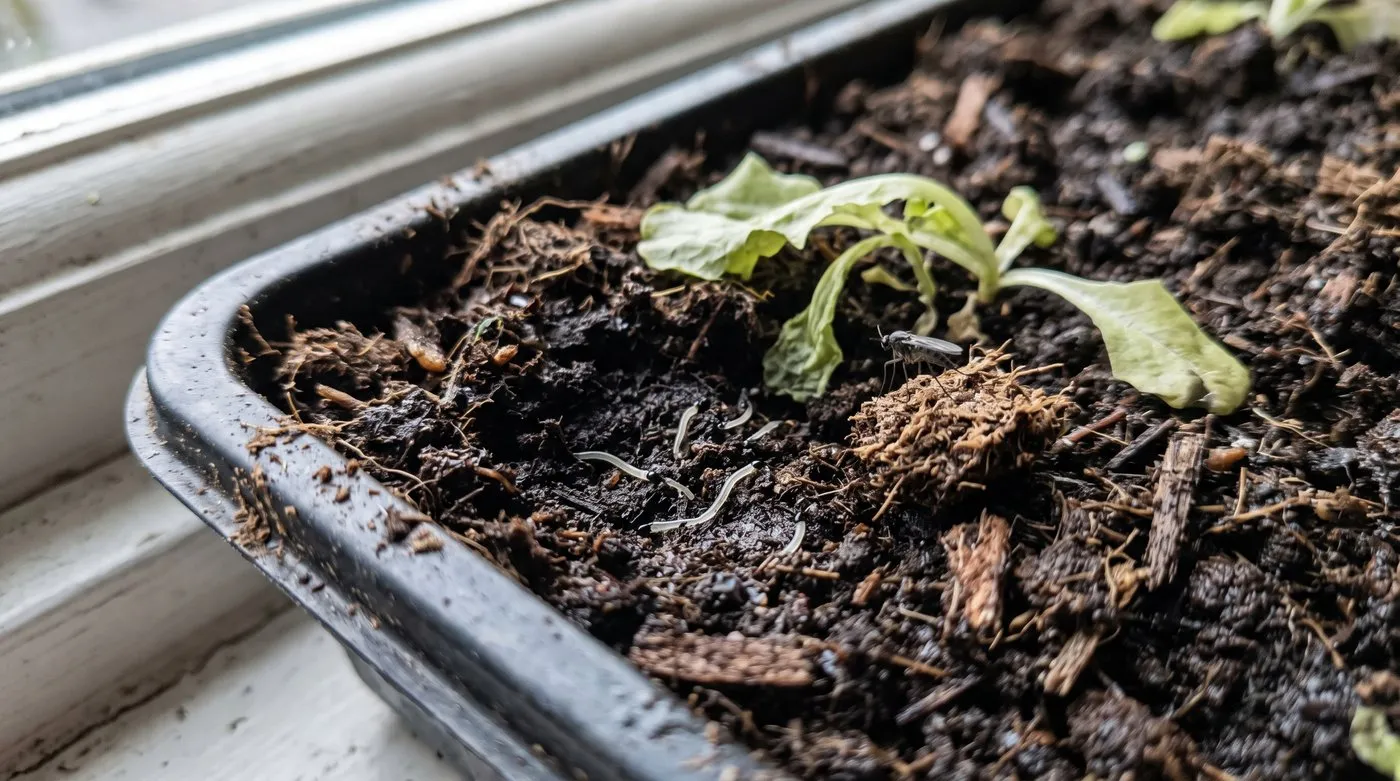
The thread-like larvae with shiny black heads do the damage. The small dark adult flies are just a nuisance.
The adults don’t harm plants. The larvae do. They are small, white, legless maggots with a shiny black head, living near the surface of damp compost. They feed on fungi and rotting material, and also on the fine roots and soft stem bases of seedlings.
In a big established pot, the larvae rarely do visible harm. In a tray of tiny seedlings, even a little root nibbling can make them stall, wilt or collapse.
Not sure it’s a sciarid fly? Shore flies are stockier with spotty wings, and whitefly are white. The guide to fungus gnats on houseplants helps tell them apart.
Why seed trays breed fungus gnats
Fungus gnats love damp, rich compost, and seed trays give them exactly that. Constant moisture, warmth from a propagator and fresh compost suit every stage of their life.
The flies lay eggs in the damp surface. The eggs hatch into larvae, which feed for a while, turn into pupae and then emerge as new adults. In a warm propagator this can all happen within a few weeks, so numbers build fast.
Some peat-free composts stay wetter at the surface for longer, which can make gnats more common. That doesn’t mean you should avoid peat-free compost, just that you should water with care. The peat-free compost guide has tips for using it well.

Eggs, larvae and pupae all live in the compost, so swatting the adults never breaks the cycle.
How larvae harm seedlings
Larvae nibble the fine root hairs and soft stem bases that seedlings rely on in their first weeks. Seedlings have very little root to spare, so they slow down, wilt or topple over.
The damage can also make damping-off worse. This is when seedlings collapse at the base, caused by fungi in wet compost. Gnats and damping-off both thrive in the same soggy conditions, so fixing the watering helps with both. The guide to damping off explains how to prevent it.
Gardener’s tip: If seedlings are falling over at the base and you can see gnats, sort out the watering first. Drier compost and better airflow tackle both problems at once.
How to prevent sciarid flies in seed trays
Prevention is all about the compost surface. Keep it drier and less inviting, and the flies go elsewhere.
Water from below
Bottom-watering means standing trays in a shallow tray of water for a short while, so the compost soaks it up from the base. The roots get a drink but the surface stays drier. Lift the tray out once the top looks moist. The guide to bottom-watering seed trays shows how.

Watering from below lets the roots drink while the compost surface stays drier, which fungus gnats dislike.
Let the surface dry between waterings
Don’t keep the compost soggy. Let the top dry a little before watering again, while making sure seedlings don’t dry right out. Open propagator vents once seeds have germinated to let air move.
Add a vermiculite or grit layer
A thin layer of vermiculite over fine seed, or fine grit around pricked-out seedlings and cuttings, keeps the surface dry. Female flies prefer to lay eggs in damp, bare compost, so this puts them off. Add it straight after sowing or potting.
Keep compost and kit clean
Use fresh compost for sowing and keep bags sealed, as open bags of damp compost can breed gnats. Wash trays and pots in hot, soapy water before reusing them. The guide on how to sow seeds indoors covers a clean, simple setup.

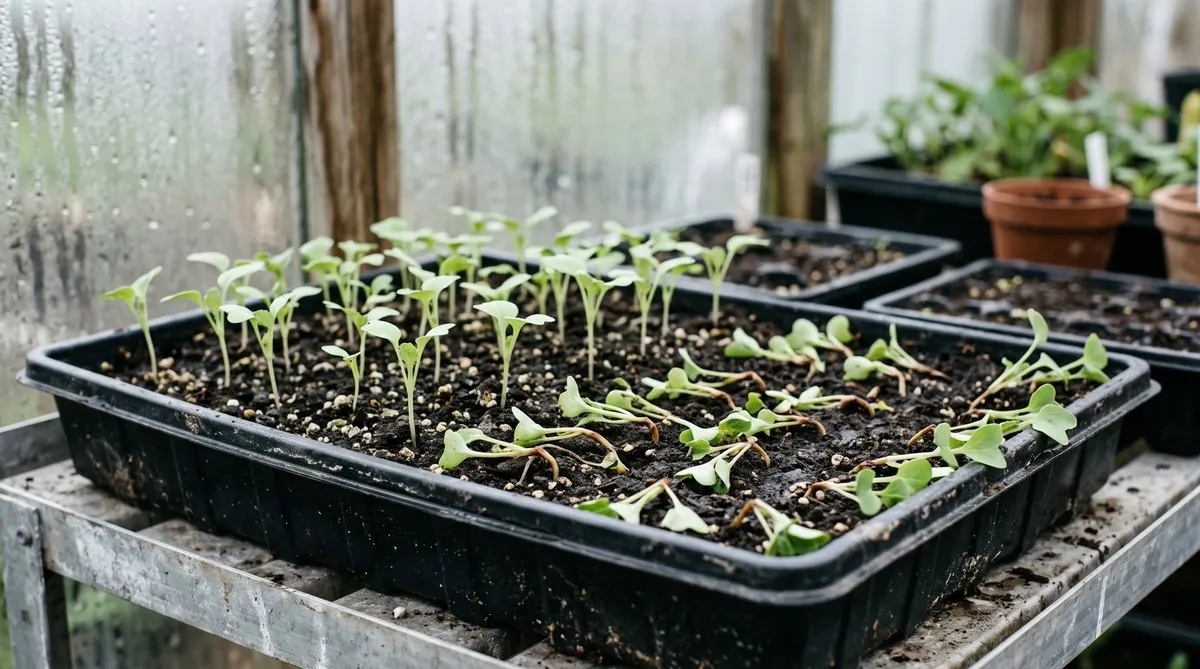
Grit-topped trays, a vented propagator and a few sticky traps make a bench far less welcoming to fungus gnats.
How to get rid of sciarid flies
If you already have plenty of flies and struggling seedlings, deal with the larvae in the compost.
Sciarid fly nematodes
Nematodes are tiny worms, sold as a biological control, that hunt down and kill sciarid larvae. They are safe for people, pets and plants. Buy a pack sold for sciarid flies or fungus gnats, mix it with water and water it into the compost. Follow the pack’s instructions on timing and temperature. The compost needs to be moist and not too cold for them to work. The guide to biological pest control explains how nematodes work.
Yellow sticky traps
Yellow sticky traps catch adult flies and show you when numbers are rising. They are useful for monitoring, but they won’t clear an infestation on their own, as the larvae carry on in the compost. Use them alongside drier watering and nematodes.
Things that don’t help
Spraying the adults does little, as eggs and larvae are in the compost. Home-made sprays are not legal to use as pesticides in the UK, so stick to the methods above.

A sticky trap shows you the flies are there. Pair it with drier watering to tackle the larvae.
Month-by-month sciarid fly plan
| Month | What to do |
|---|---|
| January | Wash trays and propagators. Keep compost bags sealed |
| February | Start sowing in fresh compost. Bottom-water from day one |
| March | Add vermiculite or grit as you sow. Hang a sticky trap to watch for flies |
| April | Busiest sowing month. Check traps weekly. Use nematodes if larvae build up |
| May | Keep surfaces drier as benches fill up. Top up grit after pricking out |
| June | Risk drops as plants go outside. Clean and dry empty trays |
| July to August | Keep stored compost dry and sealed |
| September to December | Clean and store kit. Don’t reuse old, soggy compost for sowing |
Common sciarid fly mistakes
- Chasing the flies, not the larvae. Swatting and spraying adults leaves the larvae in the compost. Treat the compost.
- Relying only on sticky traps. They catch adults but don’t clear an infestation.
- Overwatering. Soggy compost is where gnats breed. Water from below and let the top dry.
- Leaving compost bags open. Damp, open bags can breed gnats between sowings.
- Reusing old, wet compost for seeds. Use fresh compost for sowing.
Frequently asked questions
What are the tiny black flies in my seed trays?
They are almost certainly sciarid flies, also called fungus gnats. The small dark adults run over damp compost and flutter up when disturbed. Their larvae live in the compost and can nibble seedling roots.
Do fungus gnat larvae actually kill seedlings?
They can harm weak seedlings and young cuttings. The larvae nibble fine roots and soft stem bases near the compost surface. Bigger, established plants usually cope, but tiny seedlings may stall or collapse.
How do I get rid of sciarid flies in compost?
Let the compost surface dry out and water from below. Add a thin layer of vermiculite or fine grit on top. For a bad infestation, water sciarid fly nematodes into the compost to kill the larvae.
Why does peat-free compost get more fungus gnats?
Some peat-free mixes stay damp at the surface for longer. Damp, rich compost is just what the flies need to lay eggs. Water less often, from below, and the problem usually eases.
Will yellow sticky traps stop a fungus gnat infestation?
No, sticky traps only catch some of the adult flies. They are handy for spotting flies early. To clear an infestation you need to tackle the larvae in the compost.
How long do fungus gnats take to go away?
Usually a few weeks once you treat the compost and keep it drier. The adults die off as no new larvae grow up. Keep the surface dry so a fresh batch doesn’t take over.
Now your seedlings are safe from sciarid flies, read the guide to seed germination temperatures to give every sowing the best start, or browse more fixes in the garden problems section.
Our team produces practical UK gardening guidance from source research, contributor records and established horticultural practice. Editorial standards are overseen by Matt W.