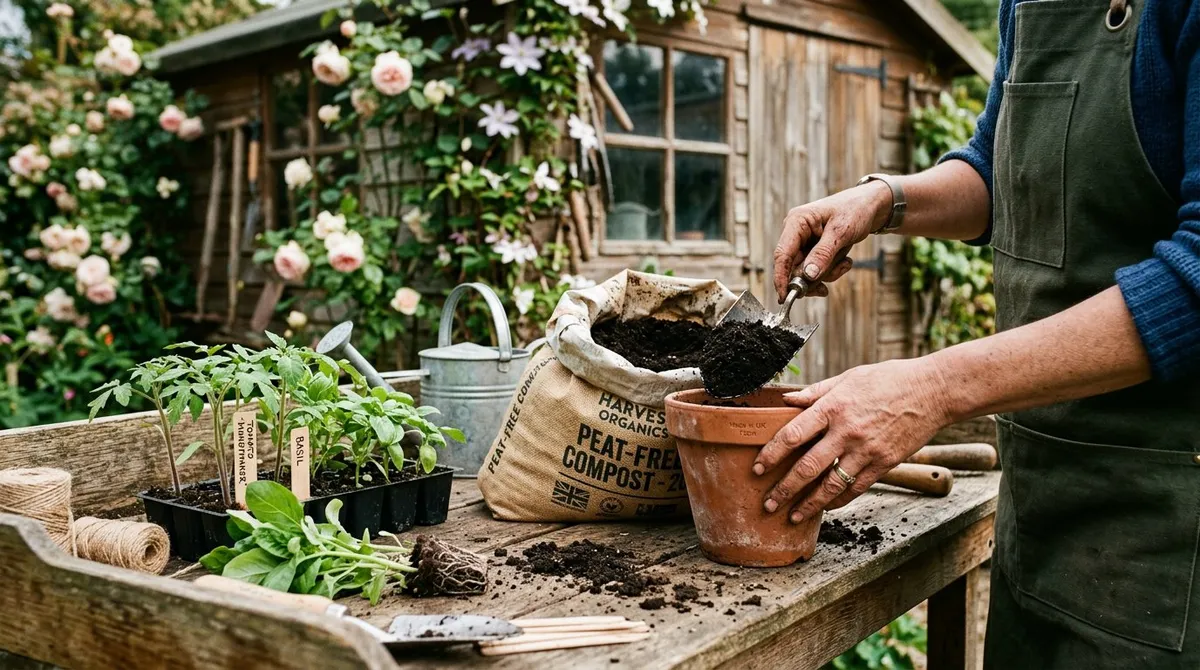
Peat-free compost outsells peat-based products in the UK, with 70% of gardeners choosing peat-free in 2024. The UK government plans to ban peat compost sales by 2030. Quality peat-free composts use coir, bark, wood fibre, or green waste as base ingredients. Successful growing with peat-free compost requires adjusted watering — it dries out faster on the surface but holds moisture deeper. Adding perlite improves drainage for seeds and cuttings.
Key takeaways
- 70% of UK gardeners already buy peat-free compost — peat sales will be banned by 2030
- Coir-based, bark-based, and wood fibre composts are the three main peat-free types, each with different properties
- Peat-free compost dries on the surface faster but holds moisture deeper — water by weight not appearance
- Add perlite to peat-free seed compost for better drainage and aeration around delicate seedlings
- Making your own compost from garden and kitchen waste is the cheapest and most sustainable option
peat-free compost sustainable gardening growing media potting compost environment
Our team produces practical UK gardening guidance from source research, contributor records and established horticultural practice. Editorial standards are overseen by Matt W.