Key takeaways
- Old compost from healthy plants is worth keeping, but it needs feeding before reuse
- Sieve out roots, then mix roughly half and half with fresh peat-free compost plus a slow-release fertiliser
- Refreshed compost suits salads, herbs, bulbs, bedding and established perennials
- Give tomatoes, peppers, courgettes and seed sowing fresh compost
- Don't reuse compost that held vine weevil grubs or a plant with root rot
- Tired compost that has lost its structure makes a good mulch on beds
You can reuse old compost from pots and grow bags, as long as the plants in it were healthy. After a season it has lost most of its food, but the bulky organic matter is still worth having. Give it a quick sieve, mix in some fresh compost and feed, and it’s ready for another year.
This guide covers what to do with last year’s compost. If you’re choosing a new bag, the peat-free compost guide explains the different types and how to get the best from them.
Is old compost from pots still any good?
Yes, mostly. A season of roots uses up the nutrients, so plants grown in old compost alone soon go pale and hungry. But the organic matter, the crumbly texture and the ability to hold water are largely still there.
So the job is simple: put back the food and some freshness, keep the rest. Old compost also loses some of its open, airy structure over time, which is why mixing in fresh compost helps.
There are a few things old compost isn’t good for. Don’t use it for seed sowing or cuttings, which need fresh, fine compost. And don’t reuse compost from a pot that had pests or disease in the roots (more on that below).

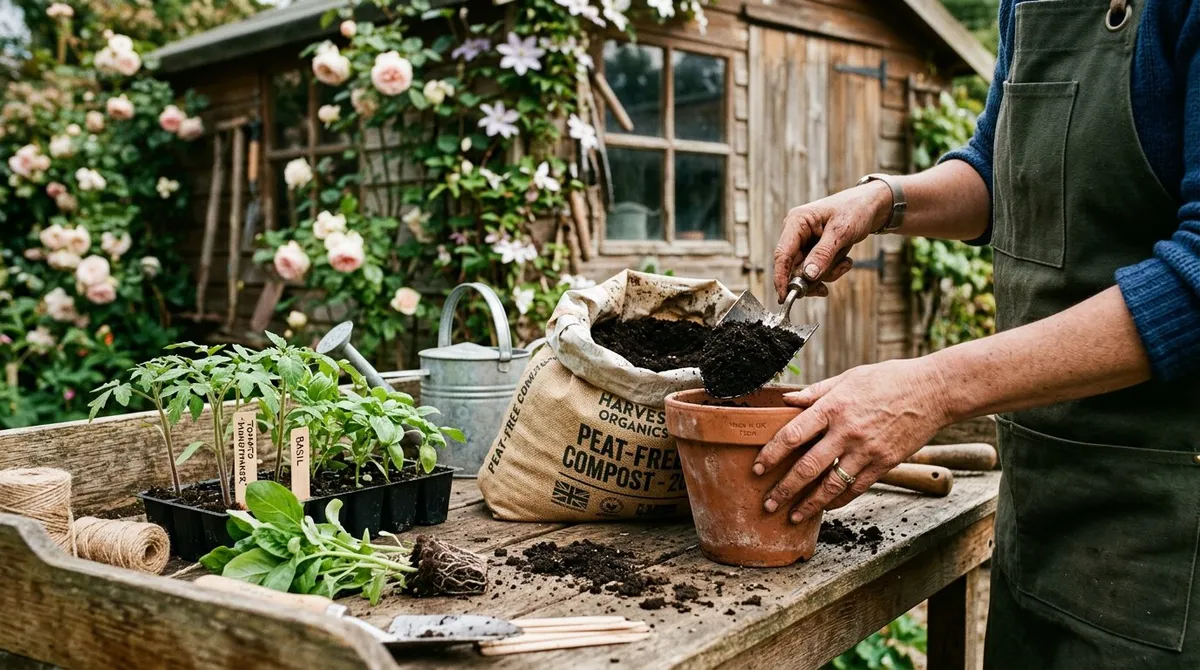
Match the plant to the compost. Salads, herbs and strawberries are happy in a refreshed mix, while tomatoes get the fresh stuff.
How to refresh old compost, step by step
It takes a few minutes per pot. Autumn, when you clear summer pots, or spring before planting, are the natural times to do it.
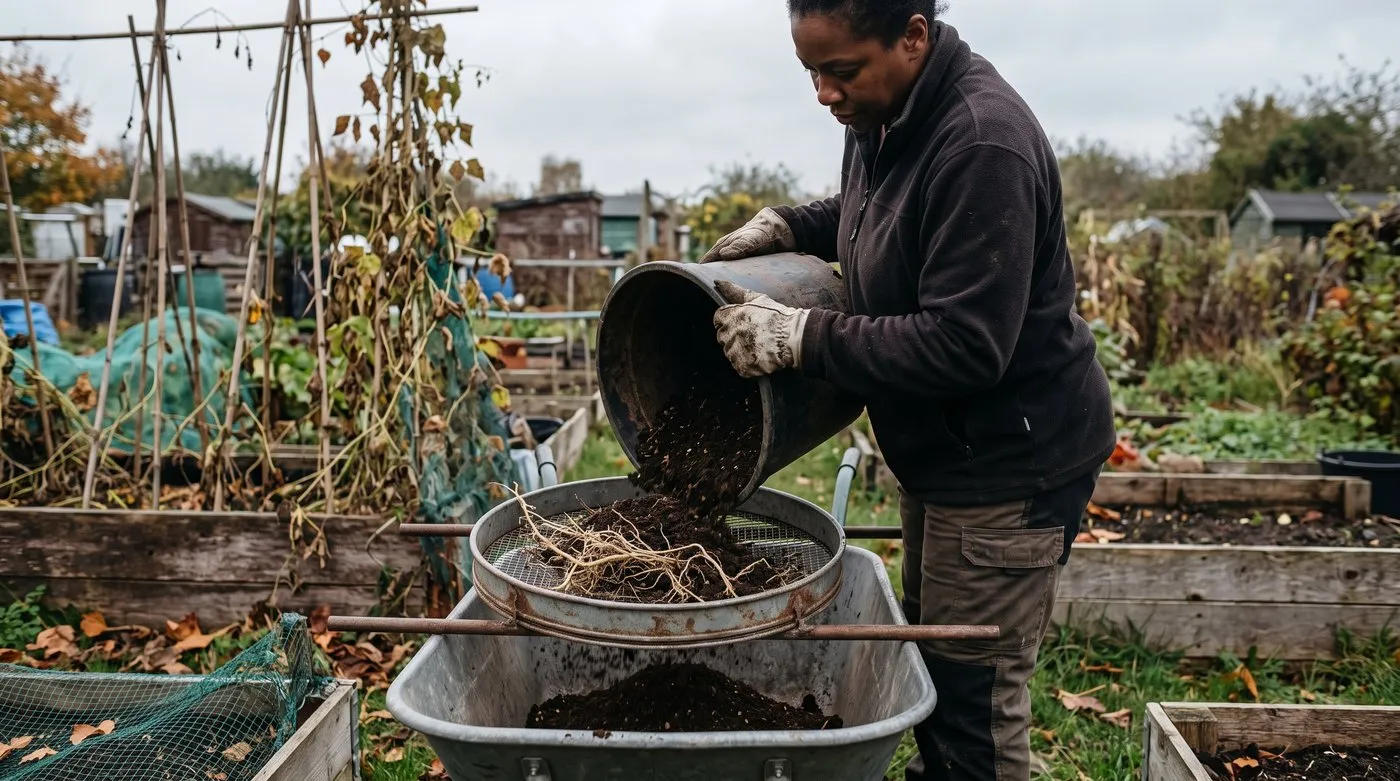
A garden riddle catches the old roots and stones, leaving crumbly compost ready to refresh.
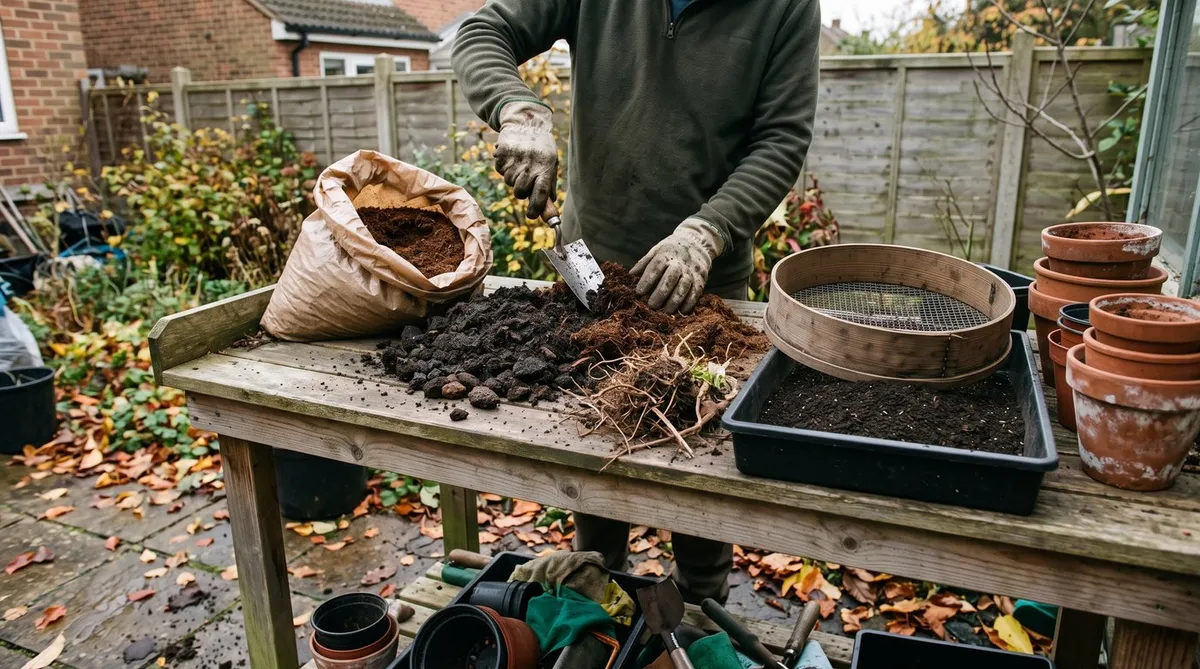
- Tip out the pot into a wheelbarrow or a large tray.
- Remove the old root ball. Tease out as many roots as you can.
- Sieve it through a garden riddle if it’s lumpy, to catch roots and stones.
- Check it. Good compost smells earthy. Look for vine weevil grubs: creamy, C-shaped, with a brown head.
- Mix with fresh peat-free compost, roughly half and half.
- Add a slow-release fertiliser, such as chicken manure pellets or a general granular feed, at the rate on the pack.
- Mix thoroughly with a fork or trowel, then refill your pots.
A handful of garden compost or leaf mould adds a bit of extra goodness if you have some. Don’t pile in several fertilisers at once. Too much feed can scorch roots in a pot. The guide to feeding garden plants explains the different types.
What to grow in reused compost
Refreshed compost suits plants that aren’t greedy. Heavy feeders and fast growers are better off in fresh compost.
| Good in refreshed compost | Fine with extra feed | Use fresh compost |
|---|---|---|
| Lettuce, rocket and salad leaves | Strawberries | Tomatoes |
| Herbs such as parsley, chives, thyme and mint | Dwarf French beans | Peppers and chillies |
| Spring bulbs | Beetroot and short carrots | Courgettes and cucumbers |
| Bedding and annual flowers | Garlic and onions | Seed sowing and cuttings |
| Established perennials such as hostas and heucheras | Acid-loving plants needing ericaceous compost |
Salads are a great match. The lettuce and salad leaves guide covers sowing them in pots. For acid lovers such as blueberries, use fresh ericaceous compost rather than reused multipurpose.
When to throw old compost away
Most old compost is worth keeping, but a few situations mean it should go.
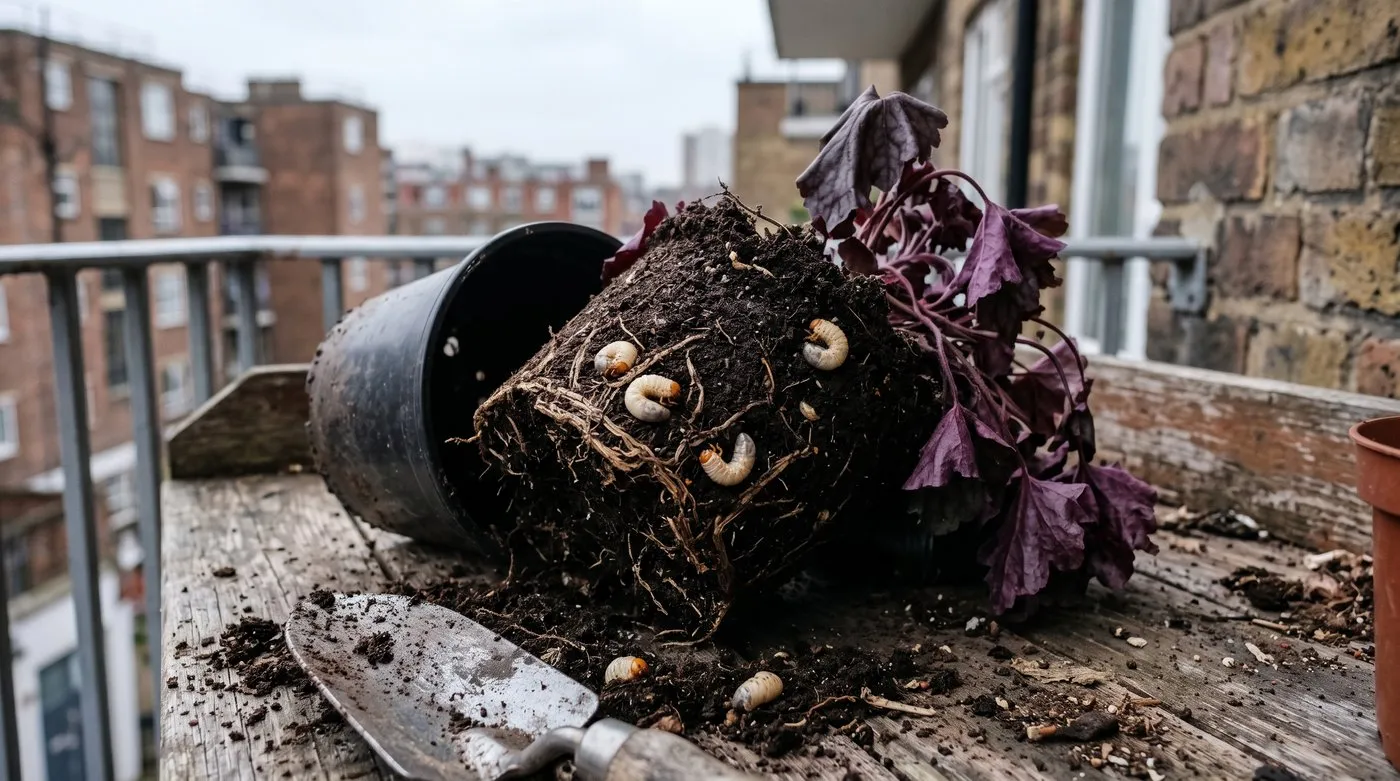
Creamy, C-shaped grubs in the root ball mean vine weevil. Bag that compost up rather than reusing it.
Vine weevil grubs. If you find these creamy, C-shaped grubs in the roots, don’t reuse the compost. Grubs and eggs can carry over into the next pot. Bag it up for your council green waste rather than your heap. The vine weevil guide explains how to protect your other pots.
Root rot or other root disease. If the plant died with soft, brown, rotting roots, bin the compost. A home compost heap rarely gets hot enough to clear disease reliably.
Sour or slimy compost. A sour, rotten smell means it has been waterlogged. Spread it thinly on a bed where air can get to it, or add it to the compost heap.
Worn-out compost. If it has turned fine, dense and sticky, it won’t drain well in a pot any more. Use it as a mulch instead.
Should you sterilise old compost?
For normal reuse, no. Compost from healthy plants doesn’t need it, and heating it kills the helpful soil life along with the bad. It’s simpler to throw out suspect compost and reuse only the clean batches. If you want to know more about the methods and their downsides, see how to sterilise garden soil and compost.
Reusing grow bag compost
Grow bags are just compost in a long bag, so they reuse in the same way. Once the tomatoes or cucumbers are finished, pull the plants out with as much root as you can.
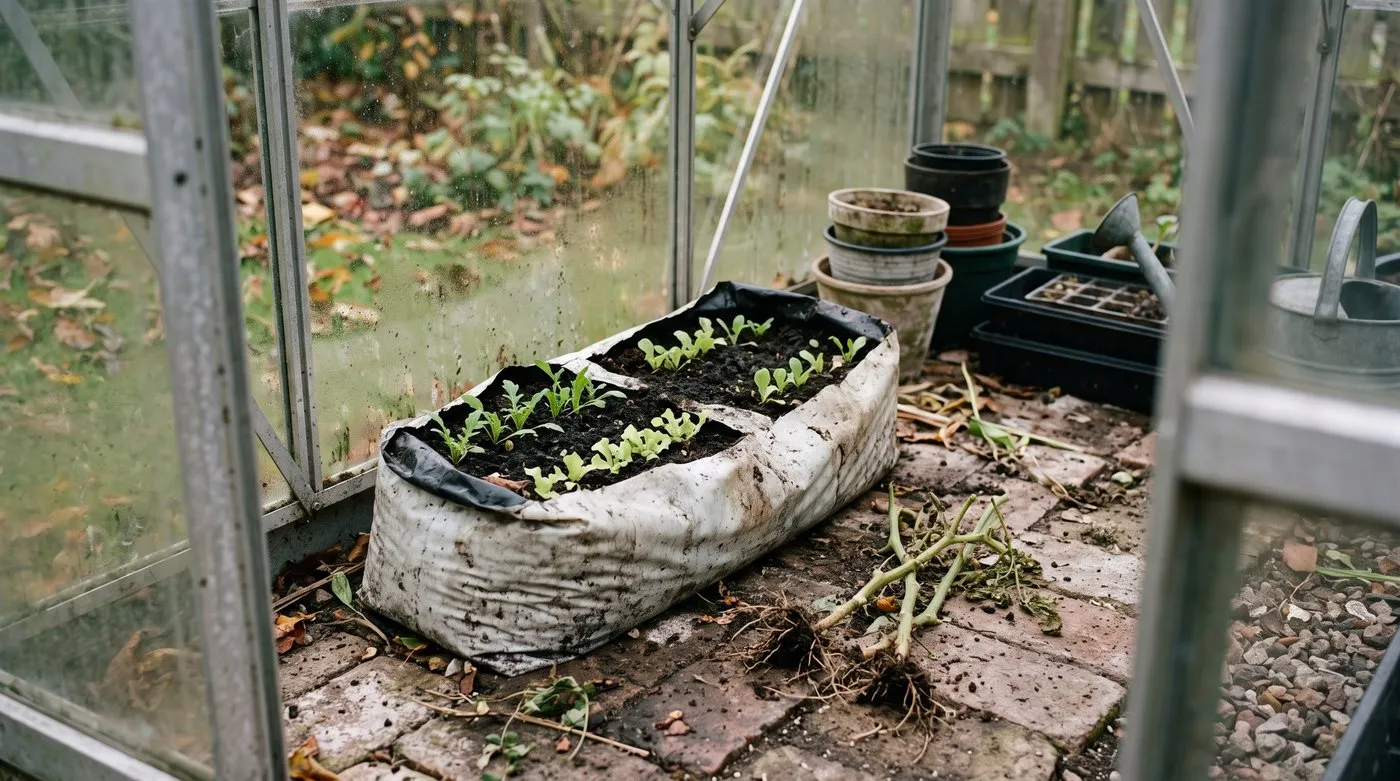
Once the tomatoes are done, a grow bag still has a quick crop of salad leaves in it.
You can sow a quick crop of salads or plant winter bulbs in the same bag, with a little fertiliser mixed in. Or cut the bag open and use the compost to top up pots, or spread it on the beds. Avoid growing tomatoes in the same bag two years running. It will be short of food, and any root problems can carry over. The grow bags guide has more tips.
Storing old compost until you need it
Keep old compost in a lidded tub, an old compost bag or a dustbin, so rain doesn’t turn it to sludge. A shed or a sheltered corner is ideal.
If you clear pots in autumn, you can store the compost over winter and refresh it in spring when you plant up. Labelling tubs by when you emptied them helps you use the oldest first.

Lidded tubs keep old compost dry over winter. Labelling them by year makes it easy to use the oldest first.
Other good uses for spent compost
Not all old compost needs to go back in a pot. It’s still good stuff for the garden.
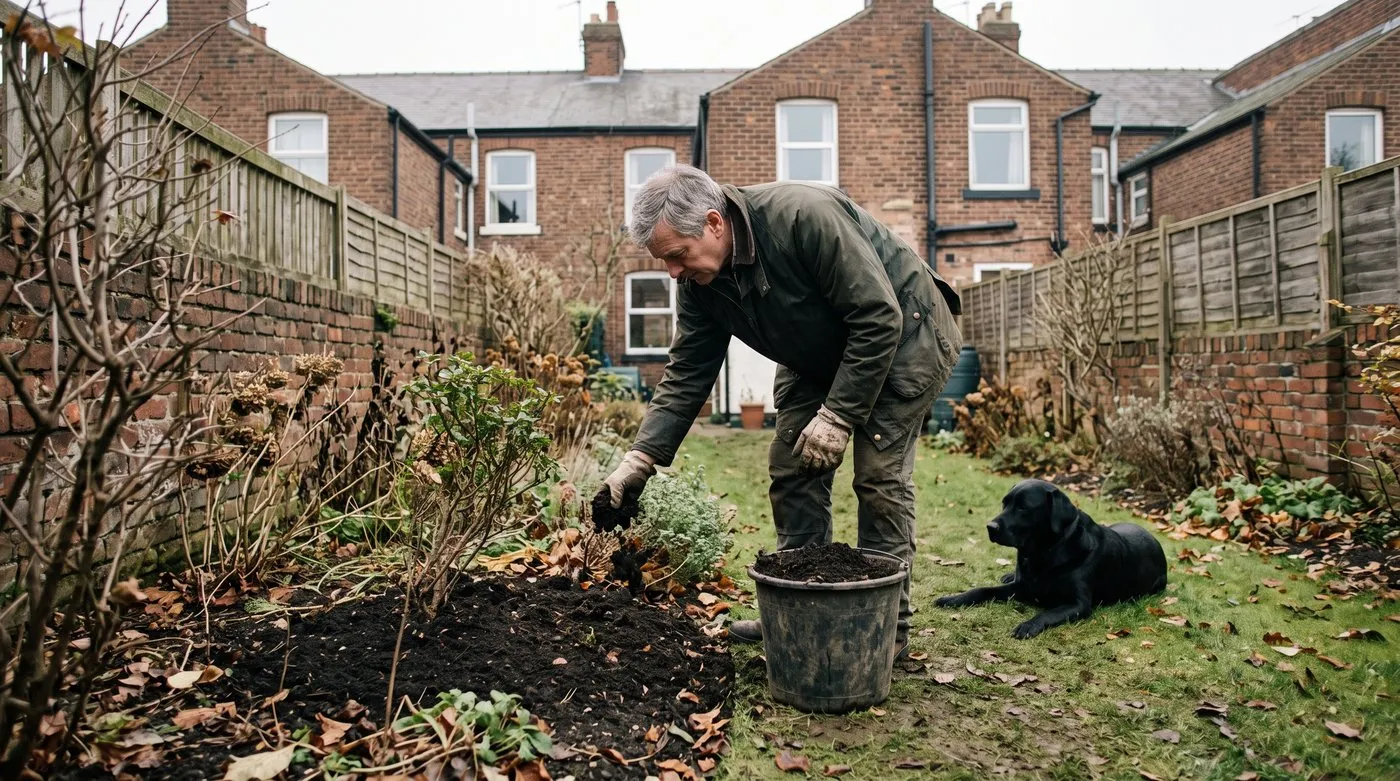
Tired compost still makes a handy mulch. Spread it on the beds and let the worms do the rest.
- Mulch on beds. Spread a layer a few centimetres thick around shrubs and perennials, or over empty veg beds in autumn. Worms will pull it into the soil.
- Topping up raised beds. Raised beds sink a little every year. Old compost is ideal for filling them back up.
- The compost heap. Mix it in with green waste. Leave out anything from diseased plants.
- Filling holes and dips. Use it when planting shrubs or to level out low spots in a border.
Common mistakes when reusing compost
- Not feeding it. Old compost on its own is hungry. Always add a slow-release fertiliser.
- Using it for seeds. Seedlings need fresh, fine compost. Old compost can be lumpy and carry problems.
- Reusing compost from sick plants. Vine weevil and root rot can carry straight into the next pot.
- Leaving old roots in. A mat of old roots makes it harder for new plants to settle. Sieve or pick them out.
- Growing tomatoes in it. Tomatoes and other greedy crops do far better in fresh compost.
Frequently asked questions
Can you reuse container compost?
Yes, if the plant that grew in it was healthy. A season of growing uses up most of the nutrients, but the bulky organic matter is still useful. Mix it roughly half and half with fresh peat-free compost and add a slow-release fertiliser. Use it for less demanding plants and give hungry crops fresh compost.
What can I grow in reused compost?
Salads, herbs, spring bulbs, bedding and established perennials all do well. Strawberries and dwarf beans are fine with extra feed. Give tomatoes, peppers, courgettes and other heavy feeders fresh compost or a well-enriched mix.
When should you throw away old compost?
Throw it out if the plant had vine weevil grubs or a root disease. The same goes for compost that smells sour or has broken down into a fine, dense sludge. Disease-free but tired compost can still go on the beds as a mulch.
How do you refresh used compost?
Tip it out, pick out the roots, then mix in fresh compost and feed. Aim for roughly half old and half fresh peat-free compost. Add a slow-release fertiliser at the rate on the pack and mix well before filling pots.
How long does spent compost last?
You can keep refreshing it for a few seasons. Each year you add fresh compost and feed, so the old material is gradually diluted. Once it turns fine, dense and slow to drain, put it on the beds as a mulch instead.
Should I sterilise old compost before reusing it?
Usually not, for everyday reuse. Compost from healthy plants doesn’t need it. Heat treatment kills helpful soil life along with the bad, so it’s simpler to bin suspect compost and reuse only clean batches.
Can I reuse grow bag compost?
Yes, grow bag compost reuses well once the crop is finished. Cut the bag open, pull out the old roots and use it to top up pots or mulch beds. For a second crop in the same bag, choose something less hungry than tomatoes, such as salads.
Now your old compost has a new job, learn to make your own with the guide to cold, fast and hot compost heaps, or browse more how-to guides.
Our team produces practical UK gardening guidance from source research, contributor records and established horticultural practice. Editorial standards are overseen by Matt W.