Key takeaways
- Small pots are sold by width in cm; pots over a litre are sold by volume in litres
- A 9cm (P9) pot holds about half a litre; a 2 litre pot is about 17cm across
- A pot twice as wide holds far more than twice the compost
- C2, C3 and C5 on plant labels mean grown in 2, 3 and 5 litre pots
- Pot on one or two sizes at a time, when roots fill the old pot
- Tomatoes need at least 10 litres each; shrubs and small trees much more
Plant pot sizes are confusing because UK nurseries use two systems at once. Small pots are sold by width in centimetres, like a 9cm pot. Anything over a litre is sold by volume, like a 2 litre or 10 litre pot. Neither tells you the depth.
This guide turns litres into centimetres, explains the codes on plant labels and helps you pick the right size. It also covers the golden rule of potting on: go up one or two sizes at a time.
Plant pot size chart: litres to cm
These are typical sizes for standard round nursery pots. Treat them as a rough guide, because there’s no fixed standard and shapes vary between makers.
| Pot size | Approx. width across top | Typical use |
|---|---|---|
| 9cm (P9) | 9cm | Seedlings, cuttings, young herbs |
| 1 litre | About 13cm | Young perennials and herbs |
| 2 litres | About 17cm | Perennials, small shrubs |
| 3 litres | About 19cm | Shrubs, roses, climbers |
| 5 litres | About 22-23cm | Larger shrubs and climbers |
| 10 litres | About 28-30cm | Tomatoes, shrubs, patio displays |
| 20 litres | About 35-37cm | Large shrubs, permanent plantings |
| 40-50 litres | About 45cm or more | Small trees, patio fruit trees |
If you’re buying a pot for a particular spot, check both the litres and the width on the label. Squat bulb pans and tall long-tom pots hold quite different amounts at the same width.
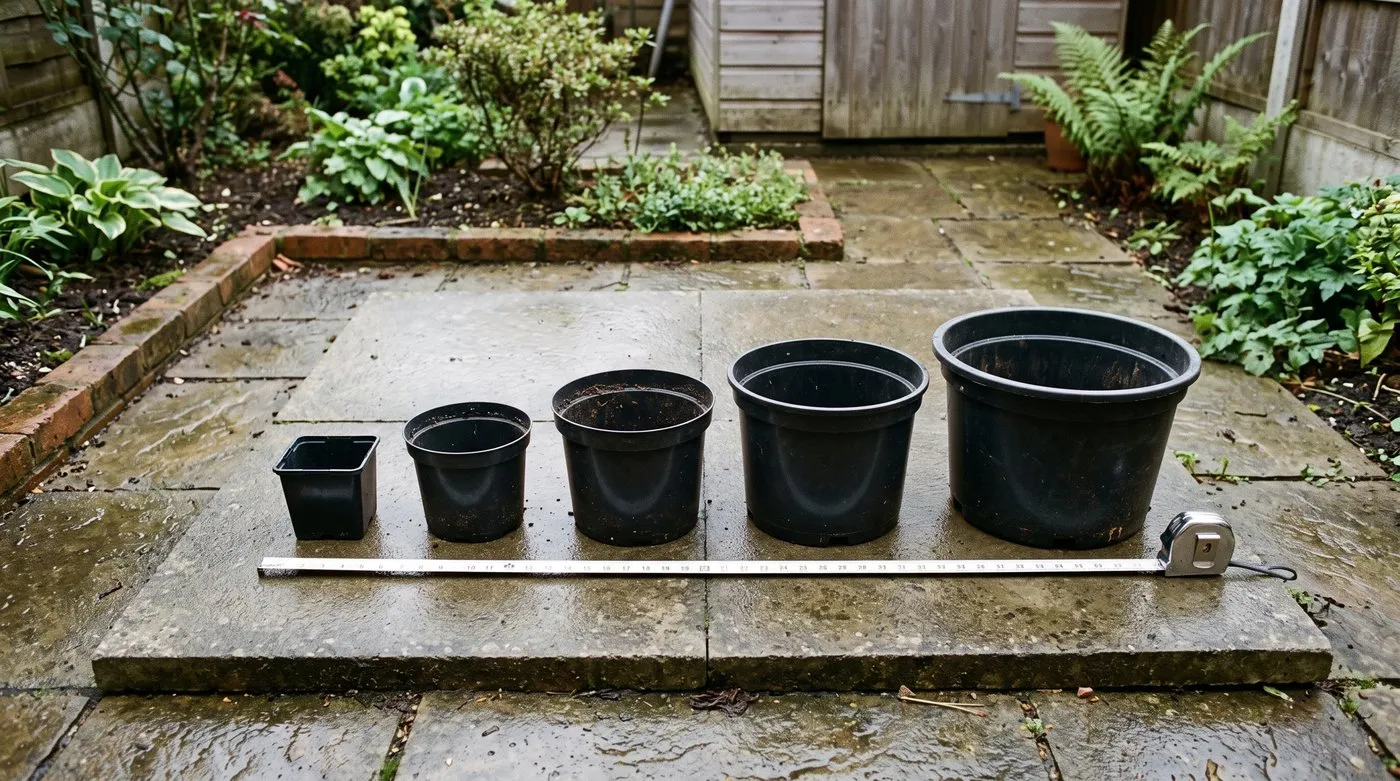
From a 9cm square pot up to a 20 litre pot. The bigger sizes hold a lot more compost than their width suggests.
Why litres and centimetres don’t match up
A pot that’s twice as wide holds far more than twice as much compost. Volume grows with width, depth and the space in between. Double the width and depth of a pot and it holds roughly eight times as much.
So a 9cm pot holds about half a litre, but an 18cm pot holds a few litres, not one. Most pots also taper towards the base so they stack, which trims the volume further.
The practical upshot: big pots swallow a surprising amount of compost, and they get very heavy once filled and watered. Put large pots in place before you fill them.
What P9, C2, C3 and C5 mean
Plant labels and catalogues use shorthand that’s easy to decode.
- P9, P11, P13: a pot sized by its width at the top in centimetres. P9 is a 9cm pot, usually square, holding about half a litre.
- C2, C3, C5: a container-grown plant in a 2, 3 or 5 litre pot. Some sellers simply write 2L.
- Bare-root: a plant lifted from the field in winter and sold without soil. It isn’t in a pot at all.
A bigger pot size usually means an older, more established plant. But a well-grown plant in a 2 litre pot often catches up fast once planted out.
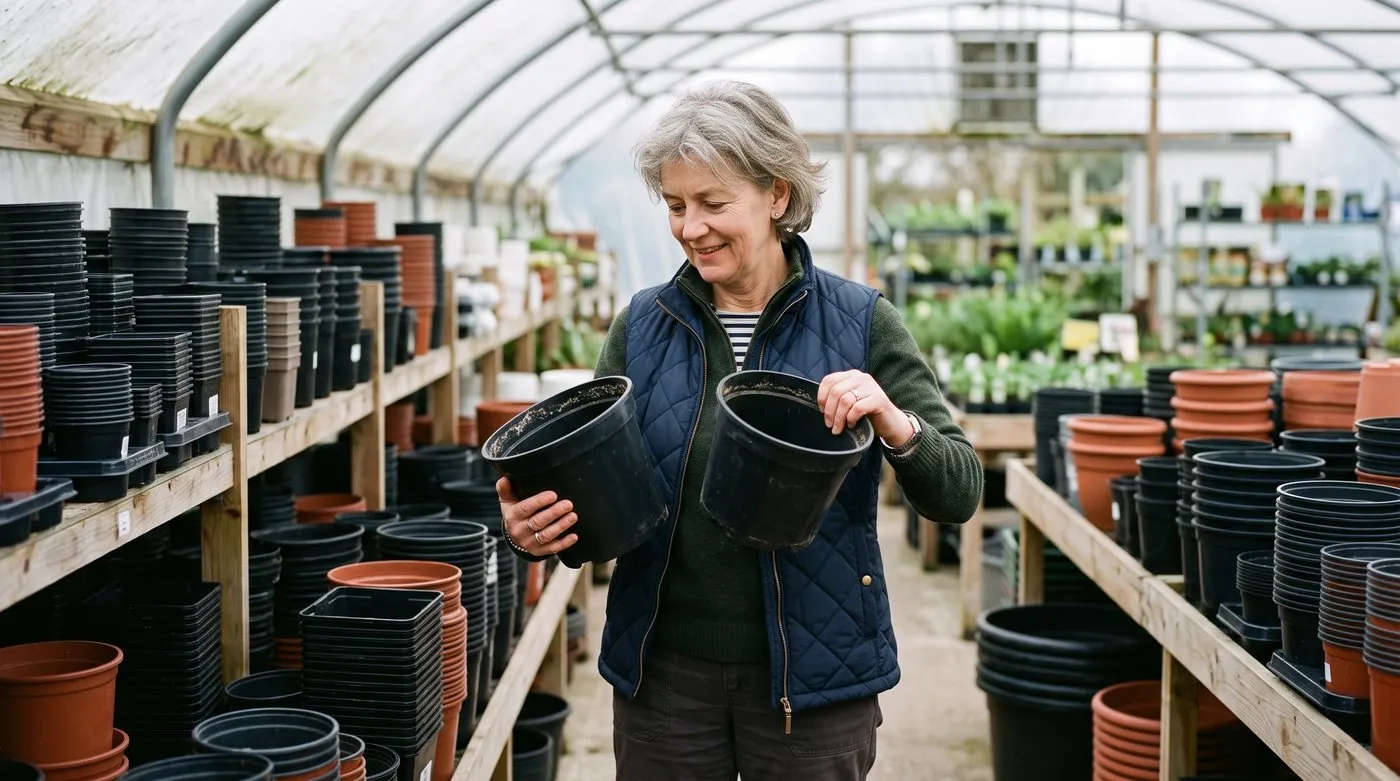
Labels often show only the litres or only the width, so it helps to compare pots side by side before you buy.
How to choose the right size when potting on
Choose a new pot one or two sizes bigger than the old one. That gives a few centimetres of fresh compost all round the root ball, which the roots can fill quickly.
First, check the plant is ready. Tip it out of its pot. If you can see white roots running round the outside of the compost, it’s time. If loose compost falls away, put it back and wait a few weeks.
Then pot on:
- Put a layer of compost in the new pot so the root ball sits about 2cm below the rim.
- Tease out any roots circling the bottom.
- Fill round the sides and firm gently with your fingers.
- Leave a 2cm gap at the top for watering.
- Water well, then let the surface dry a little before watering again.
Spring, as plants start growing, is the best time to pot on most plants. Early autumn works well for shrubs.
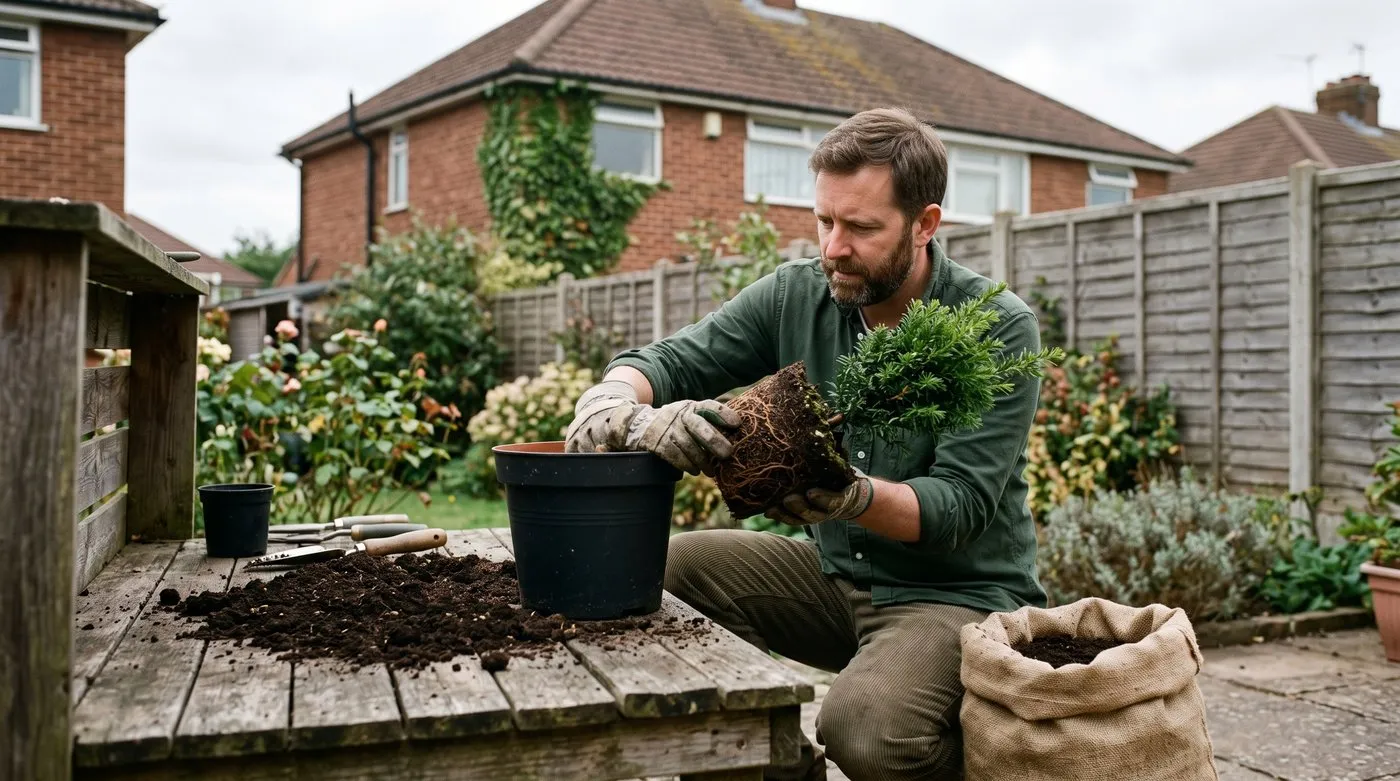
Move up a size or two at a time. A few centimetres of fresh compost all round is all most plants need.
Why a too-big pot can kill a small plant
A tiny plant in a huge pot often struggles. It’s one of the most common container mistakes.
Roots dry compost out by drinking from it. In a sensible pot, roots soon reach most of the compost. In an oversized pot, the outer compost has no roots in it, so it stays wet and airless for weeks. That’s when root rot sets in, and the plant can wilt even though the compost is soggy.
If you’ve over-potted something and it’s sulking, lift it out and move it into a smaller pot with fresh compost. Then pot on gradually as it grows. Shrubs that have outgrown their biggest pot can be root pruned instead. If a plant has been left too long in a small pot instead, our guide to fixing root-bound seedlings shows how to rescue it.
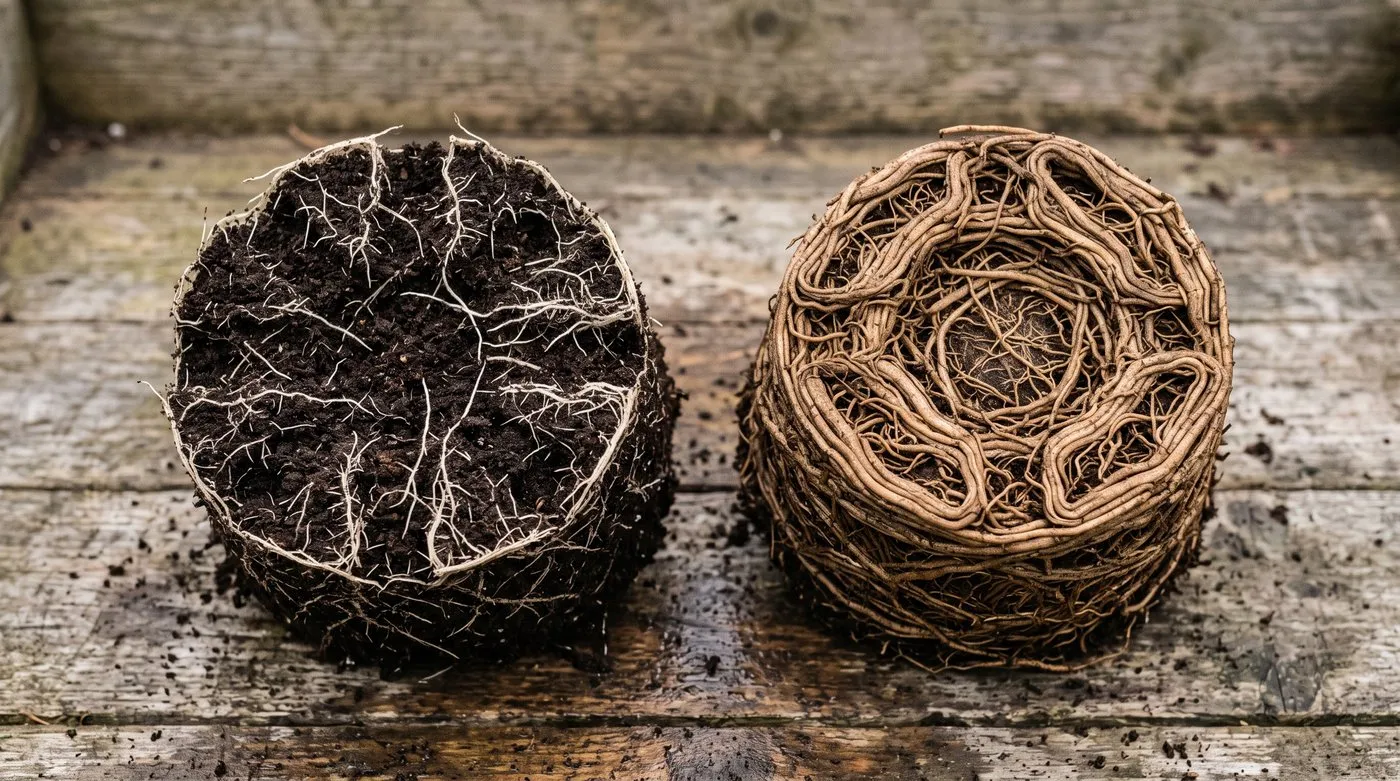
Left: white roots just reaching the edge, ready to pot on. Right: a tight mat of circling roots that’s been left far too long.
What size pot does each plant need?
Bigger pots hold more water and food, so plants in them need less watering. That matters most for plants that stay in pots for years.
| Plant | Smallest sensible pot | Better for the long term |
|---|---|---|
| Bedding plants | 1-2 litres each | Several in a 30cm pot |
| Basil, parsley, coriander | 1-2 litres | 3-5 litres |
| Rosemary, sage, bay | 5 litres | 10-20 litres as they grow |
| Perennials | 2-3 litres | 10 litres or more |
| Tomatoes | 10 litres | 15-20 litres |
| Shrubs | 10 litres | 20-40 litres |
| Patio fruit trees | 30 litres | 40-50 litres or more |
Mint is best kept in a pot of its own, as it will smother anything sharing with it. For veg in pots, see our guide to container vegetable gardening. For apples, cherries and figs, our guide to fruit in pots covers pot sizes and care.
How much compost each pot holds
A 50 litre bag of compost fills roughly:
| Pot size | Pots per 50 litre bag |
|---|---|
| 9cm (P9) | About 100 |
| 1 litre | About 45 |
| 2 litres | About 20 |
| 5 litres | About 9 |
| 10 litres | About 5 |
| 20 litres | About 2 |
Compost settles once it’s firmed and watered, so buy a little extra. For permanent shrubs and trees in big pots, a loam-based compost such as John Innes No.3 is heavier and holds its structure longer than multipurpose. Our peat-free compost guide helps you choose, or try a home-made potting mix.
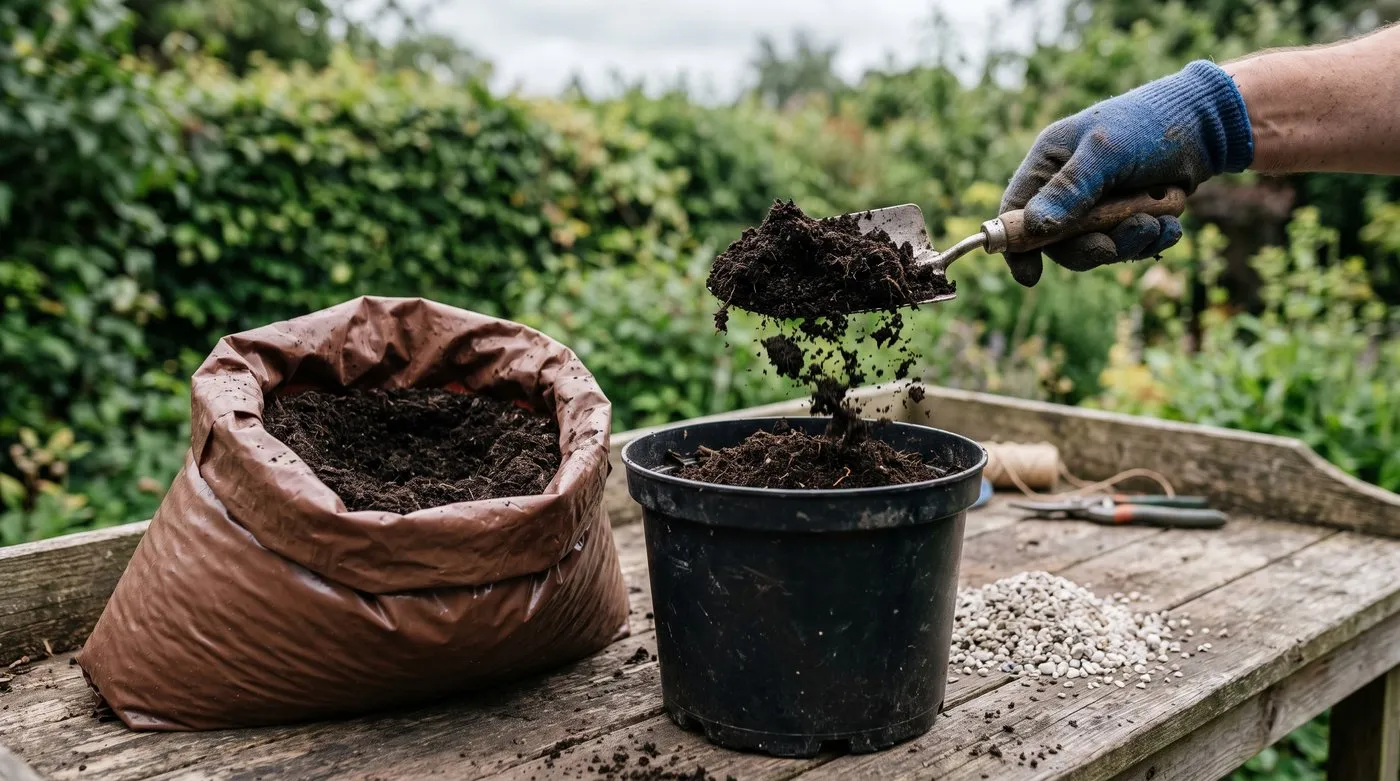
A 10 litre pot takes about a fifth of a 50 litre bag. Mixing in a little grit helps drainage in big pots.
Air pots and root trainers
Two special pot designs help stop roots circling round the inside of the pot.
Air pots have dimpled walls full of holes. When a root tip reaches a hole, it stops and the plant branches behind it, giving a dense, bushy root system. They dry out faster than ordinary pots, so they need more watering.
Root trainers are deep, narrow cells that open like a book. Grooves inside guide roots straight down. They suit plants that dislike root disturbance, such as sweet peas, broad beans and runner beans. You can open them to check the roots and slide plants out without a fuss.
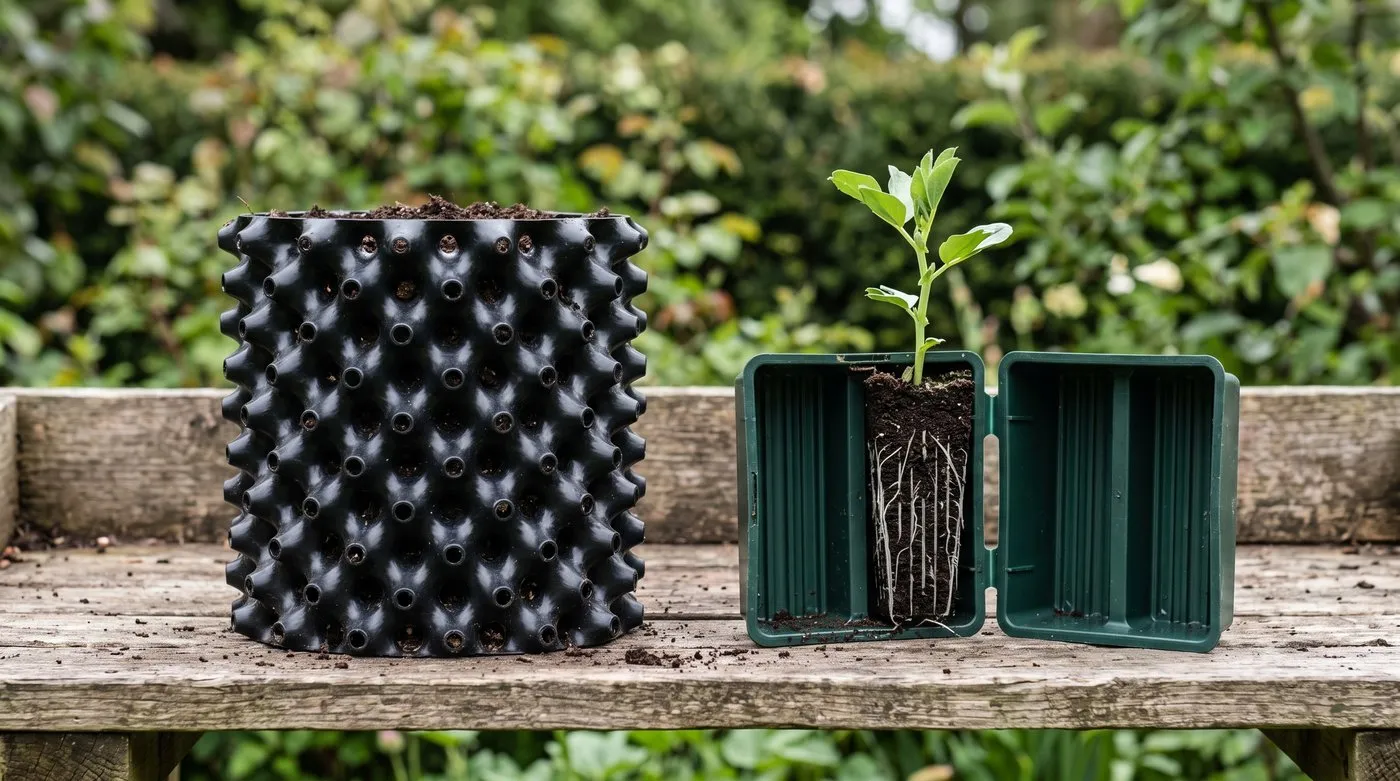
An air pot (left) and an opened root trainer (right). Both encourage roots to branch rather than coil.
Drainage and moving big pots
Every pot needs drainage holes. Raise large pots on pot feet so water can escape and the holes don’t seal against the patio. This matters most over winter.
Big pots get very heavy when filled with wet compost, especially loam-based mixes. Put them where they’re going to live before you fill them, or stand them on a wheeled pot trolley. On a balcony, keep heavy pots near the walls, and check with your landlord or building manager if you’re unsure about weight.
Grouping pots together shades their sides and helps them stay moist in summer. Our guide to grouping pots has ideas for making a display.
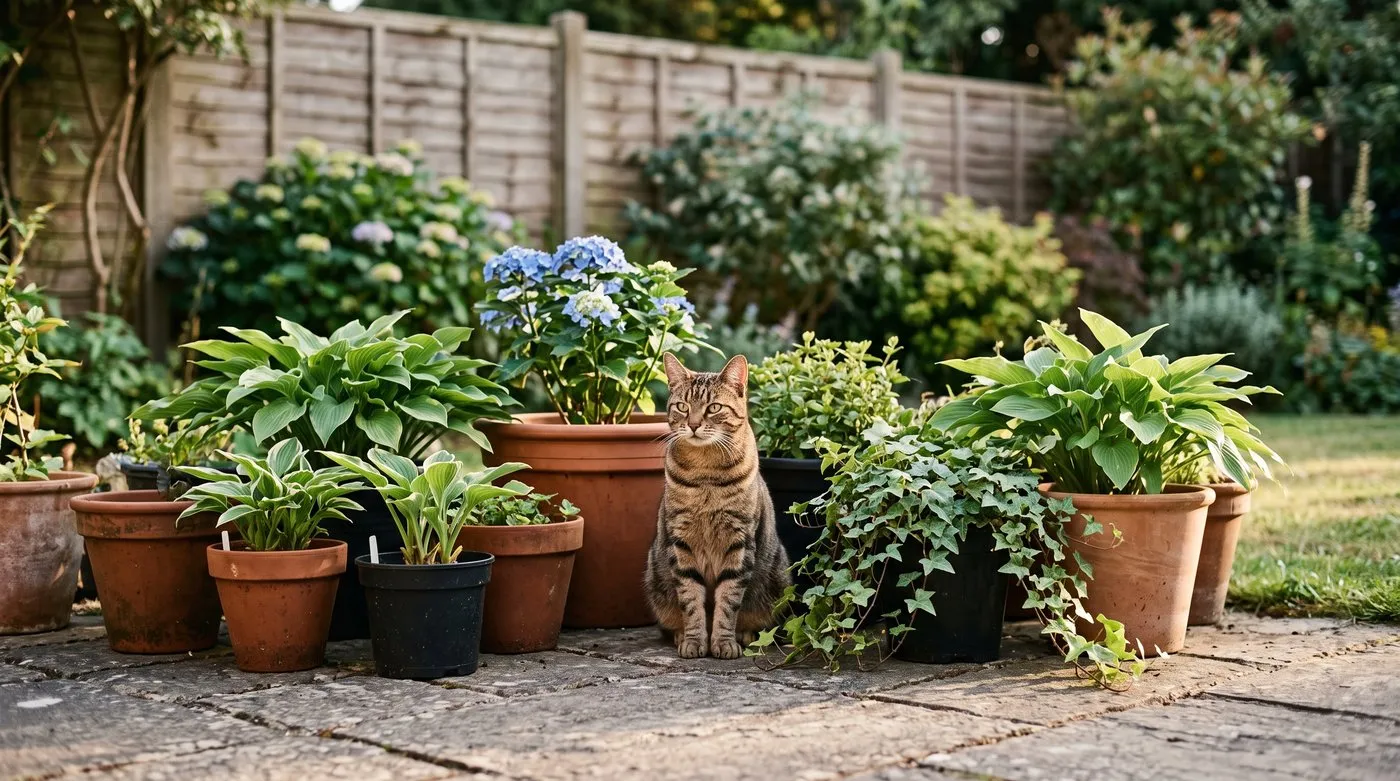
Grouping pots of different sizes looks good and keeps them a little cooler and damper in summer. (Hydrangea and ivy aren’t pet-safe, so watch cats that like to nibble.)
Common mistakes with plant pot sizes
- Jumping straight into a huge pot. Unused compost stays wet and roots rot. Go up one or two sizes at a time.
- Leaving plants too long. Root-bound plants dry out fast and stop growing. Pot on when roots circle the outside.
- Choosing pots by width alone. Check the litres too. Shapes vary a lot.
- Blocked drainage holes. Raise pots on feet, especially in winter.
- Too-small pots for hungry plants. Tomatoes and shrubs in small pots need watering constantly in summer.
Potting jobs month by month
| Month | Job |
|---|---|
| January to February | Clean old pots. Sow seeds in 9cm pots and modules under cover |
| March to April | Main potting-on time as growth starts |
| May | Move tomatoes to their final pots once frosts are over |
| June to August | Avoid repotting in hot spells. Top-dress big pots with fresh compost instead |
| September | Pot on shrubs and pot up rooted cuttings |
| October to December | Raise pots on feet. Move tender plants under cover |
Frequently asked questions
What size is a 2 litre plant pot in cm?
A 2 litre pot is usually about 17cm across the top. Depth is often around 13-15cm, but it varies between makers because pots taper. Two litres is a common size for perennials and small shrubs bought by mail order.
How many cm is a 5 litre pot?
A 5 litre pot is usually about 22-23cm across the top. It suits young shrubs, roses and climbers. Some shapes are squatter and wider, so check the depth for deep-rooted plants.
What does P9 mean on a plant pot?
P9 means a pot 9cm wide at the top, usually square. It holds about half a litre of compost. Nurseries use P9 pots for young perennials, herbs and rooted cuttings.
What do the pot codes C2, C3 and C5 mean?
They mean the plant was grown in a 2, 3 or 5 litre container. The C stands for container-grown, as opposed to bare-root plants sold without soil in winter. Some sellers simply write 2L, which means the same.
Can you put a small plant straight into a big pot?
It’s best not to, as the extra compost can stay wet and rot the roots. Roots haven’t reached the outer compost yet, so nothing dries it out. Move up one or two sizes instead and pot on again later.
How much compost do I need to fill a pot?
A 50 litre bag fills about five 10 litre pots. It also fills roughly twenty 2 litre pots. Buy a little extra, as compost settles once it’s firmed and watered.
What size pot does a tomato plant need?
Give each tomato plant at least 10 litres, ideally 15-20 litres. Bigger pots dry out less quickly. Steady watering helps prevent blossom end rot and split fruit.
Now you know your sizes, put them to use with our guide on how to repot houseplants, or browse more how-to guides.
Our team produces practical UK gardening guidance from source research, contributor records and established horticultural practice. Editorial standards are overseen by Matt W.