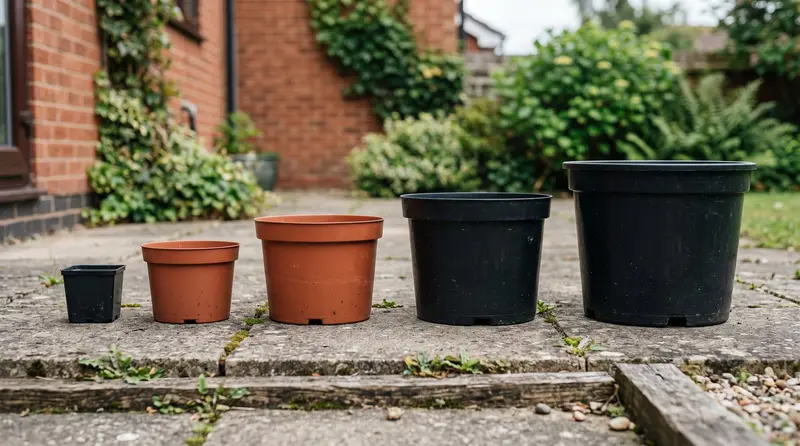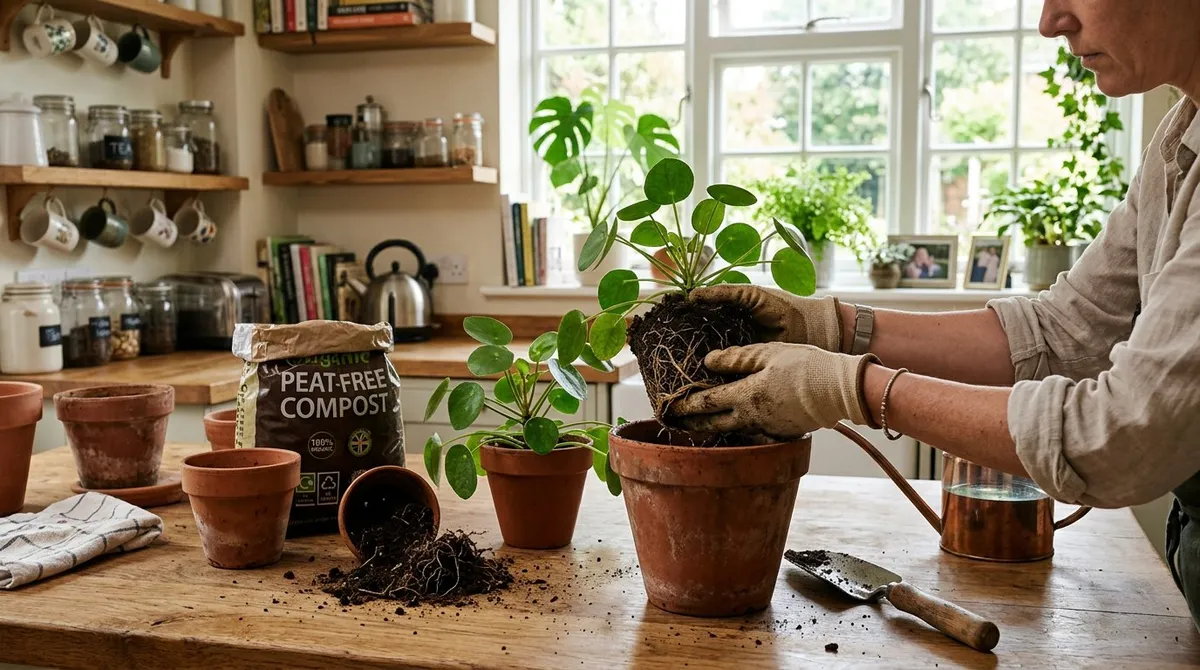
Most houseplants need repotting every 1-2 years, ideally between March and May when growth resumes. Move up by 2-5cm in pot diameter each time. Use peat-free multipurpose compost for most species, orchid bark for epiphytes, and gritty cactus mix for succulents. Terracotta pots with drainage holes give the best results. Avoid feeding for 4-6 weeks after repotting to prevent root burn.
Key takeaways
- Repot houseplants in spring (March to May) when active growth begins and roots recover fastest
- Move up by only 2-5cm in pot diameter — oversized pots hold excess moisture and cause root rot
- Roots circling the inside of the pot, water running straight through, and stunted growth are the clearest signs
- Terracotta pots with drainage holes are the best all-round choice for most houseplants
- Use peat-free multipurpose compost for most plants, but orchids, cacti, and ferns need specialist mixes
- Do not feed for 4-6 weeks after repotting — fresh compost contains enough nutrients and fertiliser burns damaged roots
repotting houseplants potting compost indoor plants plant care
Our team produces practical UK gardening guidance from source research, contributor records and established horticultural practice. Editorial standards are overseen by Matt W.