
Key takeaways
- Start tuberous begonia tubers indoors in March at about 18C, hollow side up
- Tuberous types have big, showy flowers, while fibrous types flower non-stop all summer
- Begonias like dappled shade and shelter. Hot midday sun scorches the petals
- Lift tubers after the first frost and store them dry and frost-free over winter
- Vine weevil is the main pest. Nematodes in late summer keep the grubs in check
Begonias are some of the most useful flowering plants for UK gardens. They’re happy in the dappled shade that many bedding plants dislike, flower from June until the first frost, and look great in borders, pots and hanging baskets.
There are a huge number of begonias, but UK gardeners mostly grow three types: tuberous, fibrous and rex. Each is grown a little differently. Pick the right one and you’ll have months of colour. Here’s how to grow all three, from starting tubers in March to storing them for winter.
Which type of begonia should I grow?
Tuberous begonias are the show-offs. They grow from a flat, disc-shaped tuber and have big flowers in white, yellow, orange, pink or deep red. The double ones look like roses or camellias. Plants reach 25-40cm tall and flower from June to October before dying back. You lift the tubers and store them frost-free over winter.
Fibrous begonias are compact bedding plants, 20-30cm tall. They cover themselves in small flowers from May to October without any deadheading. Leaves range from bright green to dark bronze. They’re the reliable workhorses of summer flower displays in parks across Britain, and are grown as annuals here.
Rex begonias are grown for their amazing leaves, swirled with silver, purple, pink, red and green. The flowers are tiny. They’re houseplants in the UK, as they need to stay above 13C. They like humid air and bright, indirect light, so bathrooms and kitchens suit them. The RHS begonia growing guide has more varieties to explore.
| Tuberous | Fibrous | Rex | |
|---|---|---|---|
| Grown as | Tuber, kept year to year | Summer bedding | Houseplant |
| Height | 25-40cm | 20-30cm | 20-35cm |
| Flowers | Big and showy | Small and many | Grown for leaves |
| Flowering | June to October | May to October | Not really |
| Light | Dappled shade | Sun or part shade | Bright, indirect |
| Winter | Lift and store the tuber | Compost them | Keep indoors above 13C |
| Best for | Pots, borders, baskets | Bedding, edging | Indoors |
 From left: a double tuberous begonia, a compact fibrous begonia, and a rex begonia with its patterned leaves.
How to start begonia tubers indoors
Start tubers indoors in March for strong plants and early flowers. Each tuber has a rounded bottom and a hollow, dished top where the buds sit. The hollow side always faces up.
Step 1: Prepare the tray. Fill a shallow seed tray with multipurpose compost mixed with some perlite. Water it until moist but not soggy and let it drain.
Step 2: Place the tubers. Set the tubers on the surface, hollow side up, 8-10cm apart. Press them in gently so they sit level, but don’t bury them yet, as covering them now can cause rot.
Step 3: Keep them warm. Put the tray somewhere warm and bright, at about 18C. A heated propagator or warm windowsill is ideal.
Step 4: Wait for shoots. Pink or red shoots appear from the hollow in a few weeks. Water sparingly until then. Once the shoots are a few centimetres tall, keep the compost evenly moist.
Step 5: Pot on. When shoots reach 5cm and roots show at the edges, move each tuber into its own 12-15cm pot. This time, bury the tuber just under the surface. Use multipurpose compost with plenty of perlite. Our guide to sowing seeds indoors has tips on propagators and warmth.
Step 6: Harden off. From mid-May, put the pots outside by day and bring them in at night for a couple of weeks. Plant out after the last frost, usually late May in southern England, early June in the Midlands and mid-June in Scotland.
 Tubers set hollow side up on moist compost. Don’t bury them at this stage or they may rot before they sprout.
Where to plant begonias in the garden
Dappled shade is perfect for tuberous begonias. Hot midday sun scorches the petals, turning the edges brown and papery. Deep shade gives leggy plants with few flowers. Aim for a few hours of morning sun or bright, filtered light under trees.
Shelter matters too. The stems are brittle and snap in strong winds. A spot by an east or west-facing wall, fence or hedge is ideal. Avoid open, south-facing beds where hot sun and wind team up.
Soil: Begonias like rich, well-drained soil. On clay soil, dig in composted bark or leaf mould first, as the tubers rot in wet ground. On sandy soil, add organic matter to hold moisture.
Pots: Tuberous begonias are brilliant in pots. Use a pot at least 30cm across with drainage holes, filled with multipurpose compost and plenty of perlite. Plant one tuber per 30cm pot or three in a 45cm pot. You can move pots into shade in a heatwave or under cover in heavy rain, which makes begonias one of the best plants for pots.
Hanging baskets: Trailing types such as the ‘Illumination’ series are made for baskets. Plant three to five per 35cm basket. Our hanging basket guide covers liners, compost and watering.
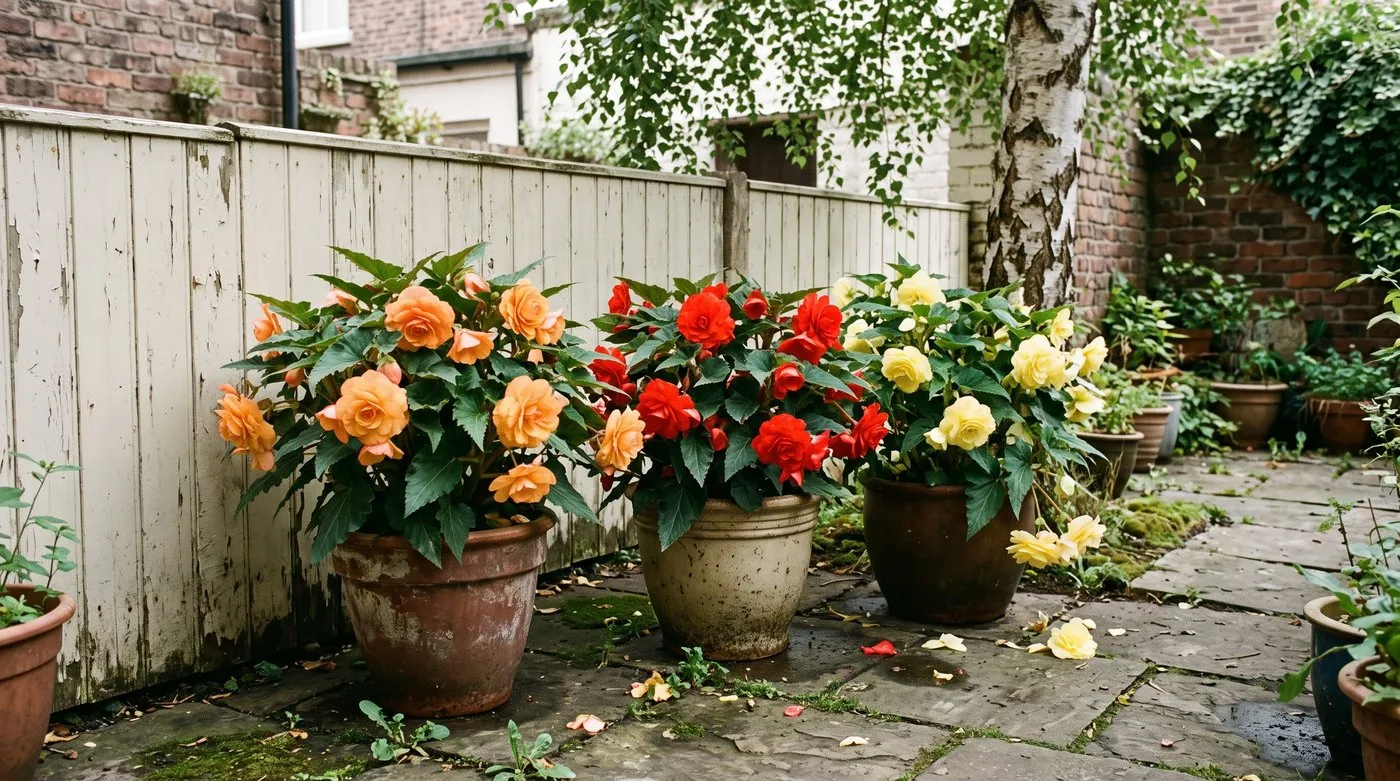
A spot with filtered light and shelter from wind suits tuberous begonias best. Pots are handy, as you can shift them out of the way of a heatwave or a downpour.
Month-by-month begonia care calendar
| Month | What to do |
|---|---|
| January | Order tubers while there’s the best choice. |
| February | Check stored tubers and throw out any soft or mouldy ones. Buy fresh compost. |
| March | Start tubers indoors at about 18C, hollow side up on moist compost. |
| April | Pot on into 12-15cm pots when shoots reach 5cm. Start a half-strength tomato feed every fortnight. |
| May | Harden off from mid-month. Plant out after the last frost. |
| June | First flowers. On tuberous types, pinch off the two small buds either side of each big flower for larger blooms. |
| July | Peak flowering. Feed weekly with tomato feed. Water in the morning. |
| August | Keep feeding and deadheading. Stake tall types. Look for notched leaf edges from vine weevil. |
| September | Water less as days shorten. Stop feeding mid-month. |
| October | After the first frost blackens the leaves, lift tubers. Cut stems to 5cm and dry them off. |
| November | Store dry tubers in trays of vermiculite, sand or peat-free compost somewhere cool and frost-free. |
| December | Check stored tubers monthly for rot or shrivelling. |
How to grow begonias in hanging baskets
Trailing begonias are among the best hanging basket plants for UK gardens. Varieties like the ‘Illumination’ series send out long, cascading stems covered in flowers from June to October. Best of all, they flower well in part shade, unlike most basket plants.
Setting up: Line a 35cm wire basket with a coco fibre liner and fill it with multipurpose compost mixed with some perlite. A short length of plastic pipe pushed into the middle makes a handy watering tube that gets water straight to the roots.
Planting: Start the tubers indoors in March, then plant three to five, evenly spaced around the edge, in late May. Angle them so the shoots point outwards and down over the rim.
Feeding: Basket plants have little compost to draw on, so feed them regularly with half-strength tomato feed from June to September. The potash keeps the flowers coming.
Watering: Check baskets every day in summer, and twice a day in hot weather. Water until it runs out of the bottom. Don’t let the compost dry out completely.
 Trailing ‘Illumination’ begonias spilling from a hanging basket, flowering from June to October.
Common pests and diseases of UK begonias
Vine weevil is the biggest begonia pest in UK gardens. The adults are flightless black beetles that come out at night and leave U-shaped notches in leaf edges. The real damage is done by their grubs: creamy-white, C-shaped and living in the compost, where they eat the tubers and roots from autumn to spring.
By the time a plant wilts, the grubs have often eaten much of the tuber, so it pays to act early.
Nematodes are the best answer. These microscopic worms, sold as a biological control, hunt down and kill the grubs. Water them into the compost in late summer while it’s still warm. Our guide to biological pest control explains how to use them.
| Problem | Signs | What to do |
|---|---|---|
| Vine weevil grubs | Wilting, collapsing tubers, white C-shaped grubs in compost | Water in nematodes in late summer |
| Vine weevil adults | U-shaped notches in leaves | Pick them off by torchlight in the evening |
| Powdery mildew | White powdery coating on leaves | Improve airflow, pick off affected leaves |
| Grey mould | Grey fuzz on stems and flowers | Remove affected bits, give more air |
| Slugs and snails | Holes in leaves, slime trails | Barriers, nematodes, evening checks |
| Aphids | Sticky leaves, twisted new growth | Knock off with water, welcome ladybirds |
Slugs and snails love young begonia shoots in spring. Our slug control guide has lots of ways to keep them off.
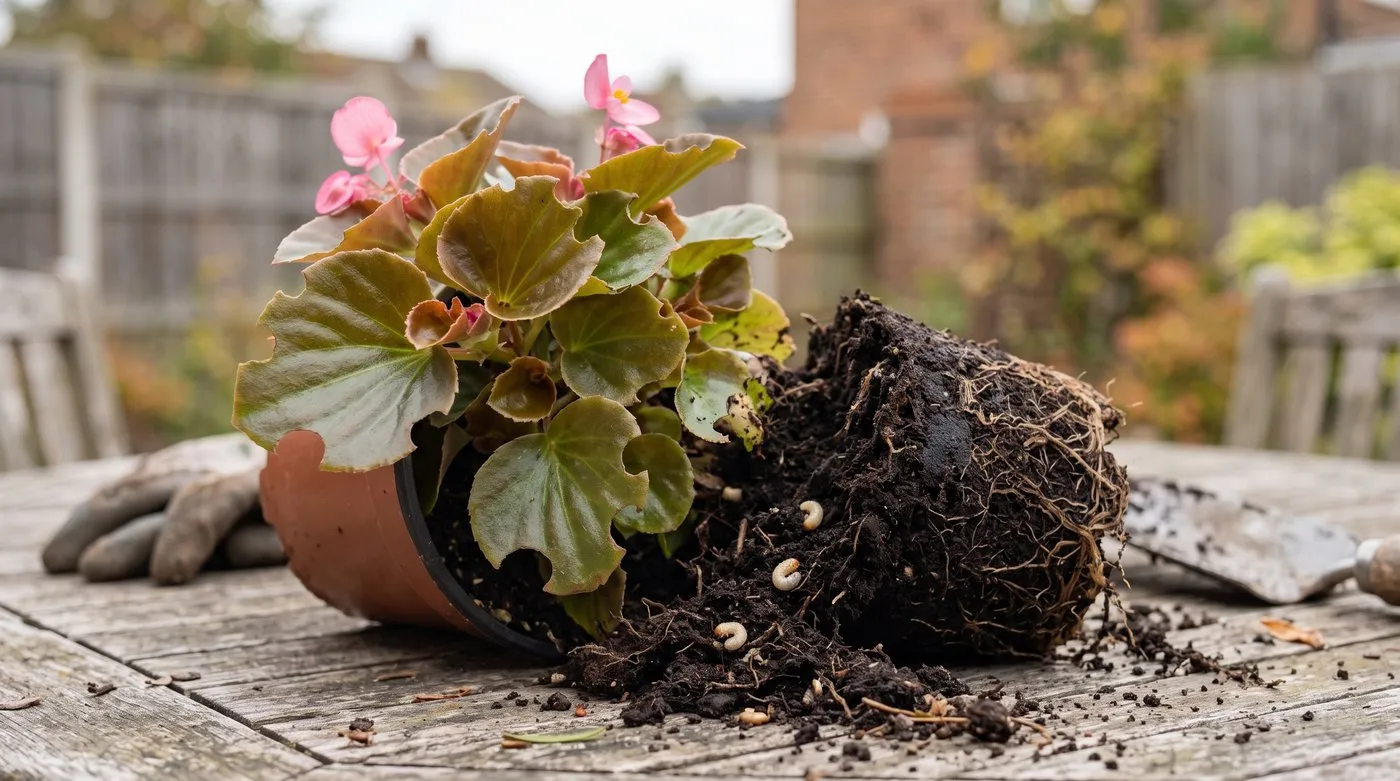
Notched leaf edges are the clue to look for. The grubs in the compost do the real harm, so check pots in September and water in nematodes.
How to overwinter begonia tubers
Lifting and storing tubers is the way to keep tuberous begonias through a British winter. Left in the ground, they rot or freeze. Even in mild areas, wet winter soil kills them.
When to lift: Wait until the first frost blackens the leaves, usually in October. Don’t cut back green leaves early, as they’re still feeding the tuber for next year.
Drying off: Cut the stems to 5cm above the tuber. Shake off loose soil but don’t wash them. Lay them upside down on newspaper in a frost-free shed or garage for a week or so, so moisture drains from the hollow stems.
Storing: Once dry, brush off the last of the soil. Lay the tubers in trays, not touching, and surround them with dry vermiculite, clean sand or peat-free compost. Keep them somewhere cool and frost-free, such as a garage or unheated spare room. Check every month and throw out any with soft spots or mould. Healthy tubers feel firm.
Year after year: Looked after well, a tuber lasts for years and gets bigger each season. Big, older tubers can be cut into pieces in March with a clean knife. Make sure each piece has at least two buds, let the cut surfaces dry, then pot them up.
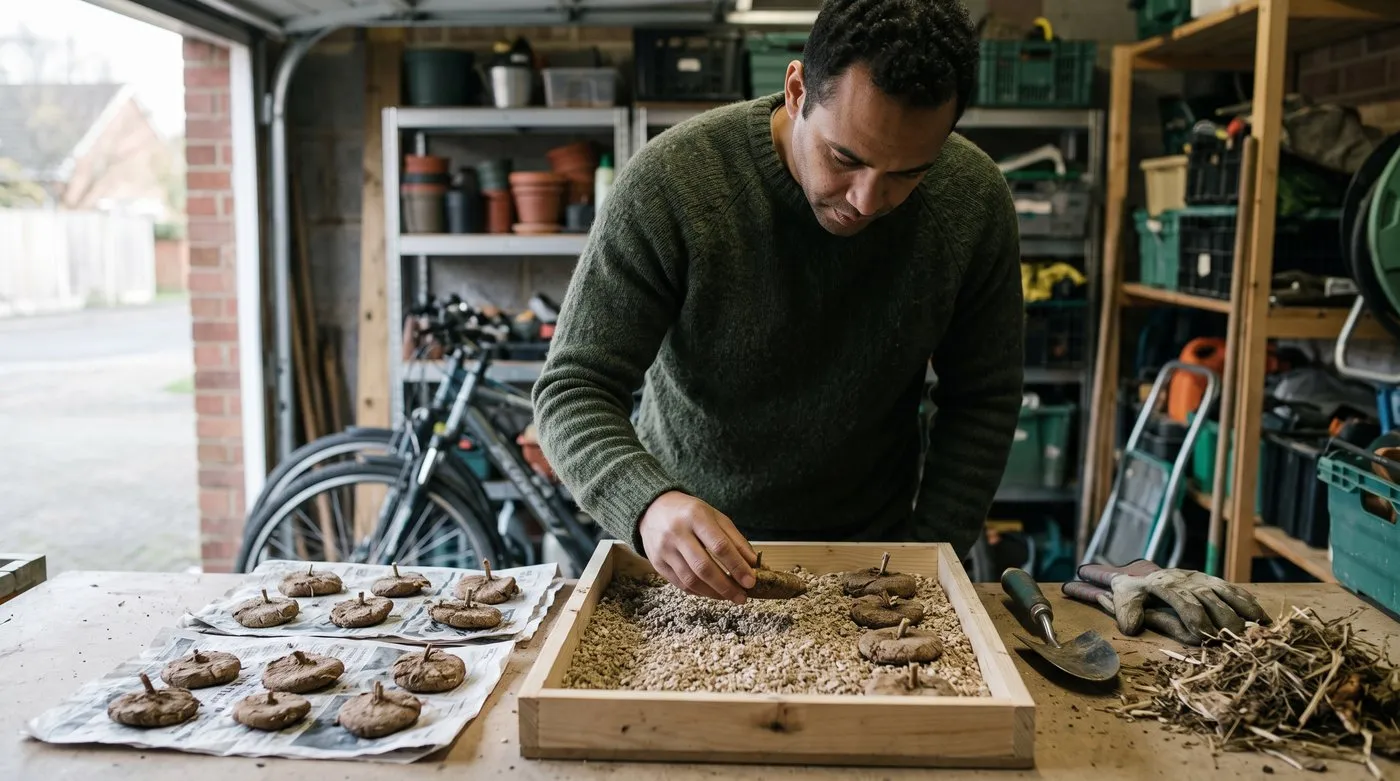
Let the tubers dry upside down for a week first, then store them apart in dry vermiculite or sand. Check monthly and keep only the firm ones.
Common mistakes when growing begonias
Planting tubers upside down. The hollow side faces up and the rounded side faces down. Plant them the wrong way and they struggle to sprout and may rot. If you really can’t tell, lay the tuber on its side.
Overwatering pots. Constantly wet compost makes the tuber rot. Let the top couple of centimetres dry between waterings. In a cool, cloudy British summer, that might mean watering only a couple of times a week.
Too much sun. Tuberous begonias come from woodland edges and like dappled light. Hot, south-facing sun scorches the petals and wears the plants out sooner.
Ignoring vine weevil. Many people blame “old age” when a begonia fades, but vine weevil grubs are often eating the tuber. Check the compost in September for white C-shaped grubs, and water in nematodes each late summer as prevention.
Leaving tubers in the ground. UK soil is too cold and wet in winter for dormant tubers, even in milder parts of the country. Always lift them.
Growing rex begonias as houseplants
Rex begonias can’t live outdoors in the UK. They need to stay above 13C and like humid air. Indoors, though, they’re stunning, with spiralling, metallic leaves in silver, purple, burgundy, pink and deep green.
Light: Give them bright, indirect light. A north or east-facing windowsill is ideal. Direct sun fades the leaf patterns. In winter, a west-facing window gives enough light without scorching.
Watering: Water when the top 2cm of compost is dry, using room-temperature water. Water at the base, as they don’t like wet leaves. Cold water can spot the leaves.
Humidity: Stand pots on a tray of wet gravel, or group them with other shade-tolerant plants to keep the air around them moist. A bathroom with a frosted window is perfect.
Feeding: Give a half-strength houseplant feed every four weeks from April to September, and none in winter. Too much feed gives dry, brown leaf edges.
Repotting: Rex begonias have shallow roots, so use a wide, shallow pot. Repot every two or three years in spring using houseplant compost with some perlite.
For more bold leaves under cover, see our guide to growing caladium. Outdoors, coleus brings bright leaf colour to the same dappled beds as fibrous begonias.
Whether you grow tuberous begonias for their big blooms, fibrous ones for easy summer colour or rex begonias for indoor drama, a little care with warmth, shade and winter storage goes a long way. For more ideas on filling container displays with colour, have a look at our seasonal planting guides.
Frequently asked questions
When should I start begonia tubers indoors?
Start tubers indoors in March at about 18C. Set them hollow side up on moist compost somewhere warm and bright. Shoots appear in a few weeks. Pot them on into 12-15cm pots when the shoots reach 5cm. Harden off for a couple of weeks and plant out after the last frost.
Can begonias grow in full shade in the UK?
They like part shade, but not deep shade. In very dark spots they go leggy and flower poorly. Dappled shade under trees or an east-facing wall is ideal. Rex begonias, grown indoors, are the ones happiest in lower light.
How do I overwinter begonia tubers?
Lift tubers after the first frost blackens the leaves. Cut the stems to 5cm, shake off loose soil and leave the tubers to dry in a frost-free shed for a week or so. Store them in trays of dry vermiculite, sand or peat-free compost somewhere cool and frost-free. Check them every month and throw away any soft ones.
Why are my begonia flowers dropping off?
Too much water is the usual cause. Soggy compost upsets the tuber and buds drop before they open. Let the top couple of centimetres of compost dry between waterings. Very hot or cold spells and wind can also cause bud drop, so stake upright types and keep them sheltered.
What is the difference between tuberous and fibrous begonias?
Tuberous begonias grow from a tuber and have big, showy flowers. They die back in autumn and need lifting and storing over winter. Fibrous begonias are small bedding plants with lots of little flowers, grown as annuals in the UK. They flower all summer without deadheading and cope with more sun.
Are begonias poisonous to pets?
Yes, begonias are toxic to dogs and cats. The tubers are the worst part. Chewing them can cause mouth irritation, drooling and sickness. Keep them out of reach in hanging baskets or raised pots if you have pets that nibble plants.
How much do begonia tubers cost in the UK?
Named tubers usually cost a few pounds each. Mixed bags work out cheaper per tuber, and fibrous begonias are cheapest as plug plants. Buy tubers in January or February for the best choice before popular colours sell out.
Our team produces practical UK gardening guidance from source research, contributor records and established horticultural practice. Editorial standards are overseen by Matt W.


