
Key takeaways
- Pinch the soft tip once plants are 10-15cm tall with three or four leaf pairs
- Always nip just above a pair of leaves, where the new shoots will grow
- Each pinch turns one shoot into two, so the plant gets bushier
- Pinching delays flowers, so finish about two months before you want a show
- Basket fuchsias love repeated pinching; busy lizzies and begonias don't need it
Pinching out means nipping off the soft tip of a young plant so it branches instead of growing up on one stem. It takes seconds and turns a thin, leggy fuchsia or petunia into a bushy plant covered in flowers.
Here’s when to do it, exactly where to pinch and which plants to leave alone. It’s ideal for pots, hanging baskets and window boxes. If you grow flowers for cutting, our guide to pinching out cut flowers covers cosmos, zinnias and friends in more detail.
Why pinching out makes plants bushier
The growing tip of a shoot holds back the buds below it. Take the tip off and the two buds in the leaf joint just underneath wake up and grow into new shoots.
So one shoot becomes two. Pinch those and you get four. Every shoot can carry flowers, so the plant ends up fuller with many more blooms.
The trade-off is time. The plant has to grow its new shoots before it flowers, so each pinch holds flowering back for a few weeks. For a summer display in pots and baskets, that’s almost always worth it.

Leggy and sparse versus short and bushy. A few quick pinches make all the difference.
When to pinch out fuchsias and bedding plants
Pinch for the first time when a plant is 10-15cm tall with three or four pairs of leaves. For plants raised in a greenhouse or on a windowsill, that’s usually April or May.
Don’t pinch tiny seedlings with only one or two leaf pairs. They need those leaves to grow the new shoots.
Time the last pinch. Because pinching delays flowers, stop about two months before you want a good show. For fuchsias, single-flowered types bloom a little sooner after the final pinch than doubles. For most summer bedding, finishing by early June gives flowers from July.
Pinch plants that are growing well. A plant that’s dry, cold or just potted recovers more slowly, so water it and let it settle first.
How to pinch out, step by step
Always pinch just above a pair of leaves, never halfway along a bare stem.
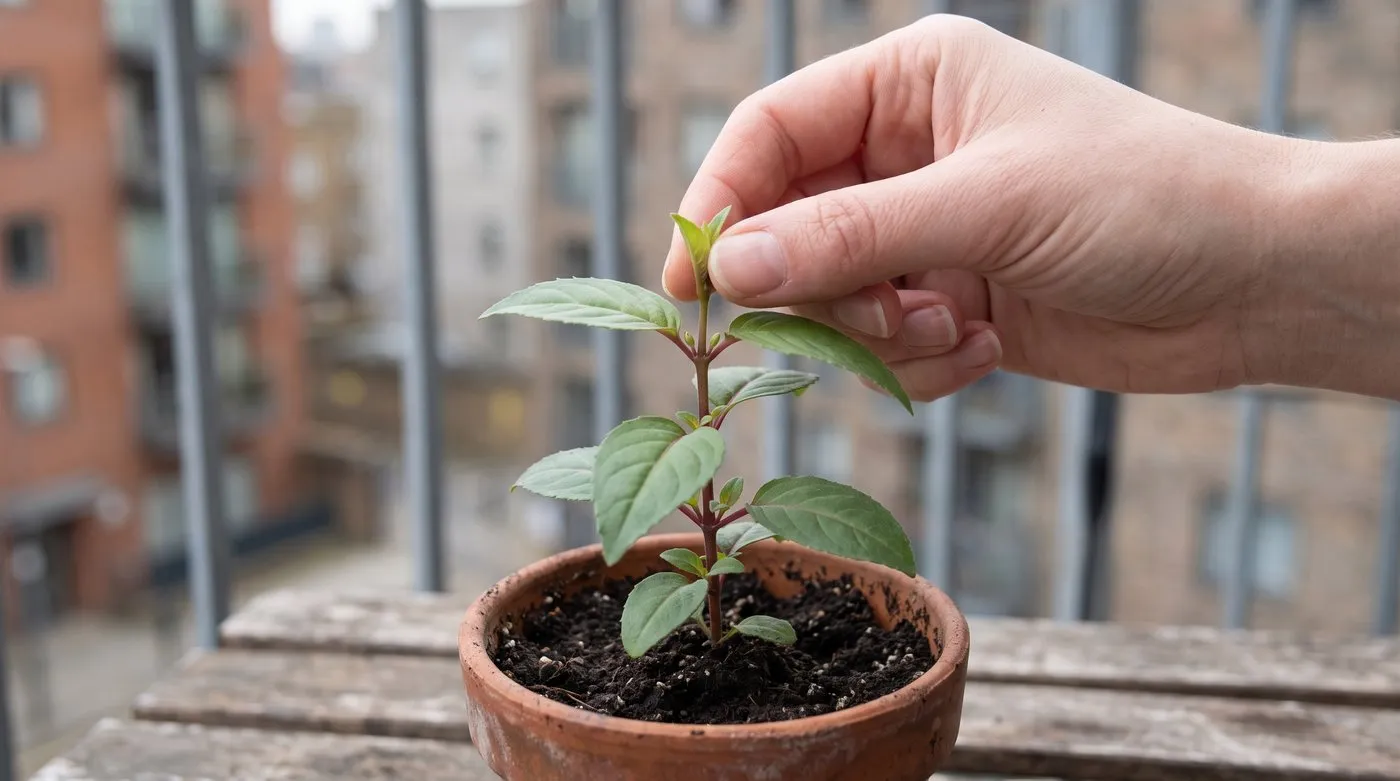
Nip just above a leaf pair. The two tiny buds in that joint grow into the new shoots.
- Find the growing tip. It’s the soft cluster of new leaves at the very top of the shoot.
- Find the leaf pair below it. The buds that will make the new shoots sit where these leaves meet the stem.
- Nip out the tip. Use your finger and thumb to take off the tip just above that leaf pair. Leave the leaves in place.
- Use scissors on tougher stems. Clean, sharp snips are better than tearing.
- Pinch every main shoot. Not just the middle one, or the plant ends up lopsided.
- Repeat on the new shoots. Once they have two or three leaf pairs, pinch them too for an even bushier plant.
Plants that have already gone leggy on a windowsill can be rescued the same way. Our guide to why seedlings go leggy explains how to stop it happening next time.
Which plants to pinch and which to leave alone
Pinch plants that tend to grow up on one stem. Leave alone plants that branch on their own or flower on a single main stem.
| Plant | Pinch? | When | Why |
|---|---|---|---|
| Fuchsia | Yes, repeatedly | After every two leaf pairs | Builds a full bush or basket |
| Petunia and surfinia | Yes | At 10-15cm, again a few weeks later | Stops long, bare stems |
| Antirrhinum (snapdragon) | Yes | At about 10cm | More flower spikes |
| Coleus | Yes | Whenever shoots get tall | Bushier, and pinch off flower spikes too |
| Busy lizzie | Rarely | Only if leggy | Branches well on its own |
| Begonia (most) | No | Not needed | Naturally bushy |
| Column stocks | No | Not needed | Flowers on one main spike |
| Single-stemmed sunflowers | No | Not needed | Pinching removes the one big flower |
Dahlias also love a pinch when young. See our dahlia growing guide for when to do it.

One quick pinch keeps a young petunia compact. It’ll fill the pot instead of trailing over the edge on long bare stems.
Pinching fuchsias for hanging baskets
Fuchsias give the biggest reward of all. For a trailing basket fuchsia, pinch every shoot after it makes two pairs of leaves. Then pinch the new shoots the same way, and keep going until about two months before you want flowers.
A few rounds turn one young plant into a dense mass of shoots. That’s what gives you a basket covered in flowers rather than a few long, bare trails.
Upright bush fuchsias need fewer pinches, usually two or three, to build a nicely rounded shape. Once you’ve stopped pinching, feed weekly with a high-potash liquid feed, such as tomato feed, to keep flowers coming.
Harden plants off for a week or two before they go outside after the frosts. Our guide to hardening off bedding plants shows how. For overwintering and care, see our fuchsia growing guide. The RHS fuchsia growing guide is handy too.

This is what repeated pinching gives you: flowers from top to bottom, not a few bare trailing stems.
Is pinching out the same as the Chelsea chop?
No. Pinching out removes just the soft tip of a young plant to make it branch before it flowers. The Chelsea chop cuts established hardy perennials back by up to half in late May, to make them shorter, bushier and later flowering.
Pinch young bedding plants and fuchsias. Chop border perennials such as sedum, phlox and asters. Our guide to the Chelsea chop explains which perennials suit it.

A tray of well-pinched bedding: short, sturdy and branching. These will fill their pots and flower for months.
Common pinching mistakes
- Pinching too late. Plants are still making shoots when they should be flowering. Stop about two months before you want a show.
- Pinching below the leaves. With no leaf joint left, there are no buds to grow. Always pinch just above a leaf pair.
- Only pinching the middle. The plant grows lopsided. Pinch every main shoot.
- Pinching stressed plants. Water and settle them first, then pinch.
- Pinching one-stem flowers. Column stocks and single sunflowers lose their main flower. Leave them be.
Once the flowers come, regular deadheading keeps them going until the first frosts. For more seasonal jobs, browse our how-to guides.
Frequently asked questions
How do you pinch out fuchsias?
Nip off the soft growing tip just above a pair of leaves. Use your finger and thumb once the shoot has three or four leaf pairs. Two new shoots grow from that leaf joint, making the plant bushier.
When should I pinch out bedding plants?
When they’re 10-15cm tall with three or four pairs of leaves. That’s usually April or May for plants raised under cover. Pinch the new side shoots again a few weeks later for an even bushier plant.
Does pinching out delay flowering?
Yes, each pinch delays flowering for a few weeks. The plant has to grow new shoots before it can flower. You get far more flowering stems, though, so the display is fuller and lasts longer.
Which plants should you not pinch out?
Skip busy lizzies, most begonias, column stocks and single-stemmed sunflowers. Busy lizzies and begonias branch well on their own. Stocks and single sunflowers flower on one main stem, so pinching removes the flower.
How often should I pinch fuchsias for hanging baskets?
Pinch every shoot after it makes two pairs of leaves. Keep going until about two months before you want flowers. Single-flowered fuchsias bloom a little sooner after the last pinch than doubles.
Can you pinch out leggy bedding plants?
Yes, pinching back leggy plants makes them bushier. Cut the long stem back to just above a healthy pair of leaves. New shoots grow from that joint within a couple of weeks.
Now your plants are pinched and bushy, read our guide on planting and caring for hanging baskets to give them a great summer home.
Our team produces practical UK gardening guidance from source research, contributor records and established horticultural practice. Editorial standards are overseen by Matt W.


