
Key takeaways
- Sow seed indoors from mid-February to March on the surface of the compost, as it needs light to sprout
- Big-flowered grandifloras look stunning but get battered by heavy rain
- Smaller-flowered multifloras and millifloras cope much better with British weather
- Trailing types like Surfinia are the best choice for hanging baskets and window boxes
- Deadhead every few days and give a tomato feed weekly for flowers until the first frost
- Petunias need full sun and are killed by frost, so plant out in late May
Petunias are one of the UK’s favourite bedding plants, and it’s easy to see why. They flower non-stop from June until the first frost, love pots and hanging baskets, and come in almost every colour except true blue.
They’re related to tomatoes and potatoes, and their wild ancestors come from South America. Modern varieties are bred to cope with European summers. Growing your own from seed is cheap and fun, though plug plants are a handy shortcut.
Which type of petunia should I grow?
Picking the right type for your spot makes the biggest difference. There are four main groups, each bred for a different job. Get it wrong and you’ll end up with battered flowers or plants that outgrow their space.
Grandiflora petunias have the biggest flowers, often ruffled or double, with pretty veined patterns. ‘Daddy’ and ‘Prism’ are classic grandifloras. The downside is rain. A heavy summer downpour shreds the big petals and leaves them soggy and brown. Grow them somewhere sheltered, like a porch or a pot against a wall.
Multiflora petunias are the workhorses of British bedding. The flowers are smaller, but you get lots more of them. The smaller petals shake off rain and recover faster. ‘Carpet’ and ‘Mirage’ are good choices for open gardens. They grow into neat mounds about 25-30cm high.
Milliflora petunias are compact plants covered in tiny flowers. ‘Fantasy’ is the best-known series. They grow just 15-20cm high and make great edging for borders or neat little pots. They handle wind and rain better than any other type.
Trailing petunias are the stars of hanging baskets and window boxes, spilling right over the edges. ‘Surfinia’ and ‘Tumbelina’ are usually sold as young plants rather than seed, while trailing series like ‘Wave’ can be grown from seed. Many trailing types drop their old flowers on their own, so they need less deadheading.
| Grandiflora | Multiflora | Milliflora | Trailing | |
|---|---|---|---|---|
| Flowers | Big, fewer of them | Medium, lots | Tiny, masses | Medium, lots |
| Height | 25-35cm | 25-30cm | 15-20cm | 15-25cm, trailing |
| Copes with rain | Poorly | Well | Very well | Well |
| Deadheading | Every few days | Every few days | A little | A little |
| Good for | Sheltered pots, porches | Beds, borders, pots | Edging, small pots | Baskets, window boxes |
| Grow from seed | Yes | Yes | Yes | Some, most sold as plants |
 Grandiflora (left), multiflora (centre) and trailing (right), showing the difference in flower size.
How to sow petunia seeds indoors
Petunia seed is tiny, like dust. It needs light and warmth to sprout, so always start it indoors.
When: Sow from mid-February to late March. Very early sowings need a grow light, or the seedlings get tall and floppy. March sowings on a bright windowsill usually give the strongest plants. Our guide to sowing seeds indoors covers the basics.
How: Fill a clean seed tray or 9cm pots with fine seed compost. Water from below by standing the tray in water for half an hour, then let it drain. Sprinkle the seed thinly over the surface and don’t cover it, as it needs light to sprout. Pop the tray in a propagator or cover it with clear film, and keep it somewhere warm, around 20-24C.
Seedlings: They usually come up in about two weeks. Take the lid or film off as soon as they appear, to stop them rotting off. When they have their first pair of true leaves, move each one into its own small pot or module. Hold them by a leaf, never the stem. Grow them on somewhere cooler and as bright as possible.
Pinching out: When plants are 10-15cm tall, pinch out the tip. They’ll flower a little later, but they’ll be much bushier with far more flowers. Skip this and they grow tall and leggy with flowers only at the top.
 Petunia seed is as fine as dust. Sprinkle it on top of the compost and keep it warm.
When to plant petunias outside in the UK
Frost kills petunias, so wait until all risk has passed. In most of England and Wales that’s late May. In northern England, early June, and in Scotland, mid-June is safest.
Harden them off first. Put plants outside for a few hours a day in the first week, then gradually longer, over about 10-14 days. Start somewhere sheltered and shady and slowly move them into the sun. Bring them in on cold nights. Skip this and they can sulk for weeks.
Spacing: In beds, plant grandifloras and multifloras 25-30cm apart. In pots, three multifloras fit a 30cm pot, and five trailing types fit a 35cm basket. In window boxes, allow one plant every 15-20cm.
Soil and sun: Petunias need full sun. They’re happy in most soils that drain well. On heavy clay, add grit and organic matter, as soggy roots soon rot. If your soil is heavy, pots of multipurpose compost are much more reliable.
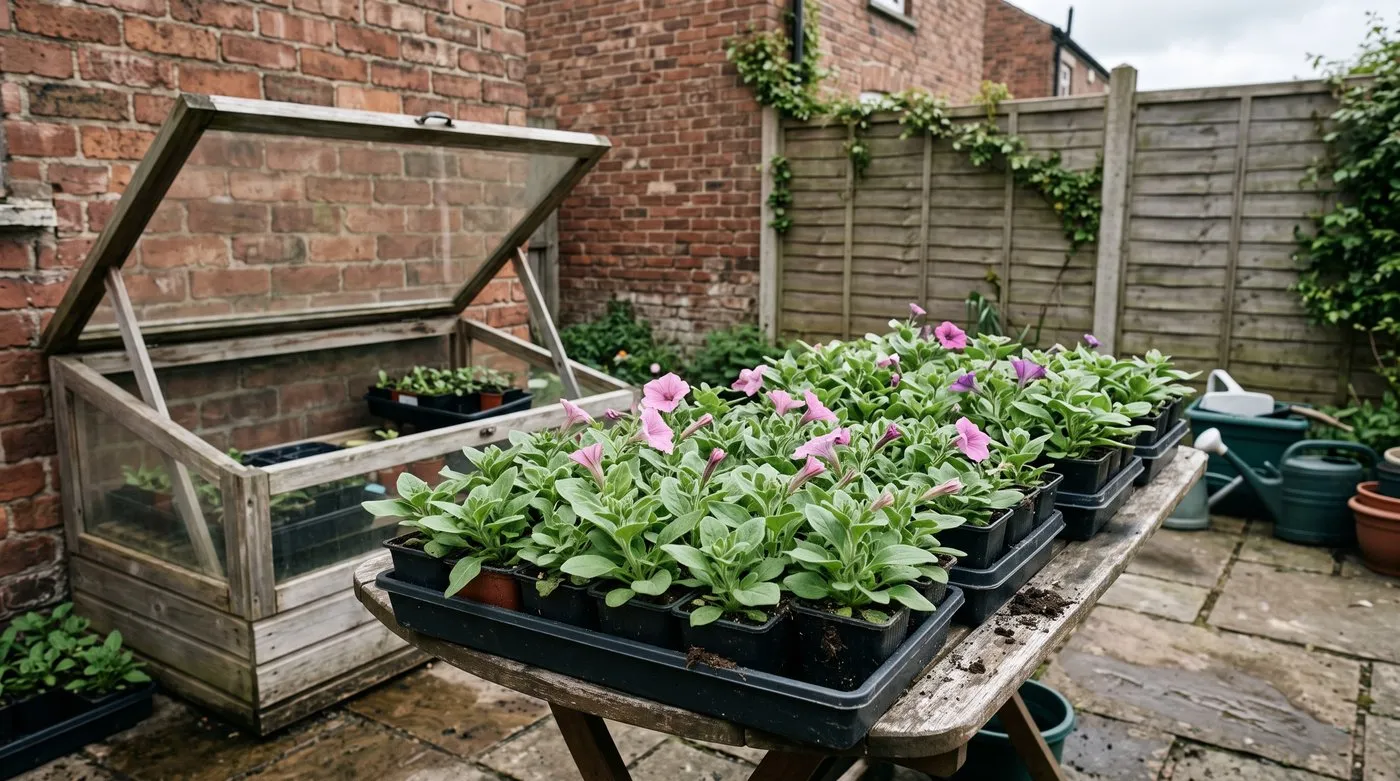
Give petunias 10 to 14 days of gradually longer spells outside before planting out. Bring them in on cold nights until the frosts are over.
How to grow petunias in containers and baskets
Pots are where petunias really shine. Good compost, good drainage and a sunny spot give you a better show than most beds. That goes for pots, window boxes and hanging baskets.
Pot size: Use a pot at least 25cm across for two or three multifloras. A 30-35cm basket holds four or five trailing plants. Bigger pots hold more water, so you’ll water less often.
Compost: Use multipurpose compost with some perlite mixed in, plus slow-release fertiliser granules at planting time. Water-retaining crystals can help pots in hot, sunny spots, which is handy for container gardening on an exposed patio.
Feeding: Start a weekly liquid feed about four weeks after planting. Use a tomato feed, diluted as the label says. It’s rich in potash, which means more flowers. Feeds high in nitrogen give you lots of leaves but fewer flowers.
 Trailing petunias in purple, pink and white tumbling from a window box by midsummer.
How to deadhead petunias for more flowers
Deadheading is the most important job. Once a petunia starts making seed, it slows down on flowers.
How: Snap or snip off the faded flower at the base of its stalk, including the little round seed pod behind the petals. If you only pull off the petals, the pod keeps growing. Run your finger down the stalk and you’ll feel it.
How often: Every two or three days for grandifloras and multifloras in July and August. Millifloras need it about once a week. Trailing types mostly tidy themselves, but pick off any seed pods you spot.
Summer trim: By late July or August, many petunias look leggy, with bare stems and flowers only at the tips. Cut the whole plant back by a third to a half. It feels drastic, but new growth soon appears and a fresh flush of flowers follows a few weeks later. Keep up the weekly feed to help it regrow. The September show from a trimmed plant is often the best of the year.
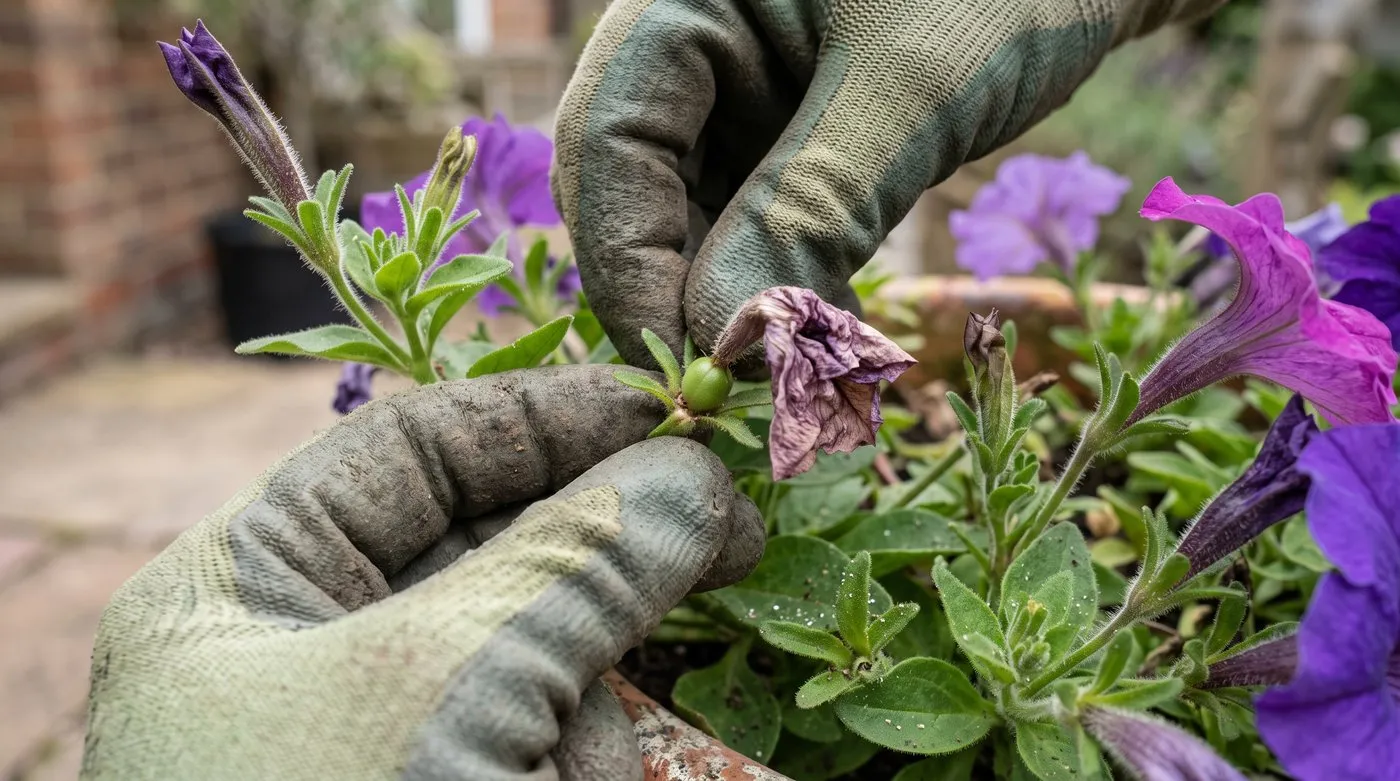
Take off the little round seed pod as well as the petals. If the pod stays, the plant puts its energy into seed instead of new flowers.
Petunia pests and diseases in the UK
Petunias are fairly trouble-free, but a few problems crop up.
Slugs and snails are the biggest danger to young plants in spring, and can wipe out a new petunia overnight. Check plants on damp evenings, and use wildlife-friendly ferric phosphate pellets or a nematode treatment if you need to. Our slug control guide has lots more ideas.
Aphids cluster on young tips and flower buds from June, causing twisted growth. Check plants every few days and squash small groups with your fingers. Ladybirds and their larvae are great helpers. If you need to spray, use an approved product exactly as the label says. Read more about aphid control.
Rots and blights can strike in warm, wet weather, with brown, soggy patches on leaves and stems that spread fast. Water the compost rather than the leaves, give plants space, and bin any affected plants straight away rather than composting them.
Grey mould shows as fuzzy grey patches on flowers and leaves in long wet spells. Pick off affected bits quickly, don’t cram pots too full, and avoid watering in the evening when it’s humid. It rarely kills plants but spoils the display.
Month-by-month petunia care calendar
| Month | What to do |
|---|---|
| January | Order seed. Plan your pots and colour schemes. |
| February | From mid-month, sow indoors in warmth, under a grow light or on a bright windowsill. |
| March | Keep sowing. Move February seedlings into their own pots. |
| April | Pinch out tips at 10-15cm. Start hardening off in mild southern areas. |
| May | Harden off all plants. Plant out after the last frost, usually late May. |
| June | First flowers. Start a weekly tomato feed. Deadhead every few days. |
| July | Flowers at their best. Water pots twice a day in hot spells. Watch for aphids. |
| August | Trim leggy plants by a third and keep feeding. Keep deadheading. |
| September | A second flush of flowers on trimmed plants. Feed every two weeks. |
| October | Flowering slows and the first frosts finish them off. Compost the old plants. |
| November | Empty and clean pots. Store basket and window box brackets. |
| December | Think back over the season and plan next year’s colours. |
Use this alongside a wider summer flower planting plan for colour from May to October.
Good companions for petunias
Petunias mix beautifully with other sun-loving summer flowers. Geraniums (pelargoniums) and verbena like the same conditions and make lovely mixed pots. Marigolds add a cheerful splash of orange alongside them.
You’ll often see petunias tucked in among vegetables too. Their sticky, hairy stems can catch the odd small insect, but don’t rely on them for pest control. Our companion planting guide has more ideas for mixing flowers and veg.
What to avoid: Don’t plant petunias where taller plants will shade them, as they’ll stop flowering. Keep them away from plants that like constantly damp soil, as petunias prefer things a little drier.
Common mistakes when growing petunias
Sowing too early without enough light. February sowings on a dim windowsill give weak, leggy seedlings that never catch up. Use a grow light or wait until March when the days are longer.
Planting out too early. One late frost kills petunias. After a warm April it’s tempting, but frosty nights can still happen in most of England until late May.
Treating beds and pots the same. Petunias in the ground rarely need watering once settled, except in a long drought. In pots they need water every day, sometimes twice, from July.
Skipping the summer trim. By August many petunias look tired and leggy, but they’re not finished. Cut them back by a third in late July or August and they’ll bounce back for September.
Choosing grandifloras for an exposed spot. Big-flowered varieties look amazing on the label but turn to mush after the first heavy shower in an open garden. Match the type to your spot.
Now you know how to grow petunias from seed to a full summer display, read our guide to the best hardy annual flowers to grow from seed for more colour that costs just pennies.
Frequently asked questions
When should I sow petunia seeds in the UK?
Sow indoors from mid-February to late March. The seed needs light and warmth to sprout, so sprinkle it on the surface of fine compost without covering. It usually comes up in about two weeks. In northern England and Scotland, start in March, as you’ll be planting out later.
Why are my petunias going leggy and not flowering?
Not enough light is the usual cause. Petunias need full sun. Pinch out the tips when plants are 10-15cm tall to make them bushy. Too much nitrogen-rich feed also gives you leaves instead of flowers, so switch to tomato feed once buds appear.
How often should I water petunias in pots?
Usually once a day, and twice in hot weather. Feel the top 3cm of compost, and if it’s dry, water until it runs out of the bottom. Petunias flop dramatically when dry but perk up within hours of a drink.
Do petunias come back every year in the UK?
No, frost kills them. Treat them as summer plants and sow fresh seed or buy new plants each spring. Enjoy them from June until the first autumn frost.
What is the difference between grandiflora and multiflora petunias?
Grandifloras have bigger flowers, but fewer of them. Multifloras have smaller flowers but lots more. Big grandiflora flowers get battered by heavy rain, so multifloras are the safer bet for open gardens. Millifloras have tiny flowers on compact plants, great for edging.
Should I deadhead petunias and how often?
Yes, every two or three days in summer. Snap or snip off the faded flower along with the little swollen seed pod behind it. If you leave the pods, the plant puts its energy into seed instead of flowers. Trailing types need less deadheading, but still enjoy a trim in late summer.
Can I grow petunias in shade?
Not really, as they need full sun. In part shade you’ll get fewer flowers and lanky stems, and north-facing spots don’t suit them at all. For shady corners, try busy lizzies or begonias instead.
Our team produces practical UK gardening guidance from source research, contributor records and established horticultural practice. Editorial standards are overseen by Matt W.


