
Key takeaways
- Dahlias flower from July right through to the first frost
- Pick sweet peas every few days and never let them set seed
- Hardy geranium 'Rozanne' flowers for months and copes with heavy clay
- Mix plants that flower at different times for colour from June to October
- Cosmos is easy from seed and quickly fills gaps in a border
- Pots need watering every day in hot weather
The best summer flowers for UK gardens include dahlias, hardy geraniums, echinacea, cosmos, sweet peas and salvias. The trick is to mix plants that flower at different times, rather than having one big burst and then nothing.
The RHS guide to annuals and biennials explains how annuals fill gaps while longer-lived plants settle in. Below are the best choices for borders, pots and cutting. For earlier colour, see our best spring flowers.
Best summer perennials for UK gardens
 Tall delphiniums at the back, with roses, phlox and hardy geraniums in front, for months of summer colour.
Perennials come back every year and get bigger and better each season. They’re the backbone of a summer border. Once settled, they need little more than a spring mulch and the odd bit of dividing.
Dahlias
Dahlias are the best summer flower for UK gardens. They flower from July until the first hard frost, longer than any other border plant. They range from 30cm patio types to 1.5m dinner-plate varieties, with pompon, cactus, decorative and single flowers.
Plant tubers 10-15cm deep from late April. In colder areas like Scotland and northern England, start them in pots indoors in March and plant out after the last frost. Pinch out the tip when plants reach 30cm so they bush out. Stake tall ones with 1.2m canes. After the first frost, lift the tubers and store them in dry compost somewhere cool and frost-free. In mild areas you can mulch them thickly and leave them in the ground.
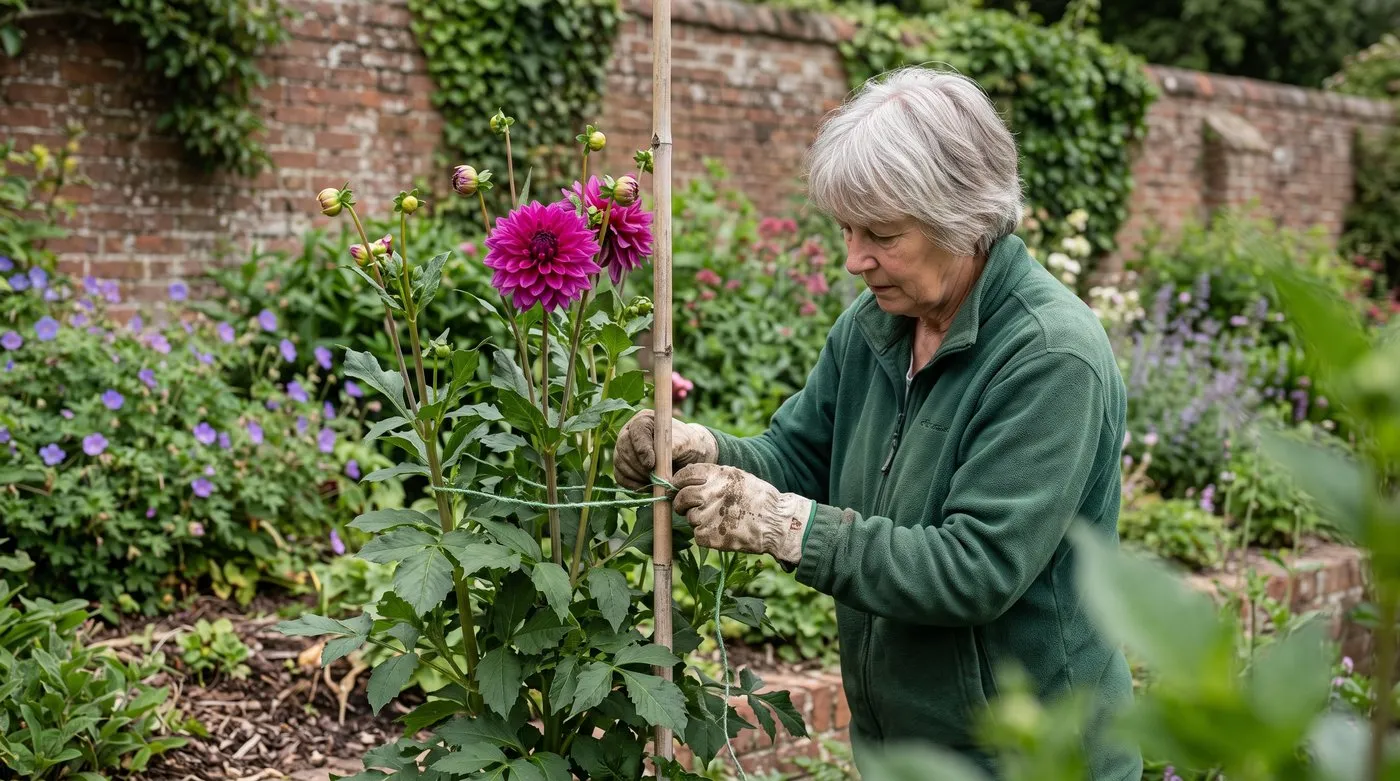
Get canes in early, while dahlias are still knee high. Tie stems loosely as they grow and summer winds won’t snap them.
Delphiniums
Delphiniums have tall spikes of blue, purple, pink or white flowers, 1.5-2m high, in June and July. Cut the spent spikes to the base and many will flower again in September. ‘Faust’ (deep blue) and ‘Bruce’ (violet-purple) are lovely named varieties.
They want rich, moist soil and full sun. Slugs adore them, so protect the new shoots in spring with copper tape or wildlife-friendly slug pellets. Stake anything over 1m tall.
Hardy geraniums
Geranium ‘Rozanne’ is one of the most reliable summer perennials in British gardens. It flowers non-stop from June to November without deadheading. Violet-blue flowers with white centres sit over a 60cm spread of leaves. It grows in any soil, including heavy clay, in sun or part shade.
Why consider Geranium ‘Rozanne’: It flowers for ages and spreads nicely at the front of a sunny or lightly shaded border. Give it room, and don’t expect it to keep weeds out on its own.
Roses
English shrub roses from David Austin give scent and flower again and again from June to October. ‘Gertrude Jekyll’ (deep pink, 1.2m) and ‘Lady of Shalott’ (apricot-orange, 1.1m) are reliable repeat-flowering choices. Feed with rose fertiliser in March and again after the first flush in July. Deadhead back to the first outward-facing leaf with five leaflets.
Echinacea
Echinacea purpurea (coneflower) has big daisy-like flowers from mid-July into September. ‘Magnus’ (deep pink, 90cm) holds an RHS Award of Garden Merit. It’s fully hardy, copes with dry spells once settled, and bees and butterflies love it. Leave the seed heads over winter for goldfinches. It likes well-drained soil in full sun and hates heavy wet clay. For more plants that cope with dry spells, see our guide to drought-tolerant plants for UK gardens.
Best summer annuals for UK gardens
Annuals grow, flower and set seed in a single year. They fill gaps between perennials, give instant colour and cost much less than established plants.
Cosmos
Cosmos bipinnatus is the easiest summer annual to grow from seed. Sow it indoors in April, or straight outside in May once frosts are over. Plants reach 90-120cm with feathery leaves and masses of white, pink or crimson daisies from July to the first frost. ‘Purity’ (white) and ‘Dazzler’ (deep pink) are reliable.
Cosmos is quick from seed and happy on poor soil. It actually flowers more when you don’t feed it. Deadhead often and it’ll keep you in vase flowers for months.
Sweet peas
Sweet peas (Lathyrus odoratus) are the classic British cut flower. Pick them every few days and never let them set seed, and they’ll flower for weeks. Sow in October or February in root trainers for the strongest plants. Plant out in April at the foot of 2m cane wigwams or along a wire fence.
They like rich, moist soil and a thick mulch, so water them regularly. As soon as seed pods form, flowering stops. ‘Matucana’ (maroon and violet) has a wonderful scent. Spencer types come in the widest range of colours. For more annuals to grow from seed, see our guide to the best hardy annual flowers to grow from seed.
Sunflowers
Sunflowers (Helianthus annuus) shoot up to 1.5-3m in one summer, which children love. Sow straight outside from mid-April to May, 2cm deep. Seedlings appear in a week or two. ‘Russian Giant’ (3m, yellow) has one huge flower head. Branching types like ‘Velvet Queen’ (1.5m, deep red) give lots of smaller flowers over several weeks.
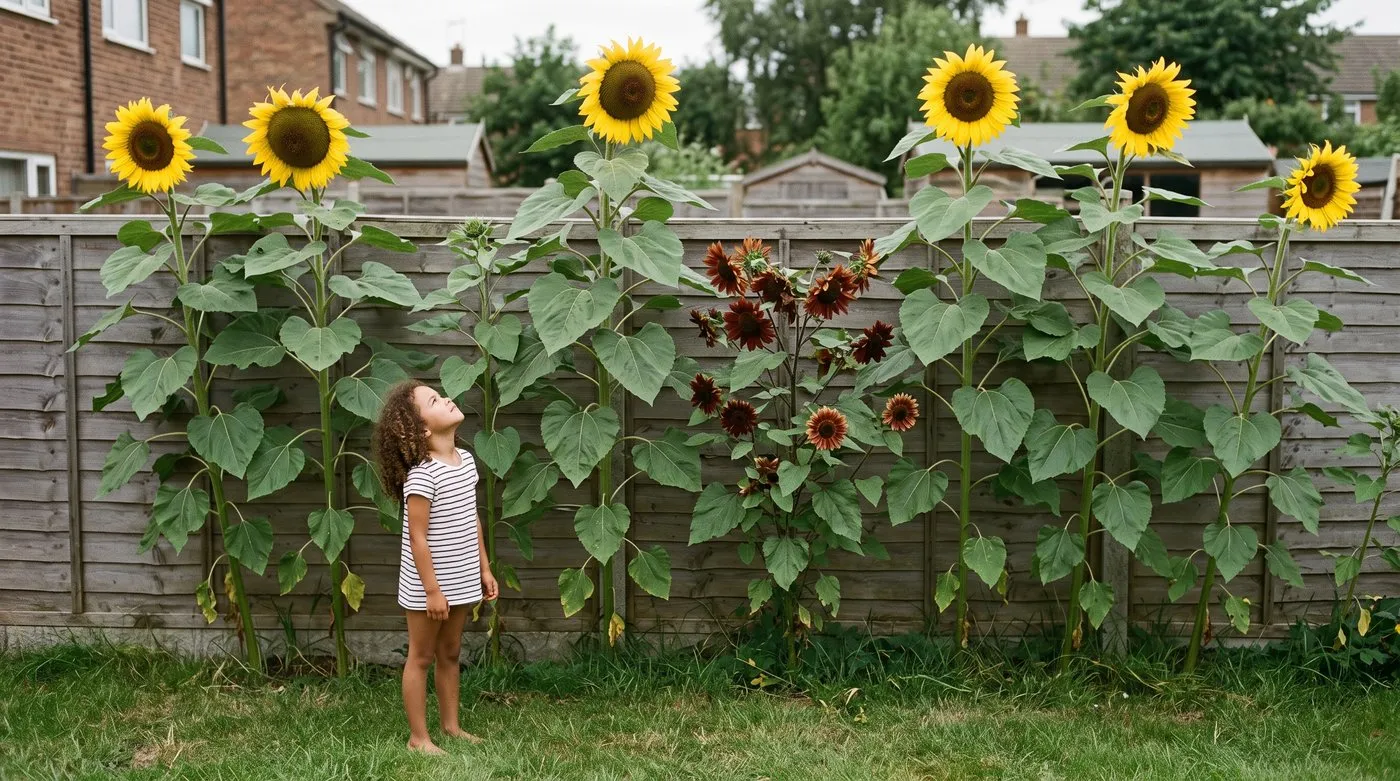
Sunflowers sown straight outside in spring can tower over children by late July. Branching types give lots of smaller heads for weeks.
Zinnias
Zinnias are underused in the UK but do well in warm, sheltered spots. Give them your sunniest place. Sow indoors in April somewhere warm, then plant out after the last frost, 25cm apart. They last well in a vase. ‘Benary’s Giant’ (75cm) has the biggest blooms for cutting.
 Pots of dahlias, pelargoniums and trailing lobelia bring summer colour to a patio, balcony or doorstep.
Best summer flowers for containers
No deep borders? No problem. Pots bring summer colour to patios, balconies, doorsteps and drives. The secret is daily watering, weekly feeding and plants that keep flowering.
Top container choices
Pelargoniums (often called geraniums) are the most reliable pot plant for summer. They flower from May to October, cope with dry spells better than most bedding and need little deadheading. ‘Calliope Dark Red’ and trailing ivy-leaf types are ideal for window boxes.
Petunias give masses of trumpet flowers from June to September. Trailing ‘Surfinia’ types tumble over the edge of hanging baskets. Feed weekly with tomato feed to keep them flowering.
Dahlias grow well in pots 30cm across or bigger. Patio varieties like ‘Gallery Art Deco’ and ‘Happy Single Date’ are bred for pots. Use multipurpose compost with some added perlite for drainage.
Trailing lobelia fills gaps between bigger plants. Sow indoors in February. It flowers from June to September in blue, white and purple. If it gets leggy in August, cut it back hard and it’ll soon flower again.
Container care calendar
| Month | What to do |
|---|---|
| April | Fill pots with fresh compost and perlite. Plant pelargoniums and dahlias. |
| May | Plant out petunias, lobelia and other tender plants after the last frost. |
| June | Start weekly liquid feeding. Water daily in dry weather. |
| July | Deadhead twice a week. Water more in heatwaves. |
| August | Cut leggy lobelia and petunias back by half. Keep feeding. |
| September | Feed every other week. Bring tender plants in before the first cold night. |
| October | Empty summer pots. Store dahlia tubers. Compost spent annuals. |
Summer flowers compared
| Flower | Type | Height | Flowers | How easy | Best for |
|---|---|---|---|---|---|
| Dahlia | Perennial (tuber) | 30-150cm | Jul-Oct | Medium | Borders, pots |
| Geranium ‘Rozanne’ | Perennial | 50cm | Jun-Nov | Easy | Ground cover, clay soil |
| Delphinium | Perennial | 150-200cm | Jun-Jul | Medium | Back of border |
| Rose (English shrub) | Shrub | 100-150cm | Jun-Oct | Medium | Scent, borders |
| Echinacea | Perennial | 60-90cm | Jul-Sep | Easy | Bees, dry soil |
| Cosmos | Annual | 90-120cm | Jul-Oct | Easy | Cutting, filling gaps |
| Sweet pea | Annual climber | 200cm | Jun-Sep | Easy | Cutting, scent |
| Sunflower | Annual | 150-300cm | Jul-Sep | Easy | Children, wildlife |
| Zinnia | Annual | 60-75cm | Jul-Sep | Medium | Cutting, hot spots |
| Pelargonium | Tender perennial | 30-45cm | May-Oct | Easy | Pots, window boxes |
| Petunia | Annual | 25-40cm | Jun-Sep | Easy | Hanging baskets |
Planning a summer border for months of colour
The secret to a border that never looks empty is succession planting. Choose plants that flower at different times, so one takes over as another fades. Plan it well and you’ll have colour from early June to late October.
Plant in three layers
Back (100cm and up): Delphiniums (June-July), dahlias (July-October) and hollyhocks (July-August) give height.
Middle (50-100cm): Roses (June-October), phlox (July-September) and echinacea (July-September) carry the midsummer show.
Front (under 50cm): Hardy geraniums (June-November), Alchemilla mollis (June-July) and cosmos (July-October) knit it all together and hide bare stems.
On heavy ground, choose from our best perennial plants for UK gardens and mulch with compost or manure.
Best summer flowers for cutting
 Sweet peas on wigwams, cosmos, dahlias and zinnias, the four easiest flowers for a cutting patch.
A cutting garden is a patch where you grow flowers just for the vase. Even a 2m by 2m plot gives you a weekly bunch from July to October.
The big four for the vase
- Sweet peas: Weeks of scented stems. Pick every few days.
- Dahlias: Bold flowers from July to October. Cut when they’re three-quarters open.
- Cosmos: Airy, plentiful stems. Cut when the petals have just opened.
- Zinnias: Last well in a vase. They need a warm, sheltered spot.
Cutting tips
Cut in the early morning when stems are full of water. Use sharp secateurs and cut at an angle. Strip off any leaves that would sit under the water. Change the vase water every couple of days. For when to sow and plant these, see our flower planting calendar.
Drought-tolerant summer flowers
British summers are getting hotter and drier, and hosepipe bans are more common. Flowers that cope with dry spells save you watering and money.
Echinacea, Verbena bonariensis (1.5m, purple, seeds itself about), sedum (45cm, pink, flowers August to October) and eryngium (sea holly, 60cm, metallic blue) are all hardy perennials. They thrive in well-drained soil with little watering once settled. Among annuals, cosmos and zinnias cope with dry spells better than most bedding.
Warning: Drought-tolerant only applies once a plant has settled in. Water all new plants regularly in their first summer, with a good weekly soak from May to September.
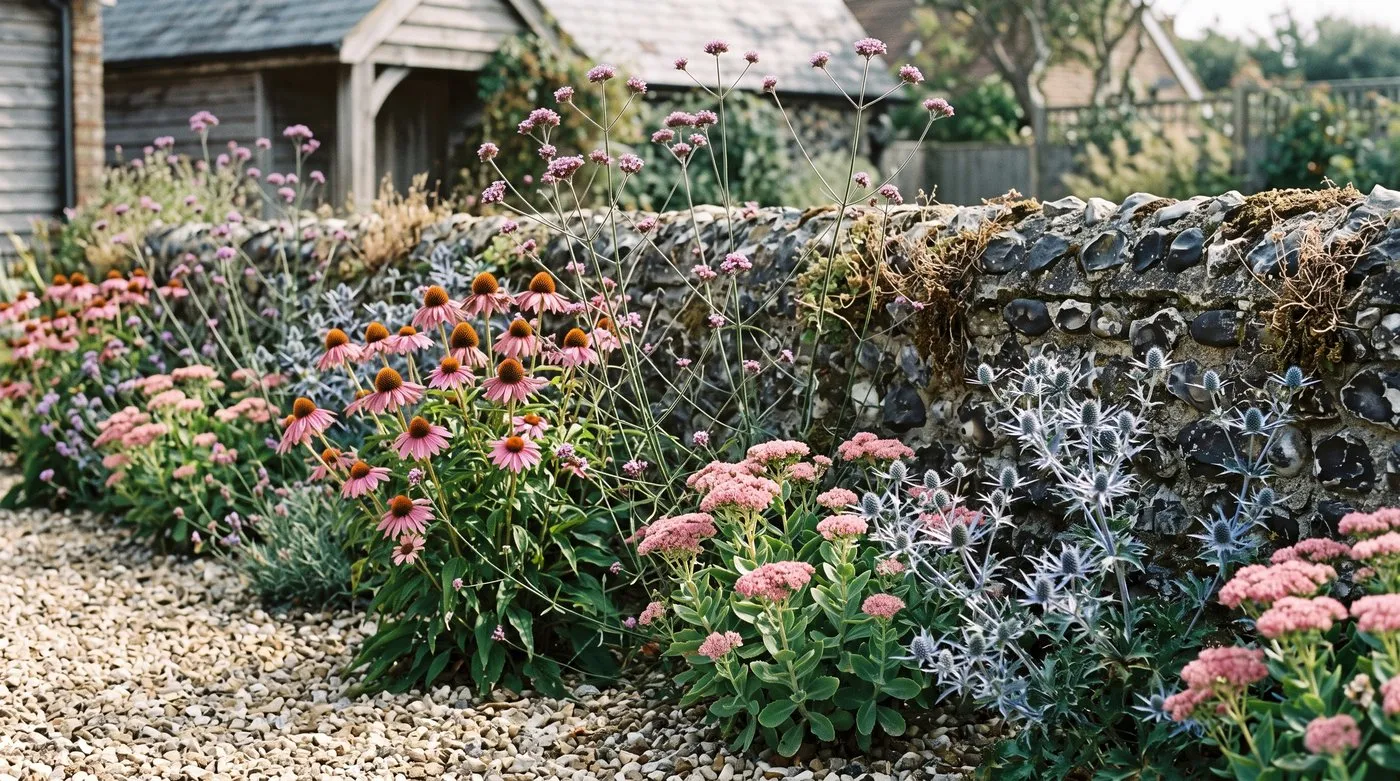
Echinacea, verbena, sedum and sea holly shrug off dry spells once settled. Give them a weekly soak in their first summer.
Common mistakes with summer flowers
Most disappointing borders come down to a few easy-to-fix mistakes.
Planting too late
Petunias and pelargoniums need planting by late May to flower from June. Dahlias planted late lose weeks of flowers. Start tubers off indoors in March for the longest show.
Not deadheading
One seed pod on a sweet pea can tell the whole plant to stop. Cosmos, dahlias and pelargoniums all slow down if you leave old flowers on. Deadhead at least twice a week in high summer.
Skipping soil preparation
Perennials settle faster and flower more in good soil. Dig in a 5cm layer of garden compost before planting a new border. On heavy clay, add plenty of horticultural grit to help drainage. A little effort now saves months of sulking plants.
Overcrowding pots
Too many plants in a pot fight for water and food. Stick to three plants in a 30cm pot: one tall centrepiece, one bushy filler and one trailer. Packed pots can dry out within hours on a hot day. For sunny yellow and gold ideas, see our guide to the best yellow flowers for UK gardens.
Choosing the wrong spot
Most summer flowers need at least six hours of direct sun a day. Dahlias, cosmos and zinnias flower much less in shade. If your garden faces north or is very shady, try foxgloves, astilbe and Japanese anemones instead. For pale, elegant schemes in shady spots, see the best white flowers for UK gardens.
Month-by-month summer flowers calendar
| Month | What to do |
|---|---|
| January | Order dahlia tubers and sweet pea seeds. |
| February | Sow sweet peas in root trainers. Sow lobelia and petunias indoors somewhere warm. |
| March | Start dahlia tubers in pots on a warm windowsill. Divide established perennials. |
| April | Plant out sweet peas. Sow sunflowers outside and cosmos indoors. Get pots ready. |
| May | Plant out tender plants and dahlias once frosts are over. Sow cosmos outside. |
| June | Deadhead roses after the first flush. Start feeding pots weekly. Stake tall dahlias and delphiniums. |
| July | Peak flowering. Pick sweet peas every few days. Deadhead dahlias. Harvest lavender for drying. |
| August | Cut back delphiniums for a second flush. Sow foxgloves and wallflowers for next year. |
| September | Collect seed from cosmos and sunflowers. Take pelargonium cuttings. Feed pots less often. |
| October | Lift dahlia tubers after the first frost. Clear spent annuals. Plant spring bulbs among perennials. |
Now you know what to plant and when, read our guide on the types of flowers to grow in the UK for colour beyond summer.
For a fiery late-summer scheme, see our guide to the best orange flowers for UK gardens.
Frequently asked questions
What are the best low maintenance summer flowers for UK gardens?
Hardy geraniums, echinacea and Alchemilla mollis need the least care. Geranium ‘Rozanne’ flowers from June to November with no deadheading or staking. Echinacea ‘Magnus’ is fully hardy, copes with dry spells once settled, and flowers from July. Alchemilla mollis seeds itself about and grows in any soil, even heavy clay.
When should I plant summer flowers in the UK?
Plant perennials from March to May or in September and October. Sweet peas go out in April. Tender plants like cosmos, petunias and pelargoniums must wait until frosts are over. That’s usually mid-May in southern England and late May further north. Plant dahlia tubers from late April.
Which summer flowers grow best in shade?
Astilbe, foxgloves and Japanese anemones are happy in part shade. Astilbe has feathery pink, red or white plumes from June to August in moist shade. Foxgloves are native wildflowers that love dappled woodland shade. Geranium ‘Rozanne’ also copes with part shade and still flowers for months.
What summer flowers last the longest in UK borders?
Dahlias flower the longest, from July until the first frost. Geranium ‘Rozanne’ is close behind, from June to November. Echinacea flowers from mid-July into September. Among annuals, cosmos keeps going for months if you deadhead it. Together these four give colour from June to October.
Can I grow summer flowers in pots and containers?
Yes, lots of summer flowers love pots. Dahlias, pelargoniums, petunias and trailing lobelia are all great choices. Use pots at least 30cm across with drainage holes. Fill with multipurpose compost mixed with some perlite. Water daily in hot weather and feed weekly with a high-potash feed from June to September.
Our team produces practical UK gardening guidance from source research, contributor records and established horticultural practice. Editorial standards are overseen by Matt W.


