
Key takeaways
- Astilbe needs soil that stays moist, so it's ideal by ponds, in bog gardens and on damp clay
- Partial shade suits it best. Full sun scorches the leaves unless the soil stays wet
- Pick by height, from short edging types to tall ones for the back of a shady bed
- Divide clumps every three or four years in spring or autumn to keep them flowering
- Leave the dried seedheads over winter and cut them down in late February
Astilbe is a star for shady, damp borders in UK gardens. It’s fully hardy and sends up feathery plumes from June to September, in shades from pure white through soft pink to deep red. It thrives in exactly the damp, shady spots where lots of other flowers sulk.
Most astilbes sold today are hybrids bred in Germany in the early 1900s, known as Astilbe x arendsii. The RHS plant finder lists plenty of varieties if you’d like to browse.
A happy clump by a pond or on a damp clay border, full of plumes in July, is a real show-stopper. Here’s how to grow it well.

A mix of astilbes showing off the colour range, from deep crimson through salmon to white.
Which astilbe varieties are best for UK gardens?
There are three main groups. Pick the group that suits your garden first, then choose a colour you love.
Astilbe x arendsii hybrids are the most common. They grow 60-120cm tall and flower from late June to August, as long as the soil stays moist. Good ones include ‘Fanal’ (deep red, 60cm), ‘Bridal Veil’ (white, 80cm), ‘Amethyst’ (lilac, 90cm) and ‘Cattleya’ (rose-pink, 100cm). For a perennial border with summer colour, start here.
Astilbe chinensis varieties cope with drier soil better than the others, so they’re the most forgiving. ‘Pumila’ is a low ground-cover type (25cm) with mauve-pink spikes in late summer. ‘Visions’ (45cm, raspberry-pink) and ‘Visions in Red’ (45cm, dark red) are compact. ‘Purpurlanze’ is tall, about 120cm, with purple-pink plumes in August and September.
Astilbe japonica varieties are mid-height, around 40-60cm, with dense upright plumes. ‘Deutschland’ (white, 50cm) and ‘Rheinland’ (pink, 60cm) are reliable. They flower a little earlier than the arendsii types, from mid-June.
What soil and light conditions does astilbe need?
Moist soil is the one thing astilbe can’t do without. Get that right and it’s easy-going about the rest.
Soil moisture: Astilbe wants soil that stays damp all through the growing season. In the wild it grows on stream banks and in damp woods. In a garden, the best spots are clay borders that hold water, the edges of garden ponds, bog gardens, and the foot of north-facing walls. Sandy or chalky soils dry out too fast unless you add lots of organic matter and water often.
Light: Partial shade gives the best leaves and flowers. Dappled light under tall trees is perfect, and morning sun with afternoon shade works well too. Full sun is only OK where the soil stays wet, such as by a stream. In deep shade it flowers poorly. For more plants that like these conditions, see our guide to the best plants for shade in UK gardens.
Soil type: Heavy clay is actually a plus, as long as it doesn’t flood in winter. Astilbe roots spread out near the surface, and clay keeps them moist. Our guide to improving clay soil shows how to open it up without losing that moisture.
Acid or alkaline: Astilbe prefers neutral to slightly acid soil, but copes with mildly alkaline ground, especially if you add plenty of compost.
Drainage: Here’s the funny bit. Astilbe loves moist soil but hates sitting in water in winter, which rots the crown. On badly drained ground, plant on a slight mound so winter rain runs away from the crown.
When and how to plant astilbe
Plant in spring (March to April) or autumn (September to October). Spring planting lets the roots settle in before the summer heat. Autumn planting works well in milder areas.
Garden centres usually sell astilbe in 2-litre pots. Specialist nurseries offer more named varieties, often in bigger pots.
Step-by-step planting:
- Soak the rootball in a bucket of water for half an hour.
- Dig a hole twice as wide as the rootball and a little deeper.
- Mix plenty of garden compost, well-rotted manure or leaf mould into the soil you dug out.
- Set the plant so the crown sits level with, or just below, the soil surface. Astilbe crowns creep upwards over the years.
- Backfill, firm gently and water well.
- Mulch 7-10cm deep with bark, leaf mould or homemade compost, keeping it off the crown.
Spacing: Leave 30-45cm between short varieties, 45-60cm between medium ones and 60-75cm between tall ones. Happy plants fill the gaps in a couple of years.

Astilbe looks right at home with hostas and ferns in a shady border.
How to care for astilbe through the year
March to April: spring tidy-up
Cut last year’s dried seedheads down to the ground. Sprinkle a general feed such as blood, fish and bone around each clump and work it in lightly. Top up the mulch. This is a good time to divide crowded clumps.
On older plants, check whether the crown has crept above the soil. If it has, spread some compost around it to cover the exposed roots, which otherwise dry out.
May to June: growing and early flowers
Water regularly as the plants grow fast. Japonica types start flowering from mid-June. A liquid seaweed feed every few weeks from May until flowering is a nice boost. Keep the mulch topped up, as this is when moisture matters most.
July to August: peak flowering
The arendsii hybrids are at their best now. No need to deadhead, as the fading plumes look good as they dry, and cutting them off won’t bring more. Keep watering in dry weather. Brown, crispy leaf edges are the first sign of thirst, and the leaves won’t recover that year.
September to October: autumn division
Divide clumps that flowered poorly or have been in the same spot for three or four years. Lift, split through the woody crown, throw away the dead middle, and replant the outer pieces in soil refreshed with compost. Water well and mulch. You can also plant new astilbes now.
November to February: winter rest
Leave the dried seedheads standing. They look lovely in frost or a dusting of snow, and the old stems help protect the crown.

Dried astilbe seedheads keep their shape all winter and look striking with frost on them.
Best companion plants for astilbe
Astilbe looks best with other plants that like damp soil and dappled light.
Hostas are the classic partner. Their broad leaves set off the feathery plumes beautifully. Put big hostas like ‘Sum and Substance’ or ‘Empress Wu’ behind shorter astilbes. Our guide to growing hostas in the UK covers varieties and slugs.
Ferns, such as Dryopteris and Athyrium, give a woodland feel between astilbe clumps and like the same conditions.
Candelabra primulas love the same boggy ground and flower in May and June, just before astilbe gets going. Together they give colour from spring to late summer.
Ligularia and rodgersia also like deep, moist soil and part shade. Their big bold leaves make a dramatic backdrop.
Iris sibirica copes with the same damp soil, and its upright, sword-like leaves contrast nicely with astilbe’s ferny foliage.
Persicaria picks up where astilbe leaves off, with bottlebrush spikes from July into October in the same moist ground.
For more ideas, see our companion planting guide.
| Companion | Why it works | Spacing from astilbe |
|---|---|---|
| Hosta | Broad leaves next to feathery plumes | 40-60cm |
| Ferns | Woodland feel, same shade | 30-40cm |
| Candelabra primula | Flowers earlier, same damp soil | 25-30cm |
| Ligularia | Bold leaves as a backdrop | 50-60cm |
| Iris sibirica | Upright leaves for contrast | 35-45cm |
| Brunnera | Early spring flowers, ground cover | 30-40cm |
What problems affect astilbe?
Astilbe is pleasingly trouble-free. Most problems come down to one thing: dry soil.
Leaf scorch and browning
Crispy brown leaf edges in summer mean the plant is too dry. The leaves won’t recover that year. Mulch thickly, water before the soil dries out, and avoid hot sunny spots unless the soil stays wet. On very free-draining soil, you may be happier with a different plant.
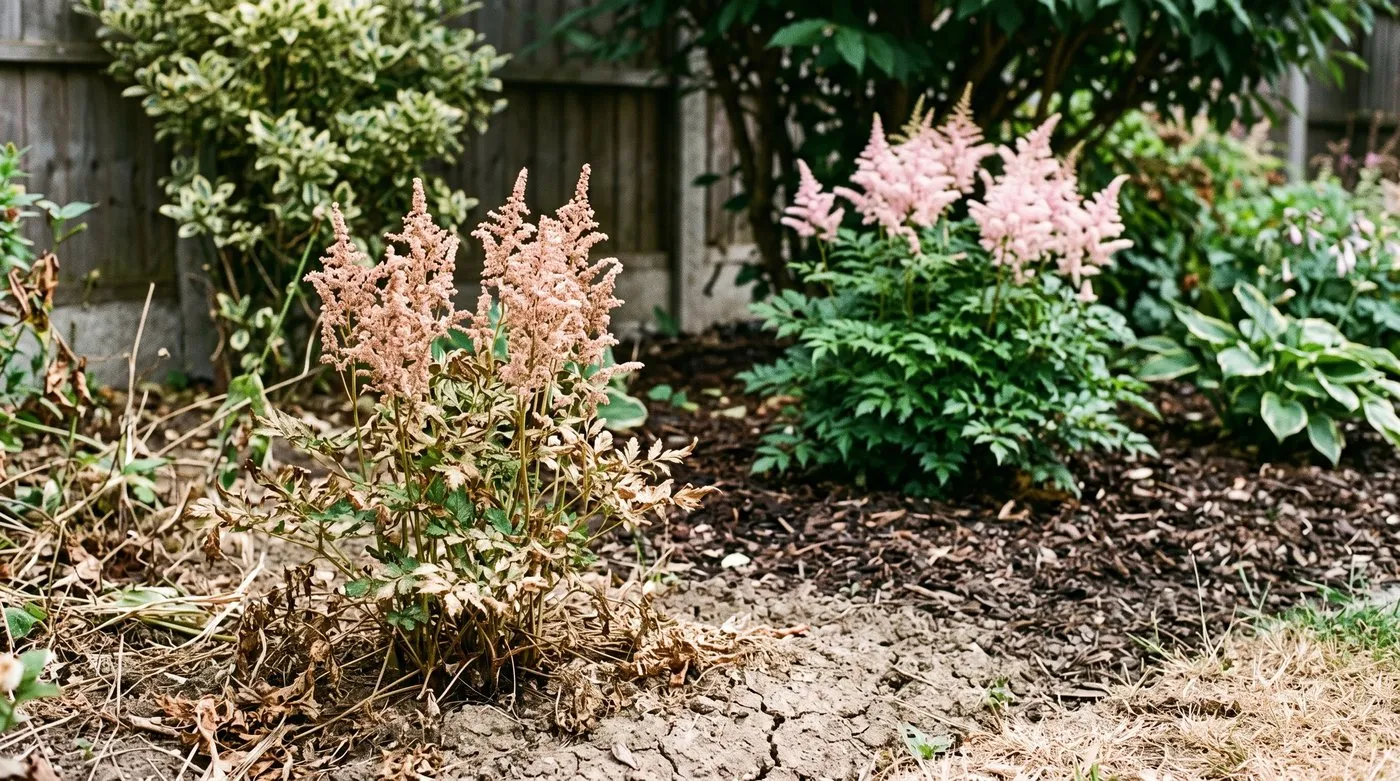
Crispy brown edges are astilbe telling you it’s too dry. A thick mulch and watering before the soil dries out stop it happening again.
Powdery mildew
A white powdery coating on the leaves in late summer. It rarely does real harm to established plants. Thin out crowded plantings, water at the base rather than over the leaves, and pick off the worst leaves.
Vine weevil
Astilbe in pots can be hit by vine weevil grubs, which eat the roots. Notches in the leaf edges from the adult beetles are a warning sign. Check the compost for white, C-shaped grubs. Biological control with nematodes in late summer, when the compost is warm enough, deals with them.
Crown rot
Soil that stays waterlogged in winter rots the crown. Don’t plant in dips where water collects. On clay that floods, add grit or plant on a slight mound.
Slugs
Slugs may nibble the new spring shoots. A ring of grit around emerging shoots helps, and established clumps soon outgrow the damage. Our guide on how to get rid of slugs naturally has more ideas.
Can astilbe grow beside a pond?
Yes, astilbe is one of the best plants for a pond edge. The damp soil and dappled shade there suit it perfectly.
Plant it 30-60cm back from the water, where the soil is moist but not under water. Its roots don’t like being waterlogged, so the shelves inside the pond are too wet.
For a lovely pond-edge scheme, mix astilbe with Iris ensata, ligularia, filipendula and moisture-loving grasses like Molinia. Astilbe plumes reflected in still water on a July evening are a real treat.
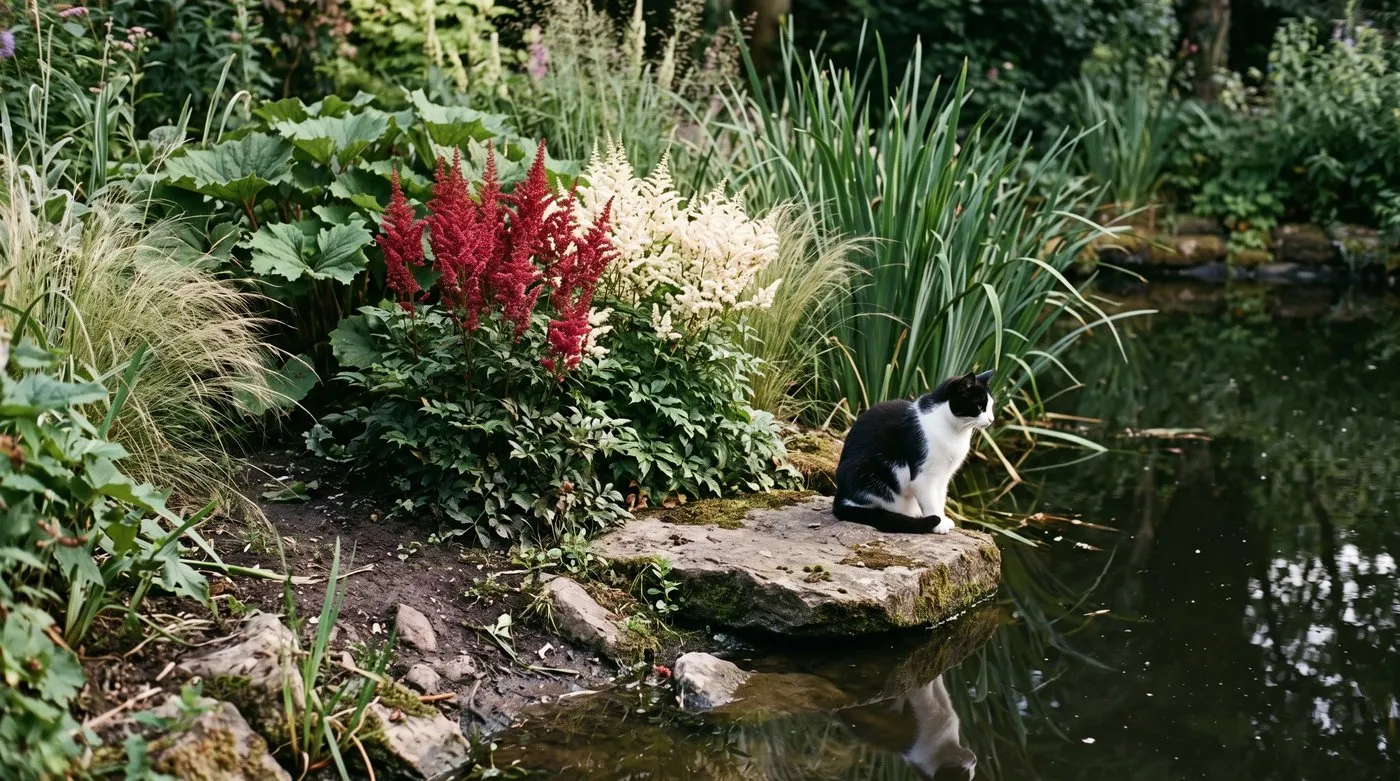
Plant astilbe 30 to 60cm back from the water, where the soil is moist but not sodden. The plumes look lovely reflected on a still evening.
How to propagate astilbe
Division is the easiest way to get more plants, and the only way to keep named varieties true.
Division: Lift clumps in early spring or early autumn. Cut through the woody rootstock with a sharp spade or an old bread knife. Keep pieces with a few healthy buds and a good bit of root. Throw away the woody middle. Replant straight away in soil enriched with compost, water well and mulch. Big spring divisions often flower the same summer.
Seed: You can grow astilbe from seed, but named varieties won’t come true. Sow fresh seed on the surface of moist seed compost in autumn and leave the tray outdoors over winter, as the seed needs the cold to sprout. Seedlings appear in spring, often patchily, and take two or three years to flower.
For more flowers to pair with astilbe, see our guide to the best summer flowers for UK gardens.
Frequently asked questions
Does astilbe grow well in full shade?
It copes with light shade but not deep, all-day shade. In heavy shade you get leaves but very few plumes. Dappled shade under tall trees, or a spot with morning sun and afternoon shade, gives the best flowers.
How often should I water astilbe?
Water whenever the top few centimetres of soil feel dry. In a dry summer that might mean every two or three days. Plants on clay or near water need less. A thick mulch in spring cuts down how often you need to water.
When is the best time to divide astilbe?
Divide in early spring or early autumn. March to April, as new growth appears, or September to October both work. Lift the clump, cut through the woody crown with a sharp spade, keep pieces with a few healthy buds, and replant straight away. Water well for the first month.
Why has my astilbe stopped flowering?
Usually the clump has become old and crowded. After three or four years the crown gets woody and flowers drop off. Lift and divide it, throw away the woody middle, and replant the outer pieces with plenty of compost. Too much shade or dry soil can also be the cause.
Can I grow astilbe in a container?
Yes, as long as you keep it well watered. Use a pot at least 40cm across, filled with loam-based compost and a little perlite. Stand it in a saucer of water in summer so the roots stay moist. Feed every fortnight from May to August, and divide every couple of years.
Is astilbe poisonous to pets?
Astilbe isn’t known to be toxic to cats or dogs. That makes it a handy shade plant for pet owners. It’s still best to stop pets chewing any garden plant, and to check with your vet if one seems unwell.
Do I cut astilbe back in winter?
No, leave the dried seedheads standing through winter. They look lovely with frost on them and help protect the crown. Cut the old stems down to the ground in late February or early March, just before new growth starts, and pop them on the compost heap.
More guides for shady, damp gardens
Our team produces practical UK gardening guidance from source research, contributor records and established horticultural practice. Editorial standards are overseen by Matt W.


