
Key takeaways
- An outdoor kitchen can cost from about £1,000 for a basic setup to £20,000 or more
- A roof or covered pergola means you can cook whatever the weather
- Kamado grills hold their heat in wind and rain better than open barbecues
- Granite and porcelain worktops shrug off frost and rain
- Gas, water and electrics need qualified installers
- Keep charcoal and wood-fired cooking about 3m from the house
Cooking outdoors in the UK used to mean huddling over a disposable barbecue in the drizzle. Not any more. A well-planned outdoor kitchen or BBQ area works all summer and well into autumn, as long as you plan for the weather from the start.
Choosing your grill or cooking appliance
The grill is the star of the show, so choose one that suits the way you like to cook.
Gas grills
Gas barbecues light at the push of a button, and you can turn the heat up and down easily. They’re ready to cook in about 10-15 minutes. A three-burner grill suits most families. Go for four or more if you entertain a lot.
Good points: quick, easy heat control, clean, no ash. Downsides: less smoky flavour than charcoal, and you’ll need to keep buying gas bottles.
Charcoal grills
Charcoal barbecues give that classic smoky flavour and get very hot for searing.
Good points: great flavour, high heat, cheaper to buy. Downsides: slower to heat up, harder to control, ash to clear, and more affected by wind.
Kamado grills
Kamado grills are thick-walled ceramic cookers that love British weather. They hold a steady heat, whether you’re slow-smoking at a low temperature or blasting a pizza. Wind and rain barely bother them, because the sealed lid keeps the heat in.
Good points: cooks in all weathers, great for smoking, uses little fuel, very versatile. Downsides: heavy, pricey and slower to get going for a quick midweek cook.
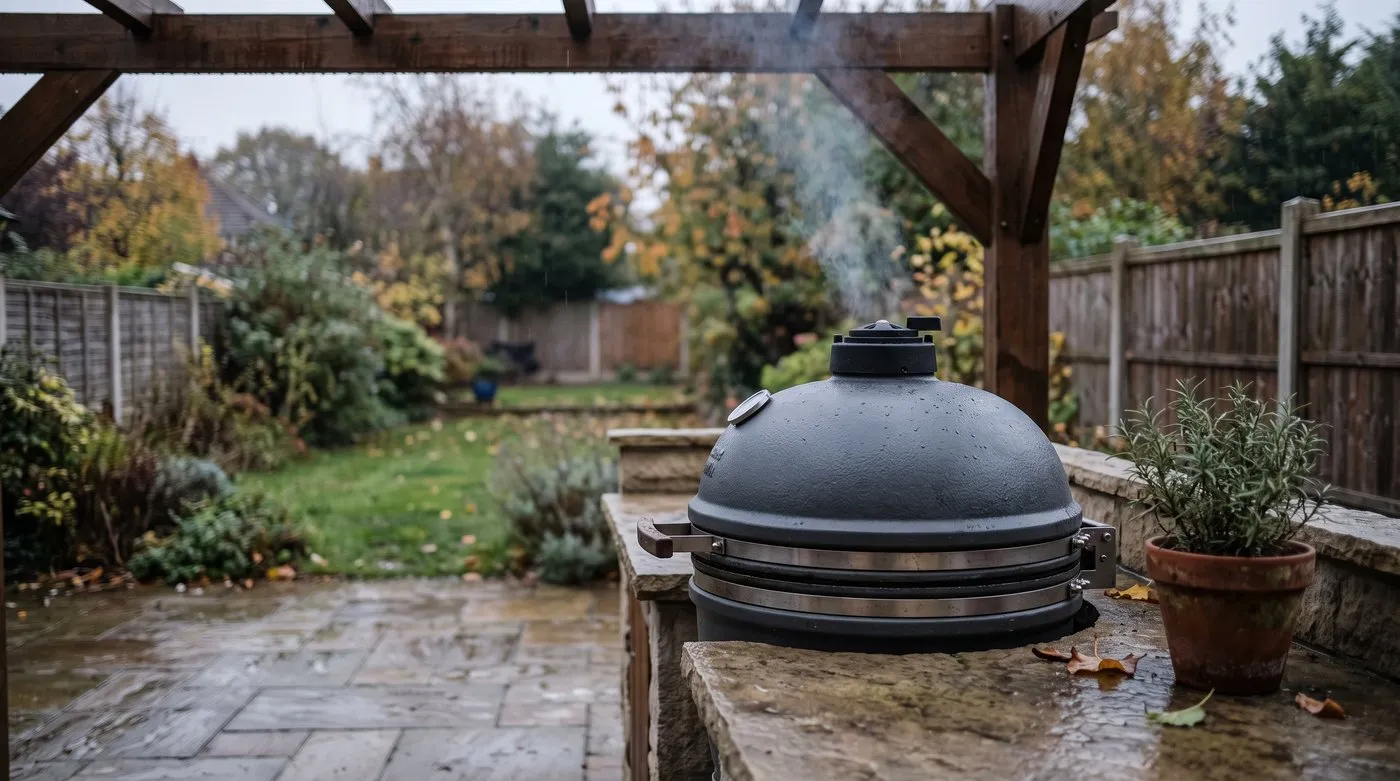
A kamado’s thick walls hold their heat when the weather turns, so a bit of drizzle needn’t call off the cook.
Pizza ovens
Wood-fired pizza ovens get extremely hot and cook a pizza in a minute or two. Small table-top models are very affordable, while built-in brick ovens cost more. A pizza oven is great for bread and roasting too.
| Appliance | Heat-up | Best for |
|---|---|---|
| Gas grill | Quick | Midweek grilling, families |
| Charcoal grill | Slower | Weekend cookouts, smoky flavour |
| Kamado | Medium | All weathers, slow cooking, everything |
| Wood-fired pizza oven | Slower | Pizza, bread, roasting |
| Gas pizza oven | Quick | Quick pizzas, less smoke |
Countertop materials for UK outdoor kitchens
Outdoor worktops have to cope with frost, rain, sun, grease and hot pans. Not every material is up to it.
Granite
Granite is the classic choice. It copes with heat and cold, shrugs off sun, and resists stains when sealed. Dark colours hide marks better than pale ones. Reseal it once a year.
Porcelain
Porcelain slab worktops are made to resist frost, sun, heat and scratches. They come in big pieces, so you get fewer joins. You can choose stone, concrete or wood-effect finishes, and they need no sealing.
Concrete
Concrete worktops suit a modern, industrial look and can be cast in any shape. Concrete soaks up water, though, so seal it regularly. Unsealed concrete can crack in a hard winter.
Stainless steel
Stainless steel is hygienic, heat-proof and weatherproof. It gives a professional-kitchen look. Grade 316 copes with outdoor life better than 304. It scratches and shows fingerprints, but softens into a worn look over time.
| Material | Frost-proof | Needs sealing | Cost |
|---|---|---|---|
| Granite | Yes | Once a year | Medium to high |
| Porcelain | Yes | No | Medium to high |
| Concrete | Only when sealed | Regularly | Lower |
| Stainless steel 316 | Yes | No | Higher |
Shelter and cover for UK weather
Without a roof, an outdoor kitchen is a fair-weather friend, and in the UK that means it sits idle for half the year.
Pergola with a solid or louvred roof: the most popular choice. A timber or aluminium pergola keeps rain off you and the worktop. Louvred roofs open for sun and close for rain.
Lean-to canopy: fixes to the house wall and stretches over the cooking area. It’s cheaper than a freestanding pergola and works best if the kitchen sits against the back of the house.
Retractable awning: a fabric awning that pulls out from the house wall. Fine for the odd shower, but cooking grease and smoke wear the fabric out, so it’s not ideal as permanent cover.
Open-sided garden building: gives the most protection, and it’s almost a garden room. It’s also the priciest option.
Safety first: Never use a gas or charcoal grill in an enclosed space. Carbon monoxide can build up and is a real danger. Keep at least two sides of any covered cooking area open, and follow the grill maker’s guidance on distance from anything that could catch fire.
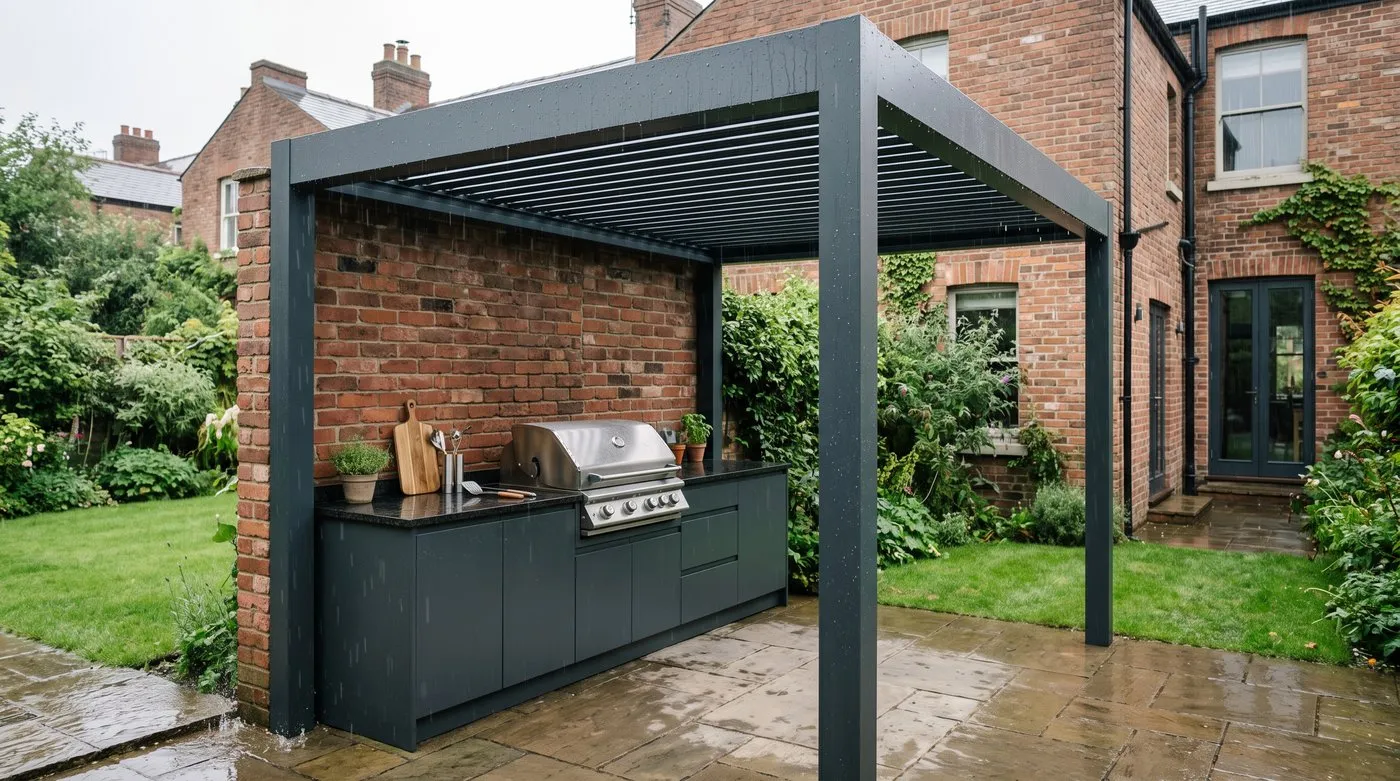
A roof is what turns a summer-only barbecue into a kitchen you’ll use from April to October. Keep at least two sides open so smoke can escape.
Layout and positioning
Where you put your kitchen makes a big difference to how much you’ll use it.
The work triangle
Kitchen designers talk about the work triangle: grill, prep area and sink or fridge, each a short step apart. It saves you walking back and forth, and it works just as well outdoors.
Key positioning rules
- About 3m from the house for charcoal and wood-fired cooking, to keep smoke and sparks away
- Close to the back door so carrying food and plates is easy
- Think about the wind. Place the grill so smoke drifts away from the seating and the neighbours. In most UK gardens, the wind usually comes from the south-west
- Level ground is a must. Build on a solid patio or a new concrete base
- Away from overhanging trees and wooden fences, as sparks and heat can start a fire
Zones
A good outdoor kitchen has three zones:
- Cooking zone: the grill, oven or burner, in the middle of the action.
- Prep zone: worktop, sink and chopping boards, right next to the cooking. A deep worktop gives you room to work.
- Dining zone: table, seats and drinks, a little way from the grill so diners aren’t in the smoke.
For smaller gardens, a straight run along one wall saves space. An L-shape suits a corner, and a U-shape suits bigger gardens.
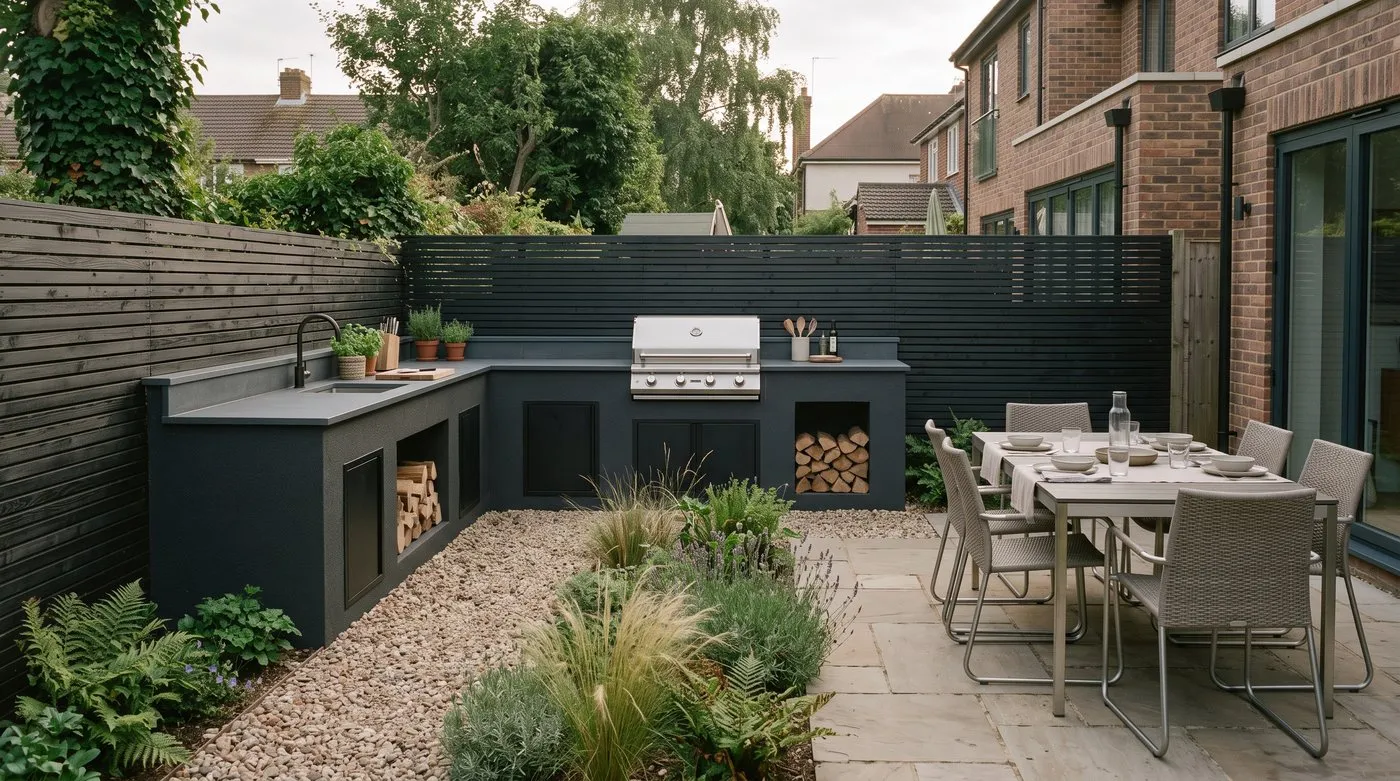
Keep prep right beside the grill and set the table a few steps away. Diners stay out of the smoke and the cook isn’t stranded.
Utilities: gas, water, and electricity
Mains connections make a permanent kitchen easier to use, but each one has rules.
Gas
A built-in gas grill can run from bottled gas, with no installation needed, or from a mains gas supply. A mains gas line must be fitted by a Gas Safe registered engineer.
Water
An outdoor sink needs a water supply and a drain. The supply pipe must be buried deep enough to stay frost-free, and waste water should go to the house’s foul drain, not the rainwater drain. Get a qualified plumber to do it.
Electricity
Outdoor sockets, lights and fridges must be fitted by a qualified electrician, with proper safety cut-outs and weatherproof sockets. Cables go underground in protective ducting.
Tip: Lay all pipes and cables before the final patio goes down. Otherwise you’ll be lifting paving and digging up a finished garden. Plan the routes at the design stage.
Our companion guide how to design an outdoor kitchen UK goes into more detail on planning services, layouts and sign-offs.
Budget breakdown
| Budget | What you get | Typical cost |
|---|---|---|
| Starter | Freestanding gas or charcoal BBQ, prep trolley, portable table | £1,000-£2,000 |
| Mid-range | Built-in grill, granite worktop, storage cupboard | £3,000-£7,000 |
| Premium | Built-in grill, pizza oven, sink, fridge, stone worktops, covered pergola | £8,000-£15,000 |
| Bespoke | Mains gas, water and electrics, made-to-measure frame, louvred roof | £15,000-£25,000+ |
In a mid-to-premium build, the grill, the frame and the roof usually take the biggest share of the budget. Worktops, electrics and a pizza oven make up most of the rest.
Seating and dining layout
Where you eat matters as much as where you cook, as people spend more time sitting than grilling.
Table and chairs: a 1.5m round or 1.8m rectangular table seats six comfortably. Leave about 80cm behind each chair so people can get in and out.
Built-in benches: L-shaped benches with cushions take less space than chairs and can hide storage underneath.
Bar counter: a raised section of worktop with bar stools makes a sociable spot where guests can chat to the cook. It’s handy where there’s no room for a table.
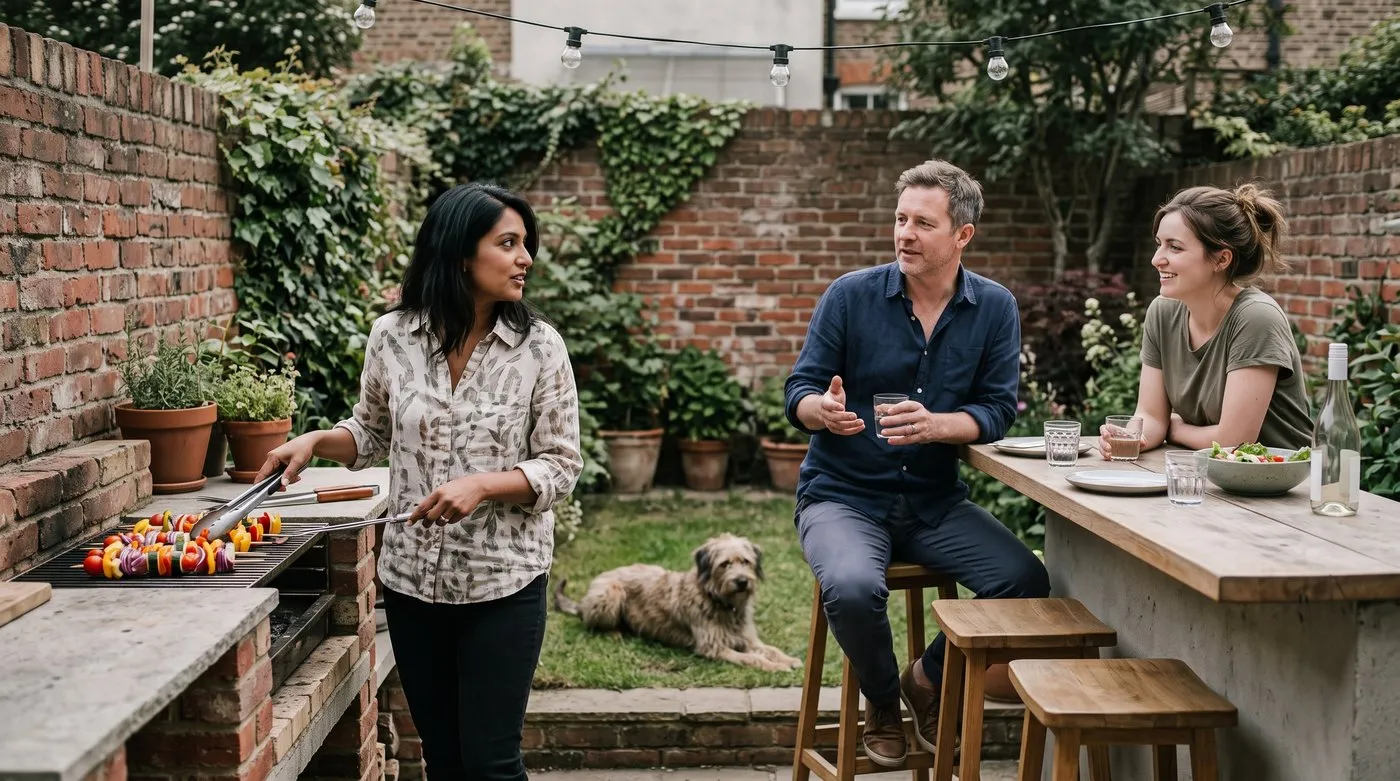
A raised bar end lets guests keep the cook company without crowding the grill. It’s a handy fix where there’s no room for a big table.
Storage and organisation
You’ll need somewhere for fuel, tools, cleaning kit and covers.
Built-in cupboards: stainless steel or powder-coated aluminium doors work well outdoors. Make sure the insides have drainage holes so rainwater can’t collect.
Drawers: stainless steel drawers under the worktop keep tools and cloths dry and to hand. Magnetic catches hold better than friction catches outdoors.
Shelves: a shelf on a pergola beam keeps oils, spices and tools within reach.
Fuel: keep gas bottles upright somewhere well ventilated, never in a sealed cupboard. Keep charcoal dry. A ventilated, lockable metal locker works for both.
Winter protection and maintenance
A bit of autumn care keeps your outdoor kitchen in good shape through the wet months.
Covers: put fitted, breathable covers on every grill, oven and worktop. Replace them when they tear or stop being waterproof.
Water pipes: drain an outdoor sink’s supply pipe before the first frost. Fit a shut-off valve indoors so you can turn the outdoor line off easily.
Worktops: reseal granite and concrete in early autumn. Clean porcelain and stainless steel with a degreaser and rinse.
Grill clean: run the grill hot for a while to burn off residue, then brush the grates. Wash the drip trays. Check gas connections for leaks by brushing on soapy water and watching for bubbles.
Timber: re-stain or treat pergola posts and wooden cladding every few years, ideally in autumn.
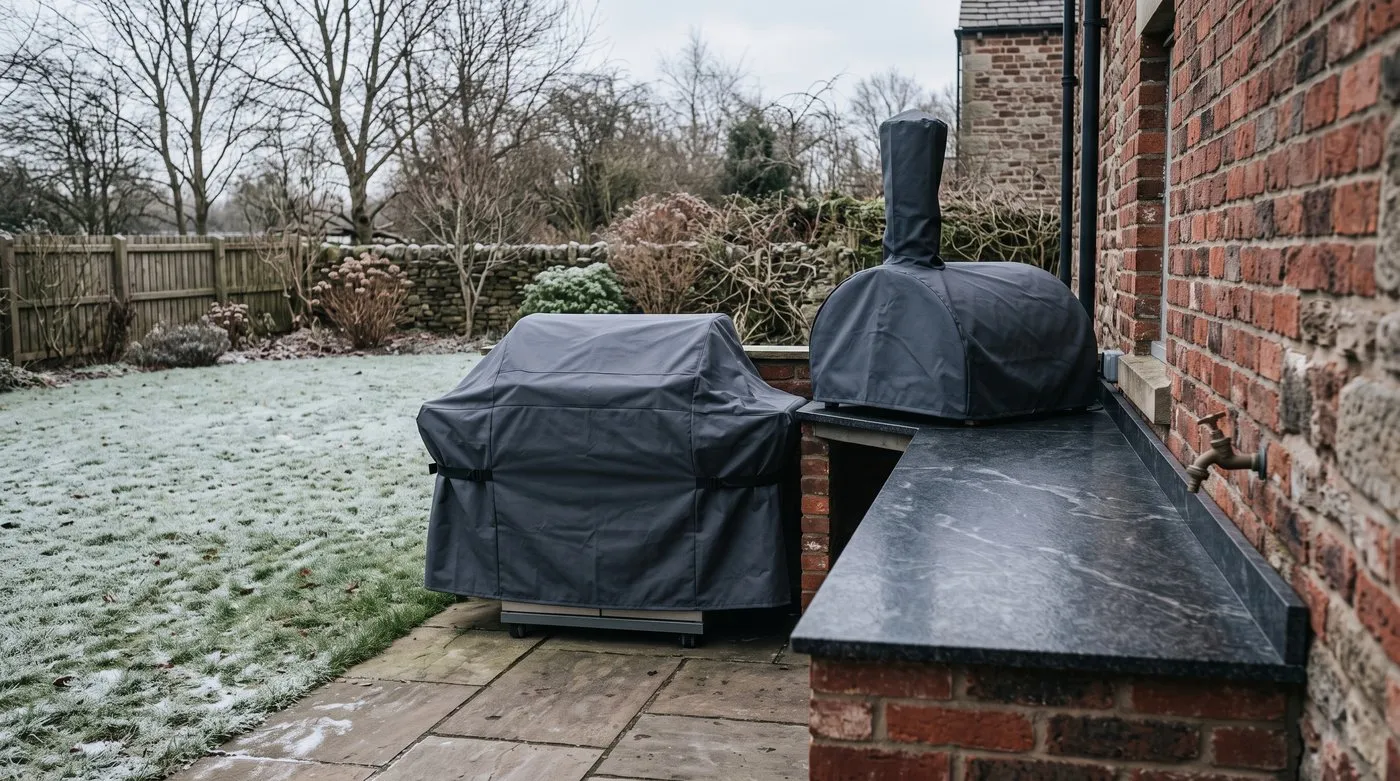
Fitted, breathable covers and a drained water pipe are most of the winter job. Do it in autumn before the first frost catches you out.
Common mistakes with outdoor kitchens
1. No shelter
Without a roof, you’ll only use it on dry days, and even a British summer has plenty of wet ones. Budget for a pergola or canopy from the start.
2. Too far from the house
A kitchen at the bottom of a long garden means a lot of trips with plates and glasses. Aim for close to the back door, but far enough away to keep smoke out of the house.
3. Forgetting about smoke
Charcoal and wood make smoke. If it drifts into a neighbour’s open window, you’ll hear about it. Watch the wind on a few different days before you decide where the grill goes.
4. Skimping on the base
A full outdoor kitchen is heavy. Slabs laid loosely on sand will sink and shift. Lay a proper concrete slab on compacted hardcore.
5. Forgetting food safety
The Food Standards Agency advice applies outdoors too. Keep raw meat away from cooked food and wash your hands after handling it. Cook burgers, sausages and chicken until they’re steaming hot all the way through with no pink left, and a meat thermometer makes this easy. Keep food cool in a cool box or outdoor fridge, not in the sun.
Keep flames away from dry plants with spark-resistant planting near a BBQ and a strip of gravel as a firebreak.
Frequently asked questions
How much does an outdoor kitchen cost UK?
A basic BBQ station costs about £1,000-£3,000. A built-in grill with a granite worktop and storage runs about £5,000-£10,000. A fully plumbed kitchen with gas, water, a pizza oven, a fridge and a covered pergola is usually £10,000-£20,000. Bespoke builds can cost more.
Do I need planning permission for an outdoor kitchen?
Usually not, as most count as permitted development. Height limits apply, and structures shouldn’t cover more than half the garden. A roofed building may need permission, especially in a conservation area. Gas and electrical work must meet Building Regulations, so check with your council if unsure.
What is the best BBQ for UK weather?
A kamado-style ceramic grill copes best with British weather. Its thick walls and sealed lid hold the heat steady in wind and rain. Gas grills work well under a covered area. Open charcoal grills struggle when it’s windy.
What countertop material is best for outdoor kitchens UK?
Granite is the toughest all-round choice. It handles frost, sun, hot pans and grease, as long as it’s sealed. Porcelain slabs are lighter, frost-proof and need no sealing. Concrete is cheaper but needs regular sealing. Avoid wooden worktops in exposed spots.
Can I have a pizza oven in my garden UK?
Yes, garden pizza ovens are perfectly legal. Wood-fired ovens make smoke, so keep them about 3m from the house and think about your neighbours. A freestanding oven on a patio doesn’t need planning permission. Gas pizza ovens make far less smoke.
How do I protect an outdoor kitchen from rain?
A pergola with a solid or louvred roof is the best long-term answer. A lean-to canopy on the house wall is cheaper and suits kitchens near the back door. Either way, cover all appliances and worktops when you’re not using them.
What base do I need for an outdoor kitchen?
A concrete slab at least 100mm thick on well-compacted hardcore is ideal. It must be flat and level and able to take the weight of a full kitchen. Existing paving is fine if the slabs are firmly bedded, level and stable.
Our team produces practical UK gardening guidance from source research, contributor records and established horticultural practice. Editorial standards are overseen by Matt W.


