Key takeaways
- Grow early, mid-season and everbearing varieties for strawberries from June into autumn
- Plant bare-root strawberries in March, with the crown level with the soil
- Feed weekly with tomato feed from the first flowers
- Tuck straw under the plants to keep fruit clean and dry
- Net the bed before the fruit turns red, or the blackbirds will beat you to it
- Replace plants every three or four years using new plants from runners
Strawberries are one of the most rewarding fruits you can grow. They crop within months of planting, grow happily in a bed or a pot, and a sun-warm berry straight off the plant tastes nothing like a supermarket punnet. Once you’re hooked, add blueberries and gooseberries for a summer full of soft fruit.
The UK suits strawberries well. Cold winters, bees and other pollinators to set the fruit, and warm summer days to ripen it. Below you’ll find which varieties to choose, how to plant, how to grow them in pots, feeding, protecting the crop, and making new plants from runners. Browse our growing guides for more fruit and veg.
Choosing strawberry varieties
Early season (June)
- Honeoye: large, glossy fruit with good flavour. A strong grower and a popular early choice.
- Christine: very early and sweet, with good disease resistance. Lovely in southern gardens.
Mid-season (late June to July)
- Elsanta: the classic supermarket strawberry. Large, firm and reliable, though not the tastiest.
- Cambridge Favourite: an old favourite that crops well in cooler northern gardens. Medium fruit, good flavour, and easy for beginners.
- Malling Centenary: big fruit with a lovely flavour. Many growers rate it the tastiest of the newer varieties.
Later season and everbearers (July to autumn)
- Florence: a late summer variety with firm fruit and good disease resistance. It carries on after the mid-season types finish.
- Flamenco (everbearer): keeps fruiting in flushes from summer into autumn. Great in pots and hanging baskets.
- Mara des Bois (everbearer): smaller berries with an amazing wild-strawberry flavour, from summer until the autumn chill.
Variety comparison
| Variety | Season | Fruit size | Flavour | Best for |
|---|---|---|---|---|
| Honeoye | Early | Large | Good | The first fruit of the year |
| Elsanta | Mid | Large | Fair | Reliable main crop |
| Cambridge Favourite | Mid | Medium | Good | Northern gardens, beginners |
| Malling Centenary | Mid | Large | Excellent | Flavour |
| Florence | Late | Large | Good | Stretching the season |
| Flamenco | Summer to autumn | Medium | Good | Pots, long season |
Gardener’s tip: Plant about five plants per person, so 20 for a family of four. Split them between early, mid and later varieties to spread the picking over the summer rather than one big glut.
 Different strawberry varieties side by side. Growing a mix spreads the harvest from June into autumn.
When and how to plant
Planting time
March is the best month for bare-root strawberries. The soil is warming up, spring rain keeps them watered, and the roots settle in before fruiting starts. See our guide to what to plant in March for everything else to sow that month.
- Bare-root plants: plant March to April. The cheapest way to buy them, and they settle in quickly.
- Pot-grown plants: plant March to September. They cost more but are handy for filling gaps.
- Runners from friends: pot them up in late summer and plant out the following spring.
Planting in open ground
Choose a sunny, sheltered spot with well-drained soil. Strawberries want at least six hours of sun. Avoid frost pockets, as late frosts damage the flowers in April and May. The RHS strawberry guide has more on choosing a spot.
- Dig in plenty of garden compost the autumn before
- Space plants 35cm apart in rows 75cm apart
- Make a hole wide enough to spread the roots out
- Set the crown (where the roots meet the leaves) level with the soil. Too deep and it rots, too high and it dries out
- Water well, and keep watering weekly for the first month if it’s dry
Planting in raised beds
Raised beds are brilliant for strawberries. Good drainage keeps the crowns from rotting, and the height makes picking, weeding and netting easier on your back.
 Planting bare-root strawberries. Spread the roots wide and set the crown level with the soil.
Growing in containers
Strawberries love pots. Any pot, grow bag, window box or hanging basket works if it drains well and holds enough compost.
Container options
- Pots: at least 25cm across per plant. Terracotta looks lovely.
- Grow bags: a standard bag takes three plants. Cut holes in the top and plant through them.
- Hanging baskets: three plants in a 35cm basket, with the fruit dangling clear of slugs. Water daily in summer.
- Strawberry towers: stacked planters fit lots of plants into a tiny space. Great for small gardens.
- Window boxes: a 60cm box holds three plants. Perfect for balconies.
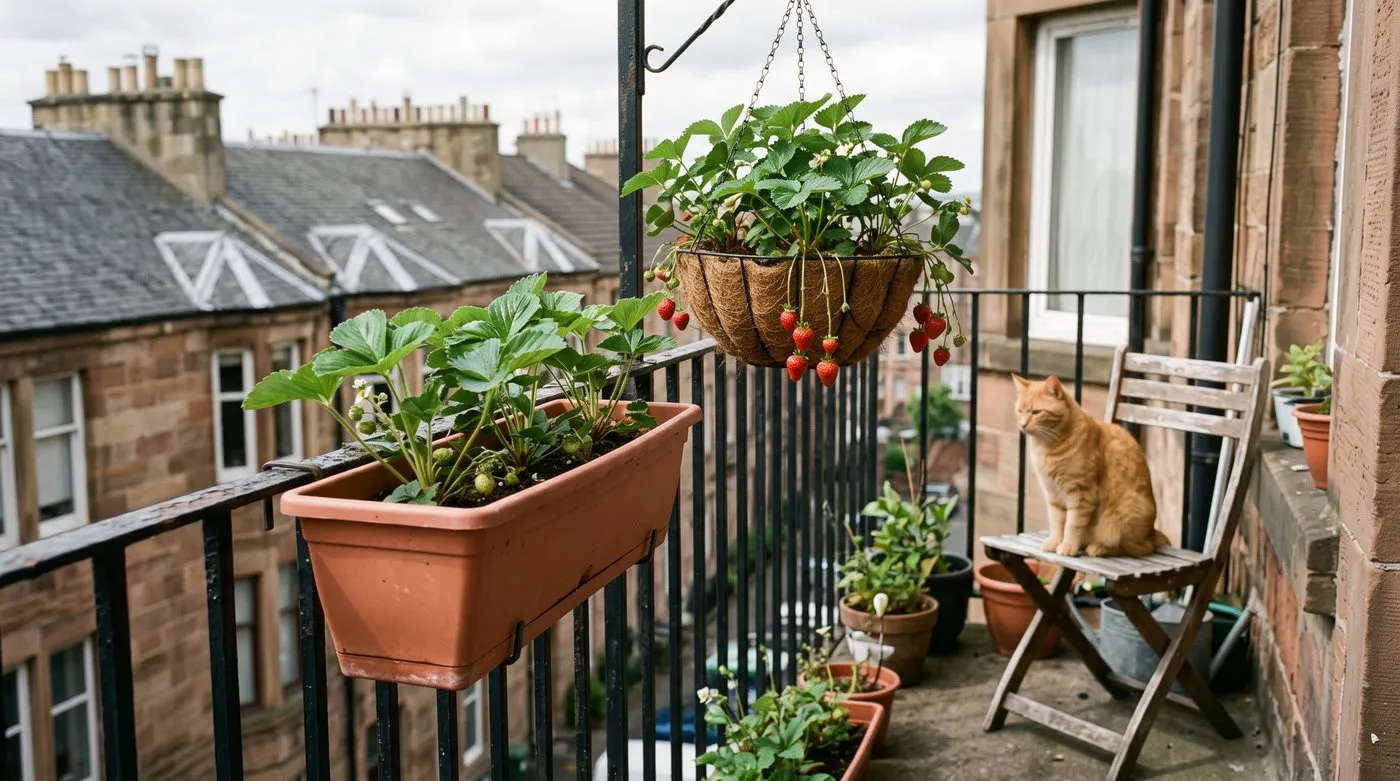
A window box or hanging basket is plenty for a few handfuls of strawberries. Fruit that dangles in the air stays clean and out of reach of slugs.
Container growing tips
- Use peat-free multipurpose compost, not garden soil, which packs down in pots.
- Feed weekly with tomato feed from the first flowers.
- Water daily in summer, as pots dry out fast.
- Use fresh compost each year.
- Move pots somewhere sheltered in winter.
Feeding and watering
Feeding schedule
| When | Feed | How often |
|---|---|---|
| Planting to first flowers | None needed | - |
| Flowering and fruiting | Tomato feed | Weekly |
| After picking | General granular feed | Once |
| Winter | None | - |
Avoid high-nitrogen feeds while plants are flowering and fruiting, as they give lots of leaves and less fruit. Tomato feed is high in potash, which helps the fruit. It’s the same feed you’d use for growing tomatoes.
Watering
Water steadily while the fruit is forming. Aim for soil that’s evenly moist but not soggy. Patchy watering gives small, poor fruit.
- In the ground: water a couple of times a week during fruiting if it’s dry
- In pots: water daily, and check twice a day in hot weather
- Hanging baskets: water daily, twice in hot spells. They dry out fastest of all
Top tip: Water at the base, not over the top, once fruit has formed. Wet fruit soon goes mouldy. A drip hose is ideal for a strawberry bed.
Protecting the crop
Straw mulch
Tuck clean straw under the plants when the first fruits form, usually in late May. It:
- Keeps fruit off the soil, so it stays clean
- Keeps the fruit drier, so less goes mouldy
- Keeps weeds down
Spread it a few centimetres deep, tucking it gently under the fruit. Use fresh straw each year.
Bird protection
Blackbirds love strawberries as much as we do. Birds in the garden are a joy, but they’ll start pecking fruit as soon as it turns colour, long before it’s ripe.
Net the whole bed with fine bird netting as soon as the fruit starts to colour. Hold the net up on hoops or a frame so it sits well above the plants. Netting lying on the plants damages fruit and can trap birds.
Check the netting every day, as hedgehogs, frogs and small birds can get tangled. Take it off after the last picking.
Slug control
Slugs love ripe strawberries on damp evenings. Straw mulch helps by keeping the surface drier. You can also:
- Go out with a torch after dark and pick slugs off
- Use nematodes, a natural slug control you water onto the soil in spring
- Grow some plants in hanging baskets, out of reach
 Bird netting on hoops over a strawberry bed, with straw underneath to keep the fruit clean.
Runners and propagation
From early summer, strawberry plants send out runners. These are long stems with a baby plant at the tip.
During fruiting season
Snip off runners while the plants are fruiting, so their energy goes into the fruit. Check every week or so.
After harvest
Once picking finishes, let four or five strong runners per plant grow on. These become your new plants.
How to root runners:
- Fill 9cm pots with multipurpose compost
- Pin the baby plant into the pot with a bent wire or a small stone
- Leave it attached to the mother plant
- Keep the pot watered
- After four to six weeks it will have rooted. Cut the stem to the mother plant
- Grow it on for a few weeks, then plant it out
That’s free new plants every year. Yields drop after three or four years, so swapping old plants for young ones keeps the harvest going. Our strawberry runners guide walks you through it step by step.
Month-by-month strawberry calendar
| Month | Job |
|---|---|
| January | Order bare-root plants and pick your varieties |
| February | Get the bed ready and dig in compost |
| March | Plant bare-root strawberries and water well |
| April | Watch for late frosts. Cover flowers with fleece on cold nights |
| May | Tuck straw under plants. Start tomato feed. Snip off runners |
| June | Net against birds. Pick early varieties. Water steadily |
| July | Main picking time. Pick every two or three days |
| August | Later varieties still cropping. Let a few runners grow on |
| September | Root runners in pots. Clear old straw |
| October | Plant out rooted runners. Tidy up |
| November | Remove old, yellow leaves, leaving the crowns uncovered |
| December | Make sure pots are sheltered. Plan next year |
Common mistakes
Planting the crown too deep
The classic slip. If the crown is buried, it rots. Set it right at soil level. If in doubt, a little high is better than too deep.
Growing plants for too long
Plants crop less after about three years. Replace them with fresh runners every three or four years, and plant the new ones in a different spot to avoid a build-up of soil pests and diseases.
Watering from above
Soaking the fruit invites grey mould, the most common strawberry problem in UK gardens. Water at the base, with a drip hose or a watering can without a rose.
Not removing runners during fruiting
Every runner takes energy from the fruit. Snip them off from the first flowers until picking ends, then let a few grow for new plants.
Ignoring bird netting
One blackbird can clear a row of ripe strawberries in an afternoon. Net before the fruit colours, not after you spot pecked berries.
 Pinning a runner into a pot. Cut it free from the mother plant once it has rooted, after four to six weeks.
Next, read our guide to raised bed gardening for beginners.
Frequently asked questions
When should I plant strawberries in the UK?
March is the best month for bare-root strawberries. Pot-grown plants can go in any time from March to September, though earlier is better. Planting in March gives the roots time to settle before the plants start fruiting.
How many strawberry plants do I need?
About five plants per person is a good rule of thumb. So a family of four needs around 20 plants. Mix early, mid-season and later varieties to spread the picking over the summer rather than getting one big glut.
Can I grow strawberries in pots?
Yes, they’re one of the best fruits for pots. Use a pot at least 25cm across per plant, a hanging basket, or a grow bag with three plants. Feed weekly with tomato feed from the first flowers, water daily in summer and use fresh compost each year.
Why are my strawberries small?
Usually the plants are old, crowded or thirsty. Replace plants every three or four years with fresh runners. Space them 35cm apart. Feed with tomato feed from flowering and water steadily while the fruit swells.
How do I protect strawberries from birds?
Cover the bed with fine bird netting before the fruit colours. Hold it up on hoops or a frame so it doesn’t sit on the plants. Check every day for trapped birds or hedgehogs, and take the netting off after the last picking.
Should I remove strawberry runners?
Yes, while the plants are fruiting. Runners take energy away from the fruit. Once picking finishes, let four or five strong runners per plant grow on. Root them in small pots and plant them out in autumn or the following spring.
What is the best strawberry variety for the UK?
It depends what you want most. Malling Centenary is loved for its flavour. Cambridge Favourite is a reliable, easy choice, good for beginners and cooler gardens. Add Honeoye for early fruit and an everbearer like Mara des Bois for a long season.
Our team produces practical UK gardening guidance from source research, contributor records and established horticultural practice. Editorial standards are overseen by Matt W.