Key takeaways
- Goji berries are hardy all over the UK and need no winter protection
- They love sun and cope with poor, sandy or chalky soil, but hate wet feet
- Expect your first berries in year two, picked from August to October
- A 40-50 litre pot stops the roots spreading through your borders
- Prune hard in late winter to get a compact bush full of fruit
Goji berries are one of the toughest, most forgiving fruits you can grow in a UK garden. These hardy shrubs (Lycium barbarum) shrug off cold winters, put up with poor soil and give you bright red berries from August to October.
Unlike blueberries, which need acid soil, goji berries are happy in almost any well-drained ground. They even like the chalky and sandy soils that many fruits struggle in. Here’s how to choose, plant, prune, pick and dry them.
What are goji berries?
Goji berries, also called wolfberries, are in the same family as tomatoes and potatoes. The plant is a deciduous shrub from China with long, arching, slightly thorny branches. Left alone it grows 2-3m tall.
 Goji berries form along the whole length of the arching branches from August to October.
The berries are small, long and bright red. Fresh, they taste mildly sweet with a hint of tomato. Dried, they turn sweeter and chewier, like the ones you find in health food shops.
The plant is fully hardy everywhere in the UK, as the RHS plant page for Lycium barbarum confirms. It drops its leaves in autumn and grows fresh ones in spring. No fleece needed.
Are goji berries good for you?
Dried goji berries are a handy snack with a little protein, fibre and vitamins. They’re nice in muesli, smoothies and baking. Enjoy them as part of a normal varied diet rather than as a miracle food.
Best goji berry varieties for UK gardens
The ordinary species is easy to find and does well. A few named varieties give bigger berries or a smaller plant. All of them are self-fertile, so one plant on its own will fruit.
 Little purple trumpet flowers appear from June to September, and each one becomes a red berry.
Lycium barbarum (straight species)
The one you’ll see at most garden centres. It’s vigorous and gives lots of small berries. It’s also the toughest and most trouble-free choice.
‘New Big’
Bigger, sweeter, fleshier berries on a slightly smaller plant. A good pick if you mainly want berries for eating fresh.
‘Sweet Lifeberry’
A compact plant with sweet berries. It suits smaller gardens and pots, and tends to fruit a little earlier than the species.
‘Crimson Star’
A compact variety with tasty medium berries. It suckers less than the species, so it’s a good choice for pots and small spaces.
Which variety should you choose?
| Variety | Size | Berries | Spreads? | Best for |
|---|---|---|---|---|
| L. barbarum (species) | Large | Small, plenty of them | A lot | Open ground, hedging |
| ’New Big’ | Medium | Big and sweet | Some | Eating fresh |
| ’Sweet Lifeberry’ | Compact | Sweet | A little | Small gardens, early crop |
| ’Crimson Star’ | Compact | Medium | A little | Pots and small spaces |
Gardener’s tip: For the biggest harvest, plant the species in open ground with room to spread. For a tidy pot on the patio, go for ‘New Big’ or ‘Sweet Lifeberry’.
Where to plant goji berries
Goji berries come from dry, rocky hills, so they cope with tough spots. Get the position right and you’ll have very little work later.
Sunlight
Give them full sun. They grow in part shade but give fewer berries. A south or west-facing spot is ideal, and a sunny wall or fence helps the berries ripen. In a north-facing spot you’ll get lots of leaves and not much fruit.
Soil requirements
Any well-drained soil is fine, including poor, sandy and chalky ground. Heavy clay works if you mix in some grit. The one thing they won’t stand is waterlogged soil, which rots the roots over winter.
They like neutral to chalky soil, so most UK gardens suit them as they are. If your soil is very acidic, add some garden lime before planting.
Wind and shelter
The bendy branches cope with wind well. Strong coastal winds can knock off flowers and young berries, though. In an exposed garden, a fence or hedge on the windy side helps.
How to plant goji berries
Pot-grown plants can go in at any time, but autumn and spring are best. Bare-root plants are sold in winter and go in between November and March.
Planting in open ground
Dig a hole twice as wide as the root ball and just as deep. On heavy clay, mix a handful of coarse grit into the soil. Don’t add fertiliser. Rich soil gives lots of leaves and fewer berries.
Plant at the same depth it was in its pot, firm gently and water well. Space bushes 1.5-2m apart, or 1m apart for a hedge. Mulch with bark, keeping it a hand’s width away from the stem.
Planting in containers
A pot is the easiest way to grow goji for most people. It stops the spreading and lets you move the plant into the sun. Our guide to growing fruit in pots has more general tips.
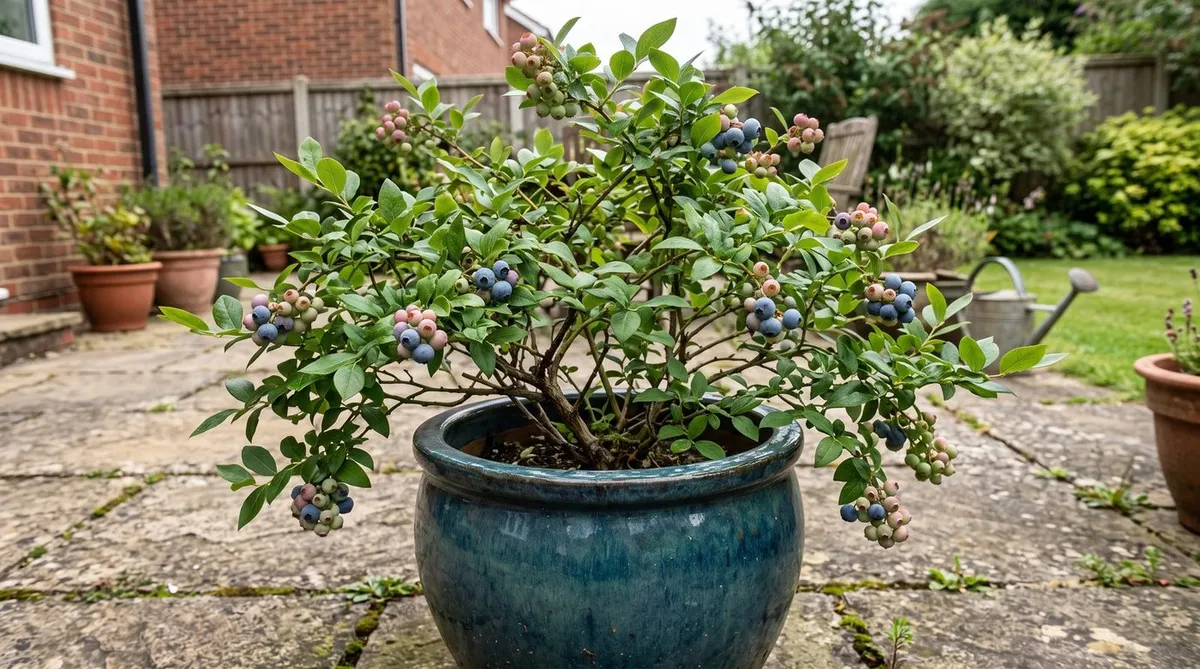
 A goji bush fruiting in a big pot on a patio. A 40-50 litre pot gives plenty of root room and stops it spreading.
Use a pot of at least 40 litres, or 50 litres for the long term. Fill with multi-purpose compost and mix in some perlite or coarse grit. No need for ericaceous compost.
Plant at the same depth as before and water well. Stand the pot on feet or bricks so it drains, and put it in your sunniest spot.
The sunken pot method
If you’d like the plant in a border, sink a large pot into the ground with the rim just above the soil. The plant looks like it’s growing in the bed, but the pot keeps the roots in. It’s a cheap, low-effort way to stop suckers.
Watering and feeding goji berries
Goji berries cope well with dry spells once settled in. Too much water causes more trouble than too little.
Watering
In the first year, water weekly in dry weather while the roots settle. After that, plants in the ground rarely need watering except in a long drought. Pots need regular watering in summer. Water when the top few centimetres of compost feel dry.
Tap water is fine. Unlike blueberries, goji berries don’t mind hard water.
Feeding
Plants in the ground rarely need feeding at all. Too much nitrogen gives you leaves instead of berries.
For pots, give a liquid tomato feed once a month from April to August. It encourages flowers and fruit. Stop in September so the plant can toughen up for winter.
How to prune and train goji berries
Pruning turns a tangle of floppy branches into a neat bush full of fruit. Unpruned, the branches grow long, droop onto the ground and fruit poorly. Our shrub pruning guide covers the basics.
First year pruning
After planting, cut the main stem back to about 60cm. It feels harsh, but it makes the plant send out strong side branches lower down.
Annual spring pruning (year two onward)
Prune in late February to early March, before new growth starts. Berries form on new shoots that grow from older wood. You’re aiming for a framework of short branches covered in fresh shoots.
Step by step:
- Cut out dead, damaged and crossing branches
- Cut last year’s fruiting shoots back to 2-3 buds
- Remove thin, wispy growth thinner than a pencil
- Take out one or two of the oldest branches at the base each year
- Pull out any suckers coming up from the roots
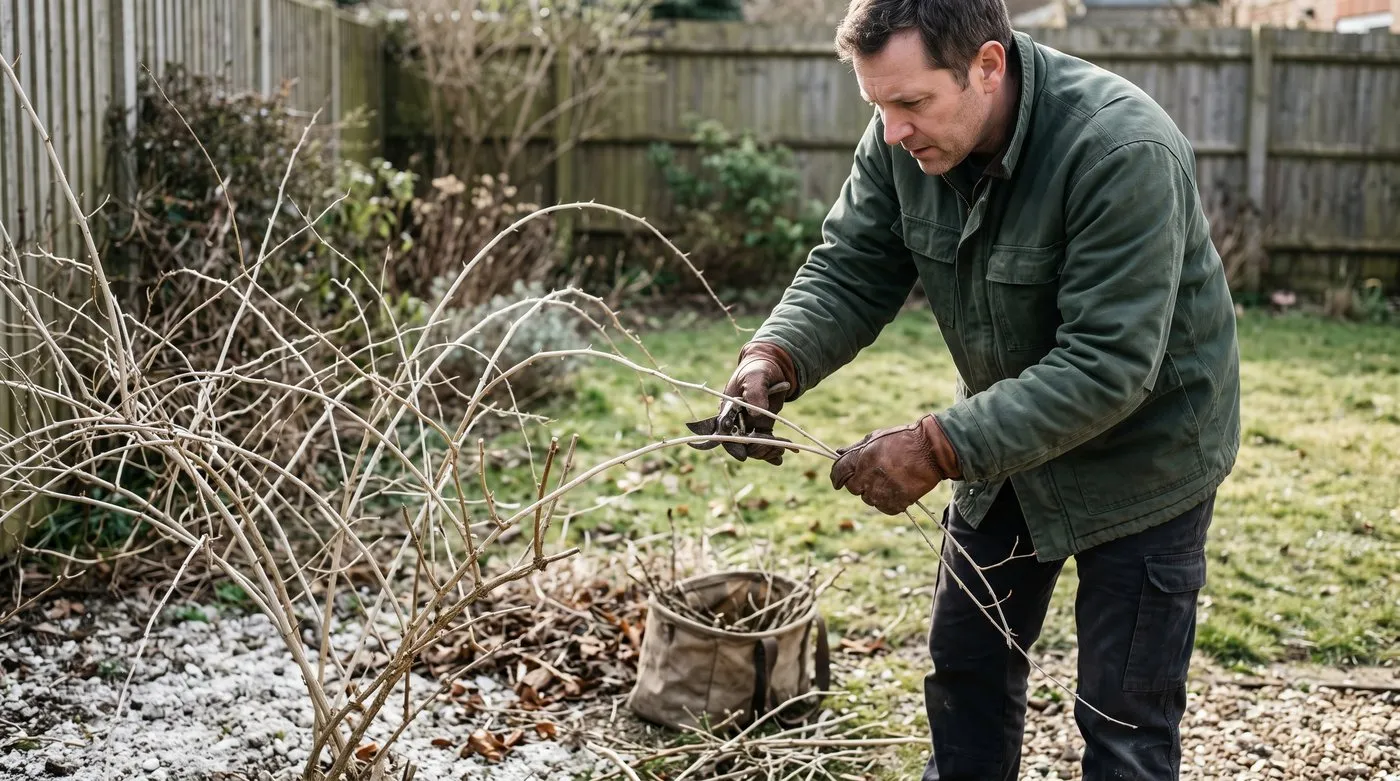
Prune goji in late winter, cutting last year’s fruited shoots back to two or three buds. Berries form on the new shoots that follow.
Training on a support
Goji berries fruit better when tied to a wall, fence or wires. Pick 4-6 main stems and fan them out along horizontal wires about 30cm apart. More sun gets to the leaves and picking is much easier.
For a free-standing bush, tie the main stem to a stout stake at about 60cm. Let the side branches arch out to make a pretty umbrella shape.
Controlling the spread of goji berries
In open ground, goji berries spread by root suckers. New shoots pop up a metre or two from the plant and can turn into a thicket. That’s why many people choose container growing.
Ways to stop it spreading
| Method | How well it works | Effort |
|---|---|---|
| Large pot (40-50 litres) | Very well | Low, repot every few years |
| Sunken pot in the ground | Very well | Very low once done |
| Root barrier at planting | Well | Medium |
| Pulling suckers by hand | Fairly well | High, monthly in summer |
| Raised bed with a solid base | Very well | Low once built |
The sunken pot is the best all-rounder. If you plant straight into the ground, pull suckers every month from May to September. Do it while they’re small, before they grow their own roots.
How to harvest goji berries
Goji berries ripen bit by bit from August to October. You’ll pick several times, which means fresh fruit for weeks.
When to pick
Pick when berries are fully red with no green or orange patches. Ripe ones feel slightly soft. Unripe ones taste bitter, and overripe ones drop and spoil.
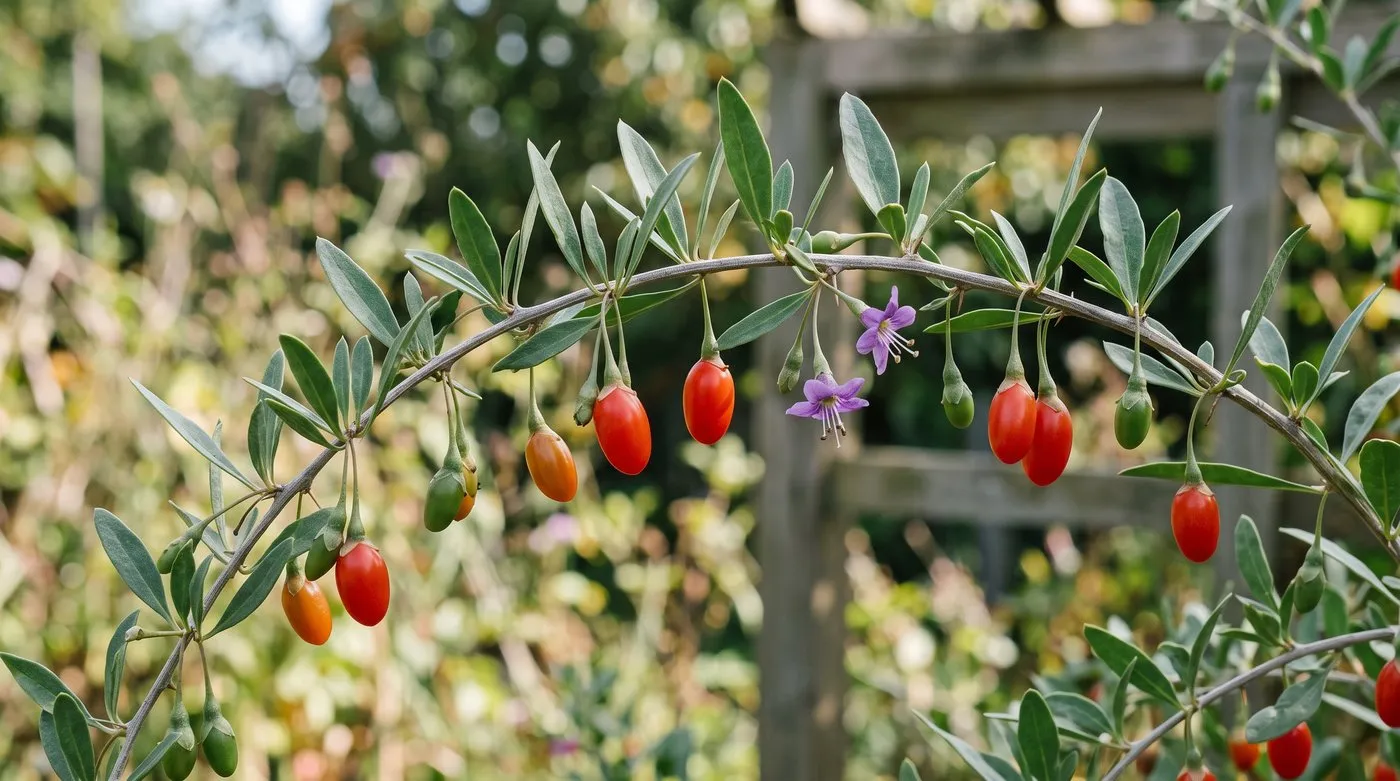
Only pick berries that are fully red with no orange or green patches. Unripe ones taste bitter.
How to pick
Ripe berries bruise easily. Shake the branch over a cloth-lined tray and the ripe ones fall while the rest stay put. Or pick by hand, wearing gloves if your plant is thorny.
Mind your clothes. The juice is bright orange-red and stains. Eat, chill or dry the berries within a day of picking.
 Fresh goji berries laid out to dry. Air drying takes about a week, a dehydrator less than a day.
Fresh storage
Fresh berries keep for 2-3 days in the fridge. Eat them straight off the bush, or add them to salads and smoothies.
How to dry goji berries at home
Drying makes the berries sweeter and lets you keep them for months in airtight jars. There are three easy ways.
Air drying (about a week)
Spread the berries in one layer on a wire rack or a tray lined with muslin. Put them somewhere warm, dry and airy, like a sunny windowsill or airing cupboard. Turn them daily. They’re done when leathery and no longer sticky.
Food dehydrator (12-18 hours)
Set it to 40-50C. Spread the berries out so they don’t touch. Check after 12 hours. They’re ready when leathery with no wet spots when squeezed.
Oven drying (8-12 hours)
Use the lowest setting, ideally around 50C. Prop the door open a little with a wooden spoon so moisture escapes. Spread berries on trays lined with baking paper and check every couple of hours.
Storage
Keep dried berries in clean, airtight jars in a cool, dark cupboard. They’ll last for months. You can freeze them to keep them longer.
Common pests and problems
Goji berries have fewer problems than most fruit. Here’s what you might come across.
Goji berry gall mite
Tiny mites cause small raised blisters (galls) on the leaves. It looks unsightly but mature plants usually crop fine. Pick off or prune out affected growth.
Aphids
Greenfly sometimes cluster on young shoot tips in May and June. Blast them off with a jet of water, or leave them for ladybirds and hoverfly larvae to deal with. They rarely do much harm.
Birds
Blackbirds and starlings love ripe berries. Net the plant when the berries start to colour, or just pick promptly. Growing other fruit like raspberries elsewhere in the garden gives the birds something else to go for.
Powdery mildew
A white powdery coating on leaves in late summer, usually when it’s dry and airless. Prune to let air through and water the soil, not the leaves. It rarely kills the plant but can reduce late berries.
Month-by-month goji berry calendar
Here’s the goji year at a glance. In the north or on exposed sites, things may run a week or two later.
| Month | Task |
|---|---|
| January | Order bare-root plants. Plan where they’ll go. |
| February | Prune established plants. Cut fruited shoots back to 2-3 buds. |
| March | Plant new bushes. Add a thin bark mulch. |
| April | New leaves appear. Start monthly tomato feed for pots. Pull suckers. |
| May | Fast growth. Tie in new shoots. Pinch out tips to make it bushy. |
| June | Purple flowers open and bees visit. Keep feeding pots. Pull suckers. |
| July | Green berries form. Water pots in dry spells. Early varieties start to colour. |
| August | Harvest begins. Pick fully red berries. Dry any spare. |
| September | Keep picking. Water less. Stop feeding. |
| October | Last berries. Leaves yellow and drop. Clear up fallen fruit. |
| November | Plant is dormant. Plant bare-root bushes. Tidy and mulch. |
| December | Rest. Plan next year’s pruning. |
Growing goji berries alongside other fruit
Goji berries fit nicely into a fruit garden. Their long season fills the gap between summer raspberries and autumn apples. They sit well with other unusual crops that do well in the UK.
As they’re related to potatoes and tomatoes, it’s sensible to keep them a little apart from those crops. Lavender, rosemary and other sun-loving herbs make good neighbours, as they like the same dry, sunny spot.
For a fruity patio, grow a compact goji like ‘Crimson Star’ next to blueberries in ericaceous compost and a few pots of herbs. Pots let each plant have the soil it likes.
Frequently asked questions
Are goji berries easy to grow in the UK?
Yes, they’re one of the easiest fruit bushes you can grow. They’re fully hardy, happy in poor or chalky soil and rarely bothered by pests. The only real job is stopping them spreading, and a big pot sorts that out.
How long do goji berry plants take to fruit?
Most give their first berries in the second year. The first crop is light. From year three you get a proper harvest, and with yearly pruning the plants keep going for many years.
Can you grow goji berries in pots?
Yes, they do well in a 40-50 litre pot. Use multi-purpose compost with a few handfuls of perlite or grit mixed in. A pot is the easiest way to stop the roots spreading. Water regularly in summer and give a monthly tomato feed from April to August.
When do you harvest goji berries in the UK?
Pick them from August to October. They’re ready when fully red and slightly soft. Ripe berries bruise easily, so the gentlest way is to shake the branch over a cloth-lined tray.
How do you dry goji berries at home?
Spread them in one layer on a rack somewhere warm and airy. They take about a week to turn leathery. A dehydrator at 40-50C or a very low oven with the door ajar is quicker. Keep dried berries in airtight jars.
Are goji berry plants invasive?
In open ground they spread by suckers from the roots. New shoots can pop up a metre or two from the plant. Growing in a pot, or in a pot sunk into the ground with the rim showing, stops this.
What do goji berry flowers look like?
They’re small purple trumpets that appear from June to September. They grow in small clusters along the arching stems. Bees pollinate them and each flower turns into one red berry.
Our team produces practical UK gardening guidance from source research, contributor records and established horticultural practice. Editorial standards are overseen by Matt W.