Key takeaways
- Self-contained fountains need no digging and suit small gardens
- Wildlife ponds need no pump, and wildlife moves in quickly
- Solar pumps suit summer use; choose mains for all year
- Drain features and lift pumps before hard frosts
- Give every pond a gentle slope so animals can climb out
- Open water is a risk for toddlers, so cover it or choose a pebble fountain
A water feature brings a garden to life. The sound of moving water hides traffic noise, draws in wildlife and gives you a lovely focal point. Even a small solar fountain in a bowl changes the feel of a patio.
Our climate suits water features well. Rain tops them up much of the year, lots of pond plants grow happily here, and insects find new water fast. The main job is a little winter care before the frosts.
Here are the main types, with pump options, planting ideas, child safety and winter care. If you’re after wildlife most of all, our guide to building a wildlife pond goes into more detail.
Types of garden water feature
There are two main kinds: self-contained features and open water. Self-contained ones recycle water from a hidden tank. Open water features, like ponds and rills, sit in or on the ground.
Self-contained features
These are the simplest choice. Water is pumped up from a hidden reservoir and flows over something pretty: a millstone, a pile of pebbles, a wall spout or a stack of bowls. No digging, no liner and no open water.
They’re perfect for small gardens, patios, courtyards and families with young children. Plug them into an outdoor socket or run them from a solar panel. Most are set up in under an hour.
Popular types:
- Pebble fountains: water bubbles up through pebbles or a drilled stone into a hidden sump. Natural-looking and safe.
- Wall-mounted spouts: a lion head, copper spout or modern blade pours into a trough. Great for courtyard gardens and narrow spaces.
- Tiered bowls: water spills from bowl to bowl. Light resin ones suit balconies.
- Millstone features: water rises through the middle of a millstone and runs over the surface. Lovely in cottage gardens.
- Corten steel blades: a sheet of water runs down a rusty-looking steel panel. Smart and modern.

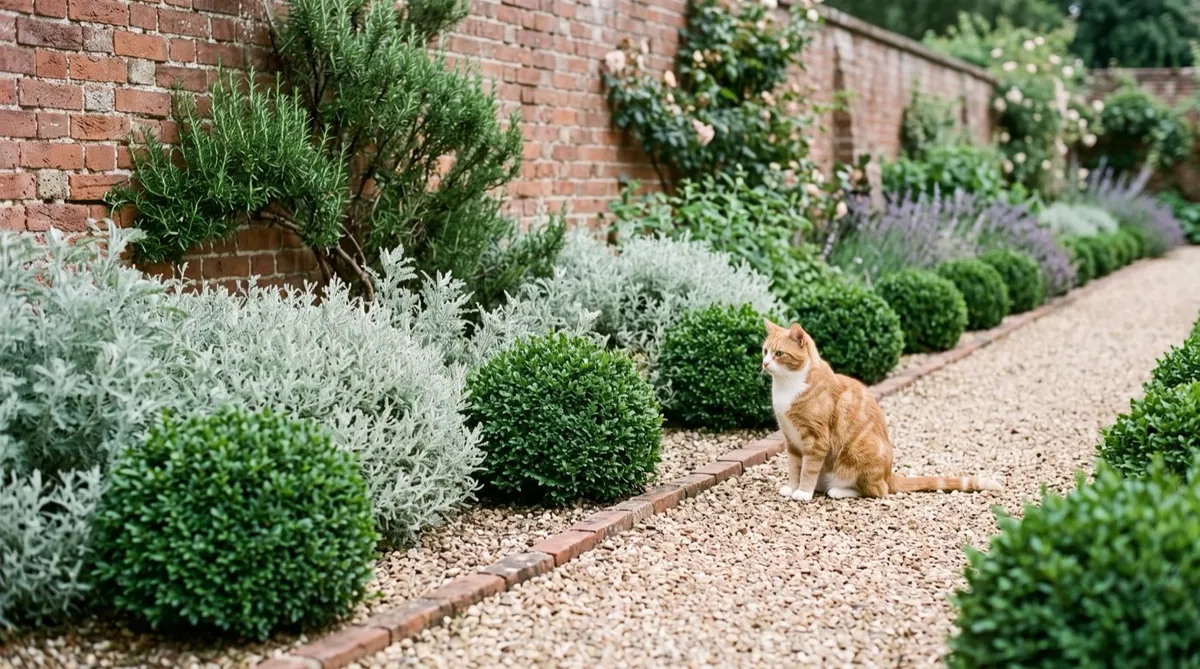
A pebble fountain among ferns and foxgloves. It’s one of the safest choices if you have children.
Can you put a water feature on a balcony?
Yes, if it’s small, light and self-contained. Water is heavy, at 1kg per litre, so a big reservoir adds a lot of weight.
Resin, fibreglass and light metal features suit balconies best. A wall spout with a small trough or a tabletop bowl keeps the weight down. Stand heavier pieces close to the building wall, not at the edge. Check your lease or ask your landlord about weight and water. A solar pump saves running a cable through a door or window. Bring it in or cover it before frost.
Ponds
A pond does more for wildlife than anything else you can add. Even a washing-up bowl sunk in the ground attracts insects.
Wildlife ponds have no pump, no filter and no fish. Plants do the work, keeping the water healthy and giving cover. Gently sloping sides let hedgehogs, frogs and birds get in and out safely. Our guide to the best pond plants helps you choose.
Ornamental ponds are all about looks. They may have fish, a fountain, smart edging and neat planting. They need a pump and filter to keep the water clear.
Raised ponds have brick, stone or timber walls, so the water sits at a nice height for looking in. They’re safer with small children around and suit sloping sites and patio gardens where digging is hard.
Rills and channels
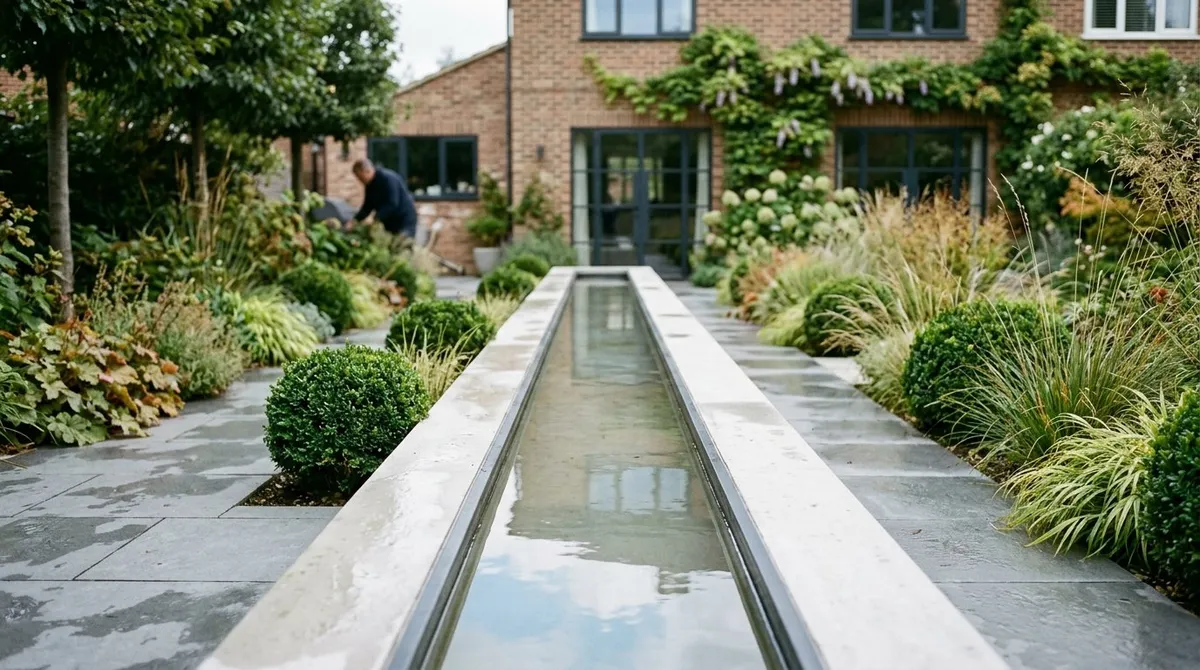
A rill is a narrow channel of running water. A pump moves water from a pool at one end to a pool at the other. It makes a strong line through a formal garden.
Rills suit long, narrow gardens and lead the eye down the space. Line them with slate, stone or steel. They look great beside paths and in Japanese-style gardens.

A slate-lined rill leads the eye through the garden between lavender and grasses.
Do you need planning permission for a garden pond?
Usually not. Most garden ponds count as permitted development, so you don’t need to apply. The Planning Portal outbuildings guide covers ponds in England under the same rules as sheds.
Those rules limit size, height and how close you build to boundaries. Listed buildings and conservation areas have stricter rules, so check with your council if that applies. A new outdoor circuit for a pump must meet Building Regulations, so use a registered electrician. It’s good manners to tell the neighbours before building something big by a shared fence. Dreaming of a dip? See our natural swimming ponds guide.
Which water feature suits your budget?
| Feature | Cost | DIY difficulty | Needs electricity? |
|---|---|---|---|
| Solar pebble fountain | Low | Easy | No |
| Mains pebble fountain | Low to medium | Easy | Yes |
| Wall-mounted spout | Medium | Easy to medium | Yes |
| Tiered bowl fountain | Low to medium | Easy | Yes, or solar |
| Corten steel blade | Medium to high | Medium | Yes |
| Wildlife pond | Low to medium | A weekend of digging | No |
| Ornamental pond with pump | Medium | A weekend or two | Yes |
| Raised pond | Medium to high | Hard | Optional |
| Formal rill | Medium to high | Hard | Yes |
| Bespoke stone feature | High | Professional job | Yes |
A solar fountain kit is the cheapest way to start. For something bigger, a professional is worth it for the electrics.
Solar vs mains-powered pumps
Pick mains for a feature you want running all year, and solar for a summer feature far from a socket.
Solar pumps
Solar pumps need no wiring and no electrician. A small panel powers a pump in the water.
The catch is that they stop when clouds cover the sun. They don’t run at night, and in a British winter they barely run at all.
Solar pumps with a battery store some charge and keep going for a few hours after sunset. They help with evenings, but not with winter.
Solar suits summer features, a bit of extra bubble in a wildlife pond, and spots far from the house. It’s not the one for a feature you want running every day of the year.
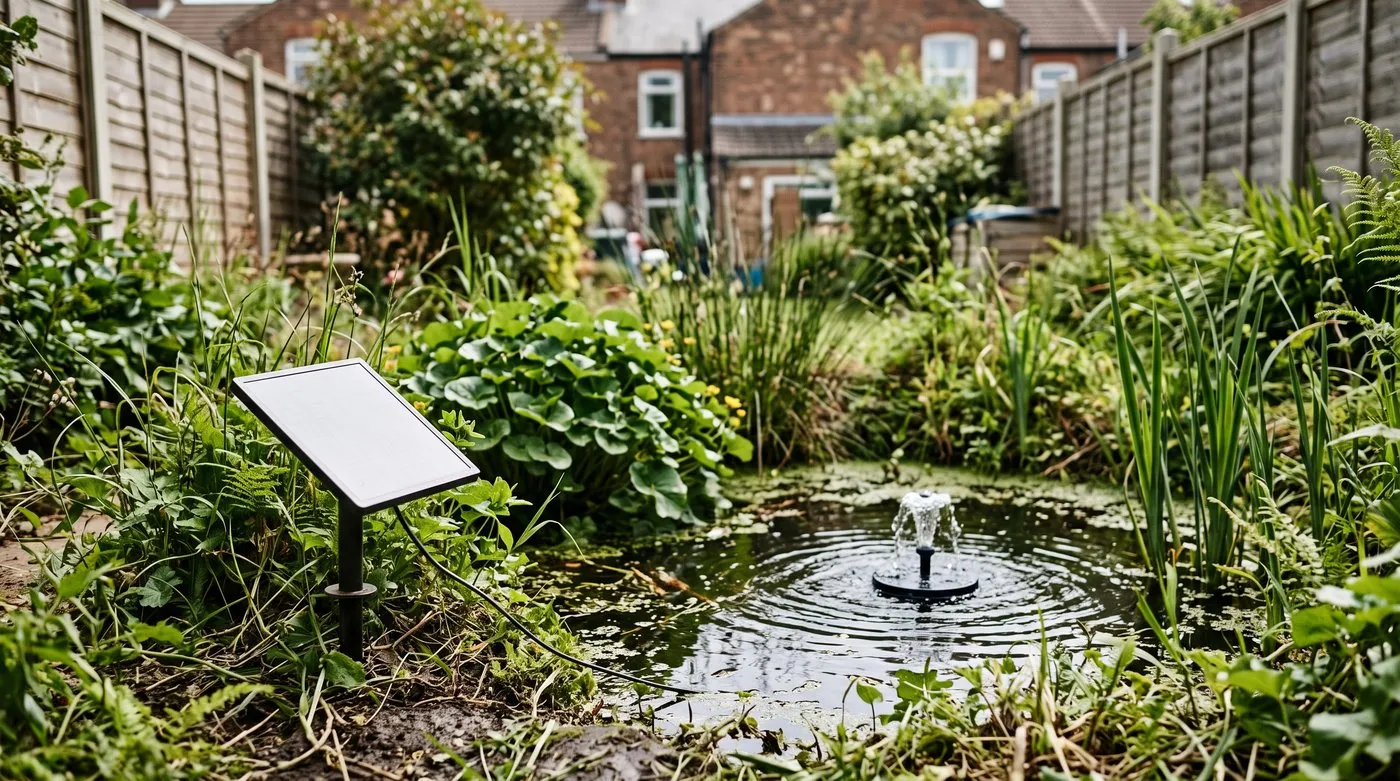
Solar pumps need no wiring, so they’re handy far from the house. They only run in good light, though, so think of them as a summer feature.
Mains pumps
Mains pumps run steadily, day and night. Small fountain pumps use very little power. They need a weatherproof outdoor socket on an RCD-protected circuit.
If you don’t have an outdoor socket, a qualified electrician can fit one. It should sit near the feature but well above any water.
How much does it cost to run a water feature pump?
A small fountain pump costs very little to run. To work out your own cost, multiply the pump’s wattage by the hours it runs, then by your electricity unit rate. Put it on a timer for half the day and the cost halves. Bigger pond pumps running a filter all the time cost more, so check the wattage on the box.
For a pond pump running a filter, choose one made for continuous use. Check its maximum head height, which is how high it can push water. Pick a pump rated a little higher than your feature needs.
Wildlife benefits of water features
Water is one of the best things you can add for wildlife. Frogs, newts, dragonflies, birds and hedgehogs all come to breed, drink or bathe.
Frogs, toads and newts: they often find a new pond within a year or two and breed from late winter into spring. They need shallow edges for spawning and long grass nearby for cover. Our frog and toad guide has more.
Dragonflies and damselflies: these can turn up within weeks. Adults hunt midges and mosquitoes. Tall plants like iris and rushes give them somewhere to perch and lay eggs.
Birds: robins, blackbirds, starlings and finches drink and bathe at shallow edges. A sloping pebble beach gives safe access, and the sound of moving water draws them in.
Hedgehogs: a gentle slope lets them drink and climb out again. Steep-sided ponds can trap and drown them, so always add a way out: a half-sunk log, a stone ramp or some chicken wire over the edge.
Insects: bees, hoverflies and butterflies drink from shallow water. A few flat stones poking out of the water in a sunny spot give them somewhere to land.

Marsh marigold and water forget-me-not around a wildlife pond, with a pebble beach for easy access.
Planting around and in water features
Plant ponds by water depth, and soften self-contained features with plants round the base. Pond plants also shade the water and use up the food that algae live on.
Pond plants by depth
| Zone | Water depth | Plants to try | What they do |
|---|---|---|---|
| Deep water | 30-90cm | Water lily, water hawthorn | Shade the surface |
| Shallow shelf | 0-15cm | Marsh marigold, water forget-me-not, iris | Shelter for wildlife |
| Bog | Wet soil, not underwater | Primula, astilbe, ligularia | Blend into the garden |
| Underwater | 15-60cm | Hornwort, water crowfoot | Keep water healthy, fight algae |
For wildlife ponds, native plants are best. Marsh marigold, purple loosestrife, ragged robin and water mint are all lovely. Never plant floating pennywort, parrot’s feather, water fern, Australian swamp stonecrop or water primrose. The government banned all five from sale because they smother ponds and rivers.
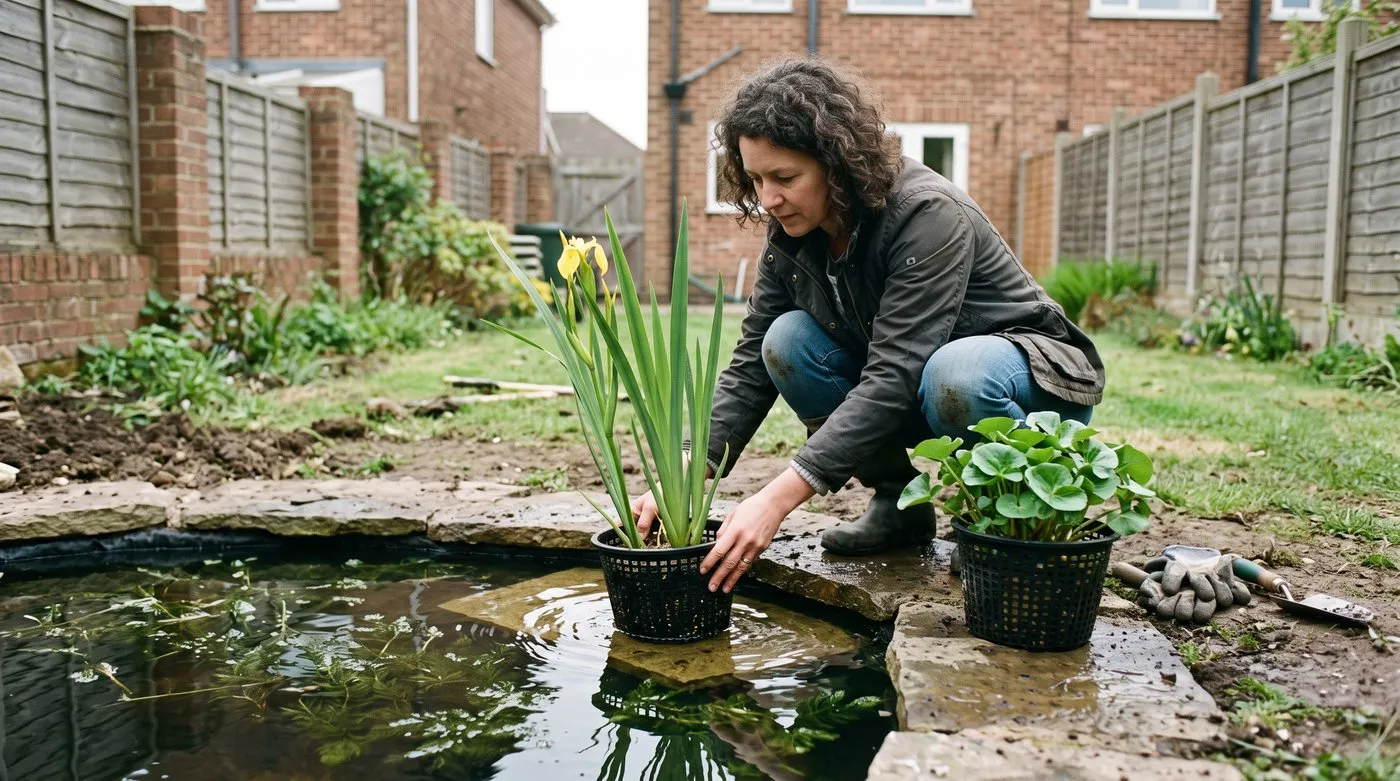
Plant by depth: marginals like iris and marsh marigold sit on the shallow shelf, giving wildlife shelter right at the water’s edge.
Planting around self-contained features
There’s nowhere to plant in the water itself, so plant around the base instead. It softens the edges and helps the feature sit naturally in the garden.
In shade: ferns, hostas and brunnera love the damp near a fountain.
In sun: lavender, grasses and low shrubs frame a feature without hiding it. Creeping Jenny softens stone and pebble edges.
Against walls: climbing plants either side of a wall spout make a green frame. Try climbing hydrangea, jasmine or clematis, depending on the aspect. Our shade plants guide helps with north-facing walls.
Frost protection and winter care
Drain self-contained features, lift pumps and keep a hole in pond ice. Ice expands and can crack stone, split pipes and wreck pumps.
Self-contained features
Empty the reservoir before the first hard frost. Take the pump out and keep it indoors in a bucket of clean water so the seals don’t dry out. Switch off the outdoor socket.
Cover stone or ceramic bowls you can’t drain, or move them into a shed. Water soaked into porous stone freezes and cracks it. Frost-proof resin and fibreglass features can stay out.
Ponds
Don’t drain a pond for winter. Wildlife spends the winter in the mud at the bottom. Float a ball or a pond ice preventer on the surface instead, so it doesn’t freeze solid.
If ice forms, never smash it. The shock travels through the water and can hurt fish and hibernating frogs. Sit a pan of hot water on the ice to melt a hole.
Take pumps out of ponds that freeze, and store them in a bucket of water indoors. Put them back in spring once hard frosts are over.
Pipework
Drain any pipes above ground that hold water. Water left in a pipe can freeze and split it overnight. A drain valve at the lowest point makes this easy.
Noise, neighbours, and placement
Put the feature between your seat and the noise you want to hide, but away from the neighbours’ windows.
Volume: a gentle trickle from a pebble fountain is much quieter than a tall cascade. Many pumps have a flow adjuster so you can turn it down.
Placement: keep features away from shared fences. Sound carries further at night, and a soothing trickle by day can be annoying next door at bedtime.
Night use: pop a timer on mains features to switch off in the evening and on again in the morning. Solar ones stop at dusk by themselves.
A small fountain between your patio and a busy road makes a surprising difference.
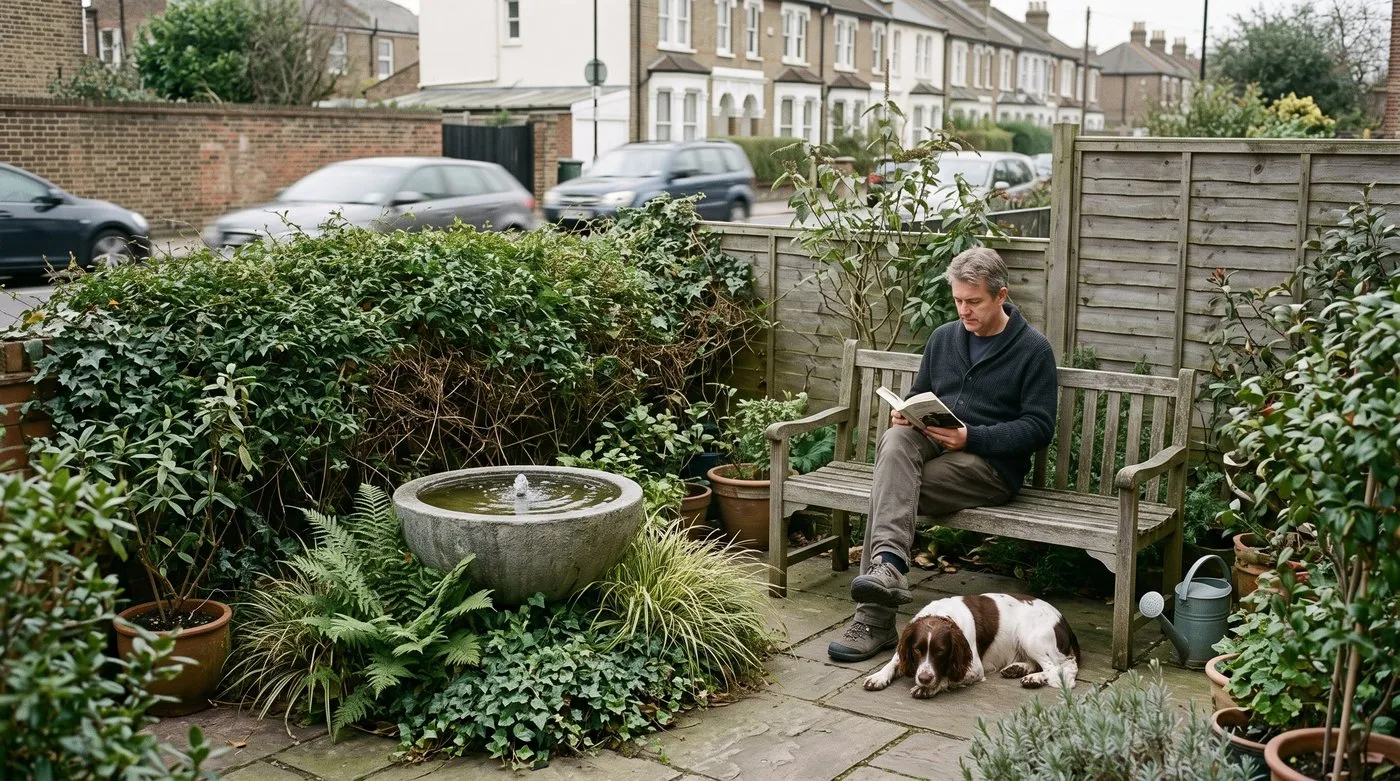
Put the fountain between your seat and the noise you want to hide. A gentle trickle is plenty, and keeps the neighbours happy too.
Algae prevention
Shade the water, plant well and keep nutrients low. Green water and blanket weed both come from too much food in the water plus lots of sun.
Shade the surface. Water lilies and floating leaves block the light algae need. Put self-contained features in part shade rather than full, all-day sun.
Plant oxygenators. Underwater plants like hornwort and water crowfoot compete with algae for food.
Don’t overfeed fish. Leftover food feeds algae. Give only what they eat in a couple of minutes and scoop out the rest.
Try barley straw. A small net of barley straw in the pond can help stop new algae as it rots. It won’t clear what’s already there, so pull out blanket weed by hand first. Replace it every six months.
UV clarifiers fit in line with the pump and clear green water. They work well but add to the cost and need new bulbs from time to time.
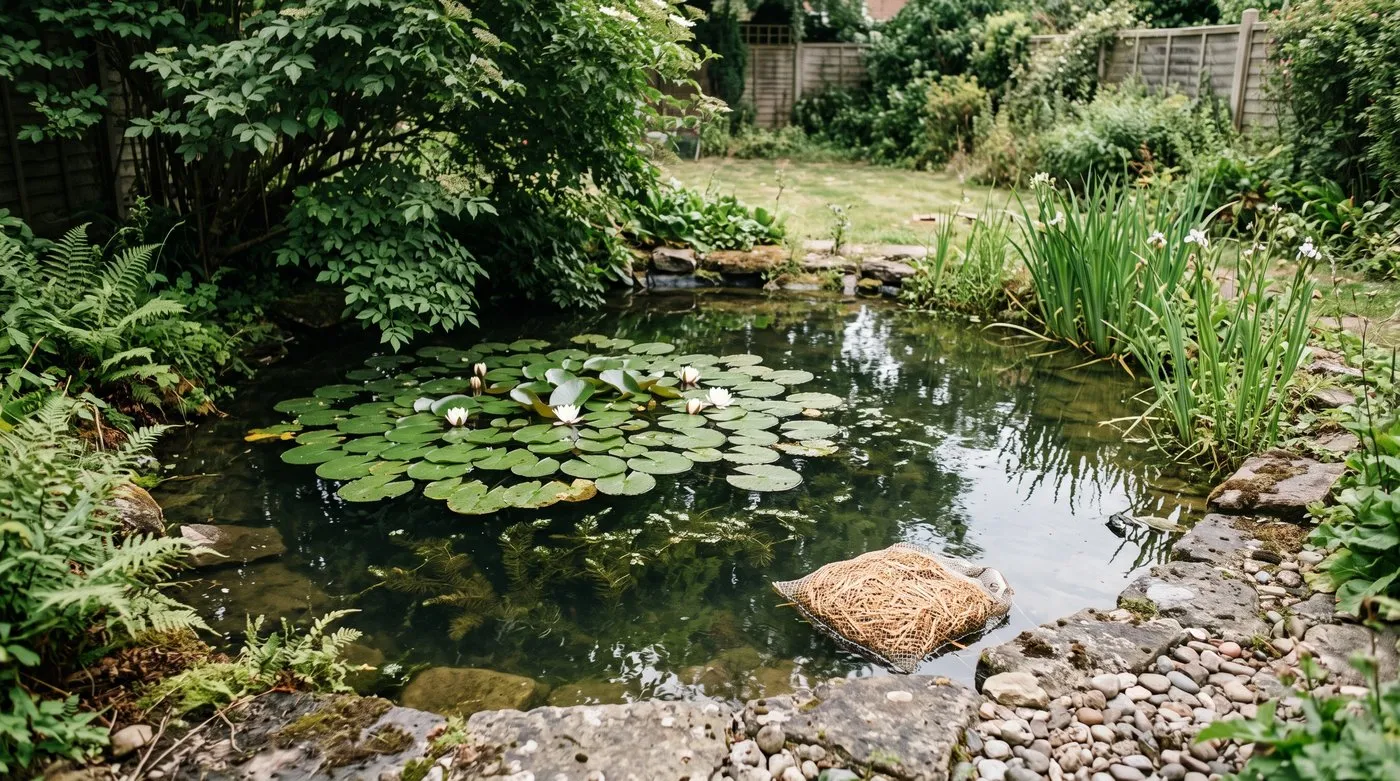
Lily pads shading part of the surface and oxygenators below starve algae of light and food. That’s the simplest route to clear water.
Common mistakes with water features
1. A pond in full sun with nothing shading it
A pond in all-day sun with no surface cover soon turns green. Choose a spot with some shade, but away from trees that drop leaves in. Add water lilies or floating plants to shade part of the surface.
2. Steep sides with no way out
Animals that fall into a steep-sided pond can’t climb out. Give at least one side a gentle slope. A half-sunk log or rough stone ramp helps too.
3. Leaving pumps in frozen water
Ice round a pump damages it. Take pumps out of features that freeze before winter, keep them in water indoors and put them back in spring.
4. Choosing solar for an all-year feature
A solar pump only runs in good light, which in a UK winter means hardly ever. For flow from January to December, go for mains power.
5. Forgetting about little ones
Open water is a real drowning risk for under-fives. With young children around, choose a feature with no standing water, or fit a strong rigid grid just below the pond surface. Our children’s garden design ideas have more ways to keep play safe.
Ready to dig? Our guide to building a wildlife pond walks you through it step by step.
Related reading: for a narrow formal channel of running water, see our guide to garden water rill design.
Related reading: most of these builds start with a liner, so see our guide to installing a pond liner.
Frequently asked questions
What is the best water feature for a small UK garden?
A self-contained wall or bowl fountain is ideal. It needs no pond and no digging, and runs from a plug socket or a solar panel. There are compact ones that fit on patios, balconies and courtyard walls. Pebble fountains are another great choice for small spaces.
Do water features attract mosquitoes?
Moving water puts mosquitoes off. They lay eggs in still water, so a pump that keeps it moving helps. A healthy wildlife pond also has dragonfly larvae and water beetles that eat mosquito larvae. Don’t add fish to a wildlife pond, as they eat frogspawn and tadpoles.
How do I stop water features freezing in winter?
Drain them and lift the pumps before hard frosts. Store pumps indoors in a bucket of water. For ponds, float a ball on the surface so it doesn’t freeze solid. Never smash the ice, as the shock can hurt fish and sleeping frogs below.
Are solar water features any good?
Yes, for sunny days from spring to early autumn. They stop in heavy cloud and do little at night or in winter. Ones with a battery keep going for a while after dark. For flow all year round, mains power is the better choice.
How much does a garden water feature cost UK?
Anything from pocket money to a big project. A solar fountain kit is the cheapest start. Self-contained mains features cost a bit more, and a lined wildlife pond is mostly the cost of liner and edging. Professional stone features with lighting cost the most.
Do I need a pump for a garden pond?
Not for a wildlife pond. Plants keep the water oxygenated and help keep algae down. Fish ponds need a pump and filter to keep the water clear. Any moving feature, like a fountain, rill or cascade, needs a pump to circulate the water.
Is a water feature safe with young children?
Pebble fountains and wall spouts have no open water, so they’re a safe choice. Open ponds are a drowning risk for toddlers. Fit a strong rigid grid just below the surface, or choose a feature with no open water until they’re older.
How do I prevent algae in a water feature?
Shade some of the water and add oxygenating plants. Water lilies and other floating leaves block the light algae need. Hornwort competes with algae for food. Don’t overfeed fish, and avoid full, all-day sun. A net of barley straw can help too.
Our team produces practical UK gardening guidance from source research, contributor records and established horticultural practice. Editorial standards are overseen by Matt W.