Key takeaways
- A rill is a narrow, shallow water channel, usually 15-45cm wide and 5-15cm deep
- A pump in a hidden reservoir recirculates the water, so you only top up for evaporation
- Build it dead level for a still reflection, or with a very slight fall for a soft trickle
- Rendered blockwork with a liner is the usual DIY build; stone and steel cost more
- Plant the edges and any still header pool, not the moving channel
- Shallow water still needs supervision around toddlers, and outdoor power needs an RCD
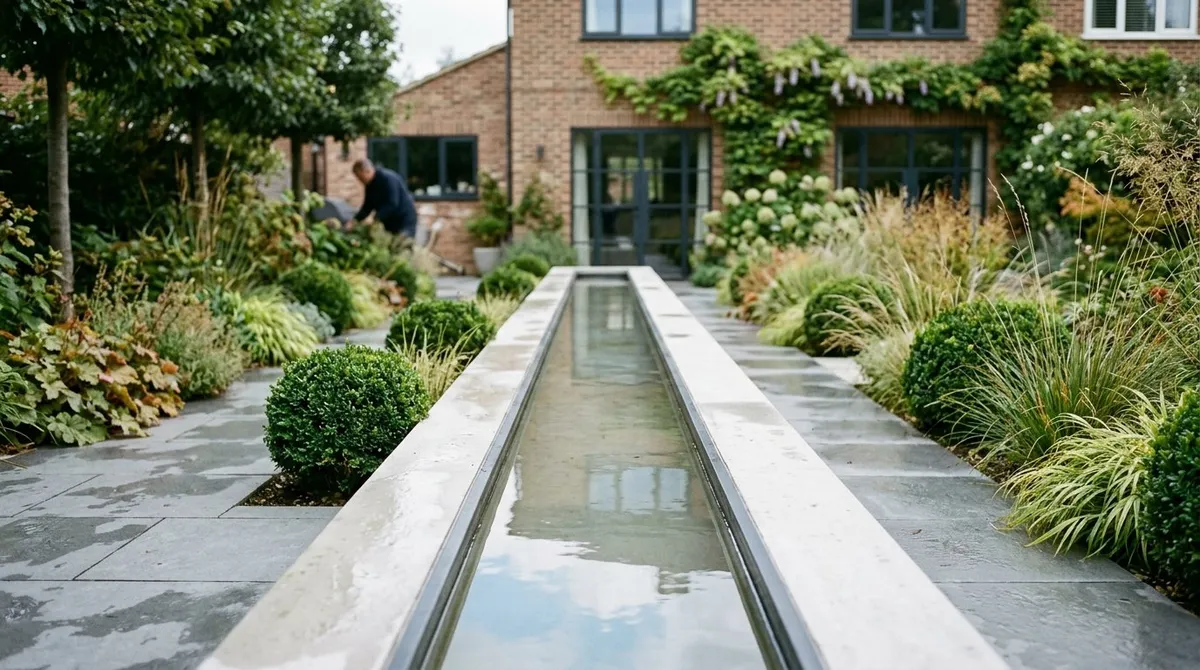
A garden rill is a narrow channel of water, usually straight, shallow and formal. It does something a pond can’t: it draws your eye along a line and leads you through the garden. The water catches the sky, the trickle adds a gentle sound, and the whole space feels calmer.
This guide covers sizing a rill, how the pump keeps water going round, which materials to choose, how a DIY build goes, what to plant and how to look after it. For other ways to add water, browse these water feature ideas for UK gardens.
What is a garden rill?
A rill is a shallow, formal channel of water cut in stone, concrete, brick or metal. A pond is a wider body of still water. A stream is informal and natural-looking. A rill is a deliberate line.
The idea is centuries old. Moorish gardens such as the Alhambra in Granada used thin channels to carry cool water through courtyards. In England, Edwin Lutyens and Gertrude Jekyll used stone rills at Hestercombe in Somerset in the early 1900s, softened with loose planting. That mix of crisp channel and soft planting is still the look to aim for.

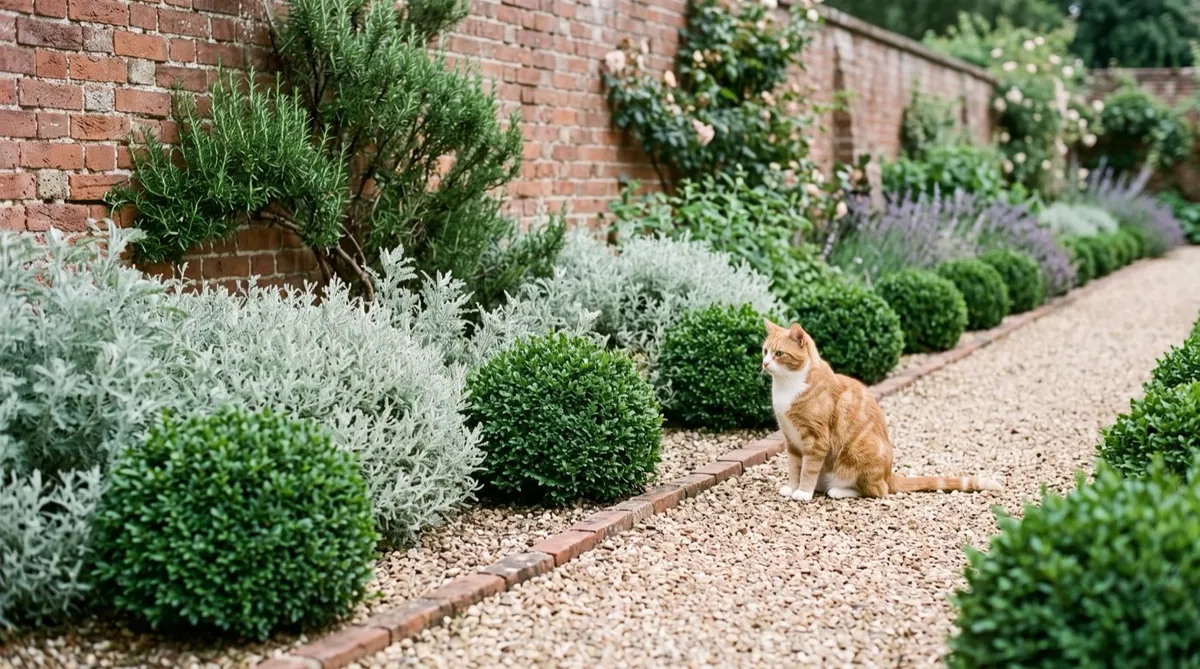
A stone rill edged with lavender and box. The crisp channel and soft planting balance each other.
How wide, deep and level should a rill be?
Three things matter: width, depth and fall.
Width is usually 15-45cm. Narrower than 15cm looks like a gutter. Much wider starts to feel like a canal and needs a bigger pump. For most gardens, 20-30cm looks right.
Depth is usually 5-15cm of water. Shallow water stays bright and reflective, and it’s easier to keep clean.
Fall is how much the channel drops along its length. Build it dead level for a still, mirror-like surface. For a soft, visible flow, a very slight fall of about 1cm per metre is plenty. Any steeper and the water rushes and splashes over the sides. On a sloping site, build short level sections with little drops between, like steps.
Gardener’s tip: Line the rill up with something worth reflecting, such as a tree, a doorway or open sky. On a still rill, the reflection does as much work as the water.
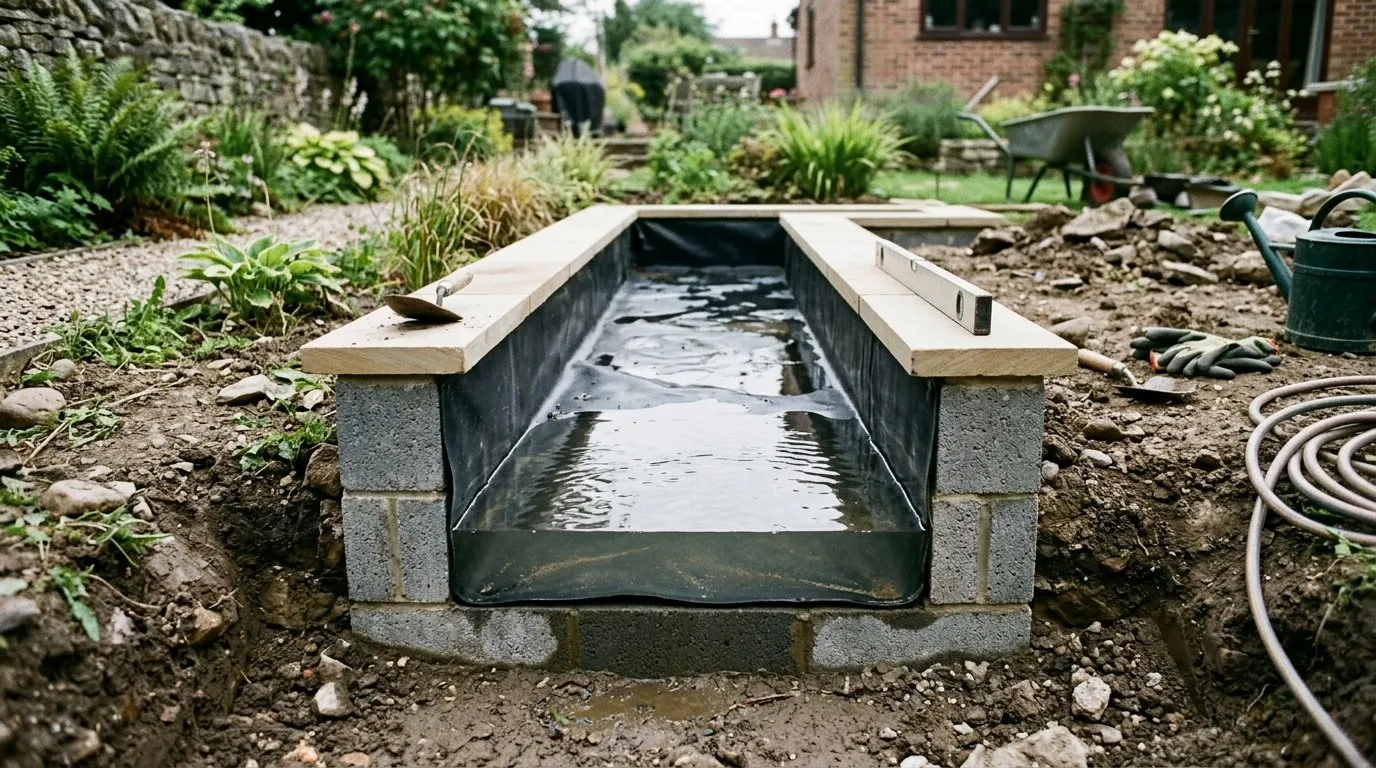
A blockwork channel lined with a flexible liner. Shallow water and level edges give a rill its crisp line.
How does the water move in a rill?
A rill recirculates the same water, so it uses very little. It needs four parts:
- A hidden reservoir, usually a buried tank at the low end
- A submersible pump inside the reservoir
- A pipe up to a header pool or spout at the top
- A grille at the bottom where water drops back into the reservoir
The pump lifts water to the top, it flows down the channel, and it falls back into the reservoir. The only loss is evaporation, so you just top up in warm weather. Water from a butt is ideal.
Choose a pump by its flow at the height it has to lift the water, not its maximum flow. An adjustable pump lets you turn the flow up or down until the water moves smoothly without splashing. Make sure the reservoir holds enough to fill the channel and still keep the pump covered.
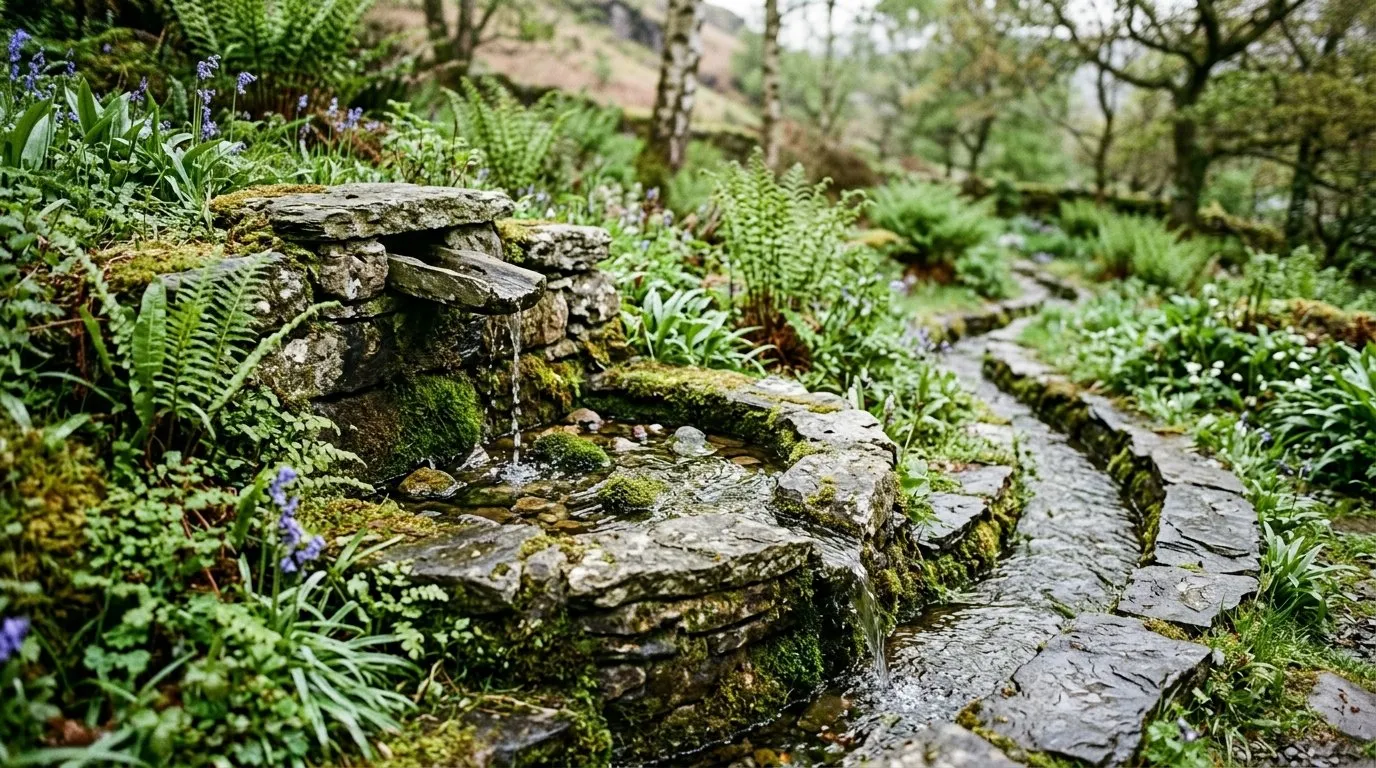
The header pool at the top is where the pump delivers the water. From here it flows back down to the hidden reservoir.
Which materials work best for a rill?
The material sets the look, the cost and how much work the build is.
| Material | Look | Good for | Notes |
|---|---|---|---|
| Blockwork with a flexible liner | Hidden under coping | Budget DIY builds | Liner copes with small movement |
| Rendered concrete blockwork | Crisp, contemporary | Modern formal gardens | Render must be waterproof |
| Brick | Warm, traditional | Cottage and courtyard gardens | Use frost-resistant bricks |
| Natural stone | Timeless, weathers well | Period gardens | Highest cost, very long-lasting |
| Corten steel | Rusty orange, sculptural | Contemporary gardens | Arrives ready-made, quick to fit |
| Stainless steel | Bright and reflective | Minimalist urban gardens | Usually the priciest option |
For most modern gardens, rendered or lined blockwork gives the best value. Steel units are the quickest to fit because they arrive ready-made.
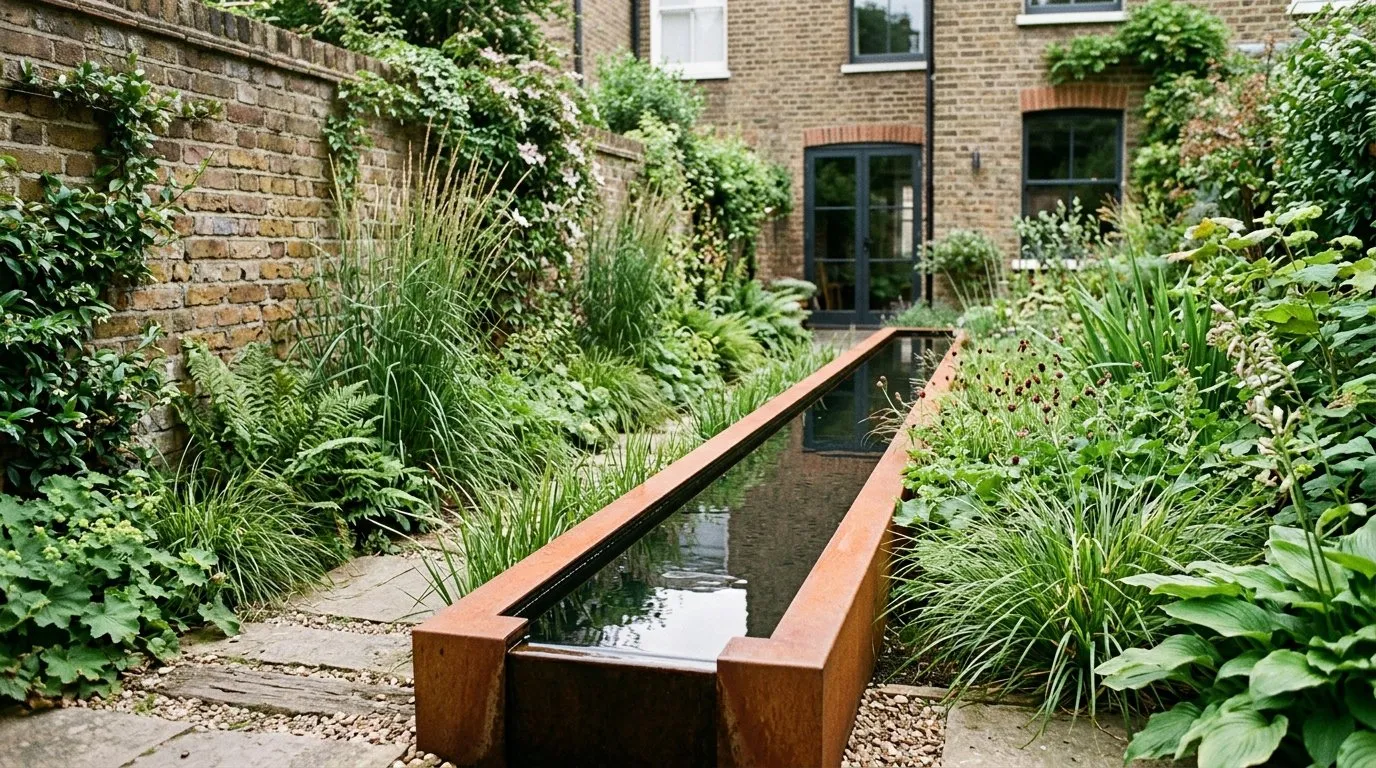
A corten steel rill suits a small, modern garden. The rusty finish looks great beside grasses and ferns.
How to build a garden rill step by step
A simple blockwork rill is a long weekend job for a confident DIYer. Work in this order.
- Set out and level. Mark the line with pegs and string. Decide whether it runs level or with a slight fall. Use a long spirit level or a laser level to get it right.
- Dig and lay a base. Dig out below the channel floor and lay a firm, level concrete base.
- Build the sides. Lay concrete blocks or bricks to form two parallel walls, the width you want apart.
- Line it. Render the inside with a waterproof mix, or fit a flexible pond liner over the blockwork. A liner copes better with small movements.
- Fit the reservoir and pump. Bury the reservoir at the low end, set the pump inside and run the pipe up to the header pool. Hide the pipe under the coping.
- Fill, test and finish. Fill the rill, run the pump and adjust the flow. Then cap the edges with coping stones or paving.
The guide on installing a pond liner shows how to fold and tuck a liner neatly. On a sloping site, the ideas in this guide to garden steps and retaining walls help you step the levels.
Warning: Outdoor pumps need a properly installed outdoor socket protected by an RCD. Have a qualified electrician fit it.
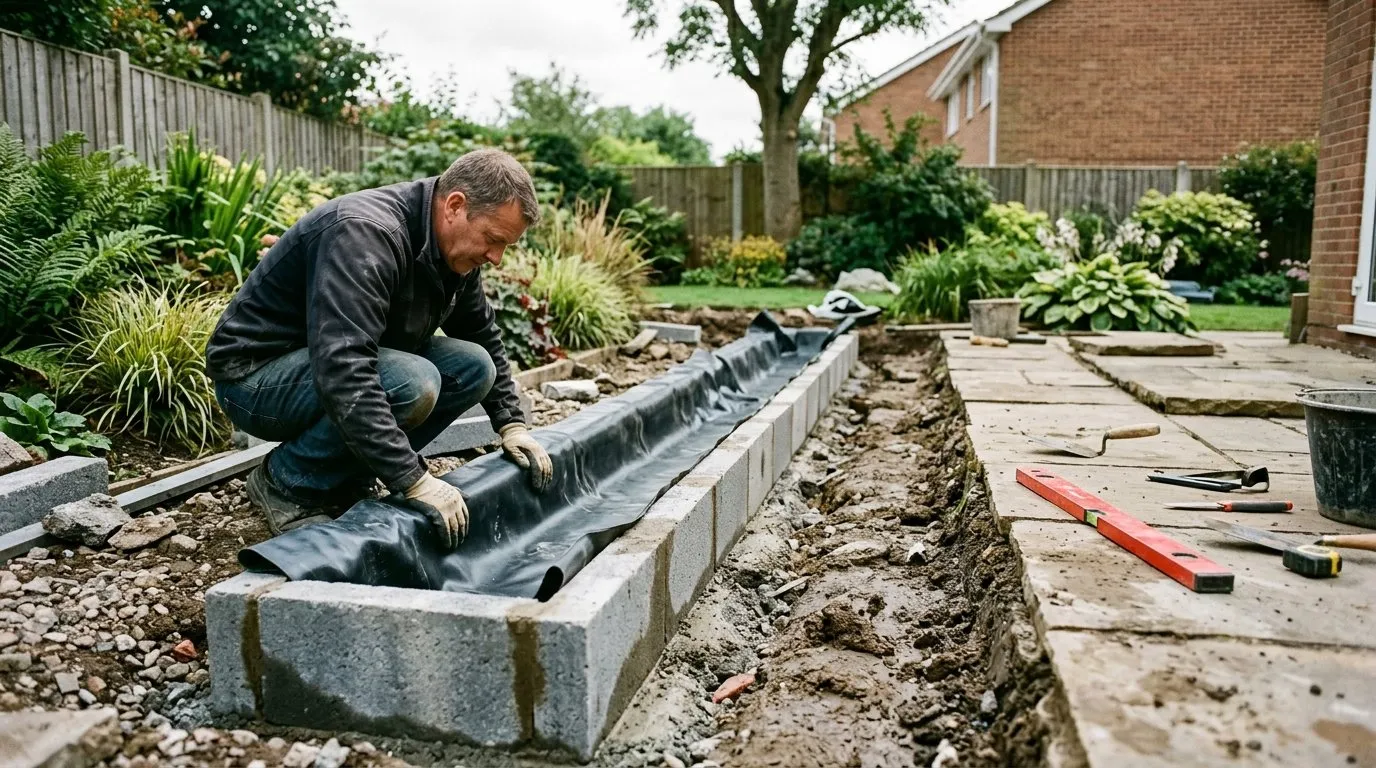
Fitting the liner into the blockwork channel. A firm, level base and a well-fitted liner keep the rill watertight.
What to plant beside a rill
Plant the edges, not the moving water. Flowing shallow water gives roots nothing to hold on to.
Along a formal rill, low repeating plants work well. Try clipped box, lavender (Lavandula angustifolia) or soft mounds of Stipa tenuissima. Erigeron karvinskianus, with its tiny daisies, looks lovely spilling over stone coping.
A still header pool can take true pond plants in planting baskets. Water forget-me-not (Myosotis scorpioides), Iris laevigata and Carex elata ‘Aurea’ suit shallow water. Water mint smells lovely but spreads fast, so keep it in its basket. There are more ideas in this guide to the best pond plants.
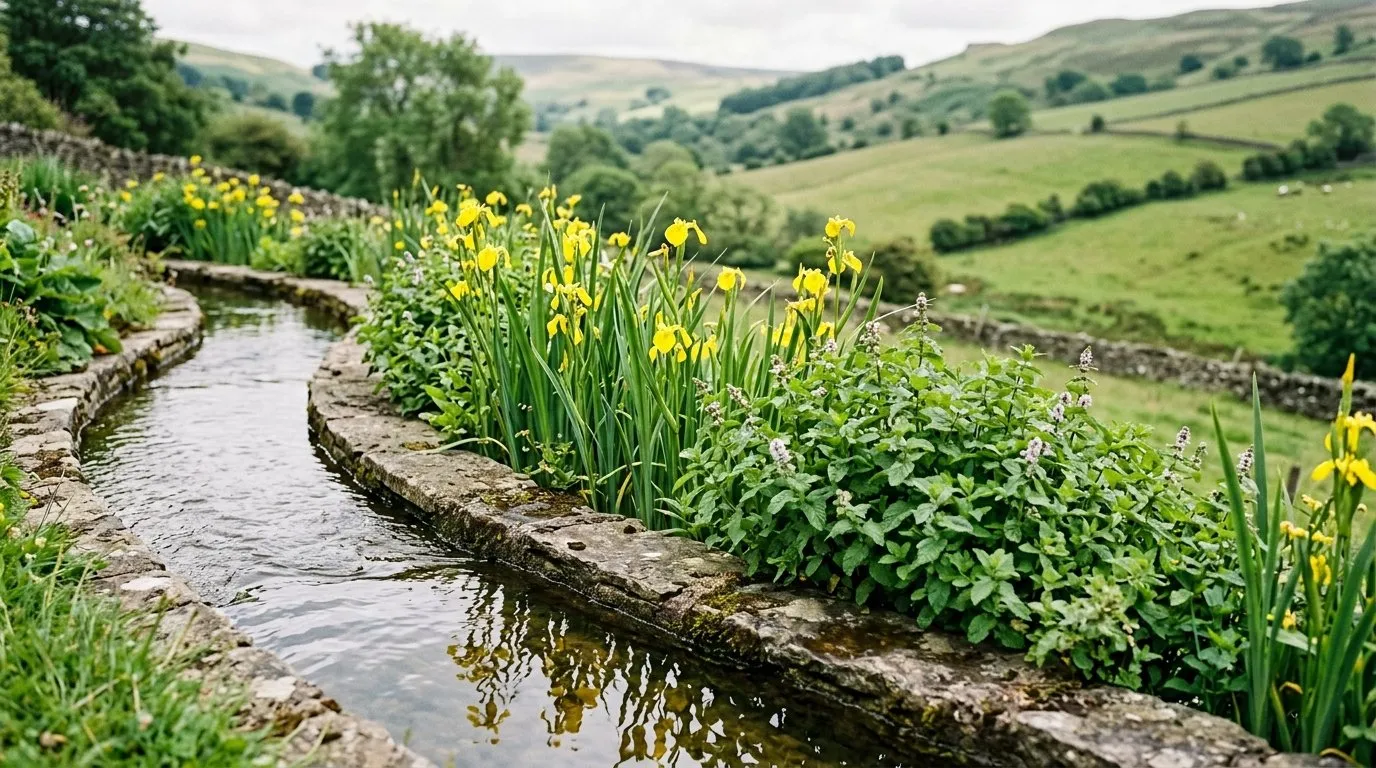
Irises and water mint soften the stone edge. Keep the planting along the sides so the water can flow freely.
Lighting a rill at night
Low-voltage lights turn a rill into the star of the evening garden. Use low-voltage underwater LED strips or spots along the channel, or a single light on the spout. The still water doubles the glow.
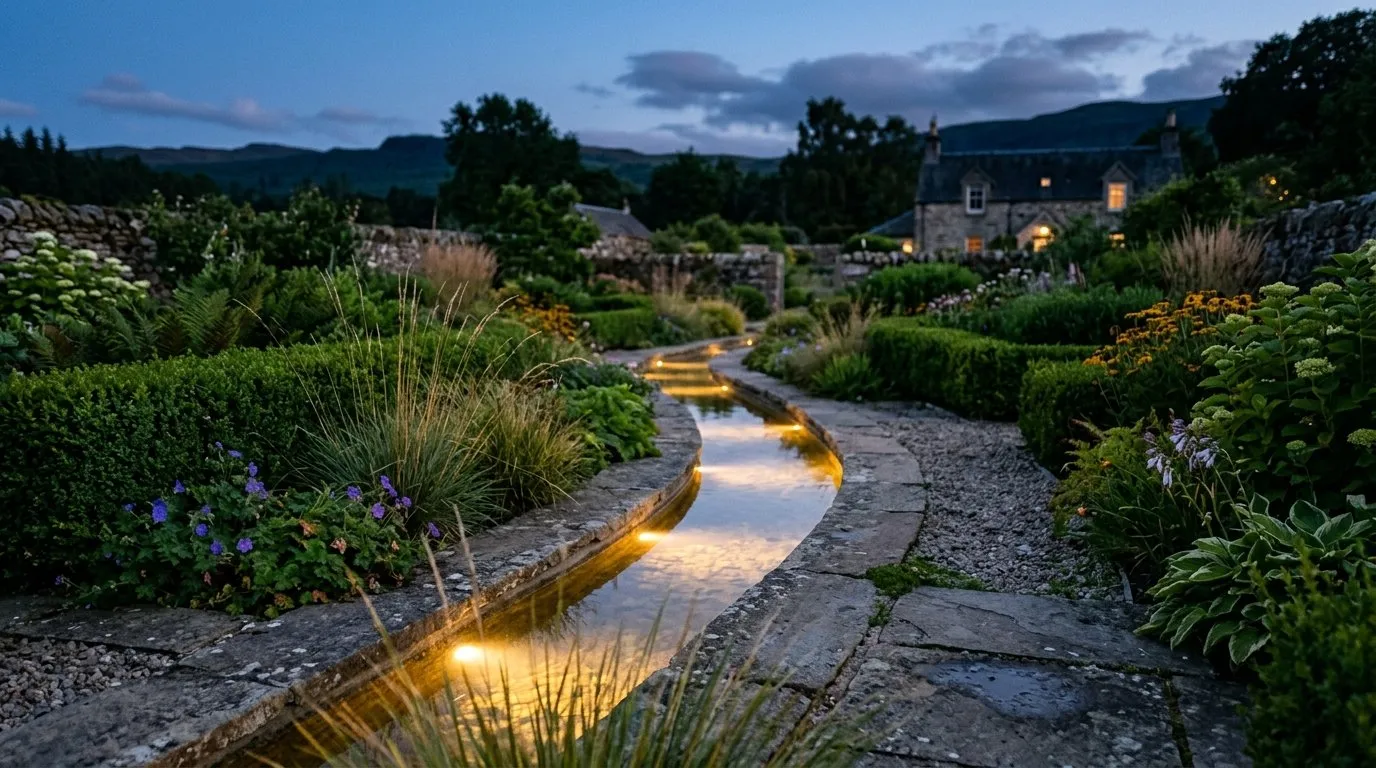
A few low lights along the channel make the rill glow at dusk.
Keeping a rill safe around children and pets
A rill is shallower than a pond, but it isn’t child-proof. Toddlers can drown in very shallow water, so always supervise young children near any water.
Keep the header pool shallow, or cover it with a rigid grille just below the surface. Make sure the reservoir lid is secure. Run the pump through an RCD-protected outdoor socket, and keep cables safely out of the way. If you’d like water with less upkeep and depth, see these low-maintenance water features.
Month-by-month rill care calendar
| Month | Task |
|---|---|
| January | Clear leaves. In hard frost, drain down or keep the pump running so ice doesn’t damage render |
| February | Check render and liner for frost damage and patch small cracks |
| March | Clean the pump filter, restart the system and top up the reservoir |
| April | Give the channel a full clean. Check the flow. Plant up the edges and header pool |
| May | Watch for algae as the water warms. Scrub or net it out |
| June | Top up as water evaporates. Trim edge plants back off the coping |
| July | Check the reservoir every few days in hot weather. Remove blanketweed |
| August | Keep topping up from a water butt. Deadhead pond plants |
| September | Net the rill to catch falling leaves |
| October | Last full clean before winter. Check the pump |
| November | Drain down or keep running through winter. Tidy pond plants in baskets |
| December | Clear debris. Check for ice after cold nights |
For green water problems, the guide to fixing pond algae and murky water works for rills too.
Common mistakes with garden rills
Getting the level wrong. A rill that’s slightly off shows it straight away, with dry patches at one end. Check the level along the whole length before the coping goes on.
Too steep a fall. Water rushes, splashes over the edges and empties the reservoir. Keep the fall very slight, or build it level.
A reservoir that’s too small. When the pump fills the channel, the reservoir drops and the pump can run dry. Size the reservoir generously.
Planting in the channel. Plants clog the flow and trap leaves. Keep them along the edges and in baskets in the header pool.
Forgetting maintenance access. You’ll need to reach the pump to clean the filter. Use a removable grille or lid over the reservoir.
Frequently asked questions
What is a garden rill?
A rill is a narrow, shallow water channel, usually straight and formal. It runs a thin line of still or gently moving water through the garden. A hidden pump recirculates the water.
How deep should a garden rill be?
Most rills hold 5-15cm of water. The shallow depth is what makes a rill bright and reflective. It also keeps the channel easy to clean and stops it looking like a canal.
What fall does a water rill need?
Only a very slight one, or none at all. A drop of about 1cm per metre gives a soft, visible flow. Many formal rills are built dead level, so the surface stays still and mirror-like.
Does a water rill use a lot of water?
No, it reuses the same water. The pump lifts water from a hidden reservoir to the top and it flows back down. You only top up what evaporates, ideally from a water butt.
Are garden rills safe for children?
They’re shallower than a pond, but not child-proof. Toddlers can drown in very shallow water, so always supervise them. Cover any deeper header pool or reservoir with a rigid grille.
What plants suit a garden rill edge?
Low, neat plants suit a formal rill edge. Try clipped box, lavender, Stipa tenuissima or Erigeron spilling over the coping. Put true pond plants in baskets in a still header pool, not the moving channel.
If you’d rather dig something deeper, our guide on how to build a garden pond takes you through it step by step, or explore more in the garden design hub.
Our team produces practical UK gardening guidance from source research, contributor records and established horticultural practice. Editorial standards are overseen by Matt W.