Key takeaways
- Green water is tiny algae; a UV clarifier clears it quickly, and more plants stop it coming back
- Pull blanketweed out by hand every week and add more submerged plants
- Foam usually means too much waste in the water, so feed less and check the filter
- Fish gasping at the surface is an emergency: get air into the water straight away
- Covering about half the surface with plants prevents more problems than any product
Almost every pond problem comes back to one of three things: too much food for algae, not enough plants, or a filter that isn’t coping. Work out which one you’re dealing with and you’ll save yourself weeks of faff and money.
If you’ve got the green pea-soup water that turns up every spring, our guide to clearing green pond water goes into it in detail.
Below are the ten most common pond problems, what causes each one, how to fix it, and how to stop it coming back.
Pond problems at a glance
Spot your problem in the table, then skip to its section.
| Problem | Usual cause | Quick fix | Stop it coming back |
|---|---|---|---|
| Green water | Tiny algae, too many nutrients and sun | UV clarifier | Cover about half the surface with plants |
| Blanketweed | Stringy algae, too many nutrients | Pull out by hand, barley straw | More submerged plants, less fish food |
| Brown or murky water | Floating bits, stirred-up sludge | Flocculant | Net in autumn, clear sludge |
| Foam | Too much waste, struggling filter | Feed less, check filter | Fewer fish, clean filter regularly |
| Oily film | Natural bacteria (or fuel) | Poke it to check | Nothing, the natural kind is harmless |
| Bad smell | Sludge rotting without air | Vacuum sludge, add air | Clear debris regularly |
| Fish gasping | Not enough oxygen | Spray water onto the surface | Air pump, good plant balance |
| Duckweed | Nutrients, still water | Net it out weekly | Feed less, ripple the surface |
| Heron visits | A hungry heron | Low wire round the edge | Plants for fish to hide in |
| Water level dropping | Evaporation or a leak | Top up with rainwater, leak test | Check the liner each year |
Green water
Green water is the problem people ask about most. The pond turns the colour of pea soup and you can’t see a thing. It won’t hurt wildlife, and frogs and birds use green ponds happily. But it spoils the look and it’s a sign there’s too much food in the water.
What causes it. Tiny floating algae love two things: spare nutrients (from fish waste or garden runoff) and sunshine. That’s why it’s worst in spring. The sun is getting stronger but pond plants haven’t grown enough yet to shade the water or soak up the nutrients.
The natural fix. Add more submerged oxygenating plants. Hornwort (Ceratophyllum demersum) is a great choice. It soaks up nutrients through its leaves and grows fast enough to beat the algae. Pair it with lilies or water hawthorn to shade at least half the surface. This takes a few weeks to kick in but it lasts.
The fast fix: a UV clarifier. Water runs past an ultraviolet bulb that kills the algae, and it usually clears in a few days. Get one sized for your pond, as a small unit in a big pond never quite catches up. The maker’s guide will tell you which size you need. A UV clarifier only deals with green water. It does nothing for blanketweed.
Why plants win in the end. A UV clarifier treats the symptom. Switch it off, or let the bulb fail, and green water soon comes back because the extra nutrients are still there. Plants use those nutrients up for good. A well-planted pond may not need a UV clarifier at all.
Blanketweed loves shallow, rich water. Pull it out weekly so it doesn’t clog the pump.
Blanketweed

Twist blanketweed out every week with a stick or cane, and it never gets out of hand.
What causes it. The same as green water: too many nutrients and lots of light. It’s especially bad in:
- Shallow ponds where sunlight reaches the bottom
- New ponds before the plants have settled in
- Ponds with lots of fish
- Ponds that catch fertiliser runoff from lawns or borders
How to fix it. Use a mix of these:
- Pull it out every week. Twist it round a stick or cane and lift it out in clumps. Leave it beside the pond for a day before composting, so any little creatures can crawl back into the water.
- Add barley straw. As it rots in the water, barley straw helps hold blanketweed back. Put it in a mesh bag or a barley straw float near the pump, so water flows through it, and follow the amount on the pack. It takes a few weeks to start working, so put it in during March before the weed takes off.
- Add more plants. Our pond maintenance guide covers how many to add. The more submerged plants there are using up nutrients, the less there is for blanketweed.
Skip the blanketweed killers. Killing a big mass of weed all at once leaves it rotting in the pond. That puts the nutrients straight back and can strip the oxygen fast enough to kill fish. Hand pulling, barley straw and more plants are the way to go, especially in a wildlife pond.
Murky or brown water
Brown, murky water looks grim but it’s usually easier to fix than green water. It isn’t algae. It’s fine bits floating in the water: stained water from rotting leaves or wood, clay stirred up from the bottom, or dust from a new pond that hasn’t settled yet.
Which one have you got? Fill a clear glass with pond water and hold it up to the light. Brownish with bits floating in it means sediment. Properly green means algae. A bit of both means you’ve got both problems to sort.
The fix: a flocculant. This is a pond clarifier that makes tiny bits clump together, so they sink or get caught by the filter. Follow the dose on the label exactly. The water usually clears in a day or two.
Stop it coming back. Net the pond from September to December to catch falling leaves before they rot. Try not to stir up the bottom. Clear out built-up sludge every few years so it doesn’t cloud the water.
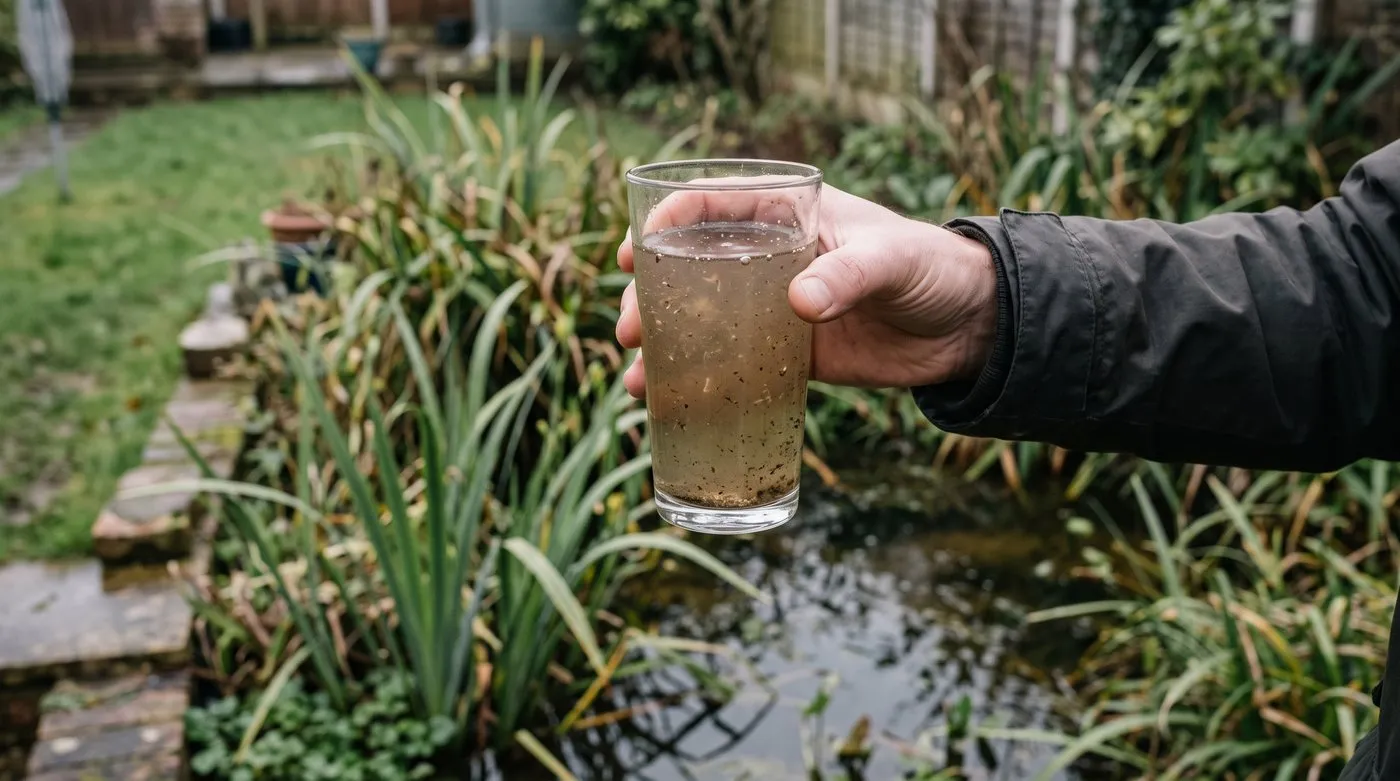
A glass of pond water held to the light tells you what you’re dealing with. Brown with specks means sediment, while properly green means algae.
Foam on the pond
A little foam where a waterfall splashes in is normal. Foam across the whole pond, or foam that smells, means something needs sorting.
What causes it. Too much waste in the water: fish poo, rotting plants or leftover food. When there’s lots of it, any splash whips it into foam. It looks like soap but it isn’t.
The fix. Skim the foam off with a fine net. Feed fish only what they eat in about three minutes, as leftover food soon rots. Check the filter is running properly, since a blocked one lets waste build up.
If foam suddenly appears after a spell of clear water, suspect the filter. Rinse the filter media in a bucket of pond water, never tap water, as chlorine kills the helpful bacteria living in it. Check the pipe joints, restart it and keep an eye on it for a couple of days.
Oily film on the surface
A rainbow sheen on the water worries most people, but it’s almost always natural and harmless.
Natural or fuel? Poke the film with a stick or blow on it. Natural bacterial film breaks into flat, jagged pieces that stay apart. Fuel swirls back together and smells of petrol or diesel. If it’s natural, leave it be. If it’s fuel, turn off the pump, cover the pond if you can and report it to the Environment Agency.
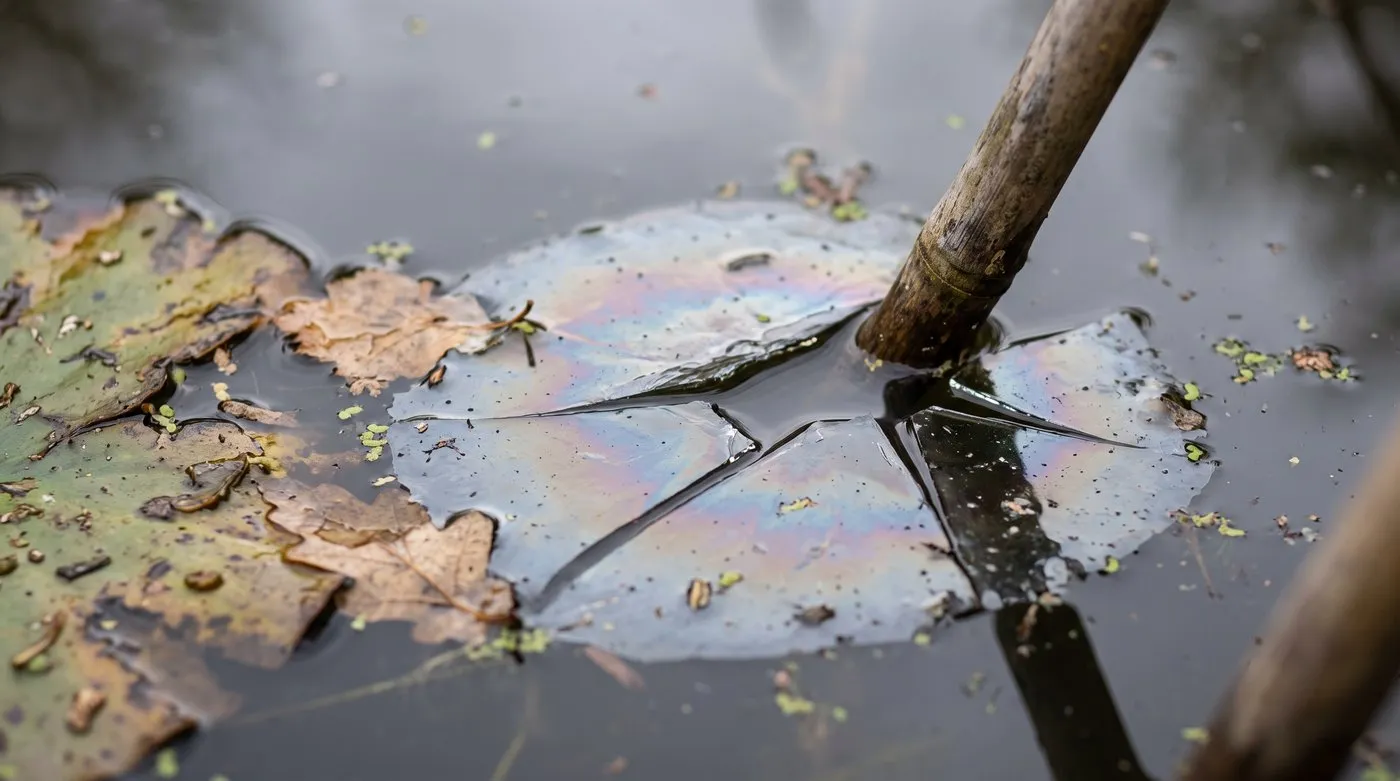
Poke the sheen with a stick. If it breaks into flat, jagged pieces that stay apart, it’s natural and harmless.
Pond smells bad
A healthy pond smells gently earthy, like damp soil. A rotten-egg smell means sludge is rotting at the bottom without enough air. It’s unpleasant, and in a big way it isn’t good for fish either.
The fix. Use a pond vacuum to lift the sludge off the bottom. Don’t drain the pond. Take out a third of the water at most and never clean everything in one go. Get more air in with an air pump, or point the pump outlet so it ripples the surface. Clear out rotting plants as you spot them.
Don’t go too far, though. The RHS pond care advice suggests leaving a little undisturbed sludge as a home for pond life. You’re clearing the build-up, not scrubbing the pond clean.
A barley straw float takes a few weeks to start working, and it’s safe for fish, frogs and other pond life.
Fish gasping at the surface
Fish gulping air at the surface is an emergency. The water is short of oxygen and fish can die within hours, so act now.
What to do right away. Spray pond water back onto the surface, from the pump outlet or a fountain head, for at least half an hour. Splashing the surface pushes oxygen into the water. Turn your pump up to full. If you have an air pump with an airstone, run it flat out. Anything that breaks up the surface helps.
Common causes:
- An algae bloom. Algae make oxygen in the day but use it up at night. A big bloom can use the lot by morning, which is why gasping is often worst at dawn.
- Hot weather. Warm water holds less oxygen than cold water, so long hot spells put fish ponds at risk.
- A broken filter. A blocked or stopped filter lets waste build up, which uses up oxygen.
Stop it happening again. In a fish pond, run an air pump day and night from June to September. Our list of the best pond plants for oxygenation includes hornwort, elodea and water crowfoot, all of which add oxygen in daylight.
Duckweed taking over
Duckweed (Lemna minor) is a tiny floating plant that can carpet a whole pond in summer. On its own it’s no villain. It’s native, wildlife enjoys it and ducks really do eat it. Trouble starts when it forms a solid blanket, blocking the light and starving the pond of oxygen.
How to control it. Netting it out is the only real answer. Sweep a fine net across the surface in long strokes, working with the wind so it piles up at one edge. Do this weekly through the growing season.
Keep it out. Duckweed sneaks in on new plants, boots, nets and visiting birds. Check new plants before they go in. Point the pump outlet so the surface ripples, because duckweed loves still water. A fountain or waterfall slows it down a lot. Feeding fish less helps too.
Lilies, water hawthorn and floating plants over about half the surface keep the water clear for the long haul.
Herons after your fish
Grey herons are protected in the UK, so you can’t harm them. They’re also brilliant at fishing and can clear a fish pond in a week.
What works. Herons land a few metres away and walk in, so a single wire round the edge at about 20cm high stops them stepping in. A heron statue works for a little while, but real herons soon realise it never moves. Motion-activated water sprayers work well when a heron keeps using the same route.
Cover is the best long-term answer. Thick planting round the edges gives fish somewhere to hide and makes wading awkward. Lily pads give them shelter from above too.
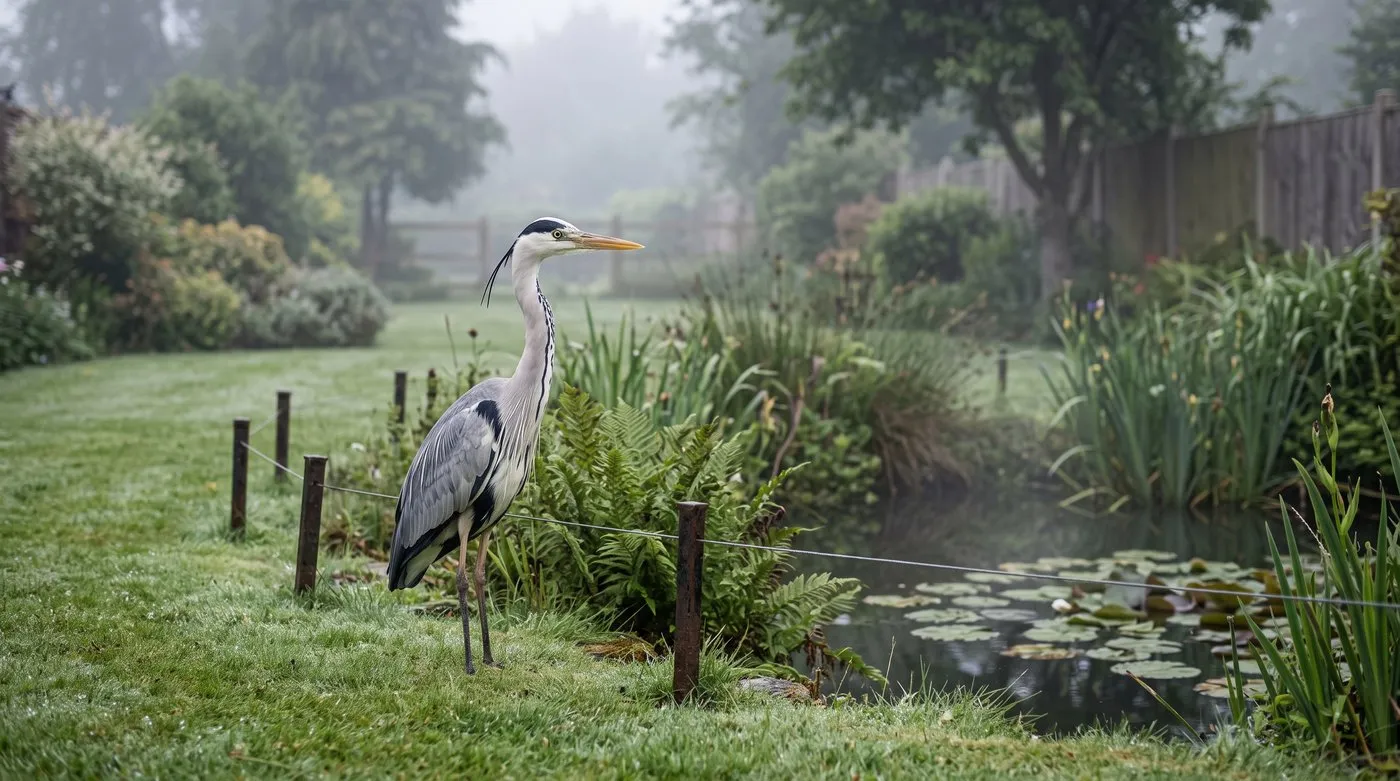
Herons land nearby and walk in, so a single low wire round the edge trips up their plan. Thick planting gives fish somewhere to hide too.
Water level dropping
A pond losing water is either evaporating or leaking.
Evaporation. In warm, sunny weather a pond can lose a couple of centimetres a week. Top up with rainwater rather than tap water, which can add nutrients that feed algae. A rainwater harvesting system on the shed or house roof makes this easy.
Leak test. Turn off the pump and mark the water level with tape or a marker. Wait 24 hours. If the level holds with the pump off, the leak is probably in the pump, pipes or waterfall. If it keeps dropping, the liner has a hole. Patches and repair tape work on butyl liners. EPDM liners need the patch made for that material.
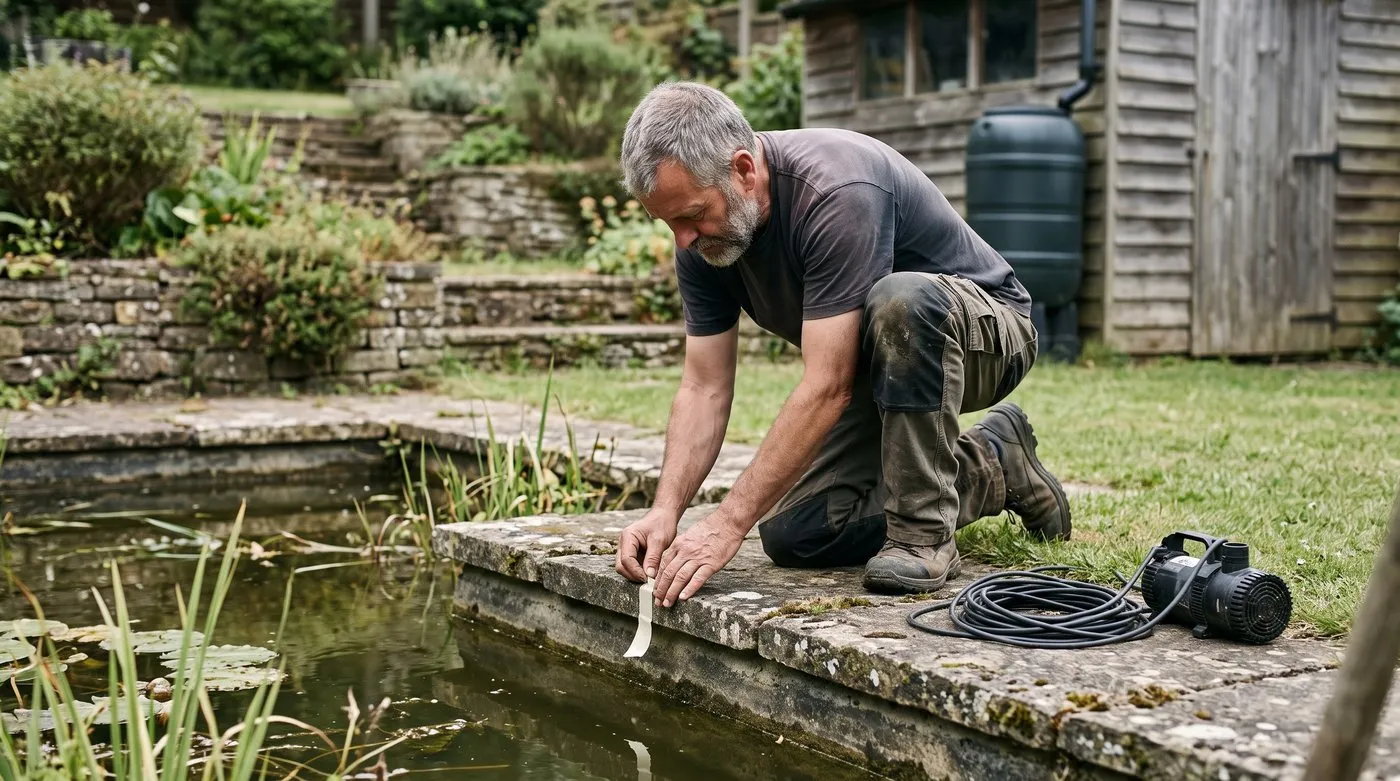
Mark the level, switch the pump off and wait a day. If it holds, look at the pump and pipes. If it keeps dropping, check the liner.
Pond problems month by month
Pond problems follow the seasons, so you can get ahead of them.
| Month | What to expect | What to do |
|---|---|---|
| March | First algae, blanketweed starts | Add barley straw, divide crowded plants |
| April to May | Green water as days brighten | Check plant cover, run the UV clarifier |
| June to July | Blanketweed peak, low oxygen in heat | Pull weed weekly, add an air pump |
| August | Gasping fish, water level dropping | Top up with rainwater, check daily |
| September | Duckweed, leaves start falling | Net duckweed, fit a pond net |
| October to November | Foam and smells from rotting leaves | Lift the leaf net, vacuum sludge if needed |
| December to February | Ice, filter slows down | Float a ball on the surface, turn the pump down |
Four habits that stop most pond problems
Get these four right and most problems sort themselves out.
1. Plenty of plants. Cover about half the surface with lilies and water hawthorn, and add a good number of submerged oxygenators. Plants beat algae to the nutrients and the light. Our water feature ideas show ways to build in planting from the start.
2. Not too many fish. Too many fish is the biggest cause of a nutrient-rich pond. Wildlife ponds with no fish are much easier to look after, as frogs, newts and bugs add very little waste.
3. Little and often. Clear debris before it rots. Never drain the whole pond. Clean filters in pond water, not tap water. A proper tidy in March and a quick check each month keep things ticking. The pond maintenance guide has a full seasonal plan.
4. Go easy on fish food. Feed only what fish eat in about three minutes. Feed less once the water drops to about 15°C and stop below 10°C. Leftover food rots and feeds algae, so this is the quickest win of all.
Frogs and toads are free helpers too. They eat insects, and their tadpoles graze on algae. Our frog and toad guide shows how to make them welcome, and creating a wildlife garden covers the bigger picture.
Short on space? A container pond works the same way and responds even faster to new plants.

A barley straw mini-bale. Give it a few weeks to start working.

Plenty of plants on the surface is the best long-term way to keep water clear.
Frequently asked questions
Why is my pond water green?
Tiny algae are feeding on spare nutrients in the sunshine. A UV clarifier will clear it as water passes through. For a lasting fix, add more submerged oxygenating plants to soak up those nutrients. Cover about half to two-thirds of the surface with lilies or floating plants to cut the light.
How do I get rid of blanketweed in a pond?
Pull it out by hand, often. Twist it round a stick or cane like spaghetti. Leave it on the pond edge for a day so creatures can crawl back in. Then cut its food supply: add more submerged plants such as hornwort, don’t overfeed fish and keep fertiliser out of the pond.
Why is my pond water brown and murky?
Usually it’s fine bits floating in the water, not algae. Rotting leaves, stirred-up sludge or peat are the usual causes. Clear out dead leaves and sludge, and check your filter is working. A pond flocculant helps the bits clump and settle. Net the pond in autumn to keep leaves out.
Why is there foam on my pond?
Foam usually means too much waste in the water. Fish poo, leftover food, rotting plants or an overloaded filter are the usual culprits. Skim it off and feed fish only what they eat in a few minutes. Check the filter is running and not blocked. Swapping a little of the water now and then helps too.
What causes an oily film on a pond?
Usually natural iron bacteria, not pollution. Poke it with a stick to check. A natural film breaks into flat, separate pieces. An oil film swirls back together and may smell of fuel. The natural kind is harmless and clears on its own. Report suspected oil pollution to the Environment Agency or your local equivalent.
Why does my pond smell bad?
Something is rotting at the bottom without enough air. That gives off a rotten-egg smell. Scoop or vacuum out the sludge and clear dead leaves and plant bits. Get the water moving more with a pump or fountain. A healthy pond smells fresh and earthy, not foul.
Why are my fish gasping at the surface?
They’re short of oxygen, so act straight away. Run a fountain, waterfall or air pump right now. Spraying pond water back onto the surface helps too. Then find the cause. Hot still weather, an algae bloom dying off, lots of rotting matter or a stopped filter are the usual ones.
Related reading
- How to maintain a garden pond: seasonal jobs month by month
- Best pond plants UK: oxygenators, marginals and floaters that keep algae down
- How to build a wildlife pond: get the design right first time
- Frog and toad garden guide: welcome the amphibians that help keep ponds healthy
- Container pond ideas for small gardens: smaller ponds, same rules
Our team produces practical UK gardening guidance from source research, contributor records and established horticultural practice. Editorial standards are overseen by Matt W.