Key takeaways
- A lined half barrel is the easiest all-round container pond
- Aim for at least 30cm deep, or about 40cm for a miniature waterlily
- Plant a simple mix: one waterlily, two marginals and an oxygenator
- Fill with rainwater and let wildlife find it on its own
- Give it 4 to 6 hours of sun, with a bit of afternoon shade
- No pump, filter or electricity needed
A container pond is the quickest way to bring water and wildlife into a small garden. There’s no digging, no big liner and no electricity. One half barrel on a patio holds enough water for flowering plants, visiting frogs and bathing birds, and you can set it up in an afternoon.
Garden ponds are one of the best things you can add for wildlife, and a mini pond brings plenty of that into a tiny space. Whether you have a courtyard, a balcony or a strip of patio, there’s a container that fits.
What are the best containers for a pond?
The container decides how deep your pond is and what you can grow. Bigger is better, as the water stays steadier, but even a washing-up bowl can hold a few plants.
| Container | Size | Depth | Good for |
|---|---|---|---|
| Half oak barrel | Medium | Deep enough for a waterlily | An all-round pond with a waterlily |
| Galvanised trough | Medium to large | Medium | Long, narrow spaces and patios |
| Belfast sink | Small to medium | Medium | Cottage and courtyard gardens |
| Large glazed pot | Small to medium | Medium to deep | A pretty centrepiece |
| Washing-up bowl | Small | Shallow | A starter pond or a children’s project |
| Zinc bath | Large | Medium to deep | Vintage or farmhouse style |
Half barrels are the favourite for good reason. They hold enough water to stay steady, they’re deep enough for a miniature waterlily, and they look at home in any garden. In a small garden, one barrel tucked in a corner gives you water without eating up space.
 A galvanised trough with marsh marigold and water forget-me-not. Troughs are great for narrow patios.
Galvanised troughs warm up faster than wooden barrels in the sun. Line them with a pond liner offcut, as zinc in the water isn’t good for plants and pond creatures.
How do you set up a container pond step by step?
It’s an easy afternoon job, and you don’t need any special tools.
1. Pick your spot. Choose somewhere with 4 to 6 hours of sun. Put the container in place before you fill it, because water is very heavy to move. Make sure the ground is level, as water shows every slope.
2. Get the container ready. Line a half barrel with pond liner so it doesn’t leak. Line galvanised containers too. Belfast sinks are watertight already, apart from the plughole, so seal that.
3. Add a base. Put about 5cm of washed gravel or aquatic compost in the bottom. Don’t use garden compost, as it’s too rich and feeds algae.
4. Plant in stages. Put oxygenating plants in first. Stand marginal plants in baskets on bricks so they sit at the right height. Add the waterlily last, in the deepest part.
5. Fill slowly. Rainwater is best, so use your water butt if you have one. Tap water is fine at a push, but leave it to stand for a couple of days first.
6. Let wildlife find it. Don’t bring in water or creatures from wild ponds. Frogs, pond skaters and dragonflies will find your pond on their own, often within a few weeks.
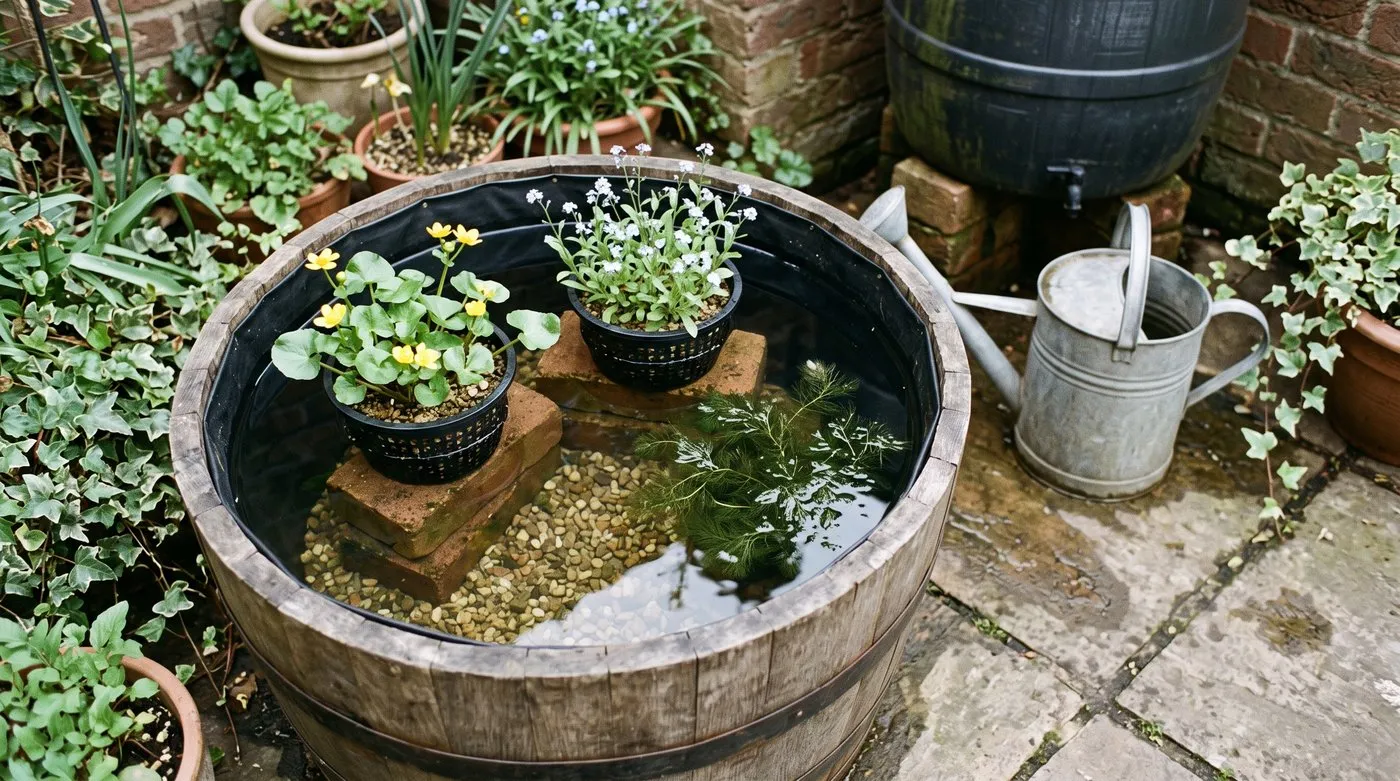
Stand marginal baskets on bricks so they sit at the right depth. Fill with rainwater from a water butt if you can.
What are the best plants for a container pond?
Pick plants that stay small and are happy in shallow water. A good mix is one waterlily, two marginals (plants for the shallow edges) and one oxygenator. Our list of the best pond plants for UK gardens covers bigger ponds too.
Miniature waterlilies are the stars. Nymphaea ‘Helvola’ has small yellow flowers and stays compact. ‘Aurora’ flowers open yellow and darken to orange and red. Both flower through summer in a pot as small as 45cm across.
Marsh marigold is one of the first native wildflowers of spring, with bright yellow flowers in March and April. It likes very shallow water and gives early food to bees and hoverflies, so it’s a great pick for wildlife gardens.
Water forget-me-not has pale blue flowers through summer and scrambles prettily over the edge. Bees and hoverflies love it.
A compact iris, such as Iris versicolor ‘Kermesina’, adds upright leaves and plum-purple flowers in early summer. One plant per barrel is plenty.
Hornwort is a brilliant oxygenator for containers. It floats just under the surface, needs no planting, and helps keep the water clear by using up the food algae would grow on.
 A half barrel with a miniature waterlily, an iris and trailing water forget-me-not, sitting in part shade.
What wildlife does a container pond attract?
Even a tiny pond brings in a surprising amount of life. The Wildlife Trusts suggest mini ponds as an easy way to help wildlife in towns.
Dragonflies and damselflies may lay eggs from early summer. Common darters and blue-tailed damselflies are the likeliest visitors.
Birds come to drink and bathe. Blackbirds, robins and blue tits will visit once they find it. A flat stone at the edge gives them somewhere safe to land. For more on attracting birds to your garden, food and shelter matter as much as water.
Pond skaters, water boatmen and water beetles fly in quickly, often within days. They’re the start of a little food chain that brings bigger visitors.
How much does a container pond cost?
It’s one of the cheapest garden projects going. Here’s what goes into three different sizes of pond.
| Setup | What you need | Cost |
|---|---|---|
| Starter | Washing-up bowl, a bunch of hornwort, two marginals, a little gravel | Low |
| Half barrel | Barrel, liner offcut, aquatic compost, hornwort, two marginals, a miniature waterlily | Moderate |
| Showpiece | Large glazed pot, more plants, a waterlily and an optional solar fountain | Higher |
The starter bowl is a real pond. With hornwort and a couple of marginals, it brings in minibeasts and makes a handy bird bath. For most people the half barrel is the sweet spot: deep enough for a waterlily, big enough to stay healthy, and room for four or five plants.
Where should you position a container pond?
Sun matters most. Waterlilies need 4 to 6 hours of direct sun to flower. Marginals cope with more shade but flower better with some sun. A spot facing south-east or south-west suits most gardens.
Avoid a baking south-facing wall if you can. Small ponds get too hot there, which stresses plants and wildlife. If that’s your only spot, use the biggest container you can fit, as more water stays cooler. If your patio is mostly shady, skip the waterlily and grow shade-tolerant plants around the pond instead.
Shelter from wind helps on balconies and open patios. Wind dries the pond out faster and can knock over tall plants. A spot by a fence or wall gives shelter without blocking the light.
Keep water handy. Small ponds lose a fair bit to evaporation in summer, so a nearby water butt or tap saves a lot of carrying. In courtyard gardens, placing the pond near a downpipe makes collecting rainwater easy.
 A lightweight container pond on a balcony, with a little solar fountain for movement and sound.
Weight on balconies. Water is heavy. A 50-litre barrel weighs over 50kg once it’s filled and planted. Check what your balcony can safely hold with your landlord or building manager before you go big, and choose a lightweight resin or fibreglass container.
How do you maintain a container pond through the year?
Container ponds need very little looking after. A few minutes a week in summer, and almost nothing in winter.
Spring (March to May). Clear out dead leaves and stems from the winter. Split any marginals that have got too big and replant them in fresh aquatic compost. Push an aquatic fertiliser tablet in beside the waterlily. Top up with rainwater. The water often turns green in spring before the plants get going, and it usually clears by itself in a few weeks.
Summer (June to August). Top up in hot spells, sometimes a few times a week. Twist blanket weed out round a stick, then leave it on the edge overnight so creatures can crawl back in. Take off faded waterlily flowers.
Autumn (September to November). Net the pond or scoop out fallen leaves often, as rotting leaves feed algae next spring. Cut dead marginal leaves back to just above the water. Stop feeding the waterlily.
Winter (December to February). The main worry is the pond freezing solid. Move small bowls and pots into an unheated shed or garage. For bigger containers, float a tennis ball on the surface to help stop ice cracking the container. Don’t smash ice on a pond, as the shock can harm anything living underneath.
Is a container pond safe around children?
Any water needs watching around young children. A small child can drown in very shallow water. A raised container is harder for a toddler to fall into than a pond in the ground, but it’s not risk-free.
With under-fives around, stand the pond at adult waist height on a sturdy base, or fit a rigid metal mesh grille just under the water. Plants grow through it, but a child can’t fall in face first. The RHS water safety advice has more on keeping ponds safe with little ones about.
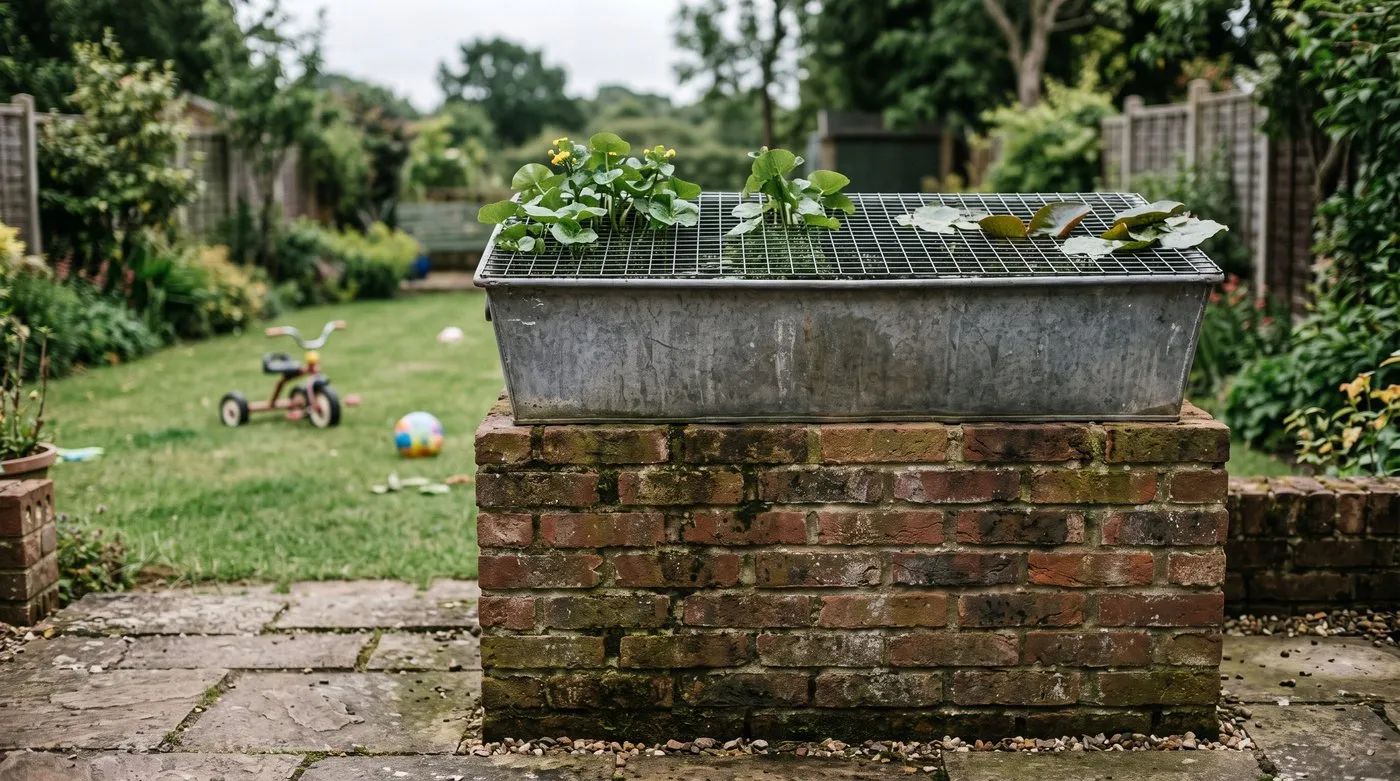
A raised pond with a rigid grille just below the surface lets plants grow through while keeping little ones out.
How do you stop mosquitoes breeding in a container pond?
Mosquito larvae like still water with nothing around to eat them. A healthy little pond soon has plenty of hungry residents.
Let predators move in. Backswimmers, water boatmen and water beetles eat mosquito larvae, and they arrive by themselves. Frogs and dragonfly larvae eat them too.
Add a little movement. A small solar fountain ripples the surface, which mosquitoes don’t like for laying eggs.
Keep it well planted. Plenty of plants means less open water, and hornwort near the surface gets in the way of egg-laying.
Keep it fresh. Take out fallen leaves and top up regularly so the water doesn’t turn to sludge.
Fancy growing something to eat in your pond? See our guide to edible aquatic plants.
Frequently asked questions
What is the best container for a pond?
A lined half oak barrel is the best all-rounder. It’s deep enough for a miniature waterlily and looks natural anywhere. Galvanised troughs and Belfast sinks work well too. Avoid unglazed terracotta, which soaks up water and can crack in frost.
Do container ponds attract mosquitoes?
Not much, once the pond has settled in. Mosquito larvae need still water with nothing to eat them. Backswimmers, water boatmen, frogs and dragonfly larvae all eat them, and they find your pond on their own. A small solar fountain helps too.
Can I keep fish in a container pond?
No, they’re too small for fish. Even a big barrel doesn’t hold enough water for fish to stay healthy, and their waste quickly fouls a small pond. Keep it as a pond for plants and wildlife.
How deep does a container pond need to be?
Aim for at least 30cm, or about 40cm for a waterlily. Deeper water stays cooler in summer and is less likely to freeze solid in winter. Very shallow containers heat up and freeze quickly.
Do I need a pump for a container pond?
No, you don’t need a pump or filter. Oxygenating plants like hornwort help keep the water clear. A small solar fountain adds nice movement and sound, but it’s optional.
Where should I put a container pond?
Somewhere with 4 to 6 hours of sun a day. Waterlilies and most marginals need sun to flower. A baking south-facing wall can make small ponds too hot, so a bit of afternoon shade from a wall or fence is ideal.
Can I have a container pond on a balcony?
Yes, as long as the balcony can take the weight. Water is heavy: a 50-litre barrel weighs over 50kg once filled. Use a lightweight resin or fibreglass container and check with your landlord or building manager first. A sheltered spot near the railing gets good light.
Our team produces practical UK gardening guidance from source research, contributor records and established horticultural practice. Editorial standards are overseen by Matt W.