Key takeaways
- Plant in four zones: deep water, oxygenators, marginals and bog edge
- Hornwort is the best oxygenator and needs no soil or planting
- Native pond plants are best for UK pond wildlife
- Several invasive pond plants are illegal to sell or grow in England and Wales, so check before buying
- Use aquatic baskets with aquatic compost and a gravel topping
- Plant from late April to June, when the water is warming up
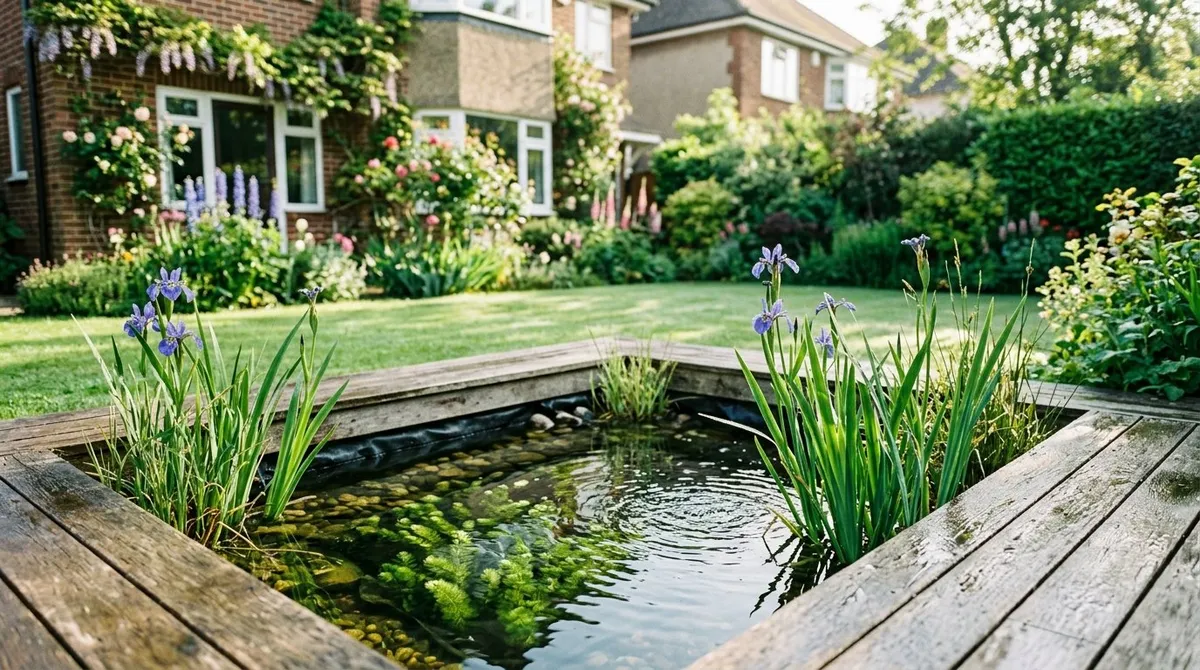
The best pond plants for a UK garden are native plants chosen for each depth of the pond. They give oxygen, food, shelter and breeding spots to everything from dragonfly larvae to great crested newts. The right plants turn a bare pond into a busy little ecosystem in a single season. The Freshwater Habitats Trust has lots of helpful advice on which plants suit which ponds.
Good planting also keeps algae in check, and our guide to clearing green pond water explains how.
Here are the best native and wildlife-friendly pond plants, sorted by zone. Whether you’re planting a new wildlife pond, building a garden pond or sprucing up an old one, plants at every depth give wildlife the layers it needs.
Understanding pond planting zones
Every pond has four planting zones, each at a different depth. Plant all four and you’ll get the most wildlife.
Zone 1: Deep water (45-90cm), the middle of the pond. Water lilies and other plants with floating leaves that shade the surface and keep algae down. For a wildlife pond, aim for at least 45-60cm at the deepest point so it doesn’t freeze solid in a hard winter.
Zone 2: Oxygenators, plants that live completely underwater. They add oxygen, soak up extra nutrients and give tadpoles and pond bugs thick cover.
Zone 3: Marginal shallows (0-15cm), the edges where water meets land. This is the richest zone for wildlife, with plants that have their roots in shallow water and their stems in the air. Gentle shallow edges also help frogs and newts get in and out.
Zone 4: Bog garden (damp soil, not underwater), the wet ground right around the pond. It stays moist but not soggy, and links the pond to the rest of the garden.
Zone 1: Deep water plants
These plants root in the deepest part of the pond. Their floating leaves shade the water, which keeps algae down and gives amphibians somewhere to hide from herons.

White water lily (Nymphaea alba)
Our native water lily, with big white flowers from June to September. It needs to sit 45-90cm deep and spreads up to 2m across, so it’s too big for a small pond. Plant it in a large aquatic basket of aquatic compost, top with gravel so the soil doesn’t float out, and lower it to the bottom in May.
Good for wildlife: dragonflies and damselflies bask on the floating leaves. Snails and insect larvae shelter underneath, and the flowers attract hoverflies and beetles.
For a small pond, choose Nymphaea ‘Pygmaea Helvola’ instead. This little lily has pale yellow flowers, sits 30-45cm deep and spreads only about 60cm.
Water hawthorn (Aponogeton distachyos)
A South African plant that’s been grown in UK ponds for a long time and isn’t on the banned list. It has white, vanilla-scented flowers from spring into autumn. It isn’t native, so skip it if you want a purely native pond. Plant it 30-60cm deep. It often keeps its leaves in mild winters, and it flowers before the lilies get going in June.
Good for wildlife: its early and late flowers give insects nectar when little else is out, and the floating leaves give cover like lily pads.
Zone 2: Submerged oxygenators
Oxygenators keep a pond healthy. They add oxygen in daylight, soak up the nutrients that feed algae and shelter pond creatures. Every pond needs some.

Hornwort (Ceratophyllum demersum)
The best oxygenator for UK ponds. Hornwort floats freely in the water with no roots, so it needs no soil, no basket and no planting. Just drop bunches into the pond from April. It stays green all year and doesn’t die back in winter.
Hornwort soaks up extra nutrients through its feathery leaves. A few bunches in a new pond help tackle the green water that often appears in the first summer.
Good for wildlife: its thick, bushy stems shelter tadpoles, newt larvae and dragonfly nymphs. Water beetles and damselfly larvae hide in it too.
Water crowfoot (Ranunculus aquatilis)
A native water buttercup with white flowers just above the surface in May and June. The underwater leaves are fine and thread-like, while the floating ones are round. It grows in still or slow water 15-60cm deep.
Good for wildlife: the flowers feed early pollinators, and the underwater leaves are great for pond bugs. That helps feed garden birds like grey wagtails too.
Water starwort (Callitriche stagnalis)
A delicate native oxygenator with small leaves that make little rosettes on the surface. It grows in shallow to medium depths, 5-50cm, and is one of the first pond plants to wake up in spring.
Good for wildlife: newts love to lay eggs in it. Female smooth newts wrap a leaf around each egg to keep it safe.
Does a planted wildlife pond need a pump?
No. A wildlife pond doesn’t need a pump or filter if it has plenty of oxygenators. Hornwort and starwort release oxygen in daylight, and the wind ruffling the surface adds more. Filters can also harm small creatures that get sucked in.
Pumps matter more in fish ponds, where lots of fish use up oxygen fast. In a fish-free wildlife pond, grow at least one oxygenator and leave some open water so light reaches the underwater leaves. Oxygen is lowest on warm, still summer nights. If tadpoles gather gasping at the surface in a heatwave, top up with rainwater rather than adding equipment.
Zone 3: Marginal plants
Marginals are the most important plants for wildlife, because they link the water and the land. Their roots sit in shallow water while their stems and flowers stand in the air. They soften the edge of the pond and give emerging insects something to climb up.

Marsh marigold (Caltha palustris)
One of the first native pond plants to flower, with bright golden buttercup flowers from March to May. Plant it 0-10cm deep or in boggy soil. It forms a tidy clump and is easy to keep in check.
Good for wildlife: early nectar for queen bumblebees waking up from hibernation. See our guide to bee-friendly plants for more early flowers.
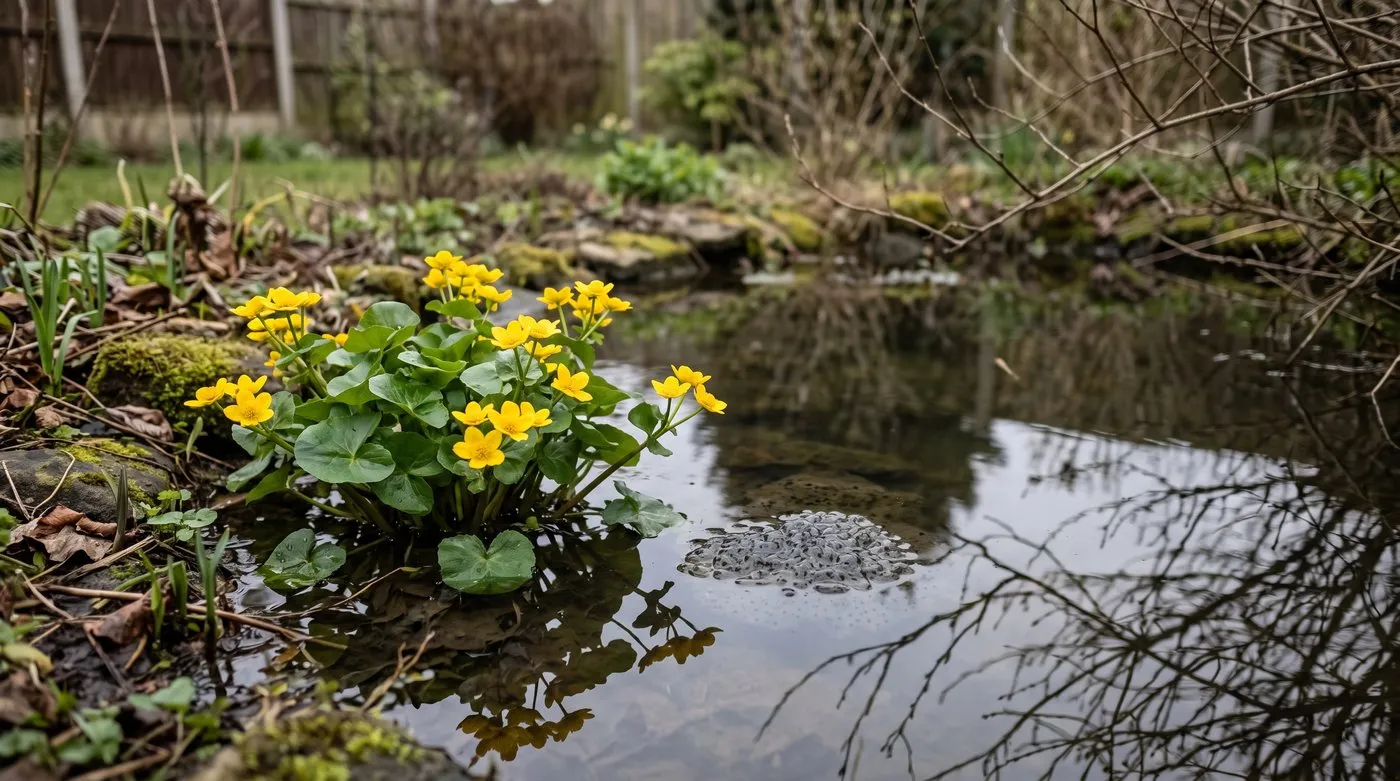
Marsh marigold is one of the first pond plants to flower, just as queen bumblebees wake up hungry. It’s tidy and happy in shallow water.
Water forget-me-not (Myosotis scorpioides)
Clouds of little blue flowers from May to September. It creeps along the water’s edge to make a low mat. Plant it 0-10cm deep and trim it back after flowering if it spreads too far. One of the prettiest, most reliable marginals.
Good for wildlife: its long flowering season gives nectar all summer, and its thick cover shelters frogs and toads and newts along the edge.
Yellow flag iris (Iris pseudacorus)
A bold native with sword-shaped leaves and bright yellow flowers in June and July. It grows tall, up to 1.2m. Plant it 0-15cm deep. It’s vigorous, so in a small pond keep it in a large basket. In a big, natural pond, let it spread.
Good for wildlife: dragonfly and damselfly larvae climb its leaves when they’re ready to turn into adults. Birds eat the seeds in autumn.
Brooklime (Veronica beccabunga)
A low, creeping marginal with small blue flowers from May to September. It spreads along the edge at 0-5cm deep and often stays green in mild winters. Easy to manage, and perfect for small ponds where flag iris would take over.
Good for wildlife: its thick cover shelters pond-edge bugs all year, and hoverflies and small bees visit the flowers.
Purple loosestrife (Lythrum salicaria)
Tall spikes of magenta flowers from June to September. Plant it 0-5cm deep or in boggy soil. It looks amazing in a big drift and seeds itself around a little.
Good for wildlife: a top nectar plant for bumblebees, honeybees and butterflies. Elephant hawk-moth caterpillars feed on its leaves.
Pond plants at a glance
| Plant | Zone | Depth | Height | Flowers | Good for |
|---|---|---|---|---|---|
| White water lily | Deep | 45-90cm | Floating | June to September, white | Dragonfly basking, cover |
| Water hawthorn | Deep | 30-60cm | Floating | Spring to autumn, white | Long-season nectar |
| Hornwort | Oxygenator | Floating | Underwater | None | Tadpole shelter, clear water |
| Water crowfoot | Oxygenator | 15-60cm | Surface | May to June, white | Newts and pond bugs |
| Marsh marigold | Marginal | 0-10cm | Short | March to May, yellow | Early bee nectar |
| Water forget-me-not | Marginal | 0-10cm | Short | May to September, blue | Frog and newt shelter |
| Yellow flag iris | Marginal | 0-15cm | Tall | June to July, yellow | Dragonflies climbing out |
| Brooklime | Marginal | 0-5cm | Low | May to September, blue | Year-round bug cover |
| Purple loosestrife | Marginal | 0-5cm | Tall | June to September, purple | Bees and butterflies |
Which pond plants grow in shade?
Marsh marigold, water forget-me-not, brooklime and hornwort all cope with part shade. Water lilies don’t. They need sun and flower poorly in shade.
A pond under trees also collects falling leaves, which rot and feed algae. In a shady garden, put the pond where it gets at least morning or afternoon sun. Plant the shady side with marsh marigold and brooklime, and keep lilies and purple loosestrife on the sunniest edge. Stretch a net over the pond in October and November to catch leaves. Hornwort is the best oxygenator for a shady pond because it floats freely.
Zone 4: Bog garden plants
Bog plants grow in the damp strip between the pond and the rest of the garden. They need soil that stays moist but not waterlogged. A bog area doubles your planting space and makes a gentle link from water to land. Candelabra primulas love this damp zone too, and our guide to growing primula covers the bog types. One bog giant to avoid is gunnera, which is now banned from sale. Our gunnera ban guide explains the rules if you already grow it.
If your pond has a liner, run it out under the bog area and poke holes in it with a fork so water drains slowly. Fill with garden soil mixed with peat-free compost. It stays moist without going stagnant.
Ragged robin (Silene flos-cuculi)
Pink, frilly, ragged flowers from May to July. It was once common in UK meadows but is now much rarer. It’s happy in damp soil that would drown most border plants.
Good for wildlife: a great nectar plant for bumblebees and butterflies, and finches eat the seeds. A lovely addition to a wildflower area near a pond.
Meadowsweet (Filipendula ulmaria)
Frothy clouds of creamy, honey-scented flowers from June to August. It’s a native of damp meadows and stream banks, and was once used to flavour mead.
Good for wildlife: bees, hoverflies and beetles love the flowers, and the leafy clumps shelter ground bugs.
Hemp agrimony (Eupatorium cannabinum)
Tall heads of pinky-purple flowers from July to September. Butterflies adore it, especially painted ladies, red admirals and commas. One of the best late-summer plants for a butterfly garden.
Good for wildlife: bees, hoverflies and moths visit too, and it flowers late when much else has finished.
Planting technique
Plant pond plants in mesh aquatic baskets of low-nutrient aquatic compost, topped with gravel. Getting this right keeps the water clear and stops plants running riot.
Aquatic baskets
Use open-mesh aquatic baskets for everything except free-floating oxygenators. Line the basket with hessian or a basket liner and fill with aquatic compost. Don’t use garden soil or multipurpose compost. They’re too rich, and the extra nutrients feed algae and turn the water green.
Firm the plant in, then cover the top with 2cm of pea gravel. This stops the compost floating out when you lower the basket in. Baskets also keep plants in check, so they don’t take over the pond.
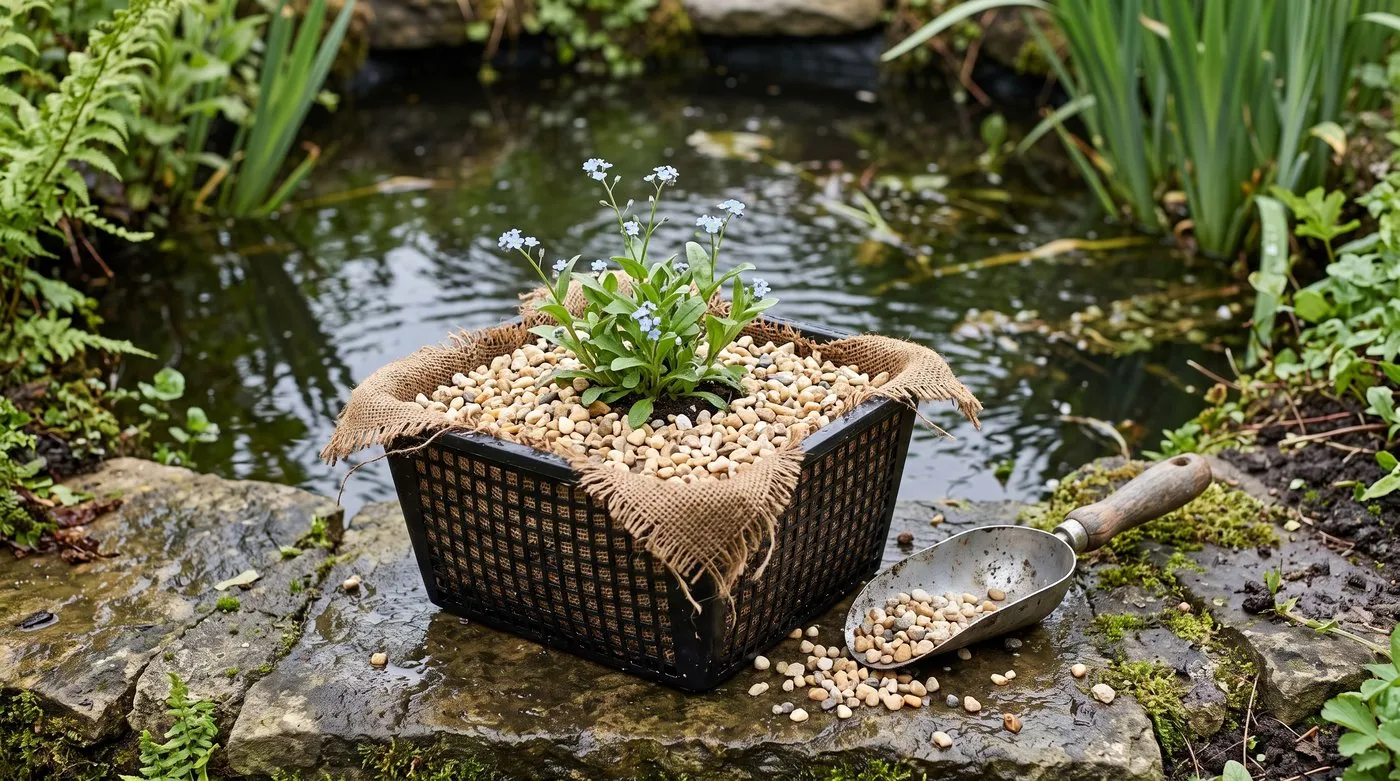
A gravel layer stops the compost floating out as the basket goes in. Use aquatic compost, as rich soil feeds algae.
Planting depth
Put each basket at the right depth for that plant. Stand baskets on bricks or upturned pots to get the level right. For water lilies, start the basket shallow and lower it bit by bit over a few weeks as the leaves reach the surface.
When to plant
Late April to June is the best time. Once the water is warmer than about 10C, roots settle in quickly before winter. Avoid planting in autumn, as roots don’t grow well in cold water and plants may rot.
Keeping plants in check
Never add fertiliser to a wildlife pond, as it feeds algae, not pond plants. Cut back vigorous plants like flag iris and purple loosestrife in autumn. Pull out blanketweed (stringy green algae) by twirling it round a stick, and net off extra duckweed. Leave anything you remove on the bank overnight so creatures can crawl back into the water.
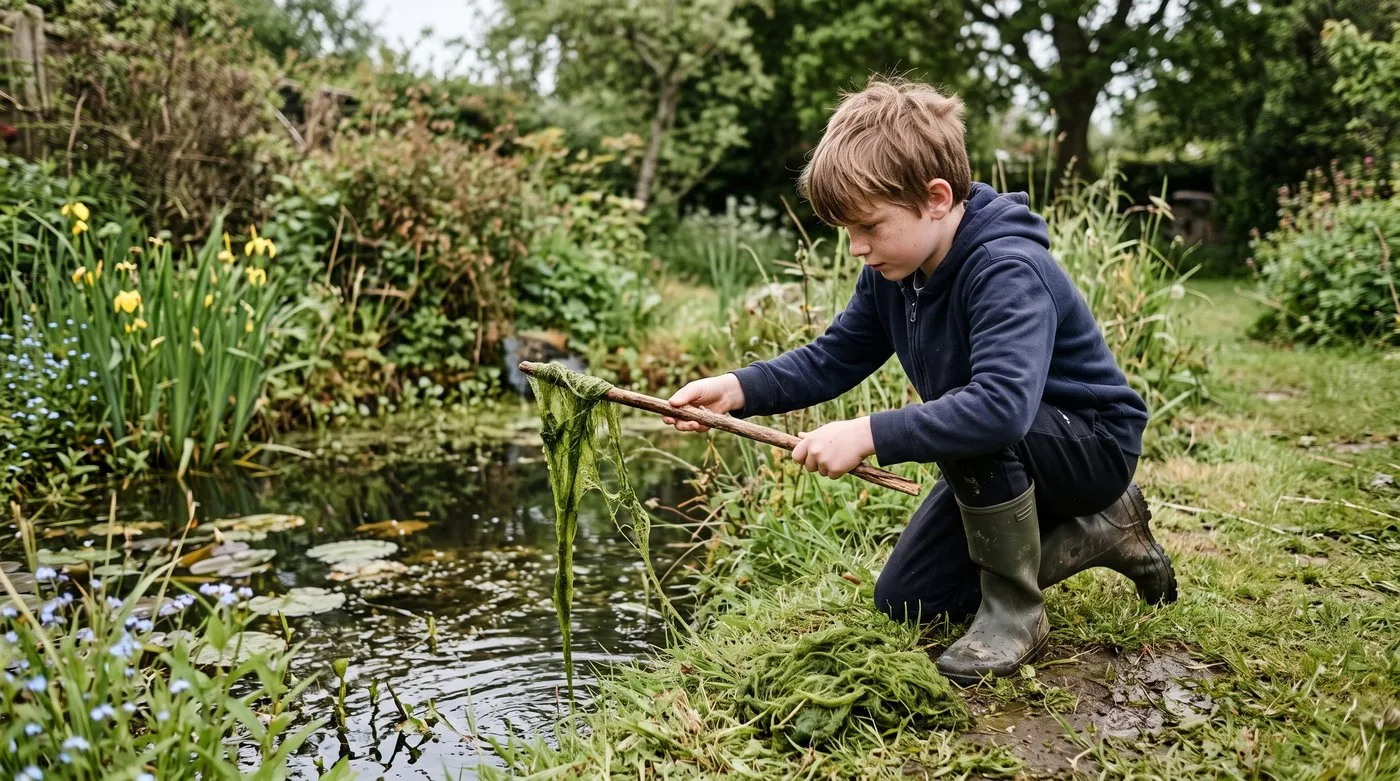
Twirl blanketweed round a stick to lift it out. Leave it on the bank overnight so any pond creatures can crawl back in.
Plants to avoid: invasive non-natives
Never buy a pond plant on the UK’s restricted invasive species lists. It’s illegal in England and Wales to keep, grow, sell or release these “species of special concern”. The GOV.UK guidance on invasive non-native plants gives the full list and the penalties, which range from warnings and fines to prison for serious offences. Water fern and New Zealand pygmyweed are also banned from sale in England.
| Restricted plant | Legal status | Why it’s a problem |
|---|---|---|
| Parrot’s feather (Myriophyllum aquaticum) | Species of special concern | Thick mats smother native plants and block waterways |
| Floating pennywort (Hydrocotyle ranunculoides) | Species of special concern | Regrows from tiny bits and covers whole ponds |
| Water primrose (Ludwigia grandiflora) | Species of special concern | Spreads fast and crowds out natives |
| Curly waterweed (Lagarosiphon major) | Species of special concern | Once sold as an oxygenator, forms dense underwater beds |
| Nuttall’s waterweed (Elodea nuttallii) | Species of special concern | Outgrows native underwater plants |
| Water fern (Azolla filiculoides) | Banned from sale in England | Floating mats block the light |
| New Zealand pygmyweed (Crassula helmsii) | Banned from sale in England | Grows underwater and on mud, very hard to get rid of |
Fanwort, water hyacinth and salvinia moss are species of special concern too. None of the plants recommended here are on these lists. Buy from specialist UK aquatic nurseries that label plants with their Latin names.
Canadian pondweed (Elodea canadensis) isn’t on the list, but it’s non-native and spreads like mad. Hornwort and water crowfoot are much better choices for wildlife and far easier to manage.
Is it safe to take plants from a friend’s pond?
Best not. Plants from another pond can carry bits of New Zealand pygmyweed or other invasive plants, as well as snails, duckweed and amphibian diseases.
New Zealand pygmyweed can regrow from a tiny scrap of stem, so it hitches a ride easily in a clump of roots. Amphibian diseases can also travel between ponds in water, mud and plants. Buy named native plants from a UK aquatic nursery instead. If you’re given plants anyway, rinse them in a bucket of rainwater and check them carefully. Tip the rinse water onto a dry border, never into a drain or ditch. Frogs and newts will find a new pond on their own, so there’s no need to move spawn or animals either.
Seasonal interest calendar
A well-planted pond has something going on from March to November.
| Season | In flower | What to look out for |
|---|---|---|
| Early spring (March to April) | Marsh marigold, water hawthorn | Frogs spawning, newts returning |
| Late spring (May) | Water forget-me-not, water crowfoot, brooklime | Dragonflies emerging, tadpoles growing |
| Early summer (June to July) | Water lily, flag iris, ragged robin, purple loosestrife | Damselflies on the wing, newt larvae |
| Late summer (August to September) | Meadowsweet, hemp agrimony, purple loosestrife | Dragonflies hunting, froglets leaving the pond |
| Autumn (October to November) | Water hawthorn (second flush) | Newts leaving the water, pond snails busy |
For more on garden wildlife through the year, our bird feeding guide shows how ponds and the rest of the garden work together.
Building a complete pond habitat
Plants alone don’t make a wildlife pond. Add a few simple features for even more life. Make a shallow, gently sloping pebble beach at one edge so hedgehogs, birds and amphibians can get in and out safely. Pop a few flat stones at the edge for basking frogs and toads.
Build a log pile near the pond for creatures moving between water and land. A compost heap nearby gives winter shelter to toads and newts. Planting native shrubs and shade-tolerant plants around the pond gives amphibians cover as they come and go.
Keep fish out of a wildlife pond. Fish eat frog spawn, tadpoles, newt larvae and dragonfly nymphs. If you want fish, give them a separate pond.
For ideas on water-wise gardening that goes well with a pond, see our water-efficient gardening guide. Fancy a crop too? See our guide to edible aquatic plants you can grow and eat. For the centrepiece, our step-by-step guide to planting a water lily covers depths, baskets and care.
Now you’ve chosen your plants, read our guide on how to build a wildlife pond for the next step.
Related reading: to clear green water, see our guide to the best oxygenating pond plants.
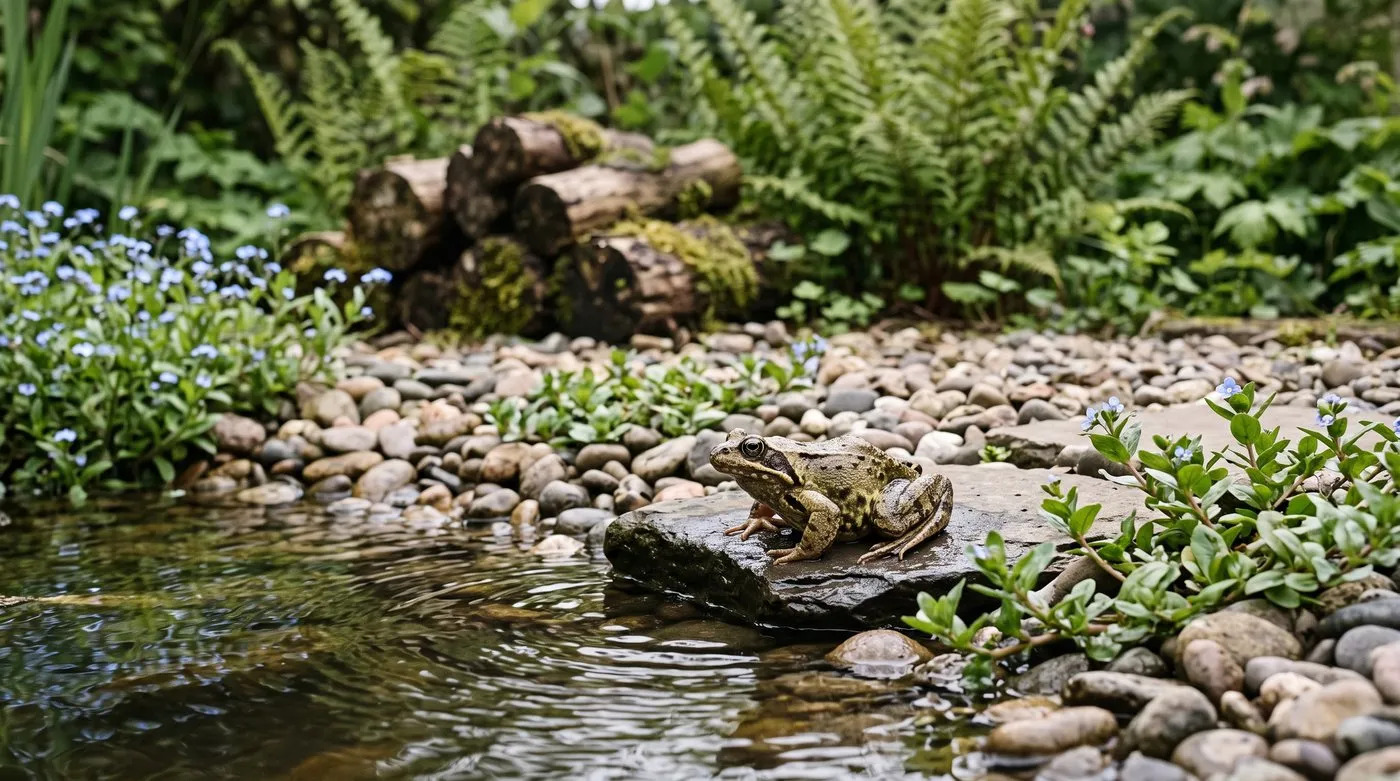
A sloping pebble beach lets frogs, hedgehogs and birds get in and out safely. Flat stones at the edge make perfect basking spots.
Frequently asked questions
What is the best oxygenating plant for a UK pond?
Hornwort is the best oxygenator for UK ponds. It floats freely in the water, needs no soil and stays green all year. It soaks up the extra nutrients that feed algae and gives tadpoles and pond bugs lots of cover. Just drop bunches into the water from April.
When should I plant pond plants UK?
Plant pond plants from late April to June. The water needs to be warming up, above about 10C, for roots to settle in. Spring planting gives them a whole growing season before winter. May is ideal for water lilies.
Which pond plants are illegal in the UK?
Several invasive pond plants are illegal to sell, keep or grow in England and Wales. They include parrot’s feather, floating pennywort, water primrose, curly waterweed, Nuttall’s waterweed, fanwort and water hyacinth. Water fern and New Zealand pygmyweed are also banned from sale in England. Penalties can include fines and, for serious offences, prison.
Do I need soil in a wildlife pond?
No, a wildlife pond doesn’t need soil on the bottom. Bare liner is fine. Plant pond plants in mesh baskets of aquatic compost topped with gravel, which stops them spreading and keeps the water clear. Hornwort floats freely and needs no soil at all.
How many plants does a pond need?
A small pond of 2-3 square metres needs about 8-10 plants across all four zones. Aim to cover about a third of the surface with lily or floating leaves to shade the water and keep algae down. Plant marginals 15-20cm apart around the edge.
Why is my pond water green?
Green water is caused by tiny floating algae. It’s very common in new ponds and usually clears as the plants grow and use up the nutrients. Add oxygenators and floating leaves to shade the water. Top up with rainwater rather than tap water, which can contain nutrients that feed algae.
Can I put pond plants in a container pond?
Yes, a container pond works well with small plants. A miniature water lily like Nymphaea ‘Pygmaea Helvola’ suits a container about 40cm deep. Add a bunch of hornwort and one marginal like marsh marigold. Even a half-barrel pond can attract dragonfly larvae and water beetles.
Our team produces practical UK gardening guidance from source research, contributor records and established horticultural practice. Editorial standards are overseen by Matt W.