Key takeaways
- Oxygenators clear green water by using up the nutrients that algae feed on
- Hornwort, spiked water-milfoil, water starwort and water crowfoot are good native choices
- Plant from April to September, ideally in spring before algae get going
- Grow two or three kinds, and thin them in summer so they don't fill the pond
- Parrot's feather, Australian swamp stonecrop and curly waterweed are invasive and can't be sold
Oxygenating pond plants are the simplest way to keep a UK pond clear. They live under the water, soak up the nutrients that green algae feed on, and add oxygen during the day. Plant the right kinds in spring and the water usually gets clearer as they grow. Pick the wrong ones, though, and you could be buying an invasive plant that can’t legally be sold.
How do oxygenating plants clear a green pond?
Green, pea-soup water is caused by tiny algae floating in the water. They thrive when the water is full of nutrients from fish food, fish waste and rotting leaves, and when it gets plenty of sun.
Oxygenating plants compete with the algae for those nutrients. Hornwort has no roots at all and feeds straight from the water through its leaves. As the plants grow, the algae have less to live on and the water clears. During the day the plants also release oxygen, which helps fish and other pond life.
Blanketweed, the stringy algae that clings to plants and sides, is different. Oxygenators slow it down but won’t clear it on their own, so see our fixes for pond algae and blanketweed. For a step-by-step fix for murky water, see our guide to clearing green pond water.
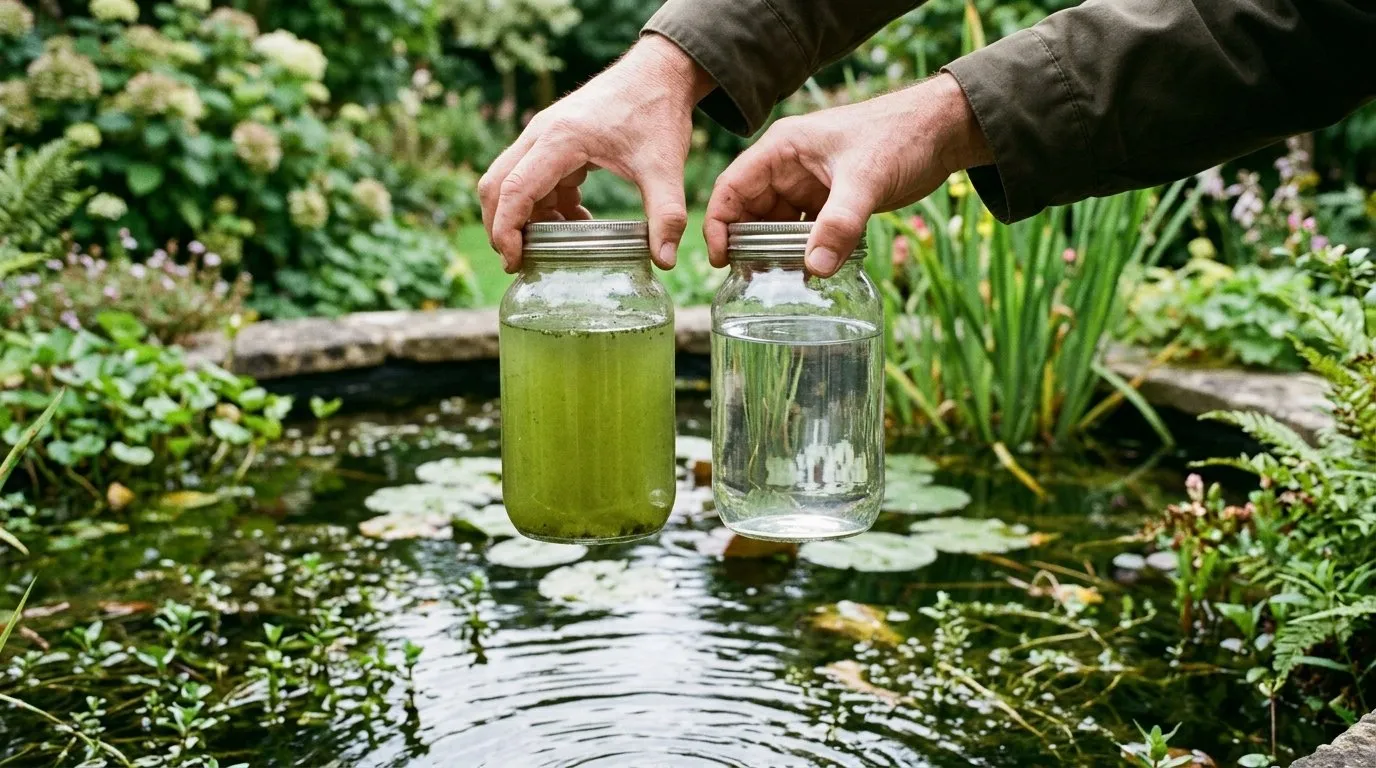
Green water is made of tiny floating algae. Oxygenators help by using up the nutrients the algae need.
The best native oxygenating pond plants
Grow two or three kinds rather than one. Each has a slightly different season, so between them they keep working all year.
Hornwort (Ceratophyllum demersum) is the easiest of all. It floats freely with no roots, has dark green, bristly whorls of leaves and grows fast in summer. Just drop it in.
Spiked water-milfoil (Myriophyllum spicatum) is a feathery native that newts love for laying eggs. Don’t mix it up with parrot’s feather (Myriophyllum aquaticum), which is invasive.
Water starwort (Callitriche) makes soft green rosettes in shallow water and grows well in spring.
Water crowfoot (Ranunculus aquatilis) has white, buttercup-like flowers on the surface in late spring. It’s lovely in a wildlife pond.
Willow moss (Fontinalis antipyretica) clings to stones and copes with shade.
| Plant | Native? | Where it grows | Good for |
|---|---|---|---|
| Hornwort | Yes | Floats free, any depth | The easiest all-rounder |
| Spiked water-milfoil | Yes | Baskets on the pond floor | Wildlife, newt eggs |
| Water starwort | Yes | Shallow water | Spring growth |
| Water crowfoot | Yes | Shallow to medium water | Flowers and wildlife |
| Willow moss | Yes | Attached to stones | Shady ponds |
For lilies, marginals and floating plants to go with them, see our guide to the best pond plants for UK gardens.
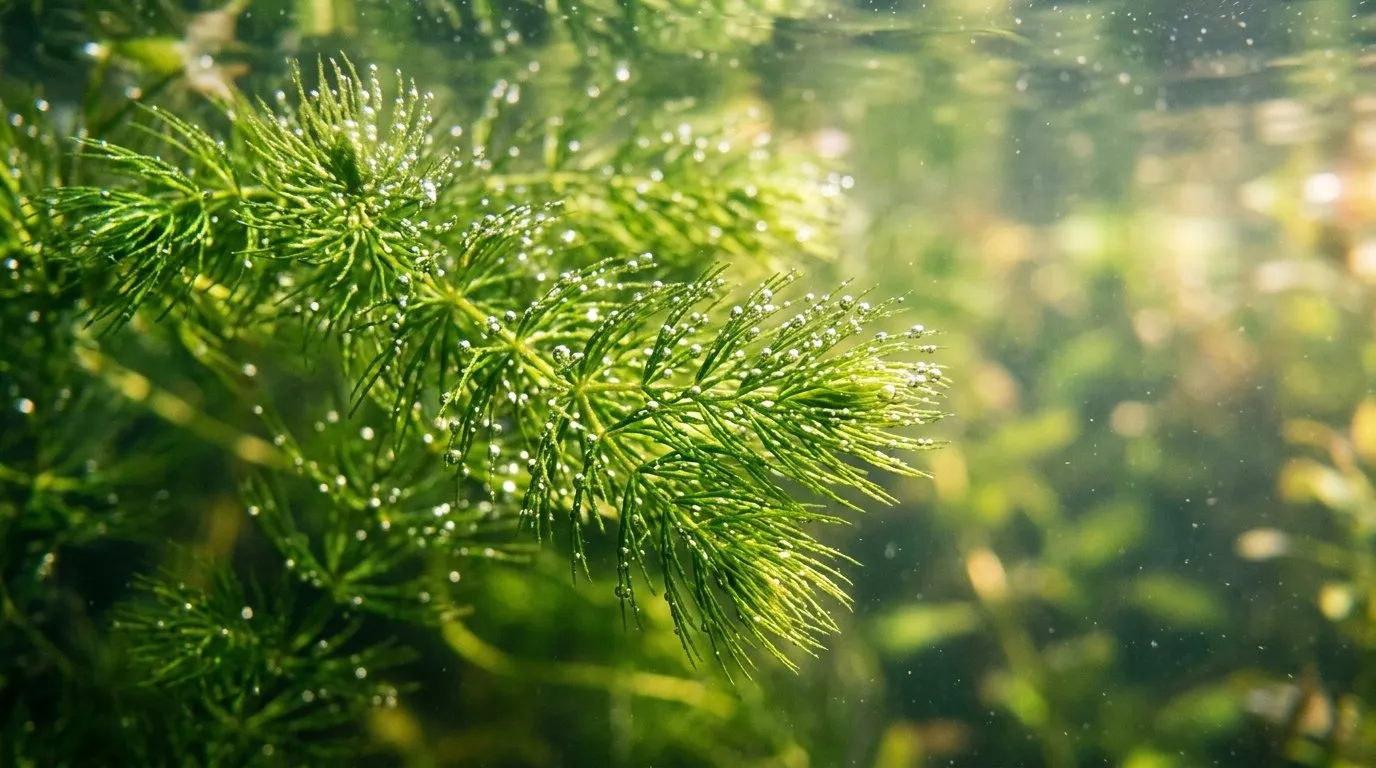
Hornwort has no roots and feeds through its leaves. The tiny bubbles are oxygen released in sunlight.
Invasive pond plants you should never buy
Some of the most vigorous pond plants are invasive. They escape into streams and canals and choke native wildlife. Five have been banned from sale in England since 2014:
- Australian swamp stonecrop (Crassula helmsii), also sold as New Zealand pygmyweed
- Parrot’s feather (Myriophyllum aquaticum)
- Floating pennywort (Hydrocotyle ranunculoides)
- Water fern (Azolla filiculoides)
- Water primrose (Ludwigia grandiflora)
Curly waterweed (Lagarosiphon major), once sold as an oxygenator and sometimes labelled “Elodea crispa”, is also on the list of invasive plants that can’t be sold or grown.
Reputable UK nurseries no longer sell these, but they still turn up in plant swaps and online. Australian swamp stonecrop is the worst, as a tiny fragment can start a new patch. Only buy clearly labelled native plants. Our guide to banned plants in UK gardens explains the law in more detail.
Warning: Never tip unwanted pond plants or pond water into a stream, ditch or drain. Dry them out on a hard surface, then bin them.
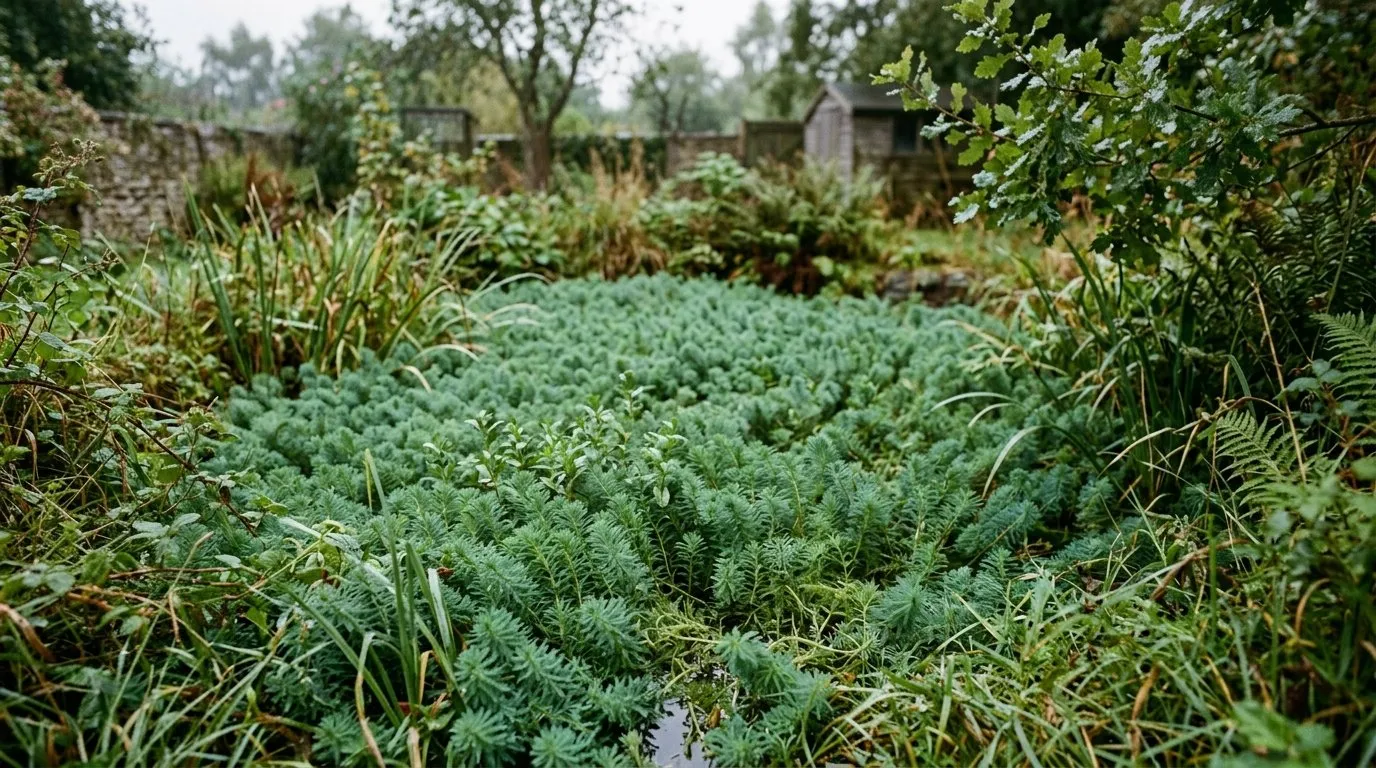
Parrot’s feather can carpet a whole pond. It’s banned from sale, so don’t accept it from a swap.
How to plant oxygenating pond plants
Plant oxygenators from April to September, ideally in spring. That gives them a head start before algae take off in warm weather.
- Rinse each bunch in a bucket of pond water or rainwater to wash off unwanted snails and algae.
- Swap any lead weight on the bunch for a lead-free plant weight, as lead isn’t good for pond life.
- Plant in a basket of aquatic compost topped with a few centimetres of washed gravel, which stops fish stirring it up.
- Lower the basket gently onto a shelf or the pond floor.
- Drop hornwort in loose. It needs no basket or soil.
Start with a few bunches per square metre of surface and let them spread. Don’t use ordinary potting compost, as it’s too rich and feeds the algae. In a brand-new pond filled from the tap, wait a week or two before planting.
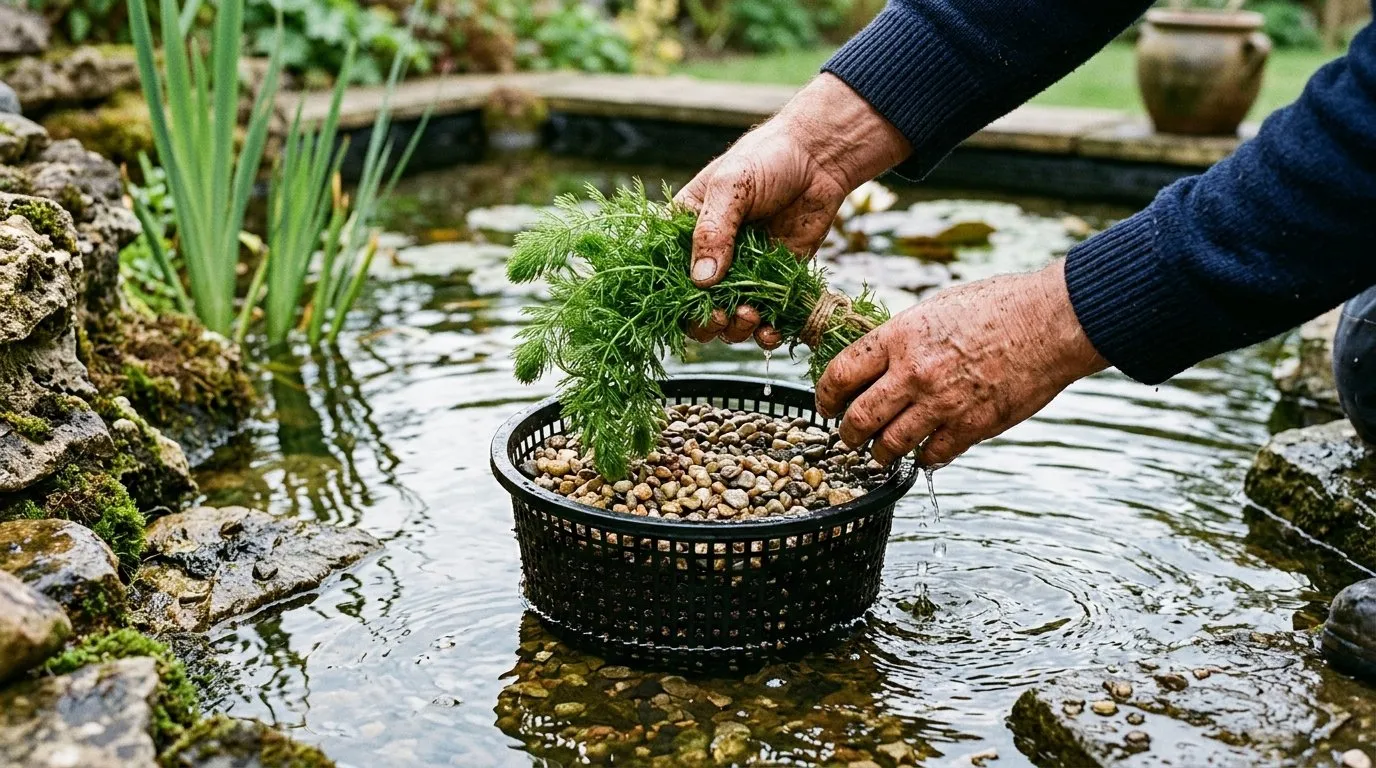
Plant bunches in a mesh basket of aquatic compost with gravel on top, then lower it onto a pond shelf.
Oxygenators for small and container ponds
Even a half-barrel pond on a balcony benefits from an oxygenator. A bunch or two of hornwort or starwort is plenty for a small container.
Container ponds warm up fast in summer, so algae can bloom quickly. Keep them topped up with rainwater, and add a small water lily or floating plant to shade part of the surface. Our container pond ideas cover choosing a pot and planting it up.
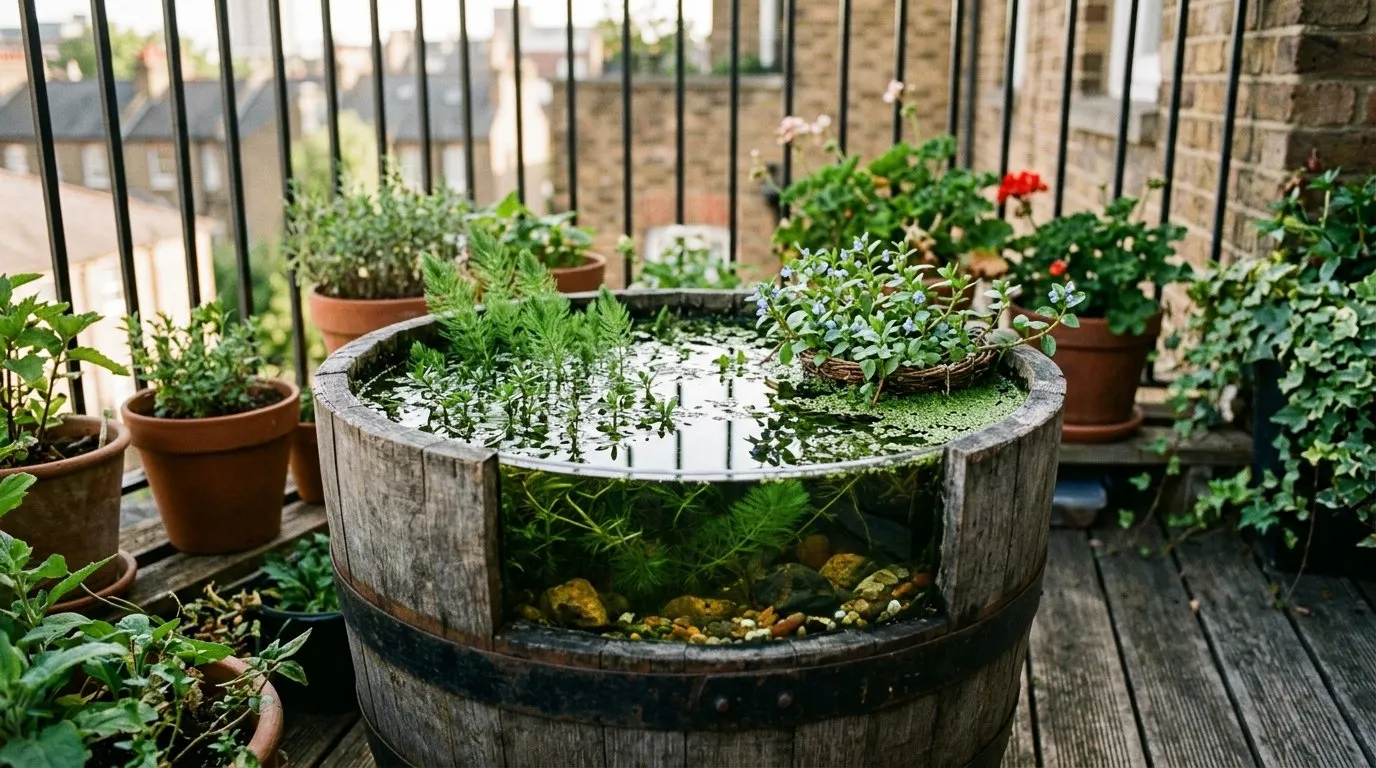
A half-barrel pond on a balcony. A bunch or two of hornwort keeps a pond this size in balance.
Keeping fish safe: the night-time oxygen dip
Oxygenating plants don’t add oxygen round the clock. By day they release it. At night they use some of it up, so oxygen levels are lowest just before dawn.
Warm water holds less oxygen than cold. On a hot, still summer night, a pond packed with plants and fish can run short. Fish gasping at the surface early in the morning is the warning sign.
Keep it simple. Don’t let oxygenators fill the whole pond. Thin them in July and August by pulling out handfuls. Leave the pulled plants on the edge overnight so creatures can crawl back into the water, then compost them. A small fountain helps on very hot nights.
Month-by-month pond plant calendar
| Month | What to do |
|---|---|
| January to February | Leave hornwort resting on the bottom. Float a ball to keep a small patch ice-free in a freeze |
| March | Net out rotting leaves. Order native oxygenators |
| April to May | Best time to plant. Water crowfoot flowers |
| June | Plants grow fast and green water should start to clear |
| July to August | Thin oxygenators by hand. Top up with rainwater in dry spells |
| September | Last chance to plant. Net the pond before leaves fall |
| October to November | Remove fallen leaves and dying growth |
| December | Little to do. Don’t smash ice, as it can harm wildlife |
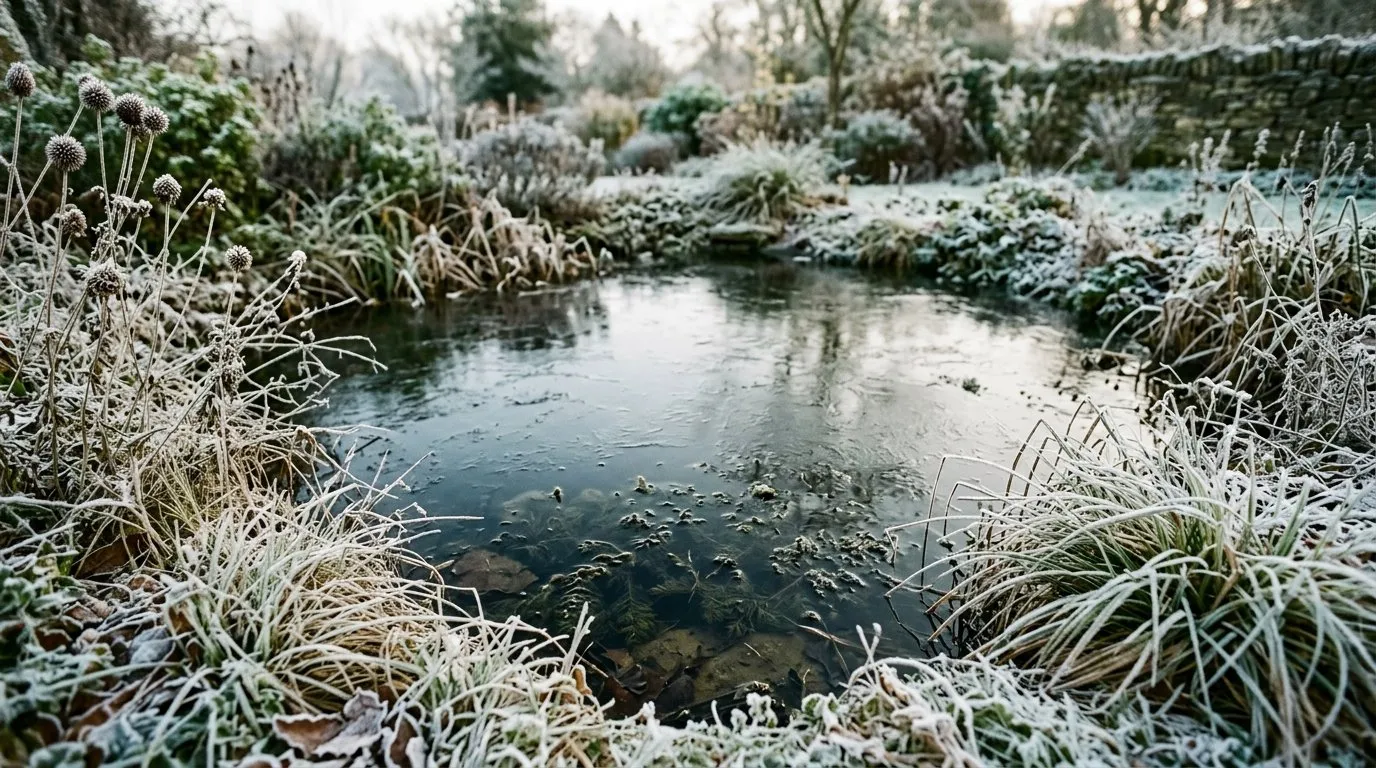
In winter hornwort sinks to the bottom and rests. It rises and grows again as the water warms in spring.
Common mistakes with oxygenating pond plants
- Buying an invasive plant by accident. Unlabelled bags from swaps often hide Crassula or parrot’s feather. Buy labelled natives from a named nursery.
- Overplanting. A pond packed with plants looks lush but can leave fish short of oxygen at night. Plant a few and let them spread.
- Using potting compost. It’s too rich and feeds the algae you’re trying to starve. Use aquatic compost with gravel on top.
- Never thinning. Left alone, oxygenators fill the pond, die back and rot, putting nutrients back in the water. Thin them every summer.
- Overfeeding fish. Uneaten food feeds algae. Give only what the fish clear in a few minutes.
Frequently asked questions
What are the best oxygenating pond plants for a UK pond?
Hornwort, spiked water-milfoil and water starwort are the best native oxygenators. Hornwort is the easiest, as it needs no roots or soil. Water crowfoot and willow moss make good extras. Grow two or three kinds together.
How many oxygenating plants do I need?
Start with a few bunches per square metre of pond surface. They grow quickly in summer and soon fill out. It’s better to plant a few and let them spread than to pack the pond, which you’ll only have to thin later.
Which pond plants are banned in the UK?
Several invasive pond plants can’t be sold. Five have been banned from sale in England since 2014: Australian swamp stonecrop, parrot’s feather, floating pennywort, water fern and water primrose. Curly waterweed (Lagarosiphon major), once a common oxygenator, is also on the banned list.
Do oxygenating plants clear green pond water?
Yes, over time they help a lot. They use up the nutrients that green algae need, so the algae struggle. It takes weeks rather than days, and works best alongside less fish food and fewer rotting leaves.
When should I plant oxygenating pond plants?
Plant them from April to September. Spring is best, because the plants get growing before algae take off in the warm weather. Avoid winter, when the water is cold and they won’t grow.
Can you have too many oxygenating plants in a pond?
Yes, too many can cause problems for fish. Plants make oxygen by day but use it up at night. A packed pond on a warm, still night can leave fish short of air by dawn. Thin them in summer.
Does hornwort die back in winter in the UK?
Yes, hornwort sinks to the bottom in winter. It loses most of its top growth and rests on the pond floor. As the water warms in spring it rises and grows again, so it hasn’t died.
Now your pond is planted, turn it into a haven for frogs, newts and dragonflies with our guide to building a wildlife pond, or see more in the wildlife hub.
Our team produces practical UK gardening guidance from source research, contributor records and established horticultural practice. Editorial standards are overseen by Matt W.


