
Key takeaways
- The white calla lily is hardy and can stay in the ground in most UK gardens
- Coloured callas are tender, so lift them in October or grow them in pots
- Plant rhizomes 10cm deep in late April or May, once the soil has warmed up
- Give them sun and moist, rich soil, then feed with tomato food from late May
- The white one also grows happily at the edge of a pond
Calla lilies bring a touch of drama to a British garden. Their smooth, funnel-shaped flowers come in white, pink, yellow, orange, deep purple and almost black, from late spring through summer. The one thing to get right is which type you have, because only one is hardy here.
The white calla lily, Zantedeschia aethiopica, holds an RHS Award of Garden Merit and happily grows wild along damp stream banks in the south-west. The bright coloured ones you see in garden centres are tender and need a frost-free spot in winter. This guide covers both, from planting and feeding to pond growing and winter care.
Which calla lilies can I grow?
Start by checking whether yours is hardy or tender. The white Z. aethiopica can stay outside all year in most of lowland England, Wales and sheltered coastal Scotland. The coloured callas can’t take frost. One cold November night blackens their leaves and can damage the rhizome (the fleshy root they grow from). That one difference decides where you plant, and what you do in winter.
There are plenty of named varieties to choose from. Here are the main groups.
Calla lily types at a glance
| Type | Colour | Hardy outside? | Height | Flowers | Best spot |
|---|---|---|---|---|---|
| Z. aethiopica | White with a yellow centre | Yes | 60-100cm | May to July | Pond edge, bog garden, damp border |
| Z. aethiopica ‘Crowborough’ | White, a little smaller | Yes | 60-80cm | May to July | Ordinary border |
| Z. rehmannii | Pink | No | 30-40cm | June to August | Sheltered border, pot |
| Z. elliottiana | Golden yellow, spotty leaves | No | 40-60cm | June to August | Pot, warm border |
| Modern hybrids (‘Picasso’, ‘Black Star’, ‘Captain Safari’) | Purple, near-black, orange, two-tone | No | 30-60cm | June to September | Pot, conservatory, sheltered patio |

Coloured callas look brilliant in pots, and pots make it easy to move them in before the frost.
‘Crowborough’ is a handy one to know. It copes with drier soil than the plain white species, so it’s the best pick for a normal border that isn’t damp all the time.
Where do calla lilies grow best?
Give them sun and soil that stays moist but is full of goodness. A spot with a few hours of direct sun a day gives the most flowers.
Soil and position
Dig in plenty of garden compost or well-rotted manure before planting, because callas are hungry plants. On heavy clay, the extra organic matter helps tender types drain better. On light, sandy soil it helps hold on to moisture, which all callas like.
How do I plant calla lily rhizomes?
Plant in spring once the soil has warmed up. That’s usually late April in southern England and mid to late May in the Midlands and north. Rhizomes planted into cold, wet ground just sit there and can rot.
Dig a hole about 15cm deep and wide, and mix a handful of blood, fish and bone into the soil. Lay the rhizome flat with any growing points facing up. Cover it with 10cm of soil, spacing plants 30-45cm apart. Water well.

Plant rhizomes 10cm deep in spring, once the soil has warmed.
Want a head start? Pot rhizomes up indoors in March in 2-litre pots of multipurpose compost. Keep them on a bright windowsill or in a frost-free greenhouse. Once shoots are up and frosts are over, harden them off for a week or so, then plant out. This gives the tender types a longer flowering season.
In mild areas you can plant the white Z. aethiopica in autumn instead. Set it 15cm deep and cover with a thick mulch of bark or straw to keep the cold out.
Month-by-month calla lily care calendar
| Month | Hardy white callas | Tender coloured callas |
|---|---|---|
| January | Nothing to do | Check stored rhizomes for rot |
| February | Nothing to do | Check stored rhizomes. Order new ones |
| March | Shoots may appear in mild areas | Start rhizomes indoors in pots |
| April | Feed as shoots come up | Keep growing indoors. Harden off late in the month (south) |
| May | Feed every fortnight. Stake tall stems if windy | Plant out after the last frost (south) |
| June | Flowering starts. Deadhead old flowers | Plant out (north). Feed every fortnight |
| July | Peak flowering. Keep the soil moist | Peak flowering. Water and feed |
| August | Still flowering | Still flowering |
| September | Leaves start to yellow. Stop feeding | Stop feeding. Water less |
| October | Cut back dead leaves. Mulch | Lift before the first frost. Dry for a week |
| November | Mulch with bark or straw | Store in dry compost somewhere frost-free |
| December | Nothing to do | Check stored rhizomes. Bin any soft ones |
How do I grow calla lilies in pots?
Pots are the easiest way to grow the tender coloured callas. You can carry them under cover before frost and show them off on a patio or in courtyard gardens.
Use a pot of at least 5 litres for one rhizome, or 10-15 litres for a group of three. Fill with John Innes No. 2 compost with a few handfuls of perlite mixed in for drainage. Plant 10cm deep. Water lightly until shoots appear, then keep the compost moist all summer. The usual container growing rules apply: water often, drain well and feed regularly.
Feed every fortnight from June to September with tomato food. It encourages flowers rather than leaves. Snip off faded flowers to keep new ones coming.
When the leaves yellow in autumn, stop watering and let the compost dry. Move the pot into a frost-free greenhouse, garage or shed. Start watering again in spring and it’ll wake up.
The white callas grow well in big pots too, of 20 litres or more. In mild areas they can stay out all year, but wrap the pot in bubble wrap or move it somewhere sheltered in a cold snap, as roots in pots get colder than roots in the ground.
Can I grow calla lilies in a pond?
Yes, the white Z. aethiopica makes a lovely pond-edge plant. It’s happy in soggy ground that would rot most plants. Plant it in an aquatic basket of heavy loam and stand it at the edge, with the crown under 10-30cm of water. Big arrow-shaped leaves arrive in April and white flowers follow from May to July.

The white calla lily is happy at the pond edge in up to 30cm of water, and gives wildlife somewhere to hide.
In a wildlife pond, the leaves give newts, frogs and water bugs somewhere to shelter. For more ideas, see our guides to the best pond plants for UK gardens and how to build a garden pond.
Plant in spring or early summer. Top the basket with gravel so soil doesn’t wash out. It spreads steadily, so split it every three or four years. Lift the basket in spring, chop the clump with a sharp spade and replant pieces in fresh loam.
Only the hardy white one suits a pond. Coloured callas rot if they sit in water.
How do I look after calla lilies in winter?
It depends on which type you’ve got. Hardy and tender callas need opposite care, and mixing them up is how most get lost.
Hardy white callas
Leave them in the ground. Cut back the dead leaves in late October and spread a 10-15cm mulch of bark, straw or compost over the top. Established plants in most of lowland England and Wales usually manage without, but new plants appreciate the cover for their first couple of winters.
In colder parts of northern England and Scotland, grow them in a big pot you can move somewhere frost-free, or plant them against a warm south-facing wall.
Tender coloured callas
Lift them before the first frost. In most of the UK that means early to mid-October. Don’t wait for blackened leaves, as the frost may already have got to the rhizome.
Cut the leaves back to 5cm and lift the rhizomes with a fork. Brush off the soil and bin any that are soft or discoloured. Let them dry somewhere airy for about a week. Store them in trays of dry compost, vermiculite or sand in a cool, frost-free garage, shed or spare room. Check monthly and remove any that start to rot.
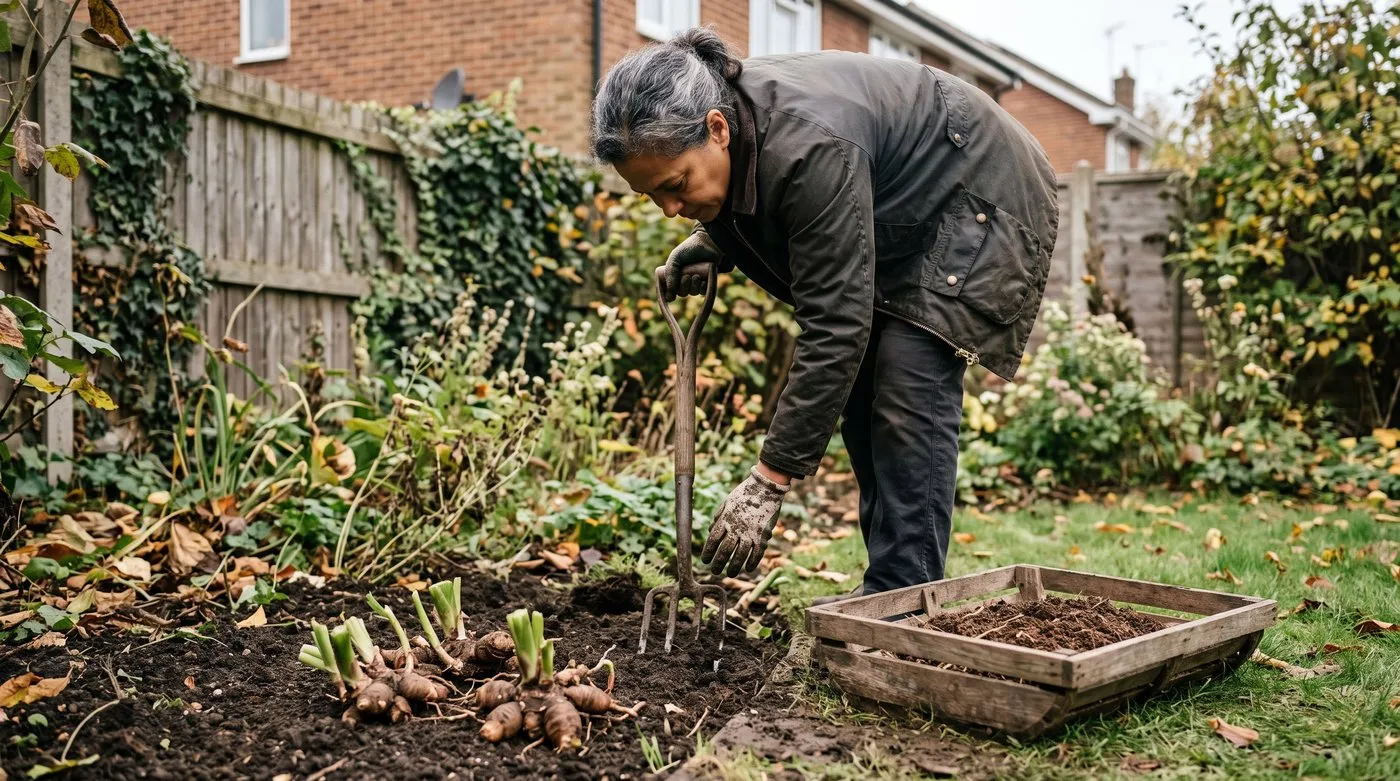
Lift the coloured callas before the first frost rather than waiting for blackened leaves. Dry them for a week, then store in dry compost somewhere frost-free.
How do I feed and look after calla lilies?
Regular feeding means more flowers. Sprinkle a general fertiliser such as Growmore when shoots appear in spring. From late May to September, switch to tomato food every fortnight.
Cut faded flowers off at the base of the stem. This stops the plant wasting energy on seed, and often keeps the white ones flowering into August.
Look out for aphids on new shoots in spring. Blast them off with a jet of water or squash small groups by hand, and let ladybirds and hoverflies do the rest. Home-made washing-up liquid sprays aren’t legal as pesticides in the UK. If you really need a spray, use an approved product exactly as the label says. Red spider mite can show up in hot, dry spots, and a morning mist of water helps. Slugs love the new shoots, especially on the tender types. The same tricks that protect dahlias work here: beer traps and a nematode drench in April.
How do I propagate calla lilies?
Dividing a clump is the easiest way. Lift hardy types in spring, and tender types at the end of the season. Cut the rhizome into pieces, each with at least one growing point. Replant at the same depth and water well. They usually flower in their first or second year.
You can grow the white one from seed, but it’s slow. Collect ripe berries in late summer, take out the seeds and sow them fresh in damp compost somewhere warm. Seedlings take two to three years to flower. Named varieties don’t come true from seed, so divide those instead.
Older rhizomes also make small side shoots, called offsets. Pull these off, pot them into 1-litre pots of John Innes compost, and grow them on for a season before planting out.
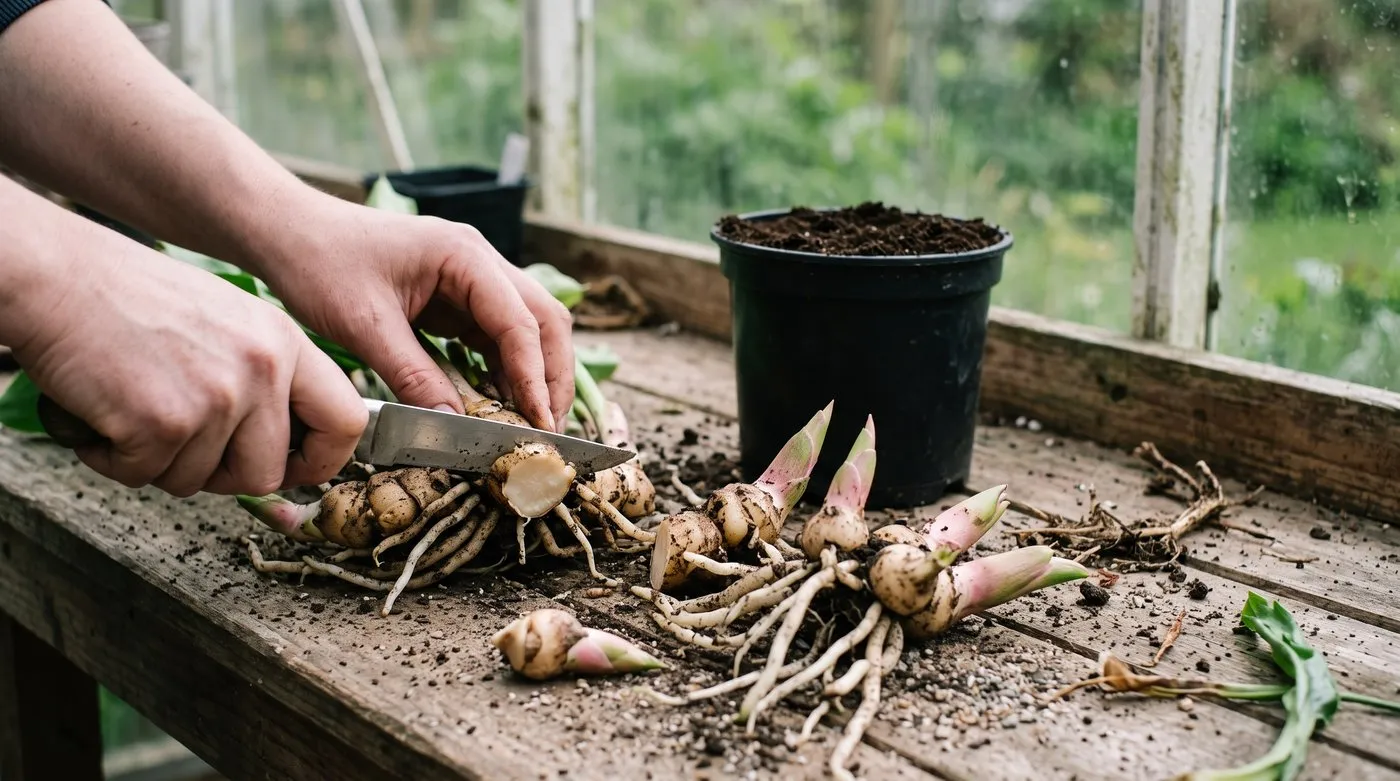
Make sure each piece has at least one growing point. Small offsets pulled off older rhizomes can be potted up and grown on for a season too.
What should I plant with calla lilies?
Pair them with other plants that like damp feet. By a pond or in a bog garden, white callas look great with Siberian iris, ligularia, astilbe and rodgersia. Hostas add big, bold leaves at the front. Our guide to the best pond plants has more ideas.
In a border, ‘Crowborough’ sits nicely with dahlias, daylilies and ornamental grasses. Its upright shape contrasts well with rounded hardy geraniums and soft grasses like Stipa tenuissima.
Coloured callas in pots look smart with trailing verbena, argyranthemum or small grasses in a courtyard garden setting. For spring colour before they get going, plant tulips in the same pots. They flower from March to May, then you can swap in your callas.
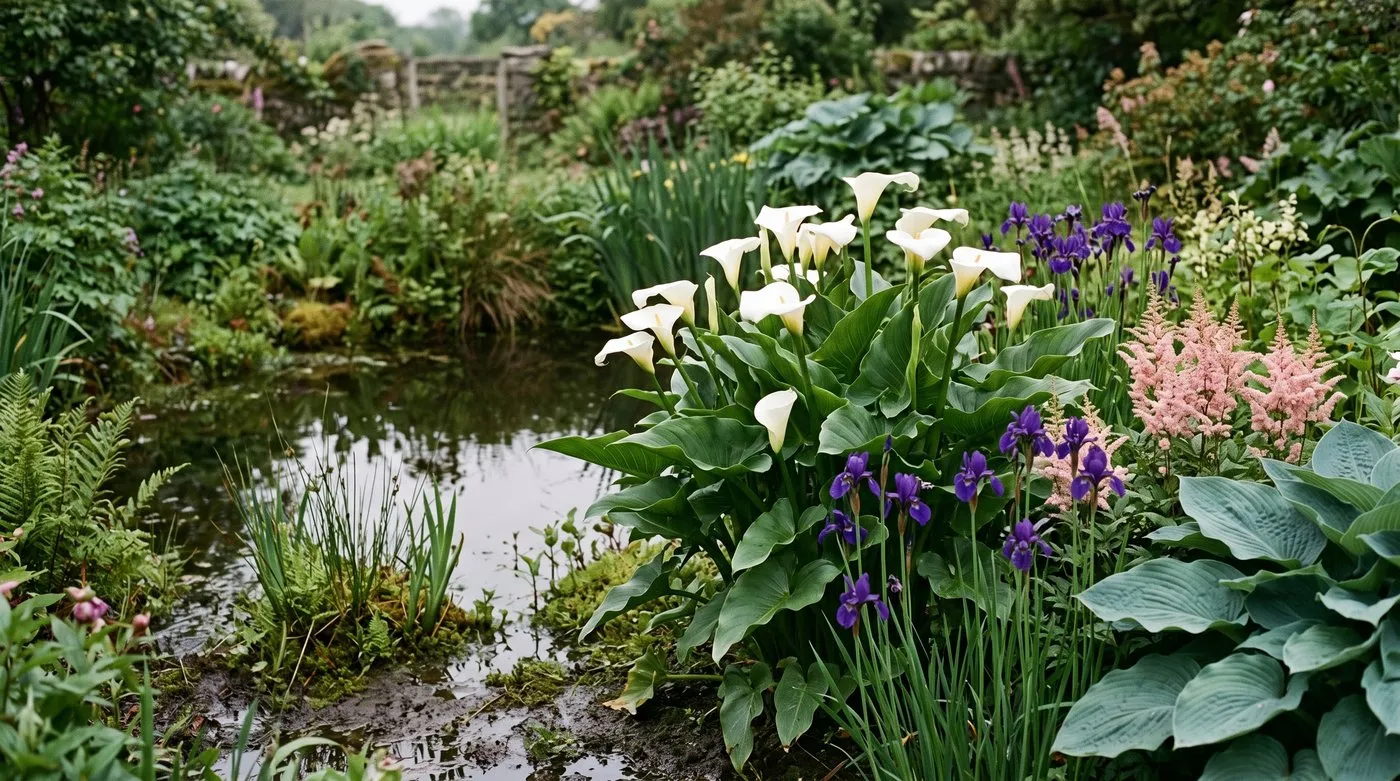
White callas love the same damp feet as Siberian iris, astilbe and hostas. Big bold leaves at the front set off the tall white flowers nicely.
Common calla lily mistakes
A few easy slip-ups to steer clear of.
Thinking every calla lily is hardy
This is the big one. A coloured calla from the garden centre planted in a border won’t survive the winter. Check the label. If it isn’t Z. aethiopica or ‘Crowborough’, treat it as tender and plan to lift it or grow it in a pot.
Planting too early in cold soil
Rhizomes in cold, wet ground sit still and can rot. Wait until late April in the south or mid-May further north.
Keeping stored rhizomes damp
Stored rhizomes need to stay dry. Even slightly damp compost over winter can make them rot. Keep the storage material dry to the touch and the space airy.
Planting in deep shade
Callas cope with a little shade but flower best with plenty of sun. In deep shade you’ll get big leaves and few flowers. A south or west-facing spot is ideal.
Forgetting to feed
These are hungry plants. Without feeding, the flowers get fewer and smaller after the first flush. Switch to tomato food from late May to keep them coming.
Now you’ve mastered calla lilies, read our guide on the best pond plants for UK gardens to create the ideal waterside setting for them.
Frequently asked questions
Are calla lilies hardy in the UK?
Only the white one is properly hardy. Zantedeschia aethiopica can stay outside all year in most of England and Wales. The coloured hybrids are tender, so lift them before frost or grow them in pots you can move under cover for winter.
When should I plant calla lily rhizomes?
Plant them in spring once the soil has warmed up. That’s usually late April in southern England and mid-May further north. You can get a head start by potting them up indoors in March.
Can I grow calla lilies in pots?
Yes, and pots suit the coloured ones best. Use a pot of at least 5 litres with drainage holes and John Innes No. 2 compost with some perlite mixed in. Feed every fortnight with tomato food from June, then move the pot somewhere frost-free in autumn.
How do I overwinter tender calla lilies?
Lift the rhizomes in October, before the first frost. Cut back the leaves, let the rhizomes dry for a week, then store them in trays of dry compost somewhere cool but frost-free, like a garage or shed. Check them monthly for rot and replant in spring.
Can I grow calla lilies in a pond?
Yes, but only the hardy white one. Plant it in an aquatic basket of heavy loam and stand it at the pond edge in up to 30cm of water. It flowers from May to July and gives frogs and newts good cover.
Why are my calla lilies not flowering?
Usually too much shade or not enough food. Callas need a good few hours of direct sun a day. Feed with tomato food every fortnight from late May, and go easy on high-nitrogen feeds, which give you leaves instead of flowers. New plants can take a season to settle in.
Are calla lilies toxic to pets?
Yes, every part of the plant is toxic. Chewing it causes a sore, swollen mouth and an upset tummy in cats, dogs and horses. Wear gloves when handling rhizomes, plant them away from where pets dig, and call your vet if you think one has eaten some.
Our team produces practical UK gardening guidance from source research, contributor records and established horticultural practice. Editorial standards are overseen by Matt W.


