
Key takeaways
- Bearded iris rhizomes sit on the soil surface, with the top showing to the sun
- Siberian iris cope with clay and damp ground where bearded iris would rot
- Dwarf Iris reticulata flowers in February from bulbs planted 10cm deep
- Divide bearded iris every 3-4 years in July to keep them flowering
- Yellow flag iris is the native water iris for pond edges, best kept in a basket
- Avoid rich, high-nitrogen feeds, which give leaves instead of flowers
Iris are some of the most striking flowers you can grow in a UK garden. Tall bearded iris open in May with ruffled flowers in almost every colour. Dwarf Iris reticulata pops up through cold ground in February. Siberian iris are happy in the damp borders and clay that beat most other plants. There’s an iris for every kind of garden.
The secret is knowing that each type wants something different. Bearded iris need sharp drainage and sun on their rhizomes. Siberian iris like moist, rich soil. Water iris grow with their feet wet. Get the spot and the depth right, and you’ll get a glorious show instead of a clump of leaves. For more reliable plants, see our guide to the best perennial plants for UK gardens.
What types of iris grow in the UK?
There are five main groups grown in British gardens. Picking the right one for your conditions is the first step.
 Left to right: tall bearded iris, yellow flag iris and dwarf Iris reticulata.
Bearded iris (Iris germanica)
Bearded iris are the classic garden iris. The “beard” is a fuzzy strip down each of the lower petals. They grow from thick rhizomes that sit on the surface and reach about 60-90cm tall, flowering in May and June in hundreds of colours. They need full sun and very good drainage, with the rhizome sitting on top of the soil. They struggle on heavy clay unless you raise the bed and add grit.
Siberian iris (Iris sibirica)
Siberian iris are the most forgiving for British gardens. They grow from fibrous roots, making dense clumps of grassy leaves, with flowers on tall stems in late May and June. They’re happy in clay, damp ground and part shade. If bearded iris have let you down on heavy soil, try these.
Dwarf iris (Iris reticulata)
Iris reticulata grows from a bulb. It flowers in February and March, sometimes poking through snow, and is just 10-15cm tall with vivid blue, purple or yellow flowers. Plant the bulbs 10cm deep in autumn, in well-drained soil or pots. They’re lovely in rockeries, at the front of a border or in bulb lasagne plantings with other early flowers.
Water iris (Iris pseudacorus and Iris ensata)
Yellow flag iris (Iris pseudacorus) is a British native that grows wild along rivers and in wetlands. It’s tall, with bright yellow flowers in June, and grows at pond edges in shallow water. Japanese iris (Iris ensata) has big flat flowers in purple, white and lavender and likes boggy, moist soil. Both are great for pond-side planting.
Dutch iris
Dutch iris are bulbs grown mainly for cutting. They have elegant flowers on slender stems in May and June, in blue, purple, yellow and white. Plant the bulbs in autumn. They don’t always come back reliably, so many people treat them as a cheap and cheerful crop for cutting gardens.
Best iris varieties for UK gardens
Variety comparison table
| Variety | Type | Size | Flower colour | Flowers | Best use |
|---|---|---|---|---|---|
| ’Jane Phillips’ | Bearded | Tall | Pale blue | May to June | Borders, cutting |
| ’Black Swan’ | Bearded | Tall | Deep purple-black | May to June | A real showstopper |
| ’Sable’ | Bearded | Tall | Dark violet | May to June | Mixed borders |
| ’Caesar’s Brother’ | Siberian | Tall | Deep violet-blue | June | Damp borders, clay |
| ’White Swirl’ | Siberian | Medium | Pure white | June | Pond edges, borders |
| ’Harmony’ | Reticulata | Tiny | Royal blue and yellow | February | Rockeries, pots |
| ’Katharine Hodgkin’ | Reticulata type | Tiny | Pale blue and yellow | February | Pots, front of border |
| ’Eye of the Tiger’ | Dutch | Medium | Bronze and yellow | May | Cut flowers |
How to plant iris
Rhizome types and bulb types are planted quite differently. Getting the depth wrong is the most common reason iris fail.
Planting bearded iris rhizomes
Plant bearded iris from July to September, so the roots settle in while the sun ripens the top of the rhizome.
- Choose a spot in full sun with free-draining soil.
- Dig a shallow hole with a ridge of soil in the middle.
- Sit the rhizome on top of the ridge with the roots spread down each side.
- Press the roots firmly into the soil.
- Leave the top of the rhizome showing above the soil.
- Water once, then leave it be.
On heavy clay, plant on a mound 10-15cm above the ground and mix in plenty of grit. Space rhizomes 30-45cm apart, all facing the same way so the leaves don’t shade their neighbours.
 Dividing bearded iris in July: each piece needs a fan of leaves and healthy roots.
Planting iris bulbs
Plant Iris reticulata and Dutch iris bulbs from September to November.
- Dig a hole about 10cm deep for reticulata, a little deeper for Dutch iris.
- Set the bulb pointed end up.
- Space bulbs 7-10cm apart.
- Fill in and water once.
- Mark the spot so you don’t dig them up by mistake.
Reticulata bulbs look great packed into a pot of loam-based compost with grit mixed in. Grow them with daffodils for a run of early spring colour. Our guide to growing iris bulbs has much more.
Planting Siberian iris
Plant Siberian iris in autumn or spring, with the crown just below the soil surface. Unlike bearded iris, they like rich, moist soil, so add some well-rotted compost when planting. Space them 45-60cm apart. They’re one of the best plants for UK garden borders on tricky ground.
How to divide bearded iris
Divide bearded iris every 3-4 years. If you don’t, the clumps get crowded, the middle dies off and flowering stops. It’s also the easiest way to get more plants.
When to divide
Divide in July, a few weeks after flowering. The roots grow back quickly in warm summer soil. Avoid dividing in winter or spring, when cold, wet soil can cause rot.
How to divide
- Lift the whole clump with a garden fork.
- Wash off the soil so you can see what you’re doing.
- Cut the rhizome into pieces with a sharp, clean knife.
- Each piece needs a healthy fan of leaves and firm roots.
- Trim the leaves into a fan about 15cm tall so they don’t rock in the wind.
- Throw away the old, woody middle and any soft, mushy bits.
- Leave the cut ends to dry in the sun for a few hours.
- Replant with the top of the rhizome showing.
One good clump usually gives you plenty of new pieces. Share the spares with friends and neighbours.
Growing iris beside a pond
Iris look wonderful by water. Yellow flag iris is the native choice and grows in shallow standing water. It spreads strongly, so plant it in an aquatic basket to stop it taking over.
 Siberian and Japanese iris flowering by a pond in early summer.
Iris laevigata is happy in shallow water. Japanese iris (Iris ensata) prefers boggy soil at the very edge rather than standing water. Siberian iris suits the damp ground a little back from the water.
Plant yellow flag and Iris laevigata in the shallows, Japanese iris in the boggy edge and Siberian iris on the bank, and you’ll have flowers from late May into July.
Pests and problems
Iris are generally trouble-free in the UK. Two problems cause most losses.
Iris sawfly
The grey-green larvae of iris sawfly munch iris leaves from May to July, eating in from the edges. A bad attack can strip the leaves to stalks. Check the leaves weekly in May and June and pick off any larvae you find. The RHS has more on this pest.
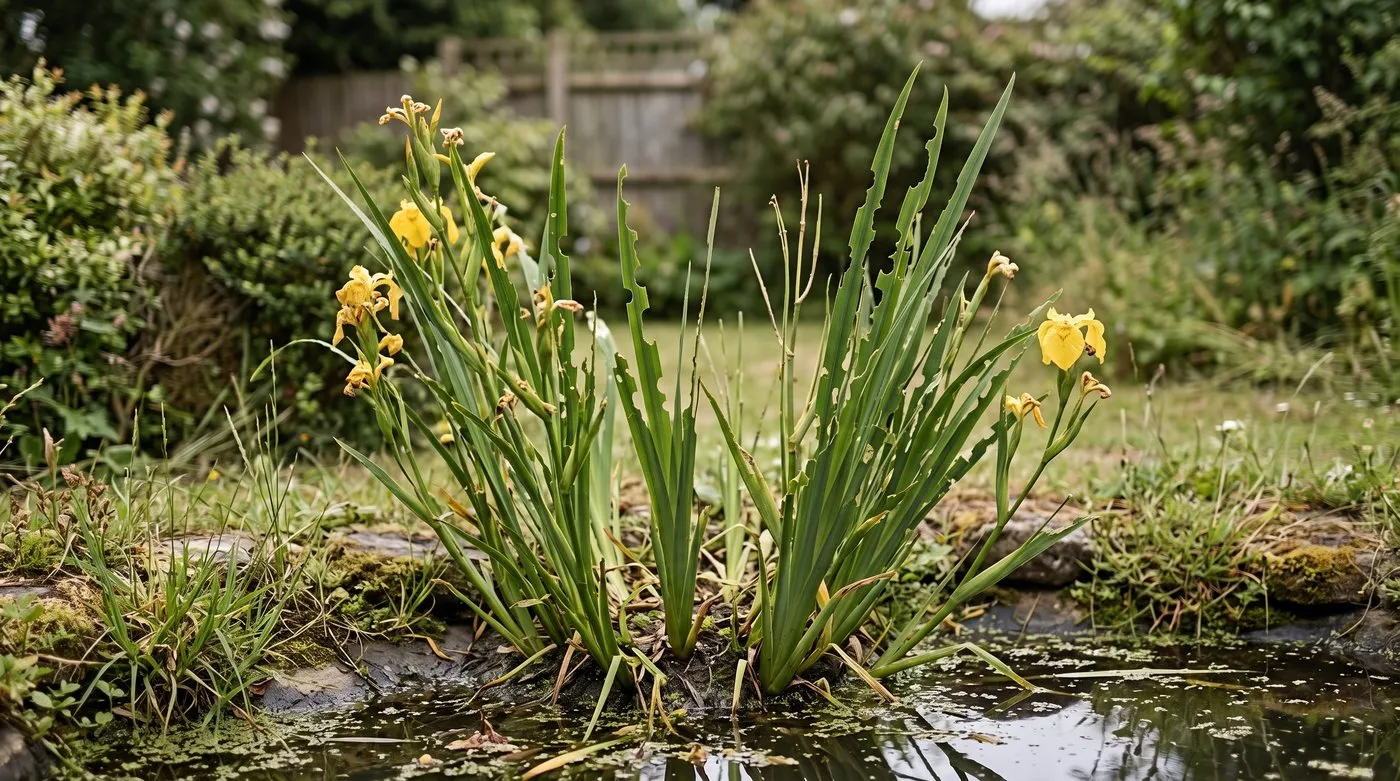
Ragged leaf edges in early summer point to sawfly. Check the leaves weekly in May and June and pick off any larvae you find.
Rhizome rot
Soft, smelly rhizomes mean rot. It’s almost always caused by burying bearded iris too deep or planting in wet soil. Cut away all the soft bits with a clean knife until you reach firm, white rhizome. Let it dry in the sun for a day, then replant in free-draining soil with the top showing.
Leaf spot
Brown or grey spots on the leaves are a fungal leaf spot. Remove affected leaves, space plants so air can move, and water the soil rather than the leaves. It rarely kills the plant.
Month-by-month iris care calendar
| Month | What to do |
|---|---|
| January | Nothing to do. Reticulata iris may start poking through. |
| February | Iris reticulata flowers. Enjoy them. |
| March | Clear dead leaves from bearded iris. Feed Siberian iris. |
| April | Bearded iris growing strongly. Look for sawfly larvae from late April. |
| May | Bearded iris flower. Deadhead faded blooms. Keep checking for sawfly. |
| June | Late bearded and Siberian iris flower. Cut off spent stems. |
| July | Divide bearded iris. Plant new rhizomes. |
| August | Keep planting bearded iris. Let the sun bake the rhizomes. |
| September | Plant reticulata and Dutch iris bulbs. Last chance for bearded iris. |
| October | Finish planting bulbs. Cut back Siberian iris leaves. |
| November | Tidy away any remaining dead leaves. |
| December | Order rhizomes from specialist nurseries for next summer. |
Common mistakes when growing iris
Most iris problems come from treating all types the same.
Burying bearded iris rhizomes
The number one mistake. The rhizome needs to sit on the surface with its top in the sun. Bury it and it stays damp and rots. After heavy rain, brush away any soil that has washed over the rhizomes.
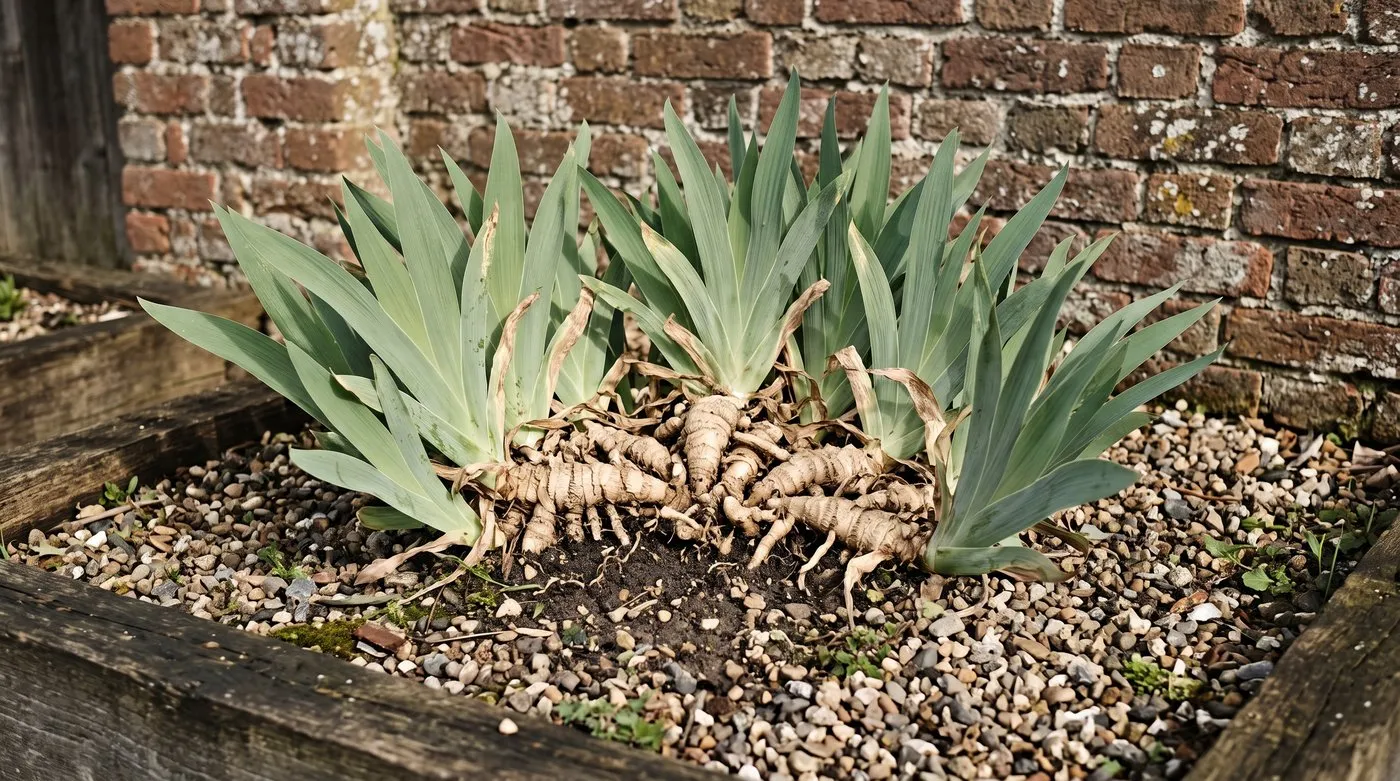
This is how bearded iris should look, with the tops of the rhizomes baking in the sun. After heavy rain, brush away any soil that washes over them.
Planting bearded iris in heavy clay
Unimproved clay holds water around the rhizome all winter, and by spring it’s rotting. Raise the bed and mix in plenty of grit. On really wet soil, grow Siberian iris instead.
Forgetting to divide
Clumps left for more than about four years stop flowering, as the middle wears out. Divide every few years in July. Siberian iris are more patient and can go longer.
Feeding too much
Rich feeds give you lots of leaves and no flowers. Bearded iris like lean soil. A light sprinkle of sulphate of potash in early spring is plenty. Skip general feeds and fresh manure.
Shading the rhizomes
Bearded iris rhizomes need sun to set next year’s flowers. Don’t let taller plants flop over them. Keep a clear space around each clump.
For ideas on combining iris with other spring-flowering plants in your borders, see our seasonal planting guide.
Frequently asked questions
When should I plant iris in the UK?
Plant bearded iris rhizomes from July to September. The roots settle in before winter while the sun ripens the rhizome. Plant Iris reticulata bulbs from September to November, 10cm deep. Siberian iris can go in in autumn or spring. Avoid planting bearded iris in cold, wet soil.
Why are my iris not flowering?
Usually overcrowding, so it’s time to divide. Bearded iris need splitting every 3-4 years. Other causes are planting too deep, too much shade and too much rich feed, which gives you leaves instead of flowers.
How deep should I plant iris rhizomes?
Bearded iris rhizomes sit on the soil surface. Press the roots into the ground but leave the top of the rhizome showing. Burying it can make it rot. Reticulata and Dutch iris bulbs go about 10cm deep. Siberian iris crowns sit just below the surface.
Can I grow iris in clay soil?
Yes, Siberian iris are happy in clay. They cope with heavier, damper ground than other garden iris. Bearded iris struggle in clay, as it stays too wet around the rhizome. Plant them on a raised mound with plenty of grit, or in a raised bed.
How do I divide bearded iris?
Divide them in July, after flowering. Lift the clump with a fork and cut the rhizome into pieces, each with a fan of leaves and some healthy roots. Trim the leaves to about 15cm so they don’t rock in the wind. Throw away the old, woody middle bits and replant with the tops showing.
Are iris poisonous to pets?
Yes, iris are mildly toxic to cats and dogs. The rhizome is the worst part, and eating it can cause sickness and drooling. The sap can also irritate skin. Plant iris where pets can’t dig up the rhizomes.
Which iris grows in water?
Yellow flag iris is the native British water iris. It grows at pond edges in shallow standing water. Iris laevigata and Iris versicolor also suit shallow water, while Japanese iris (Iris ensata) prefers boggy soil. Never plant bearded iris near water, as they rot.
Our team produces practical UK gardening guidance from source research, contributor records and established horticultural practice. Editorial standards are overseen by Matt W.


