Key takeaways
- Plant big, late bulbs at the bottom and small, early bulbs on top
- Use a pot at least 30cm deep and wide, with drainage holes
- Rough depths are tulips 15-20cm, daffodils 10-15cm and small bulbs about 5cm
- Plant in October or November, with tulips going in last
- Pick bulbs that flower at different times, or everything blooms in the same fortnight
- Keep the pot outside over winter and don't let it sit waterlogged
A bulb lasagne is one pot planted with layers of bulbs, like sheets of pasta. Big, late bulbs such as tulips go at the bottom, daffodils in the middle and small, early bulbs such as crocus on top. Each layer flowers in turn, so one pot gives colour from late winter into May, or June if you add alliums.
It’s perfect for a doorstep, patio or balcony where space is tight. You only need a deep pot, some gritty compost and an autumn afternoon. If you’d rather keep a pot looking good all year, with summer and winter plants too, see the one pot, one year container plan.
How does bulb lasagne planting work?
Each type of bulb has its own flowering time. Crocus and iris reticulata flower first, then daffodils and muscari, then tulips and finally alliums. Layering them in one pot means the flowers follow on from each other instead of all happening at once.
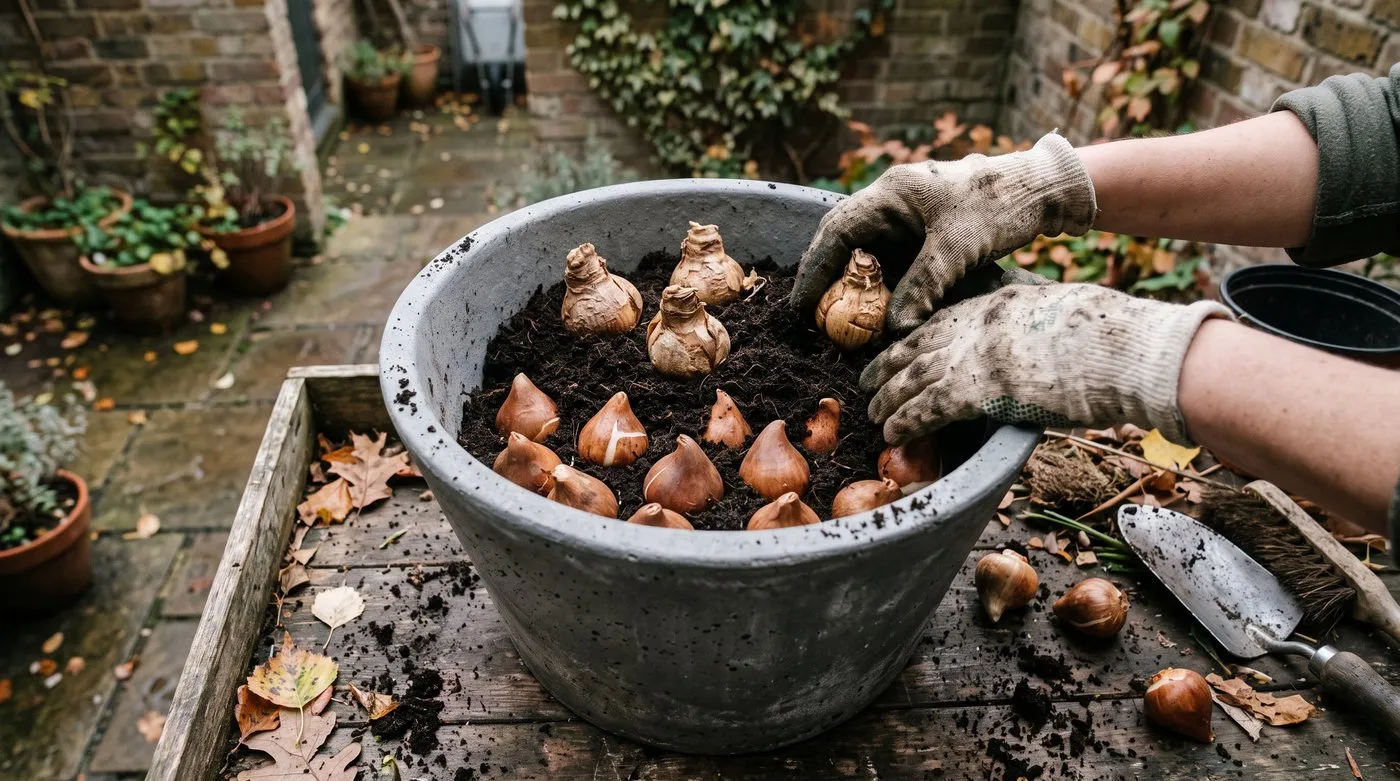
Tulips go in first at the bottom, then daffodils sit in the gaps above them on a bed of compost.
The planting depth follows bulb size. Big bulbs such as tulips need to sit deeper. Small bulbs such as crocus only need a few centimetres of compost on top. That’s why the biggest bulbs go at the bottom.
Shoots from the lower layers simply grow up around the bulbs above them. They find their way through without any help.
Which pot is best for a bulb lasagne?
Use a pot at least 30cm deep and 30cm wide, with good drainage holes. A pot 40cm across holds a generous three-layer display. For four layers, with alliums at the bottom, go for 40cm deep.
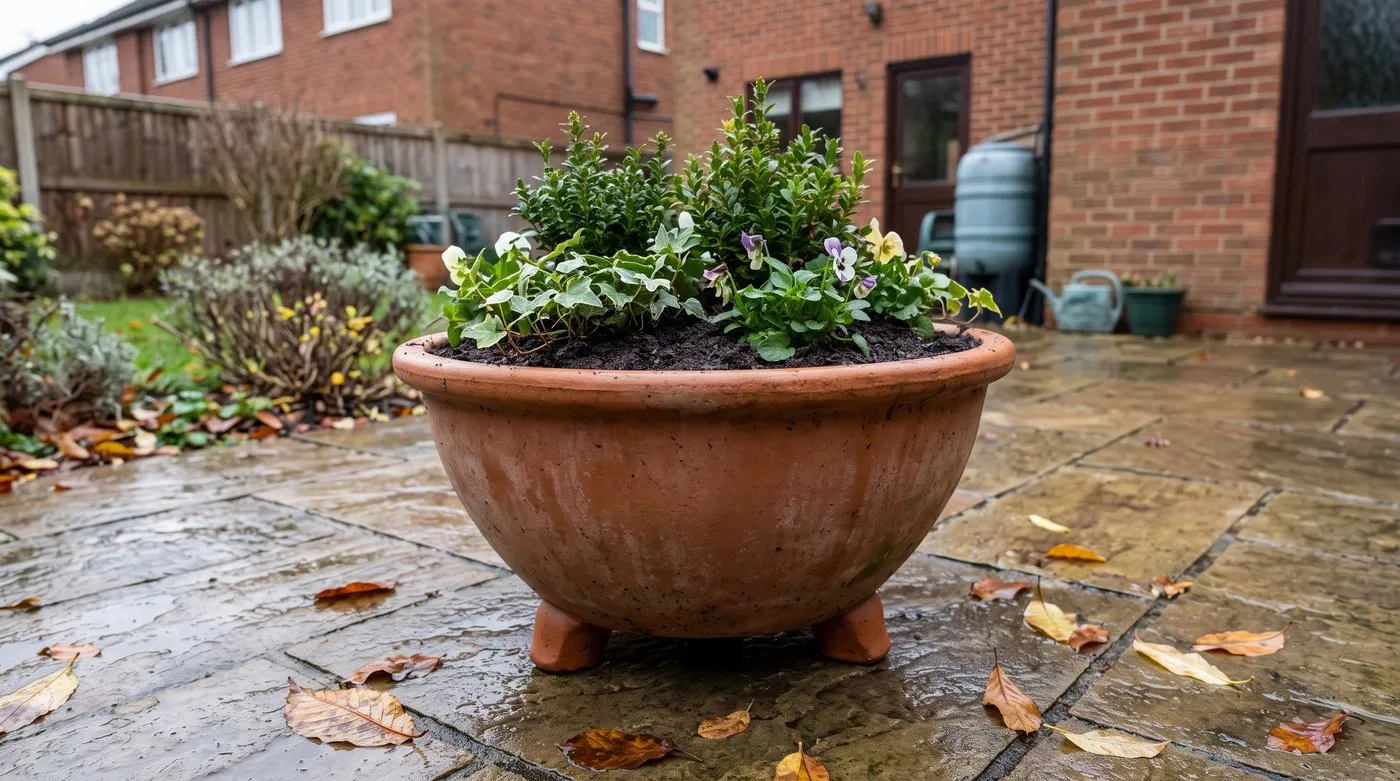
Pot feet let winter rain drain away, which stops the bulbs sitting wet and rotting.
Pick a pot that will stand winter outdoors:
| Pot material | Good points | Watch out for |
|---|---|---|
| Frost-proof terracotta | Heavy and stable, looks lovely | Cheaper terracotta can crack in hard frost |
| Glazed ceramic | Decorative, often frost-proof | Check the drainage hole is big enough |
| Fibre clay | Light and frost-proof | Can blow over in exposed spots |
| Plastic | Cheap and light | Stays wetter, can blow over |
| Metal | Modern look | Often needs drainage holes drilled |
Drainage matters more than anything else. Bulbs rot if the compost stays soggy all winter. Stand the pot on pot feet so water can run away freely.
How deep to plant each layer
Plant bulbs pointed end up, and build the layers from the bottom up. These depths count down from the compost surface and are a rough guide, not an exact science.
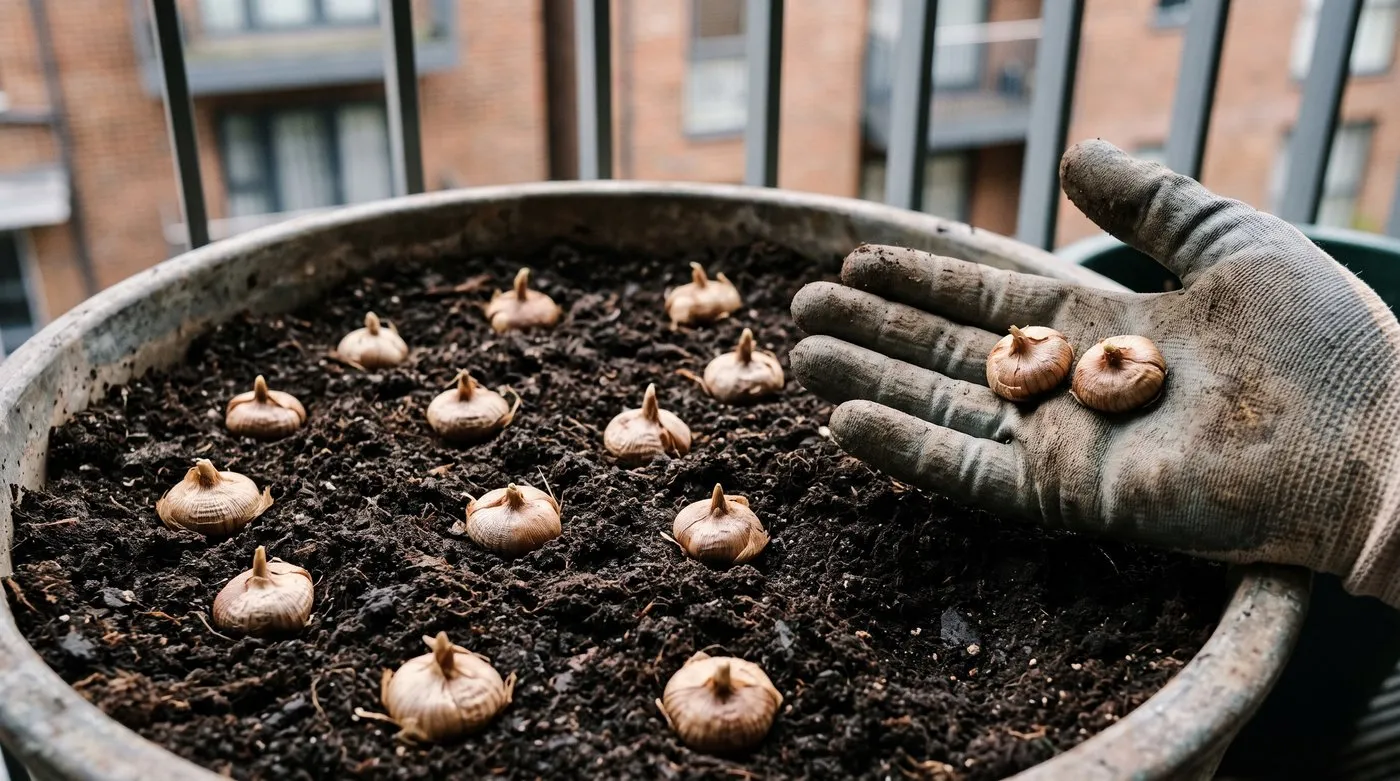
Small bulbs such as crocus and iris reticulata go on top, with about 5cm of compost over them.
Bottom layer: tulips (15-20cm deep)
Tulips are the classic bottom layer. They flower last, from mid-April to May. Pack them close, about a bulb’s width apart. Good choices include:
- ‘Queen of Night’: deep maroon-black, late April to May
- ‘Ballerina’: orange, lily-flowered and scented, late April to May
- ‘Spring Green’: white with green feathering, May
- ‘Purple Prince’: rich purple and short, good for smaller pots, April
For a four-layer pot, put Allium ‘Purple Sensation’ beneath or among the tulips for purple globes in May and June.
Middle layer: daffodils (10-15cm deep)
Daffodils fill the middle layer and flower from March to April. Set them in the gaps between the tulips below. Try:
- ‘Tête-à-Tête’: small, golden and very reliable, early spring
- ‘Jetfire’: yellow with orange trumpets, March
- ‘Thalia’: white, two or three flowers per stem, April
- ‘Hawera’: pale lemon, several nodding flowers per stem, late April
Top layer: small bulbs (about 5cm deep)
Small, early bulbs go on top and flower from February to April. Scatter them over the whole surface:
- Crocus ‘Ruby Giant’ or Crocus tommasinianus: purple and lilac, February to March, loved by early bees
- Crocus ‘Cream Beauty’: soft cream-yellow, February to March
- Iris reticulata ‘Harmony’: deep blue with yellow markings, February to March
- Muscari armeniacum: blue grape hyacinths, March to April
Glory of the snow suits this layer too, with starry blue flowers in early spring. The guide on how to grow chionodoxa covers it.
How to plant a bulb lasagne step by step
Planting a three-layer pot takes about half an hour.

Chicken wire over the top keeps squirrels from digging up the bulbs until the shoots appear.
- Get the pot ready. Check the drainage holes are clear. Mix peat-free multipurpose compost with a few handfuls of grit or perlite.
- Add the base. Put enough compost in the bottom so the tulips will sit about 15-20cm below the finished surface.
- Plant the tulips. Set them pointed end up, close together but not touching. Cover with a few centimetres of compost.
- Plant the daffodils. Place them in the gaps between the tulips below. Cover with more compost.
- Plant the small bulbs. Scatter crocus, iris or muscari over the surface. Cover with about 5cm of compost, leaving a 2-3cm gap below the rim for watering.
- Water well. Soak the pot until water runs out of the bottom.
- Put it outside. Stand it in a sheltered, open spot on pot feet. Spring bulbs need winter cold, so don’t bring it into a warm porch or house.
Gardener’s tip: Squirrels love freshly planted bulbs. Lay a piece of chicken wire over the top of the pot until the shoots come through. The guide to stopping squirrels digging up bulbs has more ideas.
Pet safety: Tulip, daffodil, hyacinth and allium bulbs are toxic to dogs and cats if eaten. Plant and store them where pets can’t dig them up or chew them.
Best bulb lasagne combinations for UK pots
The secret is picking bulbs with different flowering times, with a little overlap between them. These three combinations work well in a 40cm pot.
| Combination | Top layer (5cm) | Middle layer (10-15cm) | Bottom layer (15-20cm) | Flowers |
|---|---|---|---|---|
| Classic | Crocus ‘Ruby Giant’ | Narcissus ‘Tête-à-Tête’ | Tulip ‘Queen of Night’ | February to May |
| Pastel | Crocus ‘Cream Beauty’ | Narcissus ‘Thalia’ | Tulip ‘Spring Green’ | February to May |
| Bee-friendly | Crocus tommasinianus and muscari | Narcissus ‘Jetfire’ | Allium ‘Purple Sensation’ | February to June |
The bee-friendly mix gives early pollen in February and allium flowers buzzing with bees in early summer. It needs a pot about 40cm deep, as allium bulbs are big.

In a good lasagne, one layer is still flowering as the next opens, so the pot is never bare for long.
Bulb lasagne calendar: what to do each month
Timings are for central England. Gardens in the north and Scotland usually run a week or two behind.
| Month | What to do |
|---|---|
| September | Buy bulbs while there’s plenty of choice. Pick firm, plump ones |
| October | Plant lasagnes. Daffodils, crocus and muscari can all go in now |
| November | Finish planting, with tulips going in by the end of the month. Cover pots against squirrels |
| December | Leave pots outside. Water only if the compost is dry, which is rare |
| January | Shoots appear. Check pots aren’t sitting in water |
| February | Crocus and iris reticulata flower |
| March | Daffodils and muscari flower. Start a liquid feed as shoots grow |
| April | Late daffodils and first tulips. Pick off faded flowers |
| May | Tulips flower, then alliums if you planted them |
| June | Let the leaves die back naturally. Keep feeding until they yellow |
| July | Lift tulips once the leaves have died down. Tip the pot out ready for autumn |
Bulbs in the ground: lasagne-style borders
The same idea works in a border. Dig out a patch about 25-30cm deep and layer the bulbs at the same depths as in a pot. On heavy clay, mix plenty of grit into the soil you put back. Mark the spot with a short cane so you don’t dig into it in winter.
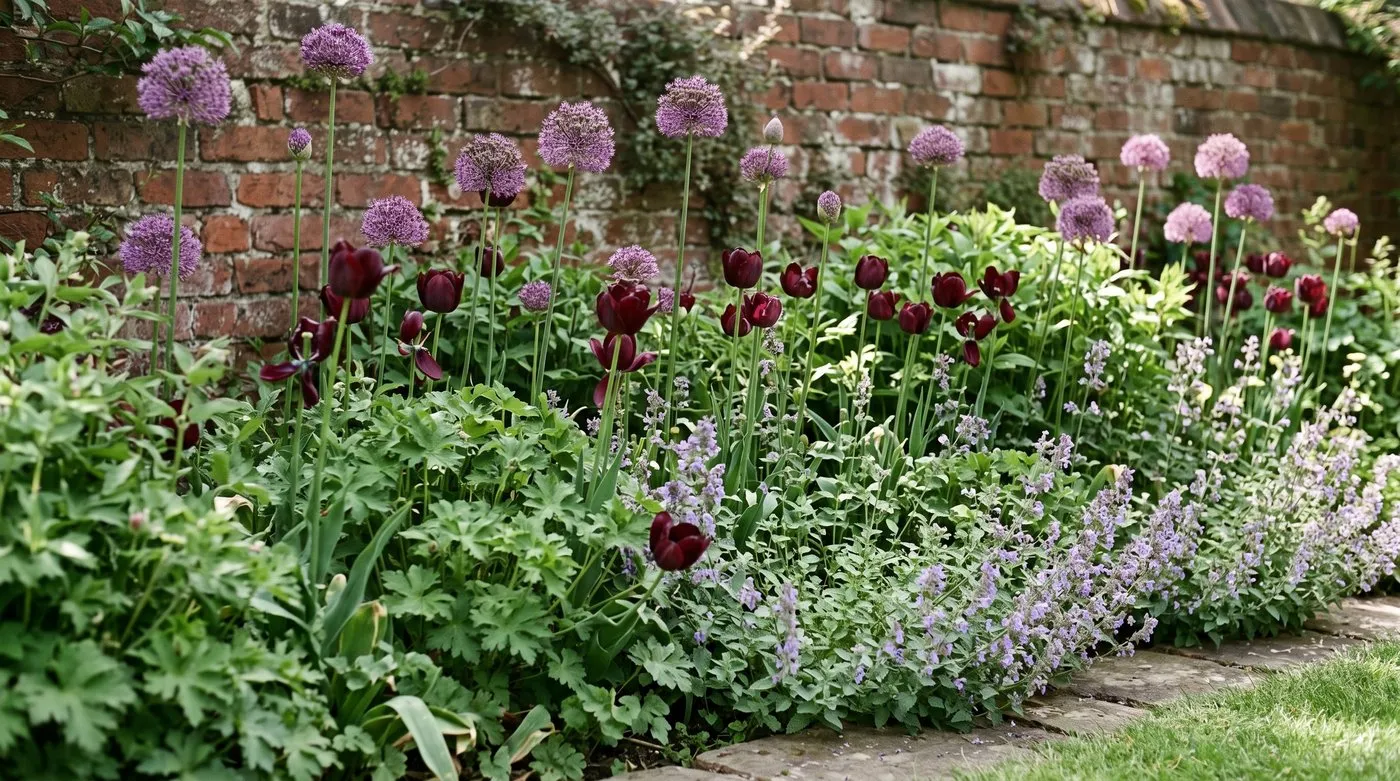
In a border, layered tulips and alliums flower in turn while perennials grow up to hide the old leaves.
Bulbs in a border can be woven between perennials, whose leaves then hide the dying bulb foliage. The guide to layering bulbs in perennial borders explains how.
You can also top a pot with low evergreen plants such as ajuga or small ivy. They hide the bare compost in winter and the fading bulb leaves in early summer.
Common bulb lasagne mistakes
- Waterlogged compost. Bulbs rot in soggy compost over winter. Add grit or perlite, keep the drainage holes clear and raise the pot on feet.
- Planting too shallow. With a shallow pot, the bottom layer sits too high and can topple or flower poorly. Use a pot at least 30cm deep.
- Picking bulbs that all flower together. Three April flowerers give one great week and nothing else. Check the flowering months on the packets before you buy.
- Bringing the pot indoors. Spring bulbs need winter cold to flower. Keep the pot outside.
- Cutting the leaves too soon. The leaves feed the bulbs for next year. Leave them for about six weeks after flowering.
How to look after a bulb lasagne after flowering
Once the flowers fade, the bulbs need their leaves to build up strength for next year.

Leave the leaves to yellow on their own and feed every couple of weeks to build up the bulbs.
Feed every couple of weeks with a high-potash liquid feed, such as tomato feed, until the leaves turn yellow. Leave the leaves to die back on their own. Don’t cut, tie or plait them.
Most hybrid tulips flower best in their first year, then often dwindle. Lift them once the leaves have died down, or treat them as a one-season treat and buy fresh bulbs. Some varieties come back more reliably, as the guide to tulips that return every year explains.
Daffodils, crocus and muscari usually flower again. Leave them in the pot and refresh the top layer of compost in autumn, or plant them out into the garden. The guide to spring bulb care after flowering covers the details.
Planning your next display? The guide on when to plant tulip bulbs explains why tulips go in last. Browse more bulbs and flowers on the plants hub.
Frequently asked questions
How many bulbs fit in a lasagne pot?
A 40cm pot usually takes 40-60 bulbs across three layers. That’s roughly 10-12 tulips at the bottom, 10-15 daffodils in the middle and 20-30 small bulbs on top. Pack each layer closely, but don’t let the bulbs touch each other or the pot.
When should I plant a bulb lasagne in the UK?
Plant in October or November. That suits daffodils, crocus and muscari, and tulips are best planted from late October once it turns cold. Planting tulips later in autumn helps them avoid tulip fire. You can still plant into early December if you’ve left it late.
Do bulb lasagnes work in the ground?
Yes, the same layering works in a border. Dig out a patch about 25-30cm deep and layer the bulbs at the same depths as in a pot. Good drainage matters, so add grit on heavy clay. Mark the spot so you don’t dig into it by mistake.
What happens to the bulbs after flowering?
Let the leaves die back naturally for about six weeks. Give a high-potash liquid feed, such as tomato feed, every couple of weeks until the leaves yellow. Then lift tulips to store or compost. Daffodils, crocus and muscari can stay in the pot or go into the garden.
Can I reuse the same pot for a bulb lasagne every year?
Yes, just replant it each autumn with fresh compost. Tip out the old compost and give the pot a scrub with warm soapy water. Old compost can go on the borders as a mulch.
Why did my bulb lasagne not flower?
The usual causes are waterlogging, small bulbs or planting too shallow. Soggy compost rots bulbs over winter, and small or soft bulbs may only make leaves. Keeping the pot indoors or in a warm porch can also stop flowering, as spring bulbs need winter cold.
What is the cheapest way to plant a bulb lasagne?
Use cheap small bulbs on top and save money on named tulips. Crocus, muscari and mixed bags of daffodils are usually good value. Muscari and daffodils also come back year after year, so one pot keeps giving.
When your tulips have finished, read the guide on how to store flower bulbs so they’re ready to plant again in autumn.
Our team produces practical UK gardening guidance from source research, contributor records and established horticultural practice. Editorial standards are overseen by Matt W.