Key takeaways
- Plant chionodoxa bulbs in September to November, about 8cm deep and 5-8cm apart
- Plant in groups of 15 or more; single bulbs vanish
- Starry flowers face upwards, which is the easy way to tell it from nodding scilla
- It spreads by self-seeding, so leave the leaves until they yellow in late spring
- Flowers from late February to April, giving early bumblebees a welcome meal
- No lifting, staking or feeding needed; just avoid soil that floods in winter
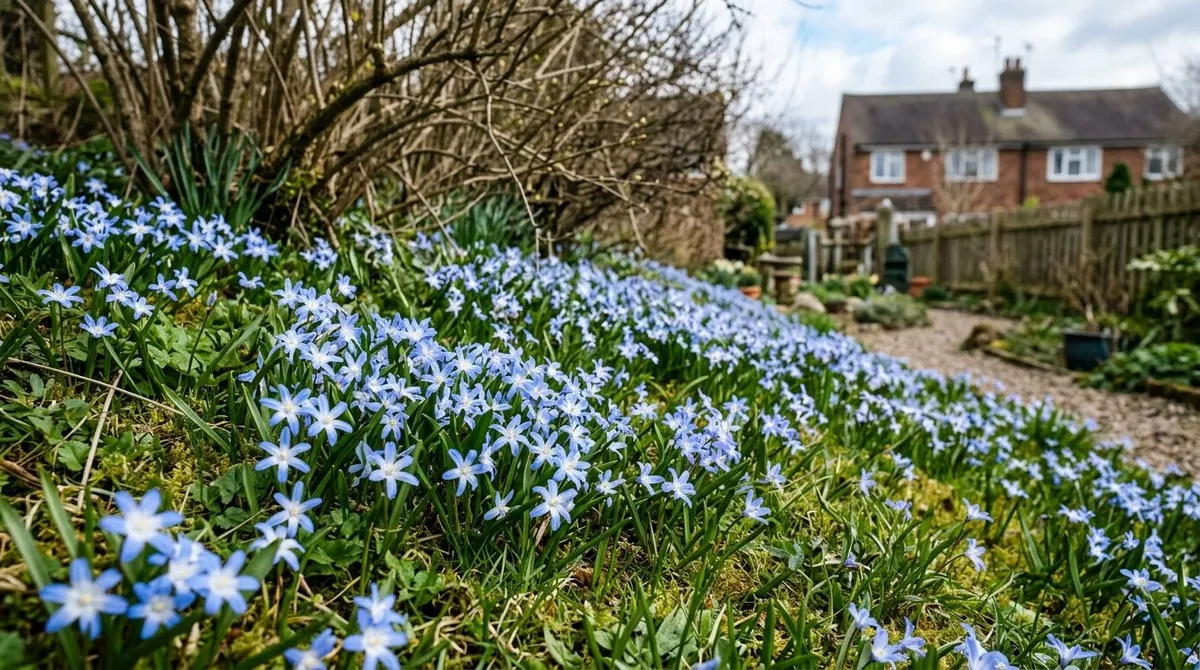
Glory of the snow is the little bulb that gets spring going. In late winter it opens upturned stars of sky blue, each with a white centre, while the borders are still bare. Plant chionodoxa once in autumn, leave it be, and it spreads into a blue carpet on its own.
It’s one of the easiest bulbs you can grow. This guide covers when and how to plant it, where it does best, which colours to buy and the simple aftercare that helps it spread.
What is chionodoxa, and is it really a scilla?
Chionodoxa is a small spring bulb from the mountains of Turkey, Crete and Cyprus. The name means “snow glory”, because in the wild it flowers as the snow melts. That’s why it shrugs off a cold British February.
Botanists now group chionodoxa with scilla. So Chionodoxa forbesii is also sold as Scilla forbesii, and C. luciliae as Scilla luciliae. Bulb suppliers use both names, so search under either if you can’t find it.
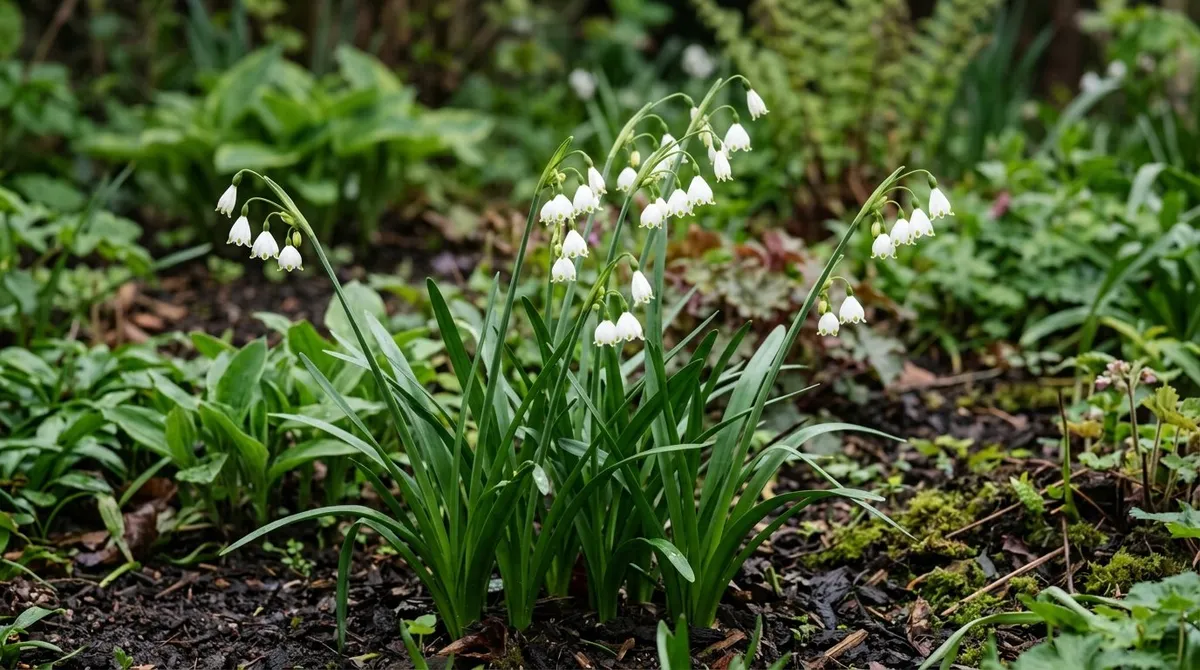
In the garden the two still look different. Chionodoxa holds its starry flowers facing upwards. The familiar Scilla siberica has nodding, bell-like flowers in a deeper blue. If that’s the look you’re after, see the guide to growing scilla for early blue.
When to plant chionodoxa bulbs in the UK
Plant chionodoxa bulbs from September to November. Earlier is better, because the bulbs root while the soil still holds some warmth. That sets them up for a good show the following spring.
The bulbs are small and dry out on a shop shelf. Buy them fresh and plant within a week or two. A shrivelled, papery bulb may flower weakly or not at all. If you have to wait, keep them cool and dry in a paper bag, never sealed plastic.
Late planting in November usually still works. Just don’t leave them in the shed until Christmas. For the running order of every autumn bulb, see when to plant spring bulbs.
How deep and how far apart to plant chionodoxa
Plant chionodoxa about 8cm deep and 5-8cm apart, pointed end up. That’s two to three times the height of the bulb.
These are small flowers, so a few dotted about simply disappear. Plant in groups of at least 15, and for a proper drift think 50 or more. Set them close and the patch reads as one block of blue. Self-seeding then fills in around the edges.
To plant in a lawn, cut and lift a flap of turf with a spade. Loosen the soil underneath, scatter the bulbs and press them in, then firm the turf back down. Scattering looks natural; a neat grid looks like a council roundabout.
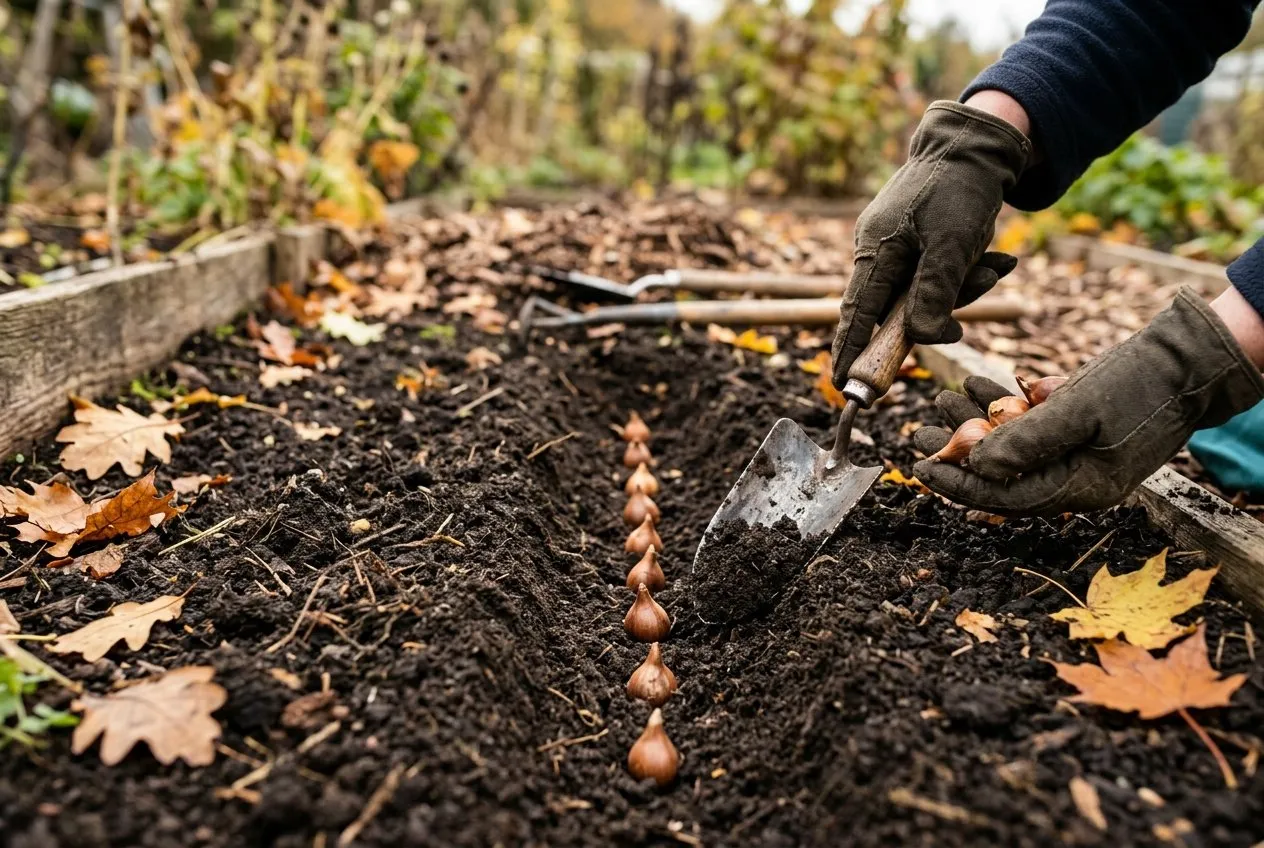
Pointed end up, about 8cm down. In a border, plant them in a tight group rather than a single line for a better splash of colour.
Where does chionodoxa grow best?
Chionodoxa grows best in sun or light shade on well-drained soil. Its great trick is flowering before trees and shrubs come into leaf. A spot that is shady in summer can be bright in February and March.
It does well in five places:
- Short grass: the classic way to grow it, dotting a lawn or rough grass under trees with early blue.
- Under deciduous shrubs and trees: the bare branches let light through, and the shrub leafs up after the bulb has finished.
- The front of a border: a low ribbon of blue while the perennials behind are still underground.
- Rockeries and gravel: the sharp drainage suits it.
- Pots and shallow pans: these lift the small flowers up to where you can see them.
The one thing it hates is waterlogged winter soil, where the bulbs rot. On heavy clay, dig in grit or plant on a slope or raised edge.
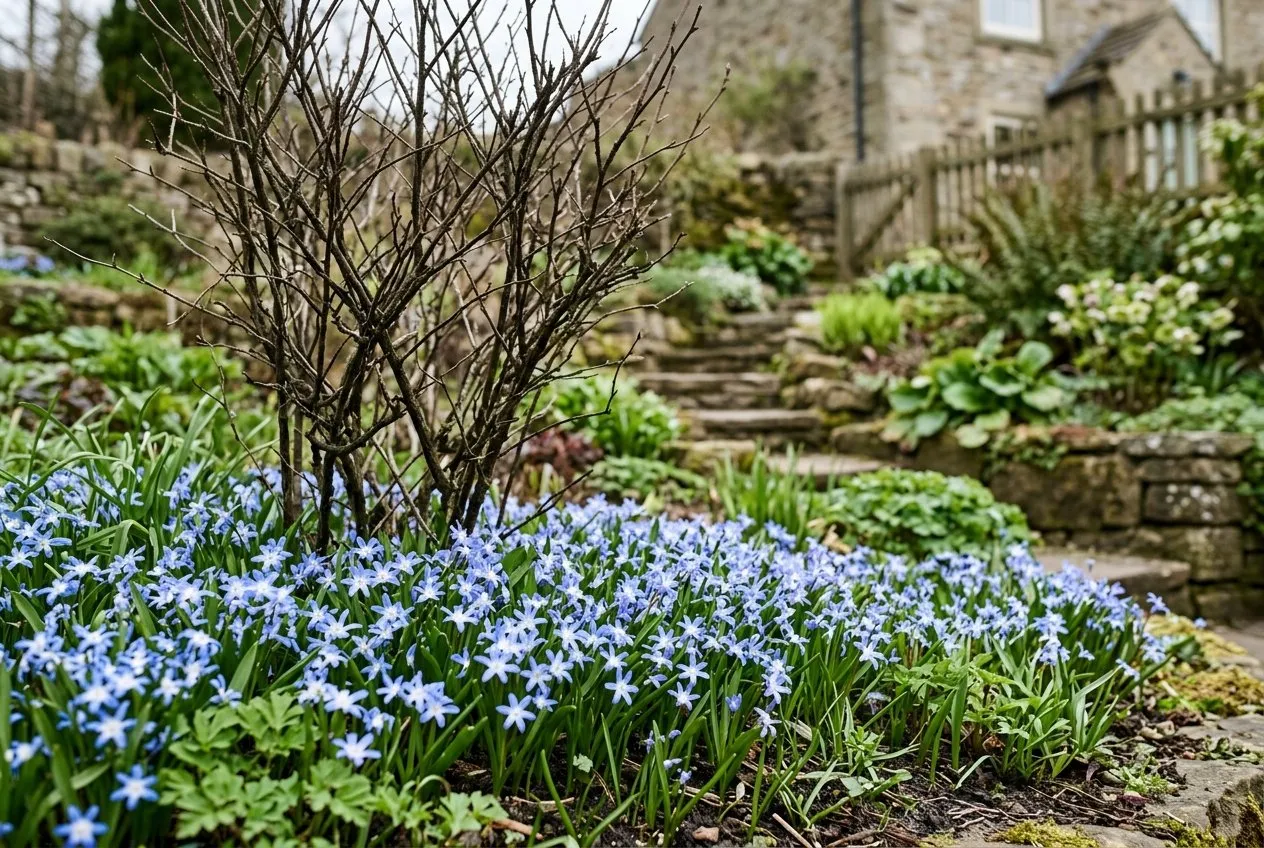
Under a bare shrub is the perfect spot. The bulbs get the spring sunshine, and the shrub leafs up once they’ve finished.
How to get chionodoxa to spread into a carpet
Chionodoxa spreads by self-seeding, and the best way to help it is to stop tidying. Each flower sets a small seed pod. Left to ripen, the seed drops around the parent and grows into new flowering bulbs within a few years.
To encourage it:
- Leave the leaves until they yellow and flop, usually by late May or early June. They feed next year’s bulb.
- Don’t hoe, rake hard or thickly mulch the patch in spring, or you’ll destroy the seedlings.
- Skip deadheading, or wait until the seed pods have browned and split.
In a lawn, leave that patch unmown until the leaves have died down. The guide to naturalising bulbs in grass has more ideas for planting a flowering lawn.
After several years, crowded clumps can flower less freely in the middle. Lift and split them just after flowering, while the leaves are still green. Replant the bulbs at once, 5-8cm apart.
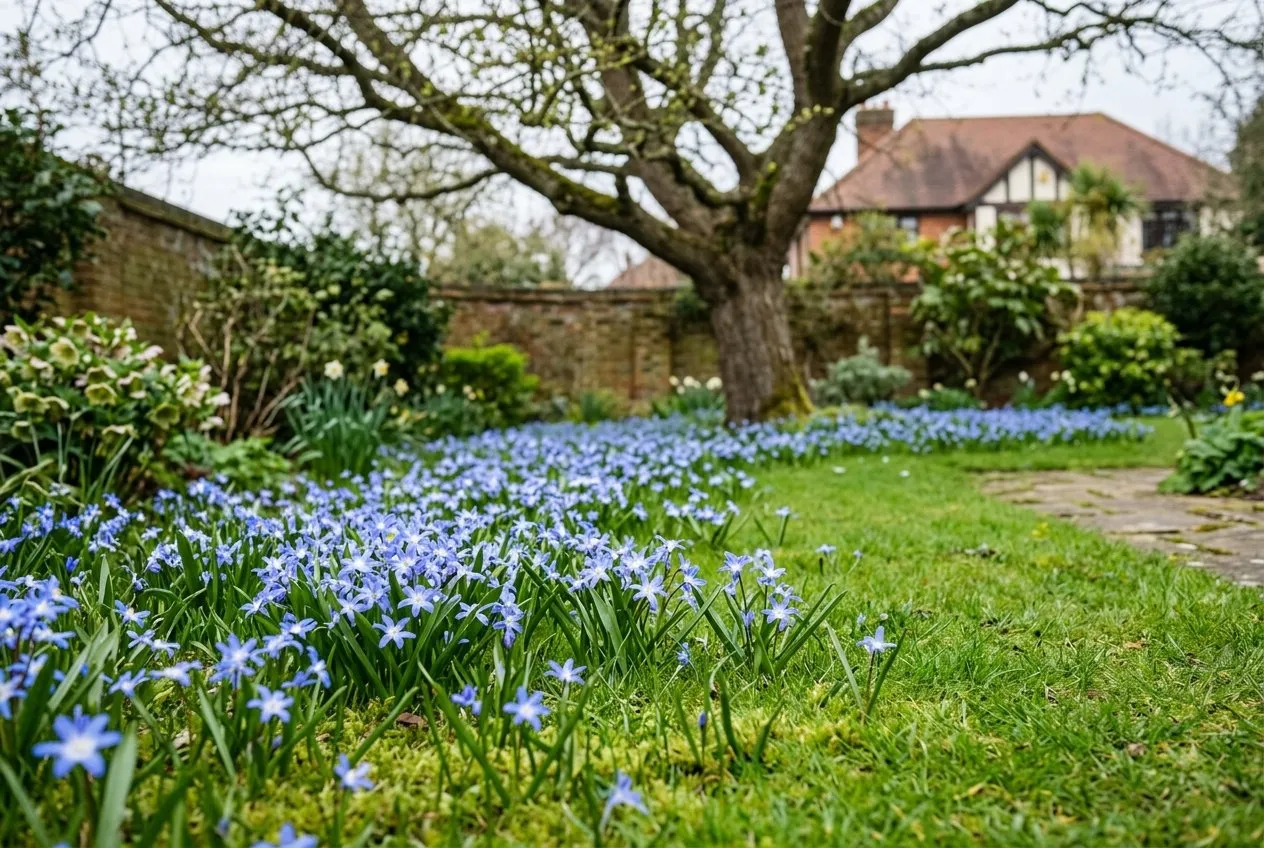
Leave this patch of lawn unmown until the leaves have died down, and the blue spreads a little further every spring.
Is glory of the snow good for bees?
Yes, glory of the snow is one of the earliest bulbs to feed bees. It flowers when queen bumblebees are waking up and need a quick meal. On mild days early solitary bees and honeybees visit too.
The open, starry flowers help. The pollen and nectar sit near the surface, so a tired queen can feed without much effort. Plant it in a sunny patch, where bees are most likely to be out on a cold spring day.
If you’re planting with bees in mind, pair it with crocus and winter aconite. The guide to February to April pollinator plants lists more early food for bees.
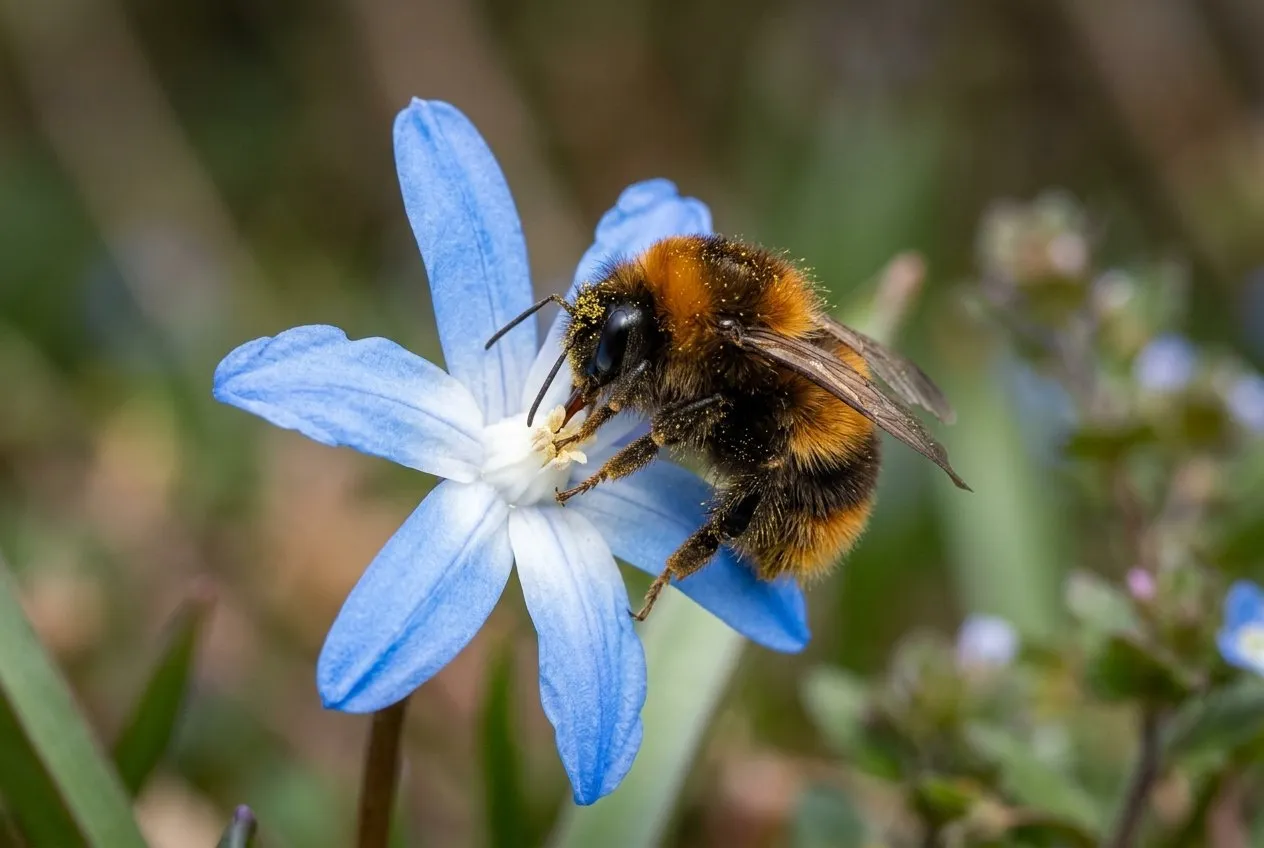
A bumblebee stopping for an early meal. Open flowers like these are easy for a just-woken queen to feed from.
Chionodoxa colours and varieties to choose
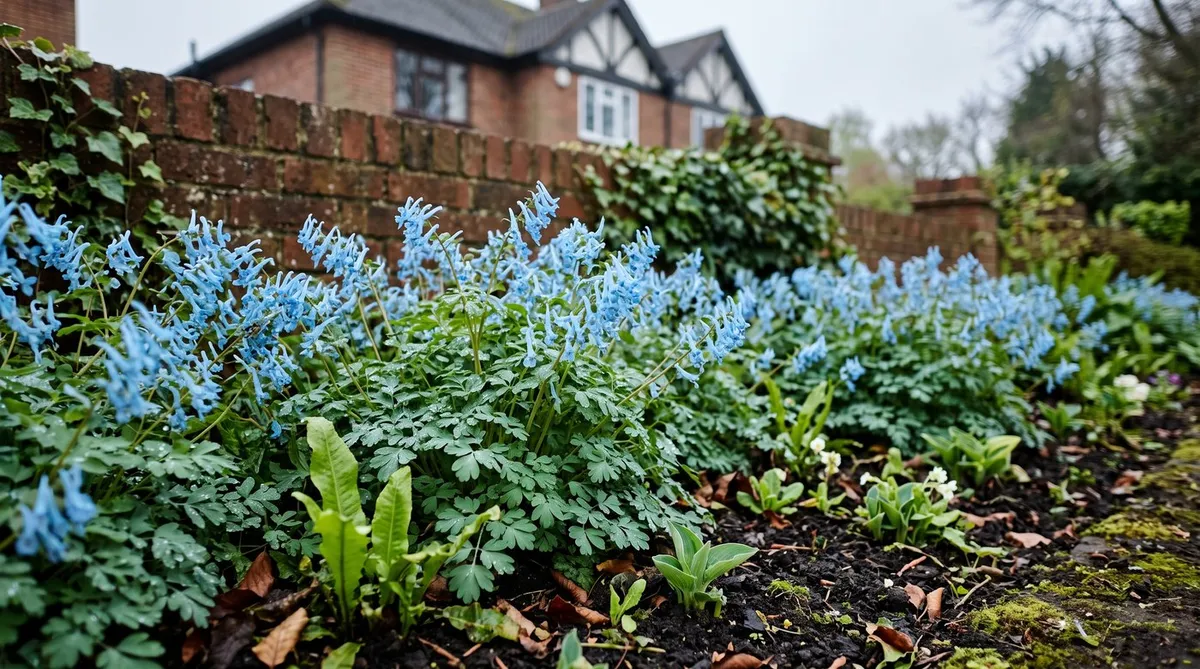
Most chionodoxa is blue, but pink and white forms mix in nicely. They all flower at the same time and need the same care.
| Variety | Flower colour | Best use |
|---|---|---|
| C. forbesii (Scilla forbesii) | Sky blue, white centre | Lawns and big drifts |
| C. forbesii ‘Pink Giant’ | Soft pink, white centre | Pots, path edges |
| C. luciliae (Scilla luciliae) | Soft blue, larger white centre | Borders, rockeries |
| C. sardensis (Scilla sardensis) | Deep blue, tiny white centre | Strong colour in a drift |
| White forms, such as ‘Alba’ | Pure white | Lighting up a shady corner |
For a lawn or large drift, buy plain C. forbesii in bulk, as it’s usually the cheapest. Save the pink and white forms for pots and the front edge, where you see them up close. Most grow about 10-15cm tall.
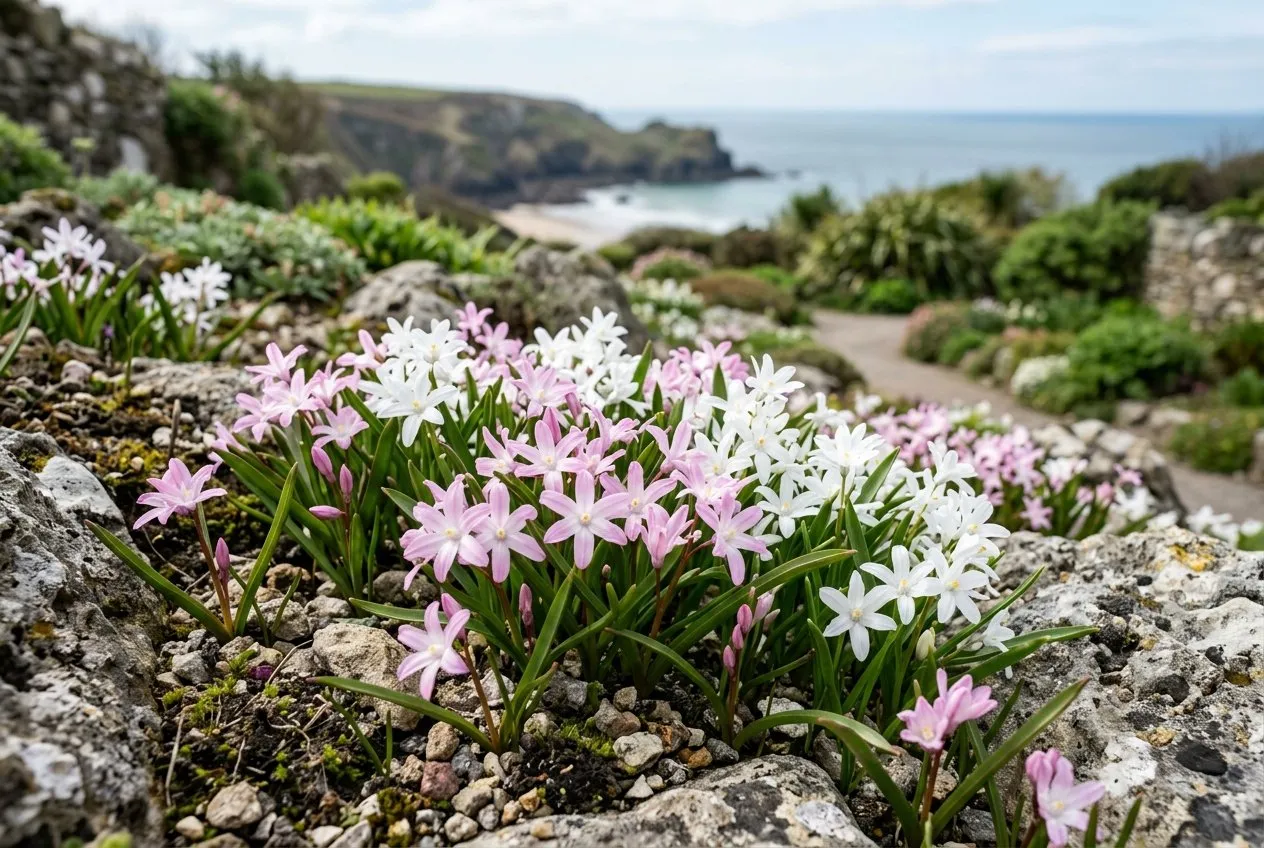
Pink and white chionodoxa in a gritty rockery. The pale forms look their best up close.
Growing chionodoxa in pots
Chionodoxa looks lovely in a shallow pot, which brings the little flowers up to eye level. Use a wide, low pot or terracotta pan at least 20cm across, with drainage holes.
Fill it with a gritty mix of two parts multipurpose or loam-based compost to one part horticultural grit. Plant the bulbs close together, almost touching, 8cm deep. Water once, then leave the pot outside all winter. The bulbs need the cold to flower, so don’t bring them into a warm room.
After flowering, plant the whole clump out into the garden while the leaves are still green. Then start the pot again with fresh bulbs next autumn.
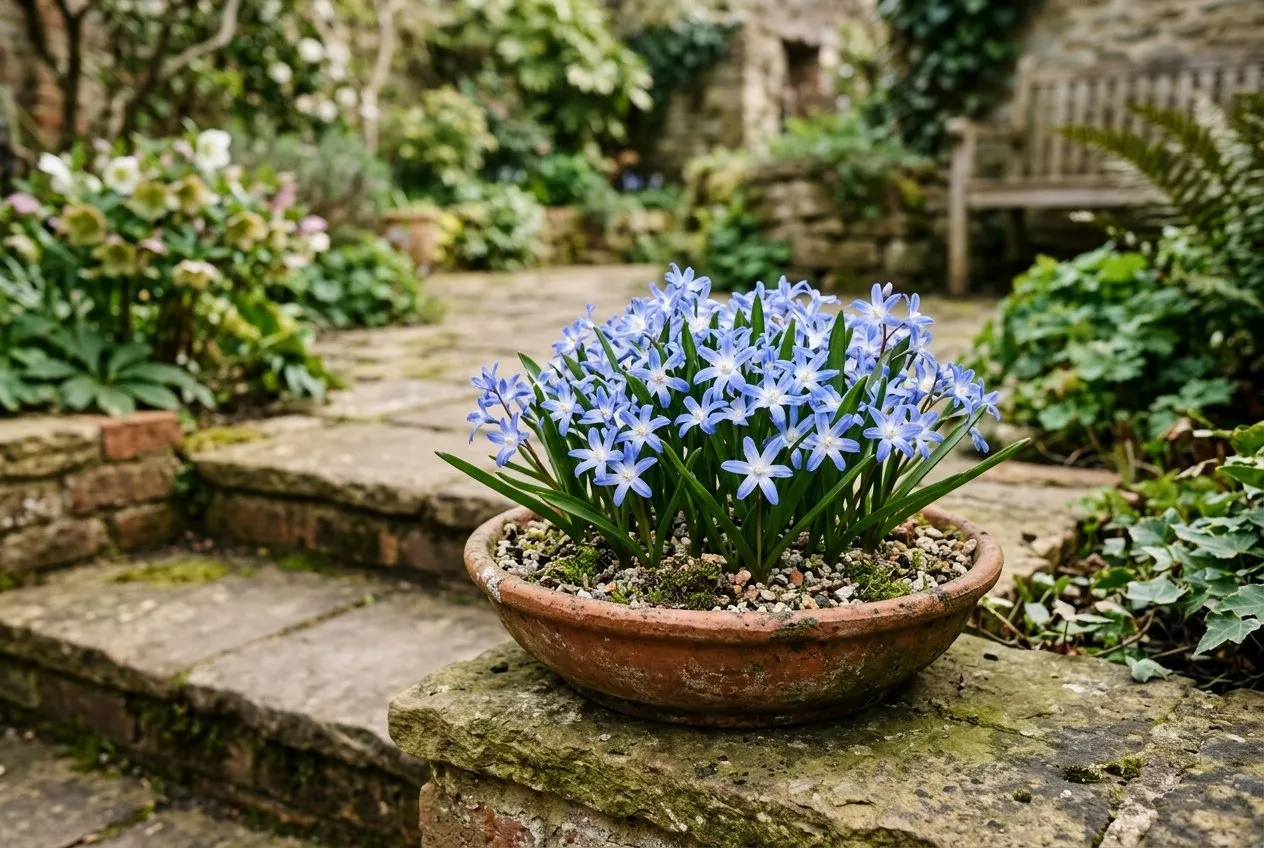
A shallow pan packed with bulbs makes a cheerful spring display on a step or patio table.
What to plant with glory of the snow
Pair chionodoxa with other early bulbs so the colour runs from February into April. Snowdrops and winter aconites flower around the same time or a little before. Crocus and dwarf iris overlap with it.
For a later wave of blue, add muscari, which flowers from March into April. It’s a vigorous spreader, so give it room. The guide to growing grape hyacinths covers it. More ideas are in the round-up of early spring flowers for UK gardens.
Chionodoxa aftercare and a simple calendar
Once planted, chionodoxa needs almost nothing. There’s no staking, no winter protection and no lifting. The main job is leaving the leaves alone until they die back. The guide to spring bulb care after flowering explains why this matters for all bulbs.
| Month | What to do |
|---|---|
| September to November | Buy fresh bulbs and plant 8cm deep, 5-8cm apart |
| December to January | Nothing. Leaves start to poke through late in winter |
| February to April | Enjoy the flowers. Leave them to set seed |
| April to May | Split crowded clumps just after flowering, if needed |
| May to June | Let the leaves yellow and die down before mowing or tidying |
| July to August | Bulbs are dormant. Mow and tidy as normal |
Feeding is optional. If an old patch looks tired, scatter a little general fertiliser as growth starts. More plants for every season are in the plants hub.
Common mistakes with glory of the snow
Most chionodoxa problems come from tidying too soon or planting too few. Here’s what to avoid.
- Mowing or clearing the leaves early. Cutting them in April starves next year’s bulbs and wastes the seed. Wait until they yellow, usually late May.
- Dotting single bulbs about. Each flower is small. Plant 15 or more together so you see a patch of colour.
- Letting bulbs dry out before planting. Shrivelled bulbs flower poorly. Buy fresh and plant promptly.
- Planting in ground that floods. Cold, wet soil rots the bulbs. Add grit, plant on a slope or use pots.
- Expecting a carpet in year one. The drift builds over a few years as it self-seeds. Be patient and leave the seedlings alone.
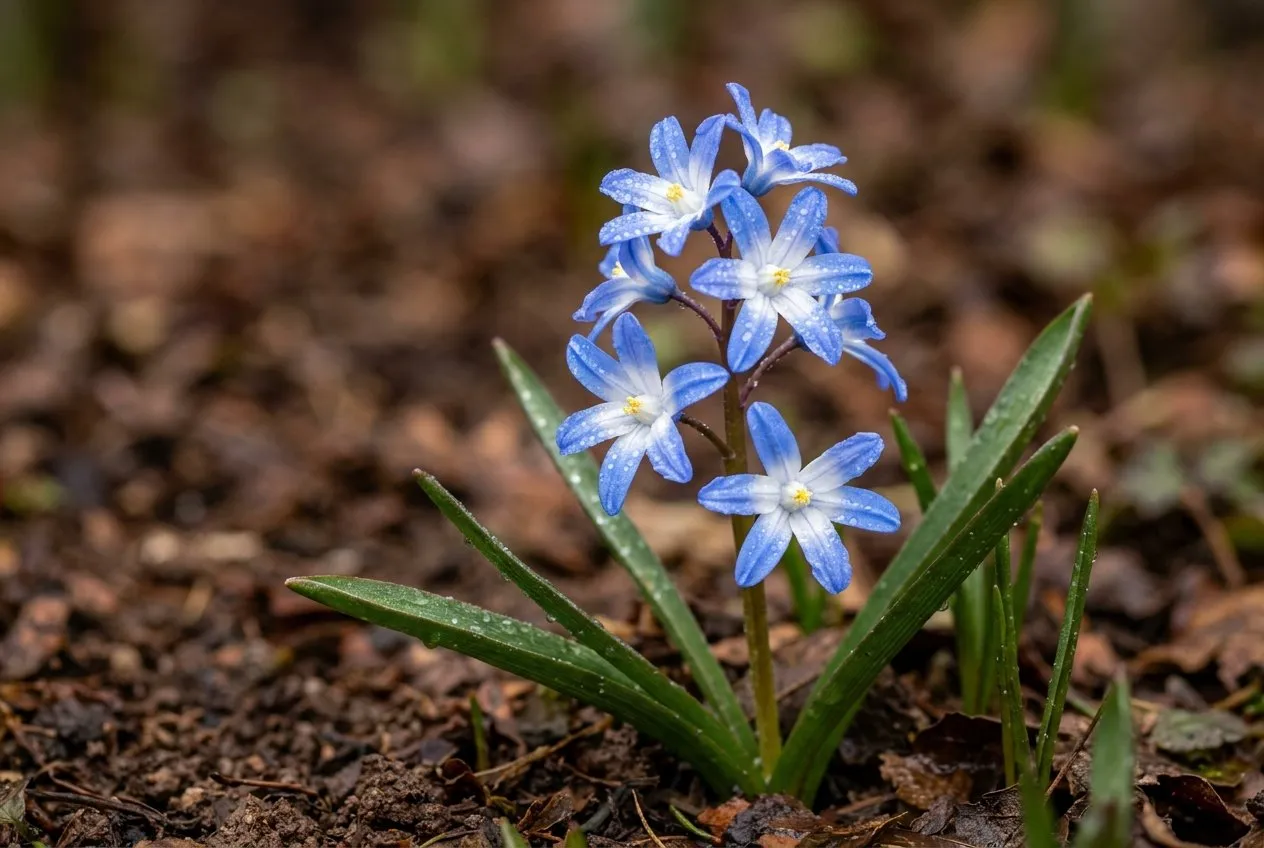
The open, starry flowers with a white centre are what you’re looking for. Give the leaves time to fade and you’ll get more next year.
Frequently asked questions
When should I plant chionodoxa bulbs?
Plant chionodoxa bulbs from September to November. Earlier is better, as the bulbs root while the soil is still warm. They are small and dry out quickly, so plant them soon after you buy them. Late November planting usually still flowers the following spring.
How deep and how far apart do you plant chionodoxa?
Plant about 8cm deep and 5-8cm apart, pointed end up. Plant them in groups of 15 or more so they read as a patch of colour. Close spacing gives a good show in the first spring, and self-seeding fills the gaps over the next few years.
Is chionodoxa the same as scilla?
Botanists now class chionodoxa as a type of scilla. So Chionodoxa forbesii is also sold as Scilla forbesii, and C. luciliae as Scilla luciliae. In the garden they still look different: chionodoxa has open stars that face up, while Scilla siberica has nodding bells.
Does chionodoxa spread and naturalise?
Yes, it spreads by seed and by bulbs slowly multiplying. Over a few years a small group turns into a wider patch. To help it along, let the leaves die down naturally and avoid hoeing or thickly mulching the area in late spring.
Is glory of the snow good for bees?
Yes, it is one of the earliest bee-friendly bulbs. The open flowers make pollen and nectar easy to reach in late winter and early spring. Queen bumblebees waking up on mild days will visit a sunny patch of it.
Where does chionodoxa grow best?
It grows best in sun or light shade on well-drained soil. Short grass, the ground under deciduous shrubs, the front of a border, rockeries and pots all suit it. It flowers before trees come into leaf, so summer shade is no problem. Avoid soil that stays waterlogged in winter.
Do I need to lift chionodoxa bulbs after flowering?
No, leave them in the ground all year. Chionodoxa is fully hardy and does best left alone. Only lift a clump if it has become crowded, and do that just after flowering while the leaves are still green.
Now your glory of the snow is planted, see our pick of the best spring flowers for UK gardens for what to grow around it.
Our team produces practical UK gardening guidance from source research, contributor records and established horticultural practice. Editorial standards are overseen by Matt W.