Key takeaways
- Blue corydalis needs cool, moist, leafy shade and often dies back by July; it is resting, not dead
- Mark blue corydalis with a cane so you don't dig it up while it's dormant
- Yellow Corydalis lutea copes with dry shade and walls, and flowers from late spring into autumn
- Plant Corydalis solida tubers about 5cm deep in autumn for March and April flowers
- Blue types prefer neutral to slightly acid soil; the yellow one is happy on lime
- Sow corydalis seed fresh, as soon as it ripens, as old seed comes up poorly
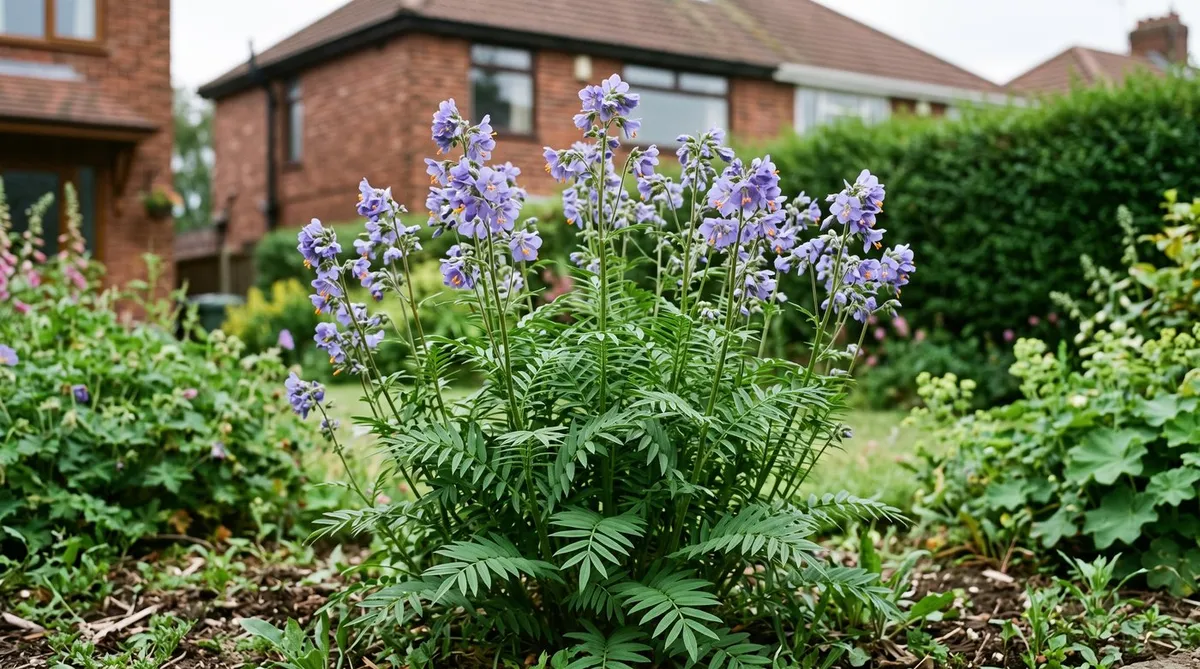
Corydalis is one of the prettiest plants for shade, and one of the most confusing. The secret is knowing which kind you’ve got. The electric-blue types are fussy woodland plants that often vanish in July. The yellow one is close to unkillable and seeds itself into every wall crack.
Get the type right and the rest is easy. This guide covers choosing a corydalis, where to plant it, coping with the summer disappearing act and making more plants.
Blue or yellow: the two kinds of corydalis
Garden corydalis splits into fussy blue woodlanders and tough yellows that need opposite care. Mixing them up causes most failures.
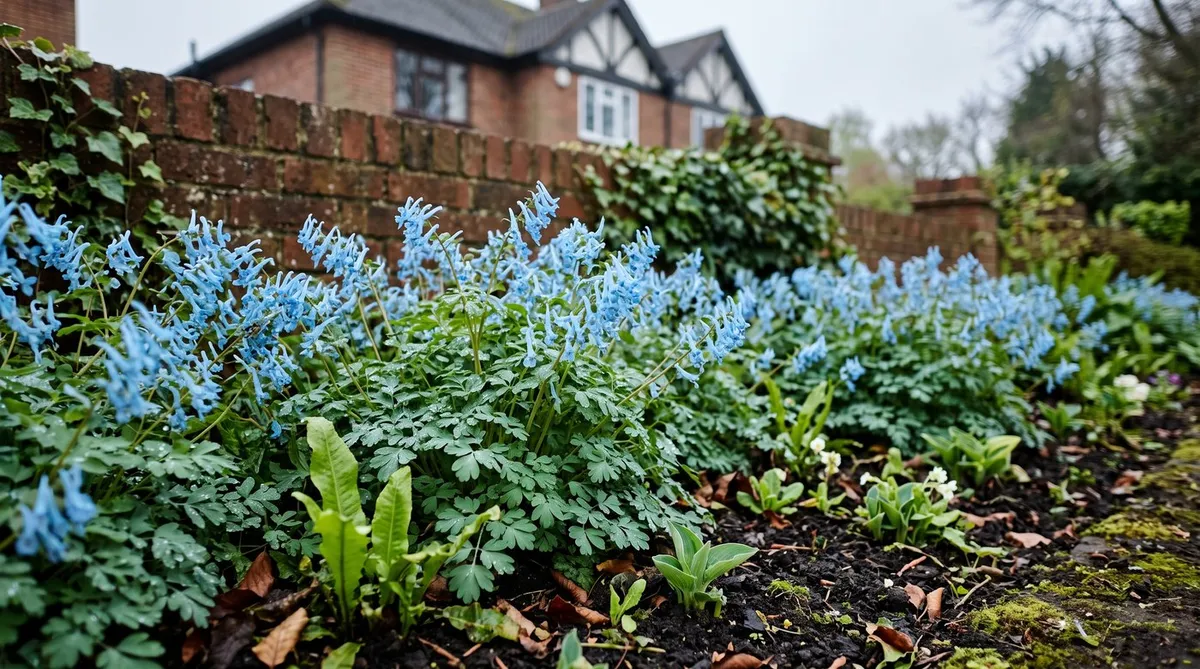
The blue woodlanders, led by Corydalis flexuosa from western China, carry sprays of clear blue flowers over ferny leaves from April to June. They need cool, moist, leafy soil. In warm, dry ground they shrink and disappear.
The tough yellows, led by Corydalis lutea (also called Pseudofumaria lutea), grow in dry shade, gravel and wall cracks. They flower from late spring into autumn and seed themselves about. Corydalis cheilanthifolia, with fern-like leaves and yellow flowers, is just as easy-going.
A third group, Corydalis solida, grows from small tubers and flowers in early spring before dying down. It’s tough and easy too.
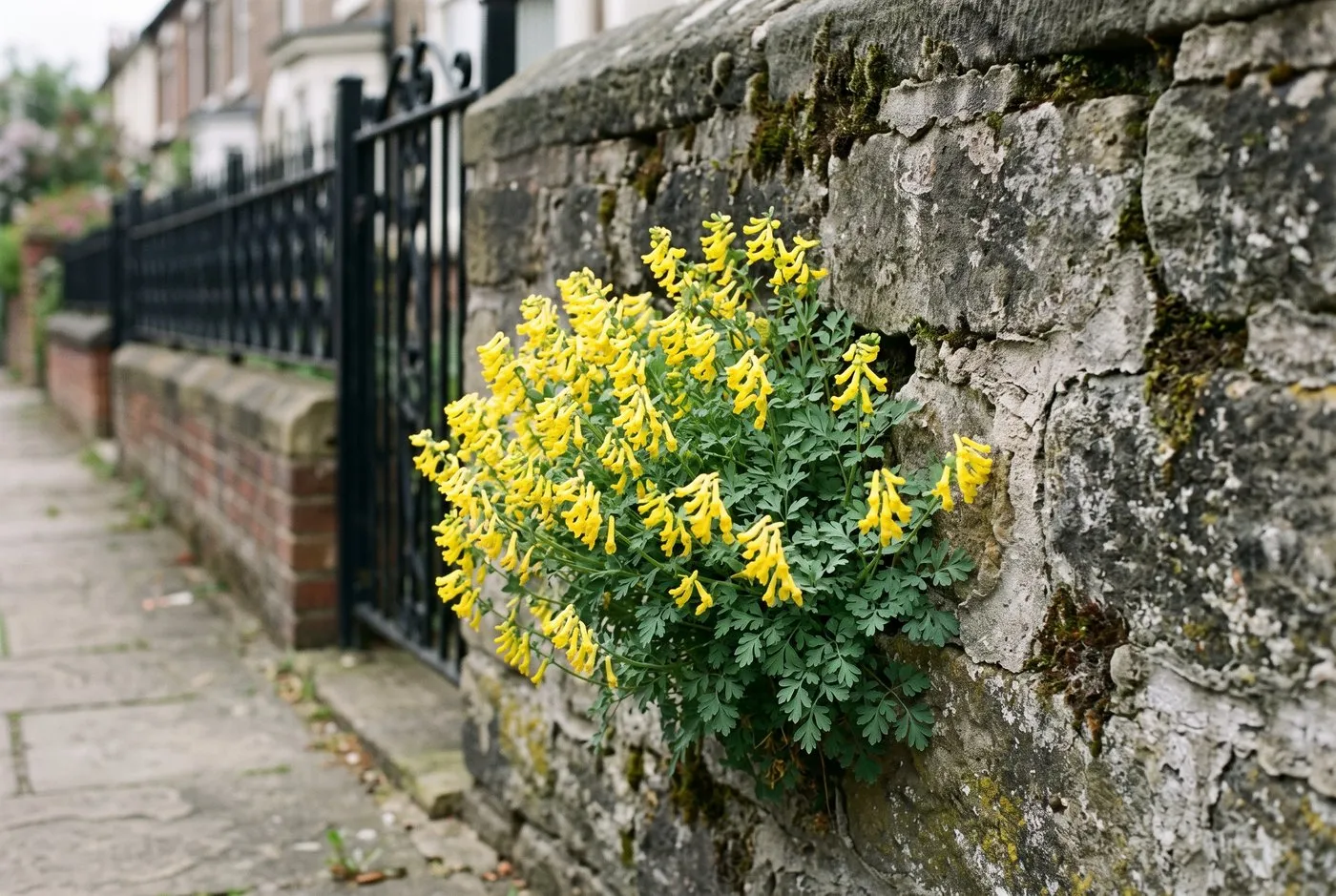
Yellow corydalis loves an old wall. It seeds into the cracks and flowers for months with no help at all.
Which corydalis should you grow?
For an easy start, choose Corydalis lutea or Corydalis solida. For blue flowers, try ‘Craigton Blue’ or Corydalis elata in cool, moist shade.
| Corydalis | Height | Flowers | Best spot |
|---|---|---|---|
| Corydalis lutea | About 30cm | Yellow, late spring to autumn | Walls, dry shade, gravel |
| Corydalis solida | 15-25cm | Purple, pink or red, March to April | Woodland, under shrubs |
| Corydalis cheilanthifolia | 25-30cm | Yellow over ferny leaves | Dry shade |
| ’Craigton Blue’ | About 30cm | Deep blue | Cool, moist shade |
| Corydalis elata | Up to 40cm | Blue, scented, a little later | Cool border |
| C. flexuosa ‘Pere David’ | About 30cm | Clear sky blue | Woodland shade |
Among the blues, ‘Craigton Blue’ and Corydalis elata tend to hold their leaves a little longer in a warm summer. Flexuosa varieties such as ‘Pere David’, ‘Purple Leaf’ and ‘China Blue’ are gorgeous but are the quickest to go dormant.
For another spring woodland plant that loves the same leafy shade, see the guide to growing erythronium (dog’s tooth violet).
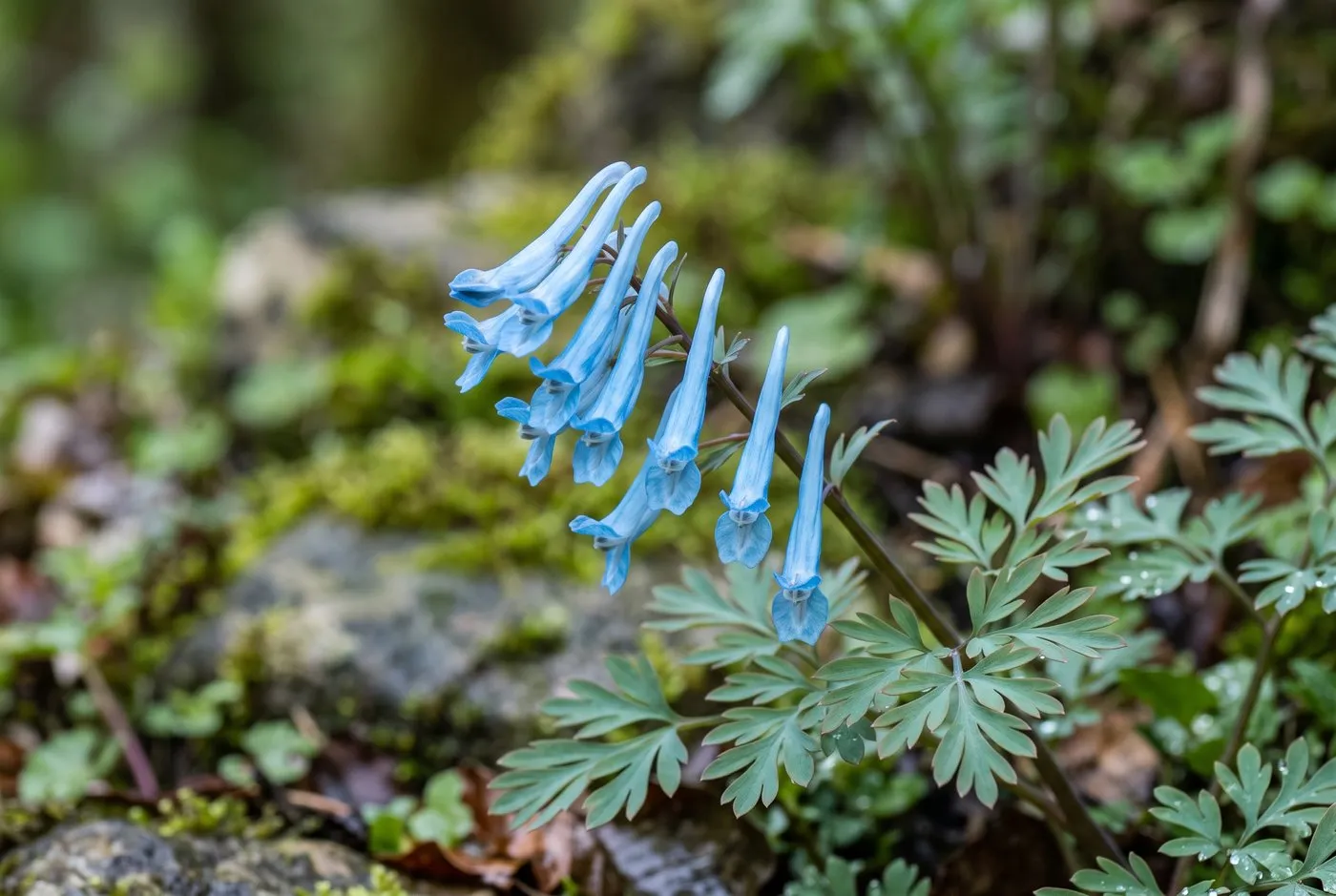
This is why gardeners chase blue corydalis. Give it cool, damp shade and the flowers are a true sky blue.
Why does blue corydalis vanish in July?
Blue corydalis usually goes dormant in summer, not dead. It comes from cool, moist mountain woodland. In a warm, dry British summer it simply shuts down and waits.
Its year usually runs like this:
- Spring (March to April): fresh ferny leaves push up.
- Flowering (April to June): blue sprays open for several weeks.
- Resting (late June to July): in heat or dry soil, the leaves yellow and die back.
- Reshooting (autumn or next spring): kept cool and moist, it comes back, sometimes with a few more flowers in autumn.
Mark each plant with a cane and label so you don’t dig it up or plant on top of it.
Gardener’s tip: Plant blue corydalis next to a fern or hosta that fills out in June. When the corydalis rests in July, its neighbour hides the gap and keeps the soil shaded and cool.
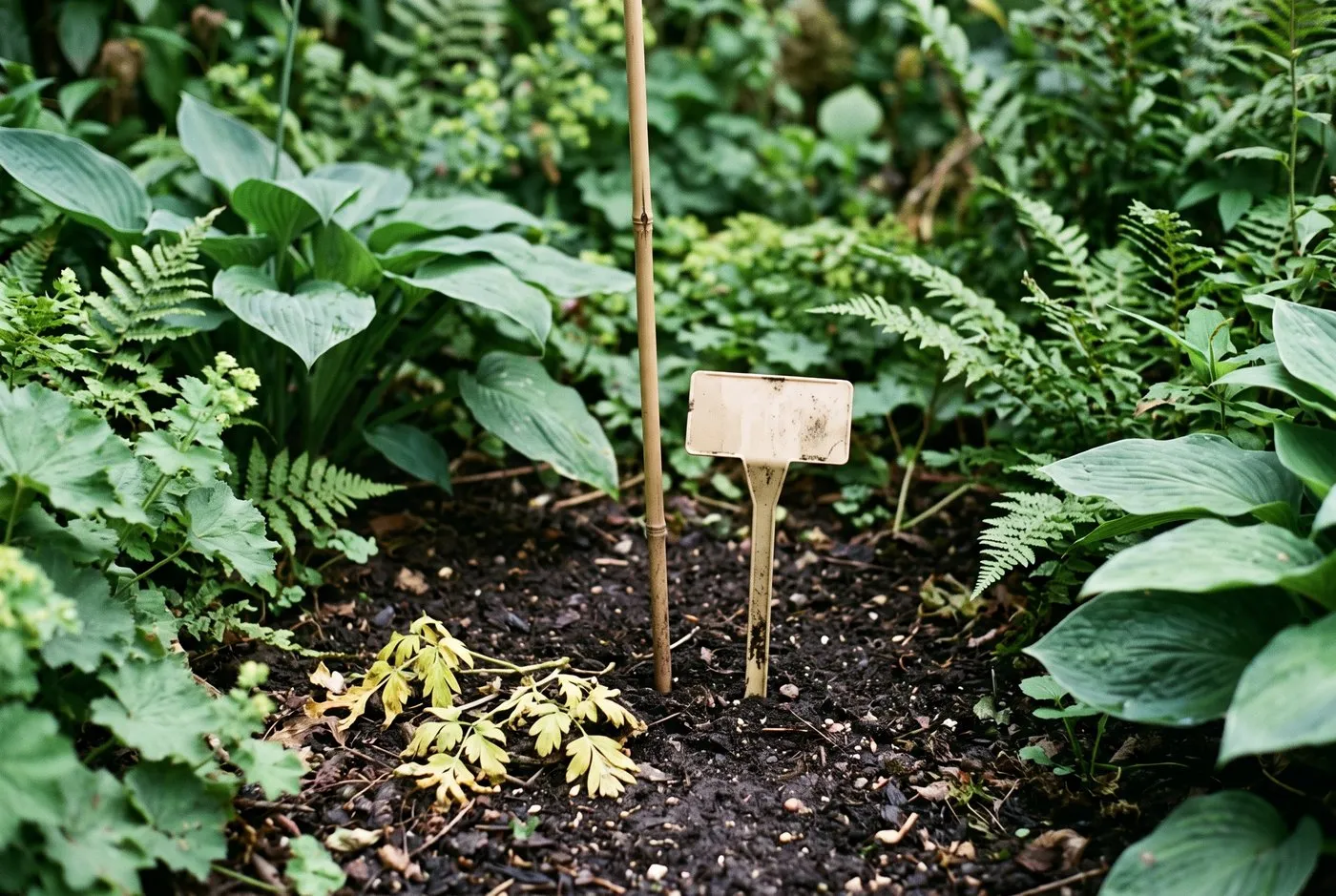
Not dead, just resting. A cane and label stop you digging up the sleeping plant while it’s out of sight.
Where to plant corydalis: shade, soil and moisture
Plant blue corydalis in cool, dappled shade, in leafy soil that never dries out. A north- or east-facing border under deciduous shrubs is ideal. Avoid hot, south-facing ground.
Before planting, fork in plenty of leafmould or leafy compost to copy a woodland floor. Add a little grit on heavy soil so it doesn’t sit wet in winter. Set plants 25-30cm apart and water them in well.
The yellow and tuberous types are far less fussy. Corydalis lutea grows in dry shade, gravel and walls where the blues would sulk. See the guide to plants for dry shade for more tough companions. For leafy partners in moister shade, the hardy ferns guide has plenty.
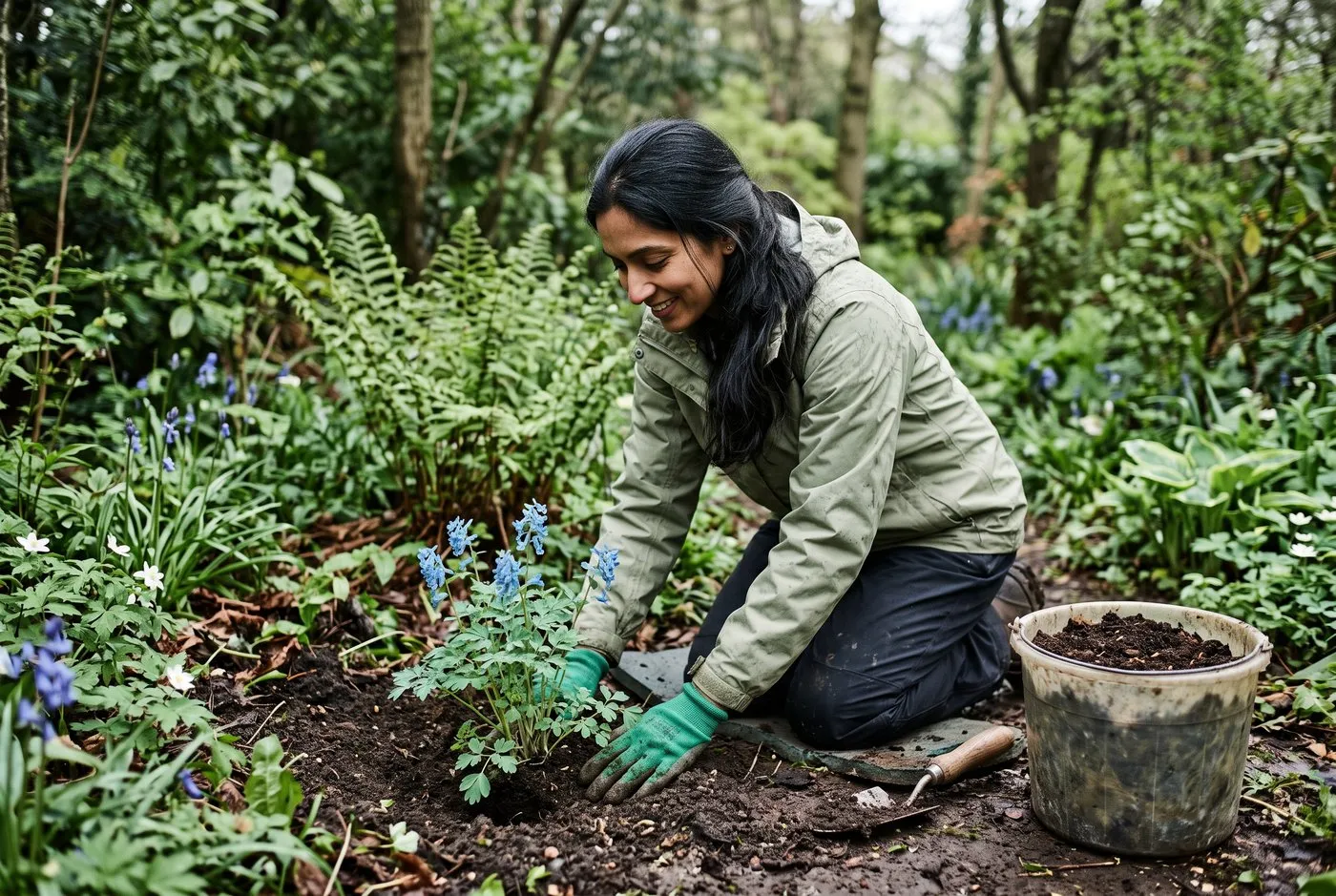
Plant into cool, leafy soil and water in well. A bucket of leafmould worked in first makes a big difference.
Does corydalis need acidic soil?
Blue corydalis prefers neutral to slightly acid soil, but the yellow types are happy on lime.
Blue corydalis isn’t a true lime-hater like a rhododendron. It just dislikes thin, chalky ground. Leafy, humus-rich soil suits it best. If your soil is chalky, grow the blues in a pot or raised bed of peat-free compost mixed with leafmould and grit. The guide to making soil more acidic covers small pockets in the ground.
Corydalis lutea is the opposite. It’s at home in old lime-mortar walls. So let your soil steer you: blues on leafy, neutral ground, yellows on chalk.
How to grow Corydalis solida for spring colour
Corydalis solida is the easiest and earliest corydalis. It grows from a small round tuber, flowers in March and April, then dies down by early summer to rest underground.
Plant the tubers in early autumn, about 5cm deep, in leafy soil under deciduous trees or shrubs. Flowers come in purple, pink and red. ‘George Baker’ is a warm brick-red and ‘Beth Evans’ a soft pink. Plants reach 15-25cm.
It’s fully hardy and spreads slowly over the years. Ants carry off the seeds, so new plants pop up a little way from the parent. Over time a handful of tubers becomes a spring carpet.
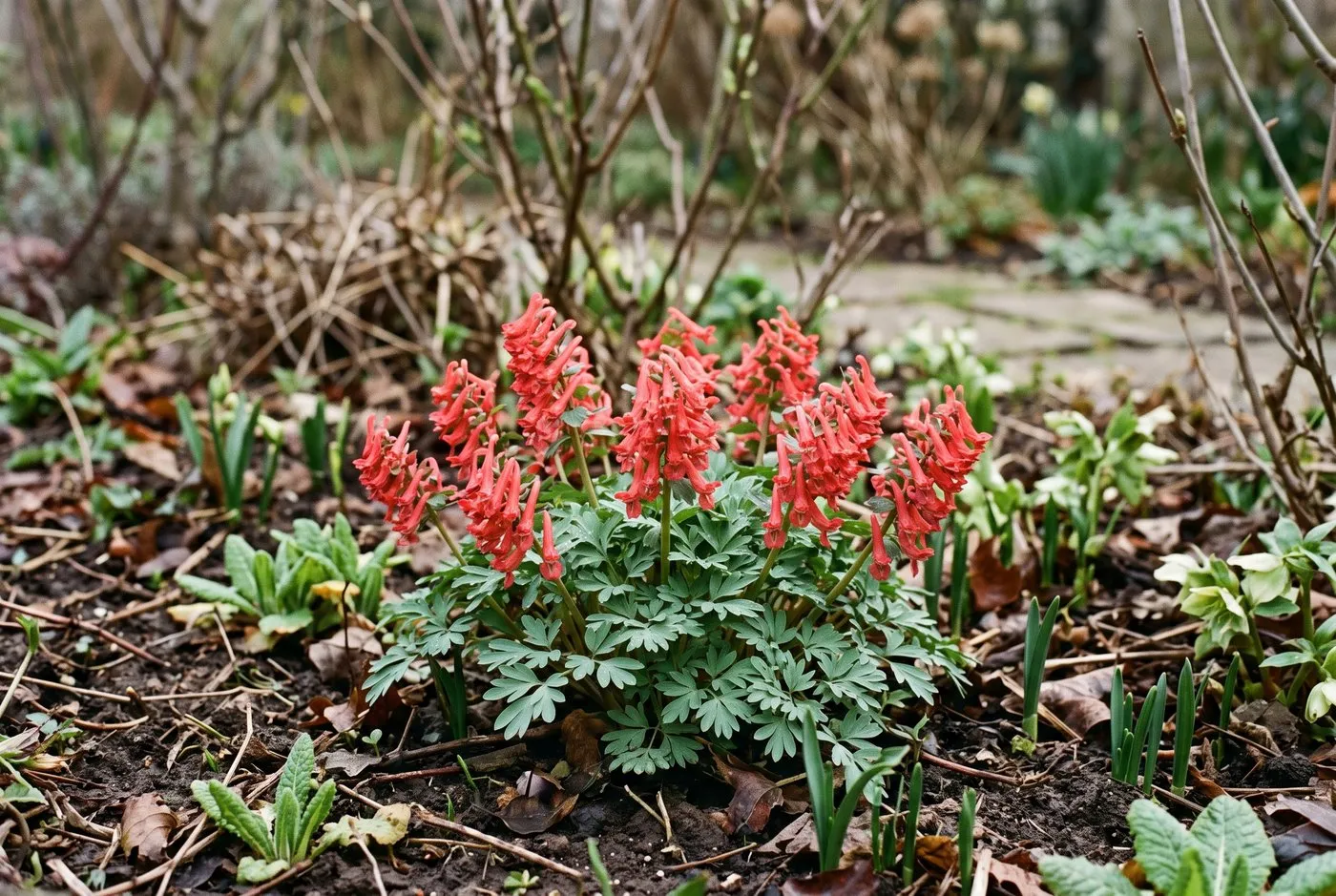
Corydalis solida ‘George Baker’ flowers in March, weeks before the blue types. It’s tough and easy in leafy soil.
Watering and feeding corydalis
Keep blue corydalis evenly moist, and mulch it with leafmould each spring. That mulch is usually all the food it needs. Water in dry spells from spring to midsummer, especially in pots.
In containers, give a weak liquid feed every few weeks while it’s growing, then stop once the leaves yellow. Too much feed gives soft, floppy growth.
While it’s dormant, aim for cool and just damp. A crown baked dry in summer may not come back. One sitting in cold mud all winter may rot.
Month-by-month corydalis calendar
| Month | What to do |
|---|---|
| January to February | Plants dormant. Top up leafmould mulch. Corydalis solida shoots appear |
| March | Blue corydalis shoots. Corydalis solida flowers |
| April to May | Peak flowering. Keep blue types moist. Corydalis lutea starts flowering |
| June | Blue flowers fade. Collect and sow seed straight away |
| July to August | Blue types rest. Mark crowns and keep the spot cool and lightly damp |
| September | Blue types may reshoot. Divide clumps now |
| October | Plant Corydalis solida tubers 5cm deep. Corydalis lutea finishes |
| November to December | Mulch with leafmould. Stop pots getting waterlogged |
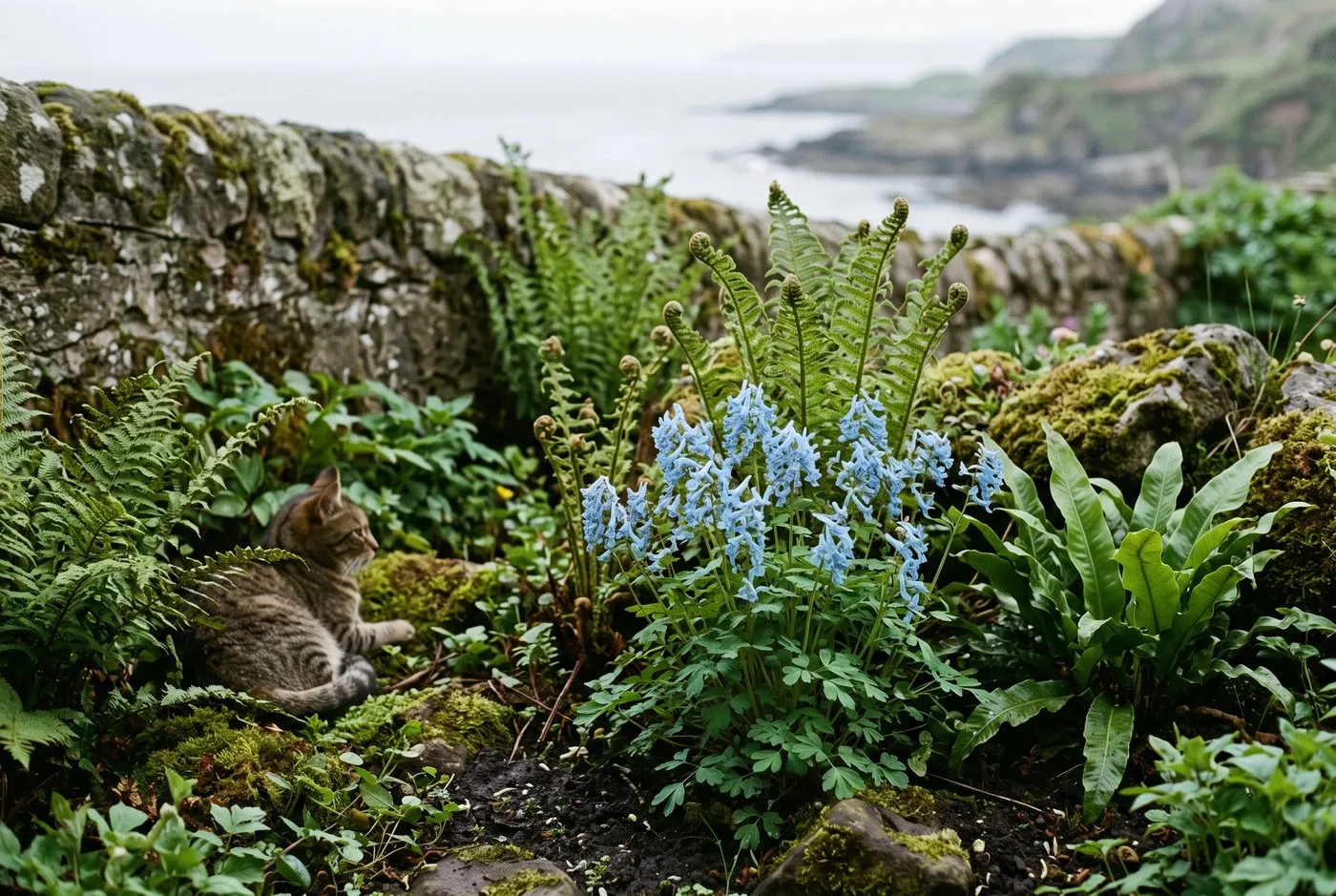
A cool, damp, fern-filled corner suits corydalis perfectly. The cat seems to agree.
How to propagate corydalis
Divide blue corydalis in early autumn, and sow any seed as soon as it ripens.
To divide, lift a clump as it reshoots in early autumn, or just after flowering. Tease it into pieces, each with roots and a shoot. Replant straight away into leafy soil and water well.
Corydalis seed comes up poorly once it dries out. Collect it while it’s fresh, sow it straight into pots of leafy compost and leave them in a shady spot outside. Seedlings usually appear the following spring after a cold winter.
Corydalis lutea seeds itself freely, so just move seedlings while they’re small. Corydalis solida makes extra small tubers you can lift and space out in autumn.
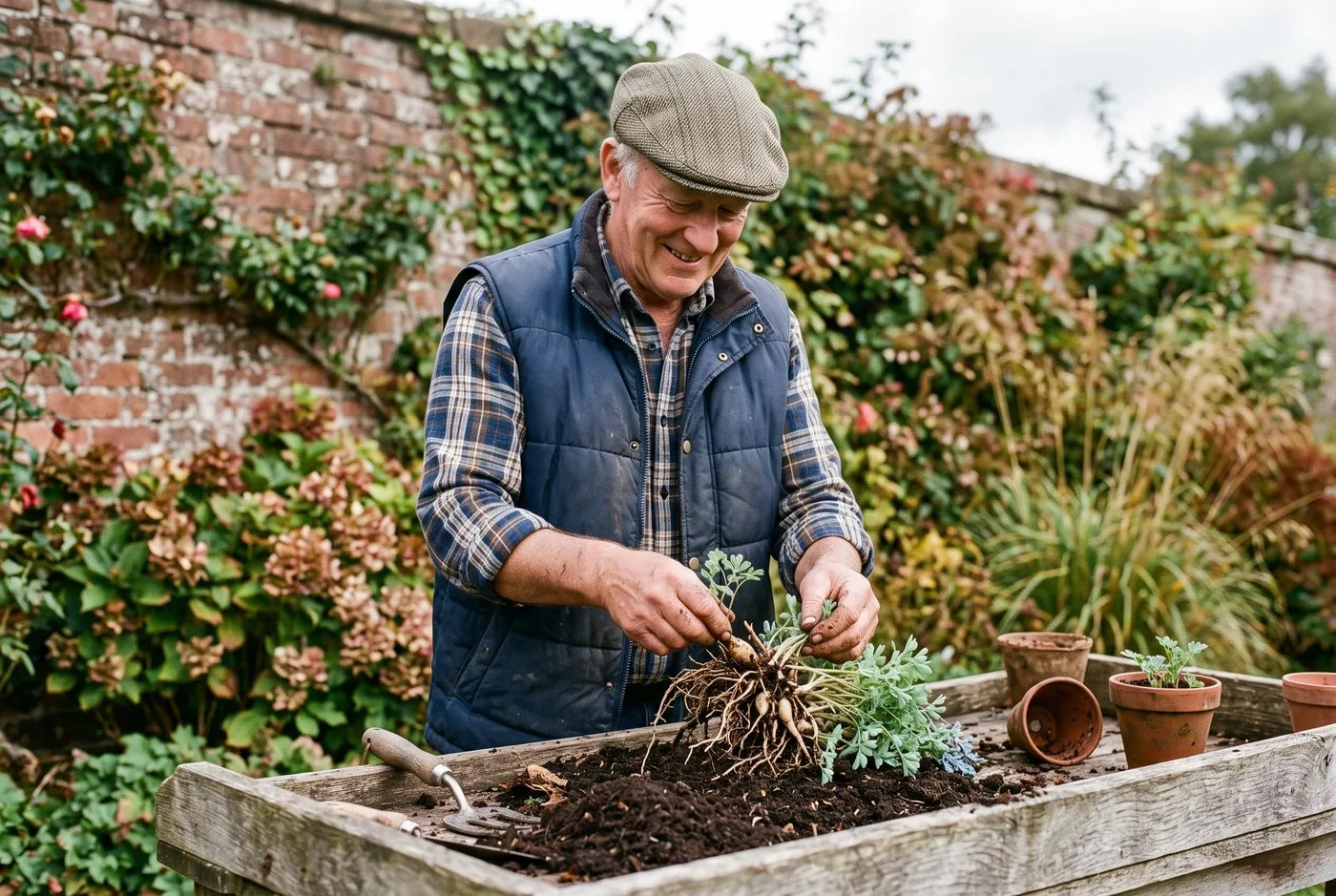
Tease the clump into pieces that each have roots and a shoot, then replant straight away so they don’t dry out.
Common corydalis mistakes
Most corydalis losses come from digging up resting plants or planting the blues somewhere too hot.
- Digging up dormant plants. Blue types vanish in July and look dead. Mark them with a cane and leave them be.
- Planting the blues in sun or dry soil. Hot ground makes them rest early and can kill them. Give them cool, moist, leafy shade.
- Sowing old seed. Dried seed rarely comes up. Sow it fresh.
- Fighting your soil. Blues like leafy, neutral soil; yellows like lime. Pick the type that suits your ground.
- Letting pots dry out. Pots of blue corydalis dry fast. Keep them in shade and check them often in warm weather.
- Letting yellow seedlings get established in the wrong place. Pull them while small, before the root gets deep.
For another shade lover that also dies back in summer, see the guide to growing bleeding hearts. More ideas for darker corners are in the plants hub and the round-up of plants for shade.
Frequently asked questions
How do you grow corydalis in the UK?
Match the type to your spot. Grow blue corydalis in cool, moist, leafy shade and never let it dry out. Grow yellow Corydalis lutea in dry shade, gravel or walls. Plant tuberous Corydalis solida in autumn in leafy soil for spring flowers.
Why does my blue corydalis disappear in summer?
It has gone dormant, not died. Blue corydalis comes from cool mountain woodland and rests when summer turns warm and dry. The leaves yellow and vanish, then it reshoots in autumn or the next spring. Mark the spot and keep it shaded and slightly moist.
Is corydalis hardy in the UK?
Yes, the common garden corydalis are hardy in the UK. Winter cold isn’t the problem for the blue types. Hot, dry summers are, so give them cool, moist shade.
Does corydalis come back every year?
Yes, corydalis is perennial and returns each year in the right spot. Blue types die back in summer and reshoot later. Corydalis lutea keeps its leaves for much of the year and self-seeds. Corydalis solida dies down by early summer and comes back from its tuber the next spring.
Does corydalis need acidic soil?
Blue corydalis prefers neutral to slightly acid, leafy soil. It dislikes thin, chalky ground. Yellow Corydalis lutea is the opposite and is happy on lime, even in old mortar walls. Choose the type that suits your soil.
How do you propagate corydalis?
Divide clumps in early autumn or sow seed fresh. Corydalis seed comes up poorly once it dries out, so sow it as soon as it ripens. Corydalis solida forms extra small tubers you can lift and spread out in autumn.
Is Corydalis lutea invasive?
No, but it self-seeds very freely. It pops up in walls, gravel and paving cracks. Pull unwanted seedlings while they’re small, as older plants have a deep root that snaps. In awkward dry shade, most gardeners are glad of it.
Now you know how to keep blue corydalis happy, read our guide to growing hostas in the UK for the perfect leafy partner to fill the gap when it rests.
Our team produces practical UK gardening guidance from source research, contributor records and established horticultural practice. Editorial standards are overseen by Matt W.