Key takeaways
- Corms dry out and die easily, so buy potted plants or fresh corms in damp packing
- Plant corms about 10-15cm deep, pointed end up, in early autumn
- Grow them in dappled shade in moist soil full of leaf mould
- 'Pagoda' is the easiest variety and bulks up well
- Leave clumps alone for a few years, then divide in late summer if crowded
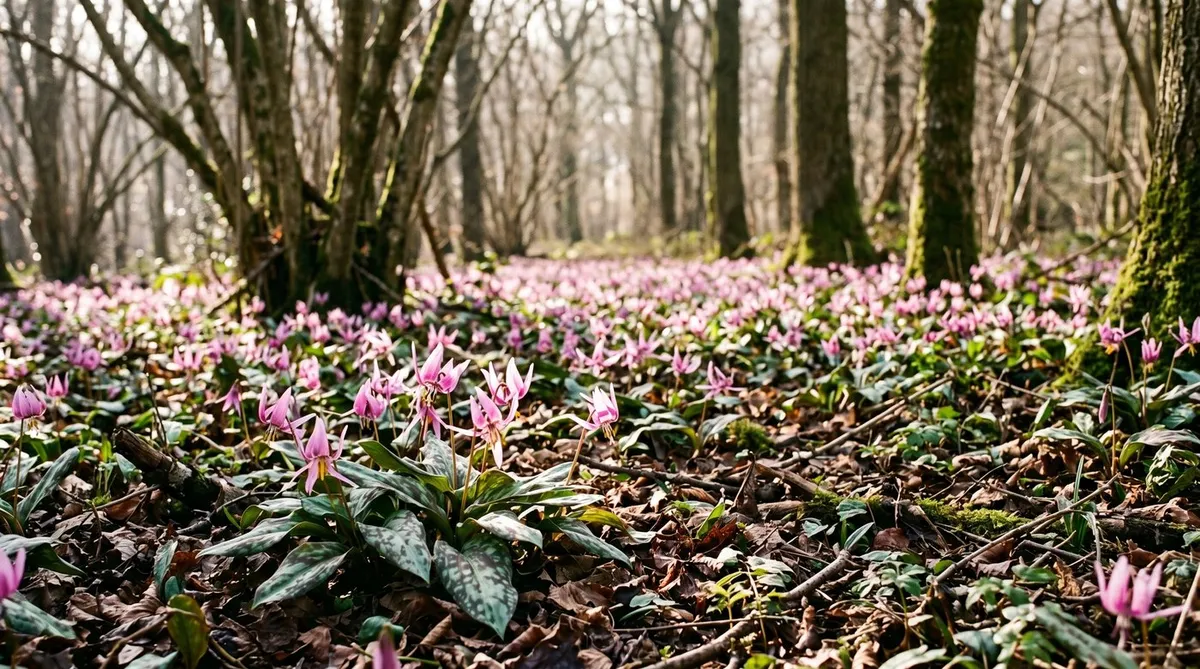
Erythroniums, or dog’s tooth violets, are some of the prettiest flowers for a shady spot in spring. Their nodding flowers have swept-back petals, like tiny lilies, in pink, white or yellow. Many have lovely marbled leaves too.
Growing them well comes down to one thing: never let the corms dry out. Buy them fresh, plant them in cool, leafy shade and leave them alone. This guide covers buying, the best varieties, planting and looking after them through their long summer rest.
What is a dog’s tooth violet?
Erythroniums are spring-flowering woodland plants that grow from corms. They belong to the lily family and are not violets at all. The name comes from the corm, which is long, white and pointed, like a dog’s tooth.
The leaves come up first, often blotched with bronze or maroon. Then the flowers follow on slender stems in March and April, before the trees overhead are in full leaf. By early summer the whole plant dies down and rests underground until next spring. Most are 10-35cm tall.
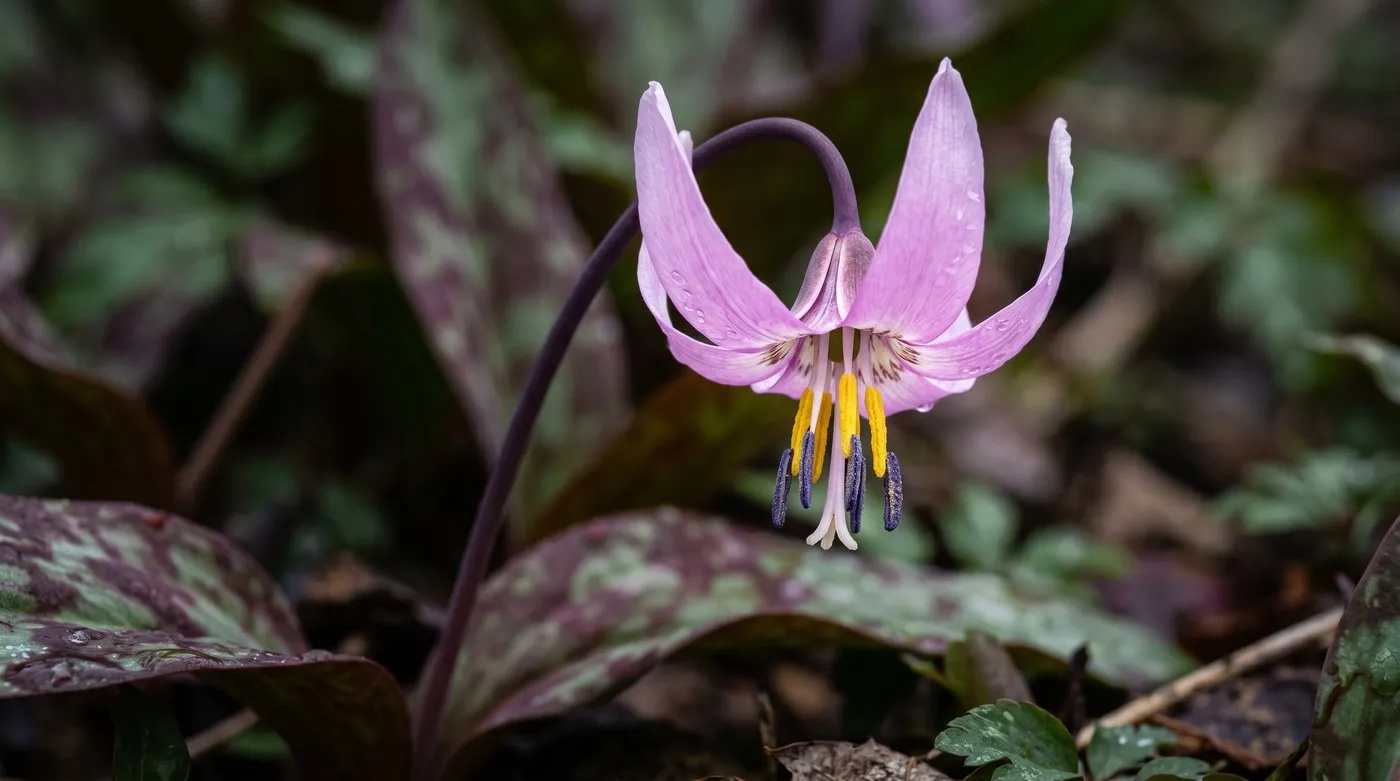
The swept-back petals look like a tiny lily. The mottled leaves are a bonus long before the flowers open.
How to buy erythroniums that will grow
Unlike daffodil or tulip bulbs, erythronium corms have no papery skin. They dry out quickly, and a shrivelled corm rarely recovers. This is the main reason they fail.
- Potted plants in spring are the most reliable way to start. You can see they are alive.
- Fresh corms in autumn, packed in damp material such as coir, are the next best option.
- Dry, loose corms in bags are a gamble. Only buy them if they are firm and plump.
Plant corms the day they arrive if you can. If you have to wait, keep them in their damp packing somewhere cool for a day or two at most. Don’t store them in a dry shed like tulips.
Best erythroniums for UK gardens
Start with ‘Pagoda’. It is the most forgiving and quickest to form a clump. Once that is happy, try some of the others.
| Name | Flower colour | Height | Leaves | Good to know |
|---|---|---|---|---|
| ’Pagoda’ | Soft yellow | 25-35cm | Lightly mottled | Easiest to grow, RHS AGM |
| ’White Beauty’ | Creamy white | 20-30cm | Mottled | Reliable, RHS AGM |
| E. tuolumnense | Golden yellow | 20-30cm | Plain green | Vigorous |
| E. dens-canis | Pink to lilac | 10-15cm | Strongly mottled | Low, for the front of a bed |
| E. revolutum | Pink | 20-30cm | Marbled | Can self-seed |
’Pagoda’
‘Pagoda’ carries several soft yellow flowers on each stem above glossy, faintly mottled leaves. It holds an RHS Award of Garden Merit. It copes with a wider range of soils than most and bulks up steadily. It is the best one for beginners.
‘White Beauty’
‘White Beauty’ has creamy white flowers with a brownish ring at the centre, above mottled leaves. It is another reliable choice that forms good clumps.
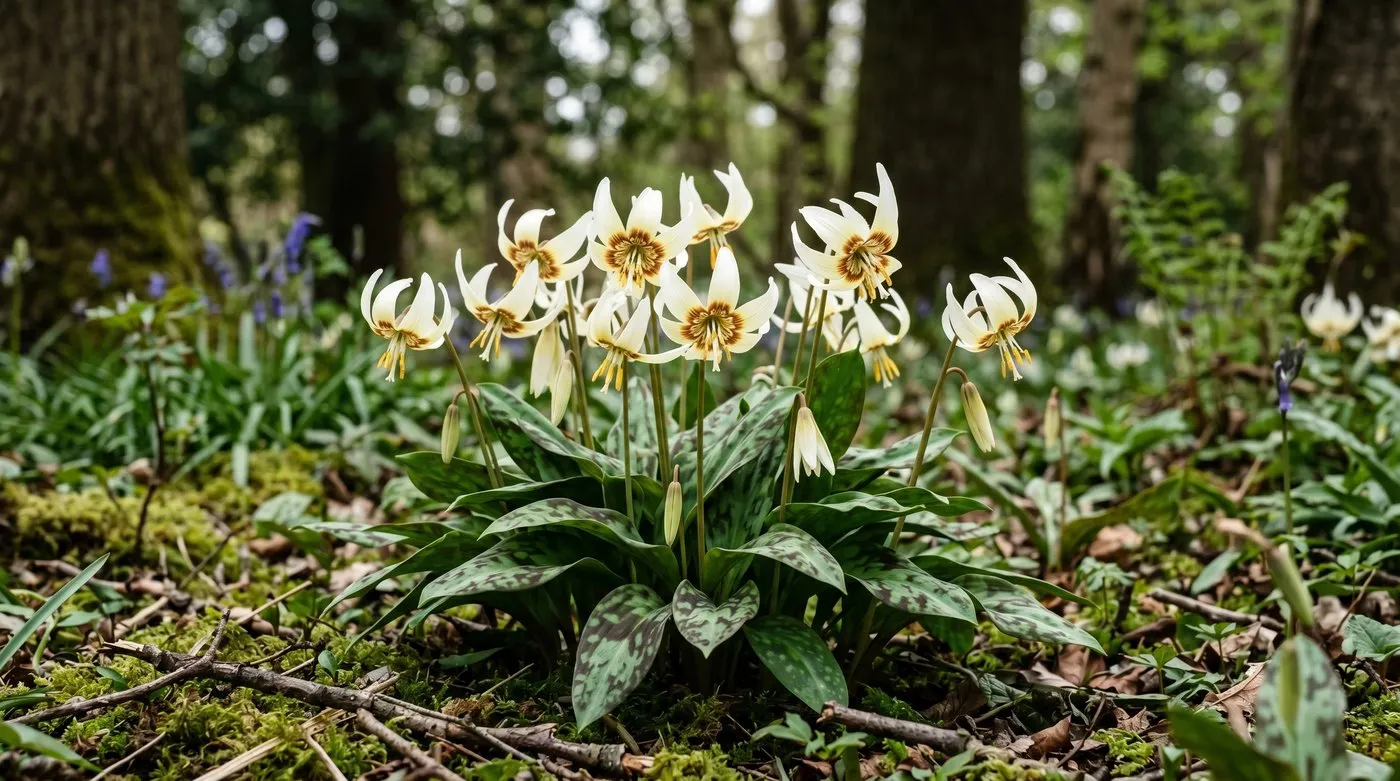
‘White Beauty’ lights up a shady corner. Plant a group of five or more for a good show.
Erythronium dens-canis
This is the original dog’s tooth violet, from mainland Europe. It is small, about 10-15cm, with pink to lilac flowers and boldly blotched leaves. Grow it at the front of a shady bed where you can see it.
Erythronium revolutum and tuolumnense
E. revolutum has pink flowers and marbled leaves, and can self-seed in moist, leafy soil. E. tuolumnense is a vigorous golden-yellow species with plain green leaves.
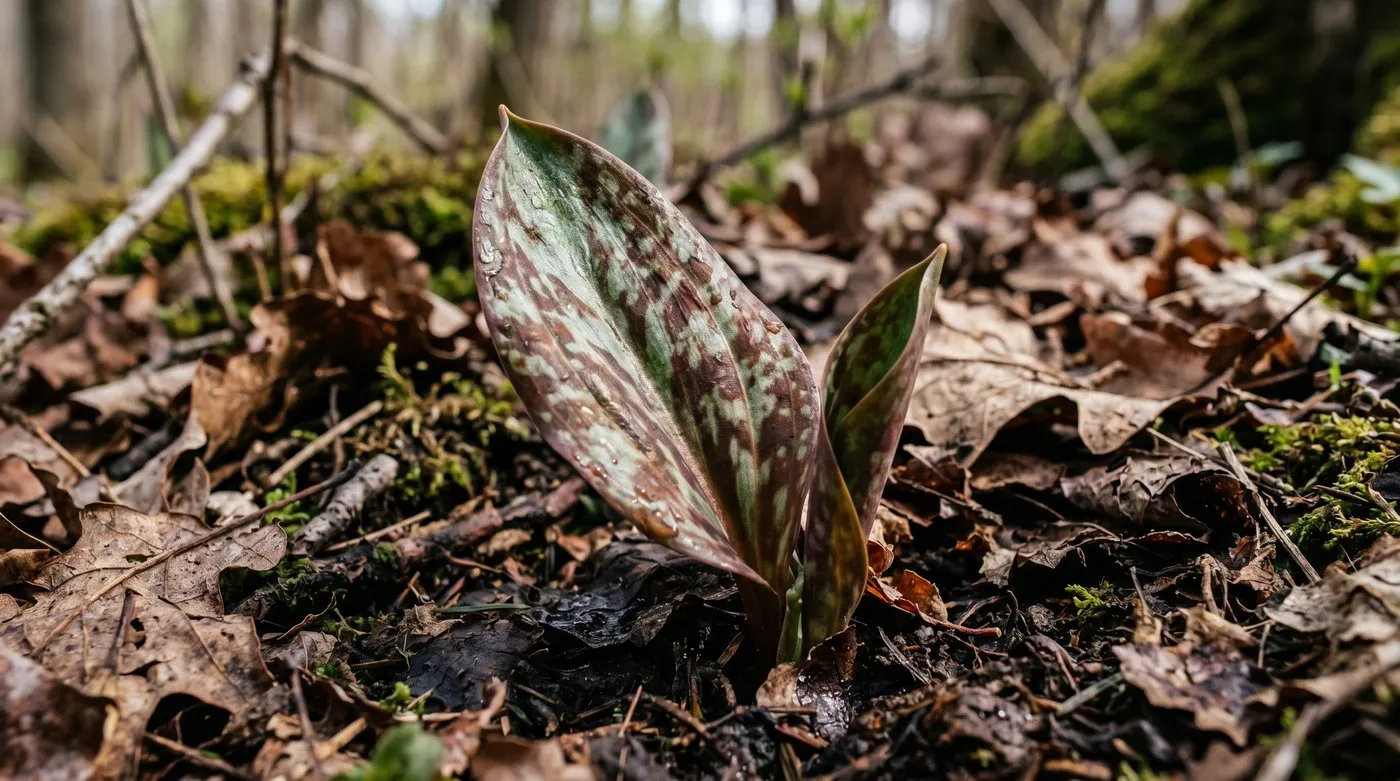
The marbled leaves push up through fallen leaves weeks before the flowers. They are half the charm.
Where to plant erythroniums
Copy the woodland floor. Choose dappled or light shade, ideally under deciduous trees or shrubs. They let in spring light while the erythroniums flower, then shade them in summer. A north or east-facing bed also works.
The soil should be moist but not waterlogged, and rich in leaf mould or compost. Avoid hot, dry, sunny beds, where the dormant corms bake. Shady corners under trees are often dry, so dig in plenty of homemade leaf mould first. For more ideas for these spots, see the guide to the best plants for shade.
How to plant erythronium corms
Plant fresh corms in early autumn, as soon as they arrive.
- Dig over the soil and work in leaf mould or compost. Add a little grit on heavy soil.
- Set each corm about 10-15cm deep, pointed end up.
- Space them about 10-15cm apart, in groups of five or more.
- Cover, firm gently and water in.
- Mark the spot so you don’t dig into them later.
Too shallow and the corms dry out in summer. Too deep in cold, wet clay and they can rot. Potted plants can go in during spring, while in leaf. Plant them at the same depth they sat in the pot and water well.
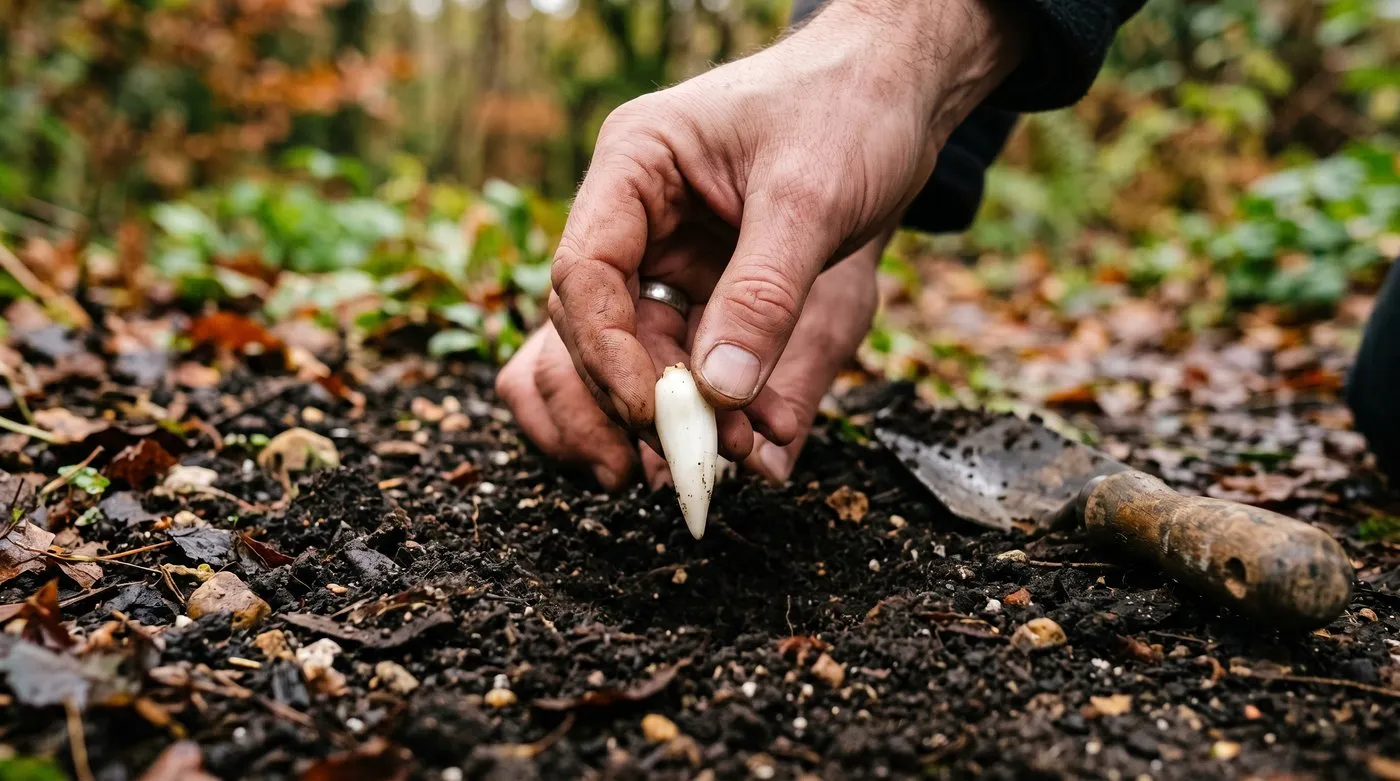
The corm really does look like a dog’s tooth. Plant it pointed end up, about 10-15cm deep.
Caring for erythroniums through the year
In spring, keep the soil moist while the plants are in leaf. A dry spring means fewer flowers next year. Let the leaves die back naturally after flowering, as they feed the corm for next year. The guide to spring bulb care after flowering explains why that matters.
In summer the corms rest. They must not bake dry. Shade from trees or neighbouring plants keeps the soil cool. In autumn, spread a few centimetres of leaf mould over the bed. It feeds the soil and holds in moisture.
Then leave them alone. Erythroniums dislike being moved and may sulk for a year or two afterwards. Given time, a few corms build into a lovely drift.
Dividing and growing from seed
Divide crowded clumps in late summer, once the leaves have gone, every few years. Lift gently with a hand fork, as the corms snap easily. Separate the offsets and replant at once at the same depth. Keep lifted corms in damp compost while you work.
You can also sow fresh seed in autumn in pots of gritty, leafy compost and leave them outside in a shady spot. It’s a slow route, as seedlings take several years to flower.
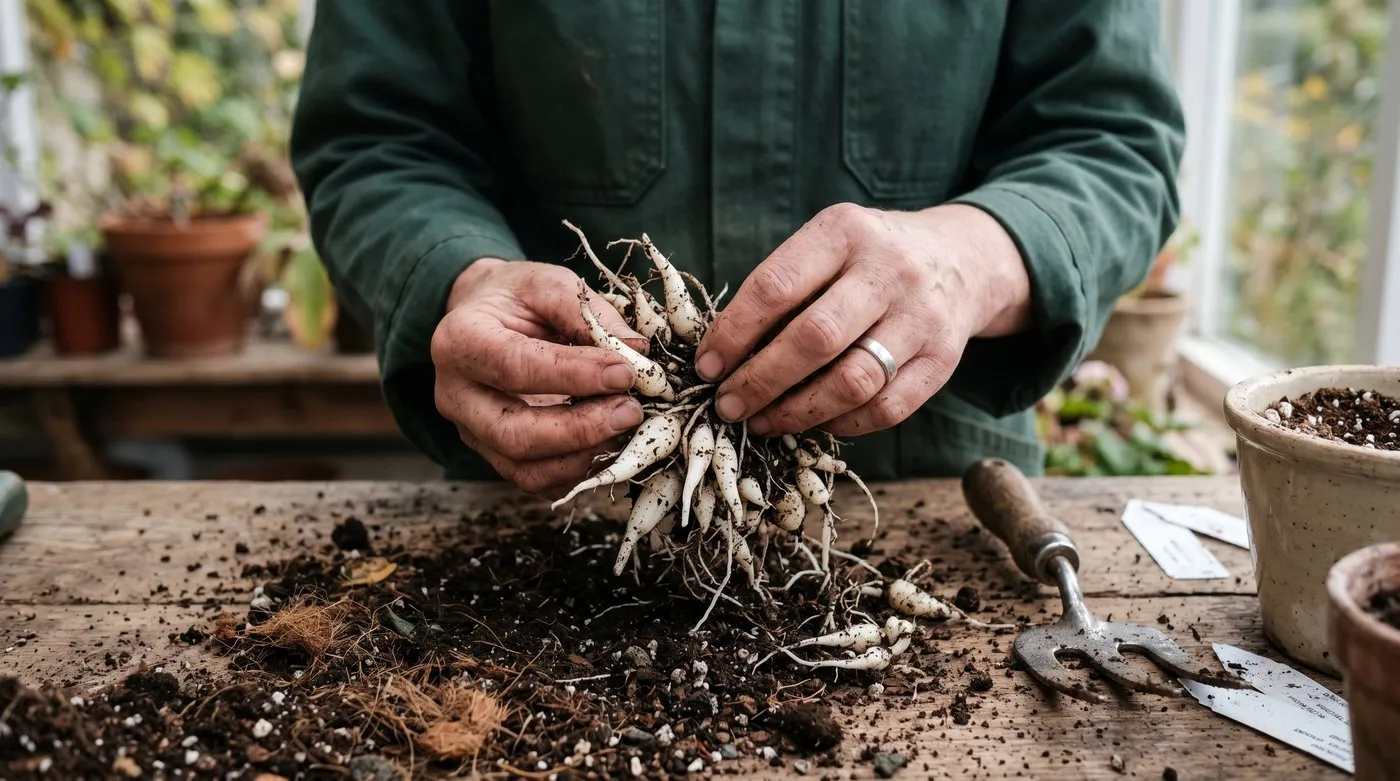
Split clumps when they are dormant and replant straight away. The corms are brittle and dry out fast.
Pests and why erythroniums don’t flower
Erythroniums are fairly trouble-free. Slugs may nibble the new shoots in spring, and the guide to getting rid of slugs has ways to protect them. Squirrels and mice sometimes dig up new corms, so lay chicken wire over fresh plantings until shoots appear. In pots, watch for vine weevil grubs.
If a clump makes leaves but no flowers, it is usually too dry, too deep or too dark. Improve the soil with leaf mould, replant at the right depth and give it dappled light.
Erythronium growing calendar
| Month | What to do |
|---|---|
| January | Plan and order. Keep potted plants cool and just moist |
| February | Early leaves appear. Clear heavy leaf litter off shoots |
| March | Flowering starts. Keep soil moist. Watch for slugs |
| April | Main flowering. Plant potted plants in leaf |
| May | Flowers fade. Let leaves die back naturally. Mark clumps |
| June | Plants go dormant. Keep the soil cool |
| July | Dormant. Leave undisturbed |
| August | Divide crowded clumps. Replant at once |
| September | Plant fresh corms as soon as they arrive |
| October | Finish planting. Mulch with leaf mould |
| November | Cover new plantings with wire against squirrels |
| December | Dormant. Nothing to do |
Common mistakes with dog’s tooth violets
- Buying dried-out corms. Shrivelled corms rarely grow. Buy fresh or in pots.
- Planting in hot sun. They are woodland plants. Give them dappled shade.
- Letting the soil bake in summer. Dormant corms still need cool, slightly moist soil.
- Planting too shallow. Go about 10-15cm deep, deeper than most small bulbs.
- Moving them too often. Leave clumps alone for a few years.
What to plant with erythroniums
Erythroniums look best as part of a spring woodland mix. Snowdrops start the show in late winter. Wood anemones, primroses and hellebores flower alongside them. Native bluebells carry on the show into May, and ferns fill the gaps once the erythroniums go to sleep.
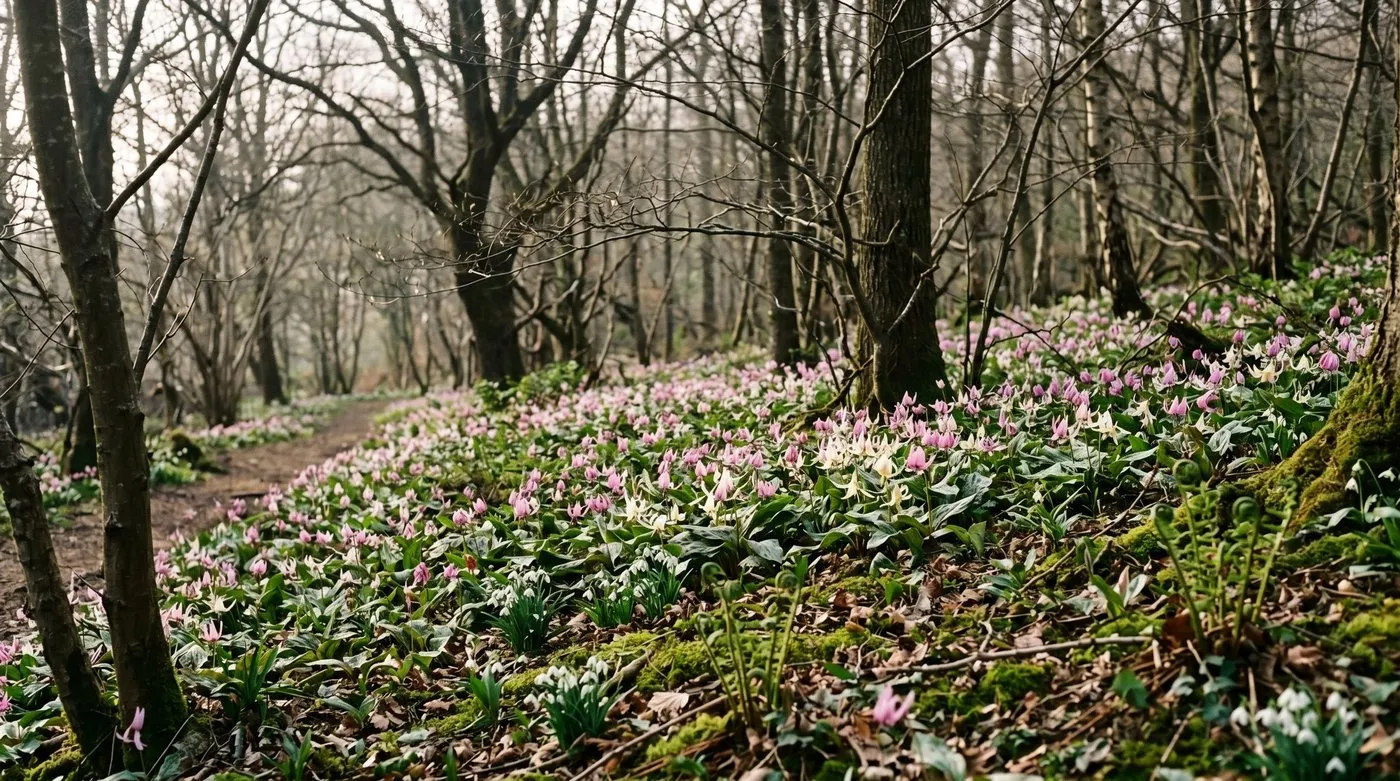
Left alone for a few years, a handful of corms can spread into a drift like this.
Frequently asked questions
Why do my dog’s tooth violet corms keep failing?
Usually because they dried out before planting. The corms have no papery skin and die once they shrivel. Buy potted plants or fresh corms in damp packing, and plant them straight away.
How deep do you plant erythronium corms?
Plant them about 10-15cm deep, pointed end up. Space them about 10-15cm apart in groups. Add leaf mould to the hole to keep the soil moist but open.
Do erythroniums prefer sun or shade?
They prefer dappled or light shade. They flower before trees come into leaf, then rest in cool shade. Avoid hot, dry spots where the dormant corms bake.
Which erythronium is easiest for beginners?
‘Pagoda’ is the easiest erythronium to start with. It is a vigorous yellow hybrid with an RHS Award of Garden Merit. ‘White Beauty’ is another reliable choice.
Will dog’s tooth violets spread on their own?
Yes, slowly, in the right spot. Most form clumps of offsets over a few years. Erythronium revolutum can also self-seed in moist, leafy soil.
When do erythroniums flower in the UK?
Most flower in March and April. They start a little earlier in mild southern gardens and later up north. The leaves die back by early summer.
For another lovely spring flower for the same shady spots, read the guide to growing fritillaria. There’s more inspiration in the plants hub.
Our team produces practical UK gardening guidance from source research, contributor records and established horticultural practice. Editorial standards are overseen by Matt W.