Key takeaways
- Star of Bethlehem (O. umbellatum) spreads quickly by small offset bulbs, so keep it to rough grass or pots
- O. nutans and O. magnum are better choices for borders
- Plant hardy bulbs about 8-10cm deep and 8-10cm apart in September or October
- Chincherinchee (O. thyrsoides) is tender but one of the longest-lasting cut flowers
- Every part is poisonous to people, pets and livestock, so wear gloves with the bulbs
Ornithogalum is a group of bulbs with starry white, green-white or orange flowers. The trick is picking the right one. Star of Bethlehem spreads fast and belongs in rough grass, while O. nutans and O. magnum behave nicely in a border. Plant hardy kinds about 8-10cm deep in autumn. Every kind is poisonous, so handle the bulbs with gloves.
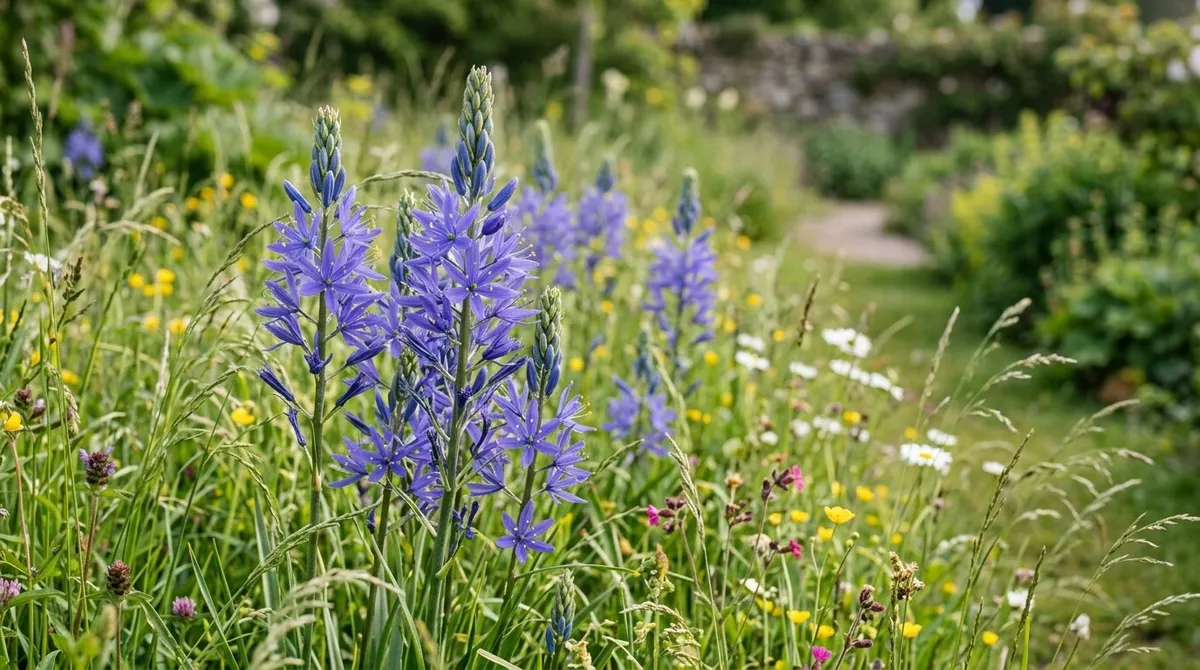
If you’re after a well-behaved spring bulb for a border, alliums and camassia are other good choices. This guide helps you choose between the ornithogalums and grow them without regrets.
Which ornithogalum is which?
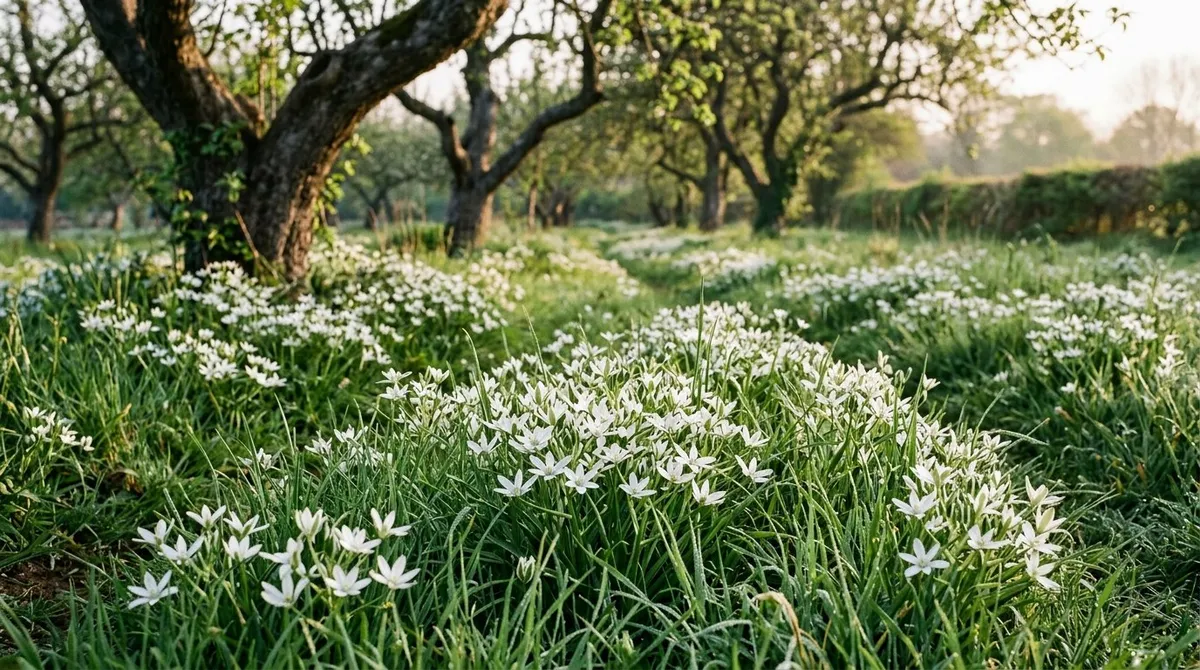
The name Star of Bethlehem usually means Ornithogalum umbellatum, the low white spring bulb you see in old orchards and on verges. But the name gets used loosely for other kinds with very different habits.
The hardy kinds come from Europe and western Asia, cope with UK winters and come back each year. The tender kinds come from South Africa, flower in summer and can’t survive frost. They’re grown for cutting or as pot plants.
| Species | Hardy? | Spreads? | Height | Best use |
|---|---|---|---|---|
| O. nutans | Yes | Slowly | 30-40cm | Borders and long grass |
| O. magnum | Yes | Slowly, in clumps | Up to about 1m | Back of a border, cutting |
| O. umbellatum | Yes | Fast | 15-30cm | Rough grass or pots only |
| O. thyrsoides (chincherinchee) | No | No | 30-45cm | Cut flowers |
| O. dubium | No | No | 20-30cm | Pot plant |
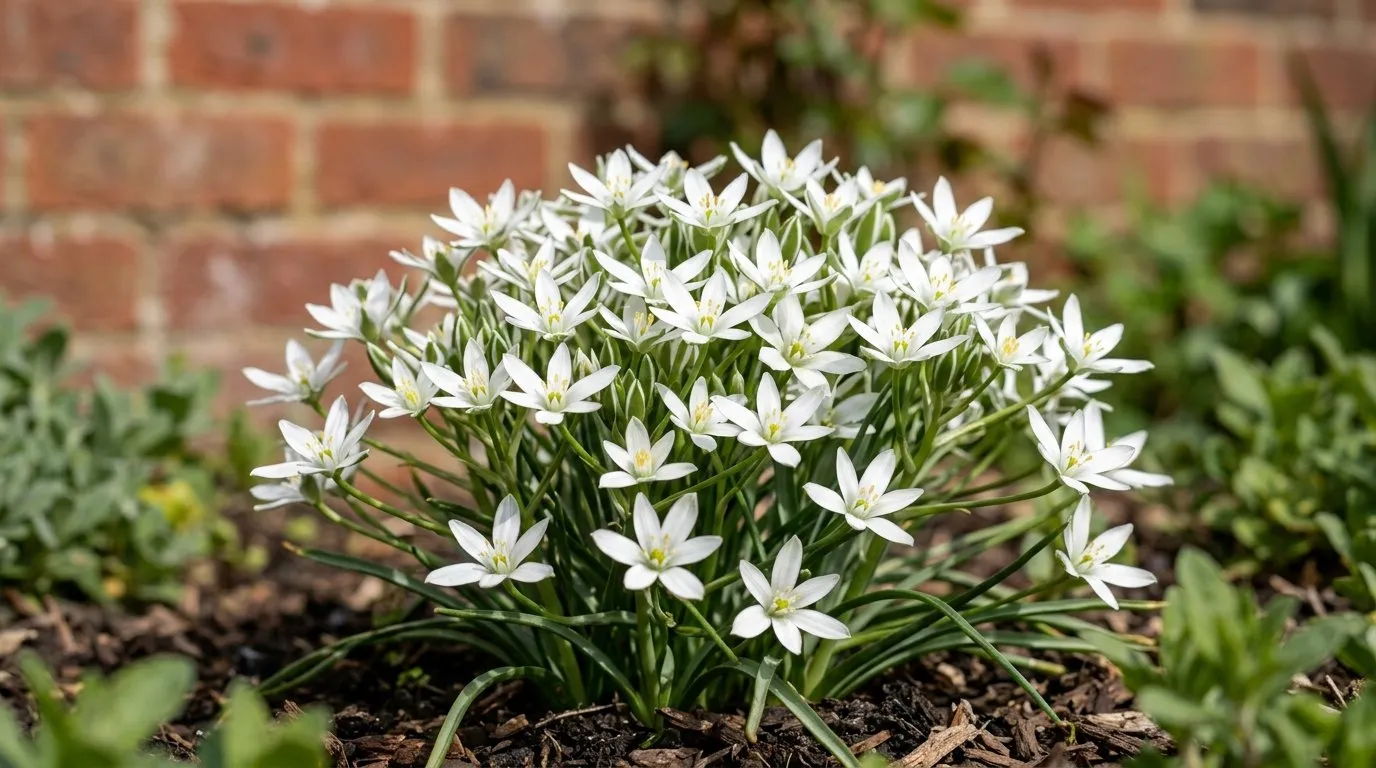
Star of Bethlehem opens its stars in bright sun. Pretty, but in a border this clump will soon spread.
Star of Bethlehem: keep it in grass
O. umbellatum spreads by making lots of small offset bulbs around the parent. In a border, a neat clump can become a sprawling colony within a few years. Every time you weed or fork nearby, you move the little bulbs around.
In grass it’s a different story. Dense turf roots leave little room, so the bulbs stay in check. That’s why it looks lovely in an orchard but becomes a nuisance among perennials. Leave the grass unmown until the leaves have yellowed, usually in June, so the bulbs can feed for next year.
If you want it near the house, grow it in a pot or trough. That keeps all the offsets in one place.
Warning: Never rotavate ground that has Star of Bethlehem in it. The blades chop and scatter the bulbs, turning one patch into many.
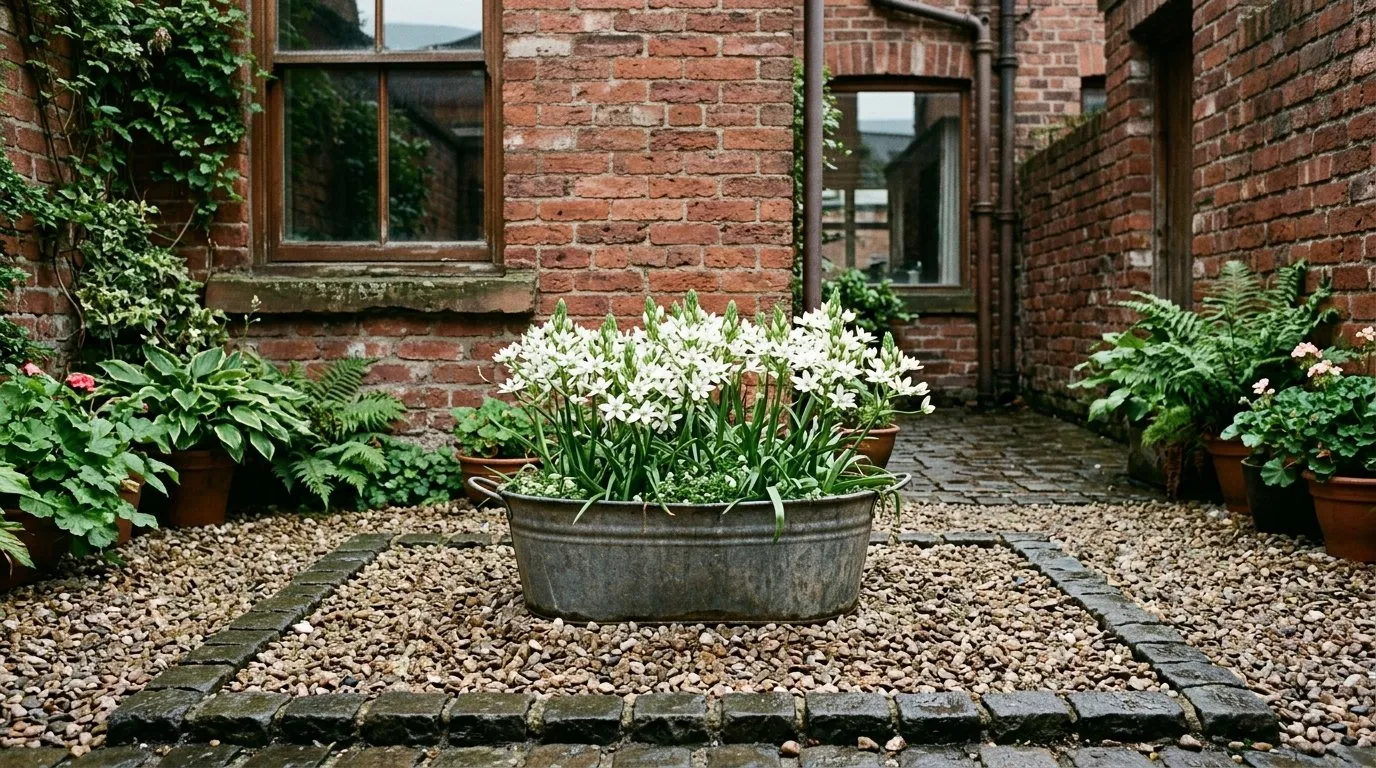
A tub on gravel lets you enjoy Star of Bethlehem without it creeping into your borders.
O. nutans and O. magnum for borders
For a border, choose a better-behaved kind.
O. nutans has nodding, silvery green-white bells rather than flat stars. It grows 30-40cm tall and spreads far more slowly, so it stays roughly where you put it. It also looks lovely drifting through long grass.
O. magnum is the giant, with tall spikes of white stars in early summer, reaching up to about 1m. It’s fully hardy and forms clumps. Use it at the back of a border or in a cutting bed.
To fit bulbs between perennials without them clashing, see our guide to layering bulbs in perennial borders.
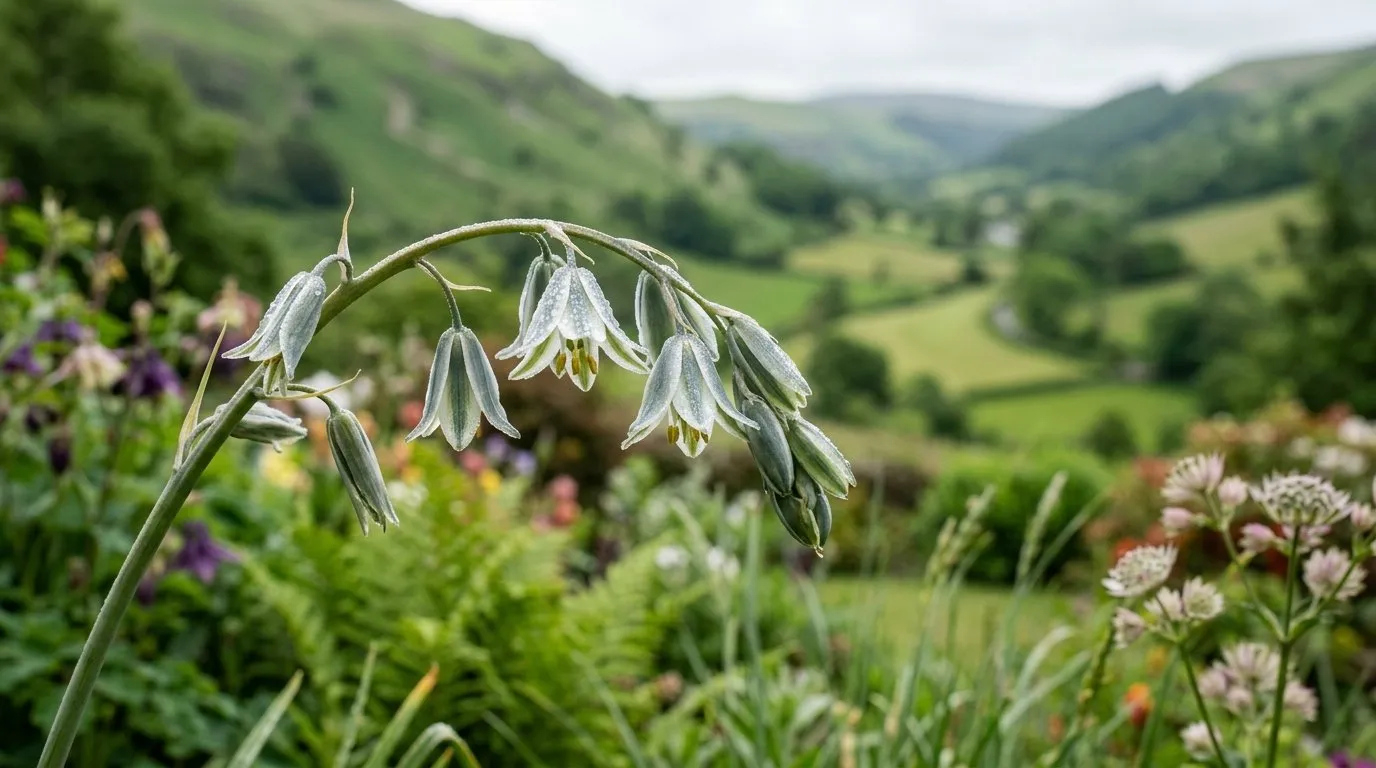
O. nutans nods rather than stares, and spreads far more politely than Star of Bethlehem.
How to plant hardy ornithogalum bulbs
Plant hardy kinds in September or October for flowers in spring and early summer.
- Pick a spot in full sun or light shade with free-draining soil
- On heavy clay, work in some grit to help drainage
- Plant bulbs about 8-10cm deep, a little shallower for small bulbs
- Space them 8-10cm apart, in loose groups for a natural look
- Set each bulb pointed end up
- Cover, firm gently and water once
- Mark the spot so you don’t dig into them later
Wear gloves while planting, and wash your hands afterwards. Bulbs planted too shallow can dry out and flower poorly, so don’t skimp on depth.
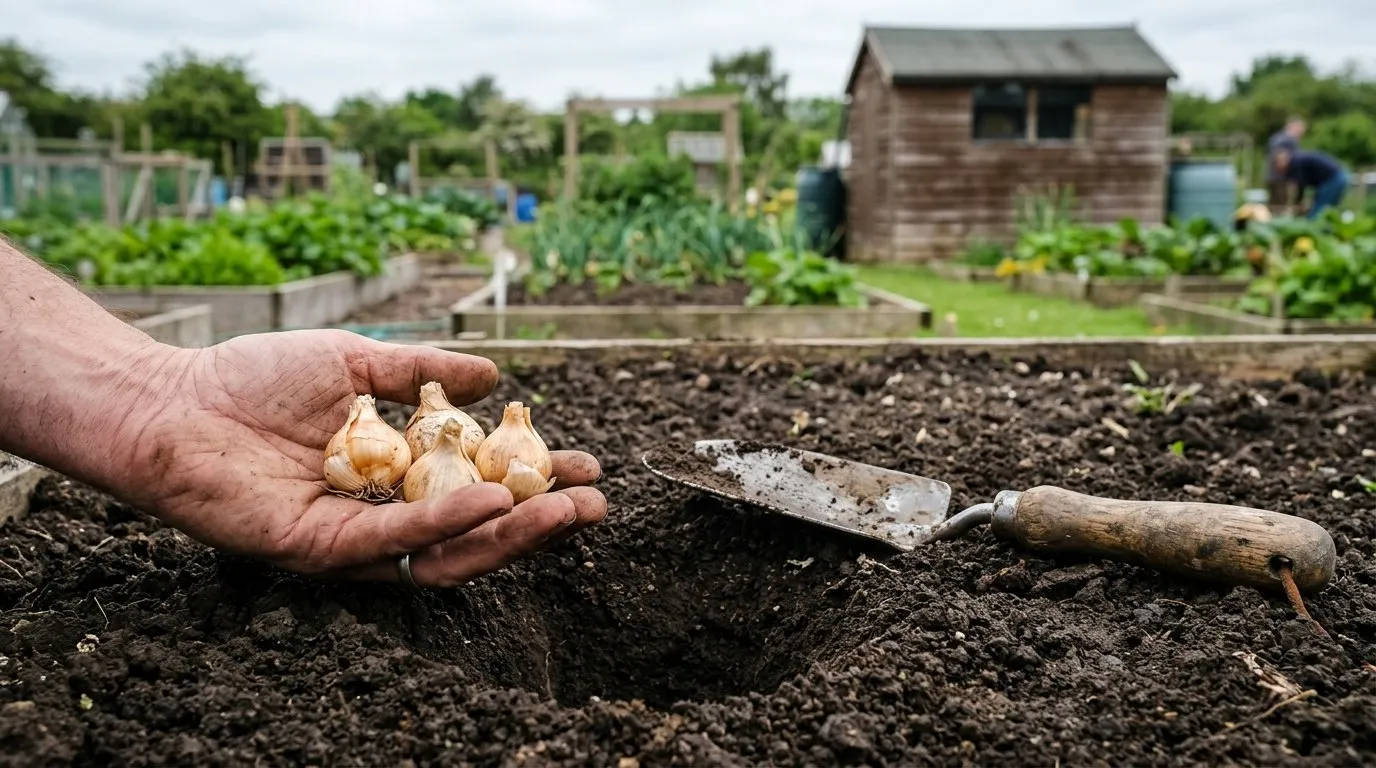
Plant about 8-10cm deep. Bulbs set too shallow tend to dry out and flower poorly.
Chincherinchee: the long-lasting cut flower
O. thyrsoides, or chincherinchee, has dense cone-shaped spikes of white flowers that open slowly from the bottom up. It’s prized by florists because the stems often last two to three weeks in a vase.
It’s tender, so it can’t stay outside over a UK winter. Plant bulbs outdoors in spring once frosts are over, in a sunny, well-drained spot, or start them earlier in pots under glass. They flower in summer. Lift and dry the bulbs in autumn before the first frost, then store them somewhere dry and frost-free until spring.
Cut stems when the lowest few flowers have opened. Change the water every few days and trim the ends. Our guide to conditioning cut flowers has more tips for a long vase life.
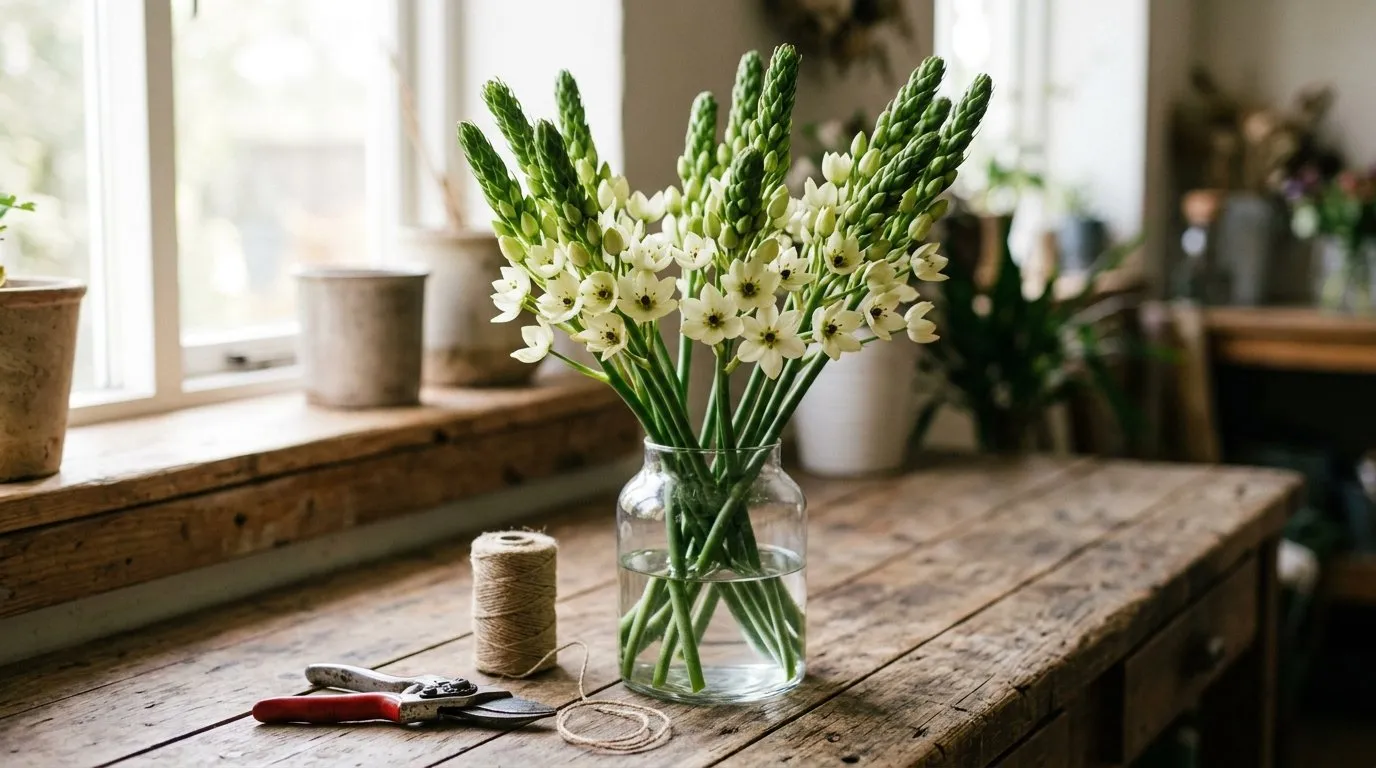
Chincherinchee opens slowly up the spike, so one jar of stems keeps going for weeks.
O. dubium: the orange pot plant
O. dubium breaks the white mould, with dense heads of bright orange or yellow flowers on compact plants 20-30cm tall. It’s tender, so grow it as a pot plant on a sunny windowsill or in a frost-free greenhouse.
Water it while it’s in leaf and flowering. Once the leaves die back, let the pot dry off and rest until it starts growing again. As with all ornithogalum, keep it away from pets that like to chew.
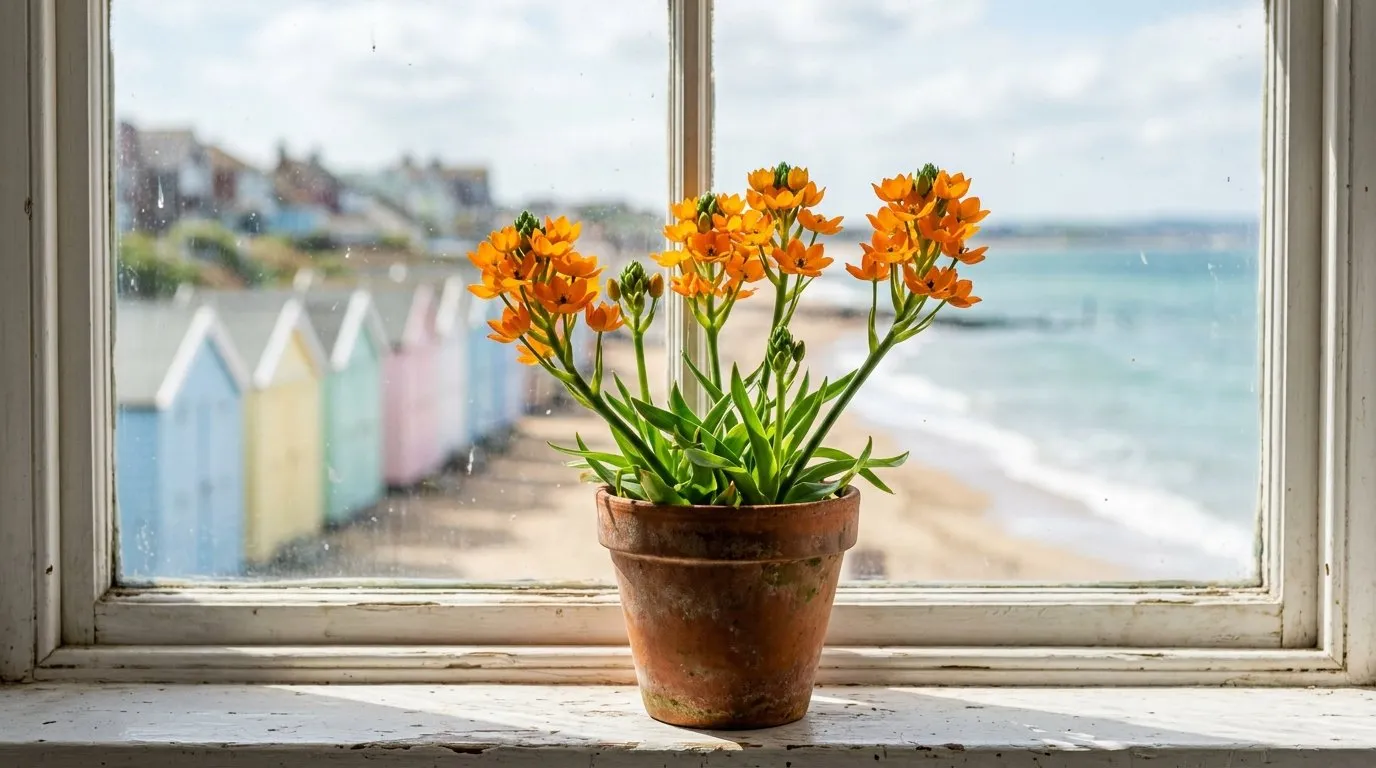
O. dubium brings a rare splash of orange and makes a cheerful windowsill plant.
Is ornithogalum poisonous?
Yes. Every part is poisonous to people, pets and livestock, and the bulbs are the most dangerous part.
- Wear gloves when handling bulbs and wash your hands afterwards
- Store spare bulbs out of reach of children and pets
- Don’t let it spread into fields where horses, sheep or cattle graze
- Watch dogs that like digging up bulbs
If a pet eats any part, call your vet straight away. Our guide to plants toxic to dogs lists other plants to watch.
How to get rid of Star of Bethlehem
Clearing an established patch takes patience. Dig in spring, when the leaves show where the clumps are. Lift each clump with a fork, and sieve the soil to catch the tiny offset bulbs. Bin them rather than composting them.
Expect to repeat this for two or three years, as a missed bulb soon starts a new patch. Never rotavate. If it’s growing in a lawn, it’s usually easier to live with it and mow normally once the leaves have yellowed.
Ornithogalum month by month
| Month | What to do |
|---|---|
| January | Check stored tender bulbs for rot |
| February | Order bulbs. Pot O. dubium if it’s starting into growth |
| March | Start chincherinchee in pots under glass |
| April | Hardy kinds flower. Don’t mow grass with bulbs in it |
| May | Plant tender bulbs out after the last frost. Deadhead border kinds |
| June | Leaves yellow. Mowing is now fine |
| July | Chincherinchee flowers. Cut stems for the house |
| August | Lift and divide crowded hardy clumps once dormant |
| September | Main planting month for hardy bulbs |
| October | Finish planting. Lift tender bulbs before the first frost |
| November | Store tender bulbs dry and frost-free |
| December | Rest. Plan next year’s planting |
Common ornithogalum mistakes
Putting Star of Bethlehem in a border. It spreads fast and is hard to remove. Keep it to grass or pots.
Leaving tender kinds out in winter. Chincherinchee and O. dubium won’t survive frost. Lift them or keep them in pots under cover.
Mowing too early. Cutting grass before the leaves yellow weakens the bulbs. Wait until June.
Planting too shallow. Shallow bulbs dry out and flower poorly. Aim for about 8-10cm deep.
Forgetting it’s poisonous. Wear gloves and keep bulbs away from children and pets.
Frequently asked questions
Is ornithogalum poisonous?
Yes, every part is poisonous to people, pets and livestock. The bulbs are the most dangerous part. Wear gloves when planting, keep bulbs away from children and dogs, and don’t let it spread into grazing land. Call your vet if a pet eats any.
Is Star of Bethlehem invasive in the UK?
It spreads quickly and can take over a border. O. umbellatum makes lots of small offset bulbs that are easily moved when you dig. It isn’t banned, but it’s hard to get rid of. Keep it to rough grass, or grow O. nutans instead.
How long do chincherinchee cut flowers last?
Often two to three weeks in a vase. Cut the stems when the lowest few flowers have opened. The rest open gradually up the spike. Change the water every few days and trim the stem ends to keep them going.
When should I plant ornithogalum bulbs?
Plant hardy kinds in September or October. Set them about 8-10cm deep and 8-10cm apart in free-draining soil. Tender chincherinchee goes outside in spring after the last frost, or can be started in pots under glass.
How do I get rid of Star of Bethlehem?
Dig out every bulb and offset you can find. Do it in spring when the leaves show you where the clumps are, and sieve the soil to catch tiny bulbs. Expect to repeat it for a few years. Never rotavate, as that spreads them.
Will ornithogalum grow in grass?
Yes, O. umbellatum and O. nutans both suit rough grass. Don’t mow until the leaves have yellowed, usually in June. Grass competition also keeps Star of Bethlehem in check, so it behaves far better in turf than in a border.
Is ornithogalum hardy in the UK?
Some kinds are fully hardy and some aren’t. O. umbellatum, O. nutans and O. magnum live outdoors all year. Chincherinchee and O. dubium are tender, so lift them in autumn or grow them in pots. Wet soil is a bigger threat than cold.
Why are my ornithogalum flowers not opening?
Most open only in bright sun. Star of Bethlehem stays closed on dull days and shuts again in the afternoon. That’s normal. Plant it in full sun for the best show.
Planning a vase-filling bed? Read our guide to the best flowers for cutting, or browse all our plant guides.
Our team produces practical UK gardening guidance from source research, contributor records and established horticultural practice. Editorial standards are overseen by Matt W.