Key takeaways
- Camassias flower in May and June, filling the gap after tulips and daffodils
- Plant bulbs about 10cm deep and 10-15cm apart, from September to November
- They cope with heavy, damp soil that rots many other spring bulbs
- In long grass, don't mow until the leaves have died back, usually in July
- Camassia leichtlinii is the tall one for meadows, C. quamash the short one for small spaces
Camassia is the spring bulb for the damp, heavy corner where daffodils sulk and tulips rot. Plant the bulbs in autumn, about 10cm deep, and you’ll get tall spikes of starry blue, white or cream flowers in May and June, right when tulips are going over.
They come from damp meadows in western North America, where the ground stays wet in spring and dries out in summer. That makes them a great fit for UK clay, orchard grass and the soggy end of the lawn. If your soil drains well and you want spring colour in pots and borders, our guide to growing tulips is a better starting point. This guide is about camassia: the best types, where to plant them, and how to let them spread in grass.

Camassias carry the border through late May, when the tulips have gone and the summer flowers haven’t started.
Which camassia should I grow?
For most gardens, start with Camassia leichtlinii for height or C. quamash for smaller spaces. All are hardy and grown the same way.
| Camassia | Flowers | Height | Best for |
|---|---|---|---|
| C. leichtlinii Caerulea Group | Rich blue | 60-100cm | Meadows, big borders |
| C. leichtlinii ‘Alba’ | White | 60-100cm | Lighting up shade, white schemes |
| C. leichtlinii ‘Sacajawea’ | Cream, with cream-edged leaves | About 75cm | Borders, foliage interest |
| C. cusickii | Pale lavender-blue | 60-80cm | Borders and grass |
| C. quamash | Deep blue to violet | 30-50cm | Small gardens, front of borders |
C. quamash and C. cusickii usually open a little earlier than leichtlinii. Grow two kinds together and you stretch the flowering over several weeks.

The paler blue of Camassia cusickii looks lovely with fresh lime-green lady’s mantle.
Where do camassias grow best?
Camassias like moist soil in spring, sun or light shade, and a summer rest once the leaves die down.
- Soil: Heavy, fertile soil that stays damp in spring is ideal. Clay is fine. Very dry, sandy soil gives shorter, weaker plants.
- Light: Full sun or partial shade. They flower less in deep shade.
- Wet ground: They cope with damp but not with water sitting on the surface for weeks.
- Places that suit them: Long grass and orchards, damp borders, pond edges and the margins of a bog garden.
Dry summer conditions are fine once the leaves have yellowed, because the bulbs are resting. For more plants that cope with soggy ground, see our pick of plants for wet, boggy soil. On heavy ground in general, our list of the best plants for clay soil has good border partners.

Orchard grass that stays damp in spring is camassia heaven. Daffodils and fritillaries flower there first.
How to plant camassia bulbs
Plant camassia bulbs from September to November, while the soil is still warm enough for roots to grow.
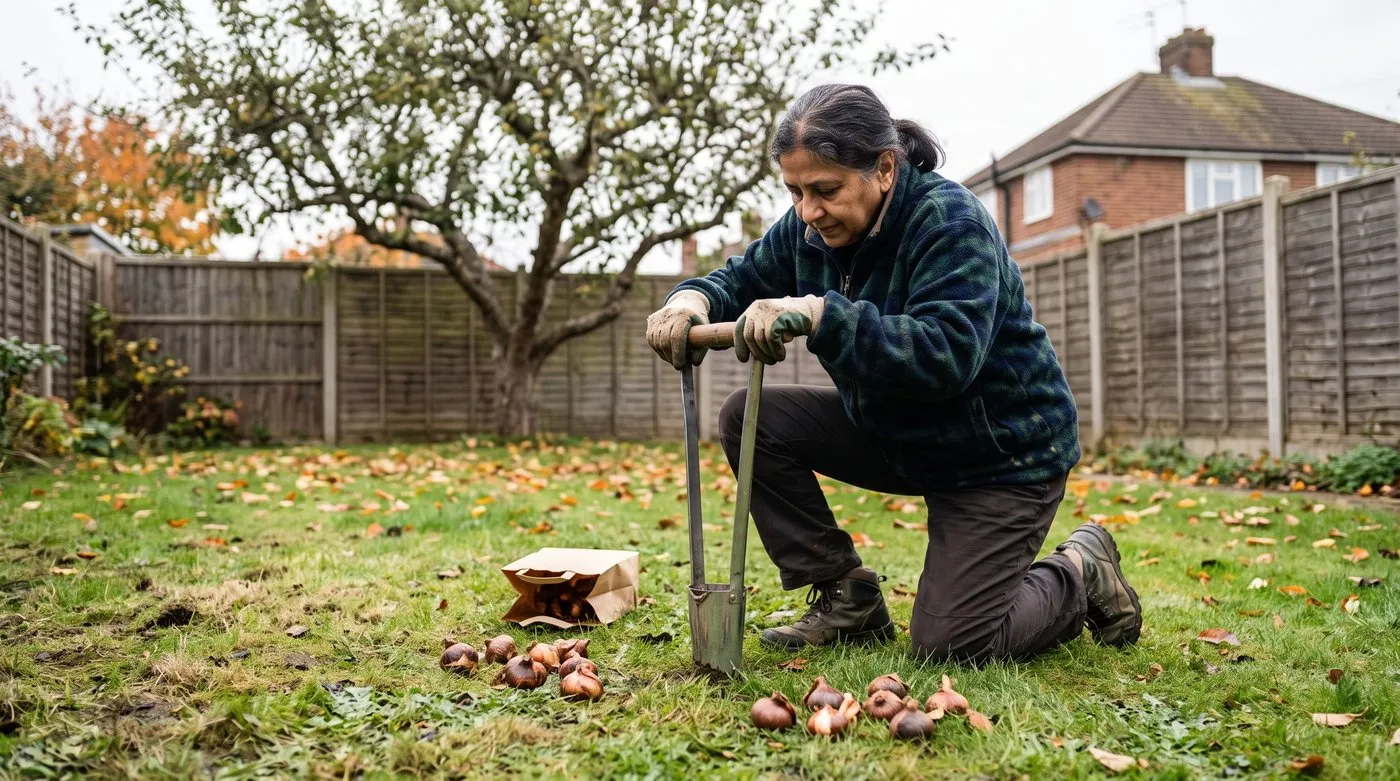
Toss the bulbs across the grass and plant them where they fall for a natural-looking drift.
- Choose firm bulbs with no soft or mouldy patches.
- Dig a hole about 10cm deep. Use a bulb planter in grass.
- Set the bulb in pointed end up.
- Space bulbs 10-15cm apart, in groups rather than single rows.
- Backfill, firm gently and water in if the soil is dry.
On very wet clay, put a handful of grit in the bottom of each hole. In grass, toss handfuls of bulbs across the area and plant them where they land. This gives the loose, natural drift you see in meadows. Our guide to bulb planting density helps you work out how many to buy for a patch.
Gardener’s tip: Garden centres sometimes sell camassias in pots in spring. These can go straight into the ground while in leaf, which is handy if you missed autumn planting.
How to naturalise camassia in grass
Camassias spread slowly in grass, by offset bulbs and seed. The secret is when you mow.
- March to early July: Leave the grass long. The camassia leaves need to keep growing after flowering to feed the bulb.
- July: Once the leaves have yellowed and died back, cut the grass and rake off the clippings.
- Late summer and autumn: Mow as normal.
Mowing in May or June, while the leaves are still green, is the most common reason camassias fade away. A mown path through the long grass keeps it looking cared for. Our guide to naturalising bulbs in grass covers other bulbs that cope with the same routine, and when to cut a wildflower meadow explains the summer cut.
Good partners in grass include snake’s head fritillaries for April, then camassias in May, followed by ox-eye daisies. Snake’s head fritillaries love the same damp grass. See our guide to growing fritillaria to plant them together.

Snake’s head fritillaries and camassias like the same damp grass, so they make easy partners.
Growing camassia in borders
In a border, camassias give upright spikes in the May gap between bulbs and summer perennials. They look best in groups of five or more.
- Blue scheme: Camassia leichtlinii Caerulea Group with late cream tulips and forget-me-nots at the front.
- White scheme: C. leichtlinii ‘Alba’ with Siberian iris and lady’s mantle.
- Damp shade: C. cusickii with hostas and ferns in light shade.
The leaves turn yellow and untidy by midsummer. Plant camassias among perennials that grow up and hide them, such as hardy geraniums. Cut the flower stems off once they fade if you don’t want seedlings in the border.

White camassias with Siberian iris and lady’s mantle make a cool, fresh May picture.
Dividing camassia clumps
Clumps get crowded after several years and may flower less. Lift and divide them in late summer, once the leaves have died back.
- Fork up the clump, starting well away from it to avoid spearing bulbs.
- Pull the bulbs apart by hand.
- Replant the big bulbs straight away, about 10cm deep.
- Grow the small offsets in a spare bed or pots until they reach flowering size.
You can also sow ripe seed in pots outdoors in late summer. It takes several years for seedlings to reach flowering size, so division is quicker.
Common camassia problems
Camassias are generally trouble-free. Most problems come down to where they’re planted.
- Few flowers: usually too much shade, too dry a spot, or a crowded clump. Move or divide them in late summer.
- Flopping stems: tall leichtlinii can lean in wind and rain. Plant among sturdy perennials or in grass, which props the stems up.
- Bulbs rotting: ground that sits waterlogged for weeks. Add grit or pick a spot that drains a little better.
- Bulbs disappearing from grass: mowing too early. Leave the leaves until they die back in July.
Camassia calendar
| Month | What to do |
|---|---|
| March | Leaves appear. Stop mowing grass where camassias grow |
| April | Flower spikes form. Early types may start to open |
| May | Main flowering |
| June | Late flowers finish. Cut stems in borders if you don’t want seed |
| July | Leaves die back. Cut long grass and rake off |
| August | Lift and divide crowded clumps. Sow fresh seed |
| September to November | Plant new bulbs about 10cm deep |
| December to February | Nothing to do. Bulbs are resting underground |
Frequently asked questions
When should I plant camassia bulbs in the UK?
Plant camassia bulbs from September to November. Earlier planting gives the roots longer to settle before winter. Potted camassias can also be planted in spring while they are in leaf.
How deep should you plant camassia bulbs?
Plant them about 10cm deep, pointed end up. Space them 10-15cm apart. In grass, scatter handfuls and plant them where they land for a natural look.
Do camassias spread in grass?
Yes, slowly, by offset bulbs and seed. They do best in grass that is left uncut until the leaves have died down in July. Mowing while the leaves are still green weakens the bulbs.
What is the difference between Camassia leichtlinii and Camassia quamash?
Camassia leichtlinii is much taller, at up to about 1m. C. quamash grows about 30-50cm tall with deep blue flowers. Leichtlinii suits meadows and big borders, while quamash fits smaller spaces and the front of beds.
Will camassia grow in clay soil?
Yes, heavy clay that stays moist in spring suits camassia well. Avoid ground that sits under standing water for weeks. Add some grit to the planting holes on very wet clay.
Should I deadhead camassia?
Only if you don’t want seedlings. Cut the faded stems at the base in June to stop self-seeding in a border. In a meadow, leave the seed heads to help the planting spread.
Can you eat camassia bulbs?
Treat garden camassias as ornamental only. Quamash bulbs were a cooked staple food for Native American peoples. But they look like poisonous death camas in the wild, and garden bulbs aren’t sold for eating.
Planning more bulbs for next spring? Our guide to when to plant spring bulbs gives the timings for everything else, and the plants hub has many more ideas.
Our team produces practical UK gardening guidance from source research, contributor records and established horticultural practice. Editorial standards are overseen by Matt W.