Key takeaways
- The six best naturalisers are small daffodils, crocus, snowdrops, camassia, snake's head fritillary and Tulipa sylvestris
- Plant most bulbs from September to November, and snowdrops in the green in February or March
- Plant at two to three times the bulb's height, so about 10-15cm for daffodils
- Scatter bulbs by hand and plant where they fall for a natural drift
- Don't mow for at least six weeks after flowering, or the bulbs won't flower next year
- Rough grass, orchards and tree bases suit naturalised bulbs better than a fine lawn
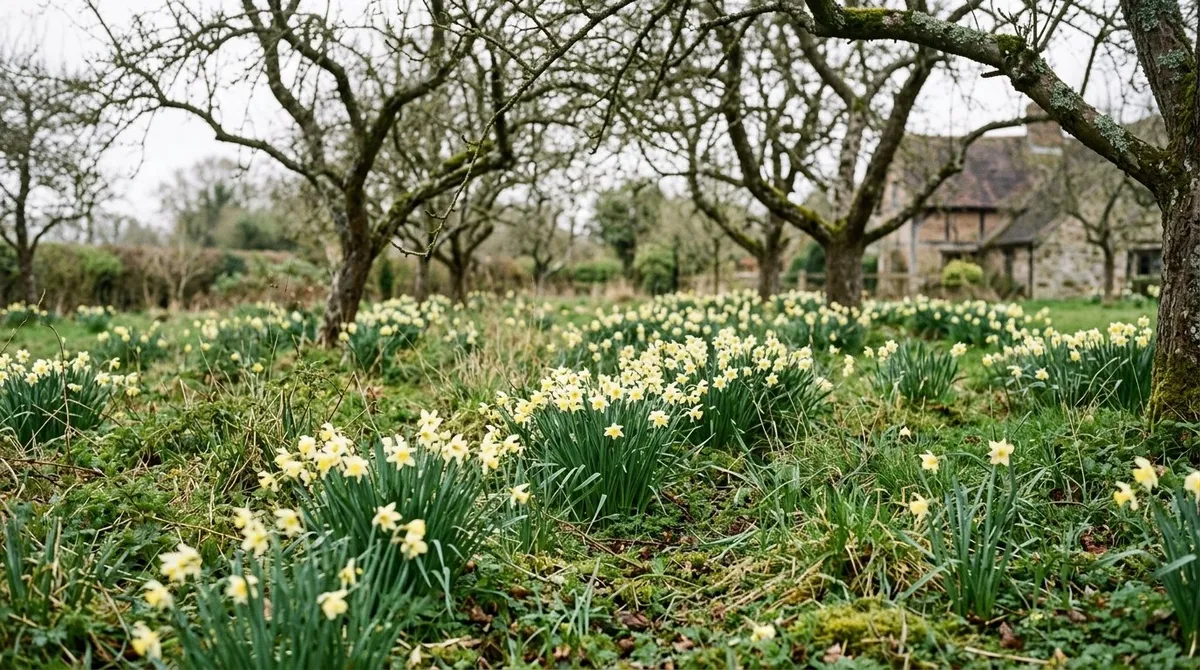
Naturalising bulbs in grass means planting them into a lawn or rough grass so they come back and spread each year. Plant once in autumn and, a few springs later, you can have drifts of crocus, daffodils and snowdrops that look as if nature put them there.
Two things decide whether it works: choosing bulbs that cope with grass, and not mowing too soon after they flower. Here are the six best bulbs, how to plant them and the mowing rule that keeps them coming back.
Which bulbs naturalise best in grass?
The best bulbs for grass are small daffodils, crocus, snowdrops, camassia, snake’s head fritillary and the wild tulip. They all spread on their own and can push through turf.
Daffodils are the backbone of naturalised grass. Small and species types beat big show daffodils, as they spread faster and cope better with grass. ‘February Gold’, ‘Jetfire’ and our native Lent lily, Narcissus pseudonarcissus, are all reliable. The guide to growing daffodils covers more varieties.
Crocus give the earliest colour, often from February. Crocus tommasinianus is the best naturaliser of all and seeds itself through short grass. Big Dutch crocus work too, but squirrels dig more of them up. See how to grow crocus for details.
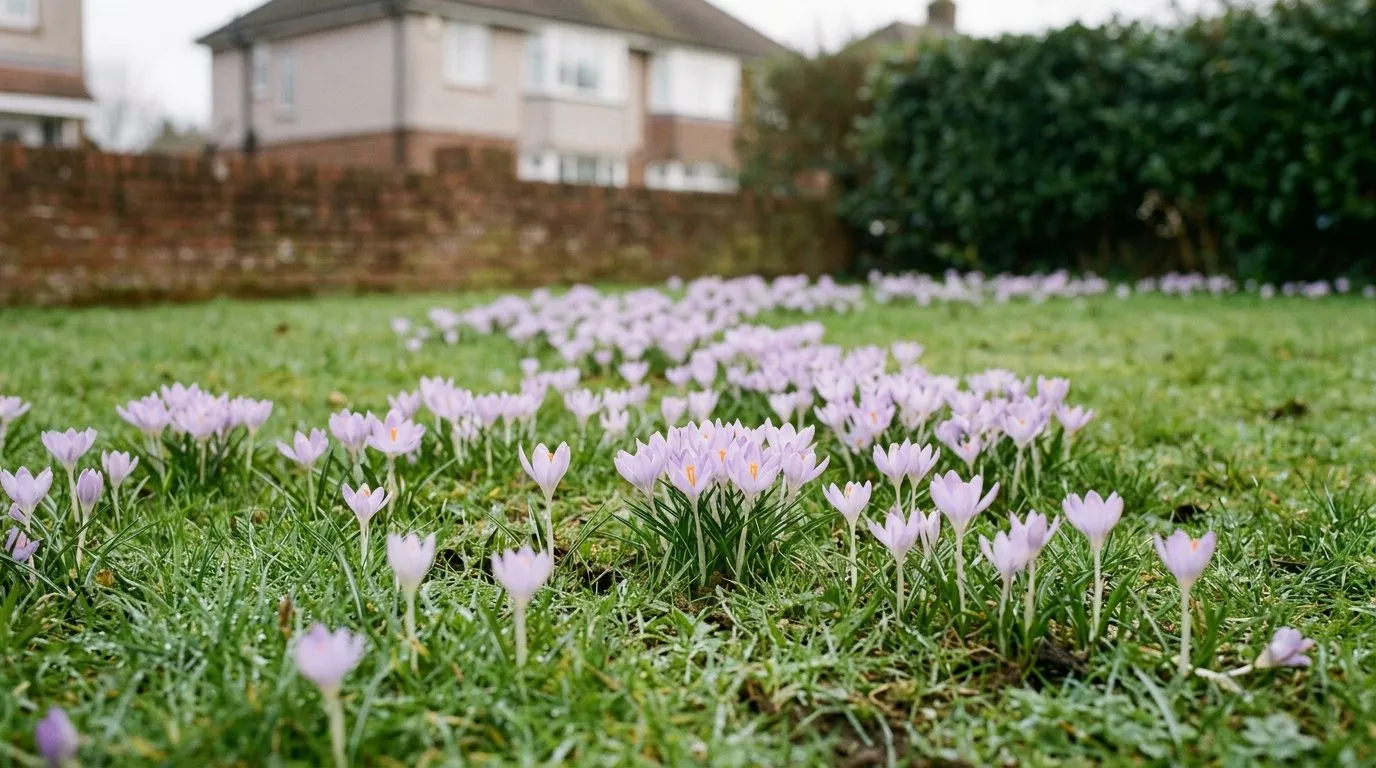
Crocus tommasinianus is one of the first bulbs to flower in grass, and it seeds itself around year after year.
Snowdrops love damp grass under trees. The common snowdrop, Galanthus nivalis, slowly bulks up into big clumps.
Camassia keeps the show going into May, after the daffodils fade. Its blue or white spikes reach up to about 90cm. It’s one of the few bulbs that likes heavy, damp clay. More in the guide to growing camassia.
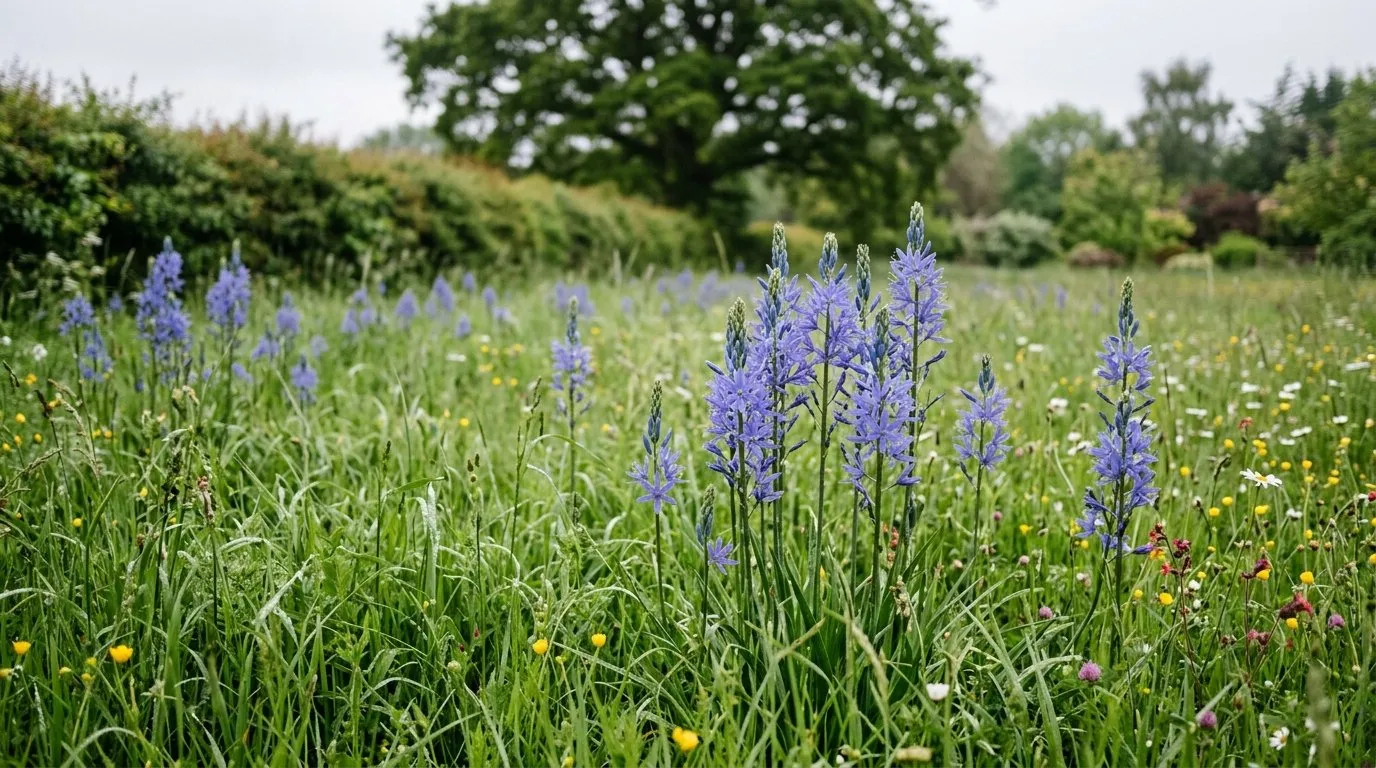
Camassia keeps the show going into May and is happy on heavy, damp clay.
Snake’s head fritillary, Fritillaria meleagris, has nodding chequered purple or white bells in April. It’s a native of damp meadows and hates drying out, so plant the bulbs as soon as they arrive.
The wild tulip, Tulipa sylvestris, is the one tulip that spreads well in grass. It has scented yellow star-shaped flowers. Most garden tulips fade after a year or two in turf.
The six best naturalising bulbs compared
| Bulb | Flowers | Plant depth | Best spot |
|---|---|---|---|
| Small daffodils | March to April | 10-15cm | Sun or light shade, most soils |
| Crocus tommasinianus | February to March | 8-10cm | Sun, short grass, well-drained soil |
| Snowdrop | January to March | 8-10cm | Damp grass under deciduous trees |
| Camassia | May | 10-15cm | Damp, heavy soil in sun |
| Snake’s head fritillary | April | 8-10cm | Damp grass in sun or light shade |
| Tulipa sylvestris | April | 10-15cm | Well-drained soil in sun |
When to plant bulbs for naturalising
Plant most naturalising bulbs in autumn, from September to November. The soil is still warm enough for roots to grow, and the grass has slowed down.
- Daffodils: September or October. They like to root early.
- Crocus, camassia and fritillary: October. Plant fritillaries promptly, as the bulbs dry out quickly.
- Tulips: November, once the soil is cold. Late planting helps avoid the disease tulip fire.
- Snowdrops: February or March, planted in the green. These are growing plants lifted just after flowering, and they settle in better than dry bulbs.
The guide to planting bulbs in the green explains how to plant snowdrops and winter aconites this way.
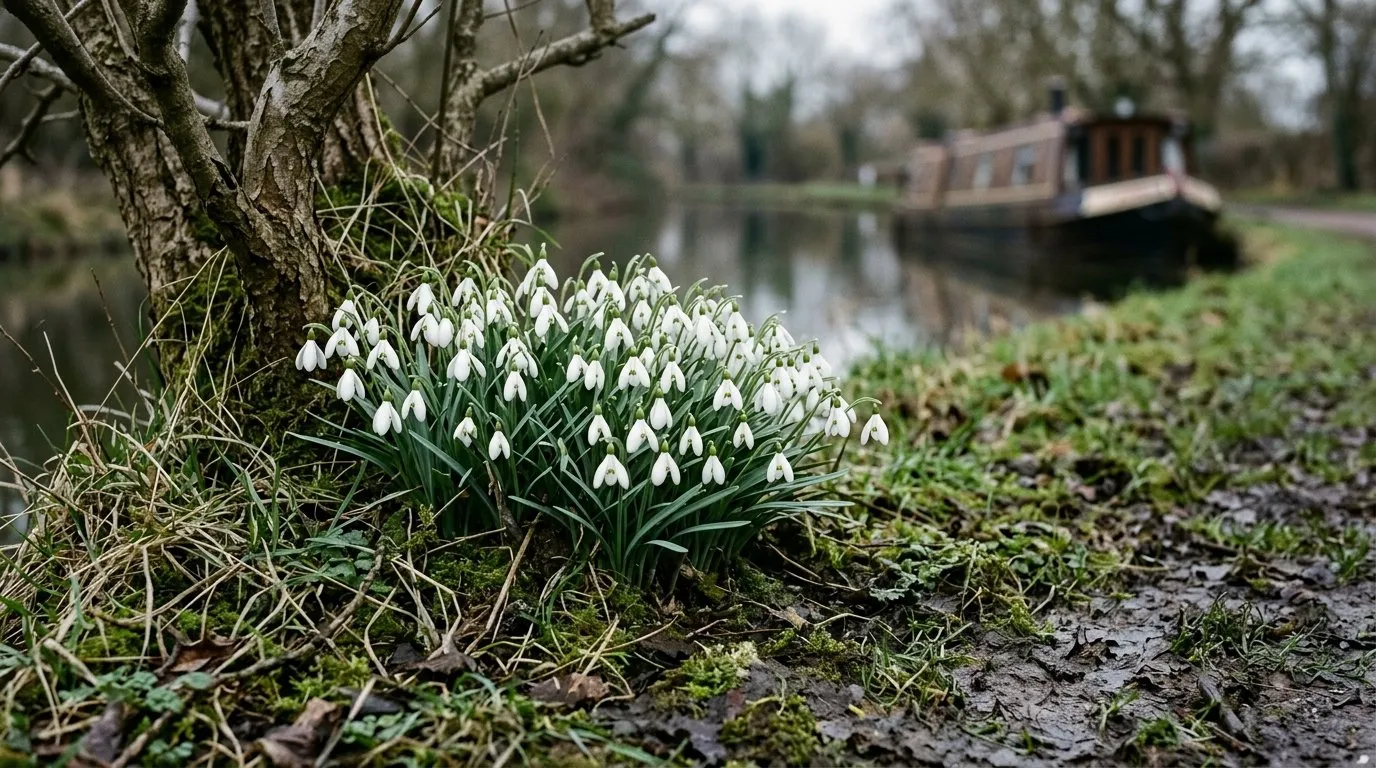
Snowdrops love damp ground under trees. Plant them in the green, just after flowering, and they’ll spread into clumps.
How deep should you plant bulbs in grass?
Plant each bulb two to three times as deep as the bulb is tall. Count the depth to the base of the bulb, not its tip.
- Daffodils, camassia and wild tulips: 10-15cm
- Crocus, snowdrops and fritillaries: 8-10cm
- Tiny bulbs such as scilla and chionodoxa: about 5cm
Depth matters more in grass than in a border. Grass roots dry out the top of the soil in summer, and shallow bulbs can bake and stop flowering. If in doubt, go a little deeper. Deeper planting also makes life harder for squirrels. The guide to stopping squirrels digging up bulbs has more tricks.
The throw-and-plant method for natural drifts
For a natural look, scatter a handful of bulbs over the grass and plant each one where it lands. It’s quick, and it gives the random, clustered look of bulbs that have spread on their own.
Toss the bulbs gently and don’t tidy the pattern. A few clumps and a few stragglers at the edges looks just right. Avoid rows, grids or even spacing. A neat line of daffodils along a lawn edge always looks planted.
Go generous. A dozen bulbs dotted about can look like an accident. As a guide, plant about 25-40 daffodils or 60-100 crocus per square metre. They’ll fill in over the years. The guide to bulb planting density has numbers for other bulbs.
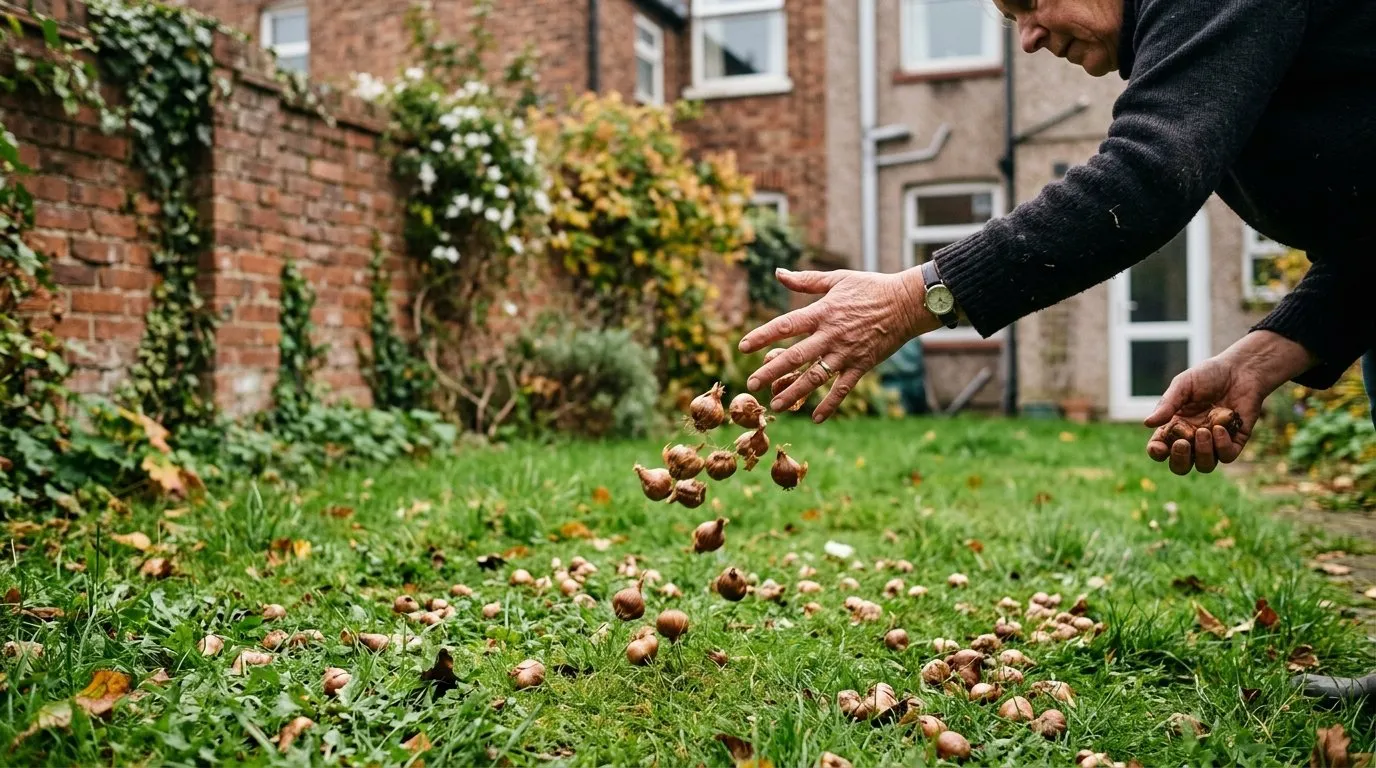
Toss a handful of bulbs and plant each one exactly where it lands. It’s the easiest way to get a natural-looking drift.
Bulb planter or lifting turf: which is better?
Use a bulb planter for big bulbs planted one at a time, and lift the turf for lots of small bulbs.
A bulb planter pulls out a plug of turf and soil. Drop the bulb in, nose up, and push the plug back. A long-handled one you can push in with your foot saves your back on a big job.
For crocus, snowdrops and other small bulbs, lifting turf is faster. Cut an H-shape with a spade and peel back the two flaps. Loosen the soil, press in a cluster of bulbs, then fold the turf back and firm it down.
For tiny bulbs in short grass, a narrow dibber or a long screwdriver makes a quick hole. Whatever you use, firm the grass down well afterwards so the bulbs don’t sit in an air pocket.
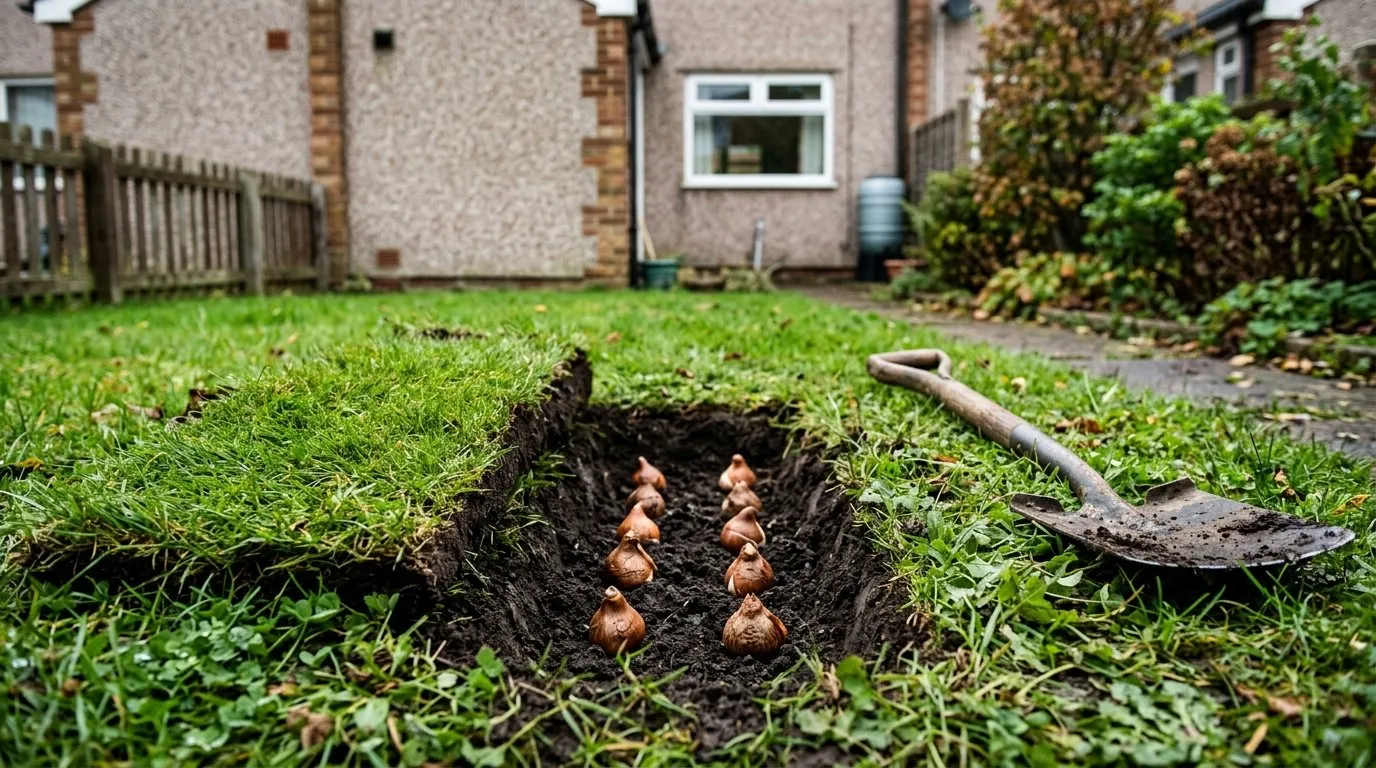
Peeling back the turf lets you plant a group of small bulbs in one go. Fold it back and firm it down when you’re done.
When can you mow after naturalised bulbs flower?
Wait at least six weeks after the flowers fade before you mow. This is the golden rule, and breaking it is the most common reason naturalised bulbs stop flowering.
After flowering, the leaves keep working to build next year’s flower inside the bulb. Cut them off too soon and the bulb can’t recharge. You get leaves but no flowers the next spring, a problem known as daffodil blindness.
- Crocus and snowdrops: usually fine to mow from mid-April.
- Daffodils: hold off until early to mid-June.
- Camassia and fritillaries: wait until the leaves have yellowed in summer.
Don’t knot or tie daffodil leaves either. It cuts down the light they catch. Just let them flop and fade.
When you do mow, set the blades high for the first cut and lower them over the next few weeks. Rake off the long clippings so they don’t smother the grass.
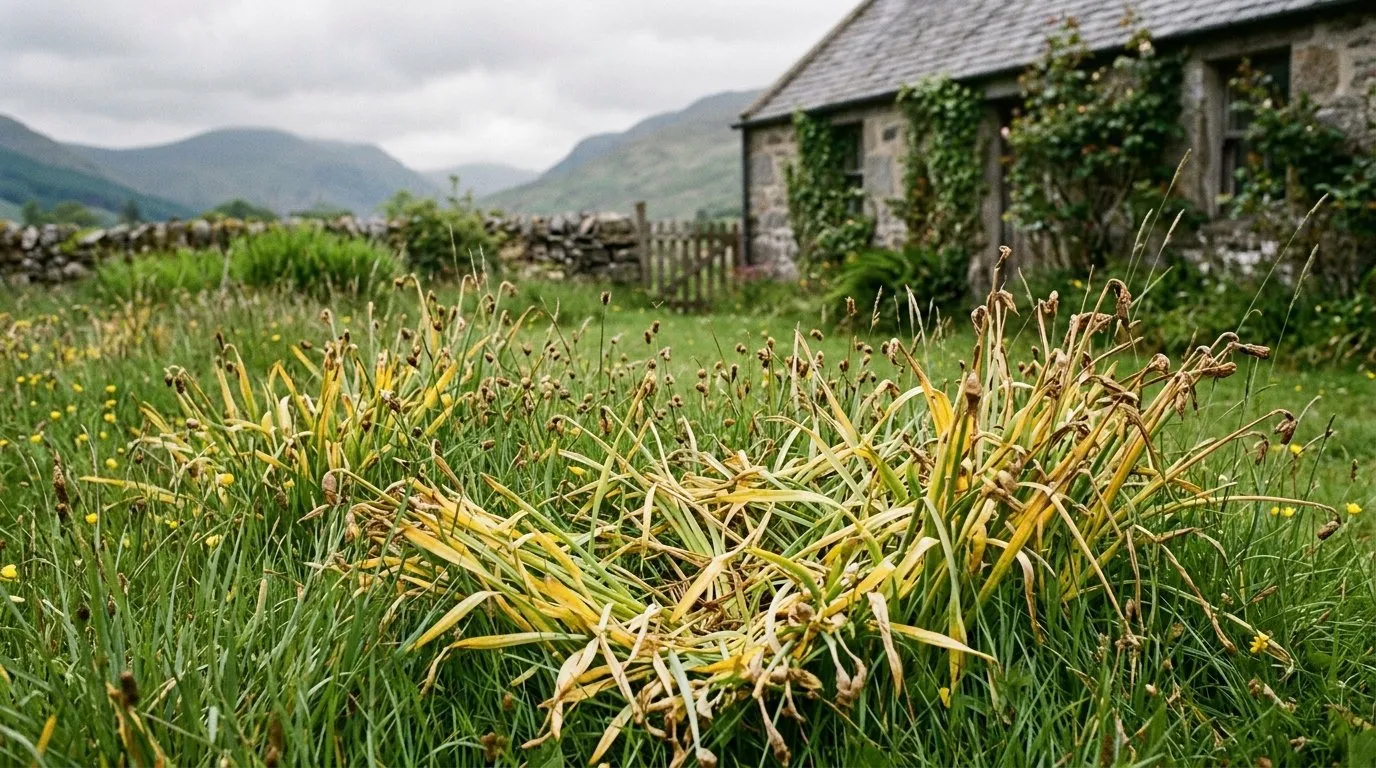
Leave the leaves to yellow and flop. They’re feeding next year’s flowers, so wait at least six weeks before you mow.
Where to naturalise bulbs, and where not to
Bulbs naturalise best in rough grass, orchards, verges and under deciduous trees.
Under trees is ideal. Snowdrops, crocus and daffodils flower before the leaves come out overhead. Orchard grass is the classic spot. Camassia and fritillaries prefer damp, heavier ground, such as low-lying grass or the edge of a ditch.
Build on your bulb planting with lessons in planting bulbs in layers inspired by Warley Place.
A fine, tidy lawn is the hardest place. The six-week rule leaves the grass long through spring. Keep bulbs to one patch or a corner you can mow around, or choose rougher grass. Letting grass grow longer in spring, as with No Mow May, goes hand in hand with naturalised bulbs.
Early crocus and snowdrops also give queen bumblebees an early meal on mild days in late winter.
Daffodil bulbs and leaves are poisonous to dogs and cats if chewed. If you have a dog that digs, keep an eye on it while you plant and pick up any spare bulbs.
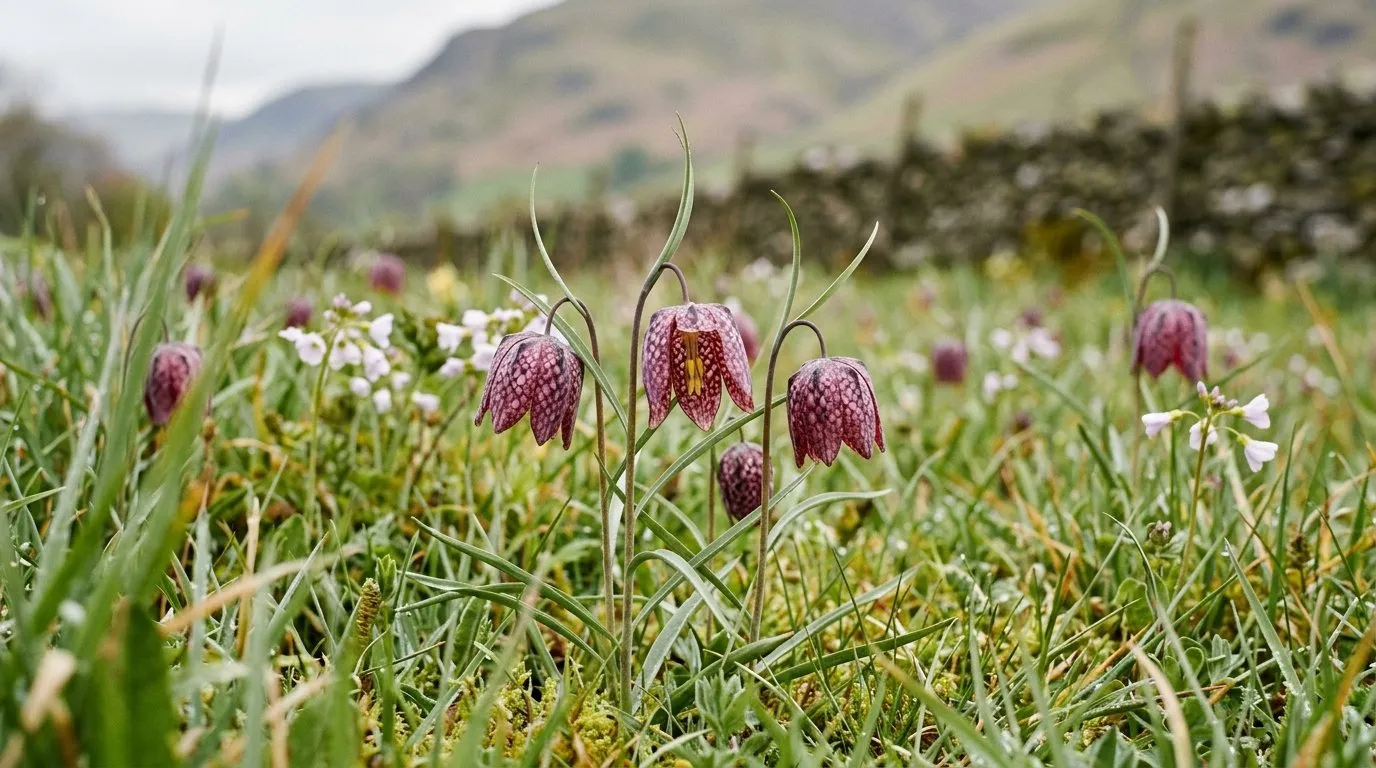
Snake’s head fritillaries love damp grass. Their chequered bells are one of the treats of April.
Naturalised bulbs through the year
| Month | What to do |
|---|---|
| September | Plant daffodils. Order fresh fritillaries and camassia |
| October | Plant crocus, camassia and fritillaries. Finish daffodils |
| November | Plant Tulipa sylvestris and any other tulips |
| January to March | Enjoy snowdrops and crocus. Plant snowdrops in the green after flowering |
| April | Daffodils and fritillaries flower. Mow crocus areas from mid-month |
| May | Camassia flowers. Leave daffodil areas uncut |
| June | Mow daffodil areas once six weeks have passed. Note any gaps to fill in autumn |
Common mistakes with naturalising bulbs
- Mowing too soon. Cutting before the leaves have had six weeks leads to blind bulbs.
- Planting too shallow. Shallow bulbs dry out under grass. Go two to three times their height deep.
- Choosing big hybrid tulips. Most fade quickly in grass. Pick Tulipa sylvestris instead.
- Planting in rows. Scatter and plant where they fall for a natural look.
- Planting too few. A handful looks lost. Plant generously and let them spread.
Frequently asked questions
Which bulbs are best for naturalising in grass?
Small daffodils, crocus, snowdrops, camassia, snake’s head fritillary and Tulipa sylvestris. All of them spread on their own and cope with grass roots. Choose small, species-type daffodils such as ‘February Gold’ over big show varieties.
How deep do you plant bulbs in a lawn?
Plant each bulb two to three times as deep as its own height. That’s about 10-15cm for daffodils, 8-10cm for crocus and snowdrops, and around 5cm for tiny bulbs. Shallow bulbs dry out in summer and often stop flowering.
When can I mow a lawn with naturalised bulbs?
Wait at least six weeks after the flowers fade. The leaves are feeding next year’s flower inside the bulb. For crocus that’s usually mid-April, and for daffodils early to mid-June.
When should I plant naturalising bulbs?
Plant most from September to November. Daffodils go in first, in September or October, and tulips in November. Snowdrops do best planted in the green, just after flowering, in February or March.
How many bulbs do I need per square metre?
About 25-40 daffodils or 60-100 crocus per square metre. Snowdrops and other small bulbs can go in at similar numbers to crocus. Naturalised bulbs spread over the years, so they’ll fill the gaps.
Do naturalised bulbs come back every year?
Yes, if you choose the right bulbs and don’t mow too early. They return and spread for many years. Big hybrid tulips are the main exception, as most fade after a year or two in grass.
Can you naturalise bulbs in a normal lawn?
Yes, but the grass will need to stay long for weeks after flowering. That suits orchards, verges and areas under trees best. In a tidy lawn, keep bulbs to one patch or corner you can mow around.
Now your bulbs are planned, check the timing for every type in our guide to when to plant spring bulbs, or browse more flower and plant guides.
Our team produces practical UK gardening guidance from source research, contributor records and established horticultural practice. Editorial standards are overseen by Matt W.


