Key takeaways
- Leave bulb leaves for about six weeks after flowering, until they turn yellow
- Feed every fortnight with liquid tomato feed while the leaves are still green
- Snap off dead flower heads so the bulb doesn't waste energy on seeds
- Lift hybrid tulips in June, dry them and store them somewhere warm and dry until November
- Divide crowded daffodil clumps every 3 to 5 years when the flowers start to dwindle
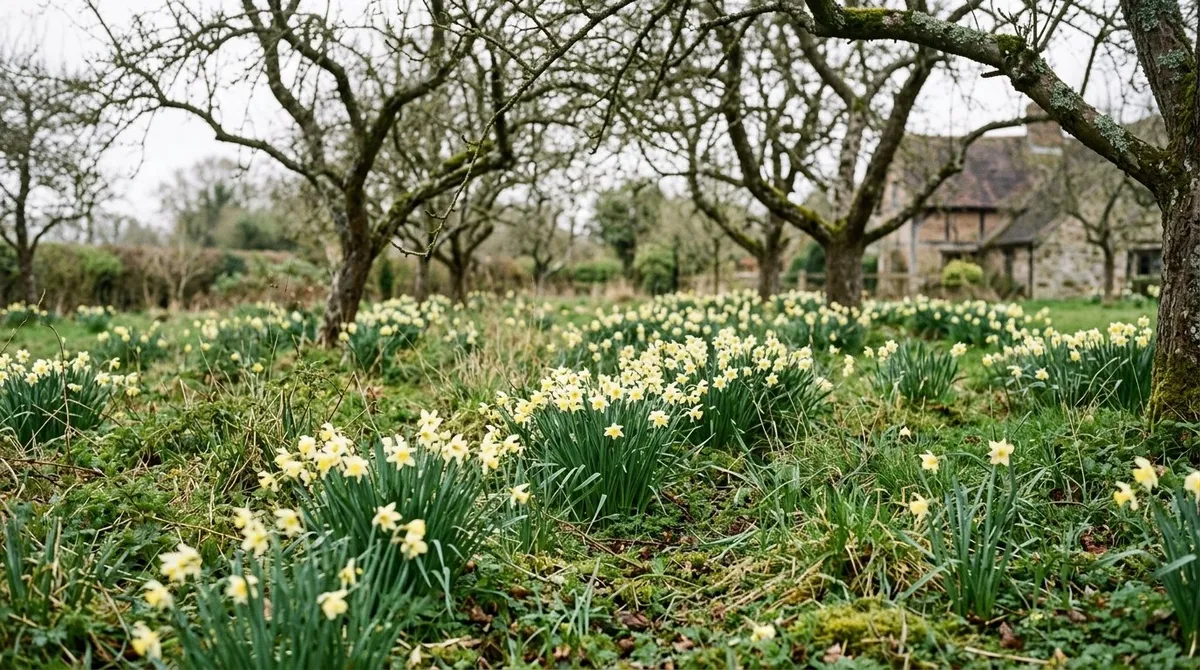
Once your spring bulbs have finished flowering, the most important thing is to leave the leaves alone. For the next six weeks or so, those floppy leaves are busy refuelling the bulb. That’s what decides whether you get a great show next spring or a clump of leaves with no flowers.
It’s easy to put all the effort into autumn planting and forget the aftercare. But a few simple jobs now keep bulbs going for years. Deadhead, feed, be patient with the leaves, and lift or divide where needed.
This guide works for all the common spring bulbs, from early snowdrops in January to the last allium heads fading in July.
Why the weeks after flowering matter
The leaves are recharging the bulb. Flowering uses up most of a bulb’s stored energy. Afterwards, the leaves soak up sunlight and turn it into food, which goes back into the bulb.
This takes around six weeks for most spring bulbs. Every sunny day helps. That stored food feeds next year’s flower bud, which forms inside the bulb over summer.
How bulbs multiply
Bulbs make small offsets (baby bulbs) around their base. A well-fed daffodil gradually turns into a clump. Hungry bulbs make fewer, smaller offsets. Over time a crowded, unfed clump gets weaker until the bulbs are too small to flower. Gardeners call this going blind, and it’s the most common complaint about old bulbs.
 Let the leaves die back naturally for about six weeks, even if they look a bit scruffy among your perennials.
How to deadhead spring bulbs
Deadheading is the first job, as soon as the flowers fade. It stops the bulb wasting energy making seeds.
Deadheading bulb by bulb
Daffodils: Snap off the flower head just below the swollen seed pod. Leave the green stem, as it keeps feeding the bulb. Never pull the whole stem out.
Tulips: Snap or cut off the flower head at the top of the stem as the petals drop. Tulip seed pods are big and hungry, so don’t leave them.
Hyacinths: Cut off the whole flower spike at its base. Leave the leaves and the lower stem.
Crocuses and snowdrops: Deadheading is optional. Their seed pods are tiny. Snowdrops can be left to self-seed, which helps them spread. Leave the seed pods on snowdrops and bluebells if you want them to naturalise.
Alliums: Cut the stem at ground level once the flower head is papery and brown. You can leave allium seed heads standing for weeks, as they look lovely and cost the bulb very little.
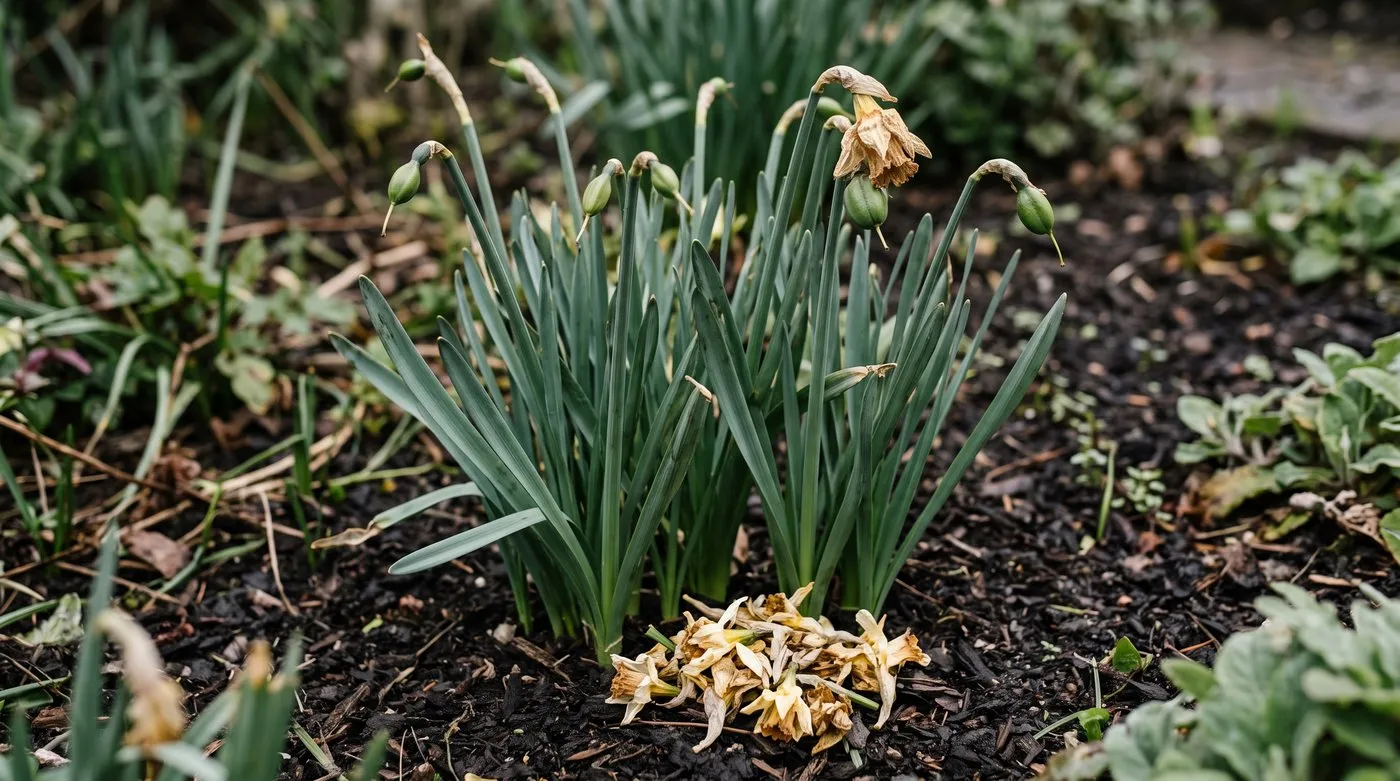
Snap off the head just below the swollen seed pod and leave the green stem. It carries on feeding the bulb for next spring.
How to feed spring bulbs after flowering
Which feed to use
Use a feed that’s high in potash. Liquid tomato feed is ideal and easy to find. Potash helps the bulb store food rather than just growing leaves.
Avoid high-nitrogen feeds like lawn feed. They give you lush leaves but a hungrier bulb.
When to feed
| Weeks after the last flower | What to do |
|---|---|
| Week 1 | First feed of liquid tomato feed |
| Week 2 | Water only if dry |
| Week 3 | Second feed |
| Week 4 | Water only if dry |
| Week 5 | Third feed |
| Weeks 6 to 8 | Stop feeding and let the leaves yellow |
Mix the tomato feed at the strength on the bottle. Pour it on the soil around the bulbs, not over the leaves.
For bulbs naturalised in grass, liquid feeding a big drift is a chore. Instead, scatter sulphate of potash around the clumps after deadheading, at the rate on the pack. Water it in, or do it just before rain.
It’s a cheap job too. One bottle of tomato feed goes a very long way.
 Water tomato feed onto the soil around the bulbs every fortnight after the petals drop.
Leave the leaves: the six-week rule
Don’t cut, tie, knot or mow bulb leaves until they’ve turned yellow. This is the golden rule of bulb care, and the one most often broken. Cutting leaves early is one of the main reasons bulbs stop flowering.
Why it’s tempting
Bulb leaves are messy. Daffodil leaves flop over the border and tulip leaves go brown and patchy. When everything else looks fresh in May, it’s tempting to tidy them away.
Tying the leaves into neat knots is an old habit, but it’s nearly as bad as cutting them. Bundled leaves can’t catch much light.
How long do the leaves last?
| Bulb | Roughly how long | Usually gone by |
|---|---|---|
| Snowdrop | 4 to 6 weeks | April to early May |
| Crocus | 4 to 5 weeks | Mid to late April |
| Muscari (grape hyacinth) | 6 to 8 weeks | May to early June |
| Daffodil | 6 to 8 weeks | June to early July |
| Hyacinth | 6 to 7 weeks | Late May to June |
| Tulip | 5 to 7 weeks | Late May to mid June |
| Bluebell | 6 to 8 weeks | June to early July |
| Allium | 8 to 12 weeks | June to August |
Further north, expect things to run a couple of weeks later.
Ways to hide the untidy leaves
Plant perennials around them. Hardy geraniums, hostas, daylilies and ferns grow up and hide the fading daffodil leaves by mid-May.
Grow them in grass. In rough grass, dying leaves just look natural. Don’t mow those patches until at least six weeks after flowering. Pop in a few short canes to remind you where they are.
Plant small groups in lawns. Small clumps are easy to mow around, and the neat grass makes them less noticeable.
Layer with later bulbs. In a bulb lasagne, later flowers take your eye off the fading leaves. Allium globes in May are great for this.
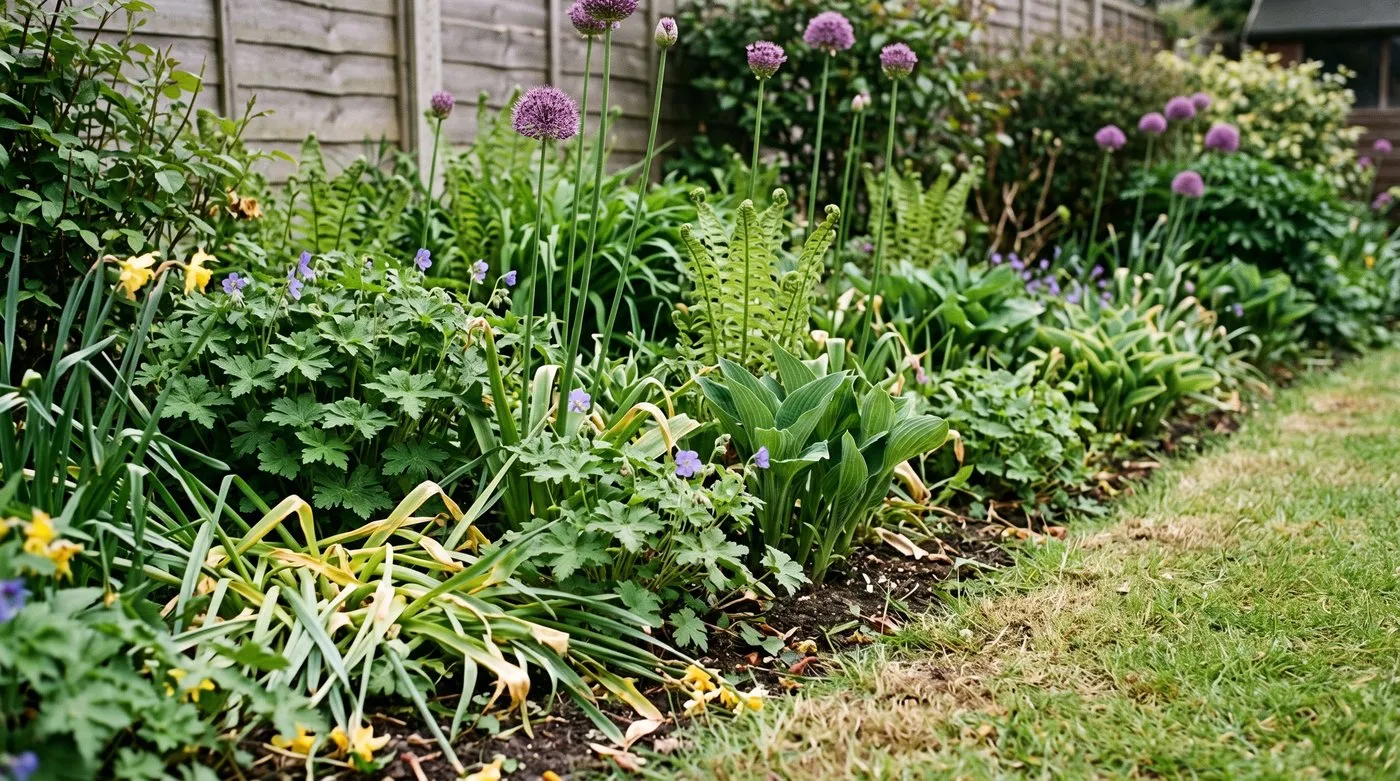
Let perennials grow up around fading bulb leaves. By mid-May the geraniums and hostas hide them while the bulbs quietly refuel.
Aftercare for each bulb at a glance
| Bulb | Deadhead? | Feed after flowering? | Lift? | Divide | What to do |
|---|---|---|---|---|---|
| Daffodil | Yes | Yes | No | Every 3-5 years | Leave in, feed, divide when crowded |
| Tulip (hybrid) | Yes | Yes | Yes, in June | Replant each autumn | Lift, dry, store warm and dry |
| Tulip (species) | Optional | Optional | No | When crowded | Leave in well-drained soil |
| Crocus | Optional | Optional | No | Every 4-5 years | Leave alone, spreads itself |
| Snowdrop | No | Optional | No | Every 3-4 years | Divide in the green after flowering |
| Hyacinth | Yes | Yes | Optional | Every 3-4 years | Feed, lift if flowers weaken |
| Allium | Optional | Yes, once | No | Every 3-5 years | Leave in well-drained soil |
| Muscari | Optional | No | No | Every 4-5 years | Leave alone, self-seeds |
Month-by-month aftercare calendar
| Month | Jobs |
|---|---|
| March | Deadhead snowdrops and early crocuses. Don’t mow snowdrop patches. Start feeding finished bulbs. Divide snowdrops in the green if needed. |
| April | Deadhead daffodils as they fade. Start fortnightly tomato feed for daffodils and hyacinths. Leave all the leaves alone. |
| May | Deadhead late daffodils, tulips and hyacinths. Keep feeding. Alliums start flowering. Remove only leaves that have fully yellowed. |
| June | Last feeds. Lift hybrid tulips once the leaves have died back, and dry them in the shade. Divide crowded daffodils. |
| July | Clear the last yellow daffodil and bluebell leaves. Mow naturalised areas again. Check stored tulips for soft or mouldy ones. |
| August | Order new bulbs. Plan where to fill gaps. Plan new bulb lasagne pots. |
| September | Start planting new spring bulbs. Save stored tulips for planting in November. |
How to lift, dry and store tulip bulbs
Most hybrid tulips do better if you lift them after flowering. Tulips come from places with hot, dry summers. Wet British summers can make the sleeping bulbs rot, which is why tulips often fade away after a year or two. Darwin hybrid and species tulips are the most likely to come back if left in well-drained soil.
When to lift
Wait until the leaves are fully yellow and come away easily. That’s usually mid to late June in the south, and early July further north. Don’t lift while there’s still green on the leaves.
How to lift
Push a fork in a little away from the clump so you don’t spear the bulbs. Lift the soil and shake the bulbs free. Brush off loose soil but don’t wash them. Throw away any that are soft, mouldy or have brown patches at the base.
Drying and storing
Spread the bulbs in a single layer on newspaper or open trays. Leave them somewhere dry, shady and airy, like a shed or garage shelf, for a couple of days. Then pull off any dead leaves and loose skins.
Store them somewhere warm, dry and dark in paper bags, net bags or open trays. Never use plastic bags, as trapped damp causes rot. Check them every month and throw out any soft ones. Replant in November.
Species tulips: leave them in
Species tulips such as Tulipa sylvestris, T. tarda and T. turkestanica cope with British summers. You can leave them in the ground in well-drained soil, and they’ll slowly spread. They suit rock gardens, gravel and raised beds. Our tulip growing guide has more planting tips.
 Dry lifted tulips on open trays for a couple of days, then store them somewhere warm, dry and airy.
When and how to divide spring bulbs
Dividing stops clumps getting too crowded. When bulbs are packed tight, they fight for food and space, and you get fewer, smaller flowers.
Signs a clump needs dividing
- Far fewer flowers than in earlier years
- Flowers smaller than they used to be
- Lots of leaves but few or no flowers
- Bulbs pushing each other up to the surface
When to divide each bulb
| Bulb | When | How |
|---|---|---|
| Daffodil | June to August, once leaves die | Lift the clump, pull offsets apart, replant at the same depth with space between |
| Snowdrop | February to March, in the green | Split while still in leaf, replant straight away, water in |
| Crocus | June to July, once leaves die | Lift, pull offsets apart, replant about 8cm deep |
| Bluebell | Late May to June, in the green | Lift with plenty of soil, split, replant straight away |
| Muscari | July to August | Lift, separate the little bulbs, replant about 8cm deep |
| Allium | September to October | Lift, separate offsets, replant at three times the bulb’s depth |
Only move bluebells that are already in your own garden. Never dig bulbs up from the wild.
Snowdrops in the green
Snowdrops are the odd one out. They settle in best when moved in the green, while their leaves are still up after flowering. Lift a clump in February or March. Tease it into small groups of three to five bulbs. Replant straight away at the same depth and water well. Dry snowdrop bulbs sold in autumn are much less reliable.

Snowdrops settle best when moved in leaf, just after flowering. Split clumps into small groups and replant at the same depth straight away.
Why bulbs stop flowering
When bulbs stop flowering, it’s rarely the bulb’s fault. It’s usually down to how they’ve been treated or where they’re growing.
Leaves cut too early
The number one cause. Cutting, mowing or tying the leaves before they yellow starves the bulb.
Fix: Wait until the leaves are yellow and come away with a gentle tug. Mark grassy patches with canes so they don’t get mown.
Hungry bulbs
Bulbs in poor soil, or left unfed for years, slowly run out of steam.
Fix: Give a high-potash liquid feed every fortnight for about six weeks after flowering. For big drifts, scatter sulphate of potash instead.
Overcrowding
Each year a daffodil adds a few offsets. After five years or so, the clump is packed tight and each bulb gets less.
Fix: Divide crowded clumps every 3 to 5 years. Don’t wait for the flowers to vanish. A simple feeding routine helps divided bulbs get going again.
Planted too shallow
Shallow bulbs often make leaves but no flowers.
Fix: Plant at two to three times the bulb’s height. That’s about 10 to 15cm for daffodils and 15 to 20cm for big tulips. Deeper planting also puts off squirrels.
Waterlogging and rot
Bulbs sitting in wet soil over summer can rot at the base. Tulips in heavy clay suffer most.
Fix: Add a handful of grit to each planting hole in clay. Lift hybrid tulips in June and store them dry. Avoid hollows where water sits. Our guide on when to plant spring bulbs covers getting the soil ready.
Common mistakes with spring bulb aftercare
Cutting the leaves too early
What happens: Daffodil and tulip leaves get cut, mown or knotted days after flowering because they look untidy.
Why: Everything else is looking fresh in May and people want tidy borders. Some old books even recommend tying leaves in knots.
The fix: Wait for the leaves to yellow, roughly six weeks. Plant perennials to hide them. A few weeks of mess buys years of flowers.
Forgetting to feed
What happens: Bulbs get fed at planting and never again, then slowly fade after a few years.
Why: Bulbs are sold as “plant and forget”. That’s true for the first couple of years, while they live off their own stores.
The fix: Make feeding part of your spring routine. Set a reminder for when the daffodils finish.
Leaving hybrid tulips in wet ground
What happens: Tulips are wonderful in year one, smaller in year two, then gone.
Why: Wet British summers rot the sleeping bulbs.
The fix: Lift them in June, store them dry and replant in November. Or treat them as one-season bulbs and buy fresh each autumn, like many parks do.
Planting in deep shade
What happens: Bulbs under evergreens or thick hedges flower less each year.
Why: The leaves can’t get enough light to refuel the bulb. Shade under evergreens like conifers, laurel or leylandii is just too deep.
The fix: Plant where they get good light in spring. Under trees that lose their leaves is fine, as the branches are still bare while the bulbs refuel.
Leaving overcrowding too long
What happens: A drift of daffodils slowly shrinks to a handful of flowers.
Why: You can’t see the clump getting crowded underground, so it’s easy to miss.
The fix: Divide on a regular cycle. Daffodils every 3 to 5 years, snowdrops every 3 to 4, crocuses every 4 to 5. Jot the date in a diary.
 Split crowded daffodil clumps every few years and replant the offsets with a bit of space around them.
Looking after bulbs in pots
Bulbs in pots need a little extra care. Pots dry out faster and the compost runs out of food sooner.
Feeding bulbs in pots
Feed potted bulbs weekly rather than fortnightly. Use the same tomato feed from when the petals drop until the leaves yellow.
What to do with potted bulbs after flowering
You’ve got three choices.
Plant them in the garden. Tip out the whole rootball and plant it at the same depth. This suits daffodils, alliums and crocuses best. They usually flower again the following spring.
Keep them in the pot. In autumn, swap the top layer of compost for fresh peat-free mix. This works for daffodils and crocuses, but rarely for tulips.
Lift and store. For tulips, tip out the pot once the leaves die back. Store the bulbs dry, as above.
Freshening up the compost
If you’re keeping bulbs in the same pot, scrape off the top 5cm of old compost. Replace it with fresh peat-free multipurpose with some perlite mixed in. Add a little slow-release fertiliser, following the pack.
The RHS bulb growing guide also recommends a high-potash feed after flowering, and no high-nitrogen feeds.
Naturalising bulbs for years of flowers
The dream is a patch of bulbs that gets better every year with hardly any work. Naturalised bulbs look after themselves in grass, under trees or in informal borders.
The best bulbs for naturalising in UK gardens are:
- Daffodils, such as ‘February Gold’, ‘Tete-a-Tete’, ‘Pheasant’s Eye’ and ‘Ice Follies’
- Crocuses, such as C. tommasinianus and C. chrysanthus
- Snowdrops (Galanthus nivalis and G. elwesii)
- Bluebells, the native English bluebell only (Hyacinthoides non-scripta)
- Muscari (M. armeniacum and M. latifolium)
- Cyclamen (C. coum for winter, C. hederifolium for autumn)
Naturalised bulbs need even less fuss. Scatter some sulphate of potash in April. Don’t mow until six weeks after flowering. Divide only when the flowers fall off. Then let nature get on with it.
For more on planting and the best varieties for naturalising, see our guide on when to plant spring bulbs.
Next step: the weeks after flowering are also the time to move snowdrops, as our guide to planting bulbs in the green explains.
Frequently asked questions
When should I cut back bulb foliage after flowering?
Wait about six weeks, until the leaves turn yellow. The leaves are refuelling the bulb for next year’s flowers. Once they’re fully yellow and pull away with a gentle tug, you can remove them.
Should I feed spring bulbs after they flower?
Yes, feed every fortnight until the leaves turn yellow. Liquid tomato feed is perfect, mixed as the bottle says. Avoid high-nitrogen feeds, which grow leaves rather than feeding the bulb.
Do I need to lift tulips after flowering?
Most hybrid tulips do better if lifted in June. Wet British summers can rot them in the ground. Darwin hybrids and species tulips often come back if left in well-drained soil. Dry lifted bulbs in the shade, then store them somewhere warm and dry.
Why did my bulbs not flower this year?
Usually because the leaves were cut too early last year. Other common causes are crowded clumps, planting too shallow, wet soil, deep shade and no feeding after flowering.
Can I move bulbs while they are still in leaf?
Yes, straight after flowering, with plenty of soil around them. This is called moving them in the green. Lift the whole clump, replant at the same depth straight away and water well. It works best for snowdrops and bluebells.
How do I store lifted tulip bulbs over summer?
Dry them in the shade for a couple of days, then store them dry. Keep them in a single layer in open trays, paper bags or net bags in a dry, dark, airy shed. Check monthly and throw out soft or mouldy ones. Never use plastic bags.
Should I deadhead daffodils after flowering?
Yes, snap off the dead flower head soon after the petals drop. Leave the green stem, as it helps feed the bulb. Removing the head stops the plant wasting energy on seeds.
Our team produces practical UK gardening guidance from source research, contributor records and established horticultural practice. Editorial standards are overseen by Matt W.