
Key takeaways
- Plant snowdrops 'in the green' in February or March, while still in leaf, rather than as dry bulbs
- Choose part shade under deciduous trees, with moist soil full of leaf mould
- Divide crowded clumps after flowering, while the leaves are still green
- They're fully hardy and need no winter protection
- All parts are poisonous if eaten, so wear gloves and keep pets and children from the bulbs
Snowdrops are one of the first signs of life in a winter garden. A flush of white flowers pushing through frosty soil in January lifts the spirits like nothing else. They’re small, rarely over 15cm, but tough. A happy clump under a tree or on a shady bank spreads a little more each year and asks for almost nothing in return.
There’s one simple rule for success: plant them in the green, not as dry bulbs. That one choice makes the difference between a spreading carpet and a few bulbs that quietly rot. For more on planting bulbs through the year, see our guide to when to plant spring bulbs in the UK.
Why plant snowdrops in the green?
Snowdrops planted in the green, while still in leaf, settle in far better than dry bulbs. Snowdrop bulbs are small with a thin skin, and once they’re dried out they often don’t recover.
In the green plants are lifted just after flowering in February or March, with their roots still on, and planted straight away. They may look a bit sorry for themselves for a week or two, but the roots never dry out. By next year they’re spreading.
You can buy them in the green from specialist bulb nurseries, garden centres in late winter, or friends splitting their own clumps. Plant fairs and snowdrop events often sell them too. For other plants that brighten the winter garden, see our guide to the best winter flowering plants for UK gardens.
How to plant snowdrops in the green
Plant them as soon as you get them. Don’t leave them sitting in a bag. Aim to get them in the ground within a day or two.
- Dig a hole 8-10cm deep and wide enough for a small group of three to five bulbs.
- Add a handful of leaf mould or well-rotted compost to the bottom.
- Set the bulbs in with the roots down and the leaves upright.
- Fill in with soil mixed with leaf mould and firm gently.
- Water in and mark the spot. The leaves die back by early summer and the spot looks bare until next winter.
Space each group 10-15cm apart. For a natural look, plant them in loose drifts, not rows.
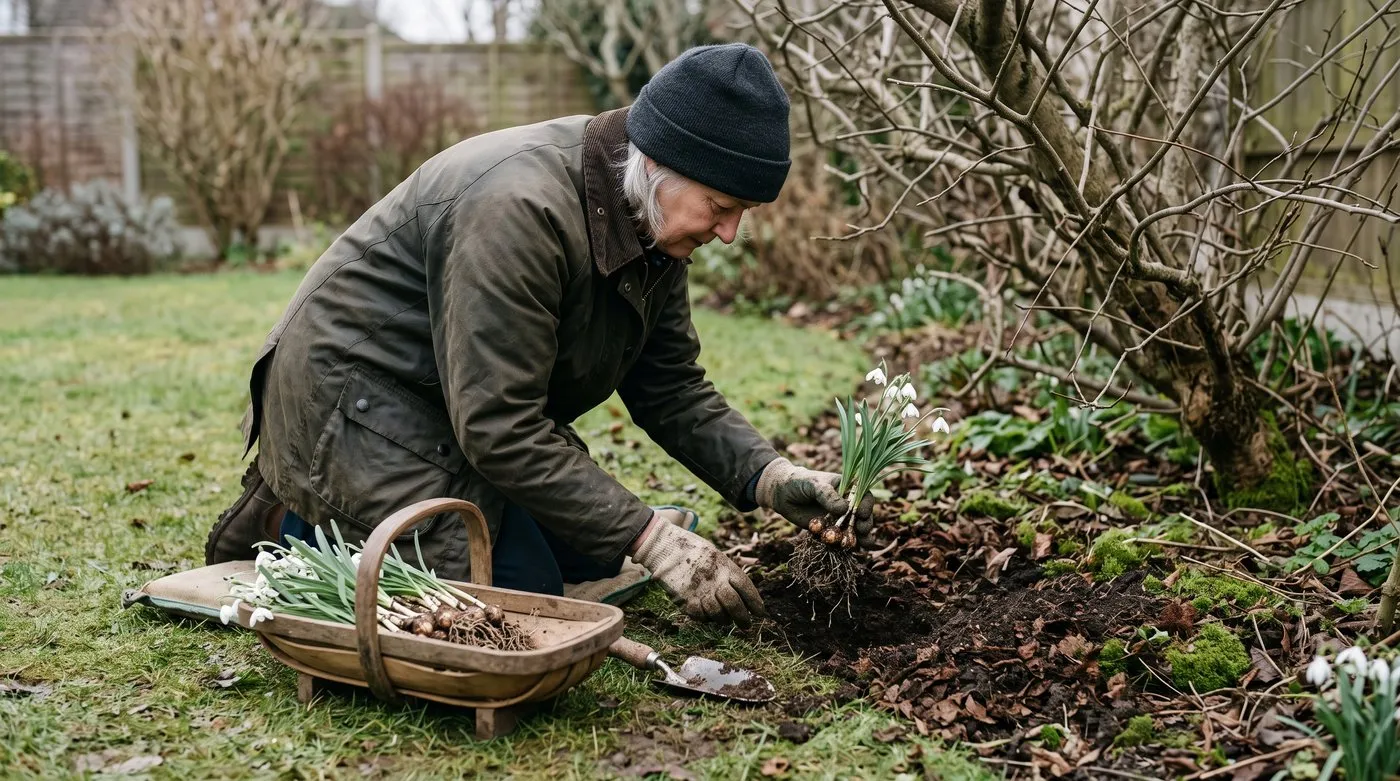
Plant them the day you get them, roots down and leaves upright. A handful of leaf mould in the hole gives them a soft, moist start.
Where do snowdrops grow best?
Snowdrops come from woodland edges and riverbanks in Europe and have made themselves at home all over Britain. They like cool, moist soil, part shade and plenty of leaf litter.
The perfect spot
Try under deciduous trees like oak, beech or hazel, on shady banks, at the foot of north-facing walls or in a woodland-style border. Deciduous trees are perfect because they’re bare while snowdrops grow, then give cool shade in summer while the bulbs rest. Their fallen leaves build up the leaf mould snowdrops love.
Avoid:
- Under dense evergreens, which is too dark and dry
- Hot, sunny beds, where snowdrops dry out and don’t spread
- Heavy clay that stays wet, where bulbs can rot over winter
- Lawns that get mown early, as the leaves need about six weeks after flowering to feed the bulbs
Snowdrops look lovely with hellebores, which flower at the same time, plus winter aconites and early primroses. As they fade, erythronium, the dog’s tooth violet, takes over in the same leafy shade. If you’ve spotted a taller lookalike, it’s probably a snowflake, and our guide to how to grow leucojum explains the difference. For a full shade planting plan, see the best plants for shade in UK gardens. Hellebores make especially good partners, and our guide to growing hellebores in the UK covers the best ones to pair with snowdrops.
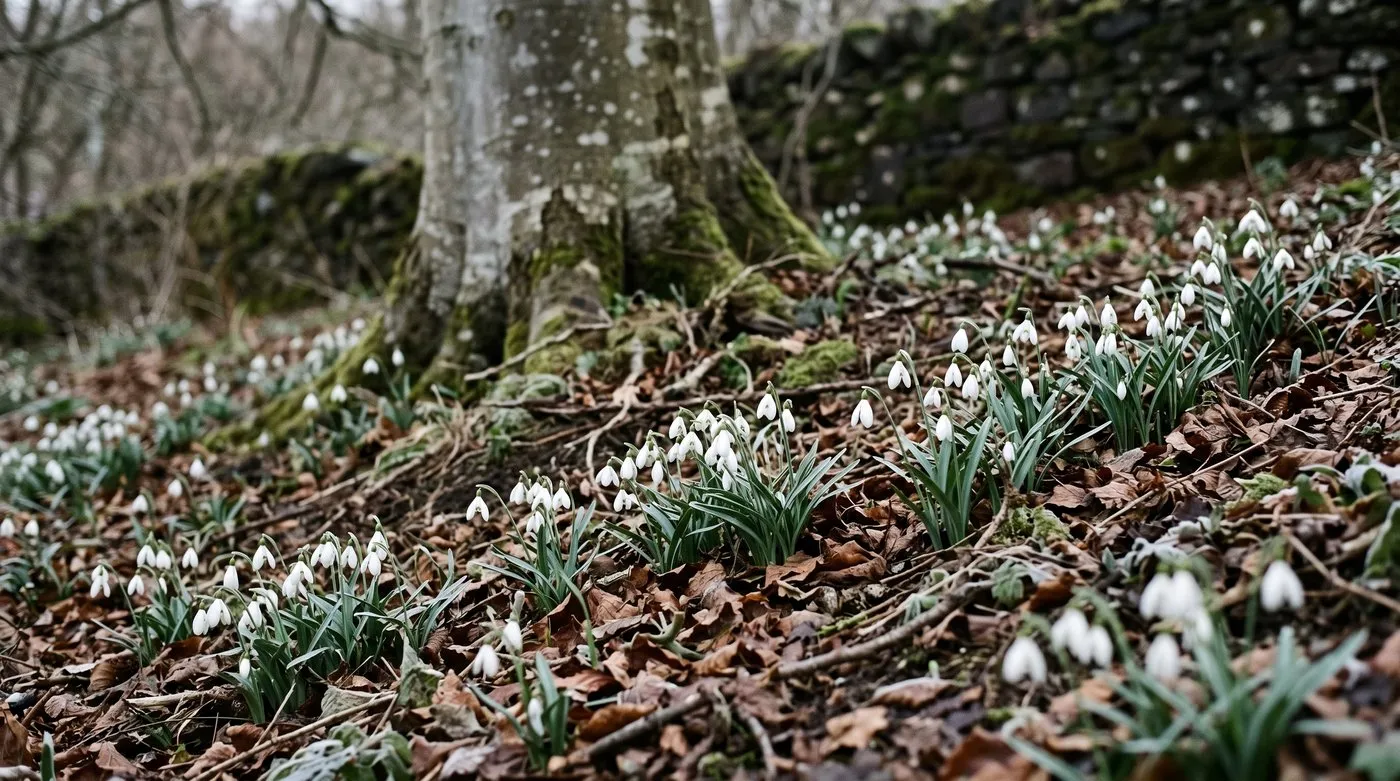
Bare trees in winter and cool shade in summer is exactly what snowdrops want. Their fallen leaves turn into the leaf mould the bulbs love.
Getting the soil ready
Snowdrops like moist soil full of organic matter. Before planting, fork over the top 15cm and mix in a bucket of leaf mould per square metre. It helps the soil stay moist in summer without getting waterlogged. No leaf mould? Well-rotted garden compost works nearly as well, and our guide to how to make compost shows you how to make your own.
Don’t dig heavy manure in deeply. Snowdrops have shallow roots and like a light, crumbly top layer.
Which snowdrops should you grow?
There are a surprising number of snowdrops, from the common one to rare doubles and giants that collectors go mad for. For most gardens, a handful of reliable ones is all you need.
| Variety | Height | Flowers | What it’s like | Best for |
|---|---|---|---|---|
| G. nivalis (common snowdrop) | 10-15cm | Jan-March | Simple, single white flowers | Big drifts |
| G. elwesii (giant snowdrop) | 15-20cm | Jan-Feb | Bigger flowers, broad grey-green leaves | A bolder look |
| ’Flore Pleno’ | 10-12cm | Feb-March | Frilly double flowers | Borders and pots |
| ’S. Arnott’ | 15-20cm | Feb-March | Big, honey-scented, strong | A great all-rounder |
| ’Atkinsii’ | 20-25cm | Jan-Feb | Tall and early | Early flowers, drifts |
| ’Magnet’ | 15-18cm | Feb-March | Flowers sway on long stalks | Borders |
‘S. Arnott’ holds an RHS Award of Garden Merit, and the RHS Galanthus page is a good place to browse others. It’s bigger and more scented than the common snowdrop, strong enough to spread and easy to find. If you only grow one named variety, make it this one.
‘Atkinsii’ is worth growing because it’s early, often opening in January and lighting up the darkest weeks. It’s tall, elegant and spreads well.
Galanthophilia, the love of collecting rare snowdrops, is a much-loved British hobby. Rare bulbs can fetch high prices at specialist fairs. Colesbourne Park in Gloucestershire is famous for its snowdrops and opens for visitors in February.
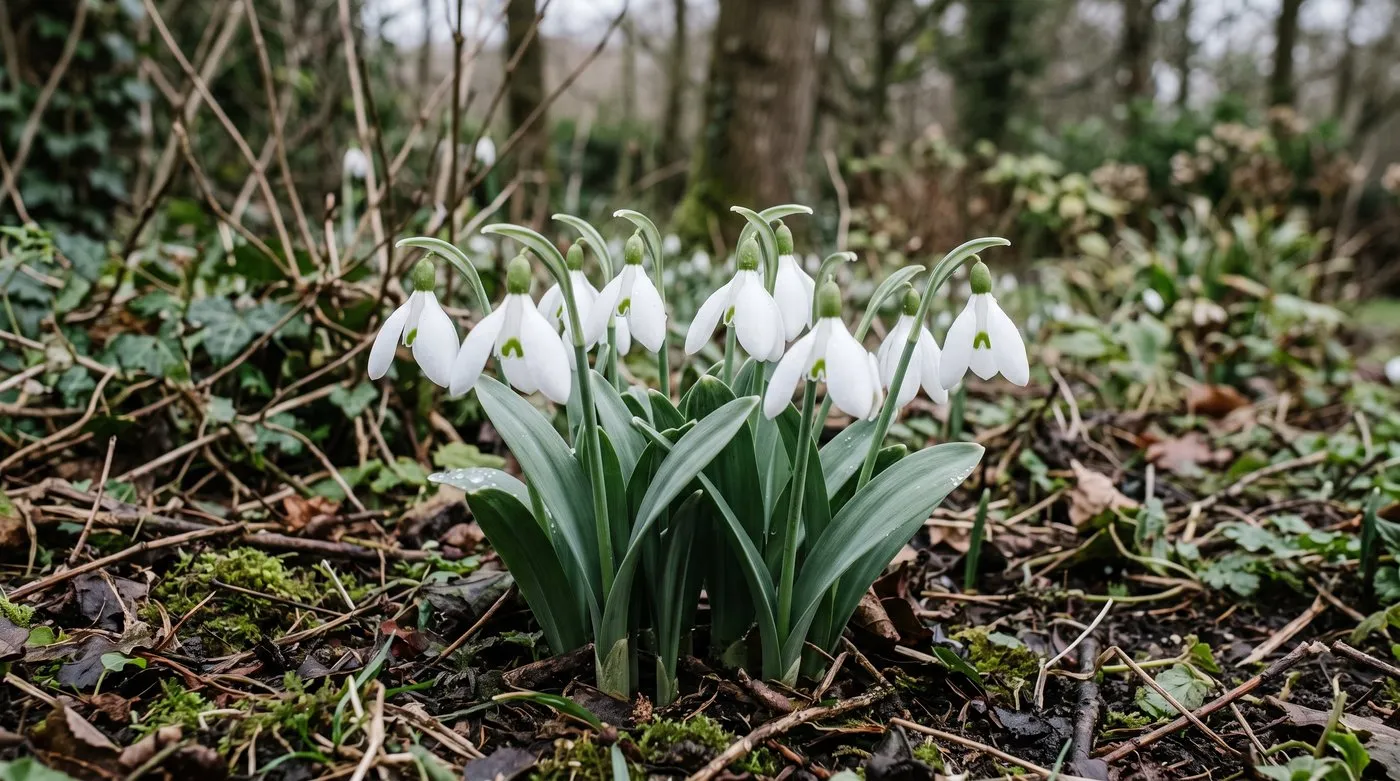
Giant snowdrops have broader, greyer leaves and bigger flowers than the common type. They make a bolder clump where you want them noticed.
How to get more snowdrops
The easiest way to get more snowdrops is to divide clumps after flowering, while they’re still in leaf. It also stops clumps getting overcrowded, which means fewer flowers.
Dividing clumps
Divide every three or four years, or when flowering starts to drop off. Do it in March while you can still see the leaves, as you’ll lose track of them once they die back.
Slide a fork under the clump from the side and ease it up gently so you don’t spear the bulbs. Pull the clump apart by hand into groups of three to five bulbs. Replant straight away at the same depth and water in. They may flower a little less next year, then pick up again.
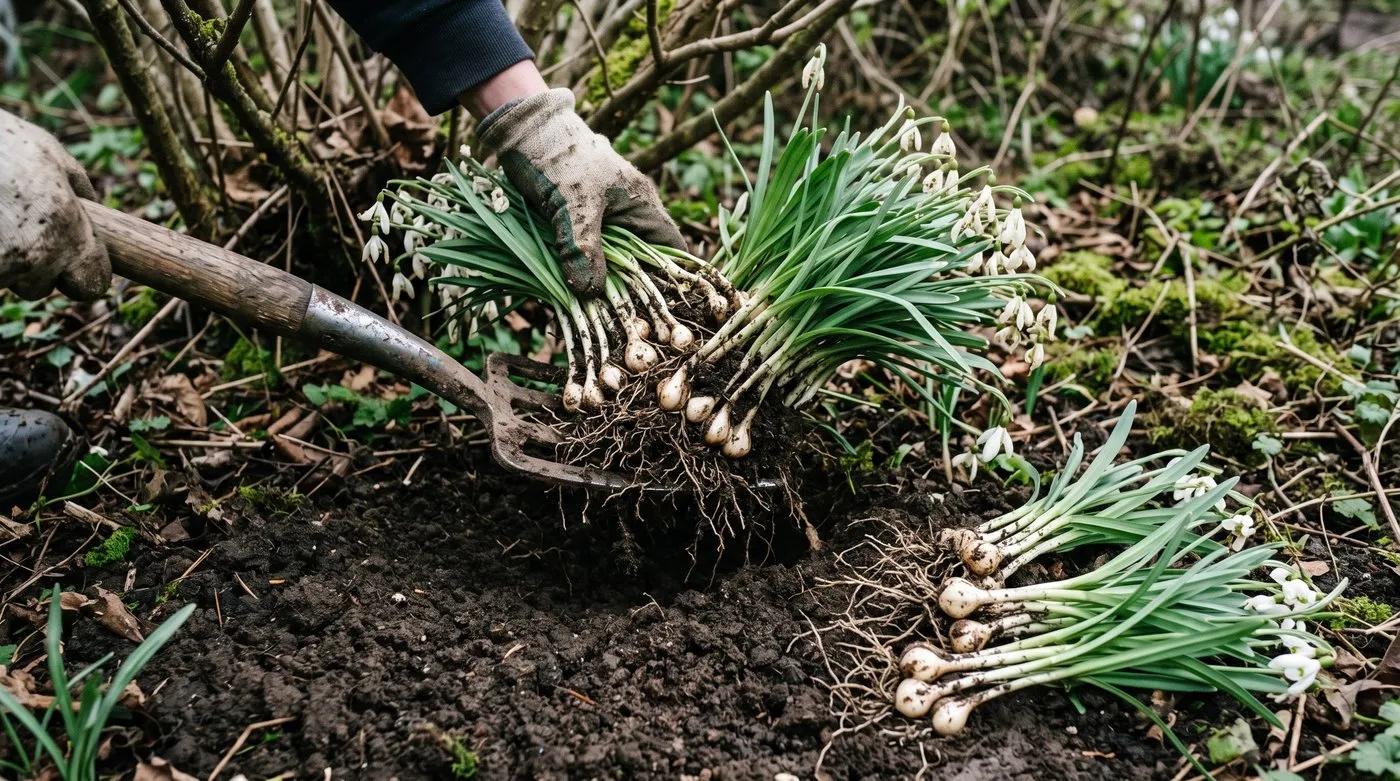
Lift from the side so the fork doesn’t spear the bulbs. Replant the small groups straight away at the same depth.
Growing from seed
Snowdrops set seed in the right spot, and ants carry the seeds about. Seedlings take a few years to flower, so dividing is much quicker.
To try it, collect the seed pods as they start to turn yellowish, before they split. Sow straight away into pots of leaf mould and gritty compost. Leave the pots outside over winter, as the seeds need the cold. Seedlings appear the next spring.
Snowdrops month by month
| Month | What to do |
|---|---|
| January | Watch for the first flowers. ‘Atkinsii’ often opens this month |
| February | The best month to buy and plant in the green. Enjoy the flowers |
| March | Last chance to plant in the green. Divide clumps after flowering |
| April | Leaves start to yellow. Don’t cut them, as they’re feeding the bulbs |
| May | Leaves have died back. Mark where clumps are if you plan to divide later |
| June-August | Bulbs are resting. Water in a long drought, as summer moisture matters |
| September-October | If you have dry bulbs, plant them now 8-10cm deep in moist, improved soil |
| November-December | Nothing to do. The bulbs are growing roots underground |
Snowdrops and wildlife
Snowdrops are one of the few winter flowers bees can feed on. Bumblebees and solitary bees out on a mild February day will visit them happily, sometimes with snow still on the ground.
Remember that every part of the snowdrop is poisonous to people and animals if eaten. Wear gloves when planting or dividing.
How to naturalise snowdrops under trees
Letting snowdrops spread naturally is the most rewarding way to grow them. A carpet of white under trees in February is one of the loveliest sights in a British garden.
It takes patience, but very little work. Start with a few dozen in the green, divide the most crowded clumps every few years and clear away fallen leaves if they smother the new shoots. Over the years, they’ll build into a proper drift.
The common snowdrop, Galanthus nivalis, is the best for spreading. It multiplies by bulbs and seed and asks for almost nothing. ‘Atkinsii’ and ‘S. Arnott’ spread well too, just a little more slowly.
Snowdrops look great with other spring bulbs. Early daffodils carry the show on from January into April, and our guide on how to grow daffodils in the UK has varieties that flower as snowdrops fade. Hellebores, wood anemones and bluebells keep things going into late spring. To plant bulbs in a lawn, see our naturalising bulbs in grass guide.
Next, read our guide on how to grow hellebores in the UK, the perfect partner that flowers alongside snowdrops all winter.
Frequently asked questions
When is the best time to plant snowdrops?
Plant them ‘in the green’ in February or early March, just after flowering. That means buying plants that still have their leaves, not dry bulbs. They settle in well and start spreading in their first year. You can plant dry bulbs in September or October, but many of them fail.
Do snowdrops prefer sun or shade?
They like part shade, ideally under deciduous trees. They grow and flower before the trees come into leaf, so they get plenty of light when they need it. Avoid deep shade under evergreens and hot, dry spots in full summer sun.
How do I divide snowdrops?
Divide clumps just after flowering, while the leaves are still green. Lift the clump with a fork, gently pull it into smaller groups of three to five bulbs, and replant straight away 8-10cm deep. Don’t let the roots dry out. Dividing every three or four years keeps them flowering well.
Why are my snowdrops not flowering?
Usually overcrowding, dry bulbs that never settled, or soil that’s too dry in summer. Lift and divide crowded clumps while in the green. Add leaf mould to help the soil hold moisture. Avoid planting under big trees with thirsty roots near the surface.
Are snowdrops poisonous?
Yes, all parts are poisonous if eaten, especially the bulbs. Eating them can cause sickness and tummy pain. Wear gloves when handling the bulbs, and keep children and pets from digging them up. Bees visiting the flowers are fine.
What is galanthophilia?
It’s the love of collecting snowdrops. Keen collectors, called galanthophiles, hunt for rare named varieties, and a single bulb can sell for a surprising amount. Snowdrop gardens and fairs, such as those at Colesbourne Park in Gloucestershire, draw big crowds in February.
Which snowdrop variety is best for beginners?
The common snowdrop, Galanthus nivalis, is the easiest. It spreads freely and is easy to buy in the green. ‘S. Arnott’ is a great named variety, with big, honey-scented flowers and an RHS Award of Garden Merit. Both settle in and multiply without fuss.
More bulb and winter garden guides
Our team produces practical UK gardening guidance from source research, contributor records and established horticultural practice. Editorial standards are overseen by Matt W.


