Key takeaways
- Plant pips in autumn, 10cm apart, with the tips just below the soil surface
- It loves part to full shade and moist soil rich in leaf mould
- Sweetly scented white bells open in late April and May
- It spreads by underground rhizomes, so plant it where a carpet is welcome or use a barrier
- Every part is poisonous, including the red berries, so keep pets and children away
- Divide tired, crowded clumps in autumn to get flowers back
Lily of the valley is one of the sweetest-scented flowers you can grow in a shady UK garden. Plant the pips in autumn in moist, leafy soil, and it comes back every spring with little help. The one catch is that every part of it is poisonous, so think about pets and children before you plant.
It’s a different plant from the other spring shade favourites. Sweet woodruff makes a lower, starry carpet, and pulmonaria is grown for its spotted leaves and early bee flowers. Lily of the valley is the one you grow for scent.
What is lily of the valley?
Lily of the valley (Convallaria majalis) is a hardy woodland perennial, native to Europe including parts of Britain. It grows from creeping underground stems called rhizomes. Each shoot along them is known as a pip.
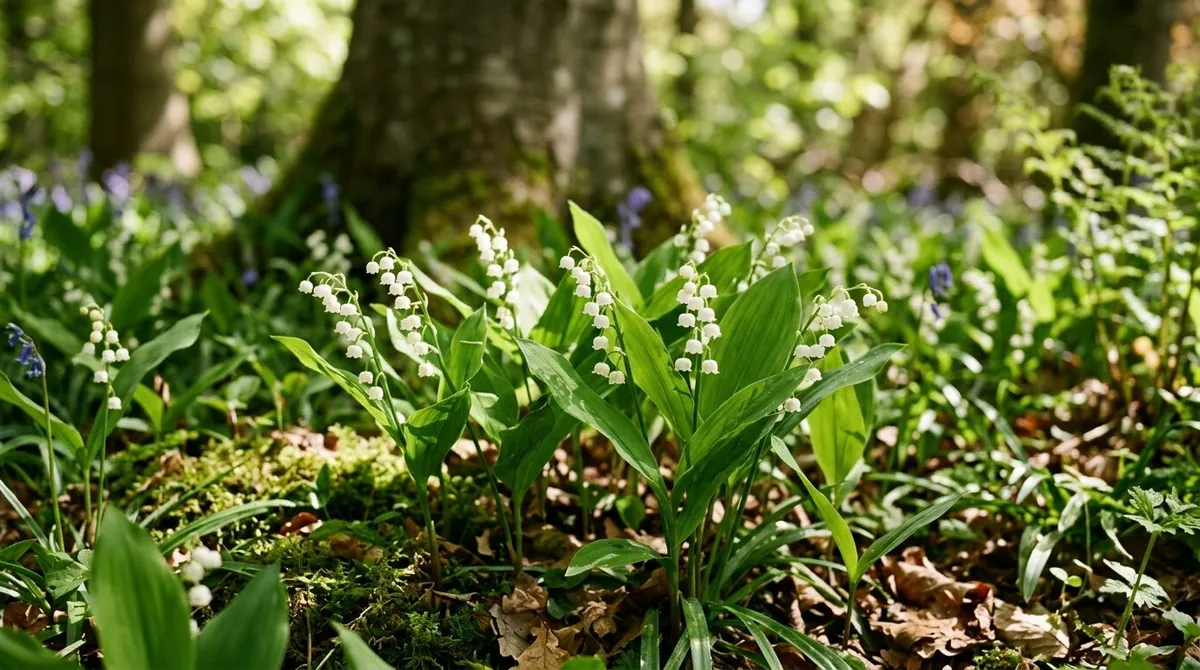
Each pip sends up two broad, pointed leaves about 20cm tall. Mature pips also send up an arching stem of small, nodding white bells in late April and May. The scent is sweet and strong, and a few stems will scent a room. Orange-red berries sometimes follow in late summer.
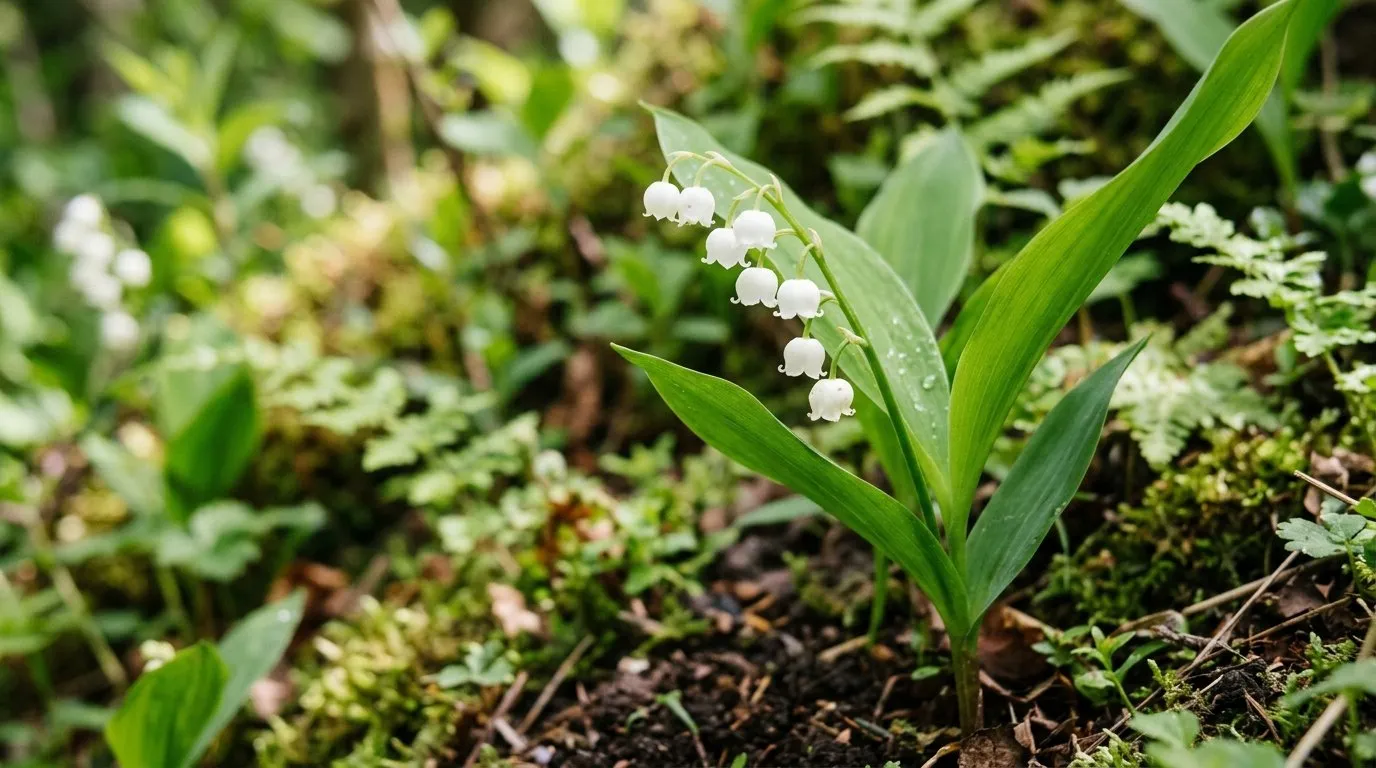
Each flowering pip sends up a single arching stem of nodding bells between two broad leaves.
Best lily of the valley varieties for UK gardens
The plain white species is still the best all-rounder. A few named forms add a twist if you want something different.
| Variety | What it looks like | Good for |
|---|---|---|
| Convallaria majalis | White bells, plain green leaves | Naturalising and ground cover |
| ’Rosea’ | Pale pink bells | A softer look, slower to spread |
| ’Bordeaux’ | Larger white bells on taller stems | Cutting for vases |
| ’Albostriata’ | White bells, cream-striped leaves | Lighting up a dark corner |
| ’Hardwick Hall’ | White bells, leaves edged pale gold | Leaf interest after flowering |
| ’Prolificans’ | Extra-full, double-looking white flowers | Something unusual up close |
‘Rosea’ is gentler than the white type, so it suits smaller beds where you don’t want a takeover. The variegated forms are slower too, and their leaves keep looking good after the flowers have gone.
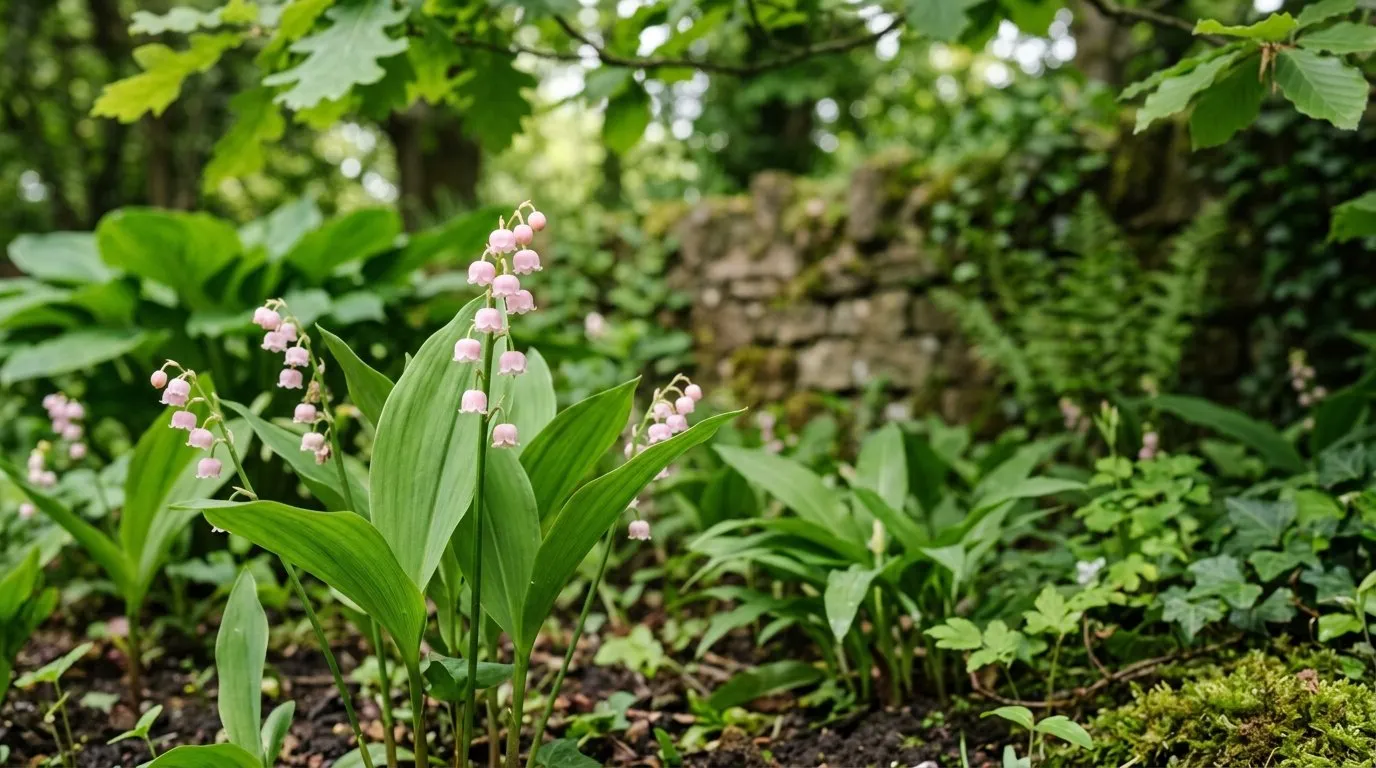
‘Rosea’ has soft pink bells and spreads more slowly than the white form, so it’s a good pick for a smaller border.
Where does lily of the valley grow best?
Think woodland floor. It wants part to full shade and soil that stays moist and is rich in rotted leaves.
Dappled shade under deciduous trees is ideal. A spot along a north-facing wall or under shrubs works well too. In hot sun the leaves scorch and it flowers less. It will cope with drier shade once settled, especially if you dig in plenty of leaf mould first. For more ideas for difficult spots, see the best plants for dry shade.
Waterlogged soil in winter can rot the pips. On heavy clay, work in organic matter to open it up.
How to plant lily of the valley pips
Plant pips in autumn, while they’re dormant. Early spring is the next best time. Bare-root pips are sold in autumn, and potted plants appear in spring.
- Prepare the soil. Dig in a good layer of leaf mould or garden compost. Clear perennial weeds such as couch grass and ground elder first, because they’re hard to separate later.
- Space the pips. Set them about 10cm apart.
- Plant at the right depth. Spread the roots out in a shallow hole and cover them so the pointed tips sit just below the soil surface.
- Water and mulch. Water well, then mulch with more leaf mould.
New pips may give only leaves in their first spring while they settle in. Once happy, they flower every year and slowly knit into a carpet.
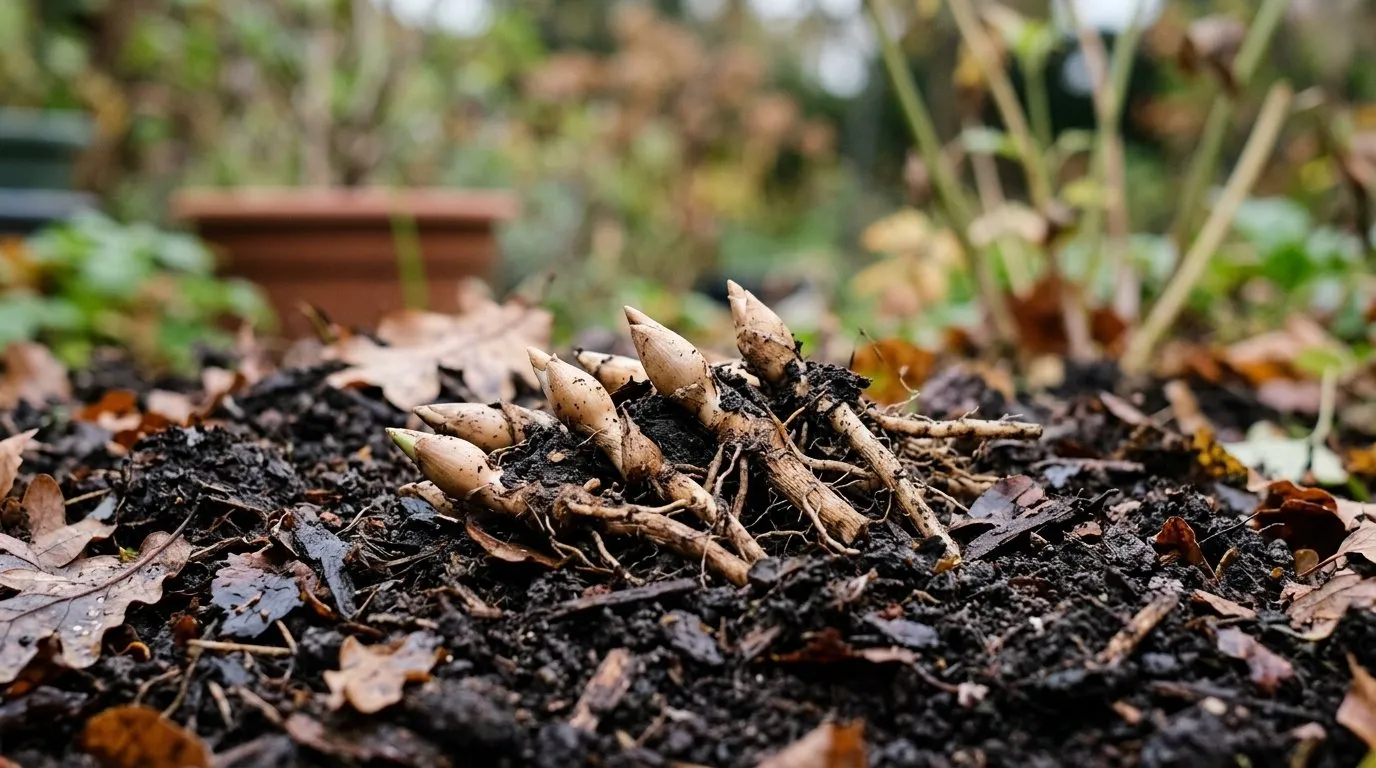
Plump, pointed pips like these are ready to plant. Set them so the tips sit just under the soil.
How to stop lily of the valley spreading
Lily of the valley spreads steadily by rhizomes. That’s lovely under trees, but it can swamp small plants in a mixed border. Choose one of these approaches:
- Plant where a carpet is welcome. Under trees, along a shady wall or beneath shrubs, the spread becomes useful ground cover.
- Use a barrier. Sink a root barrier or a large bottomless pot into the soil, with the rim just above ground level.
- Edge it every spring. Push a sharp spade straight down around the patch to cut off wandering rhizomes, then lift them out.
Clearing an established patch is hard work, because small bits of rhizome left behind will regrow. Dig out what you can, then remove new shoots as they appear over the next few months.
How to divide lily of the valley
Old, crowded clumps flower less, and bare patches can open up in the middle. Dividing them gets the flowers back.

Split crowded clumps in autumn into pieces with a few plump pips each, and the flowers soon come back.
- In autumn, fork up part of the clump at a time.
- Gently pull the rhizomes apart into pieces with a few plump pips each.
- Throw away weak or damaged bits.
- Replant the best pieces 10cm apart in soil refreshed with leaf mould.
- Water well and mulch.
Wear gloves while you do this, and wash your hands afterwards. Spare pips make a good present for a friend with a shady garden, as long as they know it’s poisonous.
Pests and problems
Slugs nibble the new shoots in early spring. Pick them off by torchlight on damp evenings, set beer traps, or use a biological nematode treatment once the soil has warmed in spring. Established clumps usually cope.
Grey mould (botrytis) can leave a fuzzy grey coating on leaves and stems in a wet spring. Cut off and bin affected growth, and thin crowded clumps so air can move.
Scorched leaves turn brown and crisp at the edges in sunny, dry spots. Mulch to keep the soil moist, or move the plants into deeper shade in autumn.
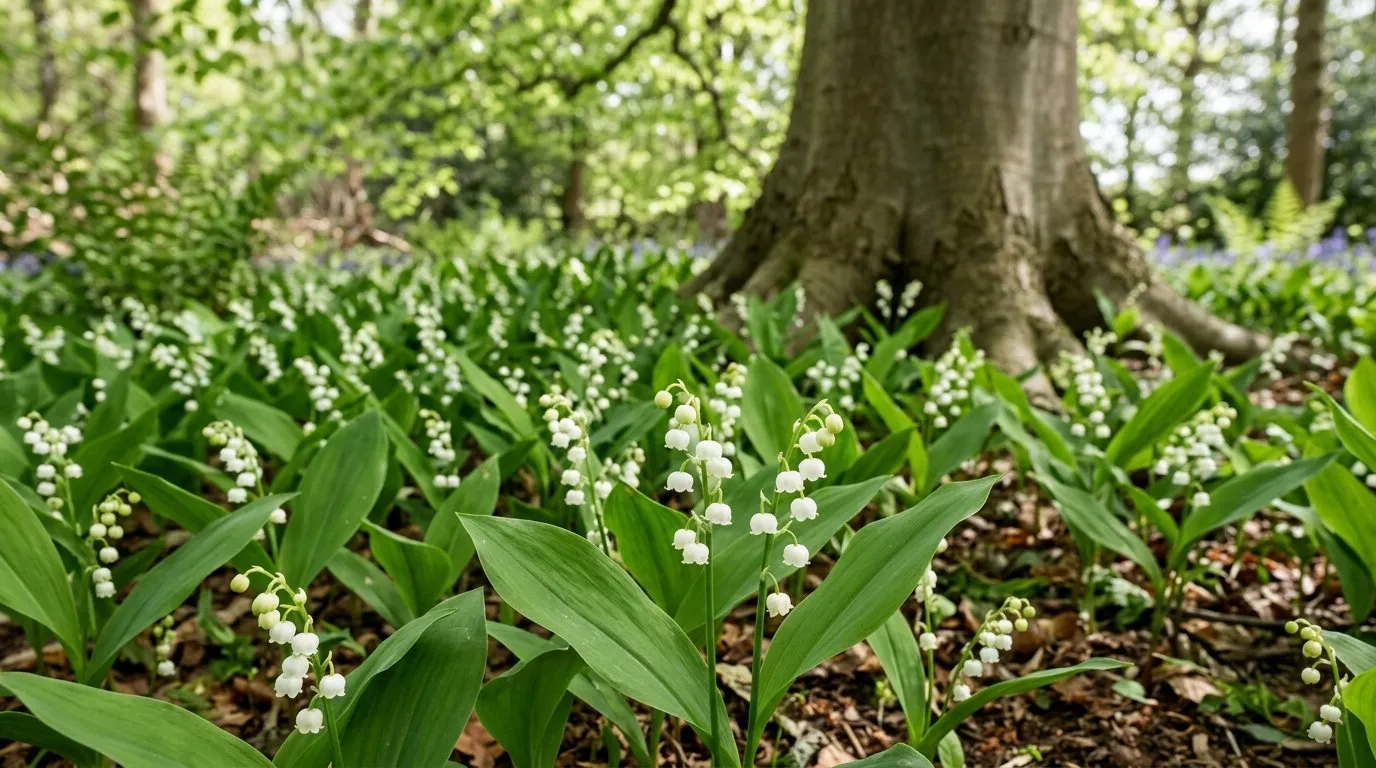
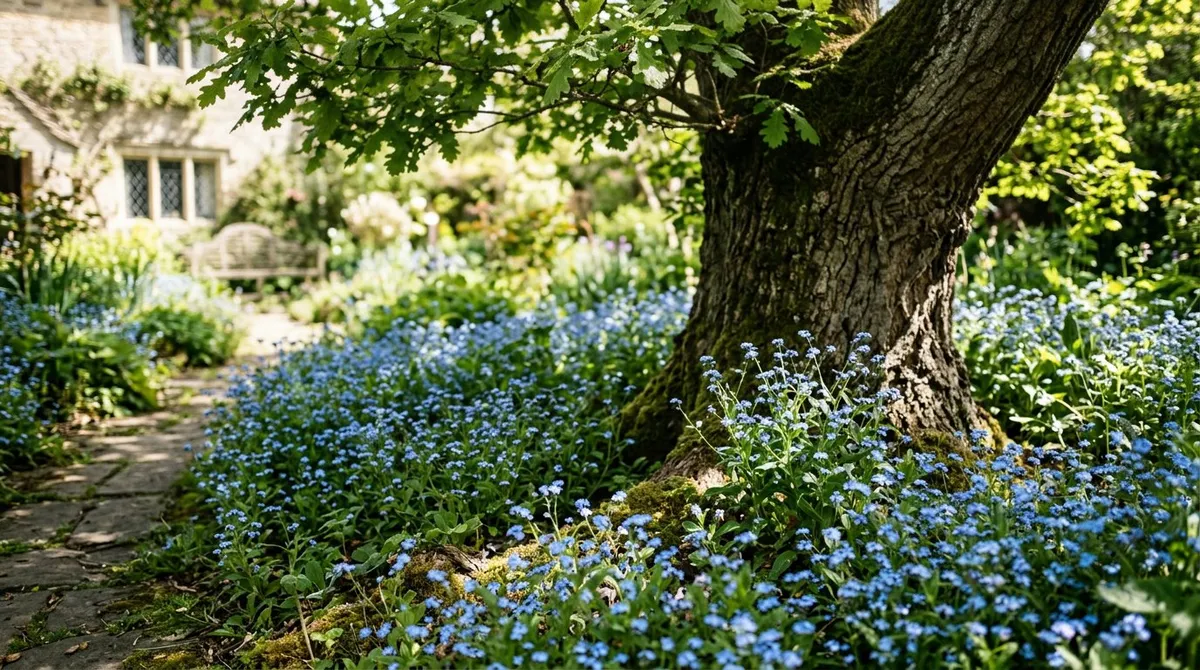
Under a big tree, the spread becomes a scented carpet. Leaf mould helps it cope with drier shade like this.
Is lily of the valley poisonous?
Yes. Every part is poisonous to people, cats and dogs. That includes the leaves, flowers, rhizomes and the bright berries. Even the water in a vase of cut stems is harmful.
- Don’t plant it where dogs, cats or small children play unsupervised.
- Pick off any berries that form if children use the garden.
- Keep vases of cut stems out of reach of pets.
- Call your vet straight away if a pet chews any part of it.
The guide to plants toxic to dogs lists other plants to watch.
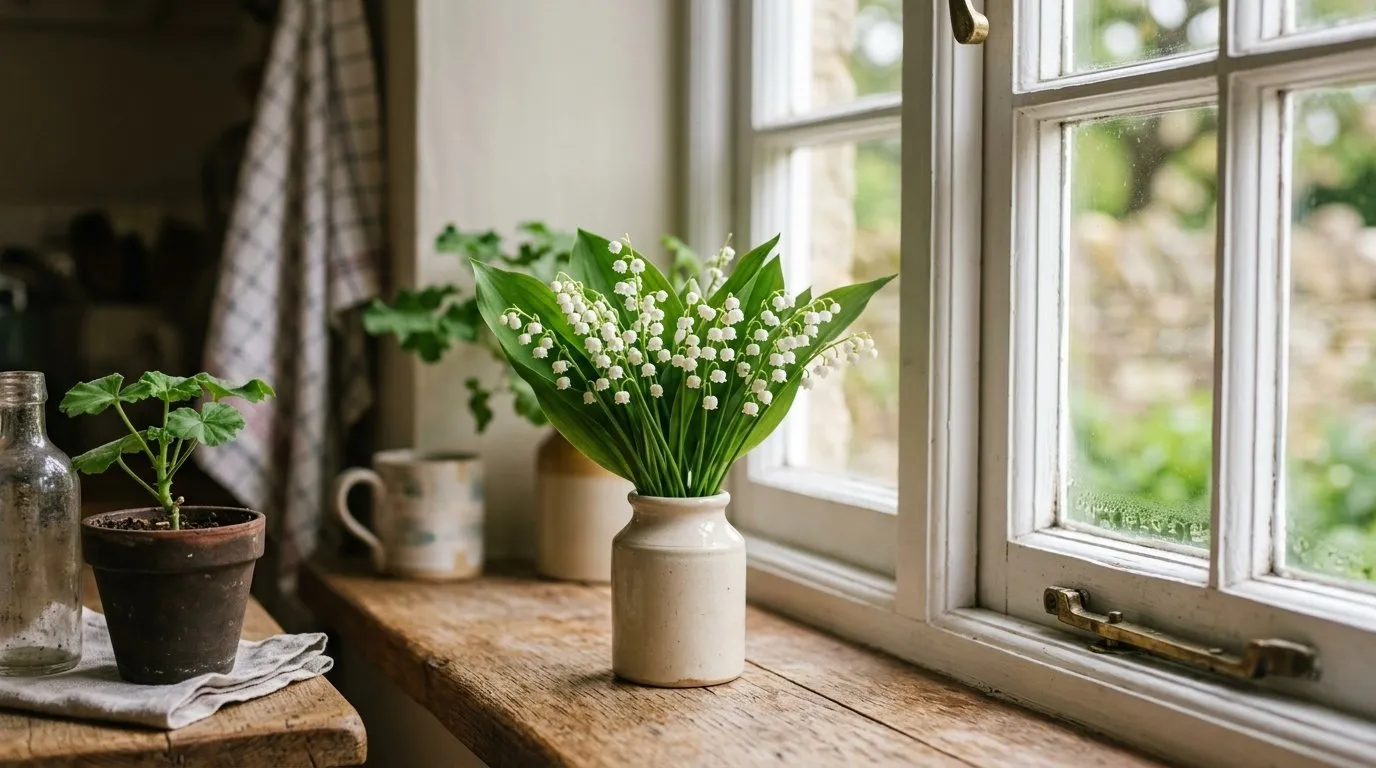
A small bunch scents the whole kitchen. Keep the jug well out of reach of pets.
Lily of the valley calendar
| Month | What to do |
|---|---|
| February | Gently rake off thick drifts of fallen leaves |
| March | New shoots appear. Start slug patrols |
| April | Keep the soil moist in dry spells. First flowers open |
| May | Main flowering. Pick a few stems for the house |
| June to August | Leave the leaves to die back naturally. Water in long droughts |
| September to October | Plant new pips. Divide crowded clumps. Mulch with leaf mould |
| November to January | Dormant. Leave fallen leaves as a natural mulch |
Good plants to grow with lily of the valley
Pair it with shade plants that flower before or after it, or have good leaves.
- Early spring: hellebores, primroses and pulmonaria
- Late spring: brunnera and bleeding heart
- Summer leaves: hostas and ferns
- Autumn: hardy cyclamen and Japanese anemones
Remember that cyclamen is also poisonous to pets, so the same care applies.
Common mistakes with lily of the valley
Planting in sun. The leaves scorch and flowering drops off. Give it shade.
Planting too deep. Pips buried deeply sulk. Keep the tips just below the surface.
Planting in a small mixed border. It soon spreads into everything else. Pick a spot where a carpet is welcome, or use a barrier.
Never dividing. Old, crowded clumps flower less. Divide them in autumn every few years.
Forgetting it’s poisonous. Think about pets and children before planting, and keep cut stems out of reach.
Frequently asked questions
When does lily of the valley flower in the UK?
It flowers in late April and May. Cool springs make the show last longer, while a warm spell hurries it along. Gardens in the north usually flower a little later than those in the south.
Is lily of the valley poisonous to dogs?
Yes, it’s poisonous to dogs, cats and people. Every part contains compounds that affect the heart, including the red berries and the water in a vase of cut stems. Call your vet straight away if a pet chews any part of it.
How do you plant lily of the valley pips?
Plant pips in autumn, with the tips just below the soil. Choose a shady spot with moist soil improved with leaf mould. Space them about 10cm apart, spreading the roots out, then water well and mulch. They may take a year to settle before flowering well.
Does lily of the valley spread?
Yes, it spreads steadily by underground rhizomes. In a spot it likes, it makes a dense carpet that can swamp small neighbours. Plant it where ground cover is welcome, or sink a deep barrier around the bed to hold it back.
Why is my lily of the valley not flowering?
Crowded old clumps are the usual cause. Lift and divide them in autumn, replanting the plumpest pips in refreshed soil. Too much sun, dry soil and newly planted pips that are still settling in can also mean leaves but no flowers.
Can lily of the valley grow in full shade?
Yes, it’s happy in full shade. Dappled shade under deciduous trees suits it best. It copes with drier shade once established, as long as the soil is enriched with leaf mould. Hot, full sun scorches the leaves.
How do I stop slugs eating lily of the valley?
Protect the new shoots in early spring, when slugs do most damage. Go out with a torch on damp evenings and pick them off. Beer traps and a biological nematode treatment in spring also help. Established clumps usually shrug off a little nibbling.
Planning a whole shady bed? Our guide to the best plants for shade has plenty more to grow alongside, or browse all our plant guides.
Our team produces practical UK gardening guidance from source research, contributor records and established horticultural practice. Editorial standards are overseen by Matt W.