
Key takeaways
- Plant in moist, well-drained soil in part shade or gentle sun
- Water new plants in dry spells until they settle in
- Use pots with drainage holes and peat-free compost
- Check potted primroses for vine weevil grubs in the roots
- Divide crowded clumps after flowering for free plants
- Never dig up primroses from the wild
Primroses love moist soil that drains well, in part shade or gentle sun. Their low rosettes look lovely along border edges, under shrubs, in informal grass and in pots. The main trick is keeping the roots cool and moist without leaving the crown sitting in water.
The wild primrose, Primula vulgaris, is a British native and very hardy. The RHS plant page has more detail. Garden centres also sell bright polyanthus and lots of other primulas, so check the label to see what you’re buying.
Primrose or polyanthus?
Wild primroses have single flowers on short stalks above crinkly leaves. Polyanthus carry a bunch of flowers on a taller central stem. Both do well in UK gardens.
Choose wild primroses for a natural, woodland look. Pick polyanthus for bold blocks of colour in pots and bedding. When buying, look for firm leaves with no grey mould or collapsed centres.
Not every primula wants the same care. Candelabra primulas like boggy ground, while auriculas prefer something quite different. Our guide to growing auriculas covers those.
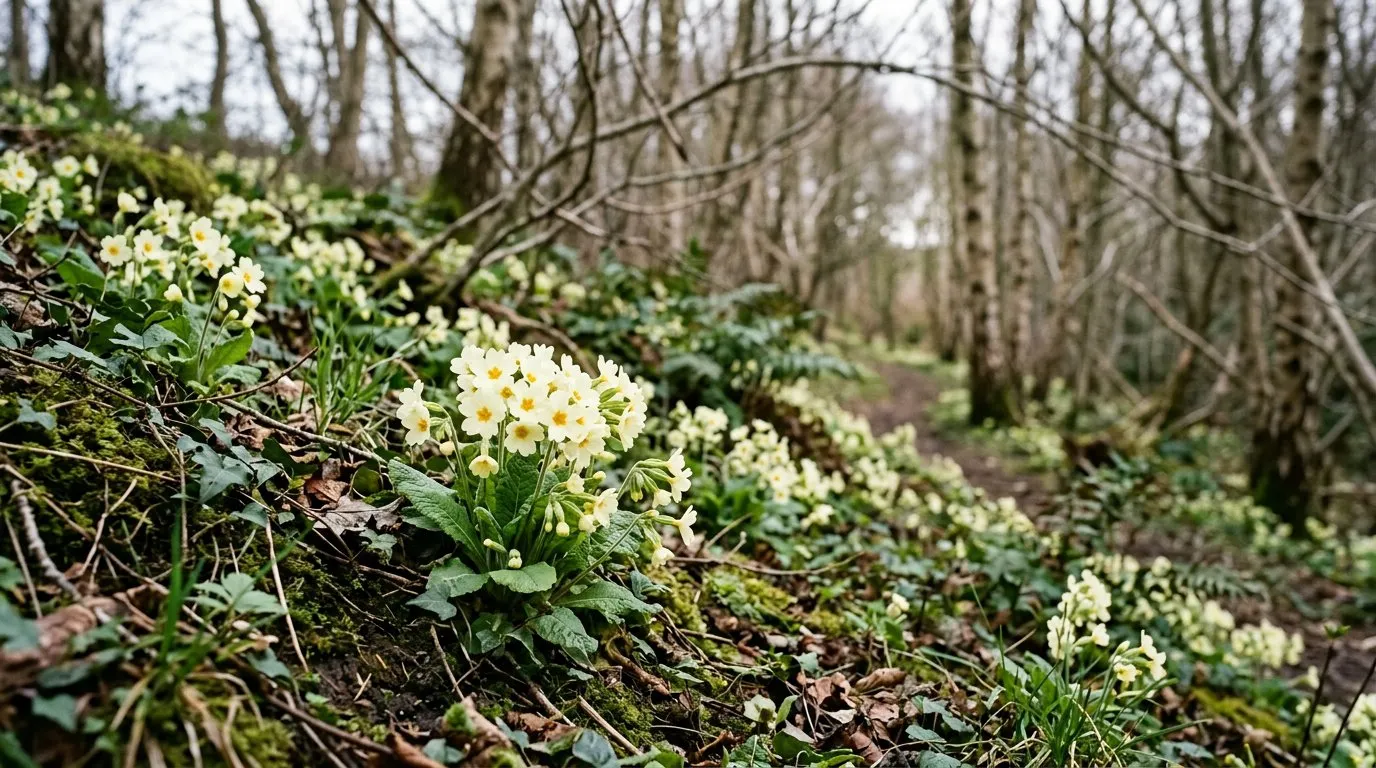
Where should you plant primroses?
Pick a spot with soil that holds moisture but doesn’t stay soggy. Part shade under deciduous trees and shrubs is perfect. Spring sun reaches the plants while the branches are bare, then summer leaves keep them cool.
Primroses can take gentle sun if the soil stays moist. A hot, south-facing border is usually too dry. Deep shade means fewer flowers.
Good spots include:
- the front of a mixed border
- under a deciduous hedge
- beside a path that gets afternoon shade
- a pot in light shade
- informal grass that isn’t mown too early
- the cool edge of a woodland-style bed
If the soil stays wet for days after rain, improve the drainage or pick another spot. Sitting in winter wet can rot the crown.
For planting partners, see our best plants for shade. Hellebores, pulmonaria and ferns all suit the same style.
How to prepare the soil
Clear weeds and loosen hard ground. On poor soil, mix in garden compost or leaf mould across the whole area, not just in the planting hole.
Keep mulch off the crown, the point where the leaves meet the roots. Spread it around the plant and leave the centre open.
Sandy soil likes regular top-ups of compost. On heavy clay, only dig when it’s neither soaked nor baked hard. If it’s sticking to your spade, leave it for another day.
How to plant primroses
Planting pot-grown primroses is easy:
- Water the pot and let it drain.
- Dig a hole as deep as the root ball and a bit wider.
- Slide the plant out without pulling on the leaves.
- Gently loosen any roots circling the outside.
- Set the crown level with the soil around it.
- Fill in, firm gently and water well.
- Add a thin mulch, keeping it off the crown.
Space plants as the label suggests. Crowding gives quick colour but less air. A bit more room lets clumps fill out naturally.
Plant in cool, damp weather if you can. Pot plants can go out any time the soil is workable, but hot, dry weather means more watering. Avoid frozen or waterlogged ground.
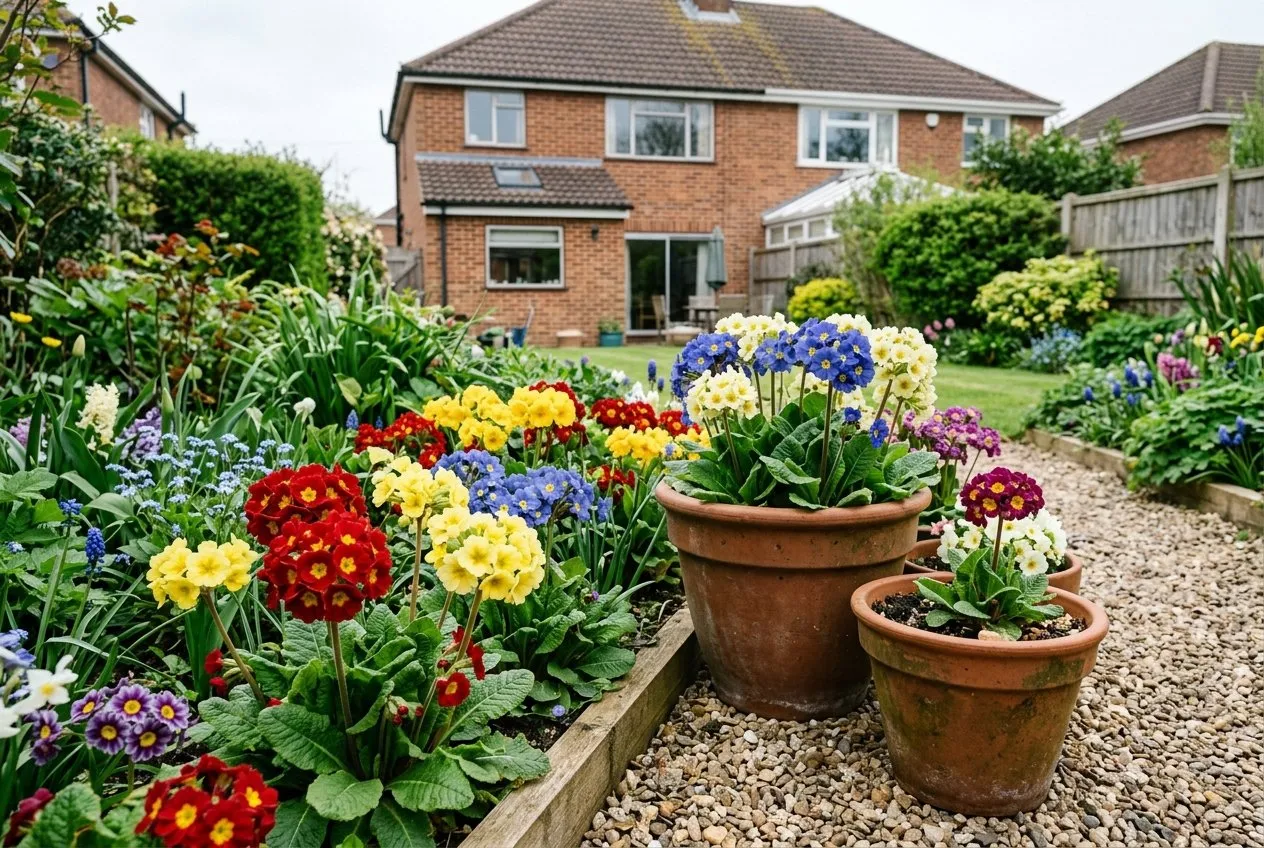
Watering and feeding
Water new plants in dry spells until they’ve settled. Water the soil rather than the flowers and leaves. Morning is best, so any splashes dry during the day.
Established primroses still like moisture in spring. In a dry summer they may look tatty or die back a little. Don’t drown a resting clump trying to get new leaves.
Garden plants in decent soil rarely need feeding. A light spring mulch is plenty. Too much feed gives soft leaves and fewer flowers.
Pots dry out faster. Water before the compost dries right out, and let the extra drain away. Empty saucers after a lot of rain.
Growing primroses in pots
Choose a pot with plenty of drainage holes and fill it with fresh peat-free multipurpose or soil-based compost. Set the crown level with the compost, leaving space below the rim for watering.
Primroses look great on windowsills, steps and tables with morning sun or bright shade. Keep them out of drying wind and hot afternoon sun. Lots of small pots dry out faster than one big one.
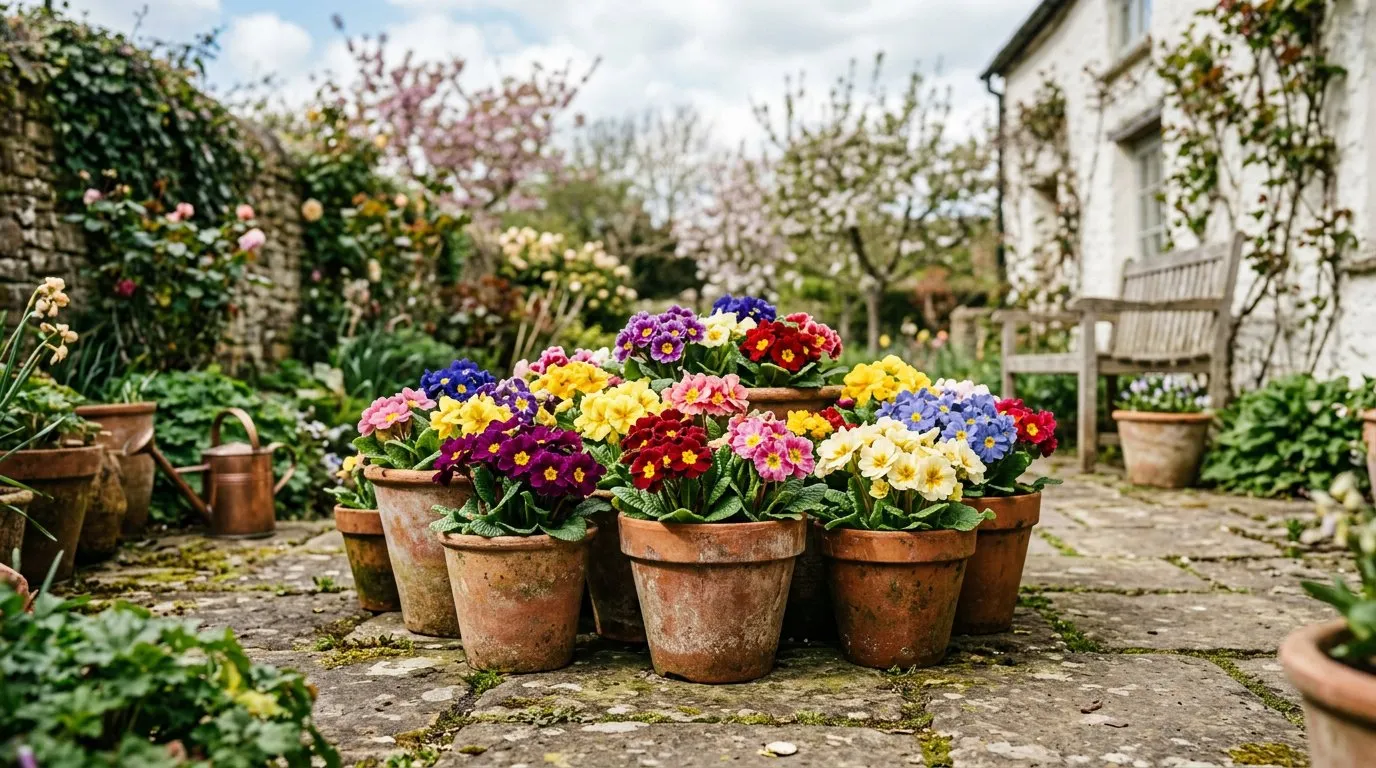
After flowering, decide whether to keep them. Good garden types can go into a border. If they stay in pots, freshen up the compost and check the roots for pests.
Little gift pots dry out quickly. Either repot them or plant them out when the weather suits.
Deadheading and seasonal care
Snip off faded flower stems right at the base. Pull gently only if they come away easily. Otherwise use clean snips, taking care not to damage new leaves.
Remove yellow or diseased leaves but keep the healthy ones, as they feed the plant after flowering. Clear fallen bits from crowded pots so air can move.
In autumn, rake off thick piles of leaves that smother the crowns. A light layer of leaf mould around them is fine, but wet leaves on top can cause rot.
In winter, check pots after long spells of rain. Raise them on pot feet if the holes are blocked against paving. Water sparingly in dry spells when the compost isn’t frozen.
How to propagate primroses
Garden primroses can be divided when the clumps get crowded, or grown from seed. Division gives you copies of the plant you have. Seed can give some surprises.
Dividing a garden clump
Divide healthy clumps after flowering, while the soil is cool and moist. Water the plant the day before if it’s dry.
- Lift the clump with a fork, keeping as many roots as you can.
- Pull or cut it into pieces, each with leaves and good roots.
- Throw away any rotten or weak bits.
- Replant the pieces at the same depth as before.
- Water them in and don’t let them dry out.
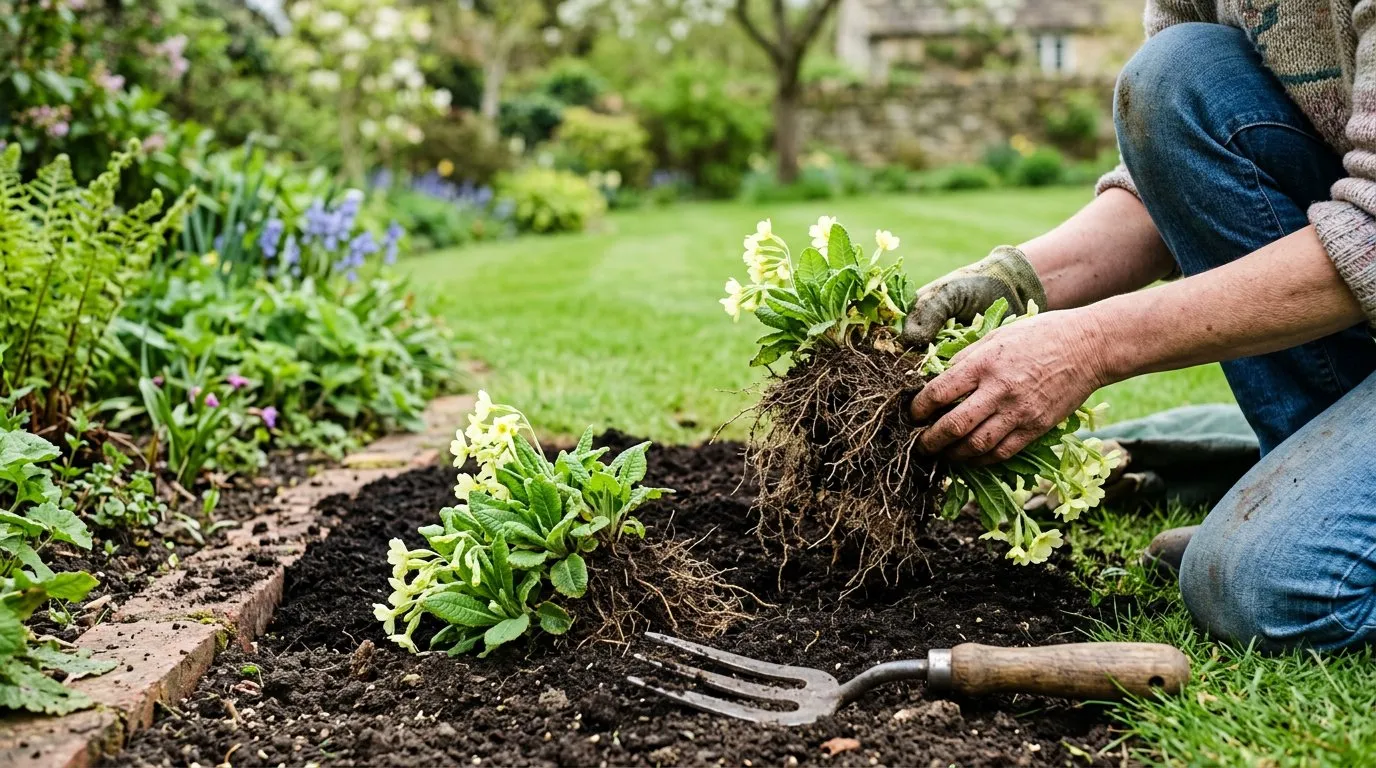
Only divide plants from your own garden, or with the owner’s permission. Never take plants from the countryside.
Growing from seed
Different primulas need slightly different treatment, so follow the instructions on the seed packet. Seedlings from garden hybrids may not look like their parent, so keep labels.
Use clean pots and fresh seed compost. Water from below or with a fine rose. Be patient, as seeds can come up unevenly.
Common primrose problems
Most problems come down to poor drainage, drought, crowding or pests in pots. Check the roots as well as the leaves.
Vine weevil
Adult vine weevils nibble notches in leaf edges. Their creamy grubs eat the roots, especially in pots. A badly hit plant wilts and may lift right out of the compost.
Tip out a struggling pot and look at the roots. Bin the affected compost and wash the pot. Our vine weevil treatment guide explains how to spot and control them.
Slugs and snails
Slugs and snails love soft new leaves and flowers. Check under pots and boards and in dense foliage. Remove their hiding places and use wildlife-friendly controls.
Grey mould and leaf spots
Crowded, damp plants don’t get enough air. Remove badly affected leaves and old flowers, and water the compost rather than the leaves. Clean your snips afterwards.
Plants wilt despite wet compost
Roots that are always wet can stop taking up water. Check for blocked drainage holes, rotten roots and vine weevil grubs. Moving the pot into shade won’t fix rotten roots.
Can you move wild primroses?
No, leave wild primroses where they are. Under the Wildlife and Countryside Act 1981, it’s against the law to uproot a wild plant without permission.
The easy answer is to buy nursery-grown plants or divide your own. Don’t take roots, divisions or cuttings from verges, woods or anyone else’s land.
Planting primroses in a natural display
Small, scattered groups look more natural than a straight row. Plant them near paths where you can enjoy the low flowers. Leave room for later perennials to come up.
Under deciduous shrubs, mix primroses with spring bulbs and shade-loving foliage plants. Plant into natural gaps rather than digging big holes through tree roots.
In grass, wait to mow until the primrose leaves have had time to feed the plant. Mark small clumps so you don’t mow them by mistake, and don’t use lawn weedkillers or feeds around them.
Primroses reward a good spot and steady moisture more than fussing. Start with healthy nursery plants, keep the crown clear and keep an eye on potted roots for vine weevil.
Find more UK plant guides or carry on with our guide to growing hellebores.
Frequently asked questions
Where is the best place to plant primroses?
Choose moist, well-drained soil in part shade or gentle sun. Under deciduous shrubs is ideal. Avoid ground that stays soggy or gets very dry in summer.
When should I plant primroses in the UK?
Plant pot-grown primroses whenever the soil isn’t frozen or waterlogged. Cool, damp weather is easiest, as the plants settle faster and need less watering.
Can primroses grow in pots?
Yes, primroses grow well in pots with drainage holes. Use peat-free compost and water before the compost dries out completely.
How do I propagate garden primroses?
Divide crowded clumps after flowering, or grow them from seed. Keep new divisions watered until they’ve made fresh roots.
Can I dig up wild primroses?
No, don’t dig up wild primroses. It’s against the law without the landowner’s permission. Buy nursery-grown plants, or divide primroses already growing in your garden.
Our team produces practical UK gardening guidance from source research, contributor records and established horticultural practice. Editorial standards are overseen by Matt W.


