Key takeaways
- Grow auriculas in small clay pots of loam-based compost mixed with plenty of grit
- They flower in April and May and dislike summer heat and wet compost
- Show and Double types have white farina that rain spoils, so keep them under cover in flower
- Water from below into a tray and keep water off the leaves and flowers
- Vine weevil grubs are the main pest; check the roots every time you repot
- Pull off rooted offsets after flowering to make new plants of the same variety
Auriculas are the jewels of the primula family, with velvety flowers in rich colours, often with a white-dusted centre. Growing them well comes down to three things: grit, clay pots and keeping them cool.
Primula auricula comes from European mountains, not woodland like the common primrose. That’s why it wants sharp drainage, fresh air and careful watering. Get those right and your plants will keep going for many years.
How auriculas differ from primroses
Auriculas and primroses are cousins, but they like opposite conditions. The common primrose is a woodland plant that enjoys moist, rich soil in dappled shade. The guide to growing primroses covers that approach.
Auriculas grow wild in gritty pockets on limestone mountains. They hate heavy, wet soil and summer warmth. A primrose shrugs off a damp border. An auricula in the same spot can rot at the crown. For the wider family, see the guide to primulas and primroses.
The four auricula classes
Auriculas come in four main classes. The class tells you how much shelter a plant needs, so it’s worth checking before you buy.
- Show auriculas have a ring of white paste round the centre, then a band of colour. Some have green, grey or white edges. They need a roof over them in flower.
- Alpine auriculas have a clean gold or cream centre with no paste. They cope better outside but still look best with a little shelter.
- Border auriculas are tough, often scented garden plants. They grow happily in a well-drained bed or trough.
- Double auriculas have many layers of petals. Treat them like Show types.
| Class | White paste centre | Shelter in flower | Best for |
|---|---|---|---|
| Show | Yes | Yes, essential | Collectors, display |
| Double | Sometimes | Yes | Display under cover |
| Alpine | No | Helpful, not essential | Cold frame, porch |
| Border | No | No | Open garden, troughs |

The white ring on a Show auricula is farina. One heavy shower can wash it away.
What farina is and how to protect it
Farina is a fine white meal the plant makes. It forms the paste centre of Show auriculas and often dusts the leaves with a silvery bloom. It’s harmless, and it’s a big part of their charm.
Rain, splashes and fingers all spoil it. So grow farina types under a roof while they flower: a cold frame, a shelf under the eaves, an unheated greenhouse or a porch. Indoor windowsills are too warm and dry.
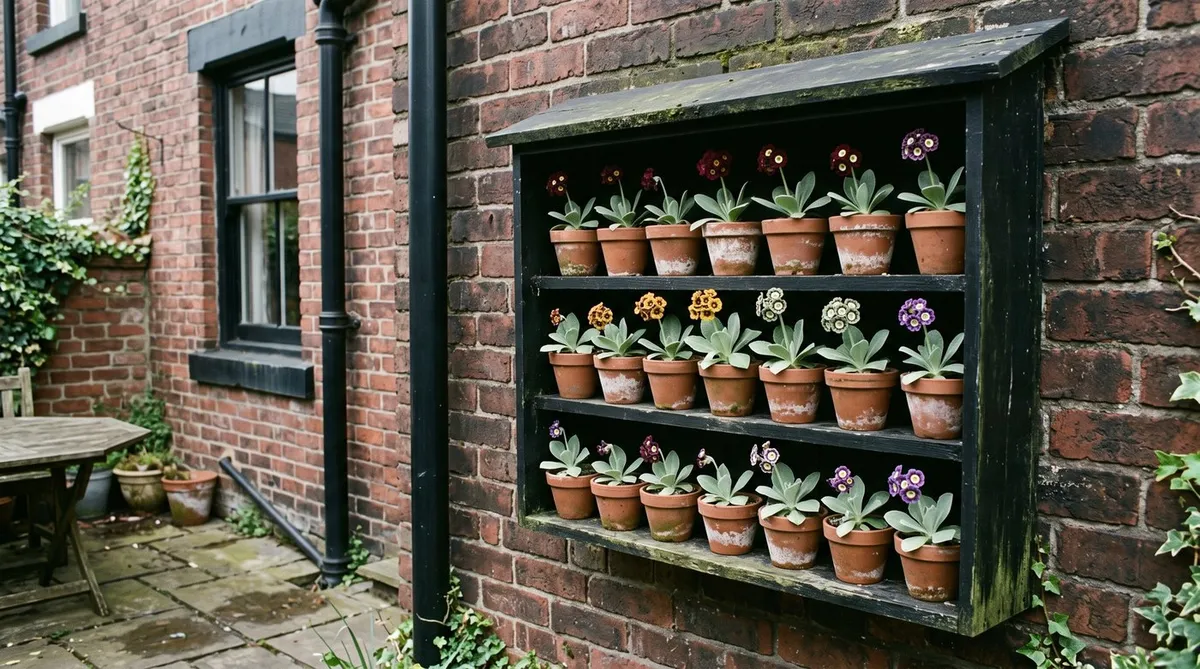
That’s the reason for the traditional auricula theatre, a set of tiered shelves with a roof and a dark back. It keeps the rain off and shows the flowers at eye level. You don’t need one. Any bright, cool, roofed spot with good airflow will do. The guide to cold frame gardening shows another easy way to shelter them.
Gardener’s tip: Never mist or hose an auricula in flower. If a Show plant gets rained on, don’t wipe it. Let it dry and move it under cover.
Compost and pots for auriculas
Drainage is everything. The compost must let water run straight through so the roots never sit wet. Peat-based multipurpose compost holds too much water and is the most common reason beginners lose plants.
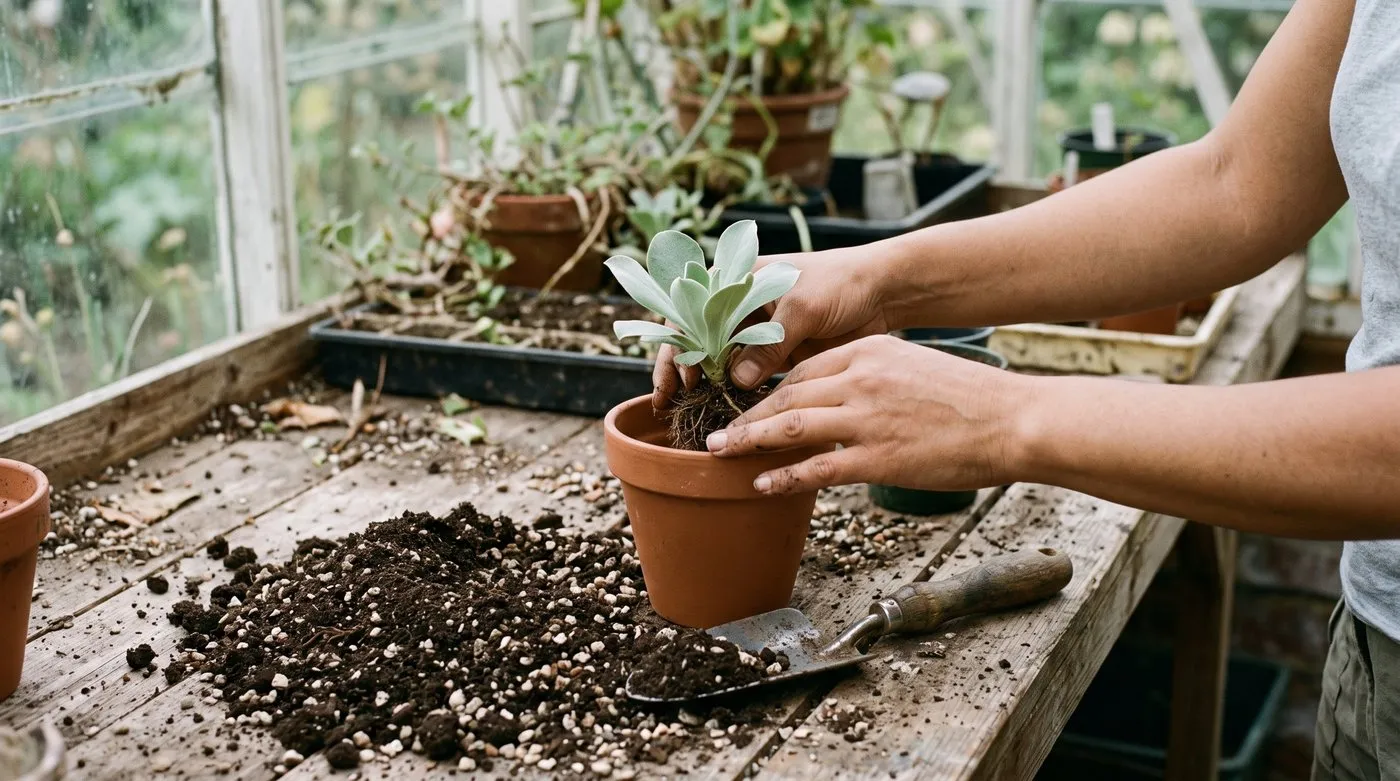
Repot after flowering into fresh gritty compost. Water should run straight through it.
Mix a loam-based compost such as John Innes No. 2 with plenty of horticultural grit, roughly two parts compost to one part grit. Some growers add a little perlite too. When you water, it should drain within seconds. If water pools on top, add more grit.
Clay pots suit auriculas better than plastic, because they breathe and dry evenly. A pot about 9-13cm across suits one plant. Auriculas like a snug pot, so don’t over-pot them.
Repot every year after flowering, in June or July. Shake off the old compost, trim off dead roots and lower leaves, and replant in fresh gritty mix. It’s also the perfect time to check for vine weevil.
Watering and feeding auriculas
Water from below. Stand the pot in a tray of water for ten minutes or so, then lift it out to drain. This keeps water off the rosette and farina. Never leave pots sitting in water.

Stand pots in a tray for ten minutes, then lift them out. The leaves and flowers stay dry.
In spring and autumn, water when the top of the compost feels dry. In summer, plants rest. Cut back on watering and keep them cool. In winter, keep the compost barely moist, as cold, wet roots soon rot.
Feed lightly from March to May with a half-strength liquid tomato feed every two or three weeks. Stop feeding in high summer.
Keeping auriculas cool in summer
Auriculas are mountain plants and dislike British summer heat. Hot afternoon sun scorches the leaves, and warm, still air brings rot and mildew.
From June to September, move pots somewhere bright but shaded: a north-facing wall, under a bench or in a shaded cold frame. Keep air moving round them. A hot greenhouse or sunny windowsill is the worst place in summer.

Border auriculas are tough enough for a well-drained bed and carry little farina to spoil.
Vine weevil: the main auricula pest
Vine weevil grubs are the auricula grower’s worst enemy. The adult beetle notches leaf edges at night, but the grubs do the real harm. These white, C-shaped grubs eat the roots, and often the first sign is a plant that wilts and lifts out with no roots left.
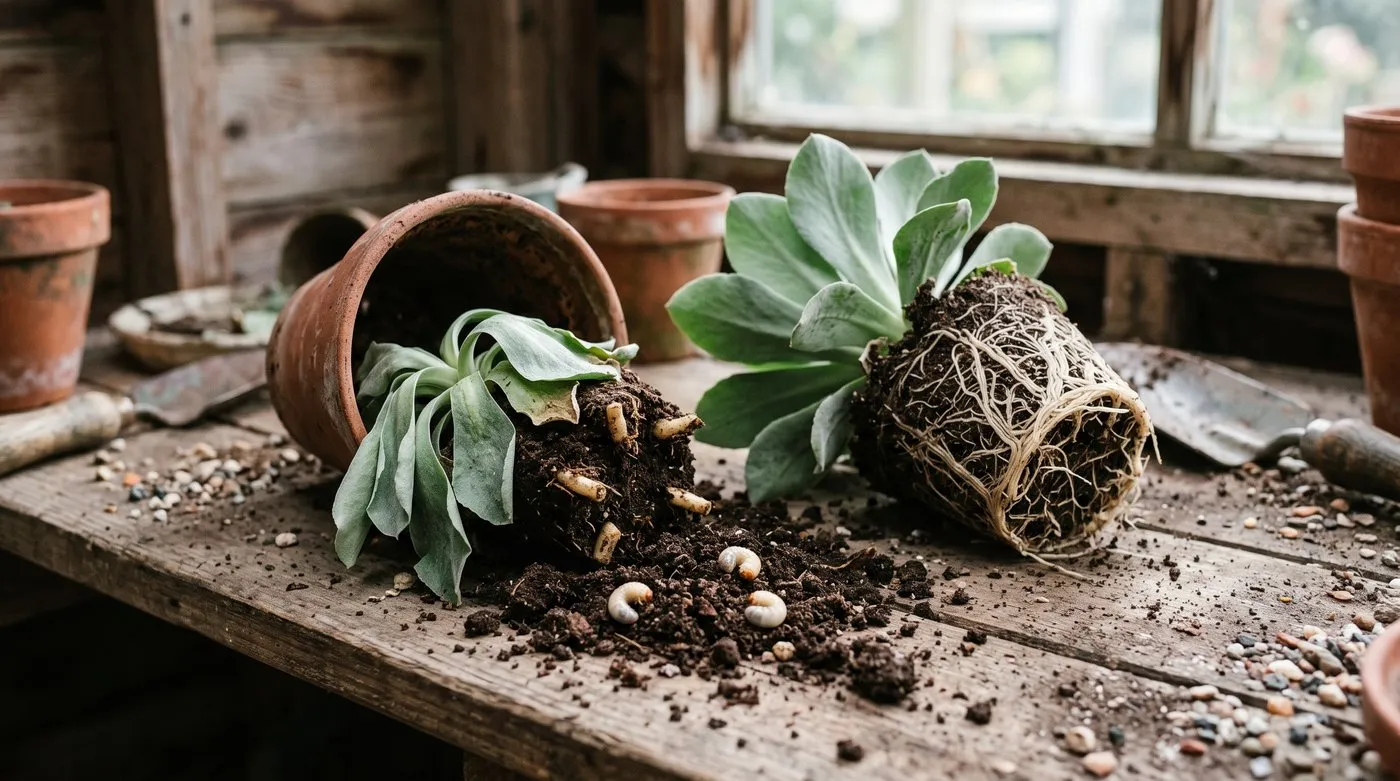
Roots eaten away and C-shaped grubs in the compost are the tell-tale signs of vine weevil.
Here’s how to keep them in check:
- Check at every repot. Tip plants out and pick off any grubs you find.
- Use nematodes. A biological drench of nematodes kills grubs in the compost. Apply in late summer and again in spring, when the compost is warm enough for the product you buy.
- Hunt adults. Look for them with a torch on mild evenings and pick them off.
- Keep it gritty. Fresh, gritty compost and clean pots make life harder for them.
If you need more help, use an approved vine weevil product for pot plants, following the label. The vine weevil treatment guide covers all the options, and the guide to nematode biological control explains how to apply them.
Warning: Grubs feed in autumn and early spring while the plant still looks fine. Don’t wait for wilting. Check the roots whenever you repot.
How to make more auriculas from offsets
Auriculas make offsets, small rosettes round the base of the parent. Growing these on is the easiest way to get more plants, and they come true to the parent. Seed doesn’t.
The best time is straight after flowering, when you repot. Tip the plant out, brush off the compost and gently pull the offsets away. Each should have a few roots of its own. Pot it into gritty compost in a small clay pot.
If an offset breaks off with no roots, treat it as a cutting. Trim the base cleanly and pot it into gritty compost. Keep it shaded and just moist until it roots.

Each offset has its own little roots, so it’s ready to pot up straight away.
Auricula calendar
| Month | What to do |
|---|---|
| January to February | Keep compost barely moist. Ventilate cold frames on mild days. Pick off dead leaves |
| March | Growth picks up. Start light watering from below and a weak feed. Move Show types under cover |
| April to May | Flowering. Keep farina types dry. Remove spent flower stems |
| June to July | Repot into fresh gritty mix. Pot up offsets. Check for grubs. Move pots into shade |
| August | Keep cool and airy. Water lightly. Apply nematodes against vine weevil |
| September to October | Root growth restarts. Check for grubs. Move pots under cover for winter |
| November to December | Keep barely moist and well ventilated. Protect from long spells of wet |
Common mistakes with auriculas
- Peat-based compost. It stays soggy and rots the crown. Use a gritty, loam-based mix.
- Watering over the top. It strips farina and invites rot. Water from below.
- Leaving Show types in the rain. Move them under cover before the flowers open.
- Growing them too warm. A hot greenhouse or sunny windowsill bakes them. Keep them cool in summer.
- Forgetting the roots. Vine weevil works out of sight. Check at every repot.
Plants to grow with auriculas
Auriculas look great with other small spring plants in pots and troughs. They flower alongside many spring bulbs, and later the trough can carry on with other alpines. Lewisia likes the same gritty compost and flowers from late spring.
For ideas on grouping small pots and troughs, see the guide to alpine container displays. Or browse more spring plants in the plants section.
Frequently asked questions
How do you grow auriculas in the UK?
Grow them in clay pots of gritty, free-draining compost. Keep them cool and bright, water from below and shade them from hot summer sun. Show and Double types need a roof over them while in flower to protect the farina.
What is the white powder on auricula flowers?
It’s farina, a natural mealy coating the plant makes. It forms the white paste centre of Show auriculas and often dusts the leaves. Rain and splashes wash it off, which is why these types are grown under cover.
Why are my auriculas dying or collapsing?
Sudden collapse is usually vine weevil grubs eating the roots. Tip the plant out and look for white, C-shaped grubs. Wet compost, especially in winter, and summer heat are the other common causes.
What are the four classes of auricula?
Show, Alpine, Border and Double. Show types have a white paste centre and need cover. Alpines have a clean gold or cream centre. Borders are tough garden plants. Doubles have many petals and are best kept under cover.
Do auriculas need full sun?
No, they prefer bright light without hot sun. Morning sun is fine, but hot afternoon sun scorches them. A north or east-facing spot or a shaded cold frame suits them in summer.
How do you propagate auriculas?
Pull off rooted offsets after flowering. These small rosettes grow around the parent and come away with their own roots. Pot each one into gritty compost in a small clay pot. They grow into copies of the parent.
When do auriculas flower in the UK?
Auriculas flower in April and May. Each plant flowers for a few weeks. A cold spring delays them, and northern gardens are often a little later than the south.
What compost do auriculas need?
A gritty, free-draining mix, not peat-based multipurpose. Mix loam-based compost such as John Innes No. 2 with plenty of horticultural grit. Water should run straight through. Soggy compost leads to rot and vine weevil trouble.
Our team produces practical UK gardening guidance from source research, contributor records and established horticultural practice. Editorial standards are overseen by Matt W.