Key takeaways
- Garden primulas fall into five groups, and each wants different soil
- Candelabra primulas and giant cowslips need wet, boggy ground, ideally by a pond
- Auriculas need gritty, free-draining compost and rot in wet soil
- Primroses, polyanthus and drumsticks like moist, well-drained soil in part shade
- Divide clumps after flowering every two or three years, and sow seed fresh
- Vine weevil grubs are the main pest, especially in pots
The secret to growing primulas is to stop thinking of them as one plant. Garden primulas fall into five groups, and each wants different soil. Get the moisture right for the group you have and primulas are some of the easiest, longest-lived spring plants around.
This guide helps you pick the right group for your garden, then covers planting, dividing and the pests to watch for. For the native primrose in detail, see our primrose growing guide.
The five primula groups UK gardeners buy
These are the primulas you’ll find on sale, and what each group needs.
| Group | Example | Flowers | Soil | Spot |
|---|---|---|---|---|
| Primroses and polyanthus | Primula vulgaris, polyanthus | February to May | Moist, well-drained | Part shade |
| Drumstick primula | Primula denticulata | March to April | Moist, well-drained | Sun or part shade |
| Candelabra primulas | P. japonica, P. bulleyana | June to July | Wet or boggy | Dappled shade |
| Giant cowslips | P. florindae, P. sikkimensis | June to August | Wet or boggy | Part shade |
| Auriculas | Primula auricula | April to May | Gritty, sharp drainage | Bright, shaded at midday |
If your garden is dry and sunny, the candelabra and giant cowslip types aren’t for you, however tempting the label. If you have a shady, damp corner where other plants rot, that’s exactly where bog primulas thrive.
Primroses and polyanthus for spring colour
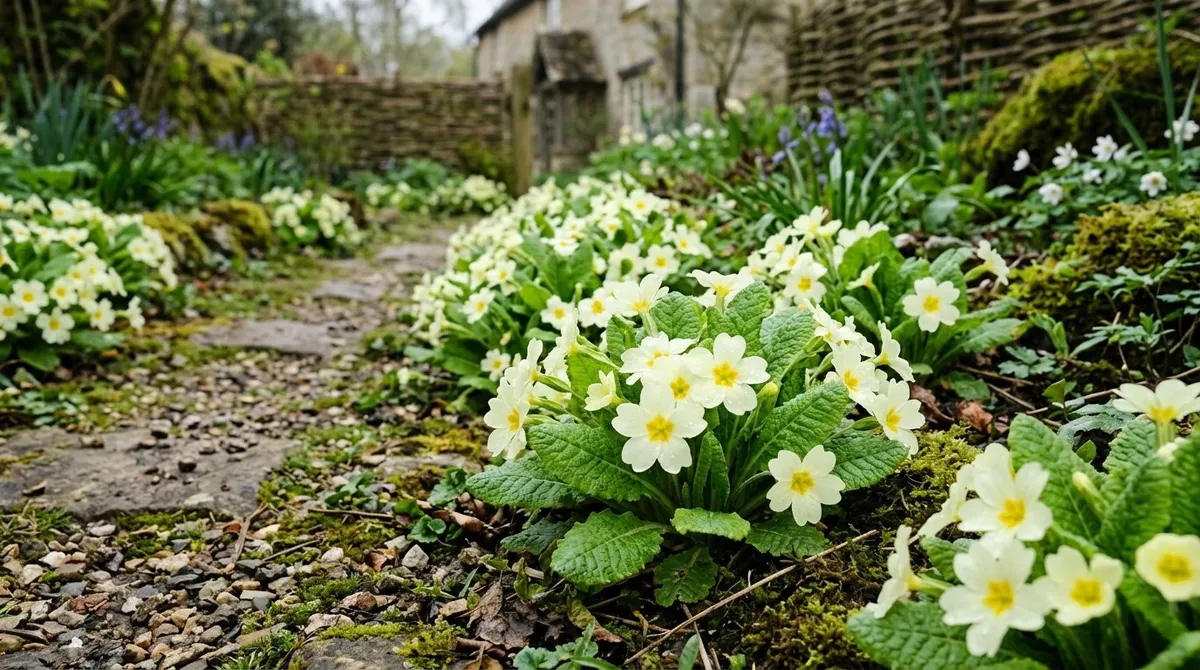
Primroses and polyanthus are the easiest primulas and the first to flower. The native primrose, Primula vulgaris, opens pale yellow flowers from February. It likes cool, moist, leafy soil in part shade, such as under deciduous shrubs.
Polyanthus came from crossing the primrose with the cowslip. They carry a whole head of flowers on one stem, in reds, yellows, blues, whites and mixes. They’re the classic spring bedding plant for pots, window boxes and border edges. They come back for years but flower best in their first few springs.
Plant both in soil improved with leaf mould or garden compost, and keep them out of hot, exposed spots. They look lovely with hellebores and early bulbs.
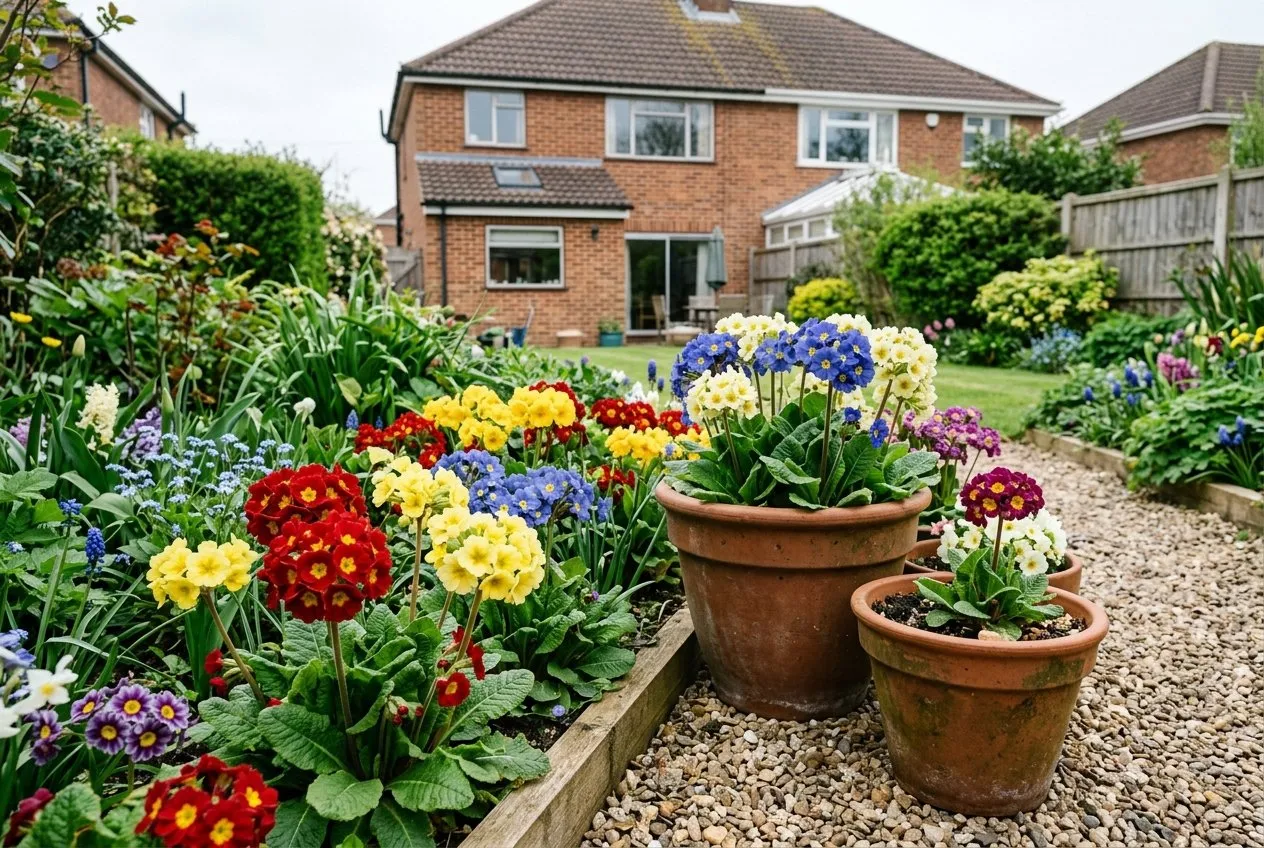
Polyanthus give bright colour in pots and borders. Keep the roots cool and moist and they flower for weeks.
Drumstick primulas for early colour
Drumstick primulas have perfect round flower heads. Primula denticulata produces a tight ball of small flowers on a stout stem, 30-45cm tall, in mauve, lilac, purple, pink or white. They open in March and April, often before the leaves are fully out.
They’re easy and reliable. Grow them in moist, rich soil in sun or part shade. They aren’t bog plants, but they hate drying out. Divide them after flowering. They can also be grown from root cuttings taken in winter.
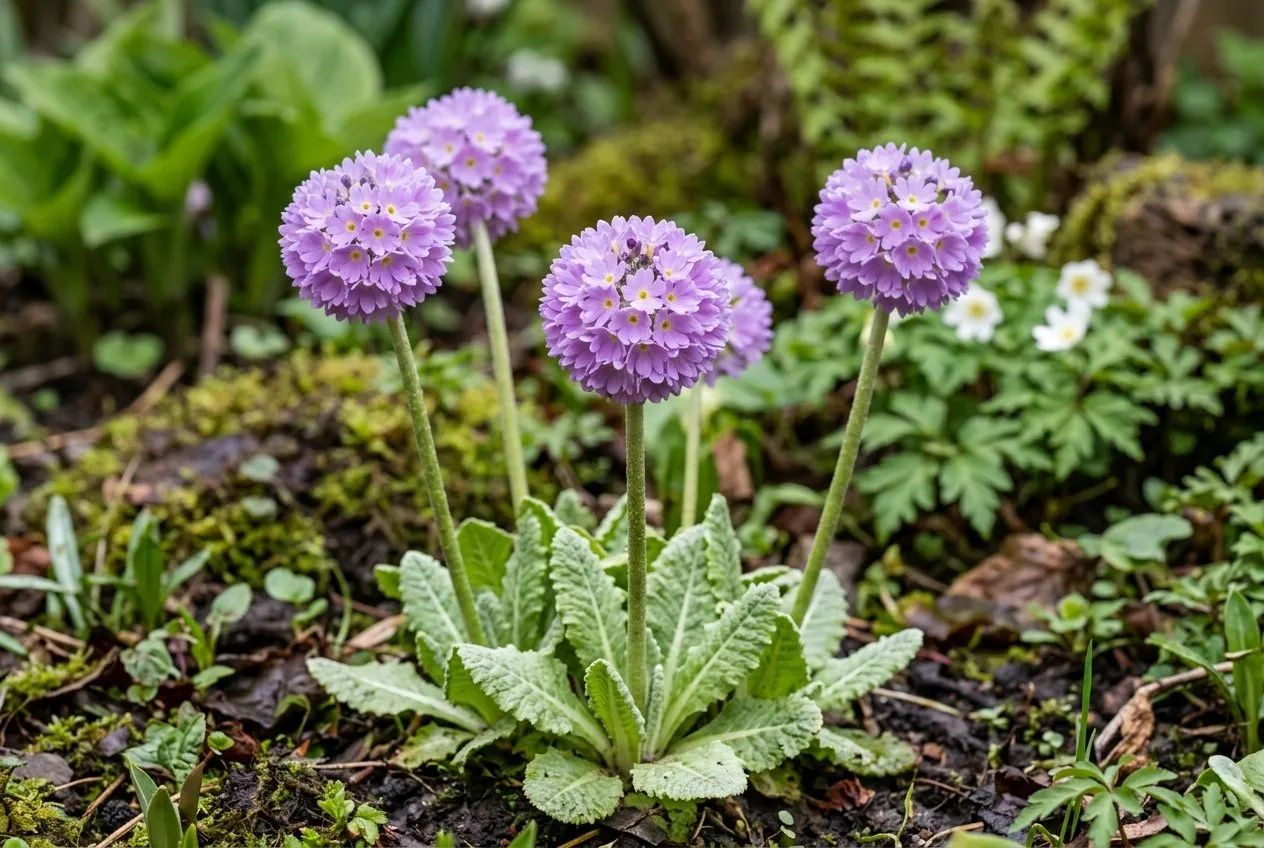
Drumstick primulas open their round heads in early spring, often before the leaves have fully grown.
Candelabra primulas for ponds and bog gardens
Candelabra primulas are tall plants for permanently wet ground. Their flowers sit in rings stacked up the stem, like the arms of a candelabra. They reach 45-90cm and flower in June and July, long after the primroses.
Good ones to look for:
- Primula bulleyana: orange and apricot tiers.
- Primula japonica: tough, in crimson, pink or white, and seeds itself freely.
- Primula pulverulenta: deep red flowers on white-dusted stems.
- Primula beesiana and the yellow Primula prolifera.
They cross with each other easily, so a mixed planting soon gives seedlings in lots of shades. A pond edge or bog garden in dappled shade suits them best.
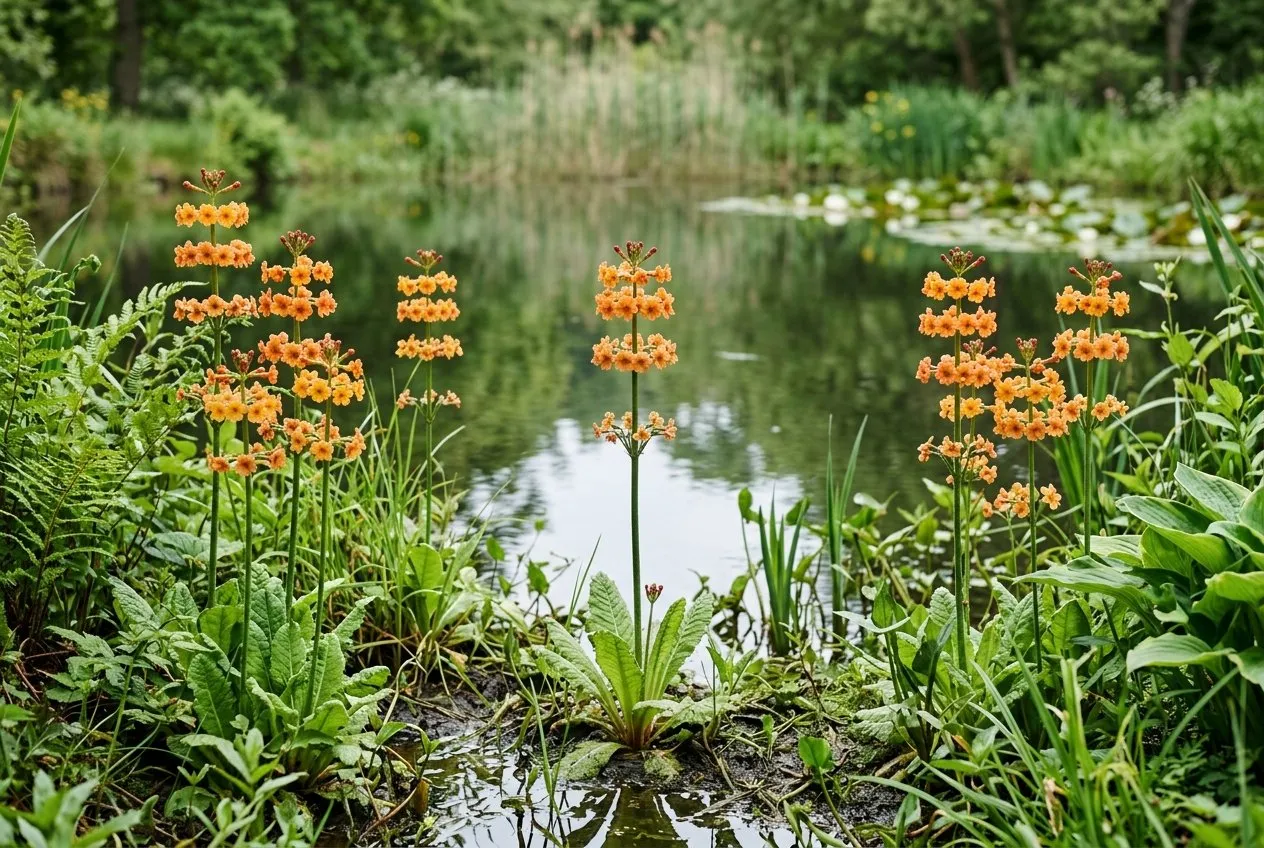
On wet ground by a pond, candelabra primulas seed themselves into colourful colonies.
Giant cowslips for late colour on wet ground
Giant cowslips are tall bog primulas for summer. Primula florindae sends up stout stems to about 1m, topped with drooping clusters of soft yellow, scented bells. It flowers from June into August, later than most primulas. Primula sikkimensis is similar but smaller, with paler yellow bells.
Both want the same conditions as candelabra primulas: rich soil that stays moist to wet, in part shade. They’re ideal by a pond or stream, and they self-seed on damp ground. Our list of plants for wet and boggy soil has more partners for these spots.
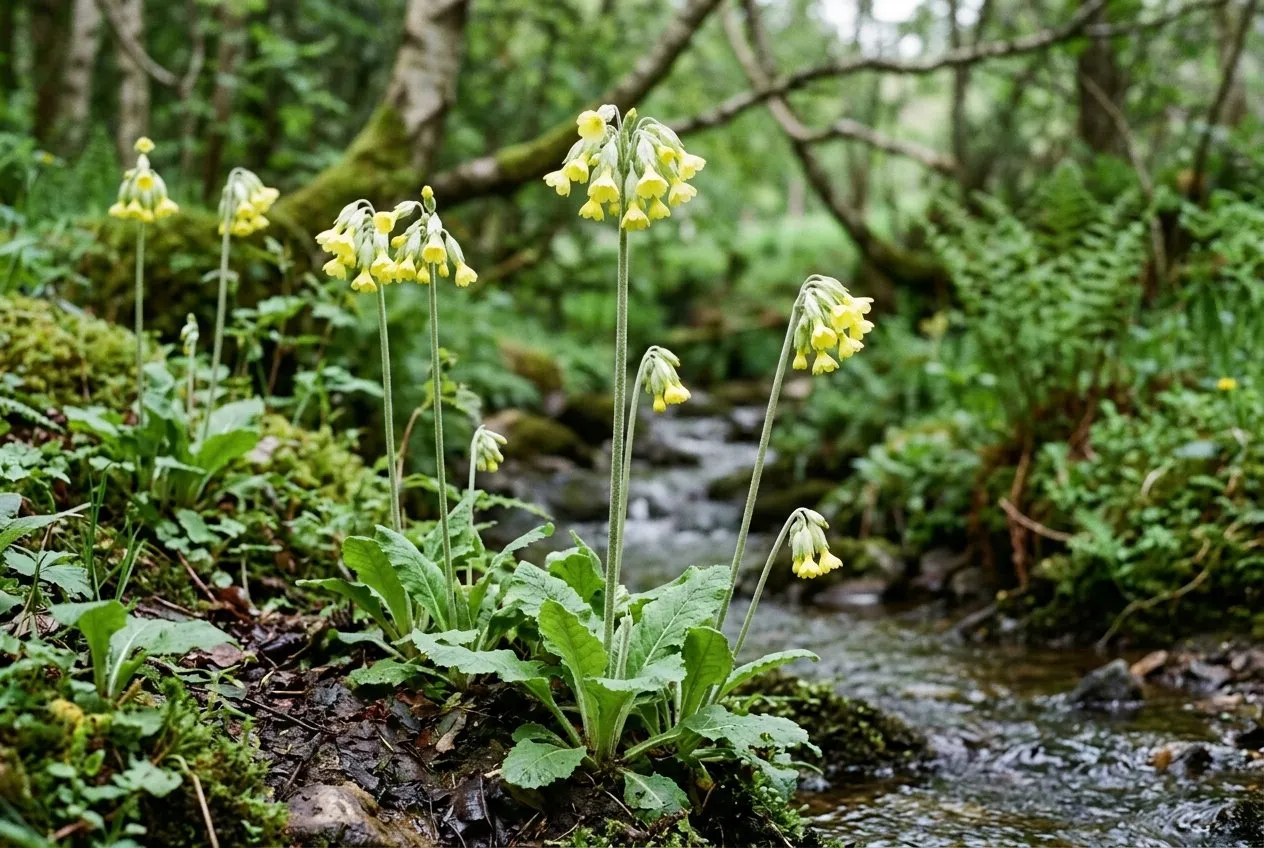
Giant cowslips carry their nodding yellow bells into summer, as long as the ground stays wet.
Auriculas: the primula for pots
Auriculas are mountain plants, so unlike the bog primulas they need sharp drainage. Their flat, round flowers are often ringed in contrasting colours, and many are dusted with a white powder called farina.
There are three main types. Show auriculas have the painted, powdery flowers and are grown under cover to keep rain off. Alpine auriculas have no farina and are tougher. Border auriculas are hardy enough for a well-drained bed outside.
Grow them in clay pots of two parts John Innes No 2 to one part horticultural grit. Give them bright light but shade from hot midday sun, and water from below. Our guide to growing auriculas in pots covers them in detail.
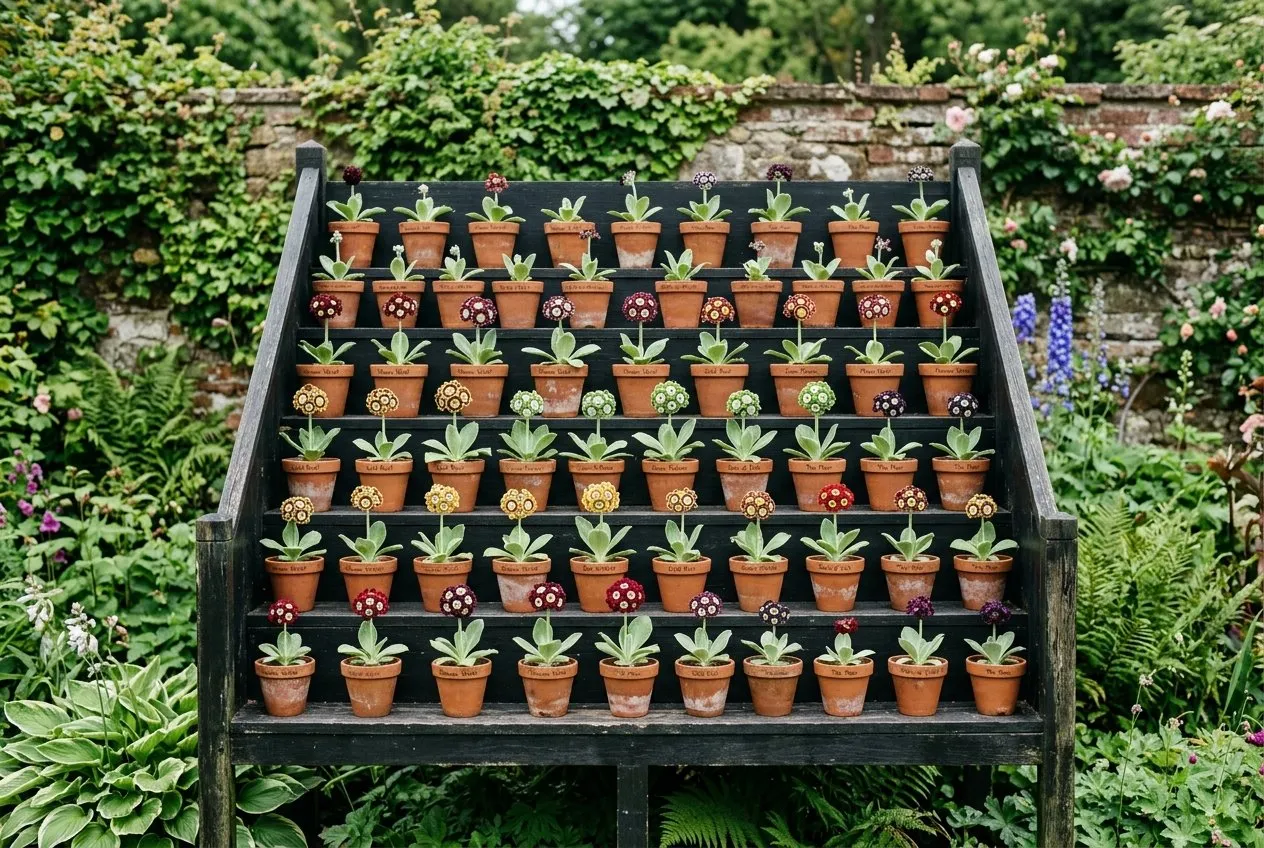
A tiered auricula theatre shows the flowers off at eye level and keeps the rain off the delicate farina.
Warning: Never plant an auricula in the same wet spot that suits a candelabra primula. The crown rots within a winter.
How to divide and grow primulas from seed
Division after flowering is the easiest way to get more primulas. Once flowering finishes, usually in May or June, lift the clump with a fork. Most primulas form separate crowns that pull apart easily. Tease them into pieces, each with roots and leaves, and replant straight away. Water them in and keep them shaded and moist while they settle.
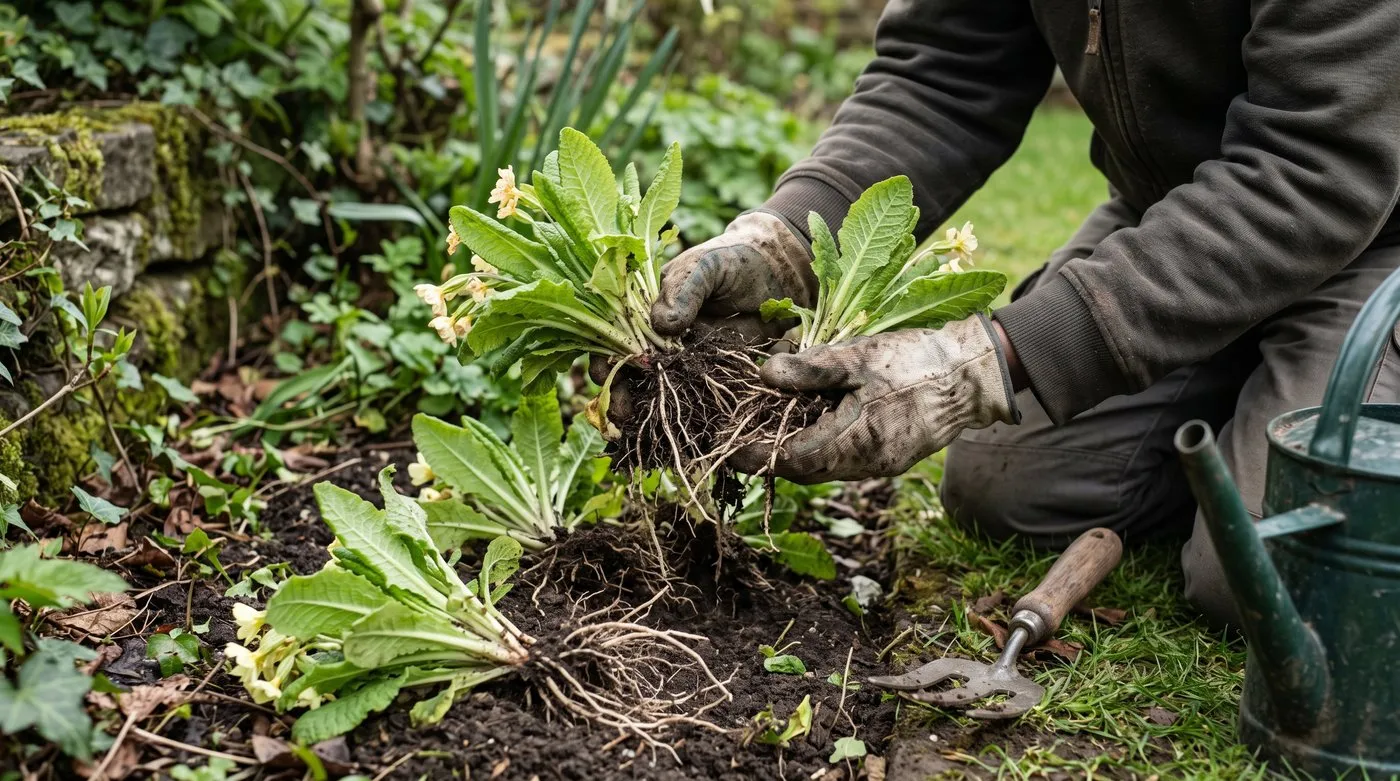
Each piece needs its own roots and leaves. Replant straight away and keep them moist while they settle.
Dividing every two or three years also refreshes tired clumps. It fits in with other perennials to divide in late spring. With auriculas, pull off the small offsets around the main rosette and pot them up instead.
Seed works best when it’s fresh. Sow it as soon as it ripens in summer. Many types need a cold spell to germinate, so leave the tray outdoors over winter and let the frost do the work. Prick out seedlings in spring.
Primula pests and problems
Three problems cause most losses.
- Vine weevil: adults nibble notches from leaf edges, but the real damage is underground. Cream, C-shaped grubs eat the roots, and the first sign is a plant that wilts and lifts with no roots. Pots suffer most. Water on biological nematodes in late summer and repot pot plants yearly. Our vine weevil guide has the full plan.
- Primula brown core: a root rot that leaves a short, dark brown core at the base of the crown. There’s no cure. Remove and bin affected plants, don’t compost them, and don’t replant primulas in the same spot.
- Slugs and snails: they love young primrose and polyanthus leaves and flowers. Protect young plants until the leaves toughen. Our guide to getting rid of slugs covers what works.
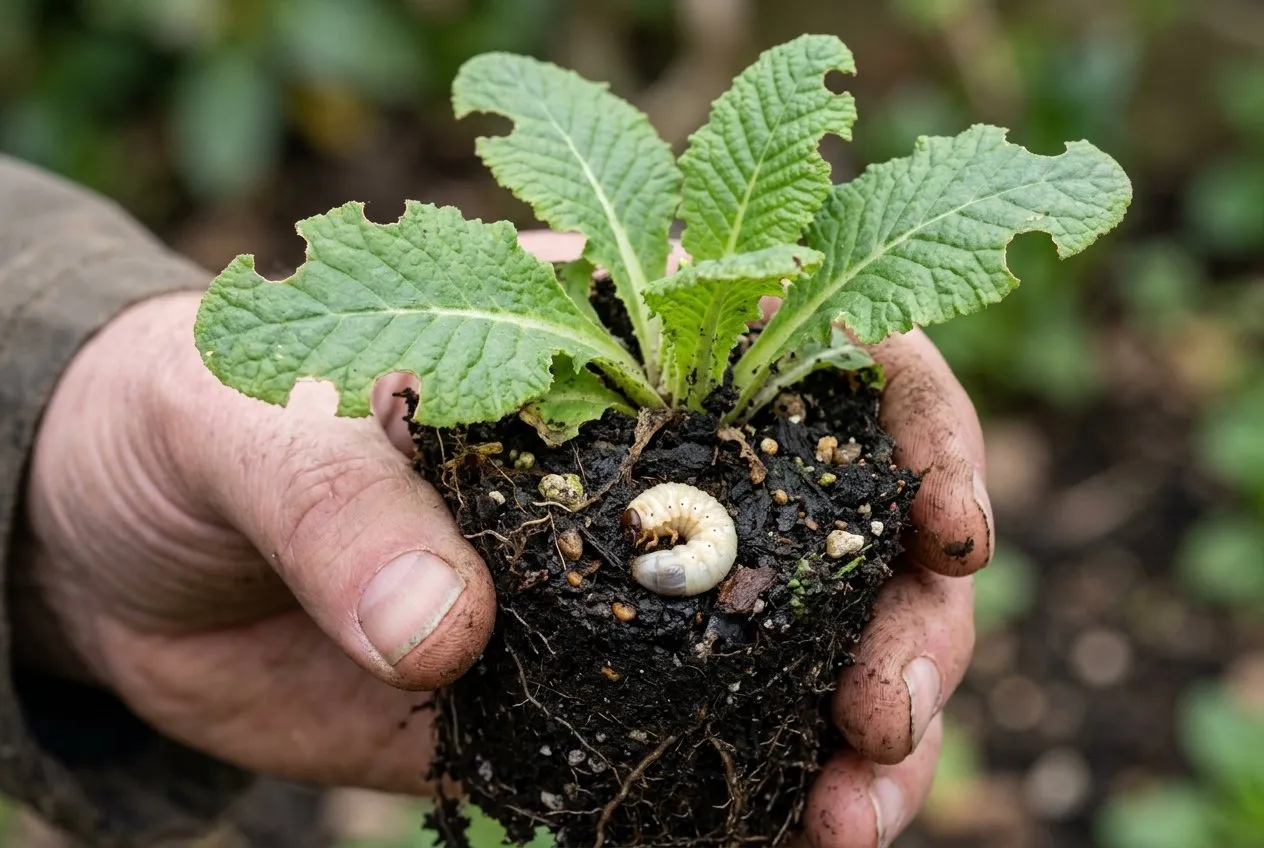
Notched leaves above and a fat cream grub below are the classic signs of vine weevil.
Can you plant supermarket primroses outside?
Yes. The bright primroses sold from January are forced primrose hybrids, grown quickly under glass. They’re hardy perennials, so there’s no need to bin them.
Keep them watered and deadheaded while they flower. If they’ve been indoors, harden them off for a week or two. Then plant them out in March or April, in moist, leafy soil in part shade, about 20-25cm apart. Many flower again the next spring.
Primula calendar
| Month | Task |
|---|---|
| January | Check potted auriculas aren’t sitting wet |
| February | Primroses start flowering. Clear leaves off crowns |
| March | Drumsticks and polyanthus open. Top-dress auriculas with gritty compost |
| April | Plant out shop primroses. Watch for vine weevil notches |
| May | Divide primroses and polyanthus as they finish |
| June | Candelabra primulas open. Keep bog plantings wet |
| July | Giant cowslips flower. Let some candelabras set seed |
| August | Sow fresh seed. Don’t let bog primulas dry out |
| September | Apply vine weevil nematodes. Pot up auricula offsets |
| October | Plant new primroses and polyanthus for spring |
| November | Move show auriculas under cover |
| December | Check pots drain freely |
Common primula mistakes
- Choosing the wrong group for your soil. A candelabra in a dry border dies, and an auricula in a bog rots.
- Letting bog primulas dry out in summer. If you can’t keep a spot wet from June to August, choose a different group.
- Planting auriculas in rich, wet compost. They want grit, not richness.
- Sowing old seed. Primula seed doesn’t keep well, so sow it fresh.
- Binning winter shop primroses. Plant them out instead.
For more early colour to go with your primulas, see our pick of early spring flowers, or browse the growing hub.
Frequently asked questions
What is the difference between a primula and a primrose?
A primrose is one species in the much larger primula group. The native primrose is Primula vulgaris. Polyanthus, candelabra primulas, drumsticks and auriculas are all primulas too. So every primrose is a primula, but not every primula is a primrose.
Do primulas come back every year?
Yes, most garden primulas are hardy perennials. They come back each spring in the right spot. They can fade if the soil dries out or vine weevil eats the roots. Dividing clumps every two or three years keeps them going strongly.
Where should I plant candelabra primulas?
In ground that stays damp or boggy, ideally beside a pond. Candelabra primulas such as Primula japonica and Primula bulleyana need soil that never dries out. A pond edge or bog garden in dappled shade is ideal. In a dry, sunny border they scorch and collapse.
How do I stop vine weevil killing my primulas?
Use nematodes in late summer and check pot plants each year. Vine weevil grubs eat primula roots and do most damage in pots. Look for cream, C-shaped grubs in the compost of any wilting plant. Water on biological nematodes in late summer while the soil is warm and moist.
Can I plant supermarket primroses in the garden?
Yes, plant them out after flowering. Winter shop primroses are hardy primrose hybrids, forced for early colour. Deadhead them, harden them off if they’ve been indoors, and plant them in moist part shade. Many settle in and flower again the next spring.
How do I propagate primulas?
Divide clumps after flowering, or sow fresh seed in summer. Lift the plant, tease it into rooted pieces and replant straight away. Seed works best sown fresh, and many types need a cold winter outdoors to germinate. Auriculas are increased from offsets.
Do primulas need sun or shade?
Most primulas prefer dappled shade and cool, moist soil. They cope with more sun only where the ground stays damp. Auriculas like bright light but need shade from hot midday sun. Deep, dry shade suits none of them.
Our team produces practical UK gardening guidance from source research, contributor records and established horticultural practice. Editorial standards are overseen by Matt W.