Key takeaways
- Silver forms such as 'Jack Frost' need shade and moist soil, or the leaves brown and crisp
- Plain green Brunnera macrophylla is the tough one and copes with dry shade under trees
- Tiny blue flowers open in April and May and feed early bees
- Fully hardy; it dies back in winter and returns each spring
- Divide in spring or autumn, as silver forms don't come true from seed
- Cut tatty leaves off at the base in midsummer for a fresh flush
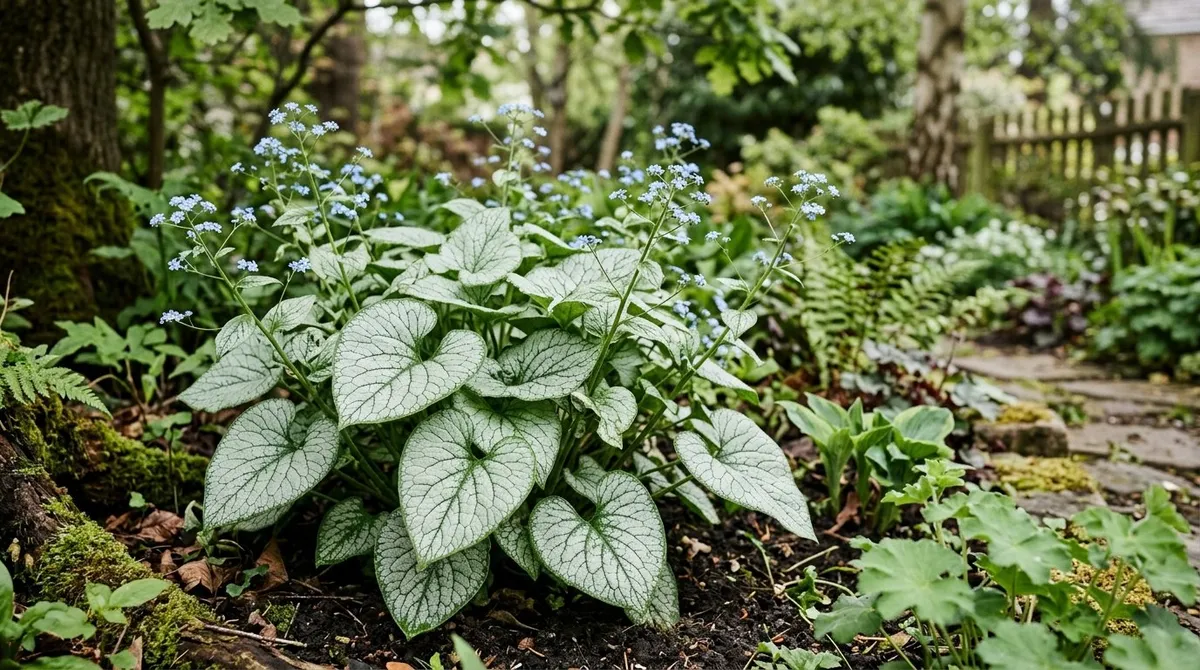
Brunnera is the plant for lighting up a shady corner. The silver-leaved forms glow in low light from spring to the first frosts. In April and May they add a haze of tiny sky-blue flowers, just like forget-me-nots.
It isn’t a difficult plant, but it has one firm rule. The silver varieties everyone buys, led by ‘Jack Frost’, need shade and moist soil together. Give them both and they stay lovely for years. Skip either and the leaves turn brown and crisp by midsummer.
If you’re weighing it up against another spring-flowering shade plant, the guide to growing pulmonaria covers lungwort, its close cousin with spotted leaves.
What is brunnera (Siberian bugloss)?
Brunnera macrophylla, also called Siberian bugloss or false forget-me-not, is a hardy, clump-forming perennial. It’s grown for its big heart-shaped leaves and early blue flowers. In the wild it grows on cool, damp woodland floors, and that tells you how to please it.
A mature plant makes a low mound about 40cm tall and 45-60cm across. In the silver forms, the leaves look frosted with pewter. In spring, wiry stems carry sprays of small blue flowers with a tiny white eye.
It’s fully hardy, so any UK winter is fine. It dies back in the cold and pushes fresh leaves as the soil warms. It flowers when the border is still bare, then gives good foliage for months.
Which brunnera variety should you choose?
Pick by how much silver you want and how shady and damp your spot is. The more silver or white on a leaf, the more shade and moisture it needs. Plain green brunnera is the toughest.
| Variety | Leaf | Best for |
|---|---|---|
| ’Jack Frost’ | Silver with green veins (RHS AGM) | The all-round silver choice |
| ’Looking Glass’ | Almost solid silver | Brightest leaves, deep shade only |
| ’Alexander’s Great’ | Very large, silvered | Bold leaves in a bigger space |
| ’Silver Heart’ | Thicker silver leaves | Silver for slightly tougher spots |
| ’Hadspen Cream’ | Green with cream edges | Brightening a shady corner |
| ’Dawson’s White’ | Green with wide white edges | Deep, sheltered shade only |
| Plain B. macrophylla | Matt green | Dry shade and ground cover |

From silver to plain green to cream-edged: the paler the leaf, the more shade and moisture the plant needs.
Why do silver brunnera leaves scorch?
Silver brunnera scorches when it gets direct afternoon sun, dry soil, or both. The silver patches are the most delicate part of the leaf, so they brown first. Remove both causes and the problem goes away.
Scorch usually starts at the leaf edges in June and spreads inwards through July. A leaf that is more than half brown won’t recover, so prevention is the real fix.
- Plant silver and variegated forms where they never get hot afternoon sun. Morning sun or dappled light is fine.
- Mulch each spring with 5cm of leaf mould or well-rotted compost over damp soil.
- In a dry summer, water before the leaves flag, not after.
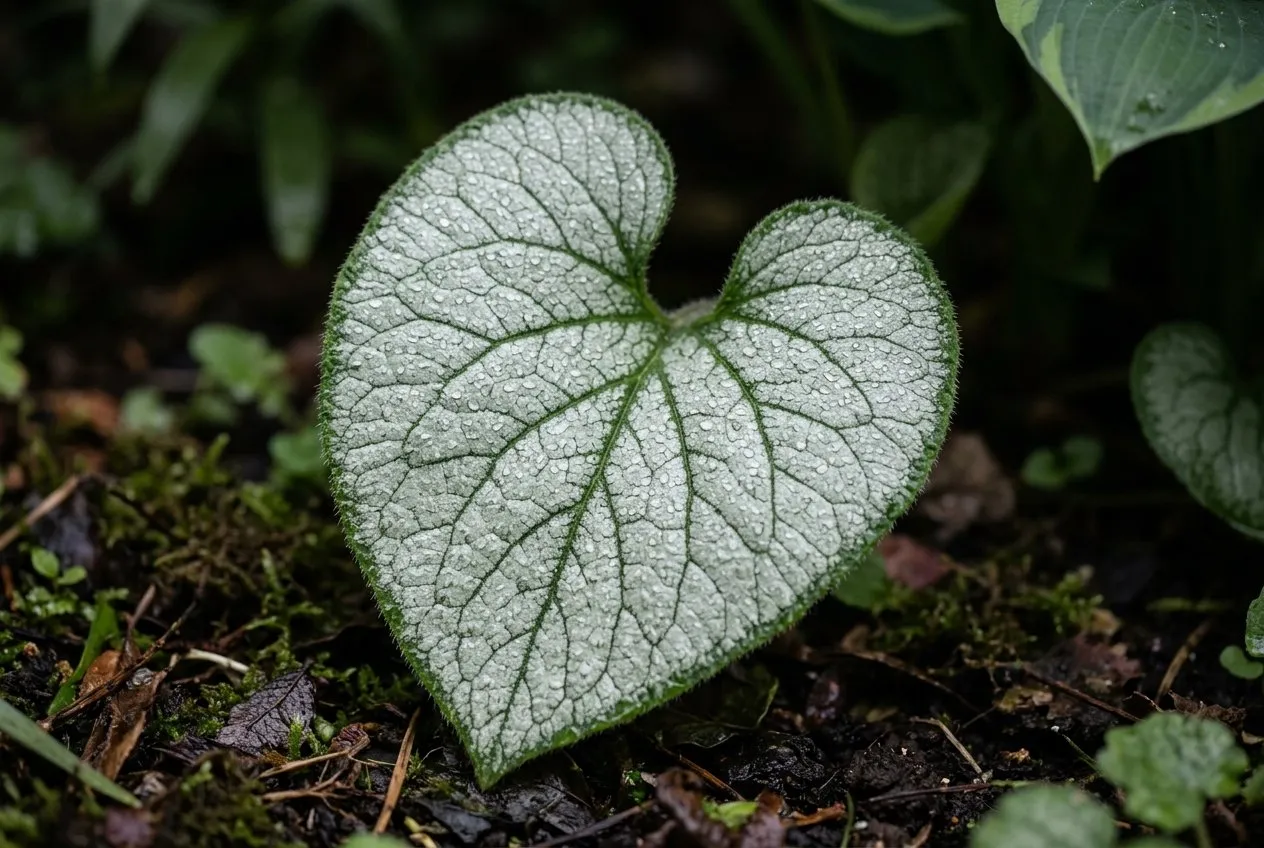
Those pale silver patches are the first bits to burn. Shade and damp soil keep a leaf looking like this all summer.
Plain green brunnera takes far more sun and drought. For really dry corners under hedges and trees, see the best plants for dry shade.
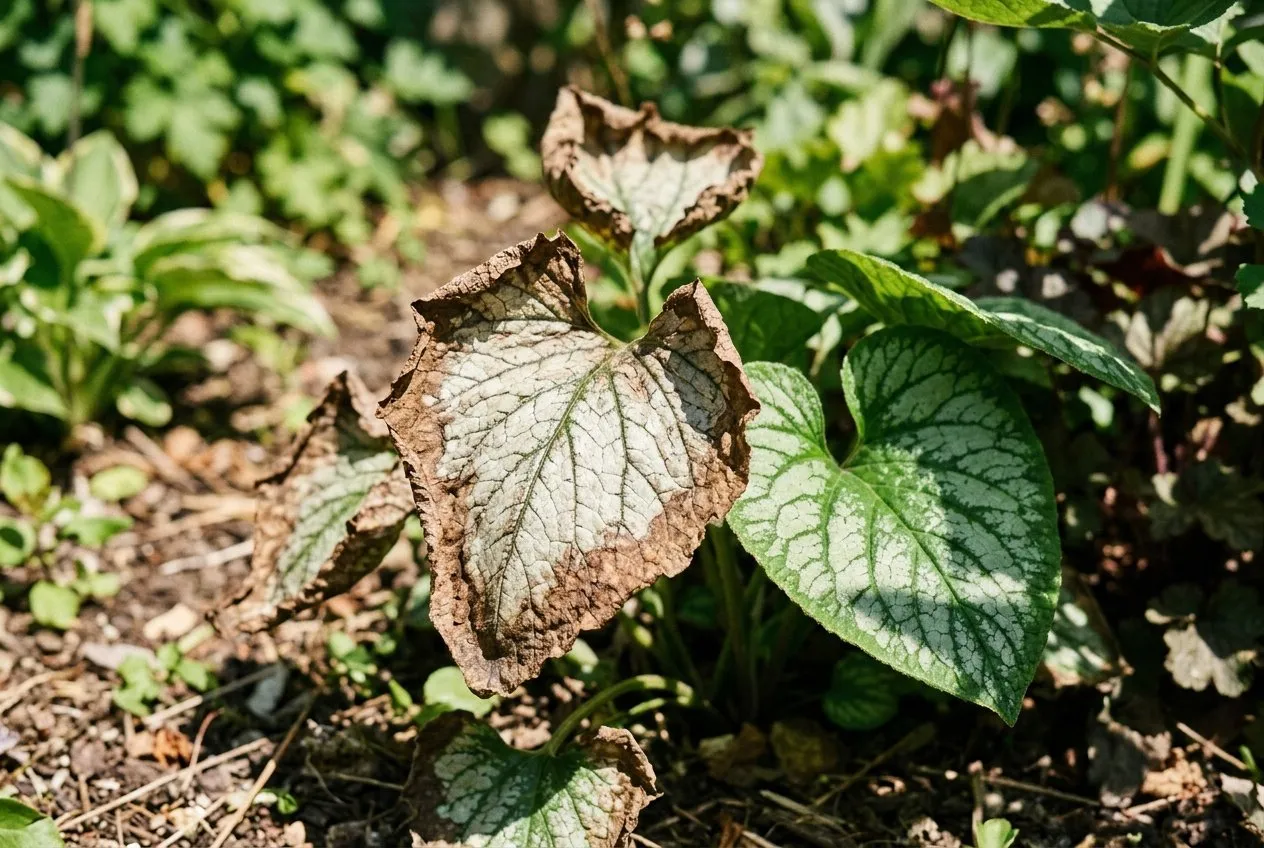
This is scorch: brown, papery edges creeping in. Once a leaf looks like this, cut it off and fix the shade or watering.
How to plant brunnera
Plant brunnera in March to May or September to October, when the soil is warm and damp. Choose a north or east border, the base of a tree, or a spot with only early morning sun.
- Dig a hole a little wider than the pot
- Mix in leaf mould or compost on poor soil, and a little grit on heavy clay
- Set the crown level with the soil surface, not buried
- Firm gently and water well
For ground cover, space plants 40-50cm apart. They knit together in two or three years and smother most weeds. Brunnera spreads slowly by short rhizomes, so it thickens up without swamping its neighbours.
Gardener’s tip: Plant brunnera beside a shady path or bench. The flowers are small and the silver leaves look best close up.
Watering, feeding and the midsummer cut-back
Keeping the soil moist is most of brunnera care. Water new plants twice a week in dry spells during their first summer. After that, established clumps only need water in a real drought.
Feeding is easy. A spring mulch of leaf mould or compost does most of the job. On poor soil, add a light sprinkle of general fertiliser in March. Don’t overfeed, as soft, oversized leaves scorch and flop more easily.
In July, cut any tatty or scorched leaves off at the base. Water well and a fresh flush of clean leaves follows in a few weeks.
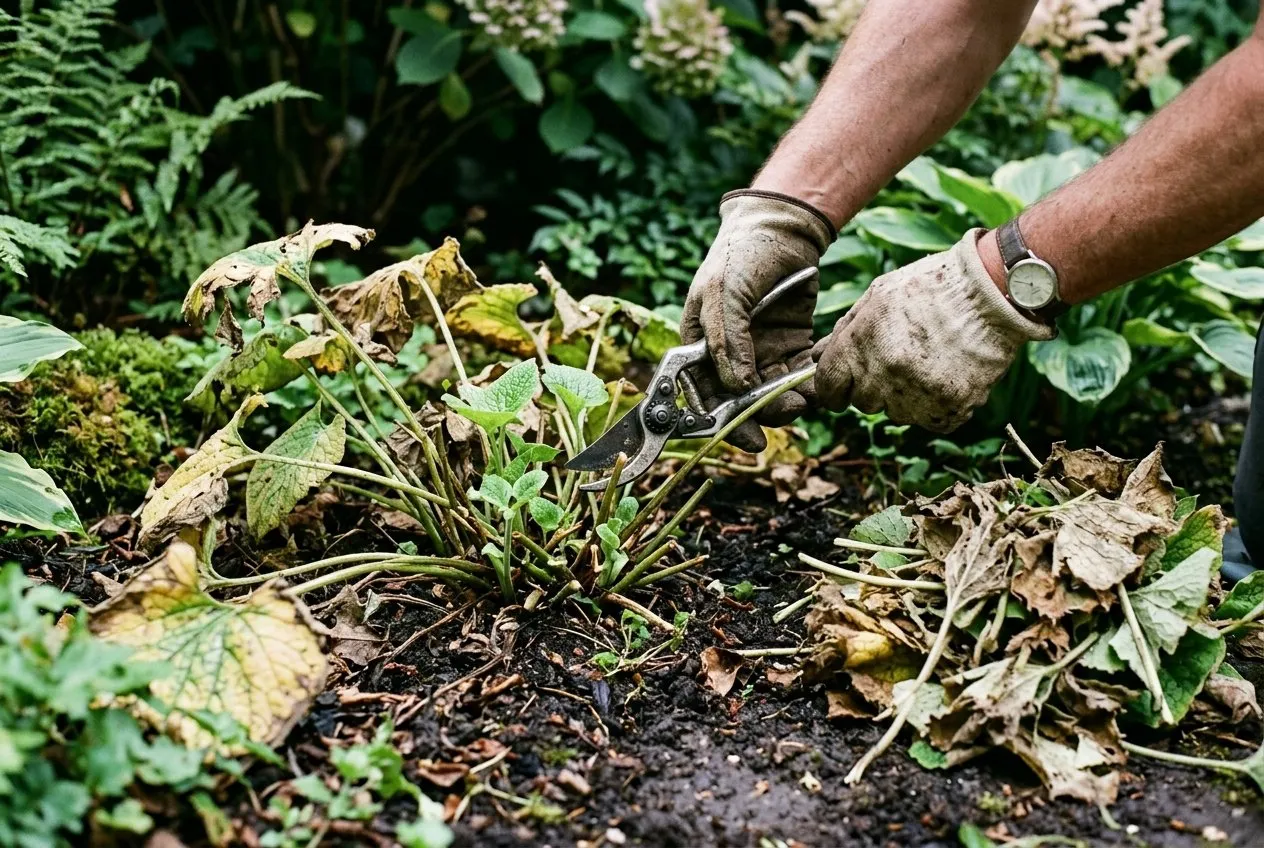
Cut the tired leaves right down to the base and water well. Clean new ones soon push through.
Month-by-month brunnera care calendar
| Month | Task |
|---|---|
| January | Dormant. Keep thick mulch off the crown |
| February | Clear old dead leaves from the crown |
| March | Mulch with leaf mould over damp soil. Plant or divide |
| April | Flowers open. Protect new leaves from slugs |
| May | Peak flowering. Keep the soil moist |
| June | Snip off faded flower stems. Watch silvers for scorch |
| July | Midsummer cut-back of tatty leaves. Water well |
| August | Water in dry spells. Apply nematodes to pots for vine weevil |
| September | Plant and divide while the soil is warm |
| October | Tidy the worst leaves |
| November | Plant dies back with the first hard frosts |
| December | Dormant. Nothing to do |
How to divide brunnera
Division is the easiest way to make more brunnera. Do it in spring or autumn when the soil is moist.
- Lift the whole clump with a fork
- Pull or cut the crown into pieces, each with buds and roots
- Replant straight away at the same depth
- Firm in and water well
Always divide silver and variegated forms. Their seedlings come up plain green, so dividing is the only way to keep the silver.
Root cuttings in winter are another way to make lots of plain green brunnera. For named silver and cream-edged forms, stick to division so they stay true.
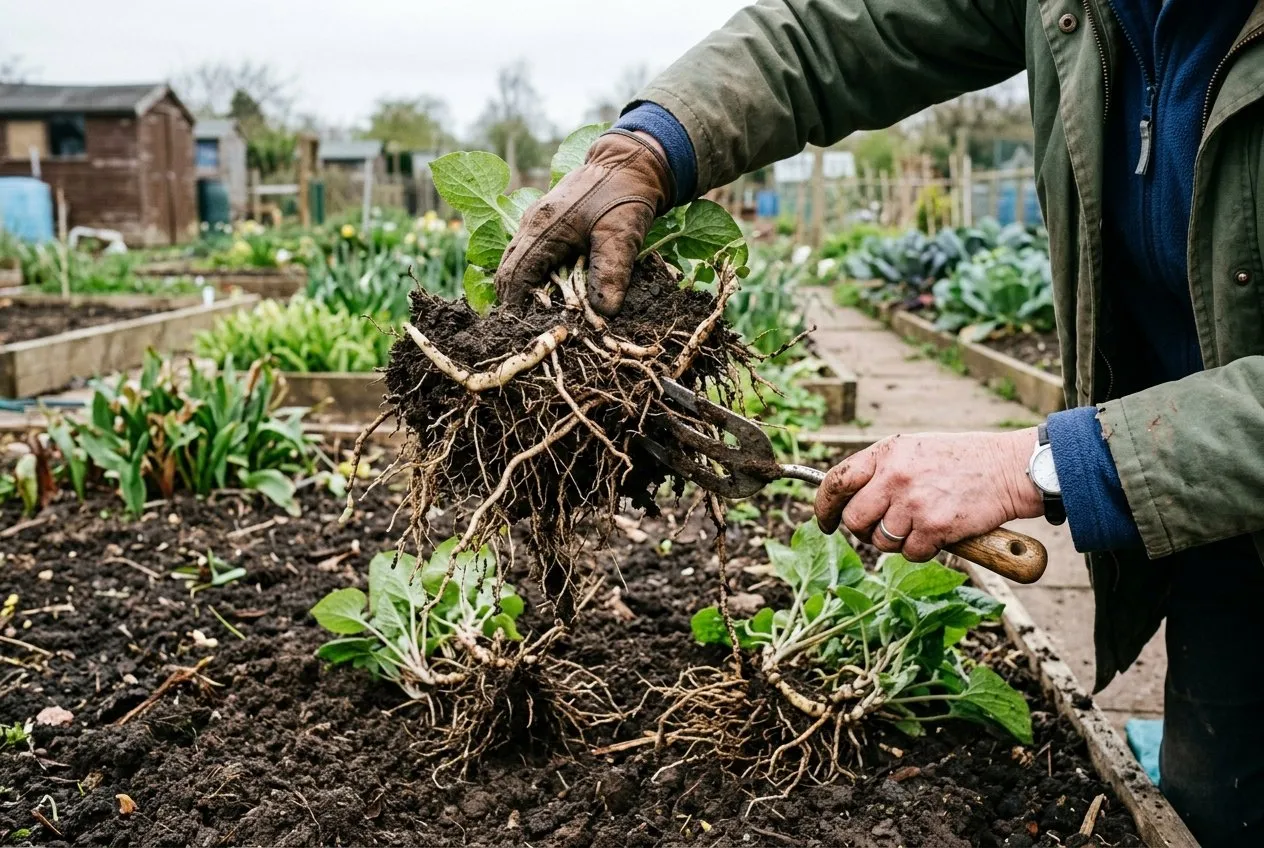
Split the clump into chunks that each have roots and a few buds. Replant them straight away and they barely notice.
Is brunnera invasive like forget-me-nots?
No. Brunnera looks like a forget-me-not in flower, but it behaves very differently. True forget-me-nots (Myosotis) are short-lived and seed themselves everywhere.
Brunnera is a long-lived perennial that widens slowly into one tidy clump. It may drop the odd seedling, but it doesn’t carpet a border. You can keep it to size by dividing it.
If you’d like the drifts of blue that true forget-me-nots give, see how to grow forget-me-nots and stop them spreading.
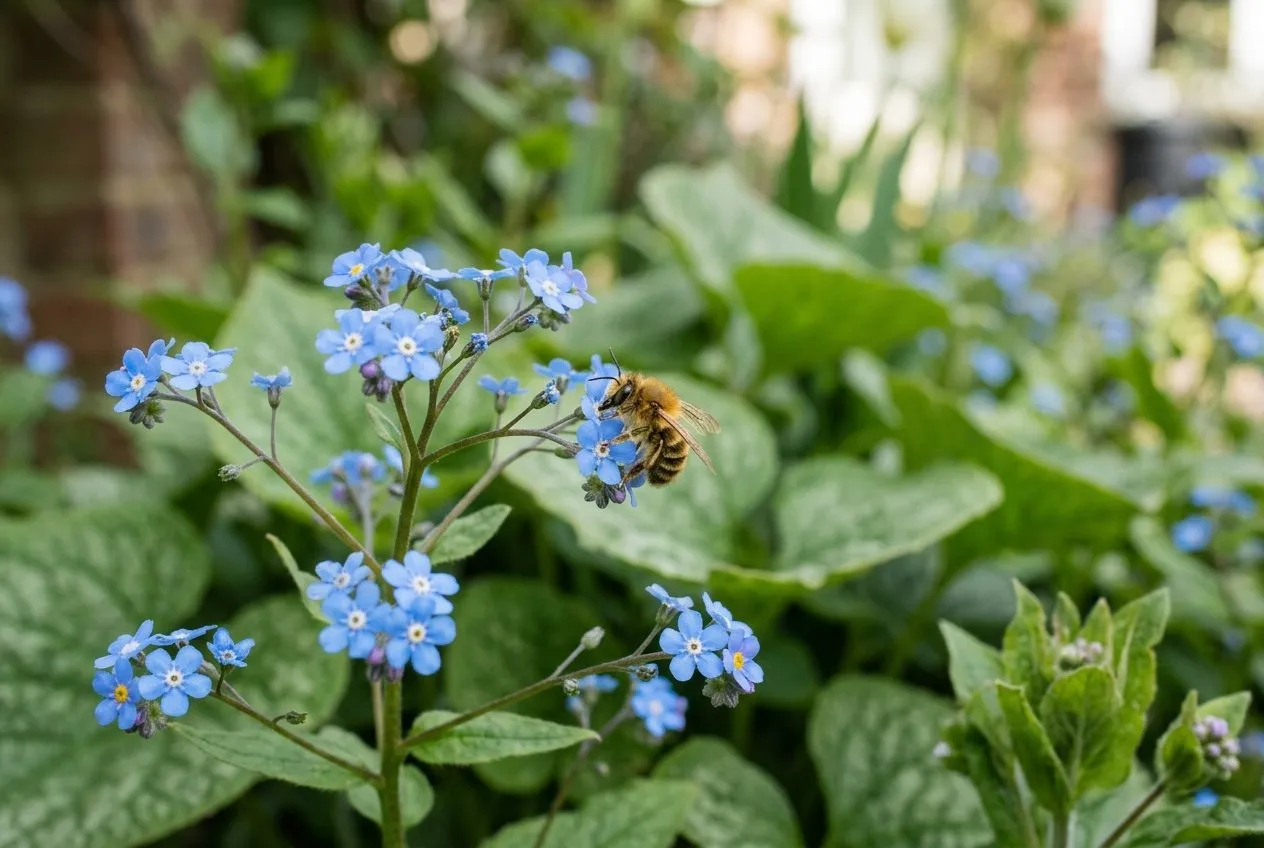
The blue flowers arrive in April and May, a handy early snack for bees before most of the border wakes up.
Brunnera pests and problems
Apart from scorch, brunnera is healthy. The one pest to watch is vine weevil. The black adult beetles notch leaf edges at night, which looks bad but does little harm. The real damage comes from the creamy white grubs, which eat the roots over autumn and winter.
Plants in pots are most at risk. Tip the rootball out in autumn to check for grubs. Water on a nematode treatment in August or early September while the compost is still warm. The guide to vine weevil treatment explains the timing.
Slugs nibble young spring leaves, especially on new divisions. Powdery mildew sometimes shows on plants that are too dry at the root. Keep the soil moist and it usually clears.
What to plant with brunnera
Brunnera looks best with other plants that love cool, moist shade.
- Hostas set off silver leaves beautifully and want the same conditions. See the guide to growing hostas.
- Ferns add feathery fronds beside the broad hearts. The guide to hardy UK ferns has easy species to start with.
- Hellebores flower in late winter, then brunnera takes over in April.
- Spring bulbs such as snowdrops and wood anemones flower first, then brunnera leaves hide their fading foliage.
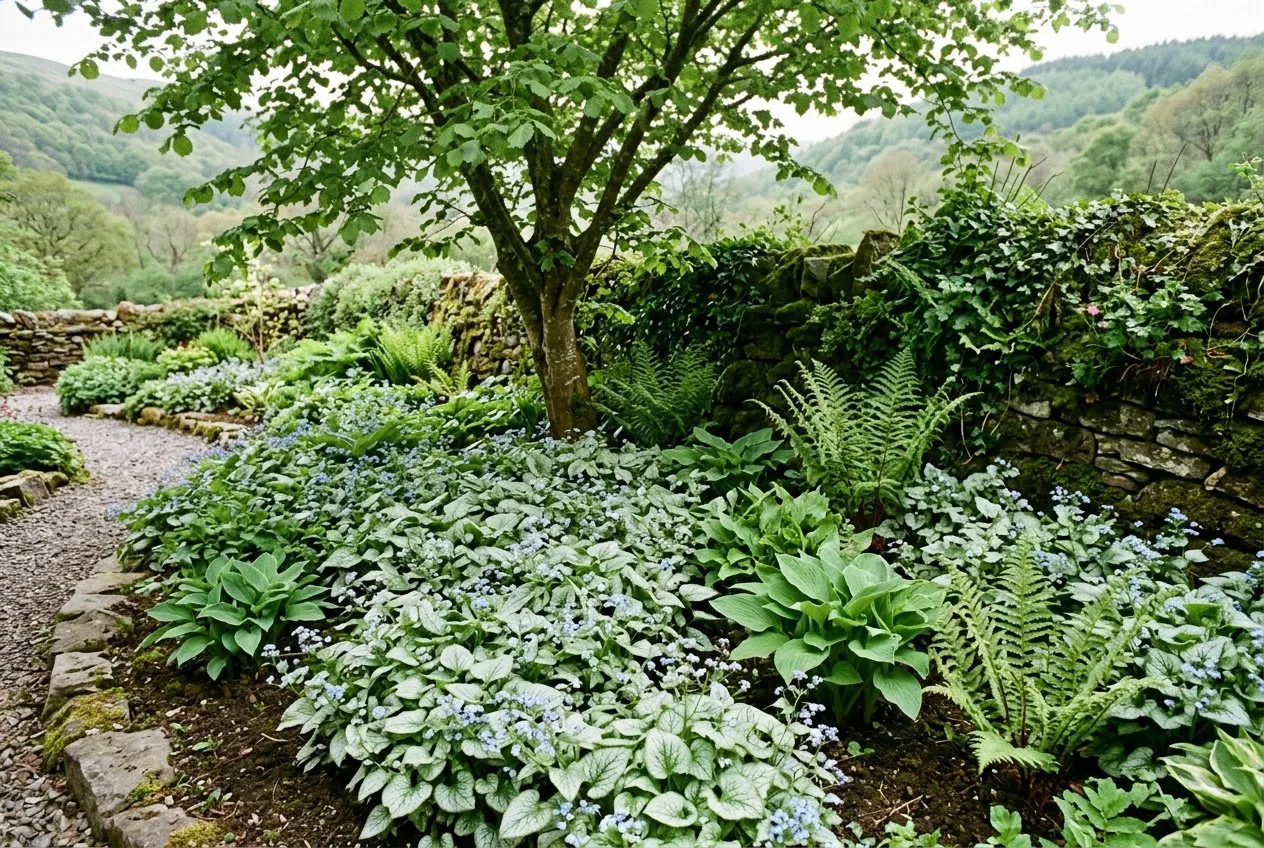
Brunnera, hostas and ferns together make a cool woodland floor that looks after itself.
Common mistakes with brunnera
- Planting a silver form in sun. Even damp soil won’t save it from afternoon sun. Shade or dappled light only.
- Letting the soil dry out. Mulch every spring and water in droughts before the leaves flag.
- Expecting silver seedlings. Seedlings come up plain green. Divide the parent instead.
- Overfeeding. Rich soil gives soft leaves that scorch and flop. A spring mulch is enough.
- Skipping the midsummer trim. Cut scorched leaves off in July and the clump looks fresh into autumn.
Frequently asked questions
Where should I plant brunnera ‘Jack Frost’?
In shade, on soil that stays moist all summer. A north-facing border, the base of a tree or the shady side of a shrub all work. Keep it out of hot afternoon sun, and dig in leaf mould before planting.
Why are my brunnera leaves going brown and crispy?
Too much sun, dry soil, or both. This is leaf scorch, the main problem with silver-leaved brunnera. Move the plant into deeper shade, mulch to hold moisture and cut off the worst leaves. New growth comes back cleaner.
Is brunnera invasive?
No, it forms a slowly widening clump. It spreads by short rhizomes, not running roots, and doesn’t seed about like true forget-me-nots. If a clump gets too wide, just lift and divide it.
Does brunnera flower every year?
Yes, established plants flower every April and May. A newly planted clump may flower lightly in its first spring, then build up. Very deep shade can mean fewer flowers, so aim for cool, dappled light.
How do you propagate brunnera?
Divide the clump in spring or autumn. Lift it, split the crown into pieces with roots and buds, and replant straight away. Always divide silver and variegated forms, as their seedlings come up plain green.
Should I cut back brunnera in summer?
Yes, cut tatty or scorched leaves off at the base in midsummer. Water well afterwards and a fresh flush of leaves follows in a few weeks. Leave healthy leaves alone.
Do slugs and vine weevil attack brunnera?
Yes, vine weevil is the main pest, especially in pots. The white grubs eat roots over autumn and winter and can kill a plant. Slugs nibble new spring leaves but rarely do lasting harm. Nematodes in late summer help protect pots.
Now your brunnera is sorted, build the rest of the bed with the best plants for shade in UK gardens, or browse more ideas in plants.
Our team produces practical UK gardening guidance from source research, contributor records and established horticultural practice. Editorial standards are overseen by Matt W.