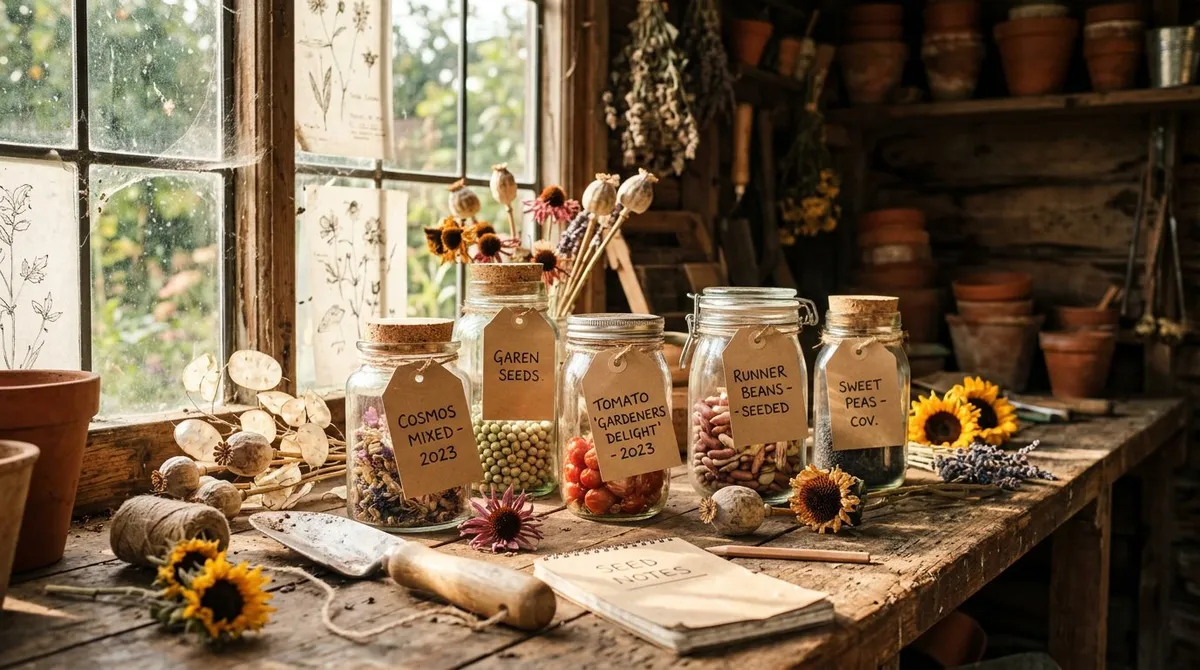
Saving seeds from your garden cuts annual seed costs by 50-80% and preserves varieties adapted to local UK conditions. Beginners should start with tomatoes, beans, peas, and lettuce, which self-pollinate and produce reliable offspring. Properly dried seeds stored in airtight containers at 5-10C remain viable for 3-10 years depending on the species.
Key takeaways
- Start with self-pollinating crops: tomatoes, beans, peas, and lettuce give reliable results
- Open-pollinated and heritage varieties produce true-to-type seed, F1 hybrids do not
- Dry extraction works for beans, peas, and most flowers; wet extraction suits tomatoes and cucumbers
- Seeds must be fully dry (below 8% moisture) before storage to prevent mould and rot
- Airtight containers stored at 5-10C keep most vegetable seeds viable for 3-10 years
- Garden Organic's Heritage Seed Library preserves hundreds of UK varieties free to members
seed saving seeds self-sufficiency grow your own vegetables allotment
Our team produces practical UK gardening guidance from source research, contributor records and established horticultural practice. Editorial standards are overseen by Matt W.