Key takeaways
- Sow indoors from February, or outside from April to July
- Pick at tennis-ball size for the sweetest, crispest bulbs
- Green kinds are quicker, purple kinds handle cold better
- Space plants 23cm apart in rows 30cm apart
- Sow a short row every three weeks for pickings from June to November
- Net against cabbage whites and lime acid soil to help prevent club root
Kohlrabi is one of the quickest and easiest brassicas you can grow in the UK. The round, swollen stem can be ready in about 8 weeks, and with a few sowings you’ll be picking from early summer to autumn. It copes with British weather better than most of its cabbage cousins.
It’s a member of the cabbage family, and the name is German for “cabbage turnip”. That sums up both the taste and the look: a ball-shaped stem that swells just above the soil. It’s been grown in Europe for centuries but is still a bit of a rarity on British allotments. Once you try it, you’ll wonder why.
Which kohlrabi variety should I grow?
There are green-skinned and purple-skinned kohlrabis, and both are white inside. The difference is speed, how well they cope with cold, and how long they stay tender in the ground.
Green kinds are a little quicker and do best from spring and summer sowings. ‘Lanro’, ‘Quickstar’ and ‘Logo’ are reliable choices. ‘Quickstar’ F1 is especially fast. Purple kinds such as ‘Kolibri’ are a bit slower, but handle cool weather better and stay tender longer.
 Planting out kohlrabi seedlings. Keep them at the same depth they were in the module.
How do I sow kohlrabi seed?
Kohlrabi seed comes up fast, usually in about a week somewhere warm. The seeds are big enough to sow one at a time.
Indoor sowing (February to March): Fill module trays with seed compost and sow one seed per cell, 1cm deep. Water gently and keep them in a propagator or on a warm windowsill. Grow them on in good light so they don’t get leggy. Our guide on sowing seeds indoors has more tips.
Outdoor sowing (April to July): Make shallow drills 1cm deep and 30cm apart. Sow thinly, cover and water. Thin seedlings to 23cm apart when they have 3-4 true leaves. You can eat the thinnings in salads.
Planting out: Harden off indoor seedlings for a week or so first. In most of England that means planting out from mid-April under fleece, or late April without. Plant 23cm apart in rows 30cm apart and water in. Don’t bury the stem deeper than it was in the module, or the bulb can swell underground and rot.
Little and often is the trick. Sow a short row every 3 weeks from April to July for fresh bulbs from June to November. Sowings after July rarely make it before winter in northern England and Scotland.
What soil and conditions does kohlrabi need?
Rich, moist soil and full sun. It grows in part shade, but the bulbs swell more slowly and stay smaller.
Watering: Keep the soil evenly moist. Dry spells followed by a soaking make bulbs split or go woody. Water deeply twice a week when it’s dry, and mulch with grass clippings or compost to hold moisture in.
Feeding: Rake in a general fertiliser such as Growmore before planting, at the rate on the pack. If growth stalls a month after planting, give a nitrogen-rich feed. Don’t overdo the nitrogen once the bulb starts swelling, or you’ll just get leaves.
Rotate your crops. Don’t grow kohlrabi where any cabbage-family crop grew in the last 3 years. It helps keep club root away, and that disease can linger in soil for many years. Our crop rotation planner shows how to plan a 4-year rotation.
How do I protect kohlrabi from pests and diseases?
Cabbage white butterflies are the biggest pest. Their caterpillars can strip leaves in days. Cover plants with fine insect mesh from the day you plant, and pin the edges down so butterflies can’t find a gap. Our guide to cabbage white butterfly control has more ideas.
Flea beetles leave lots of tiny round holes in the leaves. They’re worst in warm, dry weather from May to July, and seedlings suffer most. Fleece or fine insect mesh keeps them off. Keep the soil moist, as they love dry conditions.
Club root makes roots swollen and twisted and stunts the plant. It likes acid, waterlogged soil. You can’t cure it, so prevent it: lime acid soil, improve drainage and rotate your brassicas. Our guide to brassica diseases covers the other common problems.
Pigeons go for brassica leaves in autumn and winter. Net late crops or grow them in a fruit cage.
 Green and purple kohlrabi growing with flowers like marigolds and nasturtiums between the rows.
When and how do I harvest kohlrabi?
Pick kohlrabi when the bulb is about the size of a tennis ball. That’s when it’s crisp, juicy and sweet. Much bigger and it starts to go woody.
How to pick: Cut the stem at soil level with a sharp knife, or pull the whole plant and trim off the root. Take off the leaves, which you can cook like kale.
Storage: Kohlrabi is best eaten fresh. With the leaves off, it keeps for a couple of weeks in the fridge wrapped in a damp cloth. For longer, peel and dice it, blanch for 2 minutes and freeze.
Leaving it in the ground: In mild parts of the south and west, late-sown purple kohlrabi can stand into December. Cover with fleece in hard frost. Light frost is fine, but a long hard freeze damages the bulbs.
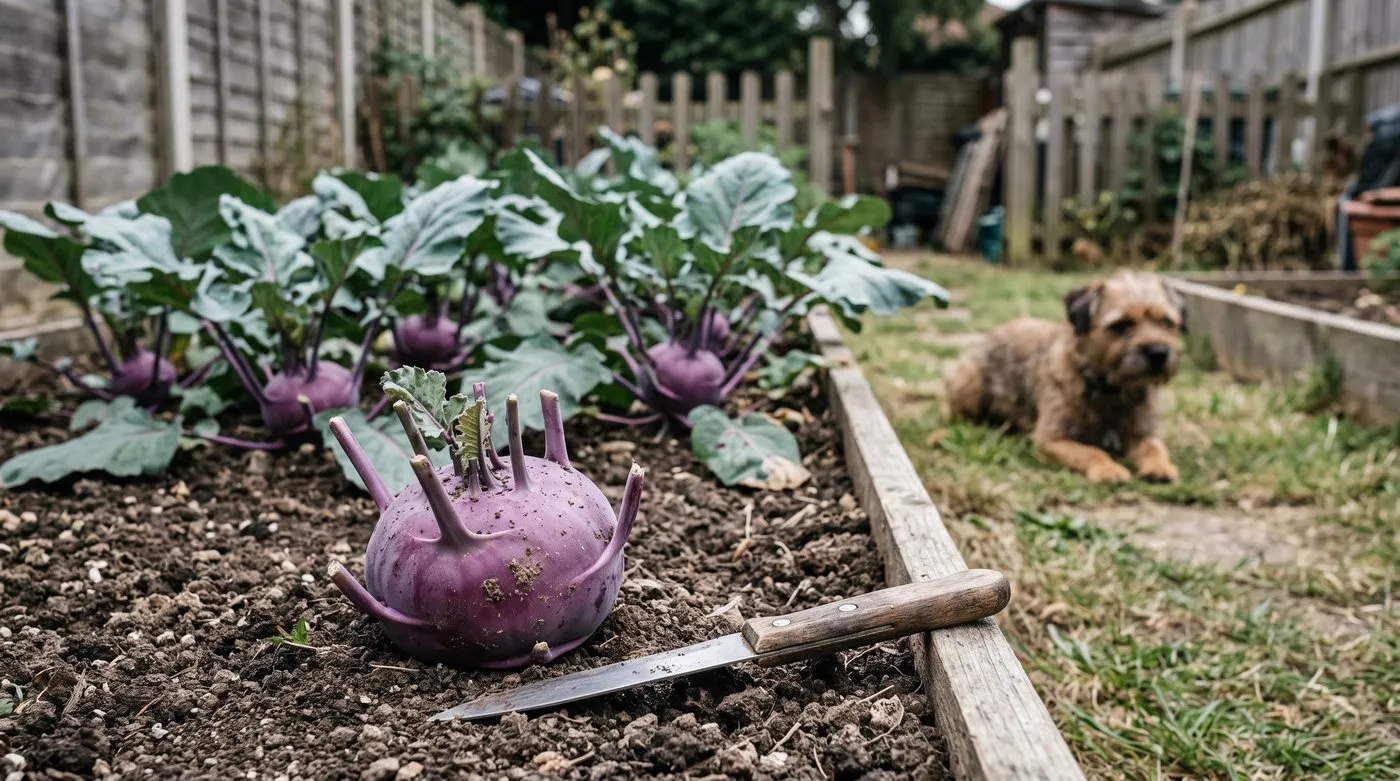
Pick kohlrabi at about tennis ball size for crisp, sweet bulbs. Leave them much bigger and they start to turn woody.
How do I cook kohlrabi?
Kohlrabi is one of the handiest vegetables to grow at home because you can eat it so many ways. Raw, it’s crisp like an apple with a mild cabbage flavour.
Raw: Peel and slice it thinly, cut into matchsticks or grate it into coleslaw. It’s lovely with apple, walnuts and a mustard dressing. It stays crunchy for hours, so it’s great in packed lunches.
Roasted: Cut into 2cm wedges, toss in olive oil and salt, and roast at 200C for 25-30 minutes until golden. Roasting brings out the sweetness. Try a sprinkle of smoked paprika or cumin.
Mashed: Peel, dice and boil for about 15-18 minutes until tender. Mash with butter and a pinch of nutmeg. It’s lighter than potato mash.
Stir-fried: Cut into thin strips and stir-fry for 3-4 minutes so it keeps a bit of crunch. Add soy sauce, ginger and sesame oil.
Leaves: Steam or fry young leaves for 3-4 minutes. They wilt like spinach with a stronger, earthier taste. Use them wherever you’d use kale or spring greens.
 Freshly picked kohlrabi. Green and purple kinds are both crisp and white inside.
Month-by-month kohlrabi growing calendar
| Month | What to do |
|---|---|
| January | Order seed. Plan where it goes in your rotation. Lime acid beds if needed |
| February | Sow early kinds indoors. ‘Quickstar’ is a good first sowing |
| March | Keep sowing indoors. Prepare outdoor beds with compost |
| April | First outdoor sowing. Plant out February sowings under fleece |
| May | Take fleece off settled plants. Sow another row outside |
| June | Sow again. Start picking the earliest plants |
| July | Last outdoor sowing (by mid-July in the south). Keep picking |
| August | Main picking time. Water in dry spells to stop splitting |
| September | Pick later sowings. Net autumn crops against pigeons |
| October | Lift the last bulbs. Eat fresh or freeze |
| November | Clear old plants, roots and all, and compost them |
| December | Plan next year’s rotation and varieties |
Kohlrabi companion planting
Kohlrabi enjoys the same companion planting as other brassicas. Good neighbours can help with pests or make better use of space.
Good companions: Beetroot, lettuce, onions, dill and nasturtiums. Lettuce covers the ground between plants and is picked before the kohlrabi needs the room. Nasturtiums can lure aphids away.
Keep apart: Don’t crowd it in with other brassicas such as Brussels sprouts or cauliflower unless they’re all under one net. They share the same pests and diseases, so pests that find one will find the lot.
The RHS kohlrabi guide is a handy extra read, and Garden Organic has plenty of advice on growing veg without chemicals.
Now you know how to grow kohlrabi, try our guide on how to grow broccoli for another quick brassica, or growing celeriac for another unusual veg that loves UK allotments.
Frequently asked questions
When should I sow kohlrabi in the UK?
Sow indoors from February or outside from April. Seeds come up in about a week somewhere warm, a bit longer outdoors. For a long season, sow a short row every 3 weeks from April to mid-July. In southern England, sowings in late July can still give bulbs by October.
How long does kohlrabi take to grow?
Usually 8-12 weeks from sowing. Fast green kinds like Quickstar can be ready in about 8 weeks. Purple kinds such as Kolibri take a little longer but stay good for longer. Warm weather speeds it up and cool weather slows it down.
What does kohlrabi taste like?
Like a mild, sweet cross between cabbage and turnip. Raw, it’s crisp and juicy with a little peppery kick. Cooked, it goes soft like a lighter potato, and roasting brings out its sweetness. The young leaves are tasty too, a bit like kale.
Can I grow kohlrabi in pots?
Yes, in a pot at least 20cm deep. A 30cm-wide pot holds 2-3 plants, or use a big trough for a row. Fill with multi-purpose compost mixed with some perlite. Water daily in warm weather, and give a liquid feed every 2 weeks once plants are settled.
Why is my kohlrabi woody and fibrous?
Usually because it was picked too late. Once bulbs get much bigger than a tennis ball, they turn tough. Uneven watering makes it worse, as the plant stalls in dry spells then swells in a rush. Keep the soil evenly moist and pick at tennis-ball size.
Is kohlrabi frost hardy?
It copes with light frost, and purple kinds are tougher than green. Established plants get through short cold snaps, but a long hard freeze damages the bulbs. In mild areas, late sowings can stand into December under fleece. Protect spring plants from late frost if you plant out before mid-May.
What pests attack kohlrabi?
Cabbage white butterflies and flea beetles are the main ones. Cover plants with fine insect mesh from planting day so butterflies can’t lay eggs. Flea beetles make tiny round holes in leaves in warm, dry weather, so keep young plants watered. Club root is the most serious disease, as with all brassicas.
Our team produces practical UK gardening guidance from source research, contributor records and established horticultural practice. Editorial standards are overseen by Matt W.