
Key takeaways
- Cauliflower likes rich, firm soil that isn't acid, plus steady watering
- Sow summer types January to March, autumn types March to May, overwintering types May to June
- Clapton F1 and Clarify F1 resist clubroot, so grow one on infected ground
- Fold the outer leaves over white heads to keep them white
- Cut heads while they're tight and firm, before the florets start to open
- Never let seedlings get pot-bound or plants dry out, or you'll get tiny heads
Cauliflower has a name as the fussiest brassica in the veg patch. It wants richer soil, steadier watering and better timing than cabbage or broccoli. Get one of those wrong and you can end up with a head the size of a golf ball. But get them right and a big, snowy home-grown cauli is a real treat.
Grow a mix of summer, autumn and overwintering types and you can be cutting cauliflowers for much of the year. This guide covers choosing varieties, sowing, soil, blanching, pests and the slip-ups that cause most failures. If you’re new to growing food, our guide to starting a vegetable garden covers the basics first.
Which cauliflower varieties should I grow?
Cauliflowers come in three groups, sorted by when they’re ready. Pick one from each and you can harvest from June right through to the next spring.
Summer cauliflowers
Summer types are sown indoors from January to March and ready from June to September. They’re the quickest to grow.
Snowball is compact and reliable, with tight white heads. It’s one of the quickest and suits small plots. All Year Round is the most adaptable, and despite the name it does best as a summer cauliflower. It’s the safest choice for beginners.
Autumn cauliflowers
Autumn types are sown from March to May and ready from September to November. They make bigger heads and enjoy the cooler, damper autumn weather.
Autumn Giant types grow large, heavy heads. Give them rich soil and plenty of space, about 75cm between plants. They’re the classic choice for freezing.
Overwintering cauliflowers
Overwintering types are sown in May or June, grow through summer and autumn, then stand over winter to make heads from March to May. They’re the hardest to get right and need a mild winter and well-drained soil.
Walcheren Winter types are the most common. They cope with light frost but struggle in long freezing spells, so they’re best in southern and coastal areas.
Coloured and unusual varieties
Graffiti is a bright purple cauliflower that keeps its colour if you cook it lightly. It doesn’t need blanching.
Romanesco sits somewhere between cauliflower and broccoli. Its lime-green spiral heads look amazing and taste nutty and sweet. Sow from March to May for an autumn harvest.
Clapton F1 resists clubroot, and so does Clarify F1. If your soil has ever had the disease, grow one of these. Clapton gives good white heads from summer into autumn.
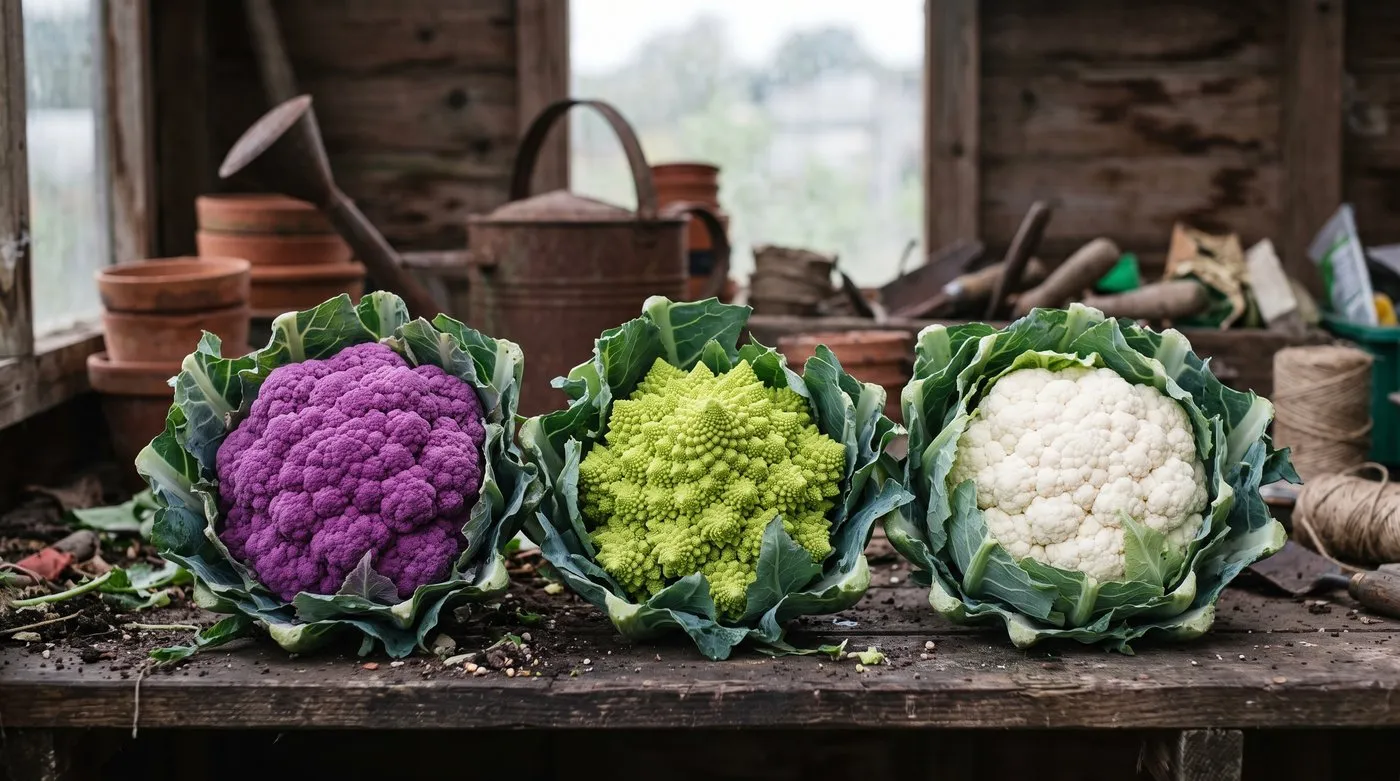
Purple and Romanesco types don’t need blanching, and their colour is best in full sun. Cook purple ones lightly to keep the colour.
Cauliflower varieties compared
| Variety | Type | Sow | Harvest | Colour | Good for |
|---|---|---|---|---|---|
| All Year Round | Summer | Jan to Mar | Jun to Sep | White | Beginners |
| Snowball | Summer | Jan to Mar | Jun to Aug | White | Small plots, quick crops |
| Clapton F1 | Summer/Autumn | Feb to Apr | Jul to Oct | White | Clubroot ground |
| Autumn Giant | Autumn | Mar to May | Sep to Nov | White | Big heads for freezing |
| Graffiti | Autumn | Mar to May | Aug to Oct | Purple | No blanching |
| Romanesco | Autumn | Mar to May | Sep to Nov | Lime green | Nutty flavour, spiral shape |
| Walcheren Winter | Overwintering | May to Jun | Mar to May | White | Mild-winter areas |
Handy tip: Grow at least two types each year. A summer one like All Year Round plus an autumn one like Autumn Giant gives you heads from June to November, without relying on overwintering types that can fail in a hard winter.
How long does cauliflower take to grow?
Most cauliflowers take three to six months from sowing to cutting, as the RHS cauliflower guide explains. Summer types are the quickest. Autumn types take a bit longer. Overwintering types sit in the ground for six months or more before heading up in spring.
Mini cauliflowers can be ready in about three months. Cold springs and hot, dry summers both slow things down, so treat packet timings as a rough guide. A plant only makes its head once it has grown enough leaves, which is why steady growth matters more than the calendar.
How to sow cauliflower seeds
Sow cauliflower in modules indoors, because the seedlings hate having their roots disturbed. Any upset at the seedling stage can lead to buttoning later, where the plant makes a tiny head too early.
Sowing indoors
Use modules or small pots rather than seed trays, so you don’t need to prick seedlings out. Fill 7cm pots or module trays with seed compost. Sow two seeds per cell, 1cm deep, and pull out the weaker one once they’re up.
Keep them somewhere warm, like a windowsill, heated propagator or greenhouse. Seedlings appear in a week or two. Then move them to a bright, cooler spot so they grow sturdy rather than leggy. Our guide to sowing seeds indoors covers the technique.
Don’t let seedlings get pot-bound. If roots start circling the bottom of the module before it’s time to plant out, move them into a 9cm pot straight away. Pot-bound seedlings usually make poor, small heads.
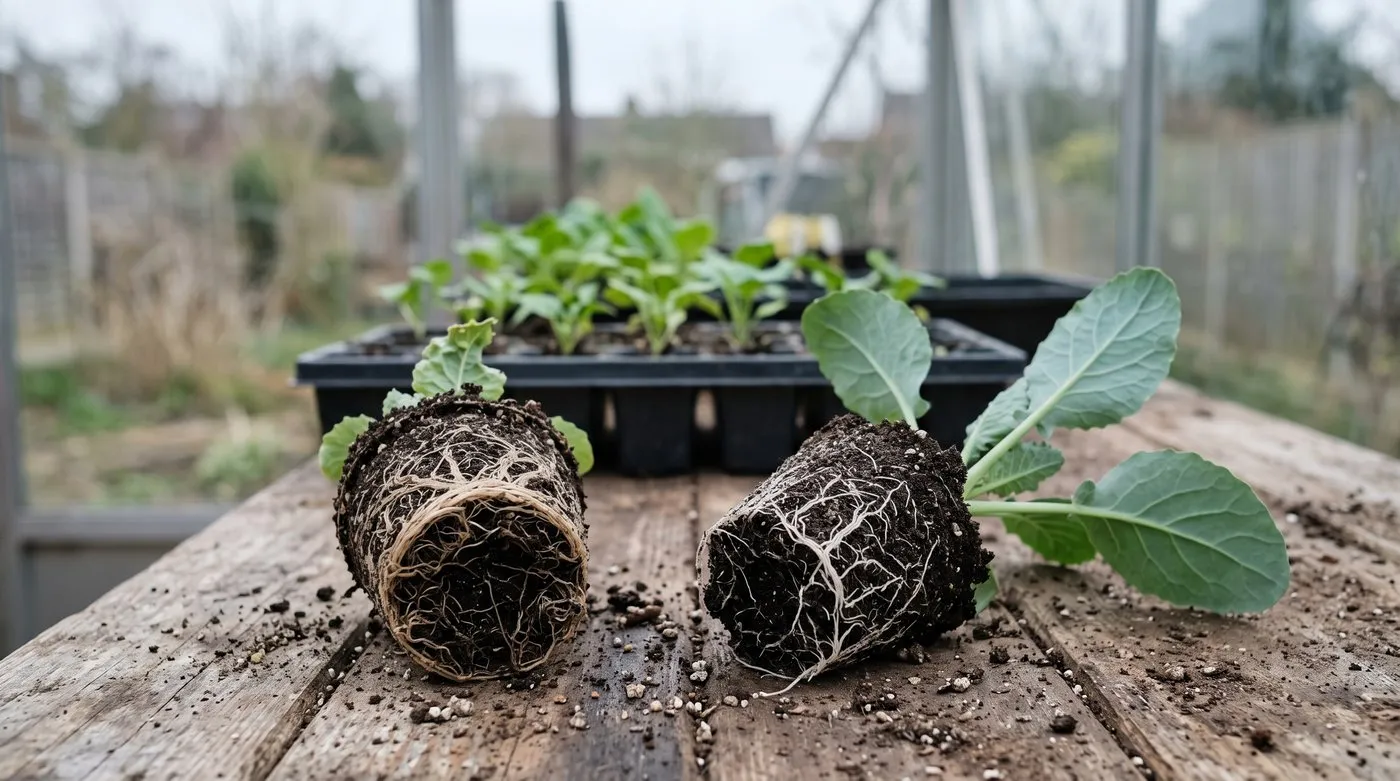
Roots circling the bottom of the module mean it’s time to pot on or plant out. Pot-bound seedlings often go on to make tiny heads.
Hardening off
Before planting out, get seedlings used to outdoor life over a week to ten days. Start with a couple of hours in a sheltered spot and build up to full days. A cold frame is ideal. Avoid doing this in a cold snap, as a sudden chill can make plants head up too early.
Sowing straight outside
You can sow cauliflower outdoors in April and May, but it’s less reliable than planting out module-grown seedlings. Tiny outdoor seedlings suffer more from slugs, weeds and drying out.
If you do, make drills 1cm deep and 60cm apart. Thin to 45-60cm apart once they have four true leaves.
Getting the soil ready
Cauliflower needs rich, firm soil that holds moisture and isn’t acid. Thin, sandy or acid soils give disappointing results.
Making the soil rich
Start the autumn before. Dig in plenty of well-rotted compost or manure, about a wheelbarrow load per square metre. This feeds the soil and helps it hold water.
In spring, rake the bed level but don’t dig it over again. Cauliflowers need firm soil, and loose ground lets them rock in the wind. Tread the soil down with your heels, then rake the top smooth.
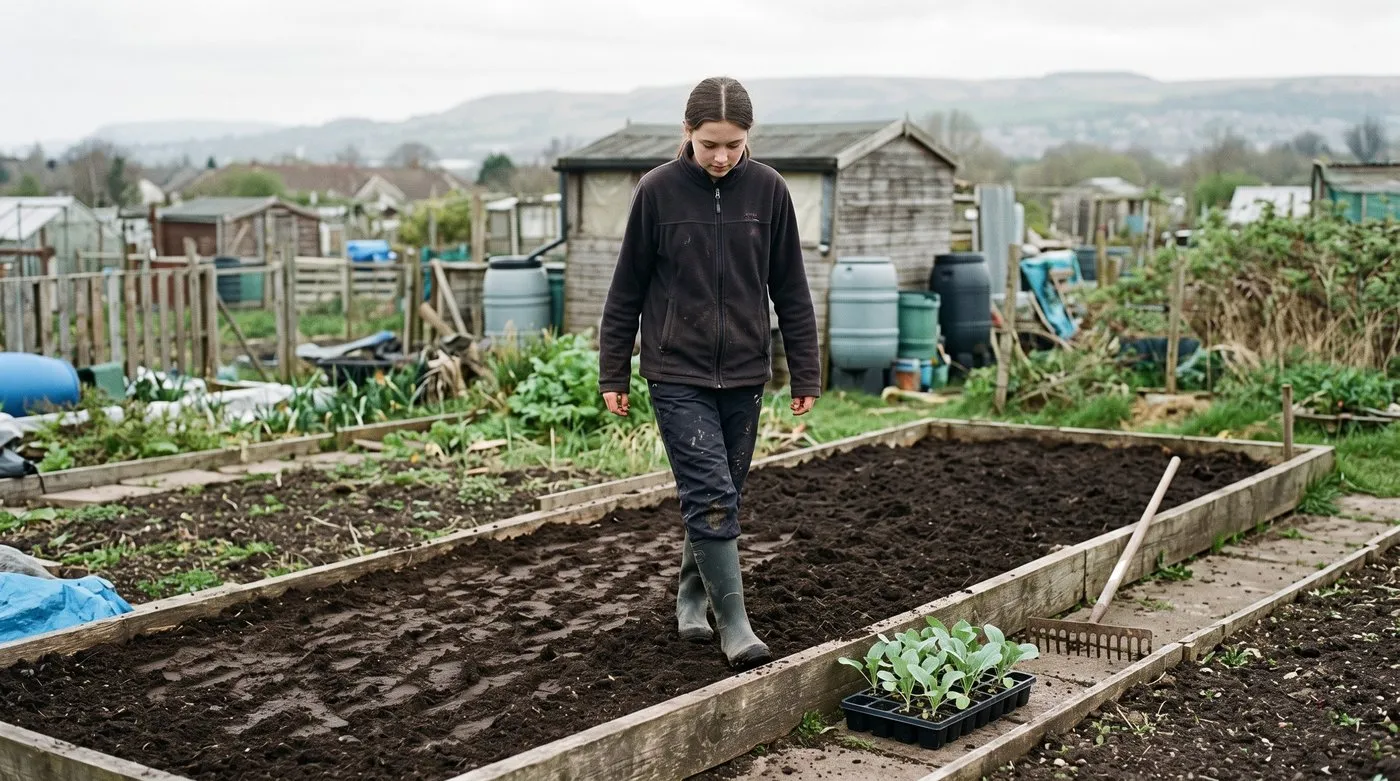
Don’t dig the bed over in spring. Tread it firm with your heels and rake the top, so the plants can’t rock in the wind.
Checking for acid soil
Test your soil with a cheap kit from the garden centre. In acid soil cauliflowers grow slowly and clubroot is more likely.
If your soil is acid, spread garden lime in autumn at the rate on the packet. Don’t add lime at the same time as manure. On heavy clay soil, add organic matter too to open it up.
Feeding
A couple of weeks before planting, rake a general fertiliser such as Growmore into the top few centimetres of soil, following the packet. Cauliflowers stay hungry all season, so top up with chicken manure pellets or blood, fish and bone every three or four weeks.
When to plant cauliflower outside
Plant module-grown seedlings out when they have four to six true leaves and are 10-15cm tall, usually four to six weeks after sowing. Summer types go out in April or May, autumn types in May or June, and overwintering types in June or July.
Spacing
Space summer and autumn plants 45-60cm apart in rows 60cm apart. Overwintering types need about 70cm each way. Closer spacing gives smaller heads, and more space lets air move around the plants.
Planting
Water the modules an hour before planting. Dig a hole a little bigger than the root ball and set the plant in so the lowest leaves sit just above the soil. Firm the soil around the stem really well with your knuckles. Loose plants rock in the wind, which damages roots and leads to tiny heads.
Water each plant in well. In dry weather, water every day for the first week while the roots settle.
Netting
Cover new plants with fine mesh netting straight away. It keeps off cabbage white butterflies, moths and pigeons. Hold it up on hoops so it doesn’t rest on the leaves, and leave it on all season.
How do you avoid a glut of cauliflowers?
Sow small batches about three weeks apart. Cauliflowers have a habit of all being ready at once, and the RHS warns about this too. Growing a summer and an autumn variety also spreads the harvest.
If too many heads are ready together, cut the most advanced first, even if they’re a little small. Freeze the spare florets rather than leaving heads in the ground, where they soon open and spoil.
Month-by-month cauliflower calendar
| Month | What to do |
|---|---|
| January | Sow early summer types indoors in a heated propagator |
| February | Keep sowing summer types. Pot on January sowings if pot-bound |
| March | Sow summer and autumn types indoors. Harden off early sowings. Plant out under fleece in mild areas |
| April | Plant out summer types. Sow outside if you prefer. Rake fertiliser into prepared beds |
| May | Plant out autumn types. Sow overwintering types indoors. Water new plants in dry spells |
| June | Plant out overwintering types. Start feeding summer cauliflowers. Look for caterpillars |
| July | Water steadily. Top up feed. Check summer types for heads and start blanching |
| August | Cut the first summer heads. Keep watering and feeding autumn types. Watch for whitefly and caterpillars |
| September | Cut autumn types. Earth up the stems of overwintering plants to steady them |
| October | Cut late autumn types. Clear old plants. Lime acid soil for next year’s brassica bed |
| November | Fleece overwintering plants in exposed spots. Dig manure into next year’s bed |
| December | Check overwintering plants for wind rock and re-firm. Order seed for next year |
How to water and feed cauliflower
Keep the soil damp all the time but never soggy, and feed regularly until the head forms. Steady watering matters more than anything. Dry spells are a common cause of tiny heads.
Watering
Give a good soak once or twice a week rather than a little often, and more often in hot weather. You want the soil moist well below the surface. Mulch around plants with compost or well-rotted manure to hold moisture and keep weeds down.
Once heads start to form, water at the base rather than over the top. Splashes on the head can cause brown spots and rot.
Feeding
Cauliflowers are hungry. A couple of weeks after planting out, start feeding every fortnight with a liquid feed high in nitrogen. Or scatter chicken manure pellets around each plant every three or four weeks and water them in. More leaves means a bigger head.
Once the head starts to form, switch to a balanced feed or stop. Too much nitrogen now can make the head loose and grainy instead of tight and smooth.
How to blanch cauliflower heads
White cauliflowers need blanching to stay white and mild. Without it, sunlight turns the head yellow and gives it a stronger taste.
When to blanch
Start when the head is about 5-7cm across. By then the outer leaves are big enough to fold over.
How to blanch
Fold two or three of the biggest outer leaves over the head. Hold them with a rubber band, a clothes peg or soft string. They should shade the head without squashing it, and air still needs to get in.
Check every few days. Once a head forms it grows fast, and in warm weather it can go from perfect to overripe in under a week.
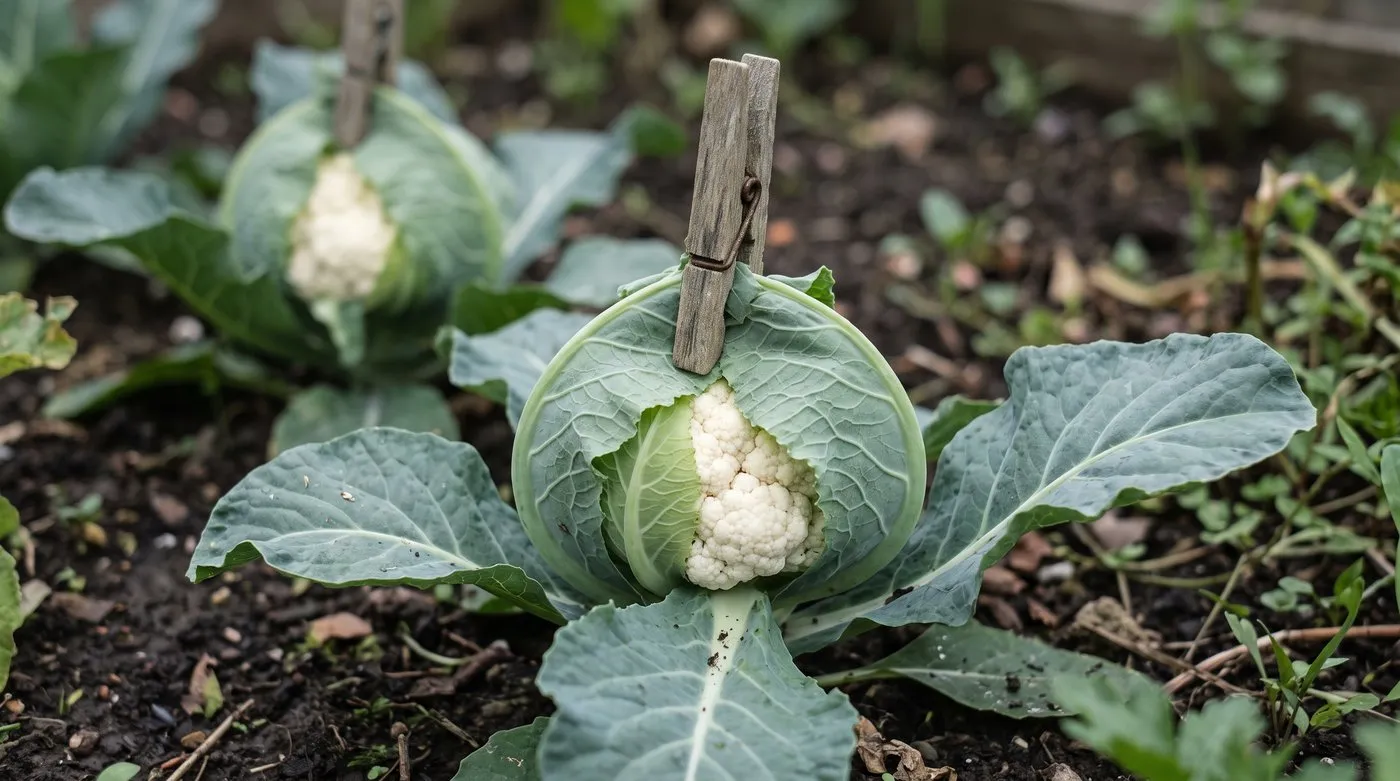
Fold a few big outer leaves over the head once it’s 5 to 7cm across. Shade it without squashing it, and check every few days.
Why has my cauliflower turned yellow or brown?
Sun and frost both mark white heads. Sun turns them creamy yellow in summer, and a hard frost can brown them. They’re still fine to eat, just stronger in flavour. Folding leaves over the head prevents it. On overwintering types, snap a leaf over the head as soon as it appears. Brown patches that go soft or slimy mean rot, so cut those heads quickly.
Self-blanching varieties have leaves that curl in over the head by themselves. They need less help, but check they’re fully covered.
Coloured varieties (purple Graffiti, Romanesco and orange types) don’t need blanching. Their colour is best in full sun.
Common cauliflower pests and diseases
Cabbage white caterpillars
Cabbage white butterflies lay eggs on the leaves from May to September. The caterpillars munch through leaves fast and leave mess in the heads. Fine mesh netting is the best defence. Check plants weekly and pick off any that sneak through.
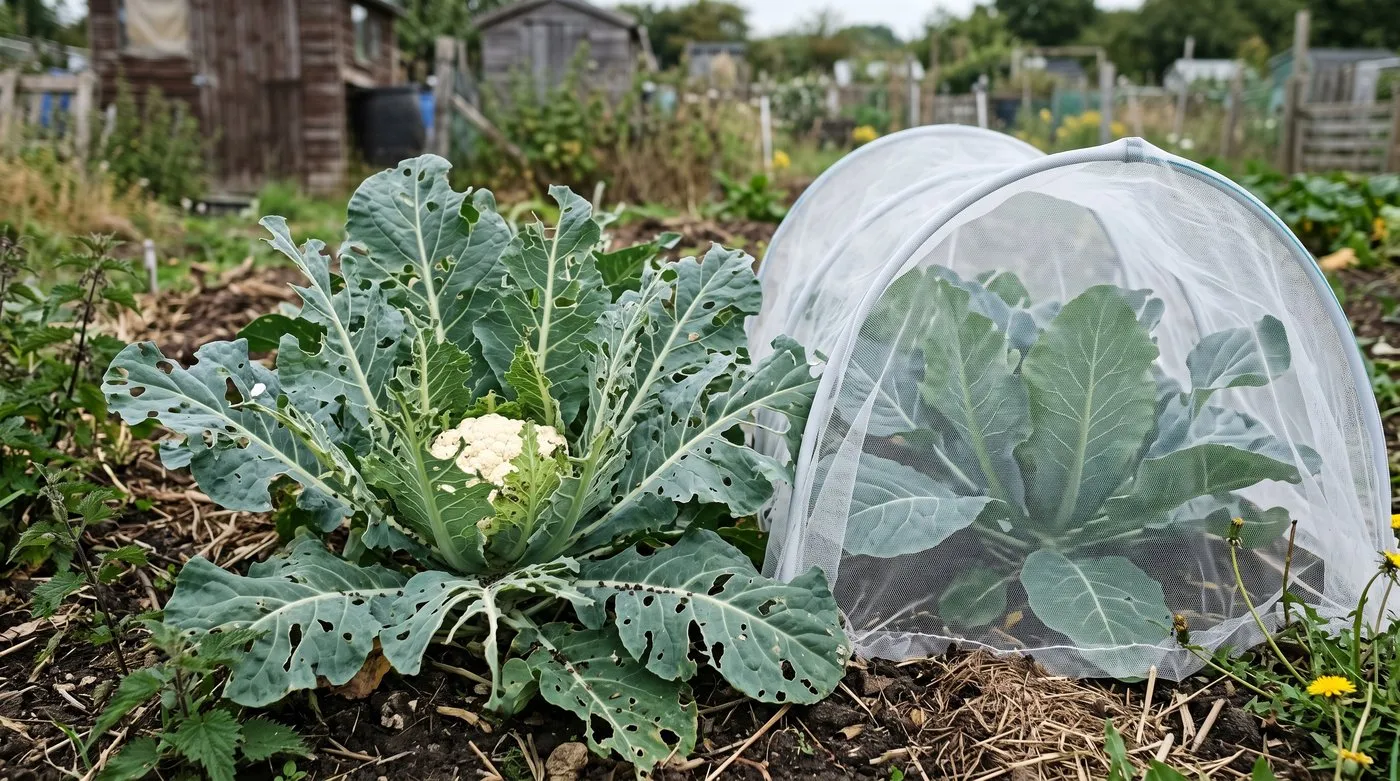
Ragged holes and droppings in the leaf folds mean caterpillars have got in. Fine mesh from planting day is far easier than picking them off later.
Whitefly
Cabbage whitefly gathers under the leaves, especially in autumn, and leaves sticky honeydew behind. Encourage ladybirds and lacewings, and remove the worst lower leaves. It rarely kills cauliflowers but can make heads smaller.
Clubroot
Clubroot is the most serious soil disease of brassicas. Roots swell into lumpy clubs, plants wilt in warm weather and heads are small and useless. The spores stay in the soil for many years.
Prevention is the only real answer. Lime acid soil, which helps but won’t get rid of it. Grow a resistant variety such as Clapton F1 or Clarify F1. Raise seedlings in fresh compost and plant with a good root ball. Never compost infected plants, and keep moving brassicas around the plot. The RHS clubroot guide has more on spotting and managing it.
Pigeons
Pigeons strip brassica leaves down to the stalks, especially in winter and early spring. Netting is the only reliable answer. Put it on a frame so pigeons can’t push it down onto the plants.
Downy mildew
Yellow patches on top of the leaves with greyish fuzz underneath mean downy mildew. It’s worse in damp, muggy weather. Space plants properly, remove affected leaves and water at the base.
Five common cauliflower mistakes
Most failures come from the plant getting a shock: pot-bound seedlings, loose soil, dry spells, acid soil or cutting too late.
1. Letting seedlings get pot-bound
Seedlings left too long in small modules grow circling roots that never spread out properly once planted. The plant can’t get enough water or food, and buttoning follows. Plant out four to six weeks after sowing, or pot on if the weather holds you up.
2. Planting into loose or poor soil
Planting into freshly dug, fluffy soil means the roots can’t grip. Plants rock, roots break and growth stalls. Tread the bed firm before planting, and add organic matter the autumn before so it has time to settle.
3. Uneven watering
This is the biggest cause of small, early heads. Any dry spell can trigger buttoning. Stick to a watering routine, especially from June to August, and mulch well.
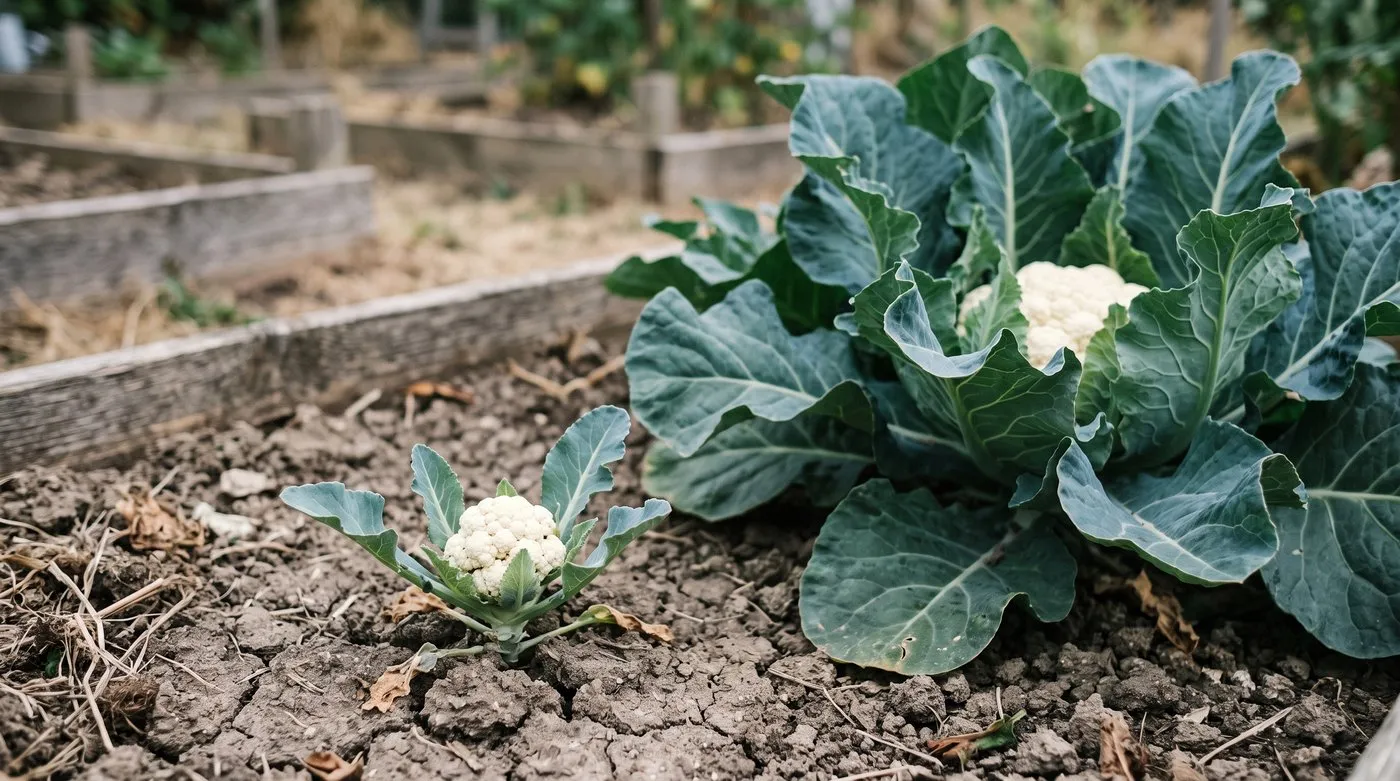
A tiny head on a small plant is called buttoning, and a dry spell is the usual trigger. Steady watering through summer is the best prevention.
4. Ignoring acid soil
Cauliflowers struggle in acid soil, and clubroot is more likely. Test before planting and lime if needed. Our UK vegetable planting calendar includes a rotation plan that keeps brassicas on limed ground.
5. Cutting too late
A cauliflower head is at its best for only a short time. Then the florets separate and the surface goes grainy. Check heads daily once they form and cut while they’re smooth and tight. Waiting for it to get just a bit bigger is how most heads get spoiled.
When and how to harvest cauliflower
Knowing when it’s ready
A ready head is firm, tight and dense, with a smooth surface. Press it gently with your thumb. It should feel solid. Once gaps appear between the florets, it’s past its best.
Size isn’t the main clue. All Year Round might give you a 15cm head, while Autumn Giant can reach 25cm. Go by firmness, not size.
Cutting
Cut the stem with a sharp knife about 5cm below the head, leaving two or three leaves around it. They protect the head and keep it fresh for longer.
Cut in the morning when it’s cool. Heads cut in afternoon sun don’t keep as well.
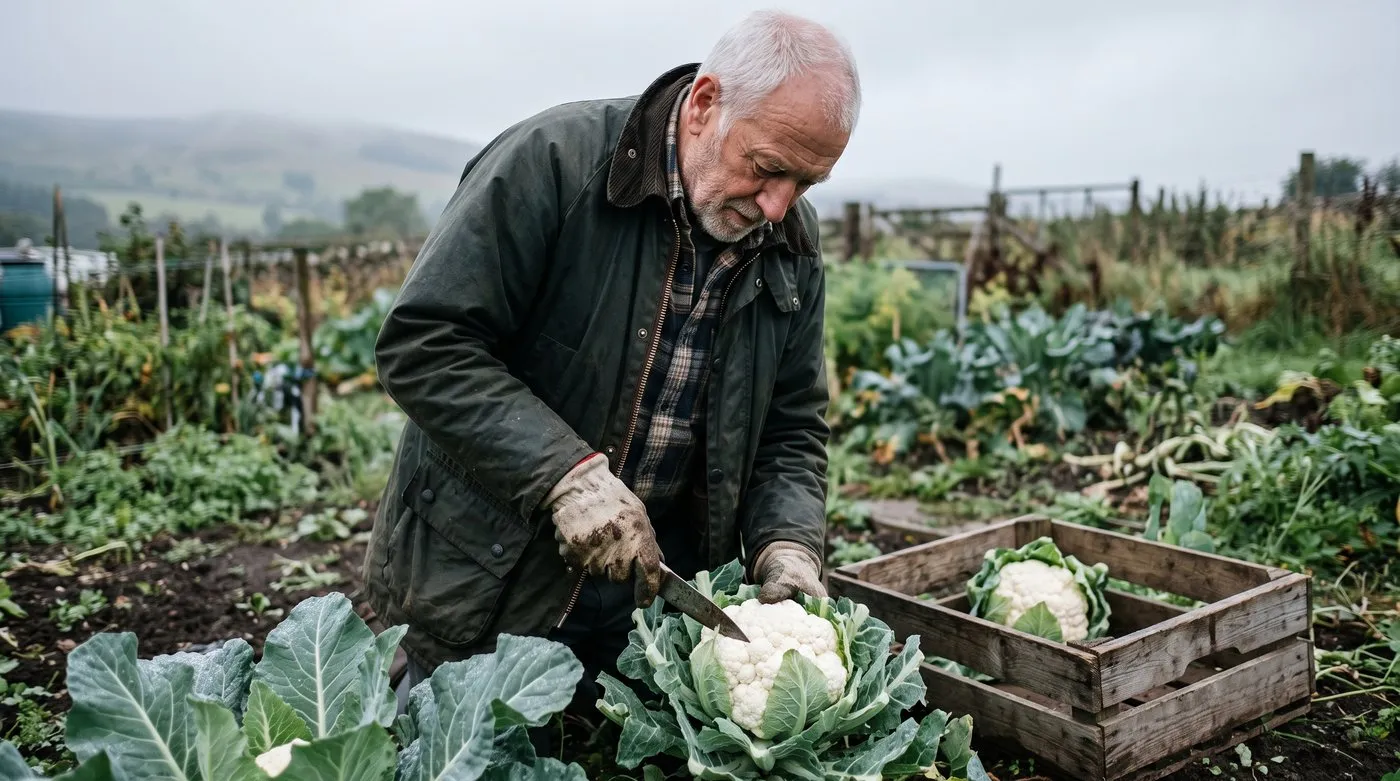
Cut in the cool of the morning and leave a few leaves round the head. They protect it and help it stay fresh for longer.
After harvest
Pull up the old plant and compost it, unless the roots are lumpy with clubroot. Bin or burn any clubbed roots.
Use the space straight away for a quick crop like salad leaves, spinach or spring onions. Our vegetable planting calendar has more ideas for what to sow after brassicas.
How to store cauliflower
Cauliflower is best eaten fresh, but a whole head keeps in the fridge for several days with a few leaves left on. For longer, freeze or pickle it.
To freeze, break the head into florets and blanch them in boiling water for 3 minutes. Plunge into iced water, drain well and freeze on a tray. Once frozen, tip them into bags. They’re great in soups, curries and cauliflower cheese.
Pickling is another good option. Small florets in spiced vinegar make a crunchy, tangy pickle.
Growing cauliflower in raised beds
Raised beds suit cauliflower because you choose the soil, so you can give it the rich, firm conditions it loves. They also drain better than open ground.
Fill with topsoil mixed with well-rotted compost, and lime if a test shows it’s acid. Firm it down well. Aim for at least 30cm depth.
You can plant a little closer in a raised bed, about 45cm apart in a zigzag. The main challenge is watering, as raised beds dry out faster. In summer you may need to water daily. A drip line along the bed keeps things steady without wetting the heads.
Can you grow mini cauliflowers?
Yes. Mini cauliflowers are summer types grown close together, about 15cm apart each way, and cut when the heads are tennis-ball size. The RHS says they’re quick and less fussy than full-size plants. They suit pots too, with up to four in a 40cm pot. Sow in modules from March to May and plant out at that spacing. The tight spacing keeps heads small, so don’t thin them.
Now you’ve mastered cauliflower, read our guide on growing Brussels sprouts in the UK to round off your winter brassicas.
Frequently asked questions
When should I sow cauliflower in the UK?
It depends on the type you’re growing. Sow summer cauliflowers indoors from January to March and plant out in April or May. Sow autumn types from March to May for heads from September to November. Sow overwintering types in May or June for heads the next spring. Check the packet, as varieties vary a little.
Why are my cauliflower heads so small?
It’s called buttoning, and stress causes it. Drought, a cold snap, root damage or hungry soil can make the plant form a tiny head too early. Water steadily, plant firmly, and don’t let seedlings get pot-bound in their modules.
What is the best cauliflower variety for beginners?
All Year Round is the most forgiving choice. It copes with a wider range of sowing dates and conditions than most, and gives reliable medium-sized white heads. If your soil has had clubroot, grow Clapton F1 instead.
How do I blanch cauliflower curds?
Fold the big outer leaves over the head and tie them. This keeps the sun off so the head stays white. Start when the head is about 5-7cm across and check it every few days. Purple Graffiti and Romanesco don’t need blanching.
Can I grow cauliflower in containers?
Yes, but it’s trickier than growing in the ground. Use a pot at least 45cm wide and 40cm deep, filled with rich compost. Water daily in warm weather, as any dry spell leads to tiny heads. Feed every fortnight and pick a compact variety like Snowball. Mini cauliflowers suit pots best.
How do I prevent clubroot in cauliflower?
Grow a resistant variety and lime acid soil. Clapton F1 and Clarify F1 both resist clubroot. Raise seedlings in fresh compost, plant with a good root ball, rotate brassicas around the plot and never compost infected roots. The spores last for many years, so prevention is the only answer.
When should I harvest cauliflower?
Cut it while the head is firm and tight. The surface should look smooth with no gaps between the florets. Once the florets start to separate, it’s past its best. Cut with a sharp knife and leave a few leaves around the head to protect it.
Our team produces practical UK gardening guidance from source research, contributor records and established horticultural practice. Editorial standards are overseen by Matt W.


