
Key takeaways
- Kale is fully hardy and gives fresh leaves right through a UK winter
- Sow in modules from April to June and plant out at four true leaves
- Net plants as soon as they go in, against pigeons and cabbage whites
- Pick the outer leaves first and the plant keeps going for months
- Leaves taste sweeter after a frost
- For baby salad leaves, sow thickly and cut after 4-5 weeks
Kale has been grown in British gardens for centuries, long before anyone called it a superfood. In Scotland and northern England it was a kitchen garden staple because it stood through the worst winter weather when little else did. It’s still one of the most reliable vegetables you can grow.
Which kale varieties grow best in the UK?
Pick by how you’ll use the leaves and how much room you have. Some kales grow tall and dramatic, others stay small enough for a pot. All are hardy, but the flavour, texture and colour vary a lot.
Cavolo Nero (Tuscan or black kale) is the cook’s favourite. It has long, narrow, crinkly leaves in a dark blue-green, with a rich, slightly nutty taste. Plants grow tall and upright, like a little palm. It’s the one for Italian dishes, slow cooking and kale crisps. It’s very hardy, though a touch less so than the curly types.
Dwarf Green Curled is the classic British allotment kale. It stays compact at 40-50cm, so it suits small plots, raised beds and pots. The tightly curled leaves taste mild and slightly peppery. It’s very hardy and crops for ages. Grow this if space is tight.
Red Russian has flat, oak-shaped grey-green leaves on purple stems, turning more purple after frost. It’s one of the most tender kales and lovely raw in salads. The flavour is mild and sweet. Try it if you find curly kale too tough.
Redbor F1 is as pretty as it is tasty. Its tightly curled leaves are a deep crimson-purple and keep their colour all winter. The taste is mild and slightly sweet. It looks striking in a flower border.
Winterbor F1 is one of the very hardiest kales. It has thick, curly blue-green leaves on sturdy plants, and the flavour gets much better after frost. It’s the best pick for cold, exposed gardens in the north.
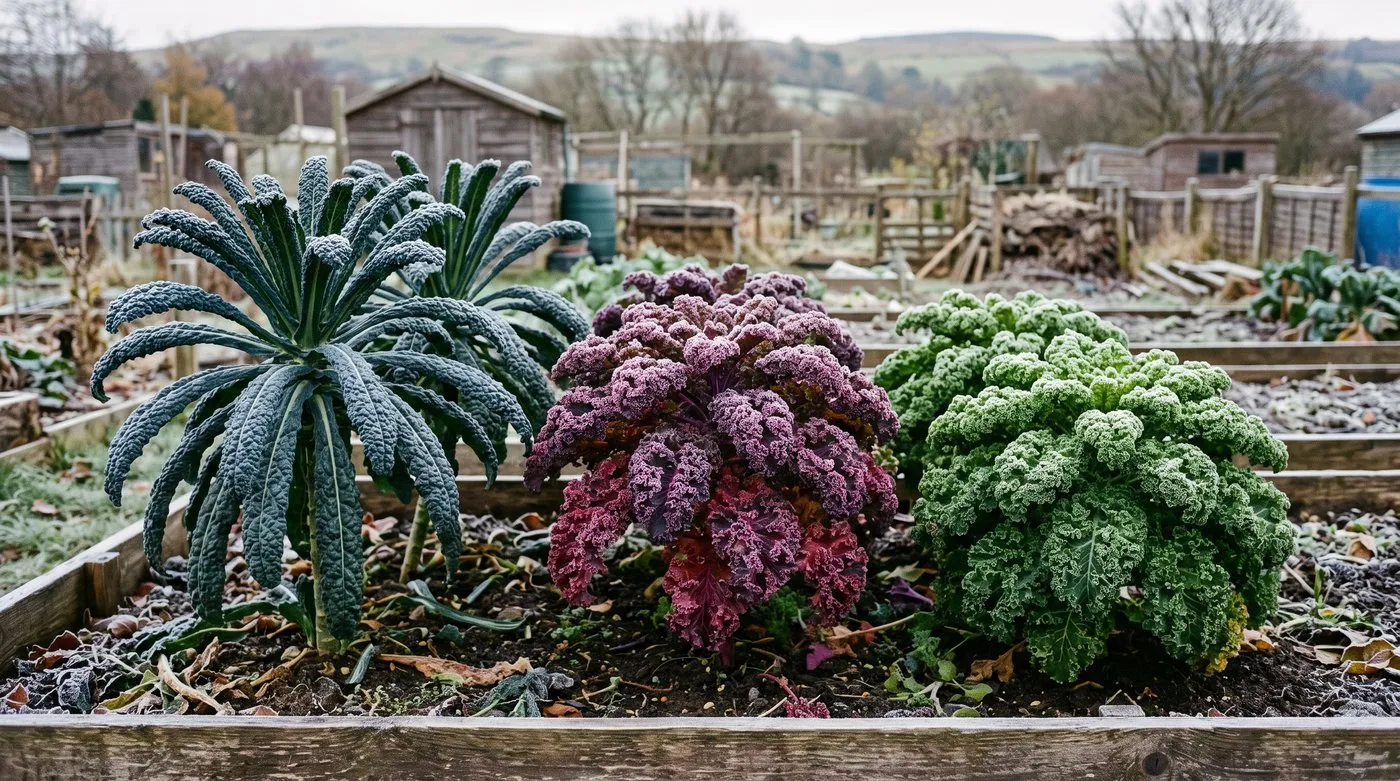
Growing two or three kinds gives you flavour and toughness. Cavolo Nero is the cook’s pick, while curly types stand up to the worst weather.
Kale variety comparison
| Variety | Size | Leaves | Colour | Taste | Best for |
|---|---|---|---|---|---|
| Cavolo Nero | Tall | Long and crinkly | Dark blue-green | Rich, nutty | Cooking, Italian dishes |
| Dwarf Green Curled | Short | Tightly curled | Dark green | Mild, peppery | Small gardens, pots |
| Red Russian | Medium | Flat, oak-shaped | Grey-green, purple stems | Mild, sweet | Salads, eating raw |
| Redbor F1 | Medium | Tightly curled | Deep crimson-purple | Mild, sweet | Borders, good looks |
| Winterbor F1 | Medium | Thick and curly | Blue-green | Sweet after frost | Cold, windy gardens |
Gardener’s tip: Grow two kinds. Cavolo Nero for the kitchen and Dwarf Green Curled or Winterbor for the winter plot gives you great flavour and plenty of toughness.
When to sow kale in the UK
You can sow kale any time from April to June, so it’s easy to fit in around busy spring jobs. Our UK vegetable planting calendar shows where it sits alongside your other brassicas.
Indoor sowing (April to June)
Sow two seeds per module or 8cm pot of seed compost, 1cm deep. Stand them on a bright windowsill, in an unheated greenhouse or in a cold frame. They usually come up within a week. Keep the strongest seedling once the first true leaves appear. New to seed sowing? Our guide to sowing seeds indoors walks you through it.
April sowings are ready to plant out in May or June. They start cropping from late summer and keep going all winter, so they give the longest harvest.
May and June sowings go out in June and July and crop from September or October. Later sowings often miss the worst of the cabbage root fly.
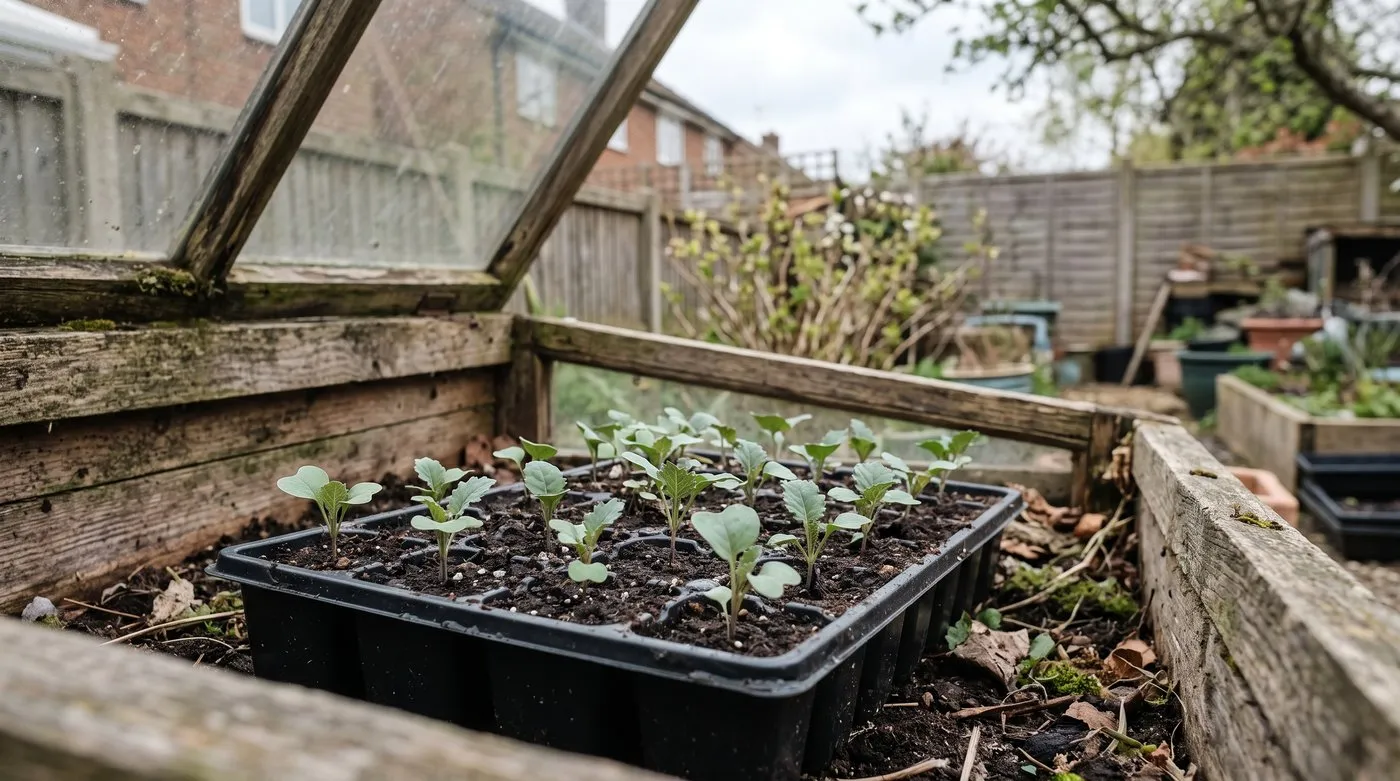
Keep the strongest seedling in each module once the first true leaves appear. They’re ready to plant out at about four true leaves.
Direct sowing outdoors
You can sow straight into the ground from late April once the soil has warmed up. Sow 1cm deep in rows 45cm apart, then thin seedlings to 45cm. Seedlings in the ground get hit harder by slugs, so keep an eye out.
Module-raised plants are usually more reliable. They get a head start and you can fill gaps exactly where you want.
How to transplant kale outdoors
Plant out when seedlings have four true leaves and a sturdy stem, usually 4-6 weeks after sowing. Harden them off for a week first: put them outside by day and bring them in at night.
Spacing and positioning
Plant 45cm apart in rows 60cm apart, or 50cm for tall kinds like Cavolo Nero. The space helps air move round the plants and keeps disease down.
Kale grows in sun or part shade. It copes with more shade than most veg and crops fine with about four hours of sun a day. That shady bed that’s too dark for tomatoes? Kale will be happy there.
Soil preparation
Kale likes firm, rich soil that isn’t acidic. Dig in garden compost or well-rotted manure a few weeks before planting. Then tread the soil down firmly. Brassicas hate loose, fluffy ground because their roots can’t grip.
Lime acid soil. Club root, a nasty brassica disease, loves acid conditions. A cheap soil test kit tells you in minutes. If you need lime, spread it in winter at the rate on the pack, at least two months before planting.
Plant each seedling a little deeper than it was in the module, up to the first pair of leaves. It makes a sturdier plant. Water well and check them daily for the first week.
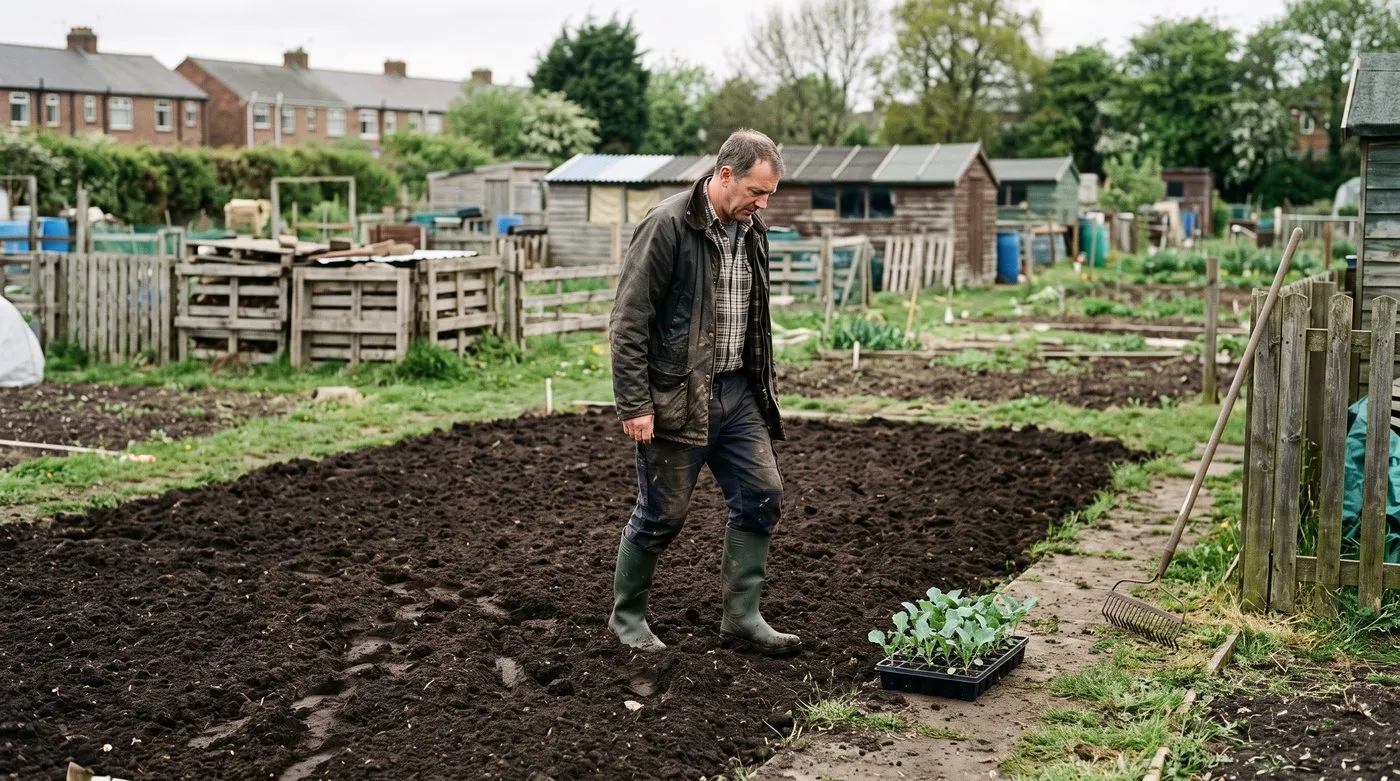
Tread the bed down firmly before planting. Kale needs solid ground to anchor its roots through winter gales.
Protecting kale from pests
Pigeons and cabbage white butterflies are the big two. Either can strip plants to bare stalks in days. Netting is the best fix by far, and it should go on the day you plant.
Netting against pigeons
Pigeons treat kale like a winter buffet from autumn to spring. Put netting over hoops or canes so it sits at least 30cm above the leaves. If the net rests on the plants, they’ll just peck through it.
Bend lengths of plastic water pipe into hoops over the row and clip the netting on with clothes pegs. Weigh the edges down with bricks or bury them. Any gap is an open door.
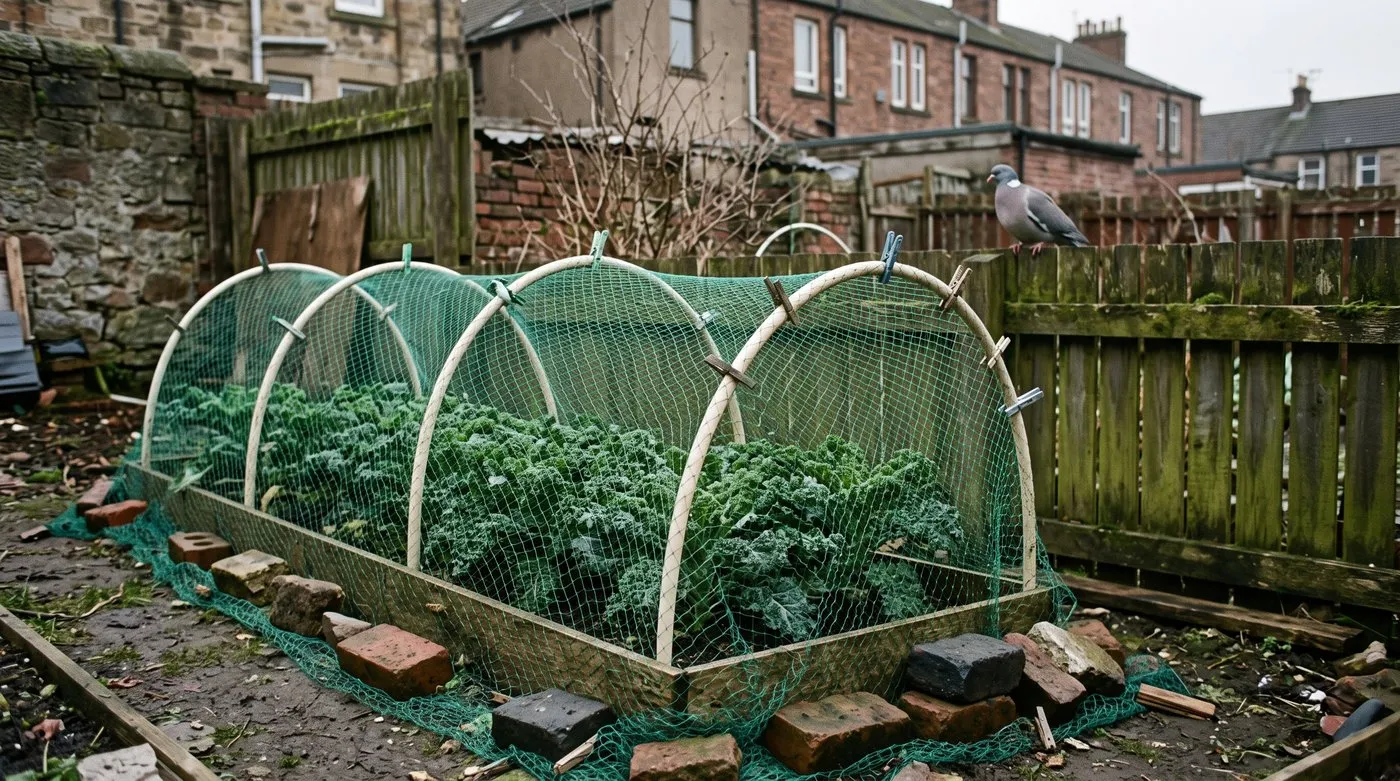
Keep the net at least 30cm above the leaves, or pigeons simply peck through it. Weigh down every edge, as any gap is an open door.
Netting against cabbage white butterflies
The large white and small white butterflies fly from April to October. They lay clusters of yellow eggs under brassica leaves, and the caterpillars can chew a plant down to its veins very fast.
Cover kale with fine insect mesh from May. It’s the most reliable way to keep them off without sprays. Lift it to pick and put it straight back. Look under the leaves weekly and squash any eggs. The RHS guide to cabbage caterpillars helps you tell which caterpillar is which.
Slugs and snails
Young plants are most at risk, and slugs can finish off a small one overnight. Use a few ferric phosphate slug pellets, beer traps or evening torch patrols. Once plants are growing strongly they shrug off a bit of nibbling.
Cabbage root fly
The fly lays eggs at the base of the stem and the grubs eat the roots, so the plant wilts. Fit a brassica collar round each stem at planting. It’s just a 15cm square of carpet underlay, card or felt with a slit to the middle. It stops the fly laying eggs next to the stem.
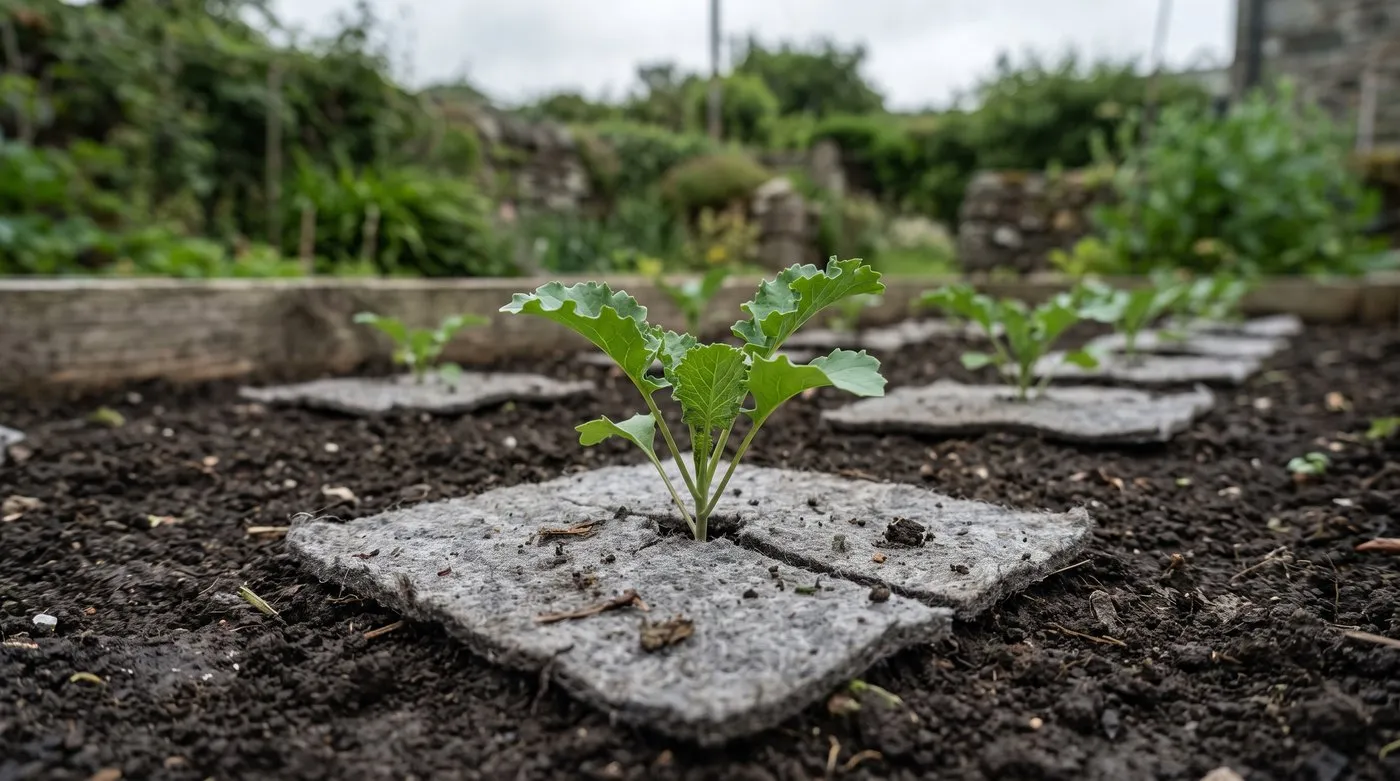
A simple square collar stops the fly laying eggs right next to the stem. Fit one when you plant and leave it in place.
Whitefly
Tiny white insects under the leaves, often in late summer. They’re a nuisance rather than a disaster. A jet of water knocks them off, and hoverflies and lacewings help keep them down.
How to grow baby kale for salads
Baby kale leaves are tender enough to eat raw and ready in just 4-5 weeks. It’s a quick crop from a small space.
Sowing for baby leaf production
Sow thickly in rows 15cm apart, or scatter seed over a shallow tray of multi-purpose compost. Cover with 1cm of compost and water gently. Red Russian and Cavolo Nero are the best kinds for baby leaves.
Keep the compost moist. Cut the leaves with scissors when they’re 8-10cm tall, about 4-5 weeks after sowing. Cut 2-3cm above the base and they’ll grow back for a second, sometimes third, cut.
Succession sowing for continuous salad leaves
Sow a fresh tray every 3-4 weeks from April to September for a steady supply. Each tray gives two or three cuts.
A kitchen windowsill, cold frame or shallow pot on the patio is all you need.
Month-by-month kale growing calendar
| Month | What to do |
|---|---|
| January | Pick leaves. Check nets after storms. Remove yellow leaves |
| February | Keep picking. Order seed for spring |
| March | Prepare beds and dig in compost. Lime acid soil if needed |
| April | Start sowing in modules. Begin baby leaf sowings |
| May | Keep sowing. Plant out April sowings and net them straight away |
| June | Last sowings. Plant out May sowings. Water new plants |
| July | Plant out June sowings. Water in dry spells. Give a feed |
| August | Water and weed. Check nets. Remove eggs and caterpillars |
| September | First pickings of outer leaves |
| October | Main picking begins. Stake tall kinds if needed |
| November | Frost sweetens the leaves. Keep picking |
| December | Keep picking. Check nets against pigeons |
How to harvest kale the right way
Pick it right and one plant gives you leaves for months. Pick it wrong and it stalls.
Cut-and-come-again harvesting
Always pick the outer leaves first. Start at the bottom and work up, snapping leaves off where they meet the stem. Leave the top growing point and the young middle leaves alone. The plant keeps growing from the top to replace what you take.
Take no more than a third of the leaves at once. A weekly pick of a handful of leaves per plant keeps it going all season.
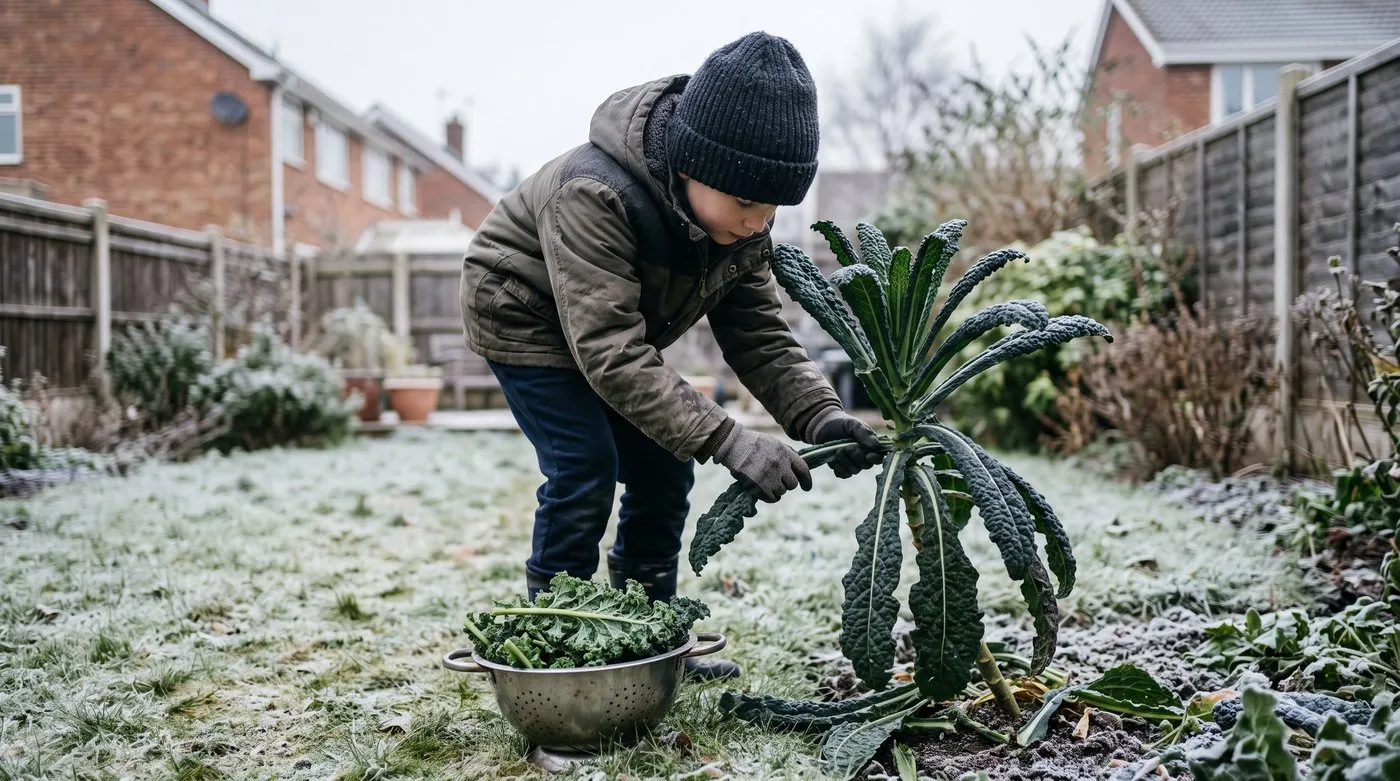
Pick from the bottom up and leave the top growing. Frost makes the leaves sweeter, so winter pickings are the best.
When to start harvesting
Start when the outer leaves are 15-20cm long, usually from late August or September for April sowings. Don’t strip young plants too early. Let them build up a good set of leaves first.
Why kale tastes better after frost
Frost makes kale sweeter. When it gets cold, the plant turns some of its starch into sugar to help protect itself from freezing. That gives you sweeter, less bitter leaves from November onwards. For the best flavour, save your main picking for after the first hard frost.
Common mistakes when growing kale
Dodge these five and you’ll have healthier plants and bigger pickings.
Not netting. Pigeons will find your kale. Unnetted winter kale can be wiped out in days. Net at planting and keep it on until you clear the plants.
Planting in loose soil. Kale needs firm ground to anchor its roots through winter storms. Tread the bed down before planting. Plants in fluffy soil rock in the wind and never settle.
Ignoring club root. This disease swells and twists the roots and stunts the plant. Once it’s in your soil, it stays for many years. Lime acid soil, rotate brassicas round the plot, and never plant out sickly seedlings.
Picking from the centre. The middle of the plant is its growing point. Pick from there and it stops making new leaves. Always work from the outside in.
Leaving yellow lower leaves. Dead leaves at the base attract slugs, carry disease and block air flow. Snap them off regularly.
Kale nutrition and health benefits
“Superfood” is a marketing word, but kale really is good for you. It’s packed with vitamins K, C and A, and gives you calcium, iron, potassium and fibre, all for very few calories.
Light cooking is the way to go. A few minutes’ steaming keeps most of the goodness and makes the leaves tender. Raw kale in a salad is great too. Long boiling loses a lot of the good stuff, and the flavour.
Growing kale in containers
No garden? Kale is happy in a pot on a patio or balcony. Dwarf Green Curled is the best one for pots, as it stays compact and bushy.
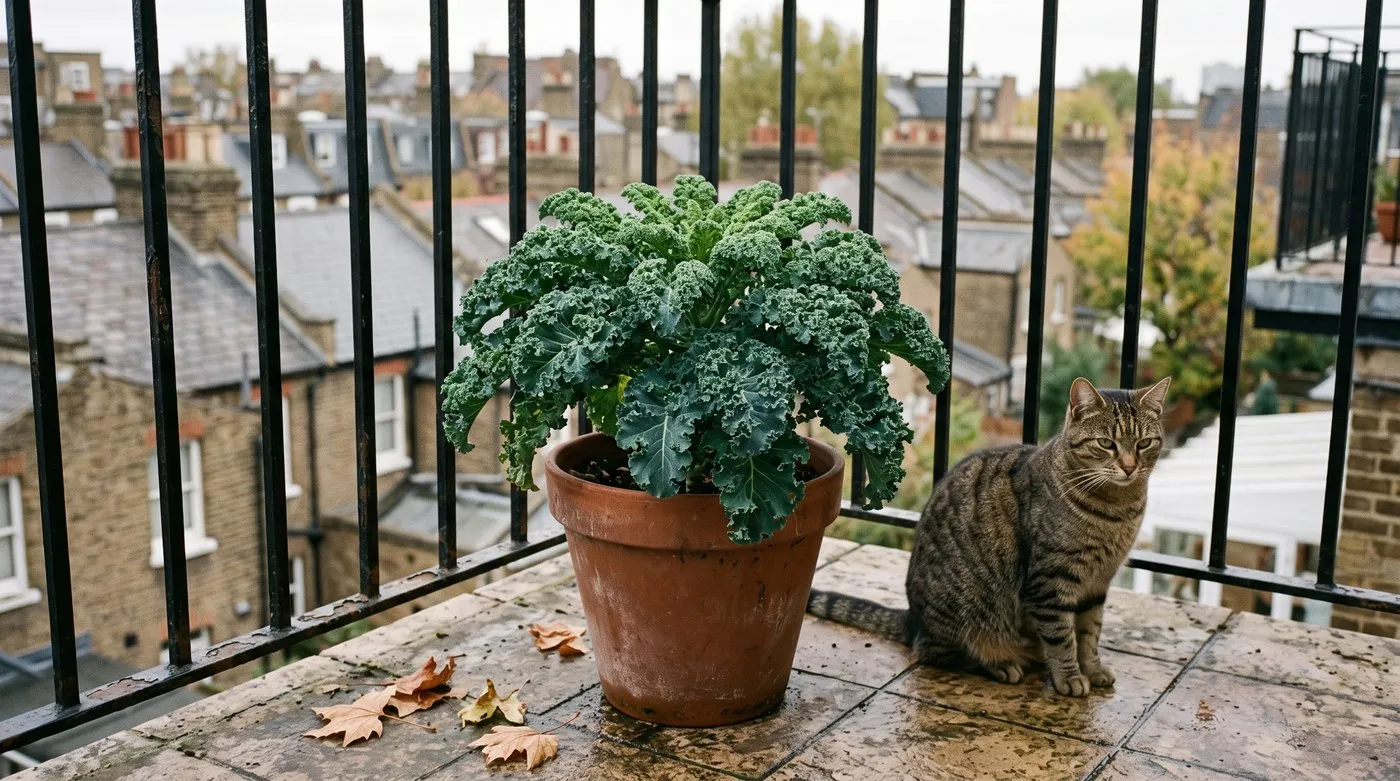
Dwarf Green Curled is the best kale for a pot. Tuck it against a sheltered wall for winter and keep the drainage holes clear.
Container requirements
Use a pot at least 30cm deep and 30cm wide for one plant. Make sure it drains well. Fill with multi-purpose compost with a few handfuls of perlite mixed in.
Feeding and watering
Pots dry out faster than the ground, so water often, especially in hot spells. From July, feed every two weeks with a balanced liquid feed.
Winter care
Move pots against a sunny, sheltered wall for winter, out of the worst wind. Soggy compost is more of a risk than frost, so keep the drainage holes clear.
Ornamental kale varieties
Some kales are pretty enough for the flower border. Redbor F1 is the star, holding its crimson colour all winter. Cavolo Nero looks great too, with its tall, palm-like shape.
Ornamental kale sold as winter bedding in garden centres from September makes rosettes of pink, purple, white and cream. You can eat it, but it’s bred for looks, so the leaves are tougher and more bitter.
For the best of both, grow Redbor F1 or Red Russian somewhere you’ll see it. You get a good-looking plant and tasty leaves all winter.
Kale in crop rotation
Kale is a brassica, in the same family as cabbage, broccoli, cauliflower and Brussels sprouts. They all share pests and diseases, so grow them together and move them to a new bed each year.
Use a three or four-year rotation, so no brassica goes back in the same spot within that time. It helps keep club root and cabbage root fly at bay. Kale does well after peas and broad beans, which leave some extra nitrogen in the soil.
When you clear the kale in spring, the bed is free for a summer crop like potatoes, courgettes or squash.
Storing and using kale
Fresh kale keeps in the fridge for about a week. Wrap the leaves unwashed in a damp tea towel and pop them in the salad drawer. Wash just before using.
Freezing kale
Kale freezes well for soups, stews and smoothies. Strip the leaves off the tough middle rib, blanch in boiling water for 2 minutes, then plunge into cold water. Drain well, freeze flat on a tray and then bag it up. Use within a year.
Quick kale recipes
Kale crisps: Tear the leaves, toss with olive oil and a pinch of salt, and bake at 150C for 12-15 minutes until crisp.
Winter kale soup: Fry onion and garlic, add diced potato and stock, and simmer until tender. Stir in shredded kale for the last 5 minutes. Blend half and leave half chunky.
Raw kale salad: Finely shred young Red Russian or baby kale. Rub with lemon juice and olive oil for 2 minutes to soften. Add toasted seeds, dried cranberries and shaved parmesan.
Now you’ve got kale sorted, read our guide on raised bed gardening for beginners to see how a raised bed makes winter brassicas even easier.
Why kale is such a good choice for UK gardeners
Kale asks for very little and gives back loads. A packet of seed is cheap, and a few plants keep a family in greens from September to March. It stands through the worst British winter and tastes better for it. Eat it raw, cooked, frozen or as crisps. It’s happy in raised beds, pots, borders and allotments. Few vegetables give you so much for so little effort.
Frequently asked questions
When should I sow kale in the UK?
Sow kale from April to June. Start the seeds in modules or small pots indoors or in a greenhouse. Plant them out from May to July once they have a few true leaves. You can also sow straight into the ground from late April in milder areas, though module plants usually get going faster and suffer less from slugs.
Can kale survive a UK winter?
Yes, kale gets through most UK winters outside with no help. Frost, snow and freezing rain don’t bother it, so you can pick fresh leaves all through December, January and February. Soggy soil is more of a problem than cold. Stake tall varieties in windy gardens.
Why does kale taste better after frost?
Cold weather makes the plant turn some starch into sugar. The sugar helps protect the leaves from freezing, and it makes them sweeter and less bitter. Most growers find winter-picked leaves taste noticeably nicer than early autumn ones.
How do I protect kale from cabbage white butterflies?
Cover plants with fine insect mesh straight after planting. Hold the mesh up off the leaves on hoops and pin it down at ground level so butterflies can’t sneak in. Check under the leaves now and then for clusters of yellow eggs, and rub off any eggs or caterpillars you find.
Should I remove the lower leaves of kale?
Yes, snap off yellowing lower leaves regularly. Old leaves attract slugs, can carry disease and block air flow around the stem. Snap them off cleanly where they join the stem. By midwinter, a well-kept plant often looks like a little palm tree, with a bare stem and a crown of leaves.
Can I grow kale in containers?
Yes, kale grows well in a pot at least 30cm deep and wide. Grow one plant per pot in peat-free multi-purpose compost and water regularly. Feed every couple of weeks in summer. Compact Dwarf Green Curled is the best choice for pots. Move them somewhere sheltered in winter.
Is kale a superfood?
“Superfood” is a marketing word, but kale is very good for you. It’s packed with vitamins K, C and A, and gives you fibre, folate and some calcium and iron. Like other leafy greens, it’s best as part of a varied diet. Light cooking keeps it tender and nutritious.
Our team produces practical UK gardening guidance from source research, contributor records and established horticultural practice. Editorial standards are overseen by Matt W.


