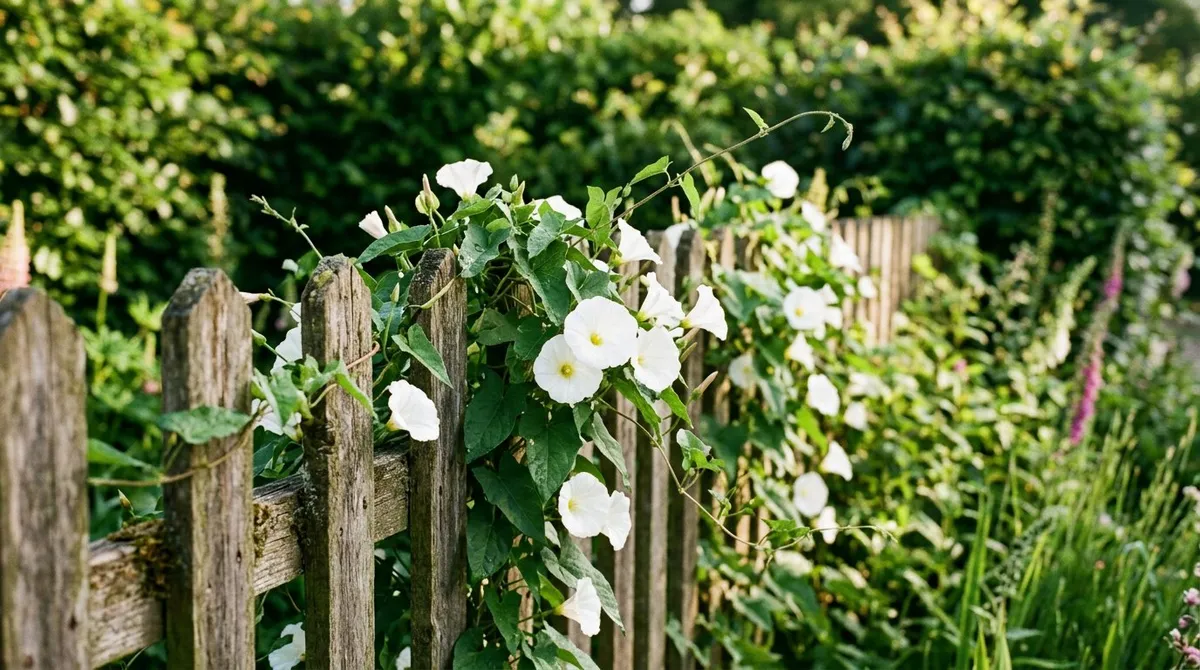
Bindweed is one of the most persistent perennial weeds in UK gardens, with two native species: field bindweed (Convolvulus arvensis) reaching 2m and hedge bindweed (Calystegia sepium) climbing to 3m or more. Root systems extend 5m deep and spread 3-4m laterally. A 5cm root fragment can regenerate a new plant within 14 days. Complete eradication takes 3-5 years of consistent treatment.
Key takeaways
- Bindweed roots can grow 5m deep, making single treatments ineffective
- A 5cm root fragment left in the soil will regenerate a new plant within 14 days
- Glyphosate is most effective when applied to 30-45cm stems in June-August
- Organic control requires cutting or pulling every 7-10 days for at least two full growing seasons
- Black polythene mulch suppresses bindweed after 12-18 months of total light exclusion
- Field bindweed has smaller pink-striped flowers (2cm); hedge bindweed has large white trumpets (5-7cm)
bindweed weed control invasive weeds glyphosate organic gardening perennial weeds
Our team produces practical UK gardening guidance from source research, contributor records and established horticultural practice. Editorial standards are overseen by Matt W.