Key takeaways
- Creeping thistle spreads by brittle creeping roots and by wind-blown seed
- Small pieces of broken root regrow, so careless digging makes it worse
- Cutting to the ground every two to three weeks slowly starves the roots
- Cut off flower heads before they turn to fluffy seed
- Never rotavate a patch, as it chops the roots into new plants
- It is listed under the Weeds Act 1959, but having it in your garden is not illegal
If prickly plants with small lilac flowers are spreading through your border or lawn, it is almost certainly creeping thistle. It is a stubborn perennial weed, but you can beat it. It spreads in two ways: by brittle roots that run underground, and by wind-blown seed on fluffy thistledown. Shut down both and it slowly gives up.
The answer for most gardens is simple. Cut it to the ground every two to three weeks, never let it flower, and keep going for a few seasons. This guide shows how to identify creeping thistle, why digging often backfires, when weedkiller helps, and what the law says. For other common weeds, see the garden weeds identification guide.
How to identify creeping thistle
Creeping thistle (Cirsium arvense) grows 30-120cm tall, usually in spreading patches. Look for:

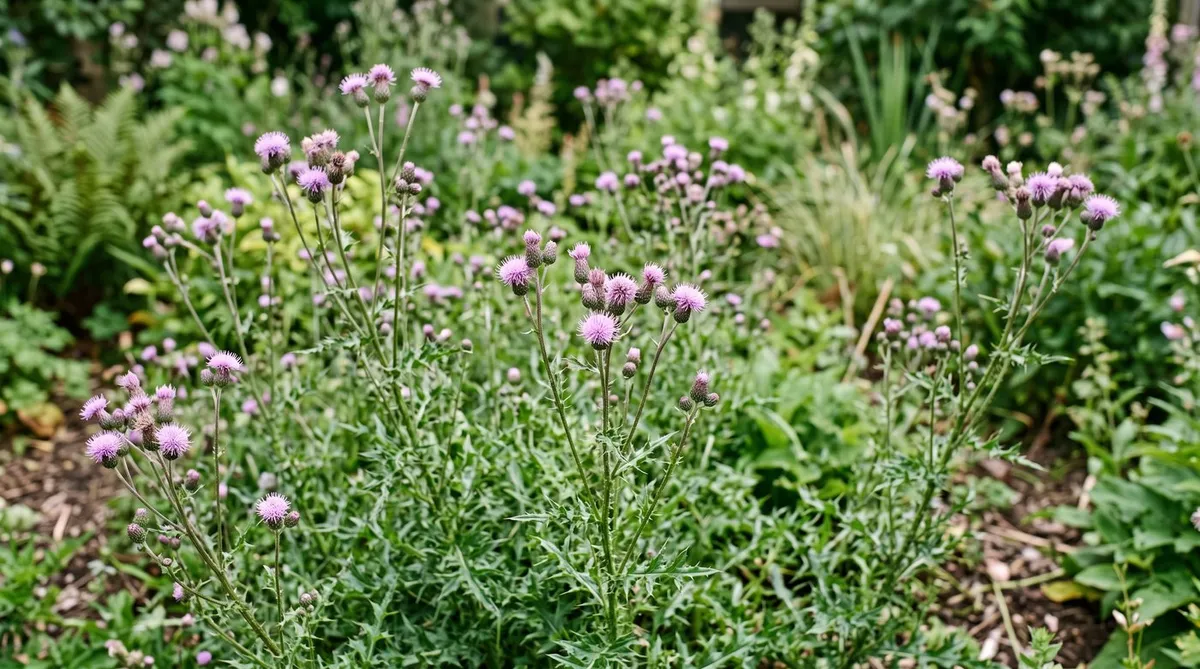
Small lilac flowers in clusters and smooth, wingless stems set creeping thistle apart from spear thistle.
- Leaves that are long, wavy-edged and spiny, often deeply lobed
- Stems that are mostly smooth, without spiny wings
- Small lilac flower heads, about 1.5-2.5cm across, in clusters at the top of the stems
- Flowers from July to September, followed by fluffy white thistledown
- Colonies of many stems coming up from underground roots
Spear thistle is the one most often confused with it. Spear thistle grows as a single plant with spiny wings along the stems and bigger flower heads. It has no creeping roots, so it’s easier to dig out.
Why creeping thistle keeps coming back
The secret is underground. Creeping thistle sends out creeping roots that spread sideways through the soil. They store food and throw up new shoots along their length. That’s why it appears as a patch rather than a single plant.
The roots are also brittle. Snap them and small broken pieces can grow into new plants. So when you dig and break the roots, or rotavate a patch, you can end up with more thistles than you started with.
That leaves two routes. Remove every scrap of root, which is only realistic for young plants in loose soil. Or starve the roots by cutting again and again. Couch grass and ground elder behave in a similar way.
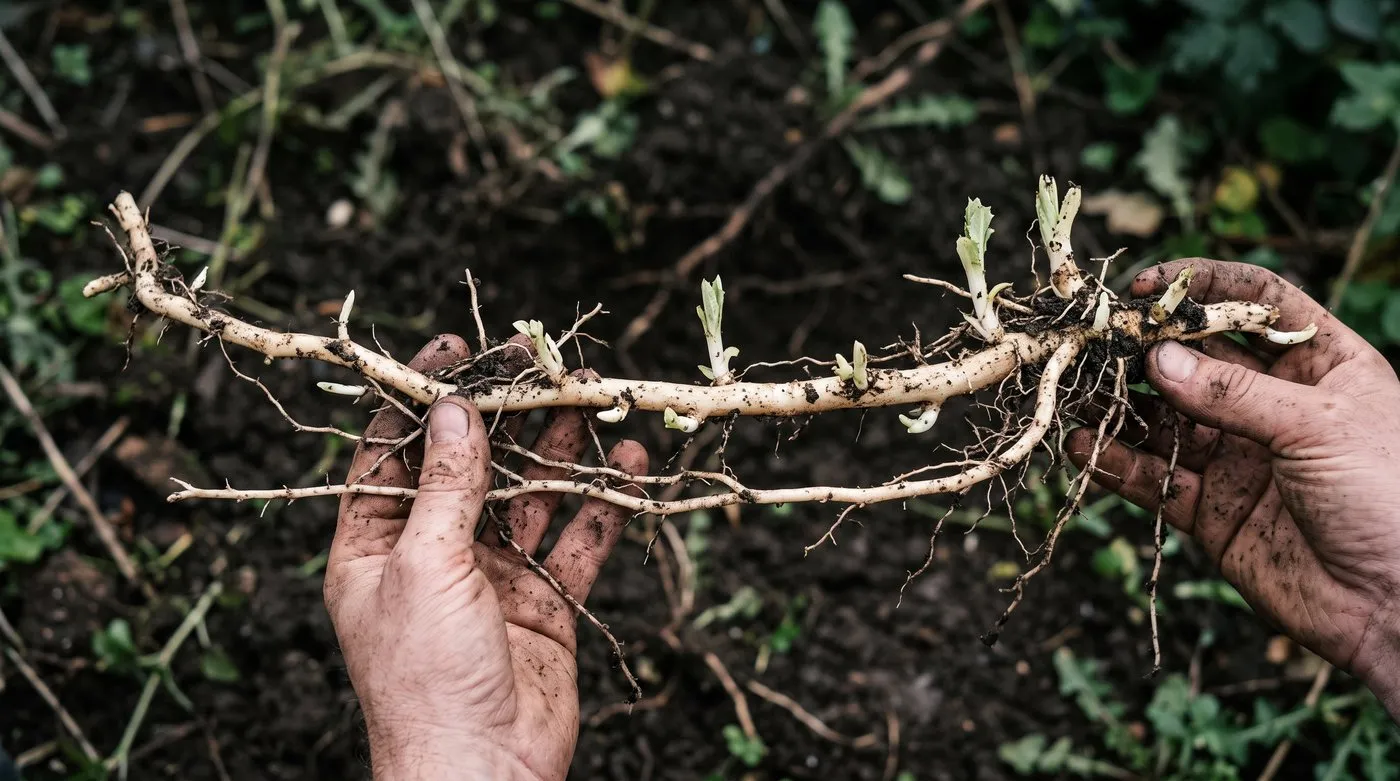
Creeping roots carry new shoots along their length. Snap them and each broken piece can make a new plant.
How to kill creeping thistle by cutting
Repeated cutting is the most reliable way to get rid of an established patch, and it needs no chemicals.
It works because leaves feed the roots. Each time you cut the thistle down, it uses stored root energy to grow new leaves. Cut again before those leaves can top the roots back up, and the roots weaken. Keep going and they eventually run out.
How to do it:
- Start in spring as soon as the first shoots appear.
- Cut to the ground with shears, a hoe, a strimmer or the mower.
- Repeat every two to three weeks through the growing season.
- Don’t let the shoots get much above ankle height between cuts.
- Keep going for two or three seasons until shoots stop coming back.
In a lawn, regular mowing keeps creeping thistle down by itself. The guide to lawn weeds covers other lawn problems.

Cutting to the ground every few weeks starves the roots. Sticking with it matters more than how hard you cut.
When is it worth digging out creeping thistle?
Digging only works if you get all of the root, including the long side runners. That’s realistic when:
- The plants are young and haven’t built a big root system yet
- The soil is light, sandy or loose, so roots lift cleanly
- It’s a single plant or two, not a dense patch
Loosen the soil widely with a fork. Follow the roots along and tease them out rather than snapping them. Check back in a few weeks and dig out anything that regrows.
On heavy clay or in an established patch, don’t try to dig it clean. Cut instead.
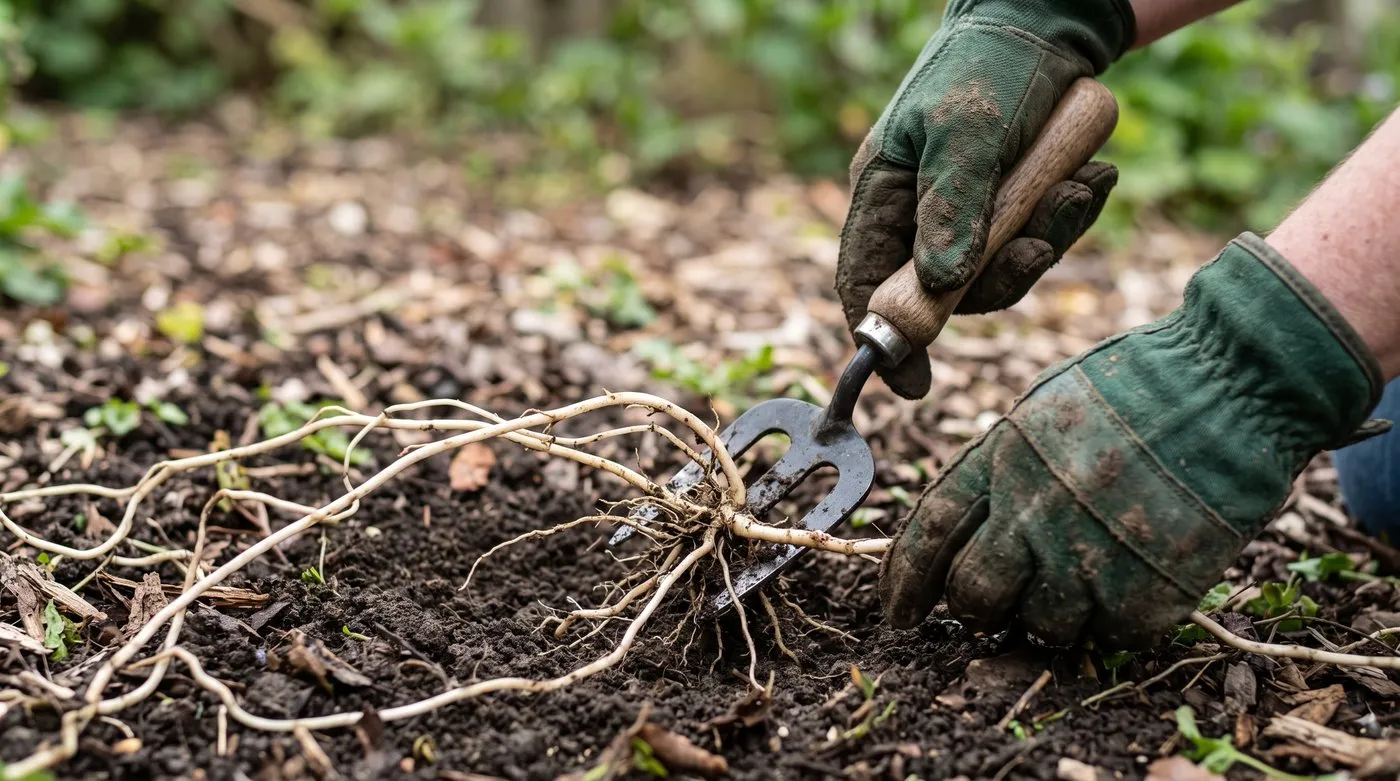
In loose soil, follow the roots out with a fork rather than snapping them. On clay, cutting is the better bet.
Warning: Never rotavate ground with creeping thistle in it. The rotavator chops the brittle roots into pieces and spreads them through the soil, turning a patch into a carpet of thistles.
Why you should never let it seed
The other key rule is to stop creeping thistle setting seed. Each flower head ripens into fluffy thistledown that the wind carries across your garden and beyond.
Cut or mow flower heads before the purple fades to white fluff, from July onwards. If seed heads have already formed, cut them carefully, bag them and put them in the bin rather than the compost heap. A patch you are cutting regularly won’t flower anyway, which is another plus for the cutting method.

Once the flowers turn to fluff, the seed blows far and wide. Cut the heads before this stage.
Does weedkiller work on creeping thistle?
A systemic weedkiller, such as one based on glyphosate, can help on a big infestation. It travels down into the roots.
Timing matters. Apply it when flower buds are forming, as the plant is then sending food down to its roots. Expect to need a second treatment, as one rarely kills the whole root system. Always use a product approved for that use and follow the label. Keep it off plants you want to keep.
In a lawn, a selective lawn weedkiller can control thistles without harming the grass.
If you’d rather avoid chemicals, repeated cutting is the way to go. Home-made sprays such as vinegar or salt are not legal to use as weedkillers and can harm the soil. The guide to preventing weeds without chemicals has more ideas.
What does the law say about creeping thistle?
Creeping thistle is one of five weeds listed as “injurious” under the Weeds Act 1959. The others are spear thistle, broad-leaved dock, curled dock and common ragwort.
It is not illegal to have creeping thistle in your garden. The Act lets the authorities require a landowner to control these weeds where they risk spreading, mainly onto farmland. In practice, be a good neighbour and don’t let it seed onto nearby land, especially fields and grazing. The guide to broad-leaved dock covers another weed on the list.
Can you leave some creeping thistle for wildlife?
Yes, if it’s in the right place. Bees, butterflies and hoverflies visit the flowers in late summer. Goldfinches love the seeds in autumn.
Control it firmly in beds, lawns and veg patches. In a rough corner well away from borders and farmland, you could leave a small clump for wildlife. Just cut the heads before most of the seed blows away. The guide to making a wildflower meadow covers managing a wilder patch.
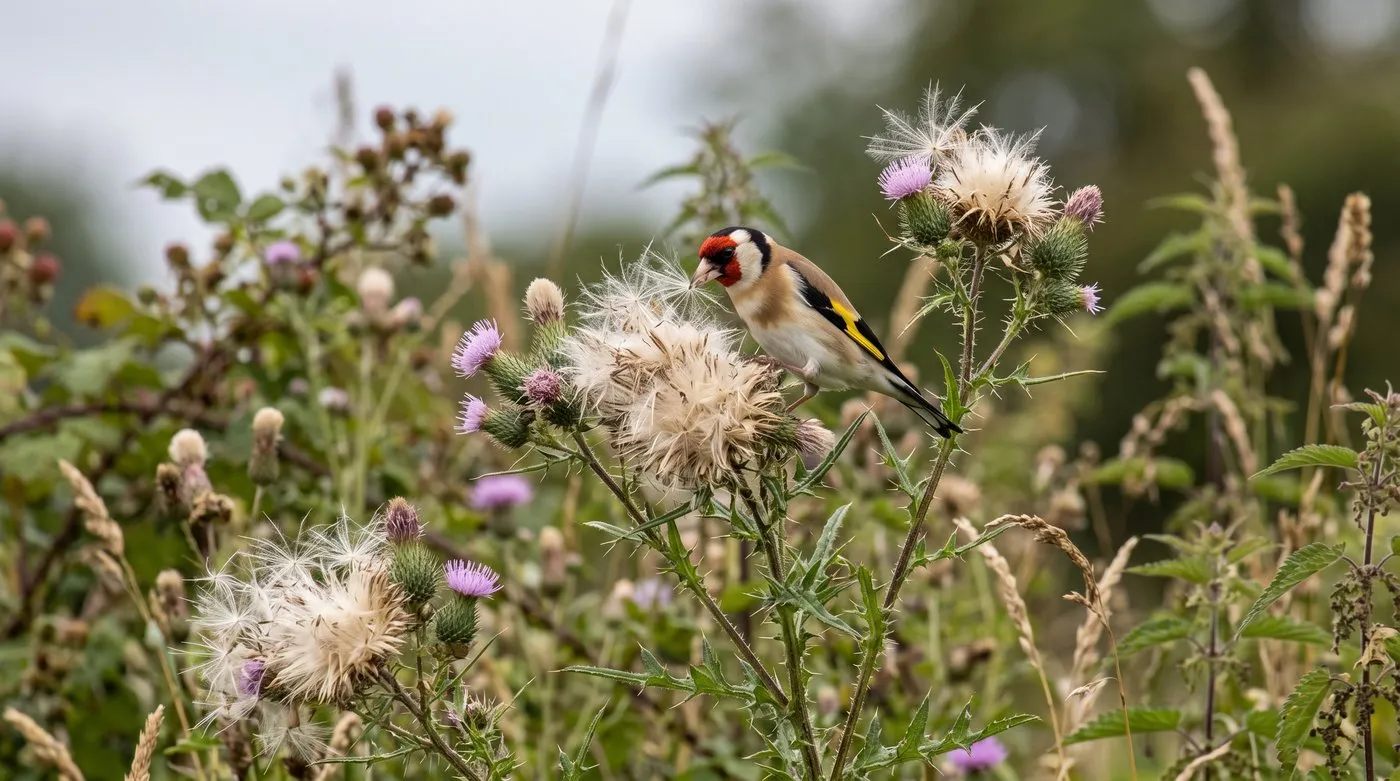
Goldfinches love thistle seed. A small clump in a wild corner can be a treat, as long as it can’t spread.
Month-by-month creeping thistle calendar
| Month | What to do |
|---|---|
| March to April | First shoots appear. Start cutting. Dig out young plants in light soil |
| May to June | Cut every two to three weeks. Buds form on uncut plants |
| July | Flowering starts. Cut every flower head. Systemic weedkiller at bud stage if using |
| August | Keep cutting regrowth and any heads. Bag seed heads |
| September | Seed blows about. Remove any remaining heads |
| October | Growth slows. Final cut. Note patches to tackle early next spring |
| November to February | Roots are dormant. Plan next year’s cutting |
Common mistakes with creeping thistle
- Rotavating an infested patch. It chops the roots into many new plants.
- Digging and leaving root pieces. On clay or in an established patch, cut instead.
- Letting it flower. The wind spreads the seed far and wide.
- Spraying young spring growth. Systemic weedkiller works best at the bud stage.
- Giving up after one season. Starving the roots takes two or three years of steady cutting.
Frequently asked questions
How do I identify creeping thistle?
Look for patches of spiny leaves with small lilac flower heads. The flowers are only about 1.5-2.5cm across and grow in clusters. The stems are mostly smooth, without the spiny wings of spear thistle. It grows in spreading colonies rather than as single plants.
How do I get rid of creeping thistle permanently?
Cut it to the ground every two to three weeks. Keep this up from spring to autumn for two or three seasons, and the roots run out of energy. Don’t let it flower. For heavy infestations, a systemic weedkiller used at the bud stage can help, following the label.
Why does creeping thistle keep coming back?
It regrows from its brittle underground roots. They spread sideways and store energy, and small broken pieces grow into new plants. Pulling off the top doesn’t touch the roots. That’s why digging and rotavating so often make it worse.
Is creeping thistle illegal to have in my garden?
No, having it in your garden is not illegal. It is one of five weeds listed under the Weeds Act 1959. That lets authorities require control where it is spreading, mainly onto farmland. Be a good neighbour and don’t let it seed onto nearby land.
Should I dig or cut creeping thistle?
Cut it, unless you can remove every bit of root. Digging works for young plants in light, loose soil. In established patches or clay, broken roots regrow. Repeated cutting is the reliable route for most gardens.
Is creeping thistle good for wildlife?
Yes, bees and butterflies use the flowers and goldfinches eat the seeds. Many gardeners leave a small clump in a wild corner. Cut the heads before they seed if it might spread into beds or onto farmland.
When should I treat creeping thistle?
Start cutting as soon as shoots appear in spring. Keep cutting every two to three weeks through summer. If you use a systemic weedkiller, apply it when flower buds form, following the label. Always act before seed sets.
Got bindweed too? Read the guide on how to get rid of bindweed for another deep-rooted weed. For more weed and plant troubles, browse the problems hub.
Our team produces practical UK gardening guidance from source research, contributor records and established horticultural practice. Editorial standards are overseen by Matt W.