Key takeaways
- Broad-leaved dock has big oval leaves with reddish stalks and rusty-red seed spikes in summer
- It regrows from the crown and top of its tap root, so pulling leaves off does nothing
- Dig straight down with a narrow spade after rain and lift the whole root
- Cut seed spikes while still green, as the seeds last for decades in the soil
- Never compost seed spikes; bag them for the council bin instead
- A cool dock leaf is the classic rub for a nettle sting, and the plant feeds wildlife
Broad-leaved dock is the big, coarse weed with oval leaves and tall rusty-red seed spikes that turns up in borders, lawns and allotment edges. To get rid of it, dig out the whole crown and top of the tap root, and never let it set seed. Do both and it goes. Miss either and it keeps coming back.
Dock isn’t all bad, though. A cool dock leaf is the classic rub for a nettle sting, and the plant feeds butterflies and birds. This guide covers how to spot it, how to dig it out properly and when it’s worth leaving a plant or two.
How to identify broad-leaved dock
Broad-leaved dock (Rumex obtusifolius) forms a clump of large, oval leaves up to about 25cm long. They have a rounded or slightly heart-shaped base, a blunt tip and often reddish stalks and veins. The leaves feel coarse and leathery.
From June, it sends up a branched flower spike 60-120cm tall. The tiny green flowers turn rusty red-brown as the seeds ripen. These dry spikes stand well into winter, which makes dock easy to spot.
Its close cousin curled dock has narrower leaves with wavy, crinkled edges. You deal with both in exactly the same way. The common garden weeds ID guide helps if you’re not sure what you’ve got.
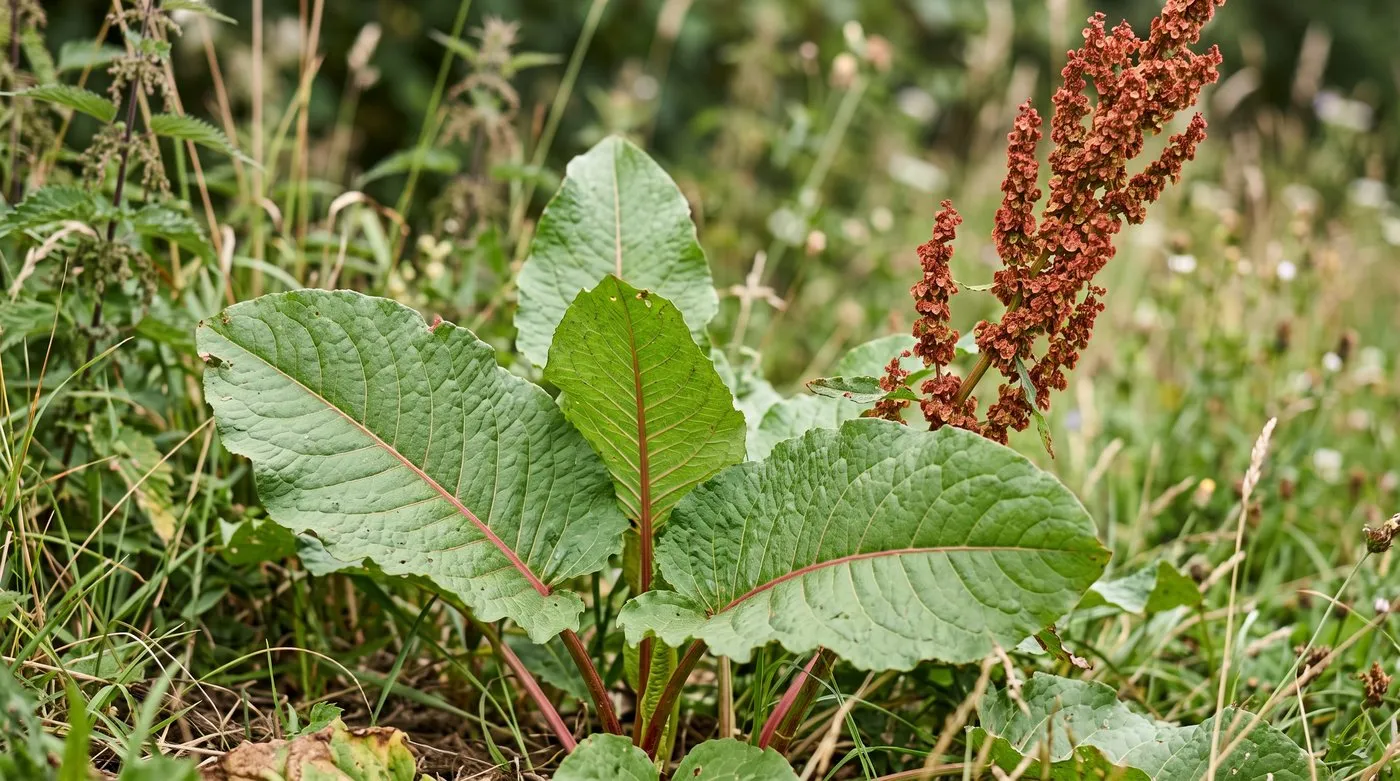
Big oval leaves with reddish stalks, plus that rusty seed spike in summer, make broad-leaved dock easy to pick out.
Young docks are much easier to remove, so learn to spot them early. Seedlings have small oval leaves on reddish stalks, and they thicken up quickly.
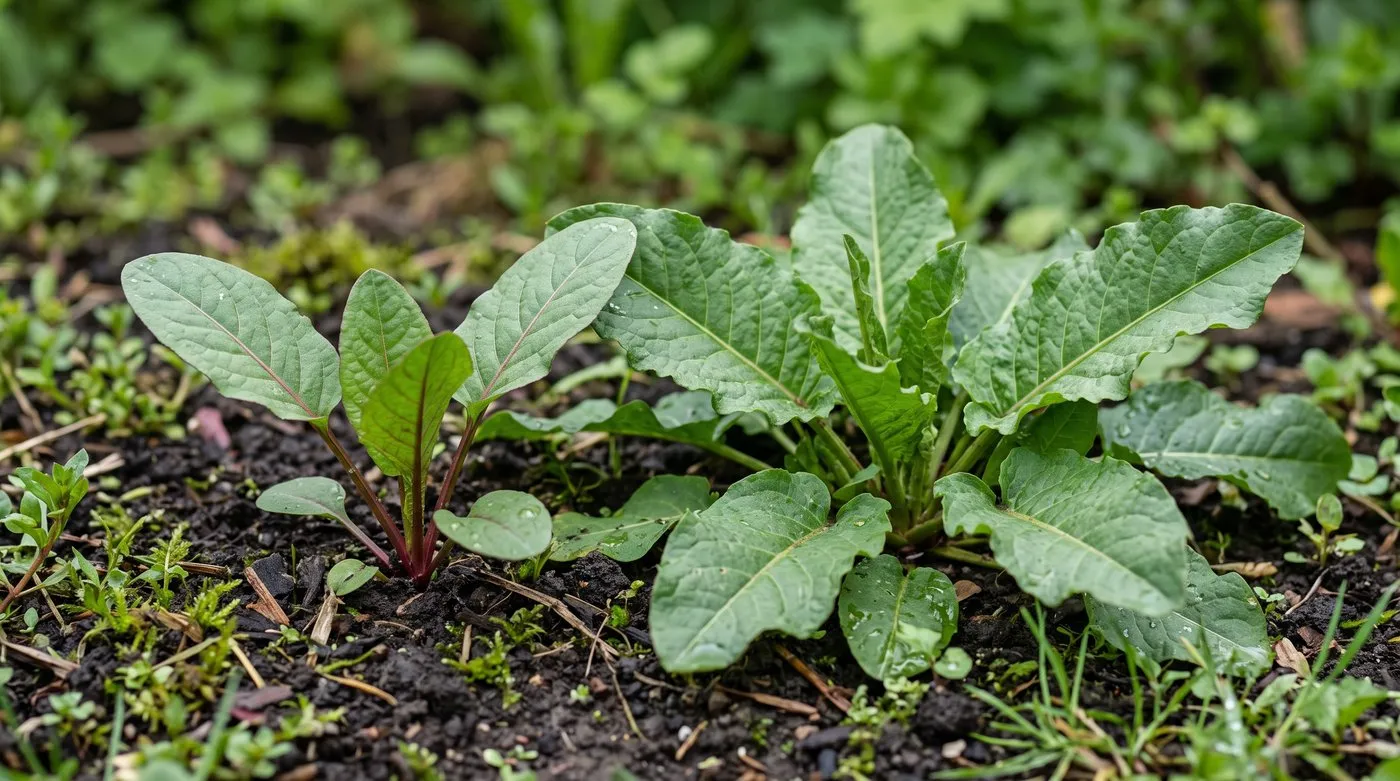
Catch docks this small and a hand fork lifts them easily. Leave them a season and the tap root thickens fast.
Why does dock keep coming back?
Dock comes back for two reasons: its tap root and its seeds.
The thick, fleshy tap root goes deep. The crown and the top 15cm or so of that root can grow a whole new plant. So pulling off the leaves does nothing. Levering the plant sideways snaps the root and leaves the live part behind. Within weeks, a new clump of leaves appears.
Then there’s the seed. Each plant can shed thousands of seeds, and they stay alive in the soil for decades. They sprout when digging brings them up to the light. That’s why freshly dug ground often fills with dock seedlings. You’re fighting seed dropped years ago as well as this year’s plants.
The same root-and-seed problem crops up with other tough weeds, as the guide to getting rid of bindweed explains.
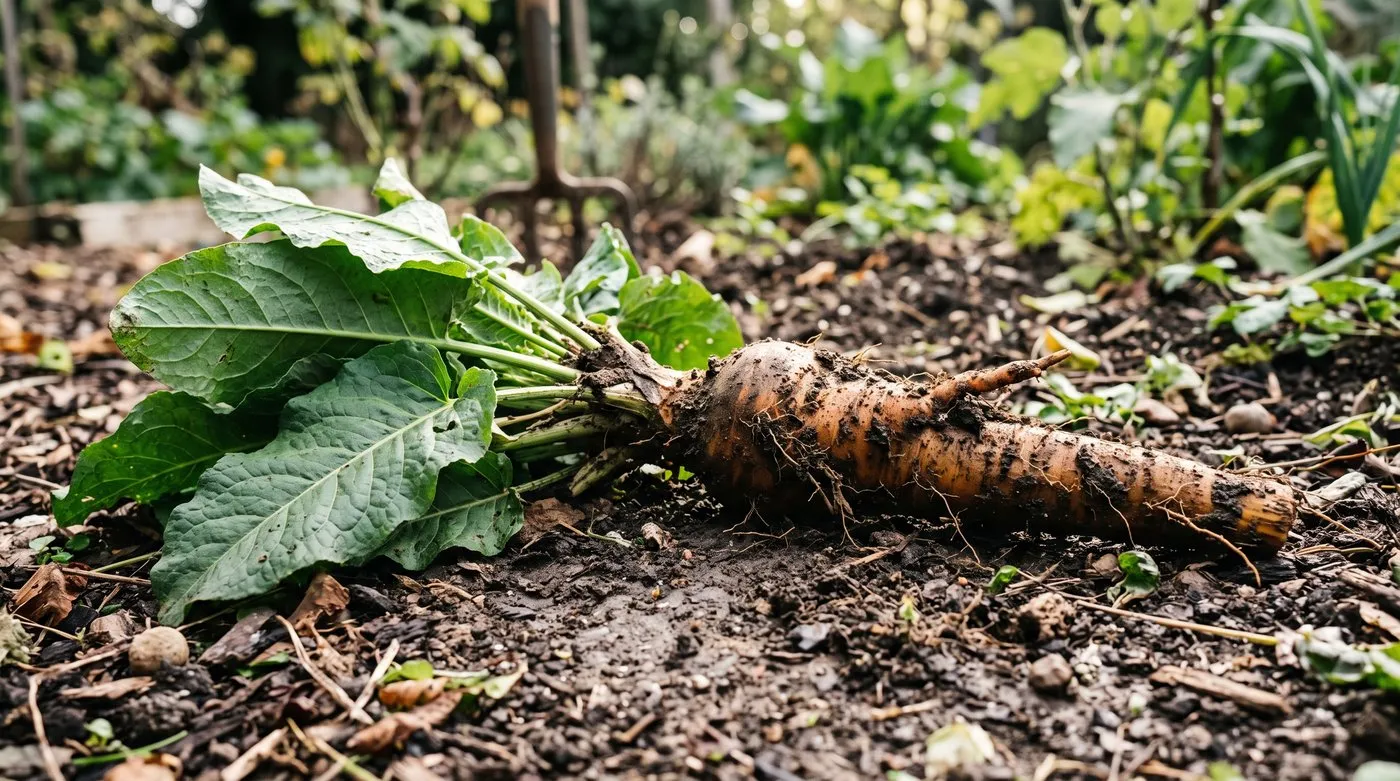
The tap root stores the plant’s energy. Leave the top part in the ground and it simply grows a new plant.
How to dig out dock properly
Digging is the most reliable way to get rid of dock in a garden, as long as you get the whole crown and top of the root. Technique matters more than effort.
- Pick your moment. Dig in spring or autumn, after rain, when the soil is soft. In dry clay the root snaps.
- Use the right tool. A narrow-bladed spade or a dock lever works best. A fork tends to snap the root.
- Go straight down. Push the blade in vertically, close beside the root, as deep as it will go.
- Loosen, then lift. Rock the blade gently to free the root, then draw the whole thing up in one piece.
- Check the hole. Look for broken bits of root and pull them out before refilling.
If a root does snap, don’t worry. Watch the spot and dig out any regrowth while it’s small.

Push the spade straight down beside the root and lift. Levering sideways snaps it and leaves the top part to regrow.
Lots of docks? If digging every plant isn’t practical, cut them to the ground every time they regrow. Over a season this starves the root. A weedkiller approved for docks, used exactly as the label directs, is another option where you’re happy to use one. For chemical-free approaches, see how to prevent weeds without chemicals.
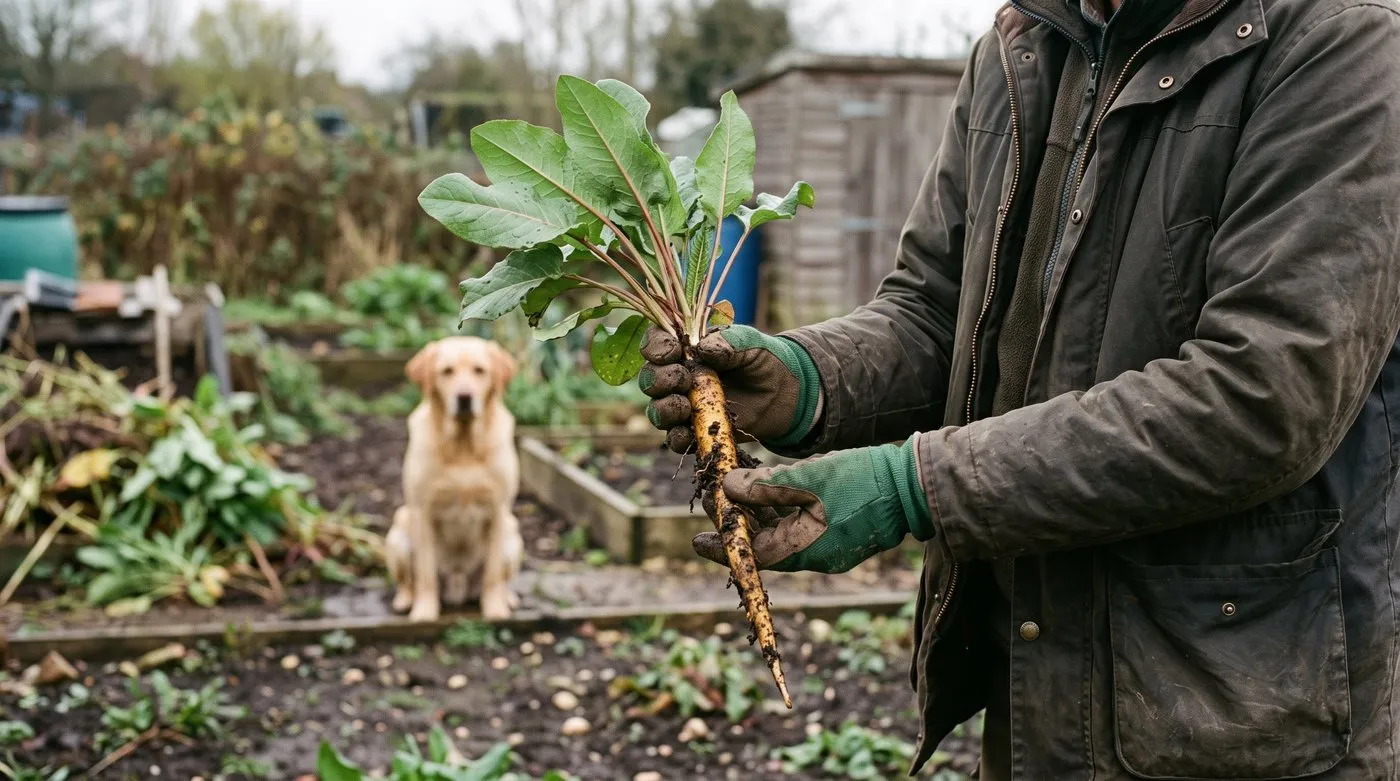
Soft, wet soil lets the whole root come up in one go. That’s the result you’re after.
Stop dock seeding
Even if you can’t dig every plant at once, don’t let dock set seed. Every spike that ripens adds to a seed bank that lasts for decades.
Cut off the flower spikes while they’re still green, before they turn rusty brown. Do this from June to August. Bag the spikes and put them in the council green bin. Seeds can ripen on cut stems, and most home compost heaps don’t get hot enough to kill them.
In lawns, regular mowing stops dock flowering and keeps the plants weak. Dig out any survivors with a narrow trowel or dock lever. The lawn weeds guide covers other lawn invaders.
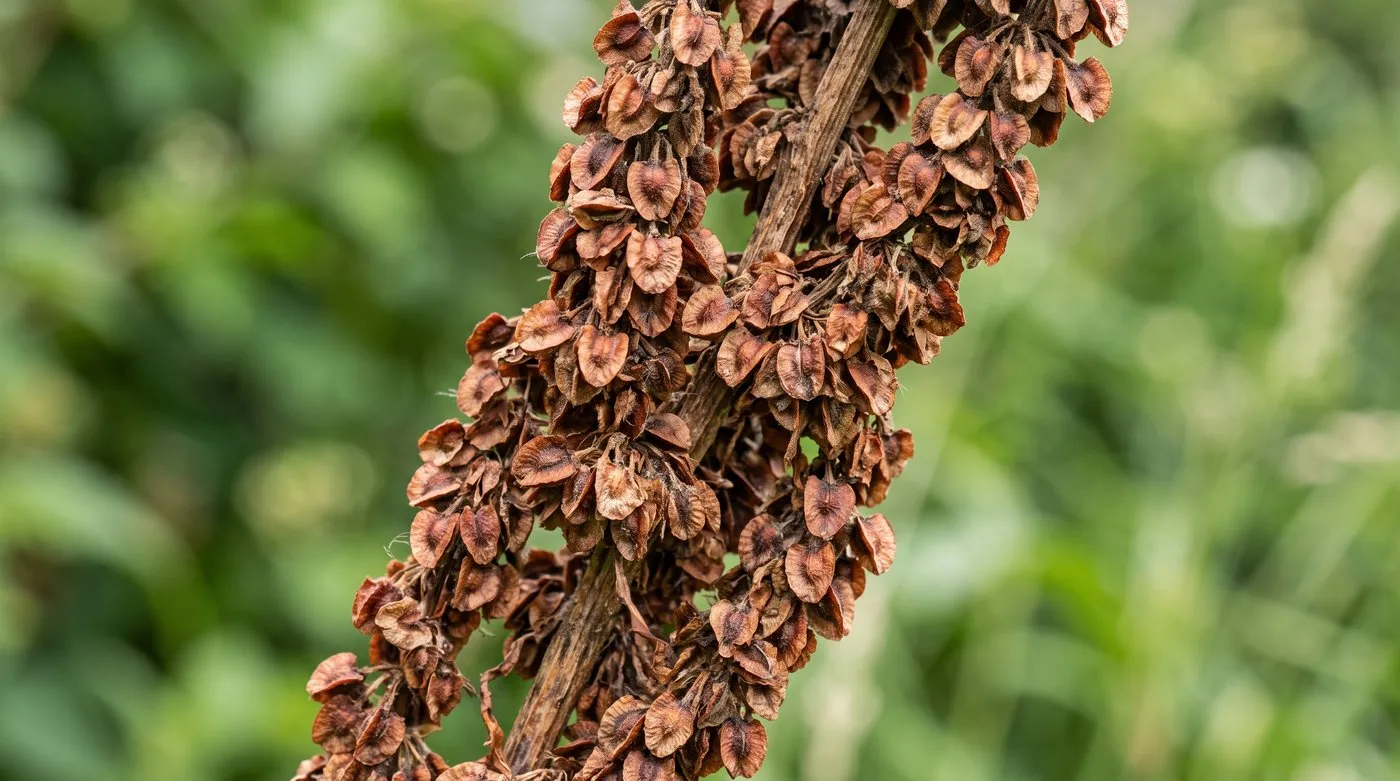
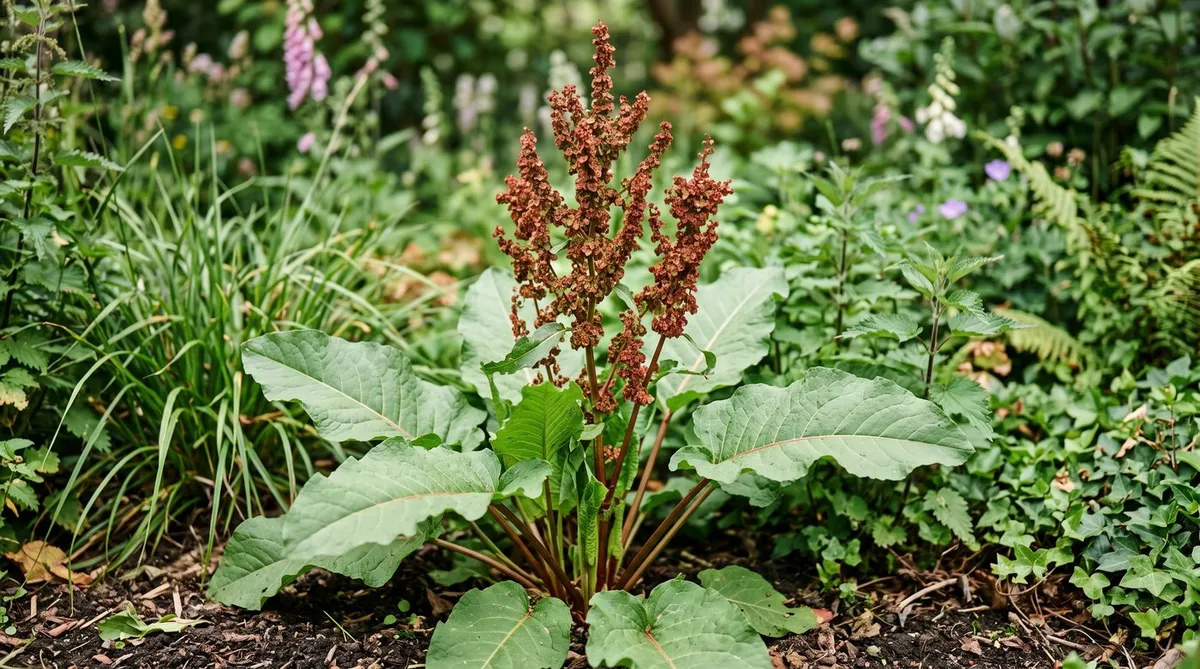
By the time a spike looks like this, it’s ready to shed. Cut spikes while they’re still green.
Is broad-leaved dock illegal?
No. Broad-leaved dock is one of five injurious weeds under the Weeds Act 1959, along with curled dock, creeping thistle, spear thistle and common ragwort. That doesn’t make it illegal to have in your garden, and you don’t need to report it.
The law lets authorities ask for control where these weeds spread onto farmland. So if you border fields, grazing or allotments, cut the spikes before they seed. The creeping thistle guide covers another weed on the same list.
Uses of dock: nettle stings, food and wildlife
Dock has earned a soft spot in a few ways.
Nettle stings. Rubbing a dock leaf on a nettle sting is a British childhood classic. The cool sap and the rubbing help more than any proven antidote, but it does no harm. Dock usually grows near nettles, so it’s often right at hand.
Food. Young leaves can be cooked and eaten in small amounts. Dock contains oxalic acid, so don’t eat much, and avoid it if you’re prone to kidney stones. Older leaves are tough and bitter. The guide to edible garden weeds covers safer foraging options.
Wildlife. Small copper butterfly caterpillars feed on docks and sorrels, as do several moths. Finches and other birds eat the seeds in autumn and winter. Many gardeners let a dock or two grow in a wild corner while keeping beds and lawns clear. Just cut the spikes before the seed drops if you don’t want more.
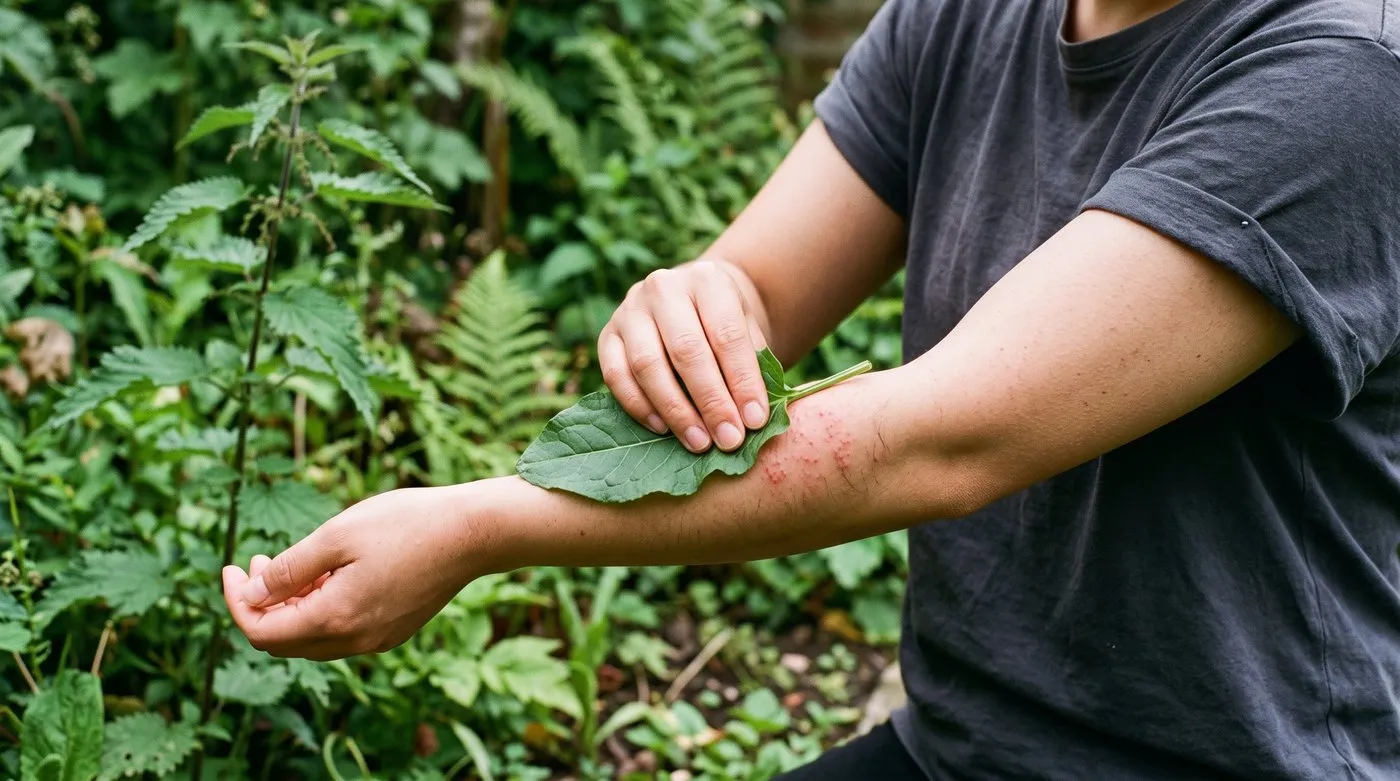
The classic dock-leaf rub. It’s mostly the cool sap that soothes, but it’s a handy trick for stung arms.
Dock control methods compared
| Method | What it does | Best for |
|---|---|---|
| Digging out the whole crown and root | Kills the plant if done properly | Borders, veg beds, a few plants |
| Cutting seed spikes while green | Stops new seed going into the soil | Every dock, every summer |
| Cutting to the ground repeatedly | Starves the root over a season | Large patches |
| Approved weedkiller on the leaves | Reaches the root | Large patches, where you’re happy to use one |
| Regular mowing | Stops flowering and weakens plants | Lawns |
| Pulling off leaves | Tidies briefly, then it regrows | Not worth doing on its own |
Common mistakes with broad-leaved dock
Pulling off the leaves. The root regrows within weeks.
Levering sideways with a fork. This snaps the root. Go straight down with a narrow spade.
Letting it seed. Each ripe spike adds thousands of long-lived seeds to your soil.
Composting seed spikes. Seeds survive most home heaps. Bag them for the council bin.
Digging in dry weather. The root snaps in hard ground. Wait for rain.
Month-by-month dock calendar
| Month | What to do |
|---|---|
| March to April | Dig out young plants while roots are small and the soil is soft |
| May | Keep digging after rain. Fill and firm the holes |
| June | Flower spikes appear. Start cutting them while green |
| July | Cut every spike before it turns rusty brown. Bag them |
| August | Check for missed spikes. Dig where the soil allows |
| September to October | Dig after autumn rain, when roots lift cleanly |
| November | Remove any standing seed spikes before they shed |
| December to February | Note where docks are for an early start in spring |
Frequently asked questions
How do I get rid of broad-leaved dock?
Dig out the whole crown and top of the tap root. Drive a narrow spade straight down beside the root after rain and lift it out in one piece. Any stub left behind regrows. For lots of docks, cutting them down repeatedly through the season weakens the roots.
Why does dock keep growing back?
Because the root you left behind is still alive. The crown and the top 15cm or so of the tap root can grow a whole new plant. Pulling off leaves or snapping the root leaves that part in the soil. Only lifting the entire crown and upper root stops it.
How long do dock seeds last in the soil?
For decades, which is why docks pop up in freshly dug ground. Each plant makes thousands of seeds on its tall summer spike. They wait in the soil and sprout when digging brings them to the light. Cutting spikes before they ripen stops you adding more.
Is broad-leaved dock a notifiable weed?
No, it is listed as an injurious weed, not a notifiable one. Having it in your garden is not illegal and you don’t need to report it. Authorities can ask for it to be controlled if it spreads onto farmland, so don’t let it seed over the fence.
Does a dock leaf really help a nettle sting?
It soothes many people, mainly through the cool sap and rubbing. There’s no proven antidote in the leaf, but it does no harm. Dock often grows right beside nettles, which is handy.
Can you eat broad-leaved dock?
Young leaves can be cooked and eaten, but only in small amounts. Dock contains oxalic acid, so avoid it if you’re prone to kidney stones. Older leaves are tough and bitter. Only eat a plant you’re certain you’ve identified.
When is the best time to remove dock?
Spring or autumn, after rain, when the soil is soft. Young plants in spring have smaller roots and lift easily. Whatever the season, cut off seed spikes before they turn rusty brown.
Got other deep-rooted weeds to tackle? The guide to clearing an overgrown allotment plot shows how to deal with docks, couch grass and brambles together, and the problems hub has more weed guides.
Our team produces practical UK gardening guidance from source research, contributor records and established horticultural practice. Editorial standards are overseen by Matt W.