Key takeaways
- Look for a single line of hairs running down one side of the stem
- Hoe on a dry day while plants are small, before they flower
- Each plant can shed thousands of seeds, so stopping seeding is the key
- A 5-7cm mulch on bare soil stops most new seedlings coming up
- Young chickweed tips are edible raw or lightly cooked
Chickweed is the soft, sprawling weed with tiny white star flowers that carpets bare soil in spring and autumn. It is easy to pull and easy to hoe. The trick is to get it before it flowers, because one plant can shed thousands of seeds.
Here’s how to tell it apart from lookalikes, how to clear it and keep it down, and how to eat the young tips if you’d rather make use of it.
How to identify chickweed
Chickweed (Stellaria media) is a low, sprawling annual with pale green, slightly juicy stems. Check for these features:
- Leaves: small, oval and pointed, growing in opposite pairs
- Flowers: tiny, white and star-shaped. Each of the five petals is split so deeply that it looks like ten
- Stem hairs: a single line of fine hairs runs down one side of the stem, switching sides at each pair of leaves
- Habit: forms loose mats on bare, rich, moist soil
The line of hairs is the best test. Run a fingertip along the stem and you’ll feel it on one side only.
| Lookalike | How to tell it apart |
|---|---|
| Common mouse-ear | Hairy all over, with darker, narrower leaves |
| Procumbent pearlwort | Tiny needle-like leaves in tufts |
| Speedwells | Small blue flowers, not white |
| Young cleavers | Leaves in rings of six or more, sticky to the touch |
If you’re unsure about other weeds, our common garden weeds identification guide shows them side by side.

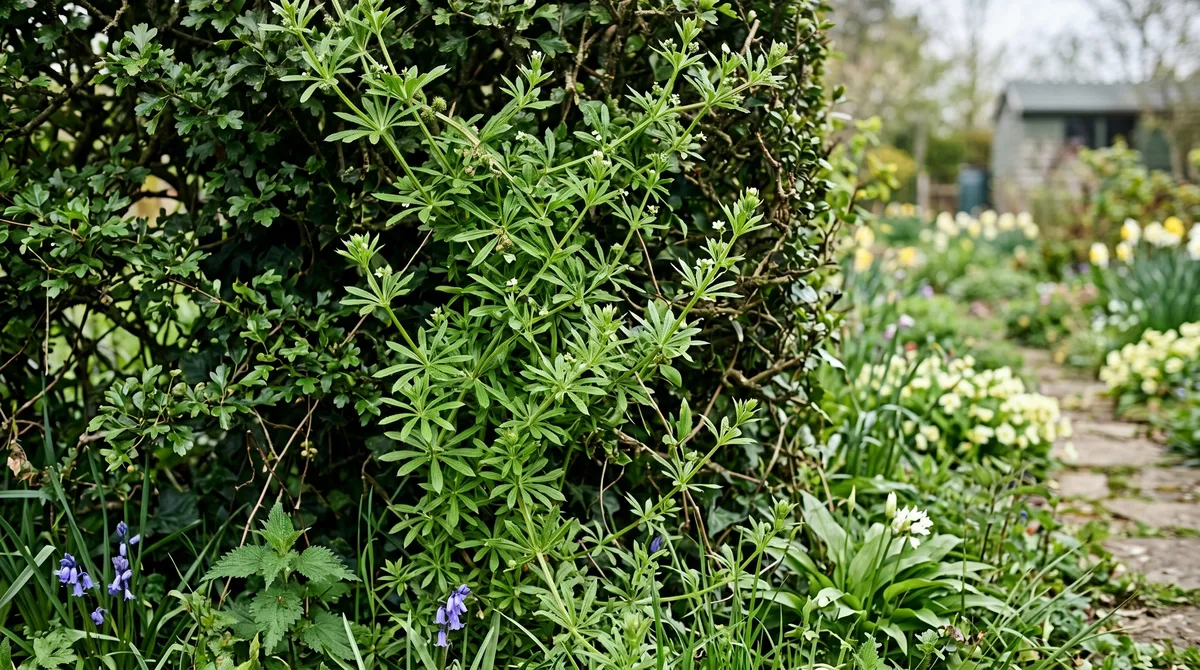
Pairs of oval leaves and a little white star of split petals. Feel the stem for the line of hairs to be sure.
Why chickweed keeps coming back
Chickweed grows fast and flowers young. It can go from seedling to seeding plant in a matter of weeks, and it flowers in almost any month in mild weather.
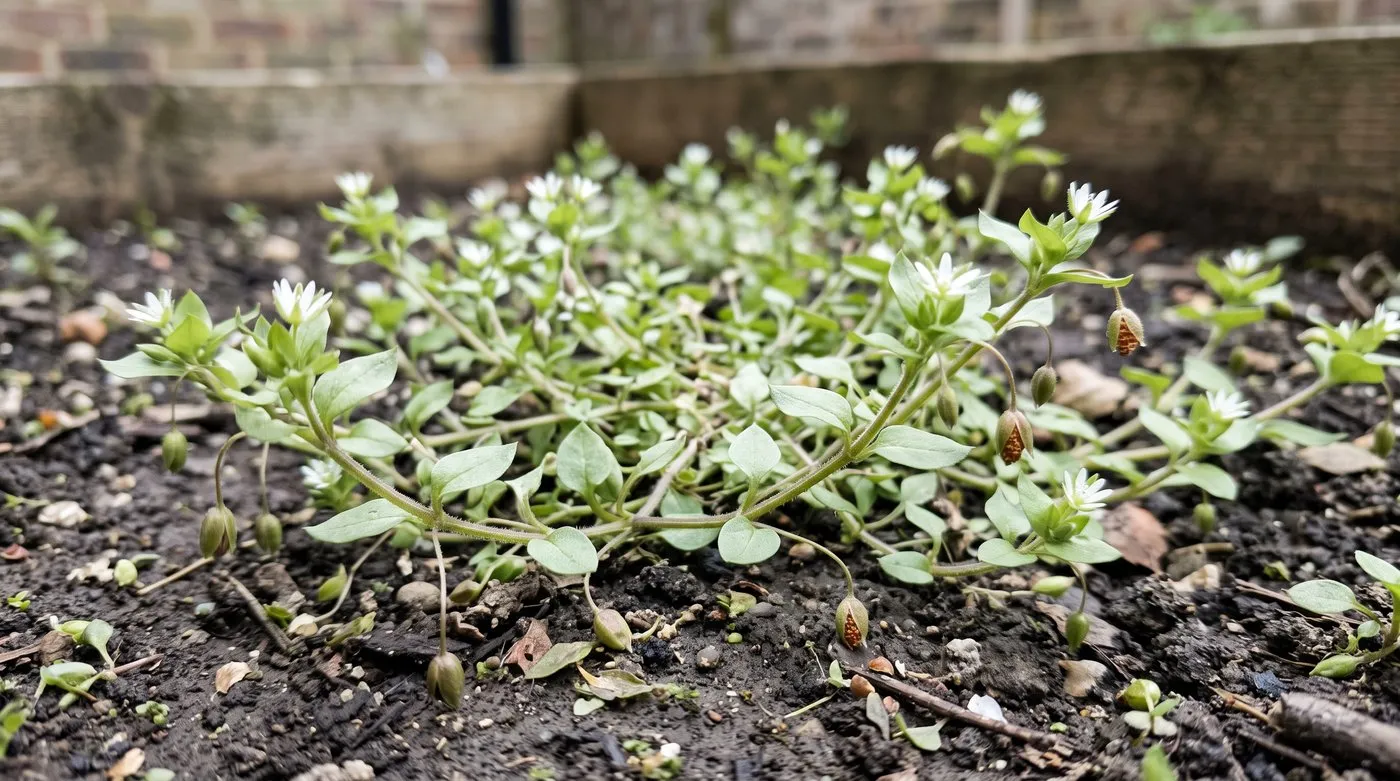
Flowers turn into seed capsules within weeks, so catching chickweed before this stage keeps next year’s crop down.
The seeds lie in the soil for years. Every time you dig or turn the soil, a fresh batch comes to the surface and sprouts. That’s why a newly dug bed often turns green with chickweed within a couple of weeks.
The good news: every plant you stop from seeding means fewer next year. Keep at it for a few seasons and the flushes get noticeably smaller.
How to hoe chickweed
Hoeing is the quickest way to clear chickweed from beds and borders.
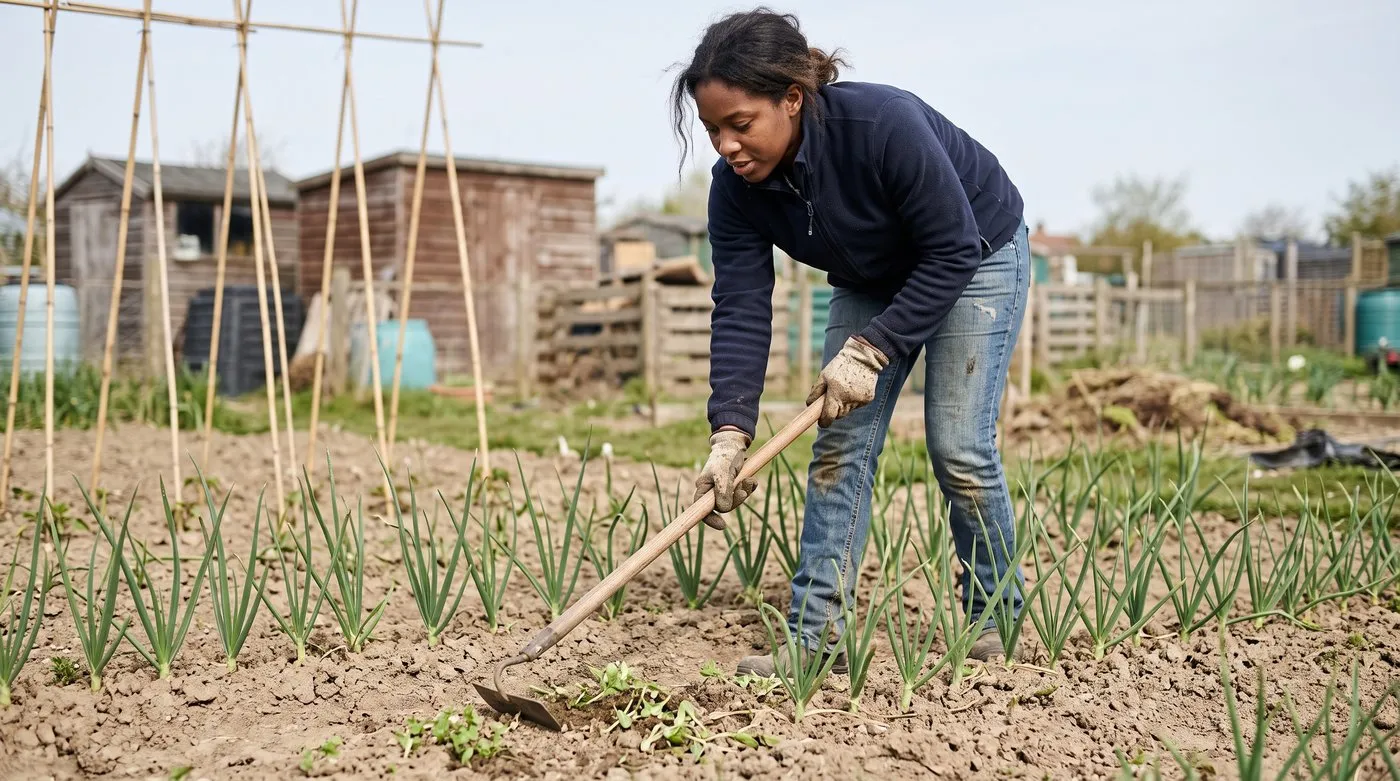
A dry morning is perfect for hoeing. Cut seedlings shrivel on the surface instead of rooting again.
- Pick a dry day, ideally sunny or breezy. In wet soil, cut plants can root again.
- Use a Dutch or stirrup hoe, keeping the blade just under the surface.
- Slice through the stems with a light push-and-pull action. Don’t dig deep, or you’ll bring up more seed.
- Leave cut seedlings to shrivel on the surface in dry weather. In damp weather, rake them off.
- Repeat every week or so in spring and autumn, while new seedlings are tiny.
Bigger plants pull out easily by hand. Gather the whole mat and lift it, roots and all. Our guide to hoeing borders covers which hoe to use and how often.
Mulch to stop new seedlings
A layer of mulch blocks the light chickweed seeds need to sprout. Spread 5-7cm of garden compost, leaf mould, bark or woodchip over bare soil between plants, after weeding and when the soil is moist.
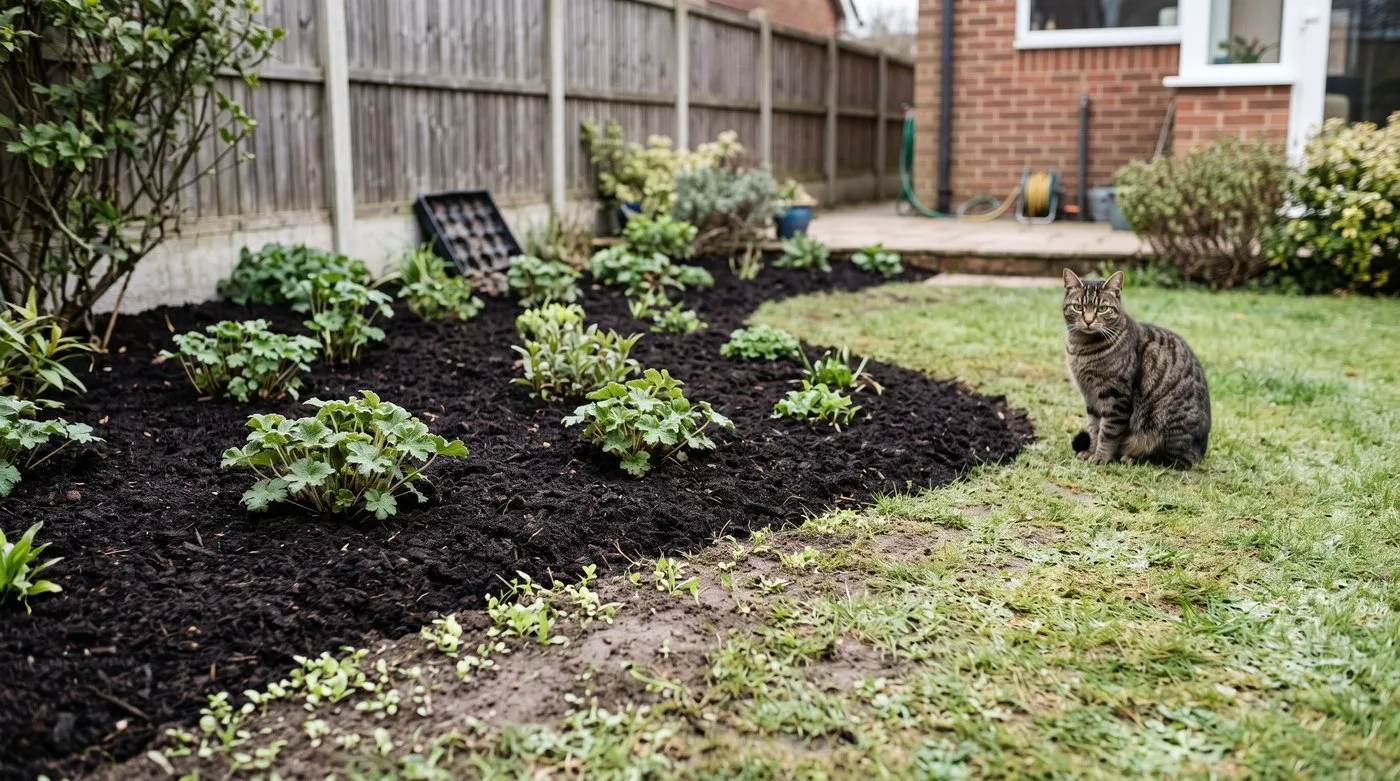
A thick layer of compost blocks the light chickweed seeds need. Only the bare strip at the edge has sprouted.
In veg beds, a mulch of compost or grass clippings between rows works well. Keep it topped up as it breaks down. For clearing a big area, cardboard under a mulch smothers everything beneath it. Our guide to cardboard and grass mulching shows how.
Not digging helps too. The less you turn the soil, the fewer buried seeds see daylight. Our guide to preventing weeds without chemicals has more ideas.
Can you eat chickweed?
Yes. Young chickweed tips are a mild, fresh-tasting salad leaf, a bit like pea shoots. You can also wilt them into soups, omelettes or pesto.
- Pick young, leafy tips before the stems turn stringy.
- Only pick from unsprayed ground, away from roads and dog-walking spots.
- Wash well before eating.
- Be sure of your identification. Check for the line of stem hairs.
Our edible garden weeds guide covers other weeds you can eat.
Chickweed in lawns
Common chickweed doesn’t usually last long in a well-mown lawn. It shows up in thin, newly sown or patchy grass. Rake it out and overseed bare patches so thick grass fills the gaps.
The chickweed-like weed that sticks around in lawns is usually mouse-ear, a hairier relative. Our guide to common lawn weeds covers how to deal with it.
Chickweed calendar
| Month | What to do |
|---|---|
| January to February | Pull plants in mild spells. Mulch empty beds |
| March to May | Main spring flush. Hoe every week or so |
| June to July | Fewer seedlings in dry weather. Hoe after rain |
| August to October | Autumn flush. Hoe weekly and mulch cleared beds |
| November to December | Pull any plants that are flowering |
Common mistakes with chickweed
Hoeing in wet weather. Cut plants can root again in damp soil. Choose a dry day, or rake them off.
Waiting until it flowers. By then it may already be dropping seed. Hoe or pull while it’s small.
Composting seeding plants. Flowers can still ripen seed after pulling. Bin plants that are flowering.
Digging over bare soil. It brings up buried seed. Weed lightly and mulch instead.
Leaving soil bare. Chickweed loves empty, rich soil. Fill gaps with plants or mulch.
Frequently asked questions
How do I identify chickweed?
Look for a single line of hairs down one side of the stem. It has small, oval, pointed leaves in pairs and tiny white star-shaped flowers. Each of the five petals is split so deeply it looks like ten.
Is chickweed edible?
Yes, the young tips are edible raw or lightly cooked. They taste mild and fresh, a bit like pea shoots. Only pick from ground that hasn’t been sprayed, away from roads and dog-walking spots, and wash well.
What is the best way to get rid of chickweed?
Hoe it on a dry day while it is small, before it flowers. Leave the cut plants to shrivel in the sun, or rake them off in damp weather. Then mulch bare soil to stop new seedlings.
Will chickweed come back after weeding?
Yes, for a while, because seeds lie in the soil for years. Each time you dig, fresh seed comes up. Stopping new plants from seeding means fewer each year.
When is the best time to hoe chickweed?
On a dry, breezy day while seedlings are small. Spring and autumn are the busiest times. Hoeing every week or so in those seasons catches plants before they flower.
Can I compost chickweed?
Yes, if it hasn’t flowered yet. Plants with flowers or seed capsules can still ripen seed, so bin those or put them in a hot heap.
Find more weed guides in the problems hub. Another fast spreader to catch early is hairy bittercress, the exploding weed.
Our team produces practical UK gardening guidance from source research, contributor records and established horticultural practice. Editorial standards are overseen by Matt W.