Key takeaways
- Annual weed; scrambles over plants and hedges October to June
- ID: whorls of 6-8 leaves with backward-pointing hooks
- Hooked sticky seeds travel on clothing and animals
- Pull or hoe September to April before seed set
- Each plant produces 300-400 viable seeds
- Heavy autumn mulch suppresses 70-80% germination
Cleavers (Galium aparine), known across the UK as Sticky Willy, goosegrass or grip-grass, is the autumn-to-spring scrambler that drapes itself over hedges and herbaceous borders. Each plant produces 300-400 sticky hook-covered seeds that catch on clothing and animal fur. This guide covers identification, the critical September-April pull window, and the three-year plan that clears established populations.
Cleavers Identification
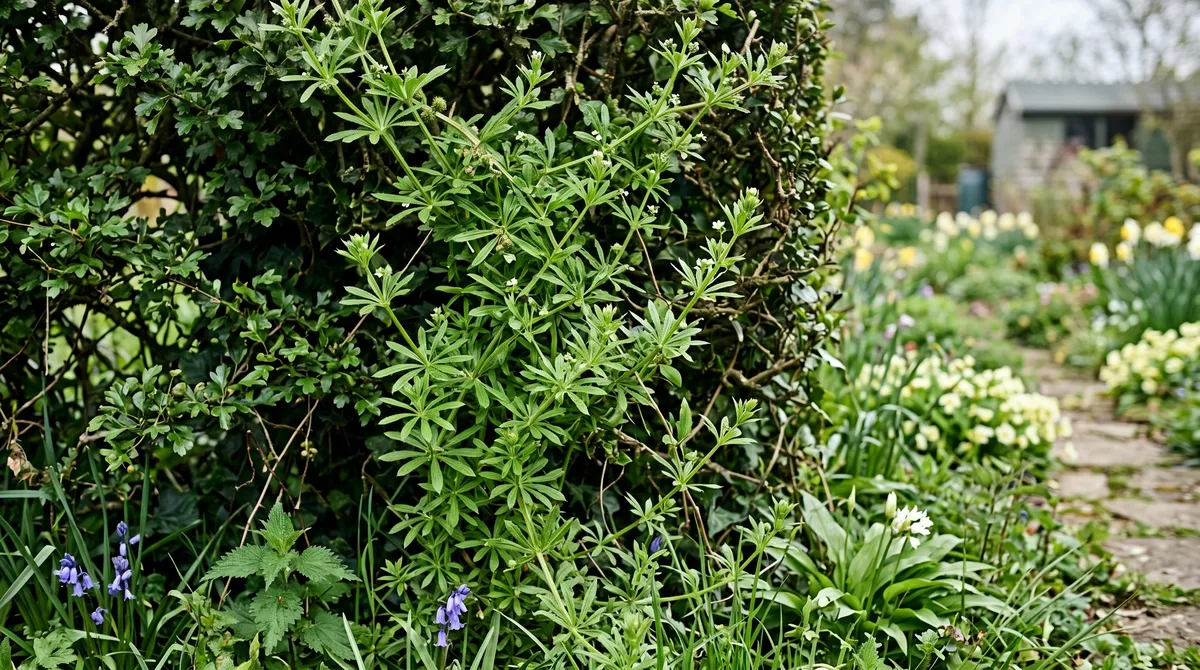
UK cleavers grow as a sprawling annual climber.
Diagnostic features:
- Long thin square-sided stems, 0.6-1.5m long when mature
- Whorls of 6-8 narrow lance-shaped leaves at each node (the diagnostic feature)
- Backward-pointing tiny hooks on stems, leaf edges, and seeds
- Tiny white 4-petal flowers in late spring
- Round sticky seed pods, 3-5mm diameter, in pairs
- Stems sprawl across ground or scramble up other plants
- Active October-June; dies back in summer heat
The whorl of 6-8 leaves around the stem is unmistakable. Most UK plants have opposite leaves (pairs) or alternate (single). Cleavers’ whorls give it a distinctive star-like cross-section.
The Velcro-like hooks are also diagnostic. Run a finger up a cleavers stem from bottom to top: it slides smoothly. Run from top to bottom: it grips. This backward-pointing hook system is the seed dispersal mechanism.
The UK Lifecycle and Pull Window
Understanding cleavers’ lifecycle determines control timing.
September-October: Seeds germinate. Seedlings emerge as small thin shoots with 6-leaf whorls at first node.
November-February: Slow winter growth. Seedlings reach 100-200mm. Plants tolerate UK frosts but pause growth below 5C.
March-April: Rapid spring growth. Plants extend to 0.6-1.0m and start scrambling up neighbouring plants.
May: Flowering begins. Tiny white flowers open. Seed pods start forming within 5-7 days of flowering.
June: Peak seed maturity. Pods turn yellow-brown and break off from parent plant. Sticky hooks attach to passing animals, shoes, and clothing.
July-September: Parent plants die back. Seeds remain on host plants or in soil for autumn germination.
The critical pull window is September to April. Plants pulled in this window have no mature seed. Plants pulled in May-June still spread seed even after pulling because pods continue ripening on detached stems.
Pulling and Hoeing Cleavers
For ornamental borders and hedges:
- Wear long sleeves and gardening gloves (avoids hook stick)
- Grasp the cleavers stem near the base
- Pull straight up; the root system is shallow (50-100mm)
- Roll the pulled plant into a tight ball as you walk
- Drop the ball into a bucket or sealed bag
- Continue along the hedge or bed
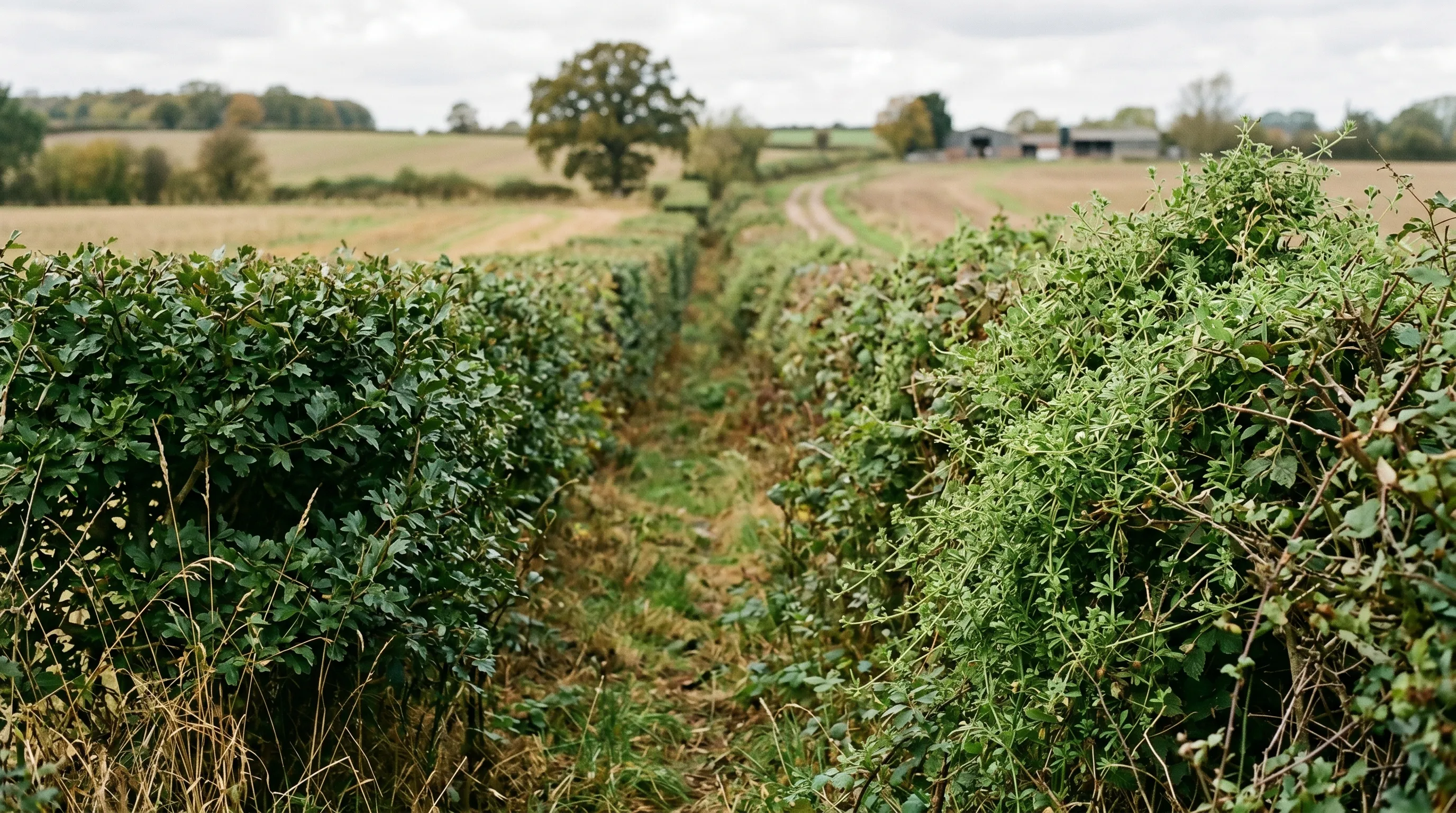
For UK established hedges, cleavers grow through and out the top. Pull from the top down, rolling the plant as you remove it. Avoid pulling outward (the hooks will catch on the hedge).
For vegetable plots:
Weekly hoeing during the active season catches cleavers at the 4-8 leaf stage before they get tangled in crops.
Equipment:
- Heavy-duty gardening gloves (essential)
- Long sleeves
- Bucket or sealed bag for collection
- Dutch hoe for bed clearance
A 30m hedge takes 1-2 hours to clear of cleavers thoroughly. Plan annual September inspections.
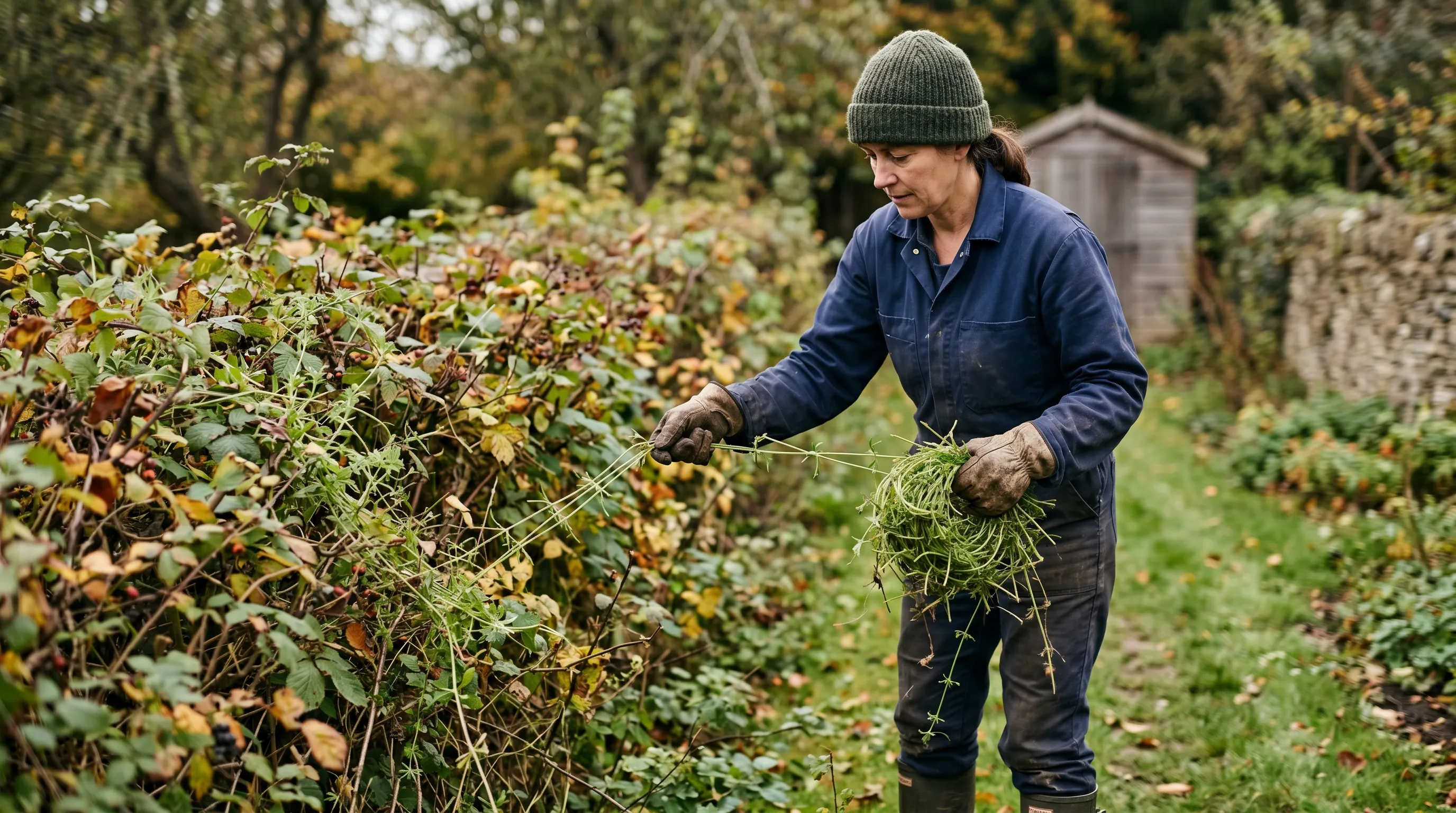 October pulling on a Staffordshire hedge. Long sleeves and gloves prevent the hook stick. Cleavers stems roll into a ball as they pull free. Drop directly into a bucket for sealed disposal.
Mulch and Suppression
Cleavers seeds need light to germinate well. Heavy autumn mulch reduces germination by 70-80%.
Effective autumn mulches:
- Cardboard plus grass clippings (90%+ suppression)
- Bark chip 75mm thick (80%)
- Leafmould 50mm thick (70%)
- Garden compost 50mm thick (65%)
Apply autumn mulch by mid-October before the main germination window. For the cardboard plus grass technique, our mulching guide covers the layer method.
In UK hedges, mulch the hedge bottom strip annually. This is where cleavers seeds accumulate and germinate.
The 3-Year Clearance Plan
For UK cleavers infestations established for 2+ years.
Year 1:
- September-October: pull every plant from hedges and beds
- November-April: walk all hedges monthly; pull any new emergence
- Expect 70-80% reduction from baseline
Year 2:
- Same routine. Easier to spot remaining plants
- Expect 90-95% reduction from baseline
Year 3:
- Light monitoring; pull any emergence
- Boundary inspection for neighbour incursion
- Expect 95-99% reduction
The seed bank persists 2-5 years for cleavers (much shorter than chickweed’s 10+ years). Three to four annual control cycles clear most UK populations.
For the wider annual weed control toolkit, our weedkillers guide covers chemical-free approaches.
The Edible Angle
Cleavers tips are edible and have UK herbal traditions.
Young spring tips (March-April):
- Cook lightly like spinach
- Mild lettuce-like flavour
- Higher protein content than most salad leaves
- Cleavers tea (UK herbal): chop fresh, steep in cold water 12 hours, strain
Older summer plants:
- Too tough to eat
- Hooks irritate the throat
Cleavers coffee:
- Roast dried seeds (mature pods, summer)
- Grind to coffee-like powder
- Steep as coffee
- Traditional UK forager option
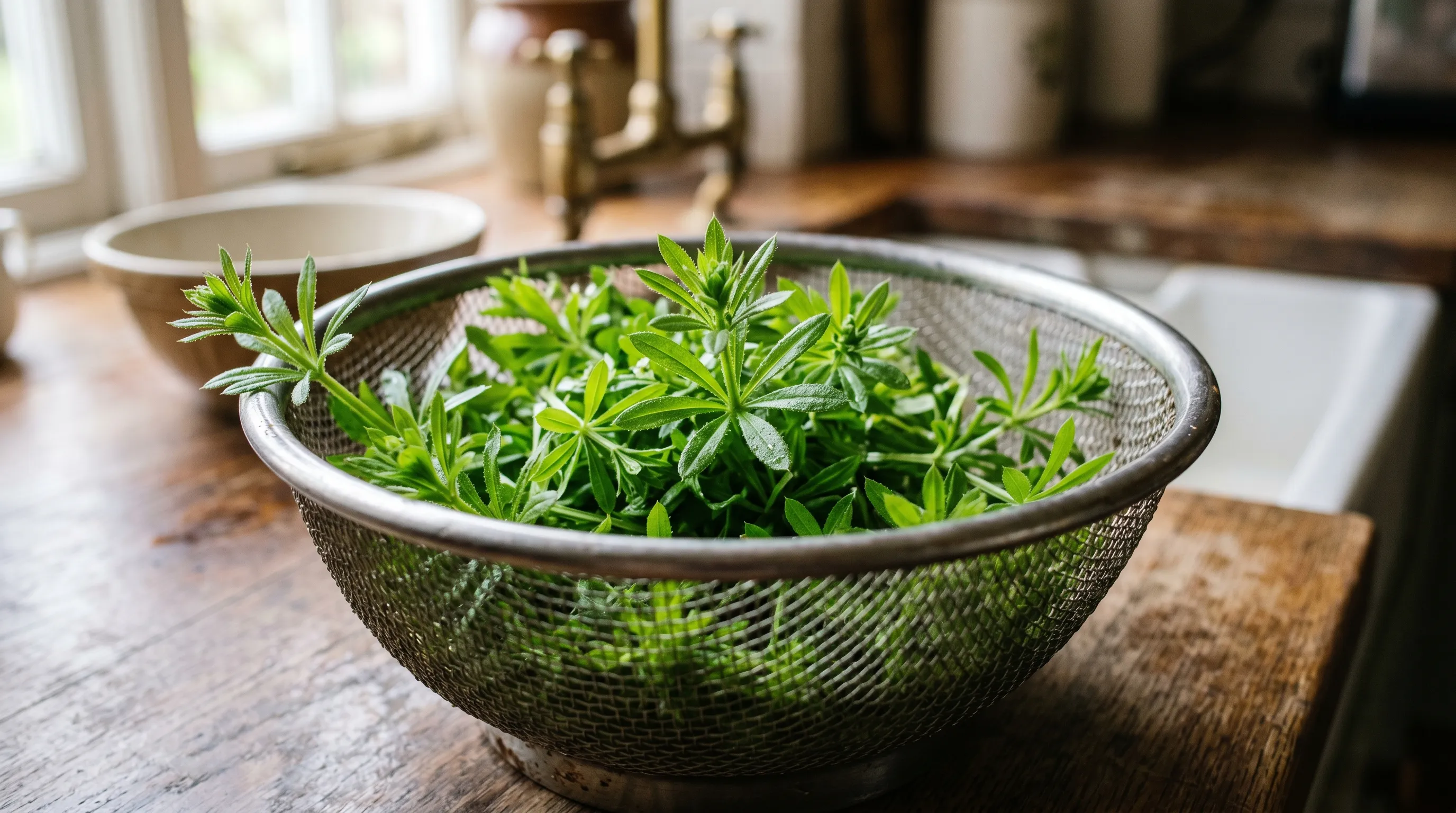 Young March cleavers tips for kitchen use. Picked before flowering. Cooked lightly like spinach or steeped as herbal tea. Pick from clean garden ground, never lawns treated with herbicide.
Common Mistakes With UK Cleavers Control
Mistake 1: pulling in May-June. Seeds have already formed; pulling spreads them. Pull in September-April.
Mistake 2: composting cleavers with seed pods. Pods continue ripening; seeds re-emerge. Sealed-bag disposal.
Mistake 3: ignoring hedge cleavers. Hedge plants drop seed across surrounding beds. Always include hedges in autumn pulls.
Mistake 4: pulling without gloves. Sticky hooks catch skin and clothing, spreading seeds further.
Mistake 5: stopping after one year. Seed bank persists 2-5 years. Plan 3-year minimum.
For the wider organic weed control approach, our guide covers chemical-free options. For the autumn mulch technique, our mulching guide covers the cardboard plus grass method.
Cleavers Calendar UK Month-by-Month
| Month | Cleavers task |
|---|---|
| January | Spot-pull any visible plants in mild winters |
| February | Pre-emergence mulch top-up |
| March | Watch for spring growth surge; pull any plants |
| April | Late spring pulls before seed set |
| May | Final pull window before pods form |
| June | Plants flowering; avoid handling |
| July | Plants dying back; no action needed |
| August | Plan autumn pull and mulch schedule |
| September | Begin autumn pull season; clear hedges |
| October | Peak pull window; apply autumn mulch |
| November | Continued pulls of late seedlings |
| December | Final pulls before deep winter |
Frequently asked questions
How do I identify cleavers in the UK?
Long thin scrambling stems with whorls of 6-8 narrow leaves arranged around the stem at each node. Tiny backward-pointing hooks on stems and leaf edges that stick to clothing like Velcro. Small white 4-petal flowers in spring. Often grows up through hedges and over other plants.
When should I pull cleavers in the UK?
September to April, before seed set. October-November is the peak window when seedlings are 50-100mm tall and easy to pull. May-June pulls still spread seed because pods have already formed. Catch cleavers early in autumn for best control.
Why do cleavers stick to clothes?
Tiny backward-pointing hooks (similar to Velcro) on both the stems and seeds. The hooks grip on fabric and animal fur. This is the seed dispersal mechanism: animals and humans walking through cleavers carry the seeds 100+ metres before brushing them off.
Can you compost cleavers?
Only if pulled before flowering (March-April max). Once seed pods have formed, the seeds continue ripening on the compost heap and re-emerge when compost is spread. Always bag cleavers with seed pods for sealed disposal, not compost.
Are cleavers good for anything?
Yes. Young spring tips (March-April) are edible cooked, with a mild lettuce flavour. Cleavers tea is a traditional UK diuretic and lymphatic herbal remedy. The plant is also a useful coffee substitute when roasted (coffee family relative). Pick young and clean.
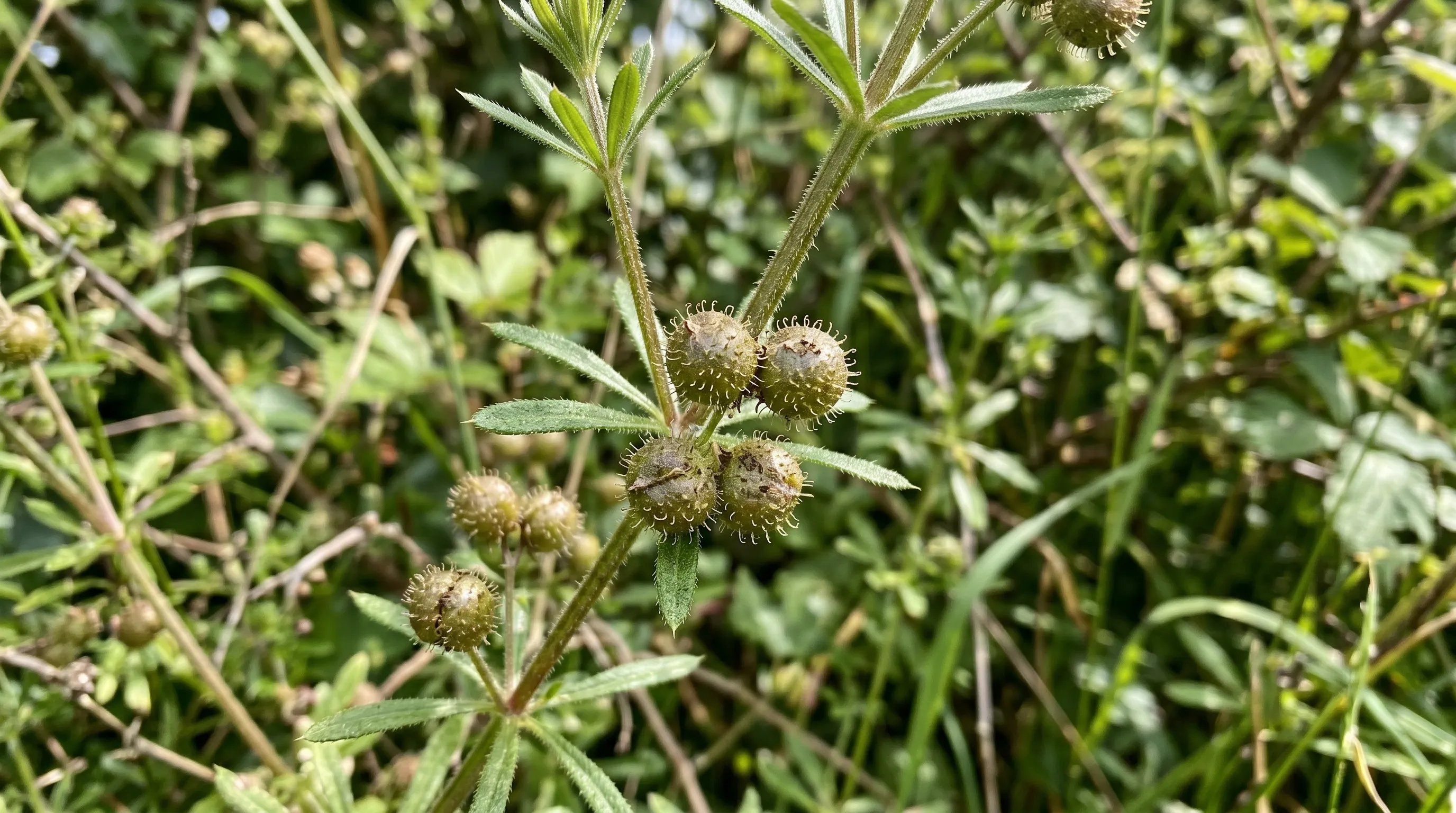 Cleavers seed pods at maturity in late May. Each pod 3-5mm diameter, covered in backward-pointing hooks. Pods break off easily and attach to animal fur, clothing or trouser bottoms for dispersal up to 100m from the parent plant.
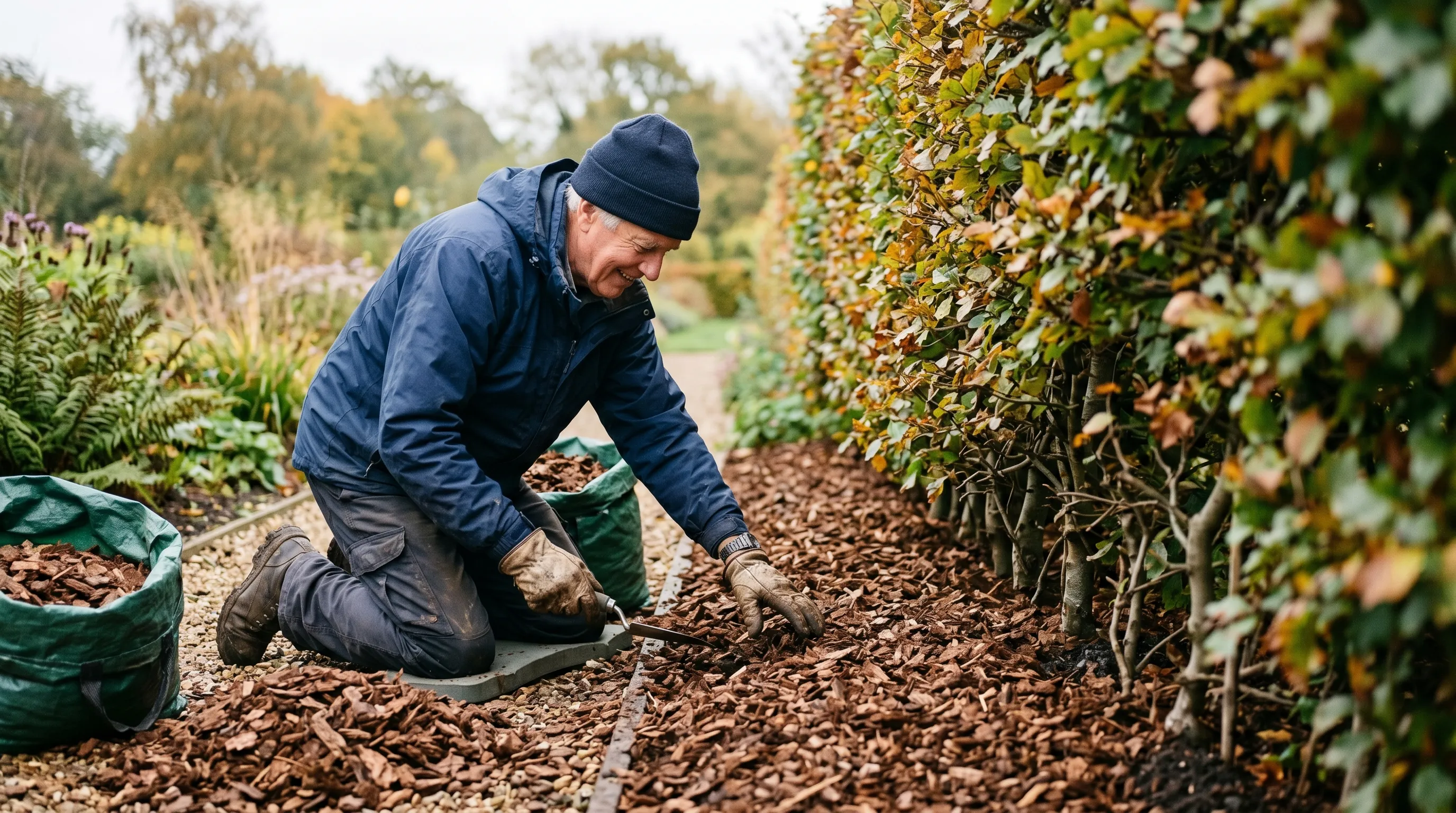 Autumn mulch suppression on the Staffordshire hedge bottom. 75mm bark chip strip 1m wide at the hedge base. Suppresses 80% of cleavers seed germination from the seed bank below.
Now plan the wider hedge and weed defence
Cleavers are one of several UK climbing annual weeds. For the wider chemical-free toolkit, our weedkillers guide covers UK-wide options. To suppress seeds long-term with mulch, our cardboard plus grass mulch guide covers the layer method. For the related couch grass perennial weed, our couch guide covers the rhizome-spread comparison. And for the broader organic garden approach, our organic pest control guide covers the wider framework.
Our team produces practical UK gardening guidance from source research, contributor records and established horticultural practice. Editorial standards are overseen by Matt W.