Key takeaways
- Work out what a weed is before deciding how to tackle it
- Hoe annual weeds on a dry day before they flower and set seed
- Perennial weeds regrow from roots, so dig them out and keep checking
- A thick mulch in spring stops lots of weed seeds coming up
- It's an offence to let Japanese knotweed spread into the wild
The most common UK garden weeds are dandelion, chickweed, bittercress, bindweed, couch grass, ground elder, horsetail and creeping buttercup. It pays to know which is which, because a weed that spreads by seed needs different treatment from one that creeps through the soil.
The RHS weed identification guide has lots of photos if you need extra help. Below we look at leaves, roots and how each weed spreads, plus easy ways to deal with them. For flat rosettes in the lawn, see our guide to greater plantain control.
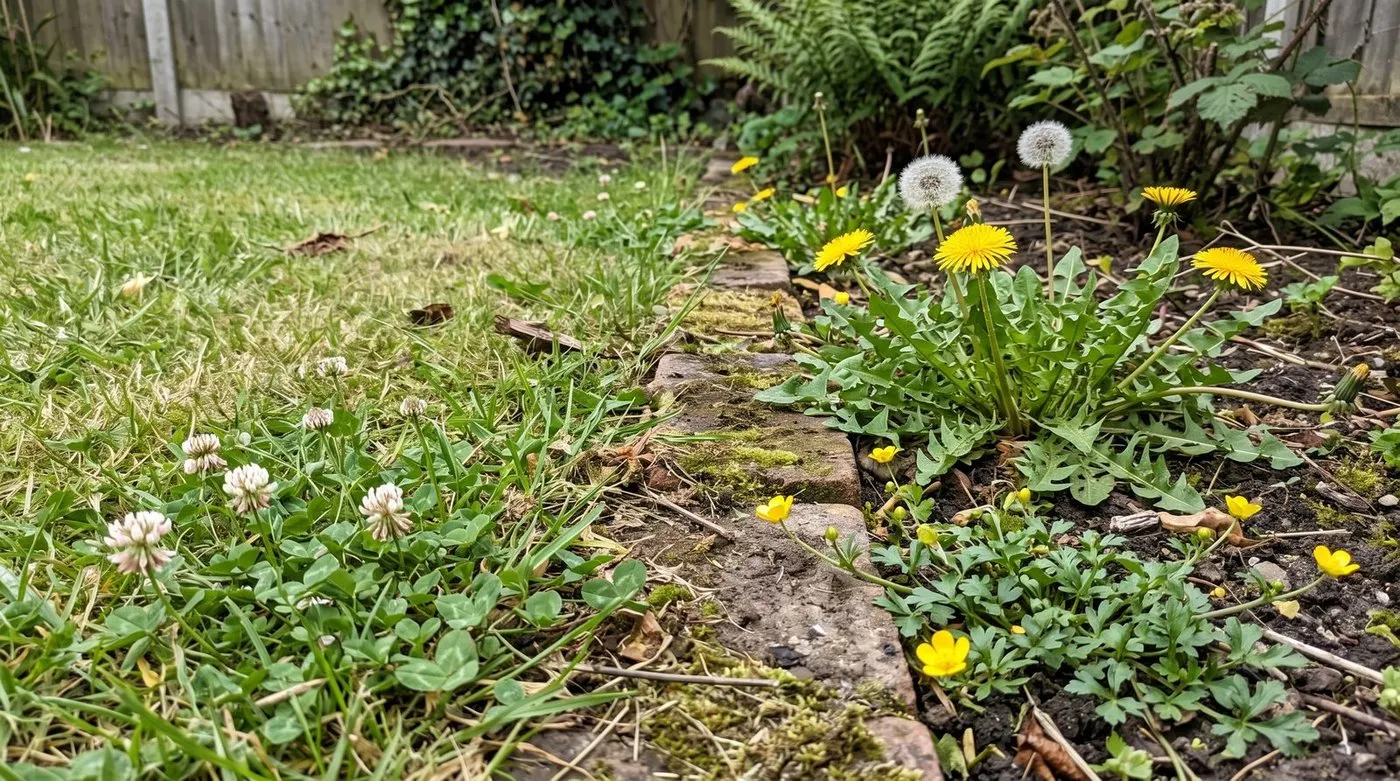
A typical border with dandelions, clover and annual weeds all jostling for space.
What are the most common annual weeds in the UK?
Annual weeds live for just one season. They come up, flower, drop seed and die, sometimes in a matter of weeks. They win by speed and numbers, and their seeds can wait in the soil for years.
The good news? They’re easy to deal with if you get them before they flower. Hoe on a dry day and they’ll shrivel in hours. Once they’ve set seed, you’ll be pulling their offspring for years.
Chickweed (Stellaria media)
How to spot it: Low, sprawling stems with small, oval, pale green leaves in pairs. Tiny white star-shaped flowers. Look closely and you’ll see a single line of hairs down one side of the stem, which swaps sides at each leaf joint.
How it spreads: Seed, and stems that root where they touch the soil. It comes up all year, even in winter.
How hard: Easy. Pull or hoe. The roots are shallow.
Groundsel (Senecio vulgaris)
How to spot it: Upright stems 10-25cm tall with deeply cut, toothed leaves. Small yellow flower heads with no petals, followed by fluffy seed heads like a mini dandelion.
How it spreads: Seed that blows on the wind. It goes from seedling to seed in just a few weeks.
How hard: Easy. Pull or hoe before it flowers.
Hairy Bittercress (Cardamine hirsuta)
How to spot it: A small rosette of rounded leaflets in pairs along a stalk. Tiny white four-petalled flowers on thin stems 10-20cm tall. The giveaway: ripe seed pods burst when touched and fire seeds everywhere.
How it spreads: Exploding seed pods. Seeds come up in autumn and sit through winter as little rosettes.
How hard: Easy to pull. Get it before the pods ripen. Our hairy bittercress control guide shows the best time to hoe.
Fat Hen (Chenopodium album)
How to spot it: Upright, branching stems from 30cm to over a metre. Diamond-shaped leaves with a mealy, greyish-white coating, especially underneath and on young growth. Tiny green flowers in clusters at the tips.
How it spreads: Lots of seed, which lasts for years in the soil.
How hard: Easy. Pull or hoe when young. Bigger plants still come out cleanly.
Annual Meadow Grass (Poa annua)
How to spot it: Soft, bright green tufts 5-20cm tall. Small triangular flower heads. It flowers and seeds all year round. It’s the most common grassy weed in lawns and borders.
How it spreads: Seed all year, and new shoots from the base.
How hard: Fairly easy. Regular hoeing keeps it down in borders. In lawns, overseed with better grasses and don’t mow too short.
Shepherd’s Purse (Capsella bursa-pastoris)
How to spot it: A rosette of deeply cut leaves. Thin flowering stems 10-40cm tall with tiny white flowers. The giveaway: heart-shaped seed pods along the stem, like little purses.
How it spreads: Seed, with several generations a year.
How hard: Easy. Pull or hoe.
What are the worst perennial weeds in UK gardens?
Perennial weeds come back year after year from roots, runners or underground stems. Cutting off the tops alone won’t kill them. Some, like bindweed and horsetail, have roots that go very deep, so getting rid of them takes a few years. Giant hogweed is in a class of its own, as its sap burns skin, so it needs extra care.
That’s why knowing what you’ve got matters. Hoeing a dandelion just gives it a haircut. Hoeing chickweed finishes it off.
Dandelion (Taraxacum officinale)
How to spot it: A rosette of deeply toothed leaves from a central crown. Bright yellow flowers on hollow stems with milky sap, then the familiar fluffy “clock”. A thick, fleshy taproot that bleeds white sap when cut.
How it spreads: Wind-blown seed, and new growth from bits of root left behind.
How hard: Fairly easy. Lever out the whole taproot with a daisy grubber, and pick off flowers before they seed. Our lawn weed identification guide has more tips.
Dock (Rumex obtusifolius, broad-leaved dock)
How to spot it: Big, broad, wavy-edged leaves on stout stalks. Tall flower spikes with clusters of reddish-brown seeds. A thick yellow taproot that goes deep and is tough to get out whole.
How it spreads: Lots of long-lasting seed, plus regrowth from the root.
How hard: Medium. Dig out the whole root. If it snaps off below ground, it’ll be back in weeks.

Broad-leaved dock with its big wavy leaves and stout taproot.
Bindweed (Convolvulus arvensis and Calystegia sepium)
How to spot it: Twining stems that climb up anything. Arrow-shaped leaves. Trumpet flowers, small and white or pink-striped on field bindweed, big and pure white on hedge bindweed. White, brittle roots that snap easily.
How it spreads: Even small bits of root grow into new plants. Roots spread a long way sideways too.
How hard: Very hard. One of the toughest weeds in UK gardens, so plan on a few years. Our bindweed removal guide has step-by-step methods.
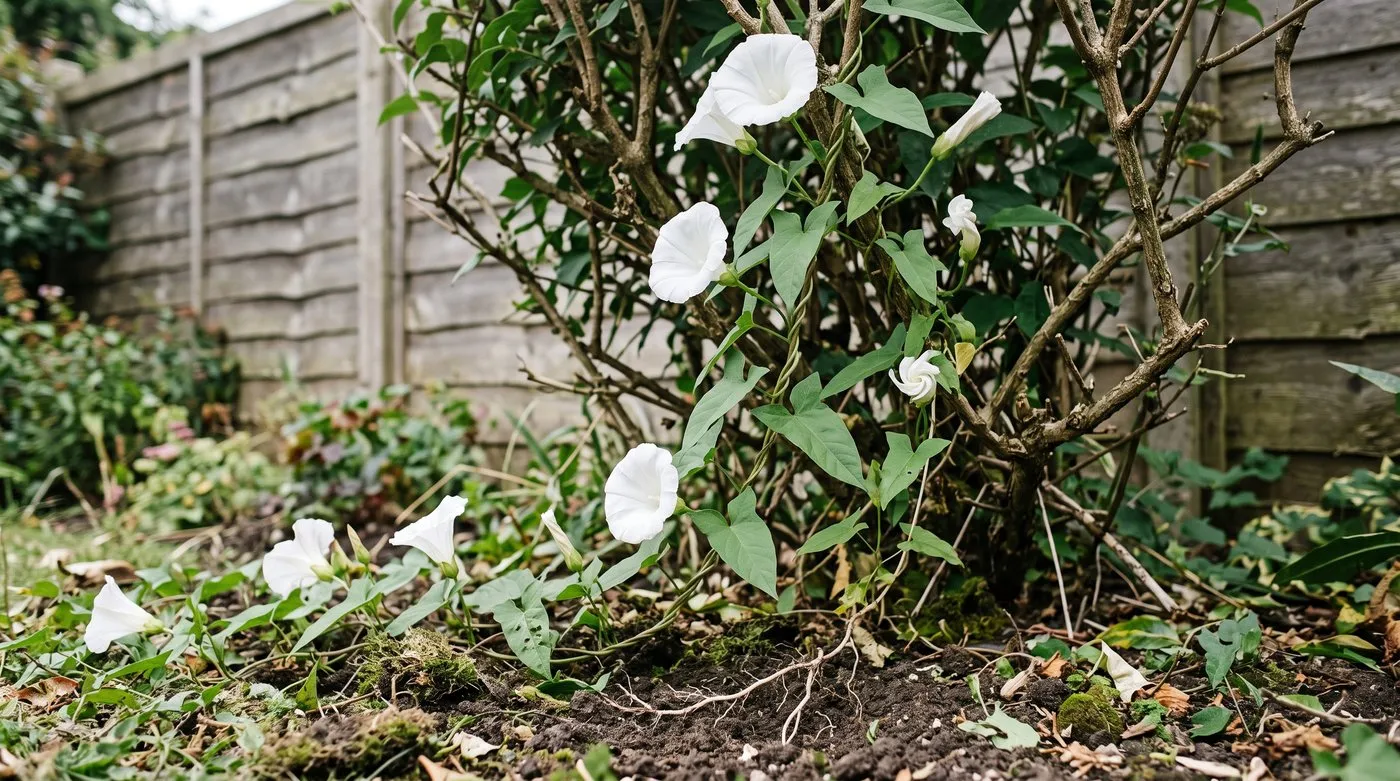
Bindweed twines up anything and regrows from tiny bits of brittle root. Plan on a few seasons of persistence to beat it.
Ground Elder (Aegopodium podagraria)
How to spot it: Toothed leaflets in threes on long stalks, a bit like elder leaves. Flat white flower heads in June and July, like a short cow parsley. A tangle of white, wiry roots just under the surface. Crushed leaves have a slightly unpleasant smell.
How it spreads: Underground stems. Tiny pieces regrow.
How hard: Hard. Dig out every bit you can find, or cover the area with black polythene for a year or more.
Couch Grass (Elymus repens)
How to spot it: Coarse, dull green grass with flat blades. Tough, white underground stems with sharp tips running through the top layer of soil. They’re sharp enough to push through potatoes.
How it spreads: Underground stems that sprout at every joint.
How hard: Hard. Fork out every piece. Never rotavate it, as chopping it up just makes lots more plants.
Creeping Buttercup (Ranunculus repens)
How to spot it: Dark green, three-lobed, toothed leaves, often with paler patches. Glossy yellow flowers. Long runners across the surface that root and make new plants.
How it spreads: Runners and seed. It loves heavy, wet, squashed soil, so it’s a good sign your ground is soggy.
How hard: Medium. Fork out whole plants and their runners. Improving clay soil drainage makes your garden less welcoming for it.
Horsetail (Equisetum arvense)
How to spot it: You can’t miss it. Upright, jointed green stems with rings of thin, needle-like branches, like a tiny Christmas tree. Brown, cone-tipped stems pop up first in March and April. No flowers. Its roots go very deep.
How it spreads: Deep underground stems, and spores like a fern.
How hard: Very hard. Weedkillers struggle with its waxy stems. Cutting it down again and again and mulching deeply weakens it over a few years, but it rarely goes completely.
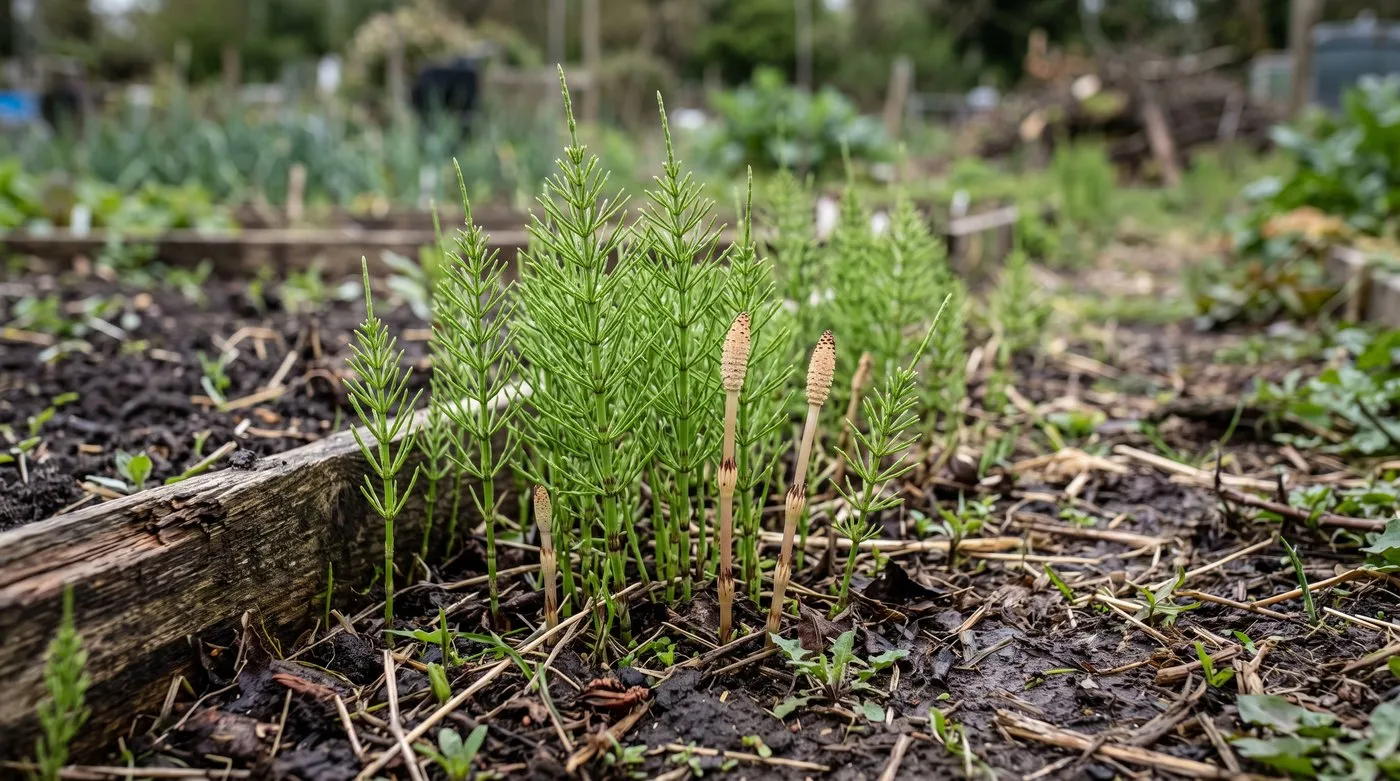
Horsetail is a sign of wet, acid soil. Cutting it down again and again and mulching deeply weakens it over a few years.
Japanese Knotweed (Fallopia japonica)
How to spot it: Hollow, bamboo-like stems up to 3m tall that zigzag between the joints. Big, heart-shaped leaves with a flat base. Creamy-white flower clusters in late summer. Reddish-purple shoots shoot up fast in spring.
How it spreads: Underground stems that travel well beyond what you can see. Tiny fragments can grow into new plants.
How hard: Very hard. It’s an offence to cause it to spread into the wild, and its waste needs careful disposal. Most people call in a specialist. Our Japanese knotweed identification guide explains your responsibilities and treatment options.
Which weeds are most common in UK lawns?
Lawn weeds move into any gap in the grass, so thin, stressed or very short lawns get the most. Many lawn “weeds” are pretty wildflowers that bees love, and lots of people now happily leave them. It’s up to you, and knowing what’s what helps you decide.
White Clover (Trifolium repens)
How to spot it: Three-part leaves, each with a pale V-shaped mark. Round white or pinkish flower heads. Low, creeping stems that root as they go.
How it spreads: Runners and seed. It feeds itself from the air, so it does well in hungry lawns.
How hard: Fairly easy. Feed the lawn so the grass can compete, or use a lawn weedkiller. Lots of people keep clover for the bees and because it stays green in dry spells.
Daisy (Bellis perennis)
How to spot it: Flat rosettes of small, spoon-shaped leaves pressed to the ground. White petals with pink tips around a yellow middle. The classic British lawn flower.
How it spreads: Seed and short creeping stems. Close mowing doesn’t bother it.
How hard: Easy. Lift them out with a daisy grubber, or raise the mower to about 4cm. Our guide to lawn daisies explains when each method works best.
Broadleaf Plantain (Plantago major)
How to spot it: A flat rosette of broad, oval leaves with strong lines running lengthwise. Short spikes of tiny greenish flowers. It lies flat and dodges the mower, and loves path edges and trampled ground.
How it spreads: Seed. It’s a sign the soil is squashed.
How hard: Fairly easy. Lever out single plants or use a lawn weedkiller. Scarifying and aerating the lawn loosens the soil and keeps it away. The greater plantain lawn guide helps if it’s spreading.
Speedwell (Veronica filiformis)
How to spot it: Tiny, round, scalloped leaves on thin creeping stems. Small sky-blue flowers. It forms mats in damp, shady lawns.
How it spreads: Bits of stem. Mowing actually spreads it, as cut pieces root where they land.
How hard: Medium. Weedkillers don’t do much. Improve drainage, let in more light, and rake before mowing.
Self-Heal (Prunella vulgaris)
How to spot it: Low, creeping stems with pairs of oval, slightly hairy leaves. Stubby spikes of violet-purple flowers. Square stems, as it’s in the mint family. It forms patches in damp, acid lawns.
How it spreads: Runners and seed. It likes poor, acid, damp ground.
How hard: Fairly easy. Raise the mower, feed the lawn and improve drainage. A soil test shows whether lime would help.

Clover and daisies in a lawn. Bees love them, and more people are happy to let them be.
Yarrow (Achillea millefolium)
How to spot it: Fine, feathery leaves that smell when crushed. Flat clusters of small white or pale pink flowers. In lawns it stays low and dodges the mower. It copes well with drought.
How it spreads: Underground stems and seed. It likes dry, hungry lawns.
How hard: Fairly easy. Dig it out or feed the lawn. Lots of people welcome it in wildflower lawns.
Weed identification comparison table
Use this table as a quick check when you’re out in the garden.
| Weed | Type | Height | Look for | Spreads by | How hard |
|---|---|---|---|---|---|
| Chickweed | Annual | 5-15cm | Small oval leaves, tiny white stars | Seed | Easy |
| Groundsel | Annual | 10-25cm | Cut leaves, yellow flowers, no petals | Seed | Easy |
| Hairy bittercress | Annual | 10-20cm | Paired round leaflets, exploding pods | Seed | Easy |
| Fat hen | Annual | 30-150cm | Diamond leaves with mealy coating | Seed | Easy |
| Annual meadow grass | Annual | 5-20cm | Soft bright green tufts | Seed | Fairly easy |
| Shepherd’s purse | Annual | 10-40cm | Heart-shaped seed pods | Seed | Easy |
| Dandelion | Perennial | 10-30cm | Toothed rosette, yellow flowers | Seed and root | Fairly easy |
| Dock | Perennial | 60-120cm | Broad, wavy leaves | Seed and root | Medium |
| Bindweed | Perennial | 2-3m | Arrow leaves, trumpet flowers | Root bits | Very hard |
| Ground elder | Perennial | 30-60cm | Leaflets in threes | Underground stems | Hard |
| Couch grass | Perennial | 30-90cm | Coarse grass, sharp white roots | Underground stems | Hard |
| Creeping buttercup | Perennial | 15-50cm | Three-lobed leaves, runners | Runners and seed | Medium |
| Horsetail | Perennial | 30-60cm | Mini Christmas trees | Deep roots and spores | Very hard |
| Japanese knotweed | Perennial | Up to 3m | Zigzag bamboo stems, heart leaves | Underground stems | Very hard |
| Clover | Perennial | 5-15cm | Three leaflets with pale V | Runners and seed | Fairly easy |
| Daisy | Perennial | 5-12cm | Small spoon leaves | Seed and short stems | Easy |
| Plantain | Perennial | 10-20cm | Broad leaves with lengthwise lines | Seed | Fairly easy |
| Speedwell | Perennial | 2-5cm | Tiny round leaves, blue flowers | Bits of stem | Medium |
| Self-heal | Perennial | 5-15cm | Purple flower spikes, square stems | Runners and seed | Fairly easy |
| Yarrow | Perennial | 20-60cm | Feathery, scented leaves | Underground stems and seed | Fairly easy |
How do you remove annual weeds from a garden?
Annual weeds rely on seed, so stop them seeding and you break the cycle. Keep at it for a few years and there’ll be fewer each spring.
Hoeing
The quickest and cheapest way. Slide a sharp Dutch hoe just under the surface on a dry, sunny day. The weeds wither within hours. On damp soil they can re-root, so pick a dry day. Hoe every week or so from March to October and annuals never get the chance to flower.
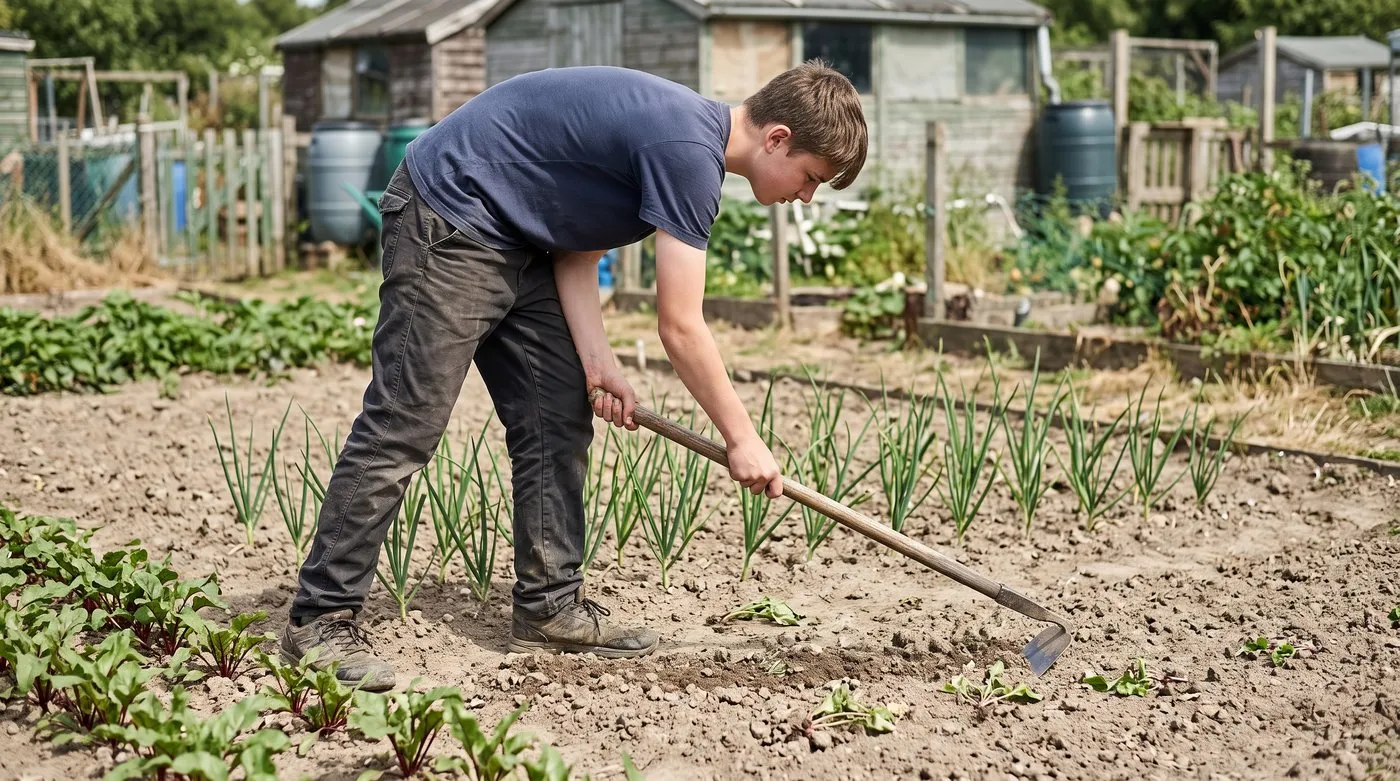
Hoe on a dry, sunny day and cut weeds wither within hours. A weekly hoe means annuals never get the chance to flower.
Hand Pulling
Good for weeds too close to your plants to hoe. Grip at soil level and pull when the soil is moist. Add them to the compost unless they’ve already set seed. If they have, put them in council green waste.
Mulching
A 5-8cm layer of mulch such as bark, woodchip or garden compost blocks light and stops most weed seeds coming up. Spread it in spring after clearing weeds. It also keeps the soil moist, so you water less.
Flame Weeding
A gas flame weeder passes a quick, hot flame over the leaves. The weed doesn’t need to catch fire, a second or two is enough. Annual weeds die within a day or two. It’s handy on paths, patios and gravel. Take care near dry plants and fences.
How do you control perennial weeds permanently?
Perennial weeds store energy in their roots, so they keep regrowing. To beat them you need to dig the roots out, starve them of light, or, if you choose, use a weedkiller that travels down to the roots.
Digging Out Entire Roots
Lever out taprooted weeds like dandelion and dock with a daisy grubber or narrow trowel. For spreaders like ground elder and couch grass, fork through the soil slowly and pick out every bit of root. It’s fiddly, but every piece you miss can grow back.
Best time: Spring or autumn, when the soil is moist. Dry, hard soil makes roots snap.
Repeated Cutting to Exhaust Root Reserves
Cut the tops off every week or so. The plant keeps using up its root stores to regrow, and eventually runs out. It can take two or three seasons, but it’s the main chemical-free way to tackle bindweed and ground elder.
The catch: Skip a few weeks and the weed quickly builds its strength back up.
Total Light Exclusion
Cover the ground with heavy black polythene, old carpet or thick cardboard topped with mulch. With no light, most perennial weeds give up after a year or more. It works well on ground elder, couch grass and bindweed. A no-dig approach with cardboard and compost clears weeds and improves the soil at the same time.
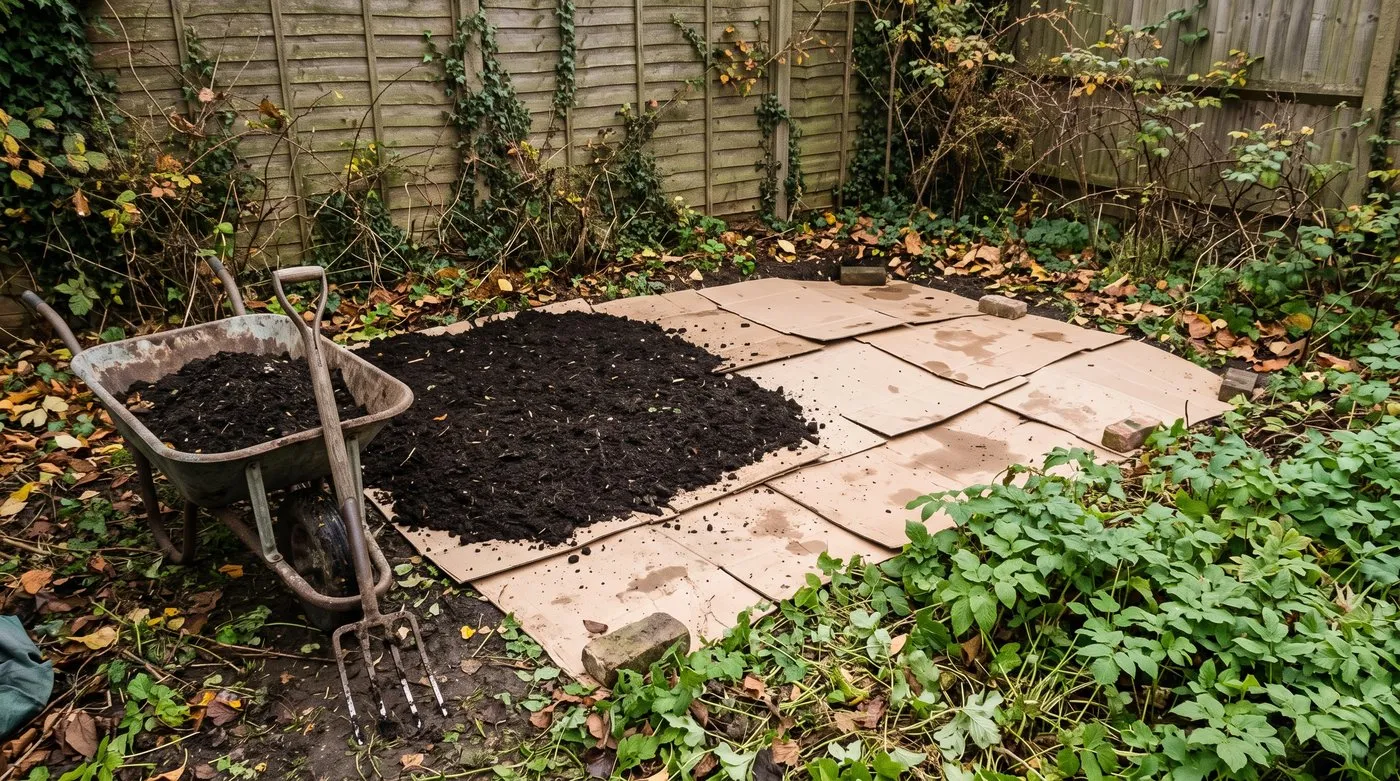
Overlap the cardboard well so no light gets through, then pile compost on top. Most perennial weeds give up after a year or more.
Systemic Herbicides
Glyphosate weedkillers are taken in through the leaves and travel down to the roots. Use them when weeds are growing strongly, usually June to August. They kill any plant they touch, so apply carefully near plants you want to keep, and follow the label.
What are the best organic weed control methods?
| Method | Best for | How well it works | Effort |
|---|---|---|---|
| Hoeing | Annual weeds in borders | Very well on dry days | Little and often |
| Hand pulling | Taprooted weeds | Well, if you get the whole root | Medium |
| Mulching (5-8cm) | Stopping annual weeds | Very well | Once a year |
| Black polythene | Clearing perennial weeds | Very well, given time | Lay it and wait |
| Flame weeding | Paths and patios | Very well on annuals | Quick |
| Boiling water | Cracks and paving | Well on annuals | Quick |
| Cardboard and compost | Making new no-dig beds | Well | Medium |
Mixing methods works best. Mulch borders thickly in spring. Hoe between rows each week. Pull perennial weeds when the soil is moist. Use boiling water or a flame weeder on paving. For ground elder and bindweed, blocking out light is the most reliable long-term fix.
When Chemical-Free Methods Are Not Enough
Three weeds are especially tough without chemicals. Bindweed roots run deep and regrow from tiny bits. Horsetail has waxy stems and very deep roots. Japanese knotweed usually needs a specialist. For these, some gardeners who otherwise avoid chemicals use glyphosate as a careful last resort.
What weeds tell you about your soil
Weeds grow where conditions suit them, so they can tell you a lot about your soil.
| Weed | What it suggests | What to do |
|---|---|---|
| Horsetail | Wet, acid soil | Improve drainage, test pH |
| Creeping buttercup | Squashed, wet clay | Loosen soil, improve drainage |
| Nettles | Rich, fertile soil | Go easy on feeding |
| Docks | Wet, heavy, squashed ground | Loosen soil, add compost |
| Clover | Hungry soil | Feed the lawn or bed |
| Chickweed | Fertile, moist soil | Nothing wrong, just hoe |
| Plantain | Trampled, squashed soil | Aerate the area |
| Self-heal | Acid, hungry, damp soil | Test pH and lime if needed |
| Annual meadow grass | Squashed, over-watered lawn | Aerate, water less |
| Fat hen | Rich, freshly dug soil | Hoe often, mulch thickly |
Fixing the soil often works better than pulling the same weeds forever. Soggy clay will keep growing horsetail and buttercup however often you weed. Improve the drainage and they lose their advantage.
Are there any legal requirements for weeds in UK gardens?
Most garden weeds come with no legal strings. Dandelions, docks and nettles are fine to leave. There are three things to know about, though.
Japanese Knotweed
It’s an offence to cause Japanese knotweed to spread into the wild. Knotweed waste, including soil with roots in it, must be disposed of properly, not put in your green bin. If you sell your home, you’ll need to say if it’s there. The GOV.UK knotweed guidance sets out the rules.
Nuisance Weeds and Overgrowth
Councils can ask people to cut back plants that cause a real nuisance to neighbours. That can include brambles pushing through, overhanging branches and very overgrown gardens that attract rats.
Injurious Weeds on Agricultural Land
Five weeds are covered by the Weeds Act 1959: common ragwort, spear thistle, creeping thistle, broad-leaved dock and curled dock. The law is about stopping them spreading onto grazing land and crops, not about ordinary gardens. Our ragwort law and safe-removal guide explains more.
Seasonal Weed Calendar: When to Act
Weeding at the right time makes the job much easier.
| Month | What’s happening | What to do |
|---|---|---|
| January-February | Bittercress and chickweed sitting through winter | Pull any rosettes you see |
| March | Weed seeds start coming up, perennials send up shoots | Start hoeing every fortnight. Mulch borders |
| April-May | Lots of seedlings. Perennials growing fast. Horsetail appears | Hoe weekly. Pull perennials while the soil is soft |
| June-July | Annuals flowering and seeding. Bindweed and ground elder in full swing | Remove flowering weeds straight away. Use glyphosate on perennials only if you choose to |
| August | A second flush of annuals | Keep hoeing |
| September-October | Chickweed, bittercress and meadow grass come up again | Hoe or pull them. Top up mulch |
| November-December | Most weeds resting. Chickweed still going in mild spells | Lay black polythene on perennial weed patches. Plan next year |
Gardens with the fewest weeds tend to have three things in common: plants packed closely, regular mulching and healthy soil. Bare soil is an open invitation, and something will always move in.
Plant borders closely so leaves shade the soil. Fill gaps with 5-8cm of bark or woodchip each spring. Feed the soil with home-made compost so your plants grow strong enough to crowd weeds out. Healthy soil also supports the natural pest predators that keep the garden in balance. In lawns, mow at 3-4cm and overseed thin patches each autumn.
Regular hoeing, pulling and mulching mean fewer weeds each year. You’ll probably never be completely weed-free, as seeds blow in from elsewhere, so think of weeding as a little-and-often job.
Weeds aren’t a sign you’ve failed. They’re just the first plants to move into bare ground, and they tell you something useful about your soil.
Further Reading
- How to Get Rid of Bindweed, step-by-step control for the UK’s most stubborn climbing weed
- How to Get Rid of Brambles, clearing bramble thickets from borders
- Japanese Knotweed Identification Guide, what to look for and what the rules are
- Organic Weedkillers: UK Guide, weedkiller options and hands-on methods compared
- Common Lawn Weeds: Identification and Control, weeds in UK lawns and when to tackle them
Frequently asked questions
What is the most common weed in UK gardens?
Dandelion is one of the most widespread. Its toothed leaves, yellow flowers and long taproot make it easy to spot. Chickweed, bittercress, annual meadow grass and creeping buttercup are also very common.
How do I identify a weed versus a plant I want to keep?
Wait for the first proper leaves to appear. Then look at how the leaves are arranged, the stem, any hairs, the flowers and the roots. A good weed guide with photos helps a lot if you’re unsure.
Should I pull weeds or hoe them?
Hoe small annual weeds and dig out perennial roots. Hoe on a dry day so the weeds shrivel. Bindweed, couch grass and similar weeds can regrow from bits of root, so you may need to repeat.
When is the best time to weed a garden in the UK?
Start in early spring, before weeds get going. Hoe small annuals on a dry day before they flower. Dig out perennial roots when the soil is moist and easy to work, then keep checking for regrowth.
Is it illegal to have weeds in your garden UK?
No, most garden weeds are perfectly legal. Japanese knotweed is the big exception, as you mustn’t let it spread into the wild, and its waste needs careful disposal. Five weeds like ragwort are also covered by law where they threaten livestock or crops.
Our team produces practical UK gardening guidance from source research, contributor records and established horticultural practice. Editorial standards are overseen by Matt W.