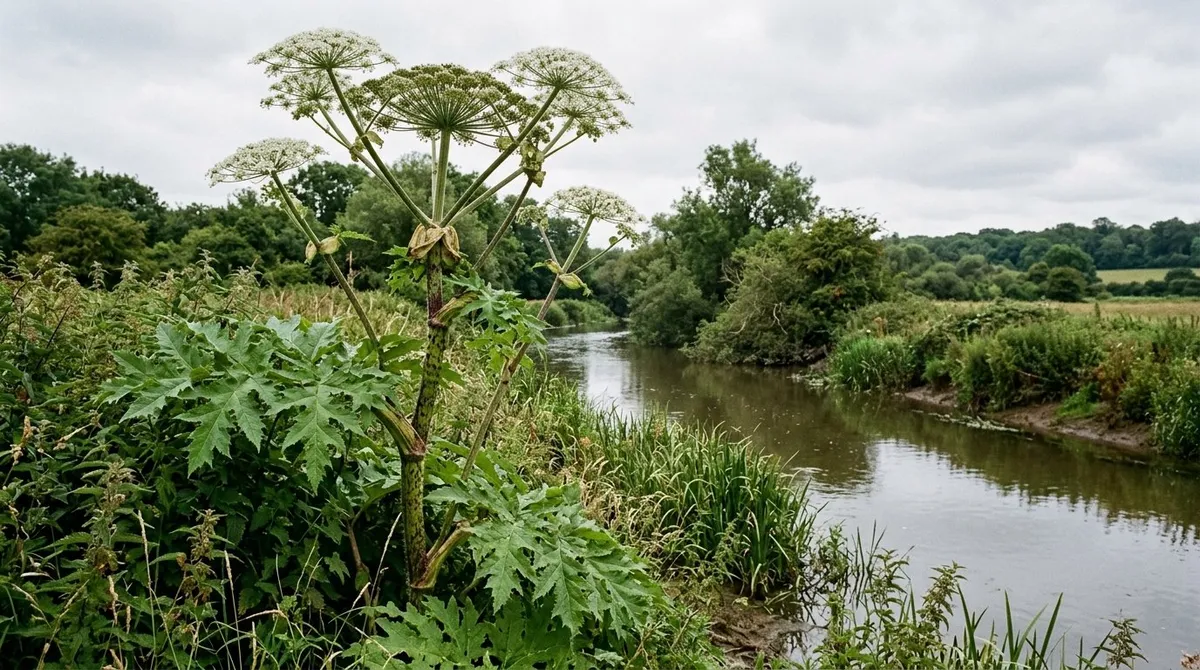
Key takeaways
- Giant hogweed can reach 5m tall with a thick stem blotched purple and covered in white bristles
- Its sap causes painful burns and blisters when skin is then exposed to sunlight
- If sap gets on skin, wash it off with soap and water and keep it covered from the sun
- It's an offence to plant it or let it spread into the wild, so control it on your land
- Never strim or mow it: wear full cover and dig out the root, or use an approved weedkiller
- Seeds last in the soil for years, so check and treat the site every year
Giant hogweed is a huge invasive plant whose sap burns skin in sunlight. It looks like an enormous cow parsley, with white umbrella-shaped flowers on a stem far taller than you. If you think it’s growing in or near your garden, don’t touch it, keep children and pets away, and plan to remove it safely.
The sap doesn’t sting at first. Hours later, after sunlight hits the skin, it can blister badly. This guide shows you how to identify giant hogweed, how to tell it from harmless lookalikes, what to do if sap touches you, and how to get rid of it.
What is giant hogweed?
Giant hogweed (Heracleum mantegazzianum) came to Britain from the Caucasus as a Victorian garden curiosity. It escaped and now grows along rivers, canals, railway banks and waste ground across the UK.
It usually takes two to four years to flower. In its flowering year it can reach up to 5m tall, then it sets seed and dies. Younger plants are just a big clump of jagged leaves, which can still burn skin.
The danger is the sap. It contains chemicals that make skin react to sunlight. Sap plus sun leads to burning and blistering a day or two later, and the skin can stay sensitive to sun for a long time afterwards. Children are most at risk, because the hollow stems look like perfect telescopes or pea-shooters.
How to identify giant hogweed
Check these features from a safe distance. Use a zoomed photo rather than getting close.
- Height. A flowering plant towers well above head height, often 3-5m.
- Stem. Thick, hollow and ridged, green with purple-red blotches and stiff white bristles.
- Flower heads. Flat-topped white umbrellas, often wider than 50cm, from June to August.
- Leaves. Huge, jagged and deeply cut, often a metre or more across.
- Where it grows. Damp ground: riverbanks, ditches, towpaths, railway banks and rough ground.
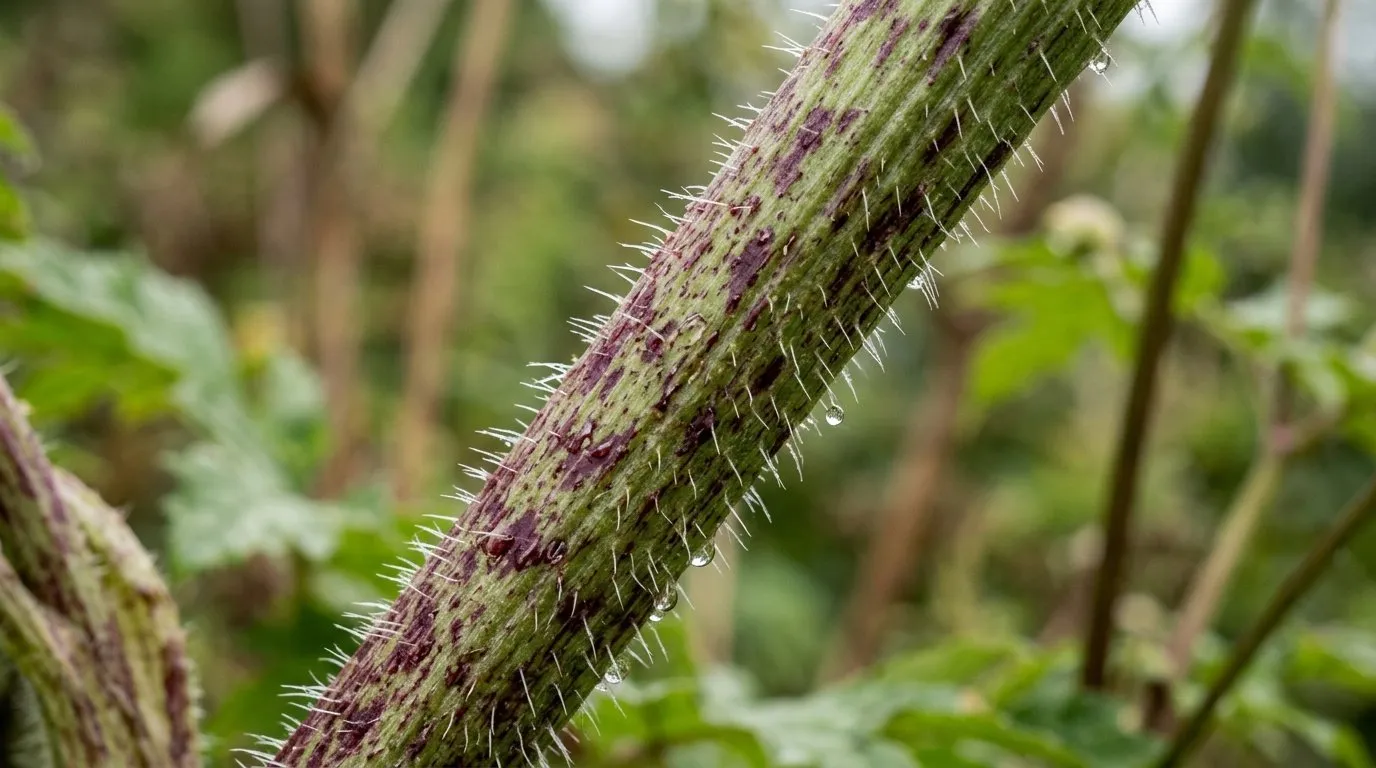
The stem is the best clue. Thick, green, blotched with purple and covered in white bristles, and still not something to touch.
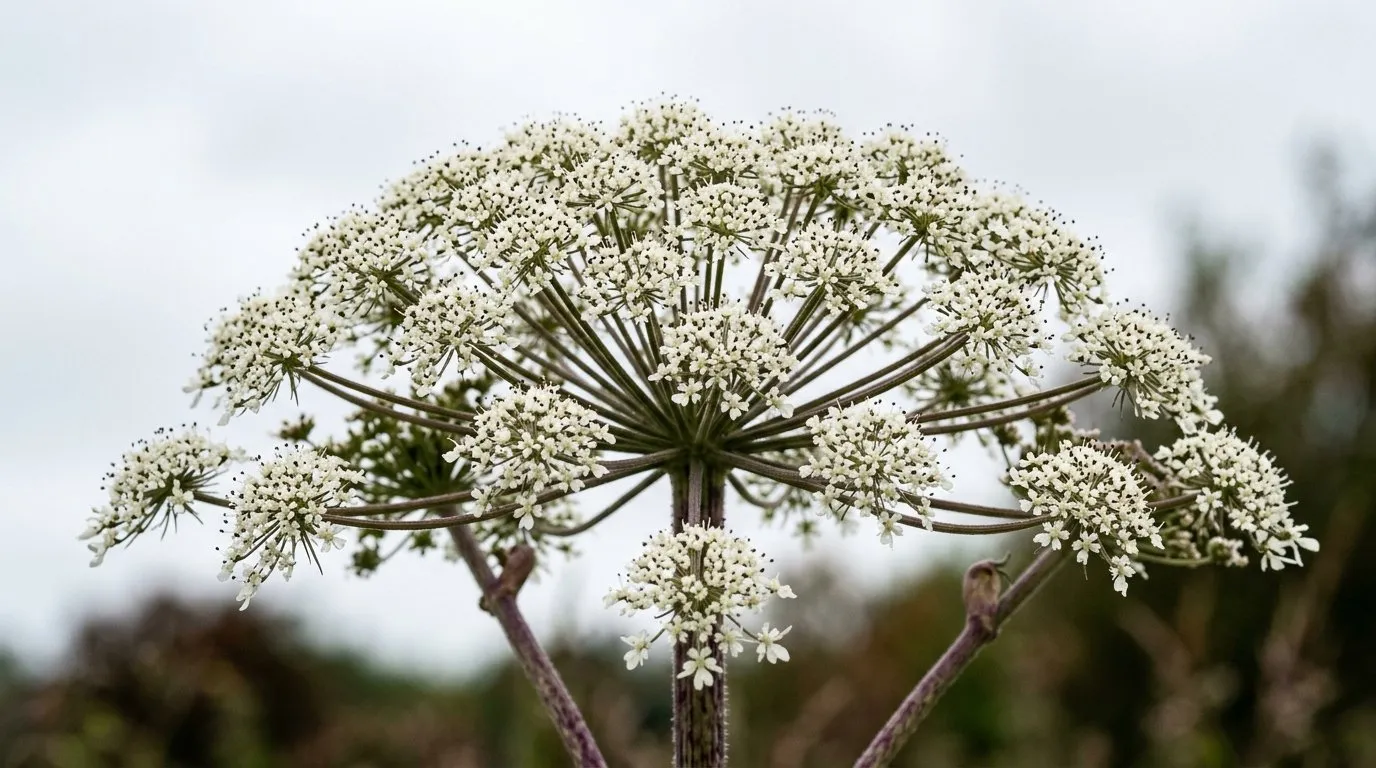
Each huge flower head can produce thousands of seeds. That’s why stopping plants flowering matters so much.
Giant hogweed vs cow parsley and other lookalikes
Several common plants have similar white flower heads. Scale and stem tell them apart.
| Plant | Height | Stem | Flowers | Risk |
|---|---|---|---|---|
| Giant hogweed | Up to 5m | Thick, purple-blotched, bristly | Very large heads, June to August | Severe burns in sunlight |
| Common hogweed | Up to about 2m | Ridged, hairy, no big blotches | Smaller heads, summer | Can irritate skin in sunlight |
| Cow parsley | About 1m | Slim, smooth or slightly hairy | Small lacy heads, April to June | Harmless, but has poisonous lookalikes |
| Elder | Shrub or small tree | Woody with bark | Flat creamy heads, May to June | Harmless |
A simple rule: if it towers over you and the stem is blotched purple and bristly, treat it as giant hogweed. Common hogweed is smaller but its sap can also cause skin reactions, so wear gloves and long sleeves when you deal with it. Cow parsley has a poisonous relative, hemlock, which has a smooth stem with purple spots. Don’t pick any of these for the vase. Another yellow-flowered roadside weed with legal duties attached is ragwort.
For other invasive plants to learn by sight, see the guides to Japanese knotweed and Himalayan balsam.
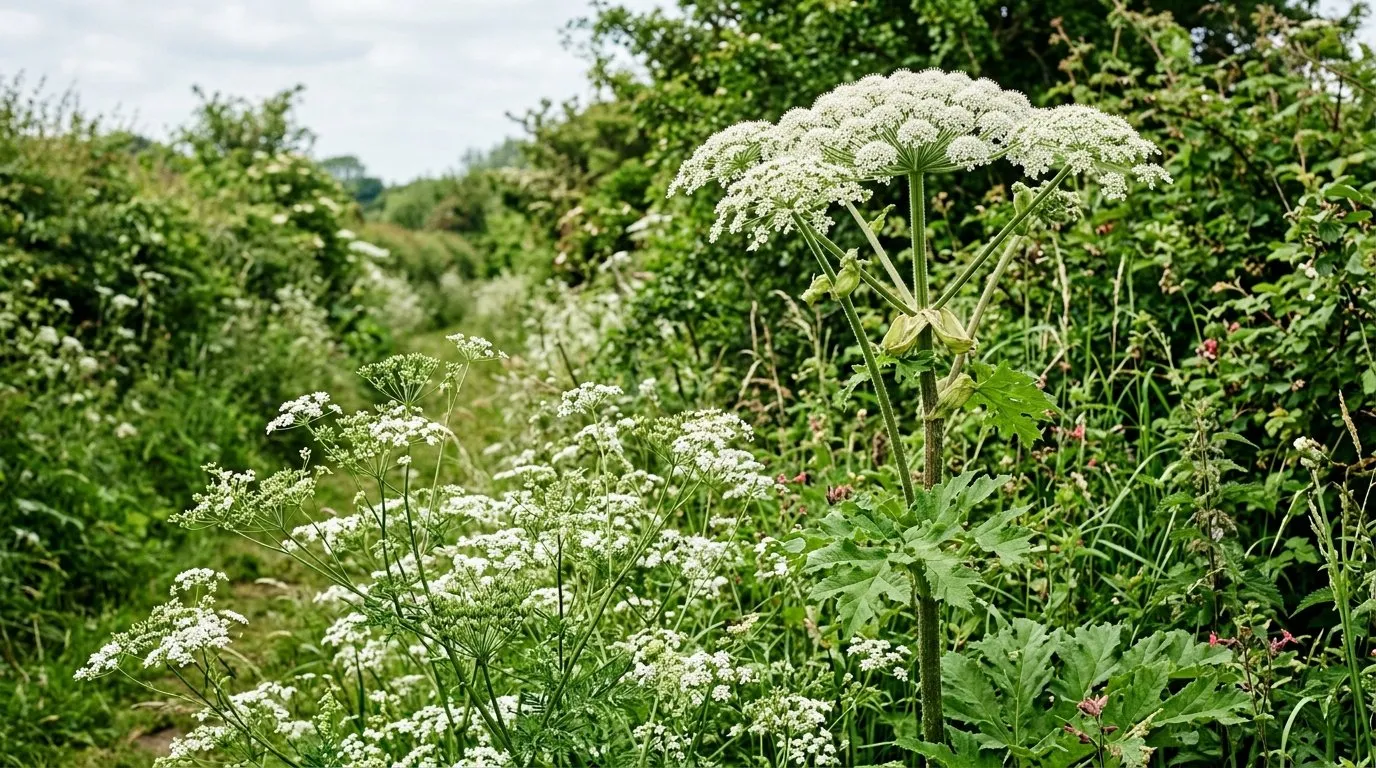
Size settles most cases. Cow parsley in front stays waist high, while the hogweed behind is far taller with broader flower heads.
What to do if hogweed sap gets on your skin
Wash the skin straight away with soap and cold water, then keep it out of the sun. The sooner you wash and cover it, the milder the reaction.
- Wash gently with soap and plenty of cold water.
- Cover the area and go indoors or into shade.
- Keep the skin out of sunlight for at least 48 hours.
- Don’t burst any blisters that form.
- Contact a pharmacist, your GP or NHS 111 if blisters appear or a large area is affected.
- If sap gets in your eyes, rinse them with clean water and get urgent medical help.
Afterwards, the skin may stay sensitive to sun for months or longer. Keep it covered or use high-factor sun cream outdoors.
Is giant hogweed illegal in the UK?
Having giant hogweed on your land isn’t an offence in itself. But it is an offence to plant it or cause it to grow in the wild, under the Wildlife and Countryside Act 1981.
In practice, that means you should control it and stop it spreading, including by moving soil that contains its seeds. Councils can take action if it causes a problem for neighbours or the public. It’s one of several plants with legal restrictions, listed in the guide to banned plants in UK gardens. The GOV.UK guidance on invasive plants explains your responsibilities and how to dispose of it.
Don’t put giant hogweed in your compost heap or garden waste bin. Check the GOV.UK guidance or ask your council how to get rid of cut plants and contaminated soil. If it’s growing on a public path, canal or riverbank, report it to the council or landowner rather than tackling it yourself.
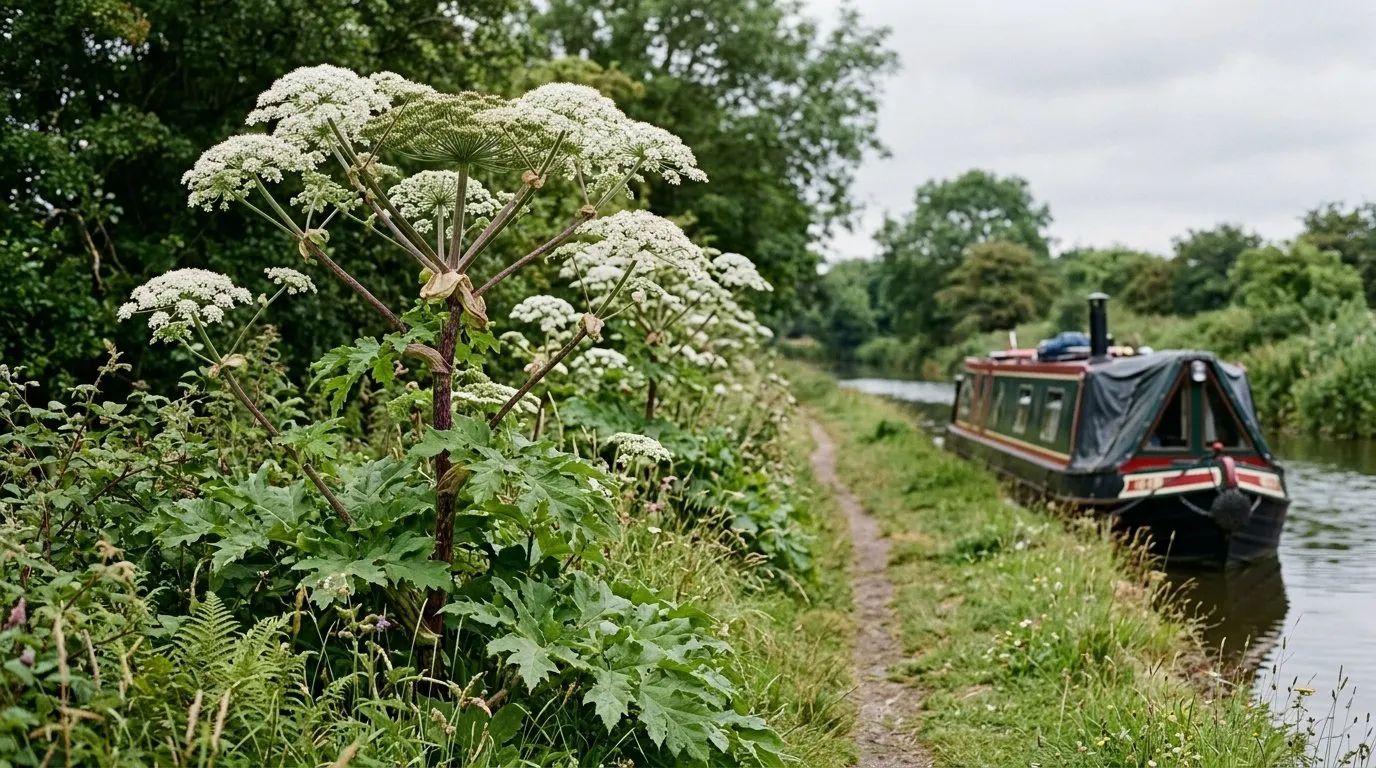
Towpaths and riverbanks are classic hogweed spots. On public land, report it rather than tackling it yourself.
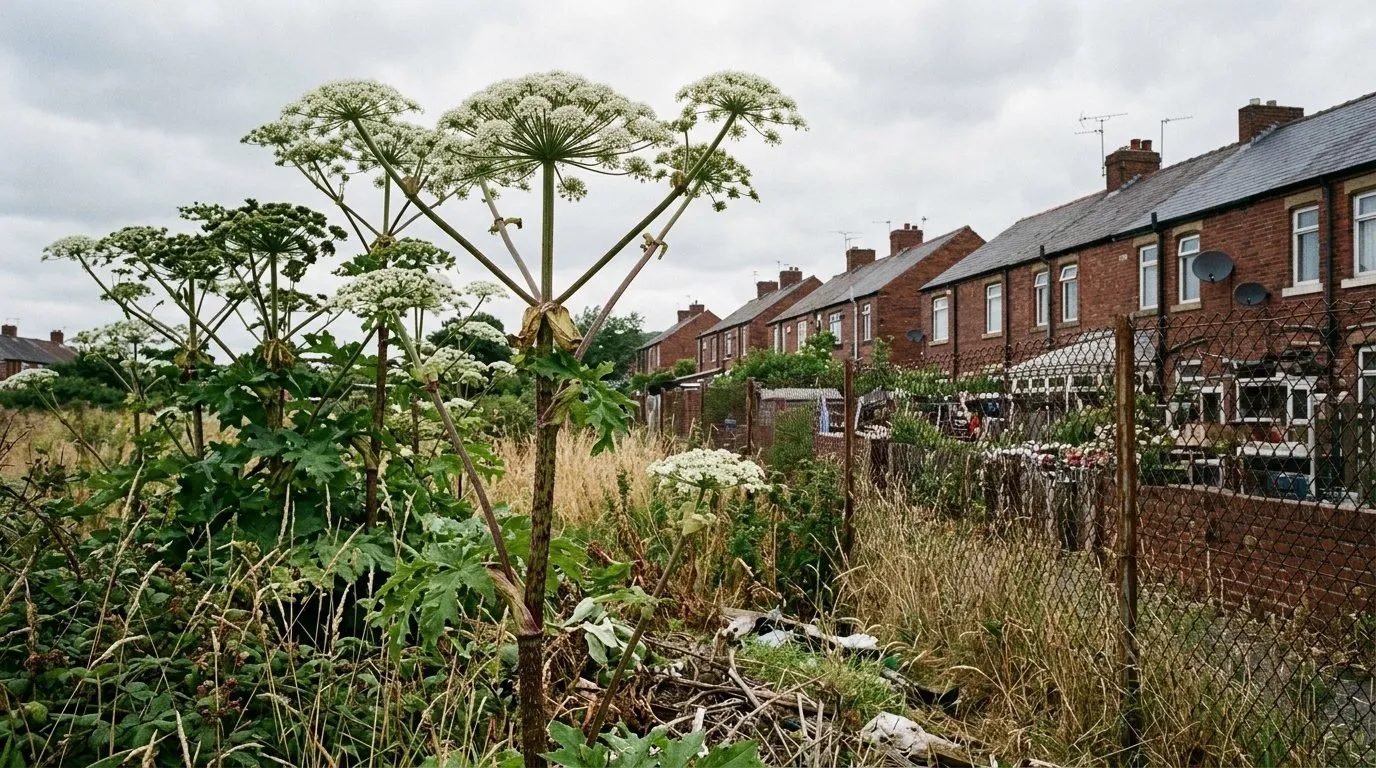
Rough ground near houses is where children are most likely to meet it. Tell the landowner or council if you spot it.
How to get rid of giant hogweed safely
Never strim, mow or flail giant hogweed. It sprays sap everywhere. Instead, dig out small plants or use an approved weedkiller, and come back every year.
Before you start, cover every bit of skin. Wear waterproof gloves, a disposable coverall, wellies, goggles and ideally a face shield. Work on a dull, still day so there’s no wind and little sun.
Digging out small plants. In spring, before flowering, push a sharp spade in and cut through the root about 10-15cm below ground. Lift the plant out. Bag it carefully and dispose of it as the guidance above says.
Using weedkiller. For bigger patches, a glyphosate weedkiller sold for garden use works best on plants in active growth in spring, before they flower. Follow the label exactly. Don’t use weedkiller near ponds, streams or ditches without checking with the Environment Agency (or Natural Resources Wales or SEPA) first.
Stopping seeding. If a plant has already flowered, carefully cut off the flower heads before the seeds ripen and bag them.
Repeat every year. Seeds stay in the soil for several years, so check each spring and deal with new seedlings while they’re small. The guide to common garden weeds helps you tell hogweed seedlings from other weeds.
For a large stand, a shared boundary or anything near water, a specialist contractor is the safer choice.
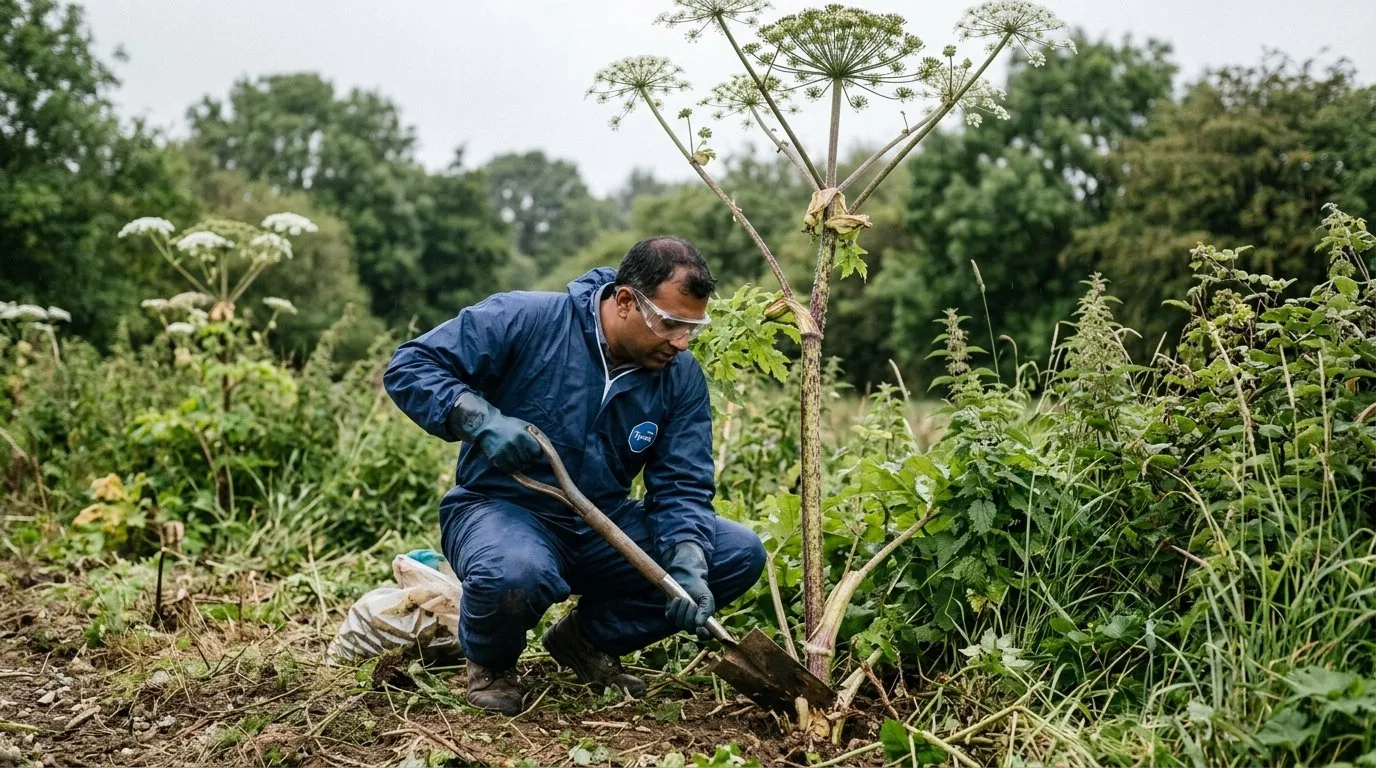
Coverall, gloves and goggles, with a spade cut through the root below ground. Add a face shield for extra protection.
Giant hogweed through the year
| Month | What to look for and do |
|---|---|
| March to April | Seedlings and young leaf clumps appear. Best time to dig or treat |
| May | Plants grow fast. Finish treating before flower stems form |
| June to August | Flowering. Cut off flower heads before seeds ripen |
| September to October | Seeds drop. Note where plants grew for next spring |
| November to February | Plants die back. Plan next year’s treatment |
Common giant hogweed mistakes
Strimming or mowing it. This sprays sap over you and everything nearby.
Working on a sunny day. Sun turns any sap that lands on you into a burn. Choose a dull day.
Doing it once. Seeds keep coming up for years. Check every spring.
Composting it. It belongs nowhere near your compost or garden waste bin.
Letting children play near it. Teach them to recognise it, and keep them away.
Frequently asked questions
Is giant hogweed poisonous to touch?
Yes, its sap burns skin when it’s then exposed to sunlight. Blisters usually appear within a day or two and can leave dark marks. The skin may stay sensitive to sun for months or longer. Keep well clear of the plant.
What should I do if giant hogweed sap gets on my skin?
Wash it off straight away with soap and cold water. Cover the skin and keep it out of sunlight for at least 48 hours. If blisters appear or a large area is affected, contact a pharmacist, your GP or NHS 111. If sap gets in your eyes, rinse them and get urgent help.
How do I tell giant hogweed from cow parsley?
Giant hogweed is far bigger and has a blotchy, bristly stem. Cow parsley stays about waist high, with a slim stem, fine ferny leaves and small flower heads in spring. If it towers over you with a purple-spotted stem, treat it as giant hogweed.
Is it illegal to have giant hogweed on my land?
No, but you mustn’t plant it or let it grow in the wild. You should stop it spreading from your land. Councils can take action if it becomes a problem for neighbours.
Can I dig giant hogweed out myself?
Yes, for a few small plants, with full protective clothing. Wear waterproof gloves, a coverall and eye and face protection on a dull, still day. Cut the root 10-15cm below ground with a spade. For larger stands, call a specialist.
How does giant hogweed spread?
By seed, and lots of it. Each plant sets thousands of seeds that float along rivers and get carried on boots, tyres and machinery. Seeds stay alive in the soil for several years, so control takes repeat visits.
Now you can spot giant hogweed, read our guide to poisonous plants in UK gardens to check what else to keep away from children, or browse more garden problem guides.
Our team produces practical UK gardening guidance from source research, contributor records and established horticultural practice. Editorial standards are overseen by Matt W.


