Key takeaways
- Most poisonous garden plants are only dangerous if eaten, so few need removing
- Monkshood, yew, deadly nightshade, hemlock, foxglove and laburnum are the highest risk
- The red flesh of a yew berry is harmless, but the seed inside is highly poisonous
- A low fence around risky plants keeps most toddlers away
- Teach one rule: nothing from the garden goes in your mouth unless a grown-up says so
- If a child eats a plant, ring 111, or 999 if they are drowsy, fitting or struggling to breathe
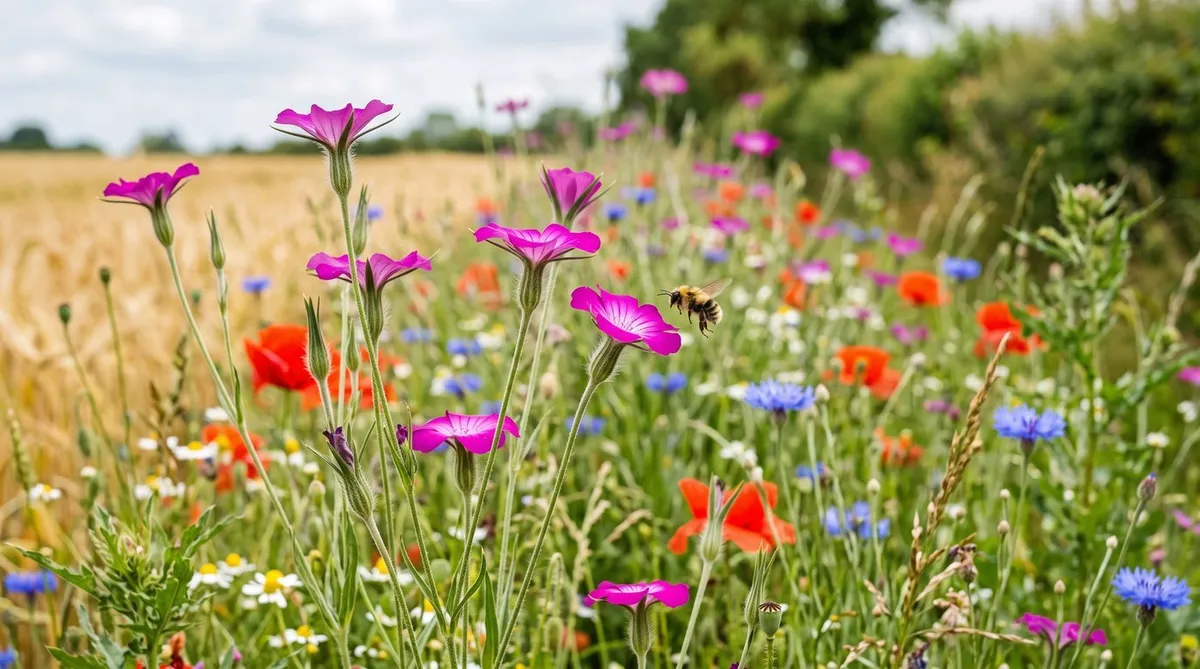
Poisonous plants grow in almost every UK garden, and most of them are fine to keep, even with young children around. The danger is nearly always a child eating a berry, a seed or a bit of root, not touching the plant. Foxgloves, yew and laburnum sit happily in thousands of family gardens without trouble.
So you don’t need to strip your borders. Knowing which few plants are a real risk is enough. Fence those, teach one simple rule and keep an eye out in berry season. This guide shows you which plants matter, how to make a garden safer and what to do if the worst happens. For pets, see our separate guides to plants toxic to dogs and plants toxic to cats, as the lists differ.
Which garden plants are dangerous to children?
The plants to worry about are the ones a child might eat. Brushing past a foxglove is harmless. Picking a berry, chewing a seed pod or nibbling a root is where problems start.
Toddlers explore with their mouths, so under-fives are most at risk. Bright berries and pea-like pods are the biggest temptations. Older children who know the rule are far less likely to eat anything.
A few plants are different. Their sap irritates or burns skin, so they matter when a child grabs or snaps a stem. These are covered below.
The most poisonous plants in UK gardens
Eight plants top the list. Learn to recognise these first.
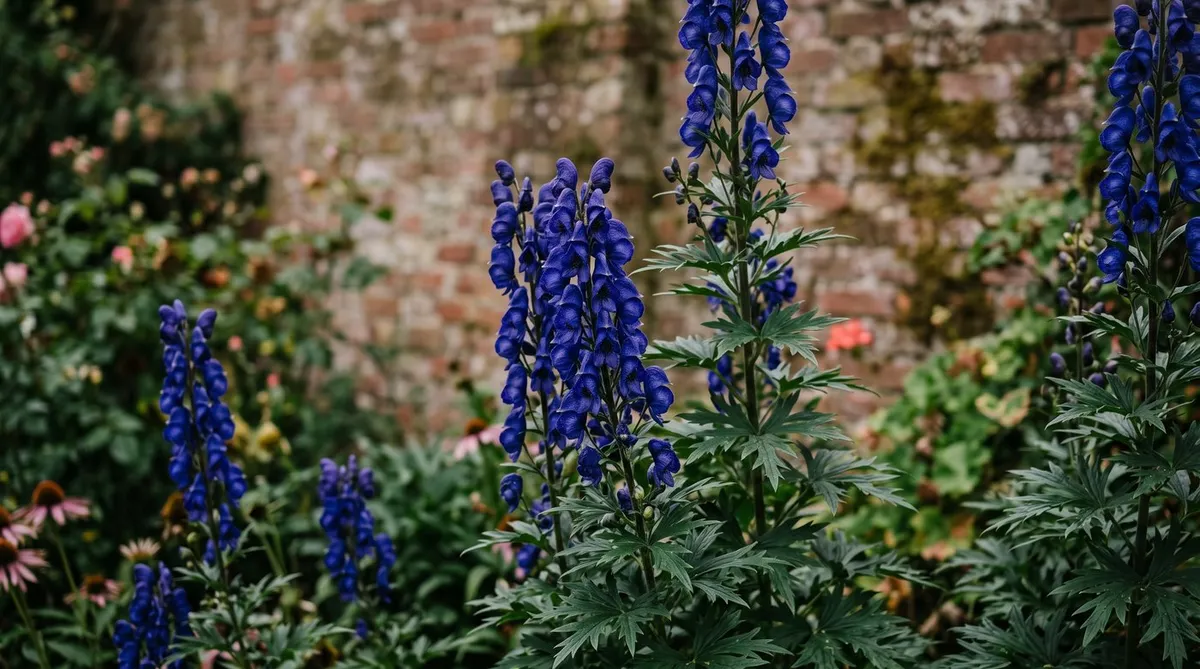
- Monkshood (Aconitum napellus): every part is very poisonous, especially the roots. Wear gloves when handling it. Our guide to growing aconitum covers safe handling.
- Foxglove (Digitalis purpurea): all parts are poisonous if eaten. It self-seeds, so new plants pop up in fresh spots each year.
- Yew (Taxus baccata): the leaves and the seed inside each red berry are highly poisonous. The red flesh around the seed isn’t.
- Laburnum: the seeds and pea-like pods are poisonous. Children open them because they look like pea pods.
- Deadly nightshade (Atropa belladonna): shiny black berries that are very dangerous. It usually turns up as a weed in hedges and shady corners.
- Hemlock (Conium maculatum): a tall wild plant with purple-blotched stems and a mousy smell. It looks a lot like cow parsley and is very poisonous.
- Lily of the valley (Convallaria majalis): all parts are poisonous, including the red berries in late summer.
- Cherry laurel (Prunus laurocerasus): the leaves and seeds are poisonous if chewed.
The RHS list of potentially harmful garden plants is the best place to check anything else you grow.
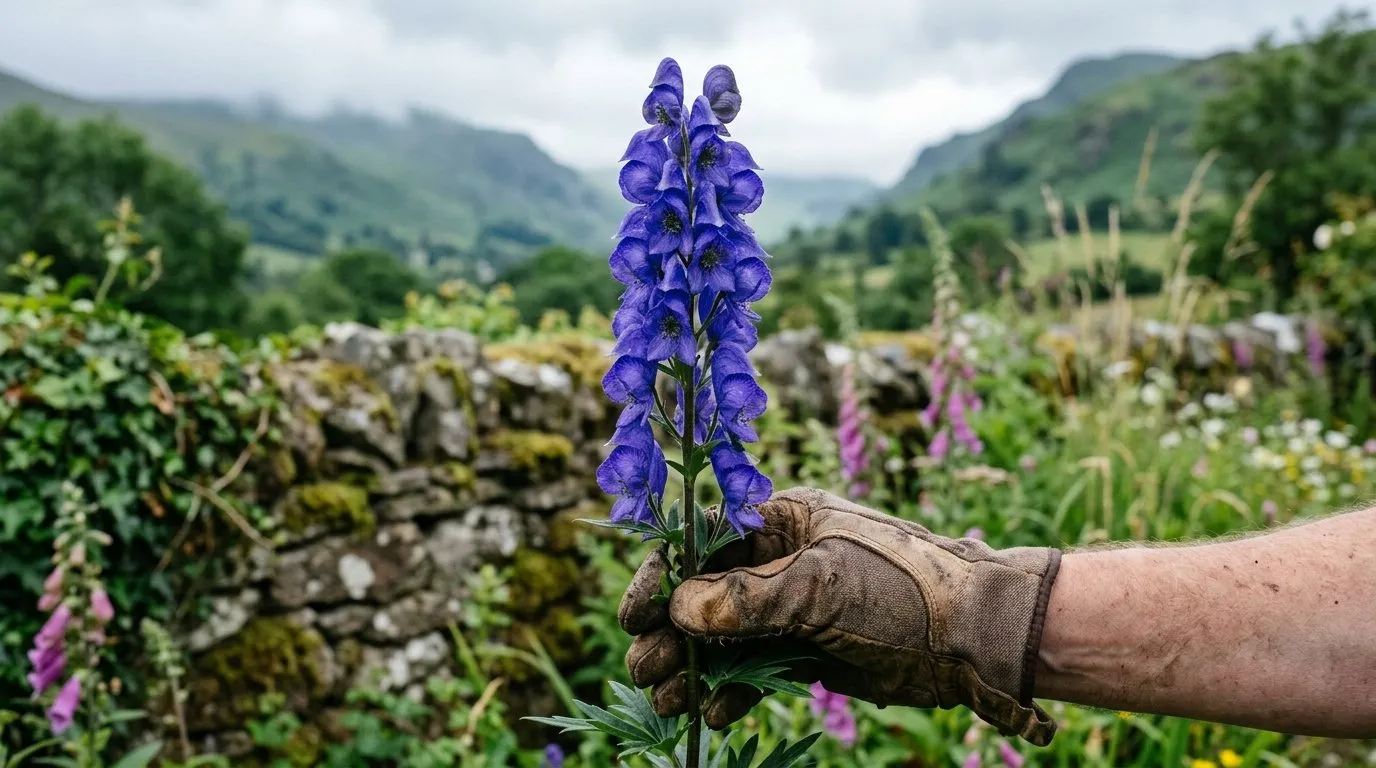
Monkshood is one of the most poisonous plants in UK gardens. Always wear gloves when you handle it.
Plants whose sap harms skin
Some plants hurt through their sap rather than by being eaten. They matter when a child snaps a stem or rubs their eyes.
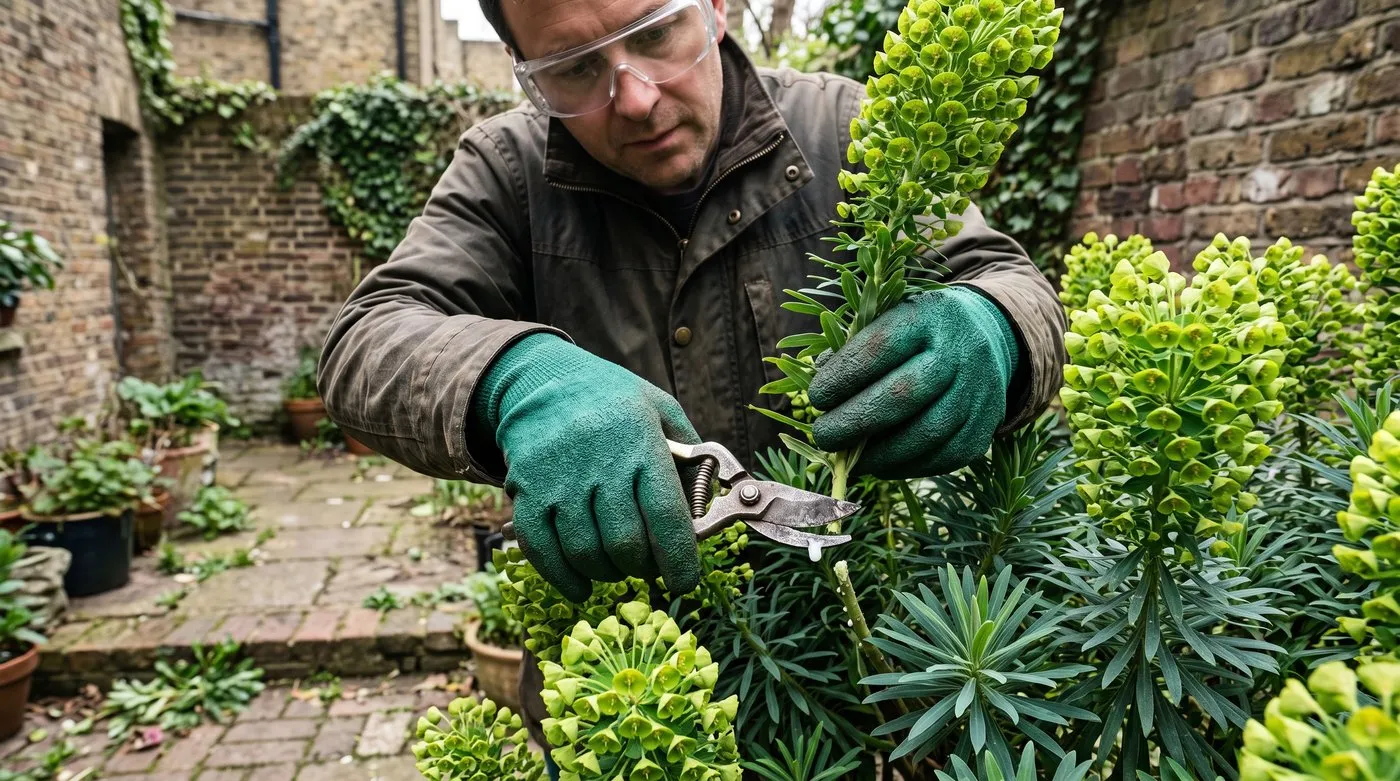
Euphorbia sap stings skin and eyes, so wear gloves and glasses when you cut it back.
Euphorbias (spurges) ooze a milky sap when cut or broken. It irritates skin and is very painful in the eyes. If sap gets in an eye, rinse it with plenty of clean water and get medical advice.
Rue (Ruta graveolens) has sap that makes skin blister in sunlight. Brushing past it on a sunny day can cause a nasty rash.
Giant hogweed is the worst. Its sap causes serious burns in sunlight, and the skin can react again for a long time after. It’s rare in gardens but grows along rivers and waste ground. Our guide to giant hogweed shows how to spot it and get it removed safely.
Warning: Never cut giant hogweed without gloves, long sleeves and eye protection. If you find it in your garden, get professional help to remove it. It’s an offence to plant it or let it spread into the wild.
Berries children mistake for sweets
Bright berries are the biggest temptation in a family garden. To a toddler, red and shiny means food. Safe and dangerous berries can look alike, so treat them all as off-limits.
The berries and seeds to worry about most are yew, deadly nightshade, laburnum pods and lily of the valley. Fence these off or clear them.
Cotoneaster, pyracantha, holly and ivy berries are far more common and much milder. Eating a lot can cause a tummy upset. They feed birds all winter, so they’re worth keeping. Instead, teach children never to eat any berry from the garden, and sweep fallen berries off paths and lawns in autumn.
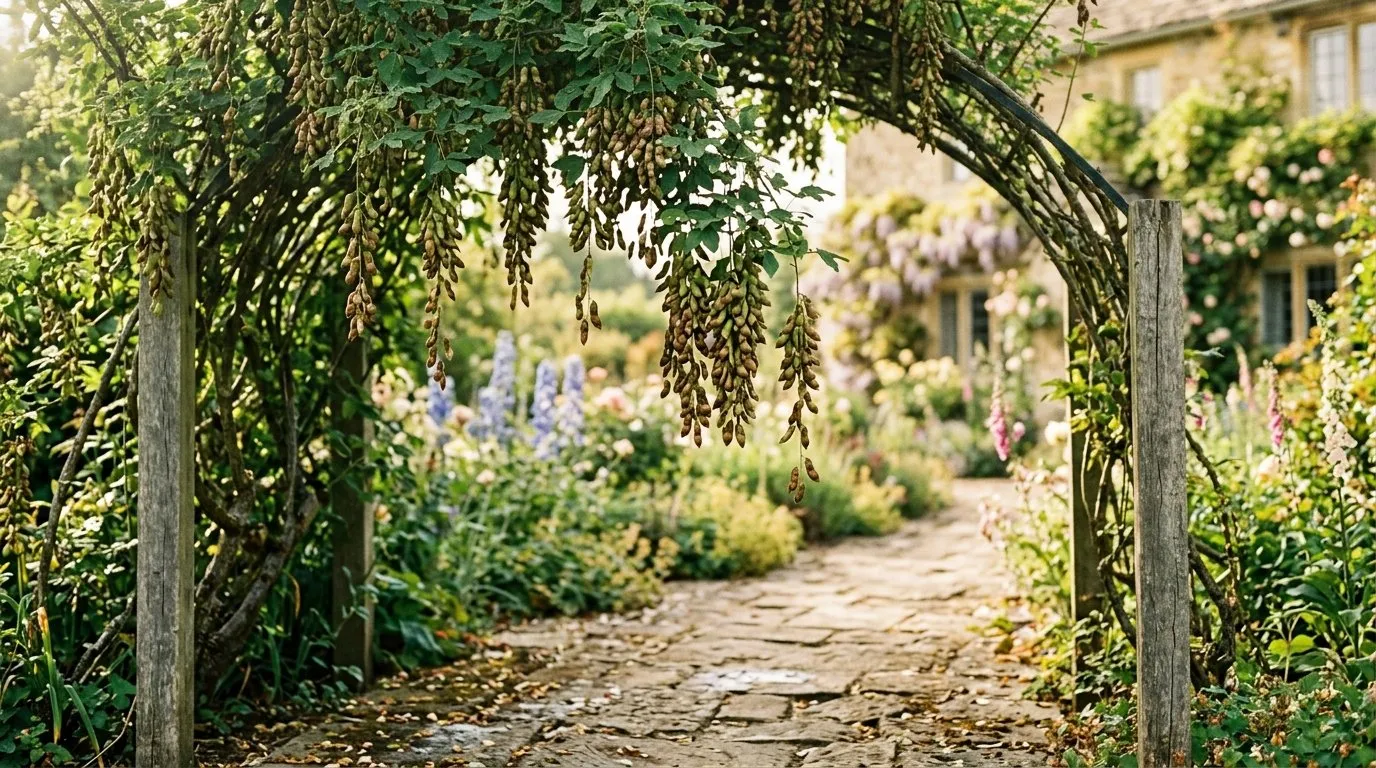
Laburnum pods look like pea pods, which is why curious children open them. Clear low pods where little ones play.
Poisonous plants at a glance
Use this table to decide what to do with each plant. “Severity” is how much harm a small amount could do to a young child.
| Plant | Poisonous parts | Severity | What to do in a family garden |
|---|---|---|---|
| Monkshood | All, especially roots | High | Remove, or fence and wear gloves |
| Foxglove | All parts | High | Fence off where toddlers play |
| Yew | Leaves and the seed in the berry | High | Sweep fallen berries, fence low branches |
| Deadly nightshade | All, especially berries | High | Remove |
| Hemlock | All parts | High | Remove |
| Laburnum | Seeds and pods | Moderate to high | Clear low pods, or replace young trees |
| Lily of the valley | All, including berries | Moderate to high | Fence off, remove the berries |
| Cherry laurel | Leaves and seeds | Moderate | Keep clippings away from children |
| Cotoneaster and pyracantha | Berries | Low | Teach the never-eat rule |
| Holly | Berries | Low | Teach the rule, sweep fallen berries |
| Ivy | Berries and sap | Low | Wear gloves when pruning |
Walk round your garden with this list once a year. Most families find only a few plants in the high rows, and often just one or two within a toddler’s reach.
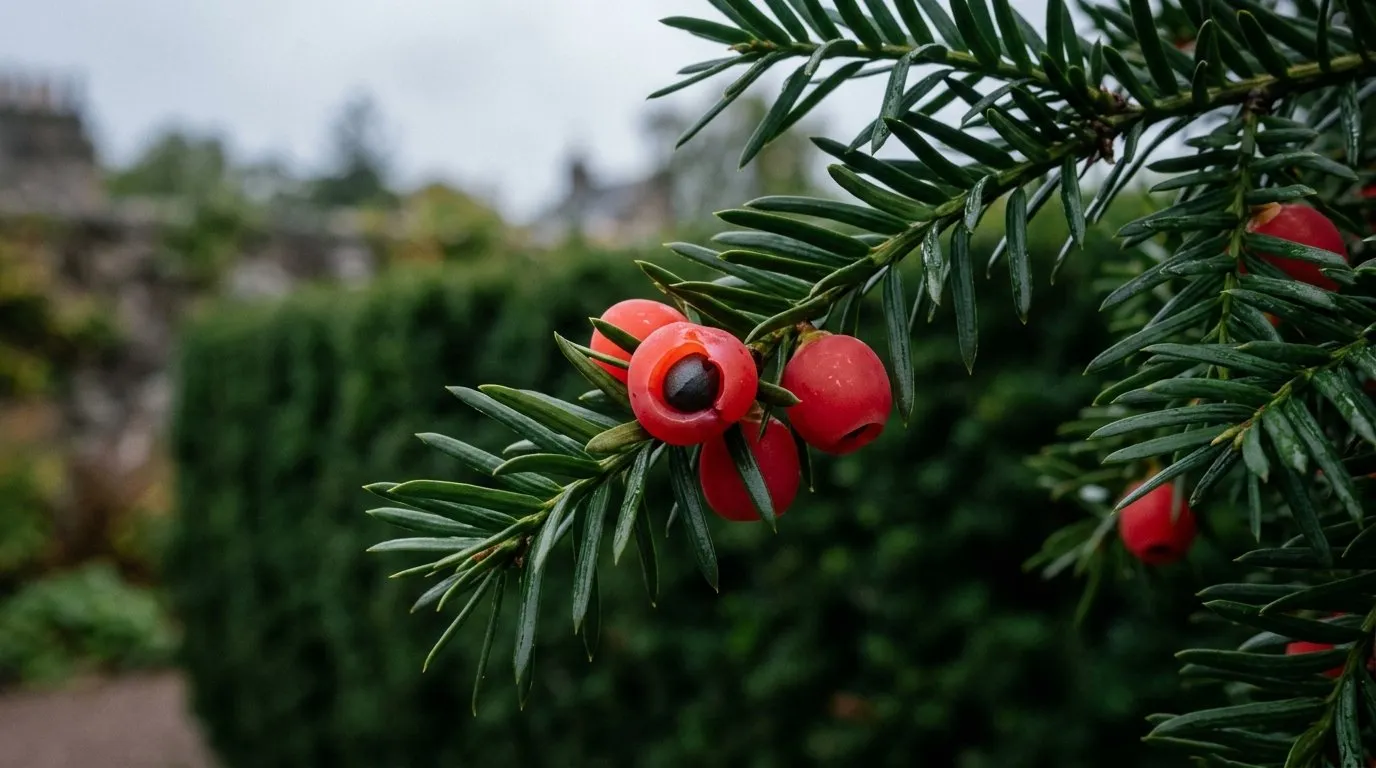
The red flesh of a yew berry is harmless, but the dark seed in the middle is highly poisonous.
Why seeds, berries and roots are the risky parts
Plants pack their strongest poisons into the parts they most need to protect. That’s usually seeds, roots and berries.
A leaf brushed in passing rarely does harm. A chewed seed or a nibbled root can contain a lot more poison. That’s why keeping seeds, berries and roots out of small hands matters far more than banning every plant with a warning.
Cherry laurel is a useful example. The living hedge is low-risk, but chewed leaves and seeds release a poison. Keep fresh clippings off the lawn and away from children and pets, and shred them outdoors rather than in a shed or garage.
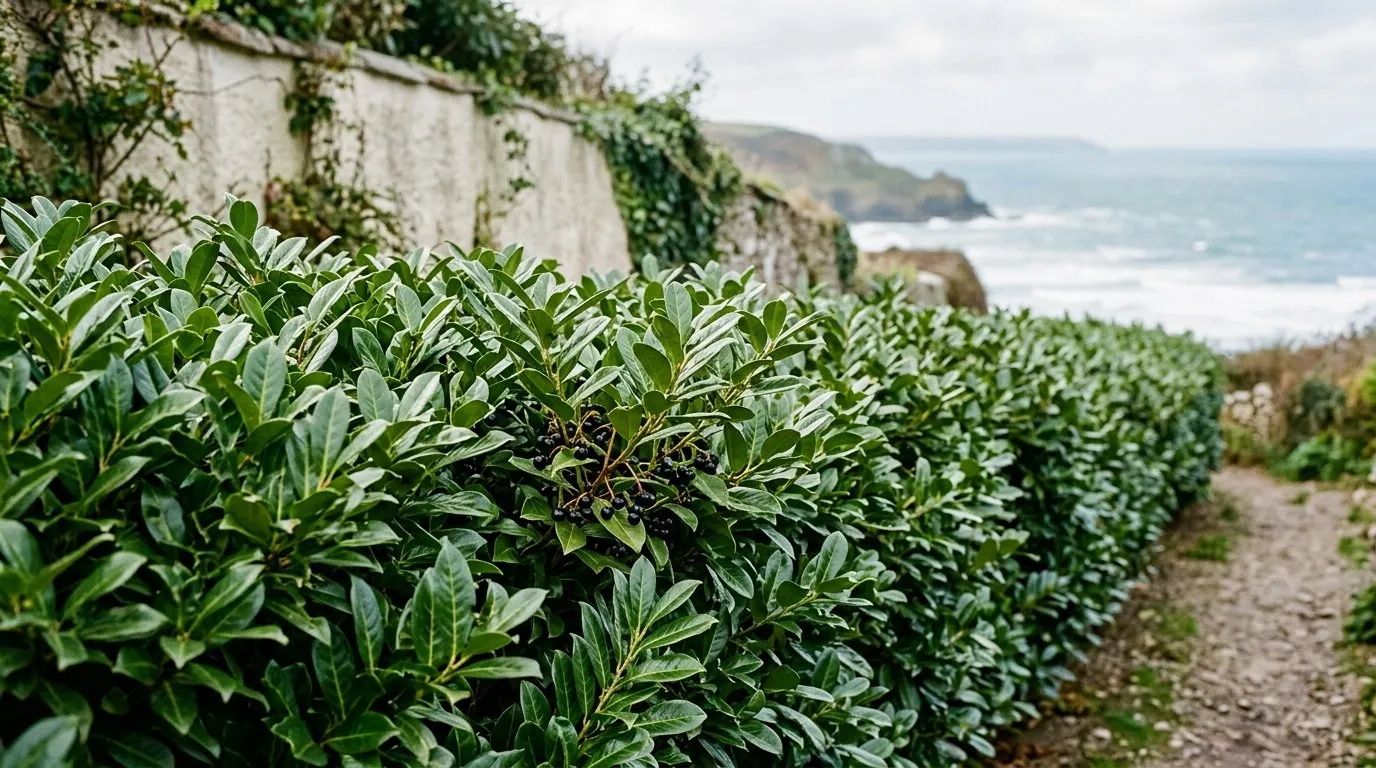
Cherry laurel makes a handy hedge. Just clear up the clippings and berries where children play.
How to make your garden child-safe
Work through four simple steps. You’ll keep most of your plants and remove the real risks.
- Know what you grow. Walk the garden and list your plants. Check each against the table above and the RHS list.
- Remove the plants with no upside. Deadly nightshade and hemlock are dangerous weeds. Dig them out wearing gloves.
- Fence the useful risky plants. Foxglove, yew, monkshood and laburnum are good for bees, structure or colour. A low fence of about 1m keeps most toddlers out. Make sure small hands can’t reach through.
- Teach one rule. From about age three, children can learn that nothing from the garden goes in their mouth unless a grown-up hands it to them.
Gardener’s tip: One clear rule beats a list of plant names. Small children won’t remember which berries are which, but they can learn “ask first”.
Want to swap risky plants for gentler ones? Hardy geraniums, lavender and catmint aren’t poisonous to children and are great for bees. If you also have a dog or cat, check our guide to pet-safe garden plants, as lavender and catmint aren’t pet-safe. Our children’s garden design ideas show how to build in play space too.
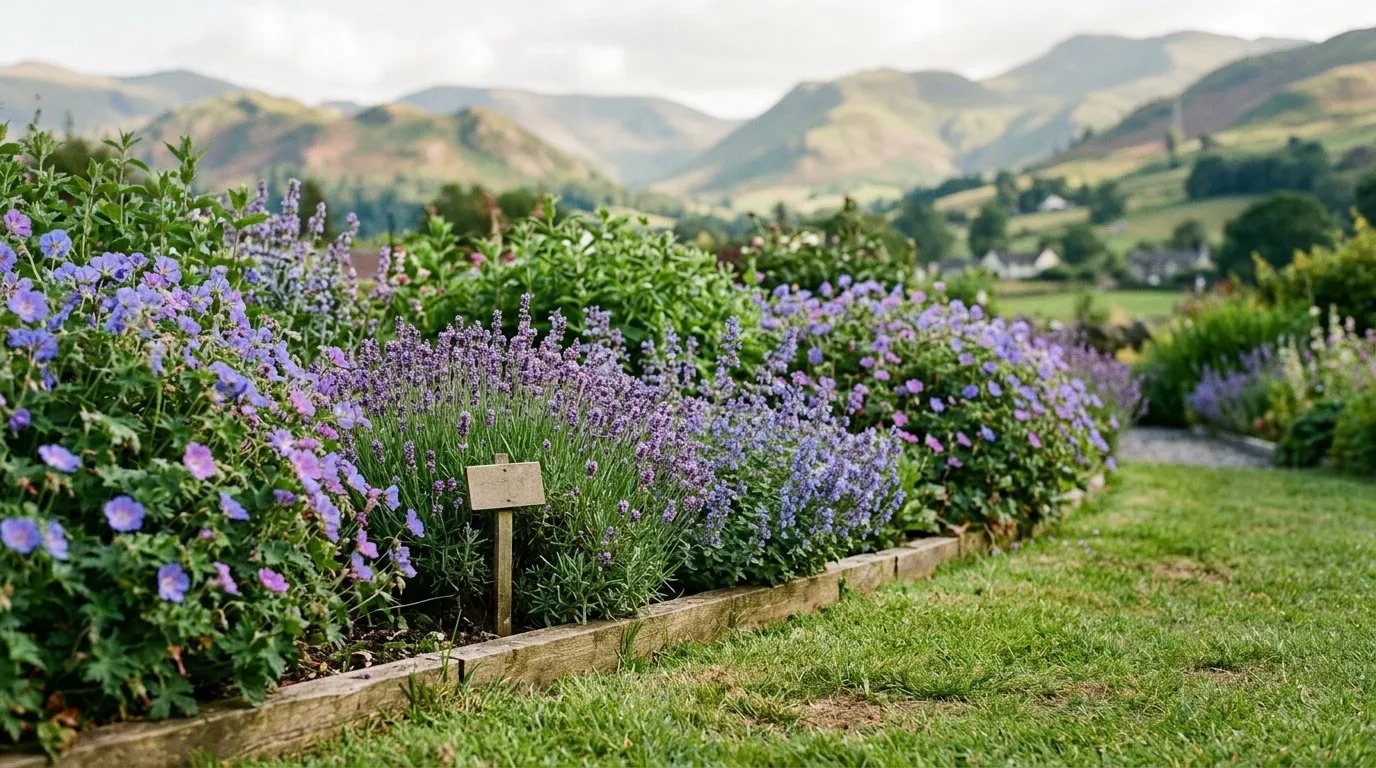
Lavender, catmint and hardy geraniums make a pretty, child-friendly border. Labels make the yearly check quick.
A month-by-month child-safety calendar
| Month | What to check |
|---|---|
| January | Check for winter berries on cotoneaster, holly and ivy within reach |
| February | Clear cherry laurel prunings and keep them off the lawn |
| March | Foxglove and monkshood come up. Mark and fence the clumps |
| April | Laburnum comes into leaf. Plan to clear low pods later |
| May | Laburnum and lily of the valley flower. Note where berries and pods will follow |
| June | Foxgloves flower. Remind children flowers are for looking at |
| July | Check for new foxglove seedlings near paths and play areas |
| August | Yew berries start to colour. Begin sweeping under yew |
| September | Peak berry month. Sweep paths and lawns often |
| October | Clear fallen yew berries and laburnum pods |
| November | Cut back foxglove and lily of the valley as they die down |
| December | Keep holly and mistletoe berries off the floor indoors |
Common mistakes with poisonous garden plants
- Digging out every plant on a list. Most are fine to keep. Fence or remove only the few within reach.
- Handling monkshood or giant hogweed bare-handed. Wear gloves and long sleeves.
- Assuming pretty berries are safe. Teach children never to eat any garden berry, whatever the colour.
- Leaving clippings lying around. Cherry laurel, yew and other prunings are easy for toddlers to pick up. Clear them straight away.
- Making a child sick after they eat a plant. This old first-aid tip can make things worse. Ring 111 instead.
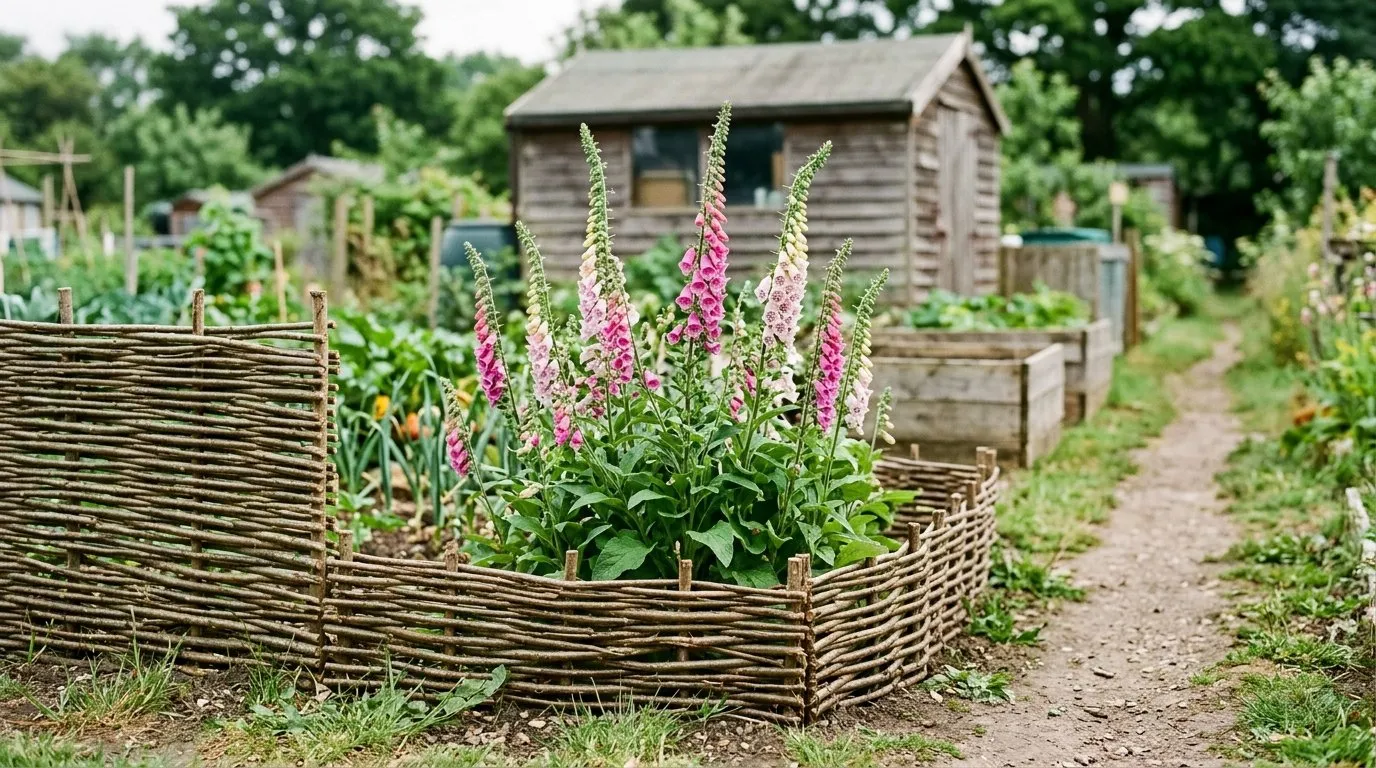
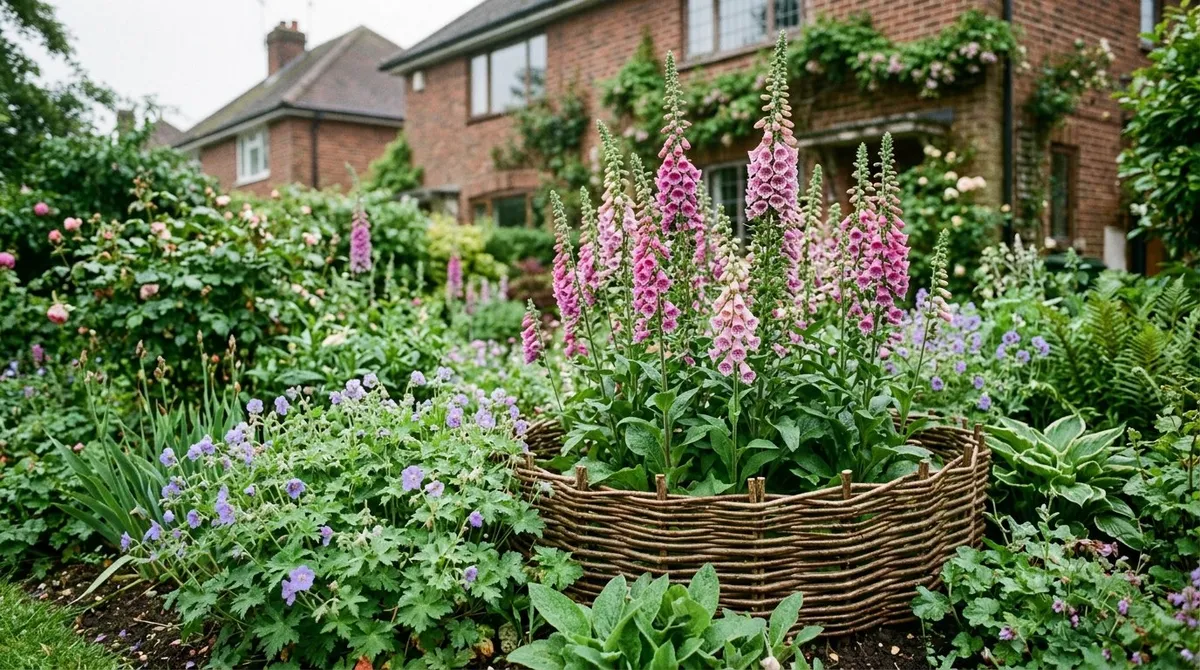
A woven willow fence keeps toddlers away from foxgloves without losing a great bee plant.
What to do if a child eats a garden plant
Stay calm and act quickly. Most nibbles cause nothing worse than an upset tummy, but a few need fast help.
- Take any plant bits out of the child’s mouth and keep them.
- Don’t make them sick. Don’t give them anything to eat or drink unless a medical adviser tells you to.
- Ring 111 for advice, and say what the plant is if you know.
- Ring 999 straight away if the child is drowsy, struggling to breathe or fitting.
Take a photo and a piece of the plant with you to help identify it. The NHS poisoning advice explains what happens next. For more plant guides, browse our plants section.
Now you know which plants to watch, read our guide to easy self-seeding plants to see where foxgloves might pop up next.
Frequently asked questions
What is the most poisonous plant in a UK garden?
Monkshood is one of the most poisonous plants grown in UK gardens. Every part is toxic, especially the roots. Deadly nightshade, hemlock and yew are also very dangerous. Fence them off or remove them in a garden used by young children.
Which garden berries are poisonous to children?
Yew, deadly nightshade and lily of the valley berries are the dangerous ones. Laburnum seeds and pods are risky too. Cotoneaster, pyracantha, holly and ivy berries are milder and mostly cause a tummy upset. Teach children never to eat any garden berry.
Are foxgloves poisonous to touch?
No, foxgloves are safe to brush past but poisonous to eat. All parts are toxic if swallowed. Wash your hands after cutting the flowers, and never let a child chew any part.
Do I need to remove poisonous plants if I have young children?
Usually not, as most can stay if you fence them and teach a simple rule. Deadly nightshade and hemlock are worth removing completely. Foxglove, yew, monkshood and laburnum can be fenced off or planted out of reach.
What should I do if my child eats a garden plant?
Stay calm, ring 111 and don’t make them sick. Ring 999 if they are drowsy, fitting or struggling to breathe. Take a photo and a piece of the plant to help identify it.
Is yew poisonous to children?
Yes, yew is highly poisonous, apart from the red flesh of the berry. The leaves and the hard seed inside each berry are the dangerous parts. Sweep up fallen berries and clippings where children play.
Can giant hogweed burn you?
Yes, its sap makes skin blister badly in sunlight. The burns can come back in sunlight for a long time afterwards. Never touch or cut it without protective clothing, and wash any sap off straight away.
Our team produces practical UK gardening guidance from source research, contributor records and established horticultural practice. Editorial standards are overseen by Matt W.