Key takeaways
- Colchicums flower in September and October with no leaves, hence the name naked ladies
- Plant corms in July or August, about 10cm deep, and they often flower within weeks
- Big strappy leaves appear in spring, so plant where other plants or long grass hide them
- Never cut the leaves until they've turned yellow, or next year's flowers suffer
- All parts are poisonous to people and pets, and colchicum is not the saffron crocus
Colchicums are the autumn bulbs that flower with no leaves at all. Plant the corms in July or August and, within weeks, pink, lilac or white goblets pop straight out of bare soil or grass. That’s why they’re nicknamed naked ladies. They flower in September and October, just as the garden is winding down.
There’s a catch. In spring each corm throws up a clump of big, glossy leaves that turn yellow and floppy by early summer. So the secret is planting them where long grass or other plants hide that spring mess. Colchicums are also poisonous, so this guide covers safety too.

Colchicums flower on bare stems with no leaves, which is why they’re called naked ladies.
Colchicum or autumn crocus: what’s the difference?
Colchicum is often sold as “autumn crocus”, but it isn’t a crocus. True crocuses have three stamens and narrow, grassy leaves. Colchicums have six stamens, bigger goblet flowers and much broader leaves.
The difference matters because colchicum is poisonous. It must never be confused with the saffron crocus, Crocus sativus, which gives the spice. If you want to grow your own saffron, see our guide to growing saffron. For true crocuses, including autumn-flowering ones, see our guide to growing crocus.
Colchicum autumnale, or meadow saffron, is a native UK wildflower of damp meadows. The garden types are larger and showier.
Best colchicums for UK gardens
All are grown the same way. Most reach about 15-20cm tall in flower.
| Colchicum | Flowers | Good for |
|---|---|---|
| ’The Giant’ | Big lilac-pink goblets, white centre | Grass and borders, very reliable |
| ’Waterlily’ | Double, lilac-pink, many petals | The front of a border |
| C. speciosum ‘Album’ | Pure white goblets | Lighting up shade under shrubs |
| C. autumnale | Smaller, pale lilac | Naturalising in grass |
| ’Rosy Dawn’ | Soft rose-pink | Borders and grass |
The heavy double flowers of ‘Waterlily’ can flop in rain, so tuck them among low plants that hold them up. White forms show up well in shade and at dusk.

White colchicums brighten up a shady corner in September, especially as the light fades.
Where to plant colchicums
Colchicums like sun or light shade and soil that drains well but doesn’t dry out completely. Most garden soils suit them, including chalk and clay that isn’t waterlogged.
The real question is where the spring leaves will go. Each corm makes a clump of broad leaves up to about 30cm long in spring. They yellow and flop by June or early July. Good places include:
- Long grass, such as an orchard or a rough patch of lawn.
- Under deciduous shrubs, where the shrub’s own leaves hide the yellowing foliage.
- Among perennials that grow up in late spring, such as hardy geraniums, hostas and Japanese anemones.
Avoid the very front of a neat border or the edge of a path, where the leaves will be in your way.

This is what colchicums look like in spring. Plant them where something else hides the leaves as they fade.
How to plant colchicum corms
Plant colchicum corms in July or August, as soon as you get them. They’re ready to flower and won’t wait long.
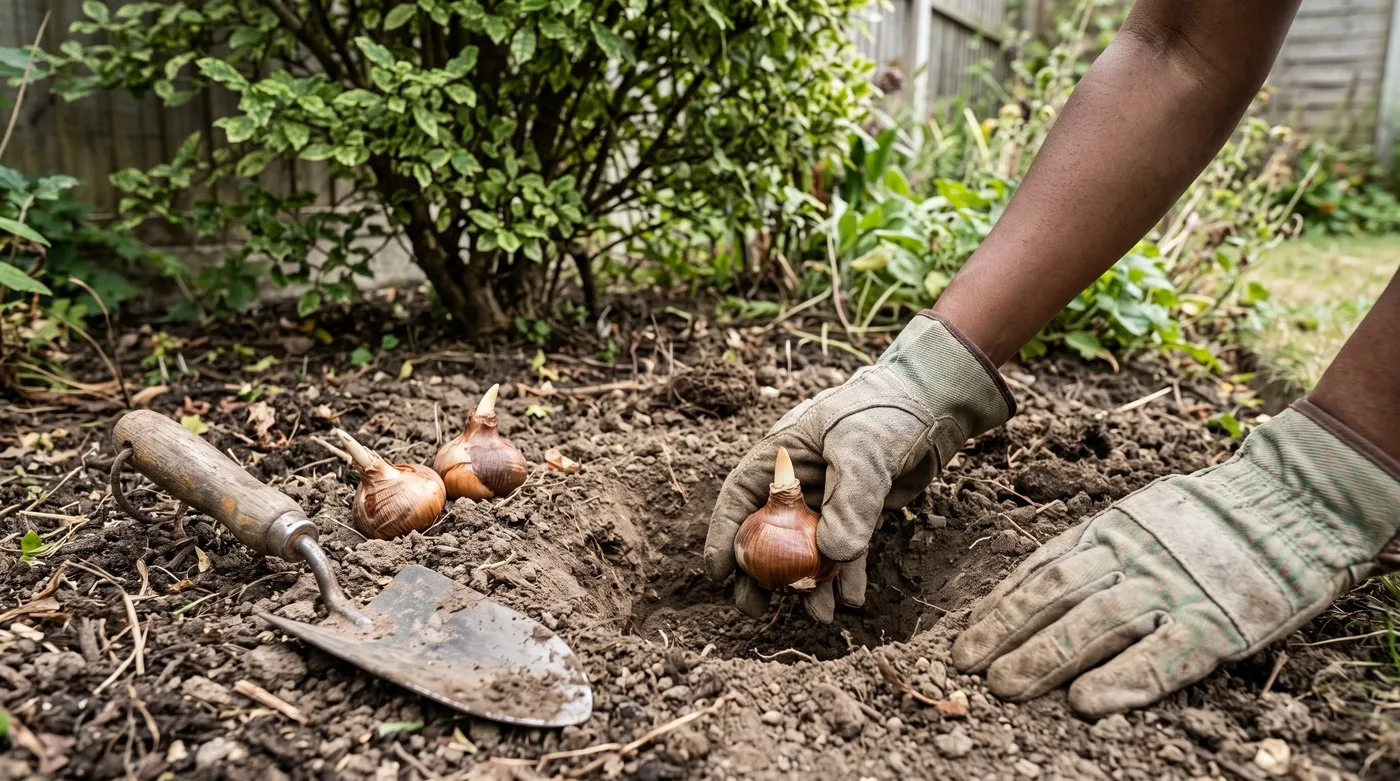
Wear gloves and plant the corms about 10cm deep in July or August. Flowers can follow within weeks.
- Put on gloves before handling the corms.
- Dig a hole about 10cm deep.
- Set the corm in with the pointed tip upwards.
- Space corms 15-20cm apart, in groups rather than lines.
- Backfill, firm gently and water in if the soil is dry.
- Wash your hands and tools afterwards.
Flowers usually appear a few weeks later, in September. Newly planted corms sometimes flower poorly in their first year and then settle down. Once planted, leave them alone. Clumps slowly bulk up over the years.
Growing colchicums in grass
Colchicums naturalise well in grass. The key is letting the spring leaves finish their job.
- Spring: leave the grass around them unmown until the colchicum leaves have turned yellow, usually by early July.
- Summer: cut the grass once the leaves have died down.
- September and October: mow round the flowers or raise the mower blades.
Cutting the leaves while they’re still green starves the corm, and flowering fades over a few years. Our guide to naturalising bulbs in grass has more on planning a bulb lawn. Camassias like the same uncut grass in spring, so see our guide to growing camassia to plant both for May and September flowers.

Meadow saffron is at home in orchard grass that’s left long until early summer.
Colchicums in autumn borders
In a border, colchicums give low pink and lilac colour at the front in September and October. They look lovely with Japanese anemones, asters and soft grasses, which flower at the same time. Hardy cyclamen and ferns make good partners in light shade.
For more ideas, see our pick of the best autumn flowers for UK gardens.

Colchicums add ground-level colour beneath taller autumn flowers such as Japanese anemones.
Are colchicums poisonous?
Yes. All parts of colchicum are poisonous to people, dogs, cats and livestock. The corms are the most dangerous part.
- Wear gloves when planting, dividing or handling corms, and wash your hands afterwards.
- Don’t plant them where dogs dig or where small children play unsupervised.
- Keep corms away from the kitchen, as they can be mistaken for onions or shallots.
- If a person eats any part, get urgent medical help. If a pet does, call your vet straight away.
Our guide to plants toxic to dogs lists other garden plants to watch for.
Common colchicum problems
- Slugs: they nibble the flowers in damp autumns. Clear hiding places nearby and see our guide to getting rid of slugs.
- Flopping flowers: rain flattens the stems, especially doubles. Plant among low plants or in grass for support.
- Few or no flowers: usually a new planting settling in, too much shade, or leaves cut while green. Leave the foliage alone next spring.
- Messy leaves: normal. Hide them with other plants or long grass, and tidy them away once they’re yellow.
Common mistakes with colchicums
- Planting in autumn. By then the corms want to flower. Plant in July or August.
- Cutting the leaves early. The corm needs them. Wait until they turn yellow.
- Planting at the front of a neat border. The spring leaves will spoil it. Use grass or plant behind later perennials.
- Handling corms bare-handed. Wear gloves and wash up afterwards.
- Confusing it with saffron. Colchicum is poisonous. Saffron comes only from Crocus sativus.
Colchicum calendar
| Month | What to do |
|---|---|
| March to April | Big leaves appear. Leave them be |
| May to June | Leaves start to yellow. Don’t cut them yet |
| July | Tidy yellowed leaves. Buy and plant new corms |
| August | Keep planting. Divide crowded clumps once leaves have gone |
| September to October | Flowering. Watch for slugs |
| November to February | Resting. Nothing to do |
Frequently asked questions
When do colchicums flower in the UK?
Colchicums flower in September and October. The goblet-shaped flowers come straight up from bare ground with no leaves. Each corm sends up several flowers over a few weeks.
When should I plant colchicum corms?
Plant colchicum corms in July or August. They flower soon after planting, often the same autumn. Corms left in the bag into September may start flowering before they’re even in the ground.
Is colchicum the same as saffron?
No, and it must never be used as saffron. Saffron comes from Crocus sativus, a true crocus with long red threads. Colchicum is poisonous. True crocuses have three stamens, while colchicums have six.
Are colchicums poisonous to dogs and cats?
Yes, all parts are poisonous to dogs, cats and people. The corms are the most dangerous part. Plant them where pets won’t dig, and contact a vet straight away if one eats any.
Why are colchicum leaves so big?
That’s normal. The leaves appear in spring, long after the flowers, and feed the corm for next autumn. Leave them until they turn yellow in early summer, then tidy them away.
Can I plant colchicum in a lawn?
Yes, they naturalise well in grass. Leave that patch unmown in spring until the leaves have yellowed, usually by early July. Mow round the flowers in autumn too.
For another bulb that lights up autumn, read our guide to growing nerines, and find more in the plants hub.
Our team produces practical UK gardening guidance from source research, contributor records and established horticultural practice. Editorial standards are overseen by Matt W.