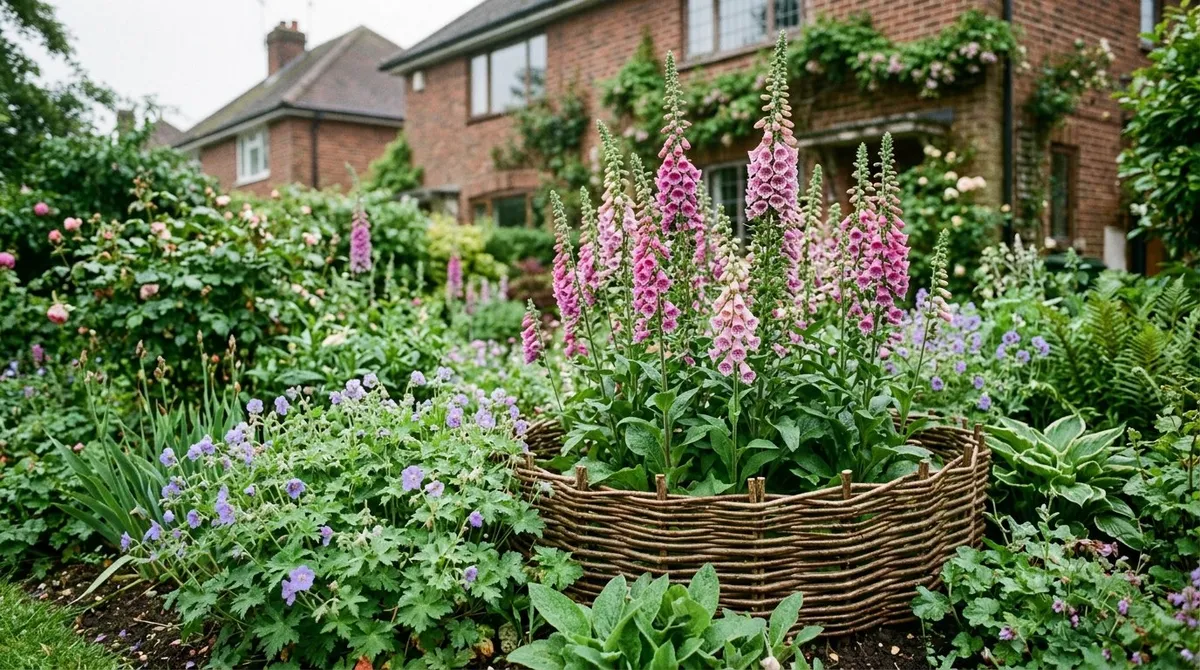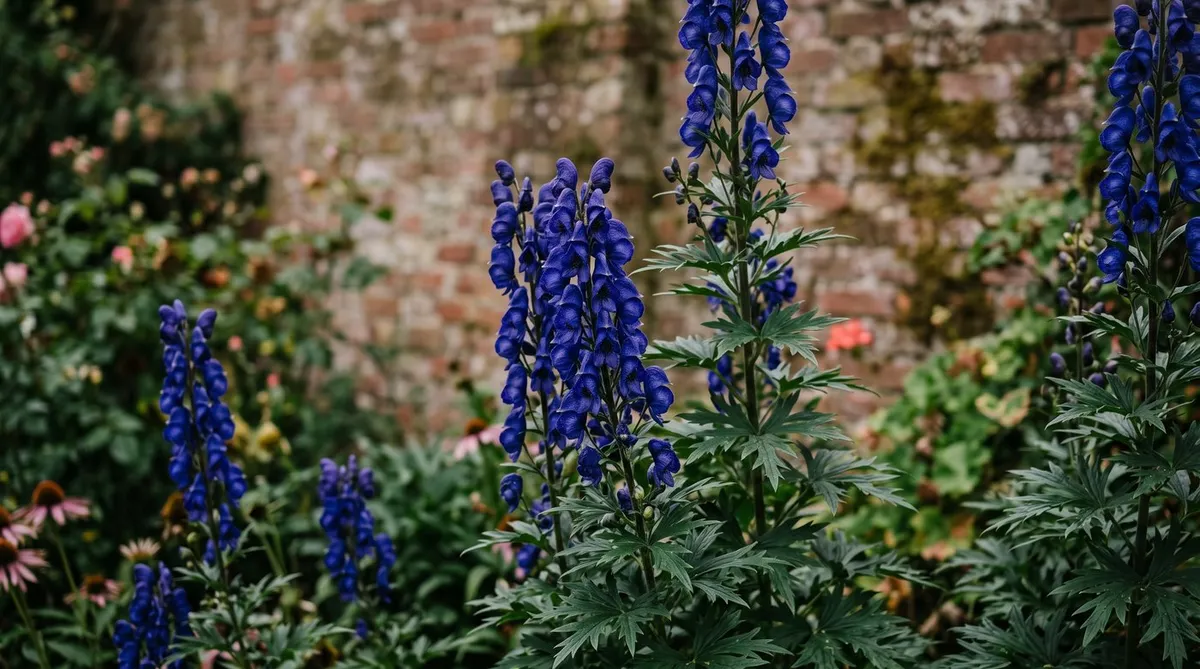
Key takeaways
- Every part of monkshood is poisonous, and the roots are the most dangerous
- Always wear waterproof gloves to handle it and wash your hands afterwards
- Plant at the back of a border, away from paths, play areas and the veg patch
- It likes moist, rich soil in part shade and sulks in hot, dry spots
- Plant crowns about 5cm deep and 45cm apart in autumn or early spring
- A. carmichaelii 'Arendsii' gives deep blue spires in September and October
Aconitum, better known as monkshood, gives you tall spires of hooded blue flowers in damp, part-shaded borders where few tall plants thrive. Some types flower well into October. It’s also one of the most poisonous plants grown in British gardens, so it pays to grow it with care.
This guide covers where to plant it, how to handle it safely, the best types to grow and the simple jobs through the year. Get the siting right and it’s a reliable, long-lived plant.
Is monkshood safe to grow in a garden?
Yes, as long as you treat it with respect. Every part is highly poisonous, and the roots are the most dangerous. It’s not a plant to grow if you can’t keep it away from young children or a digging dog.
A few simple rules keep things safe:
- Wear waterproof gloves whenever you cut, divide or weed around it. The sap can be absorbed through skin, especially through cuts.
- Wash your hands and tools afterwards, even if you wore gloves.
- Keep it out of the veg patch. The roots have been mistaken for edible roots such as horseradish, with serious results.
- Don’t use it as a cut flower in a home with children.
If you’d rather have tall blue spires without the worry, growing delphiniums gives a similar look. The guide to poisonous garden plants covers other border plants that need the same care.
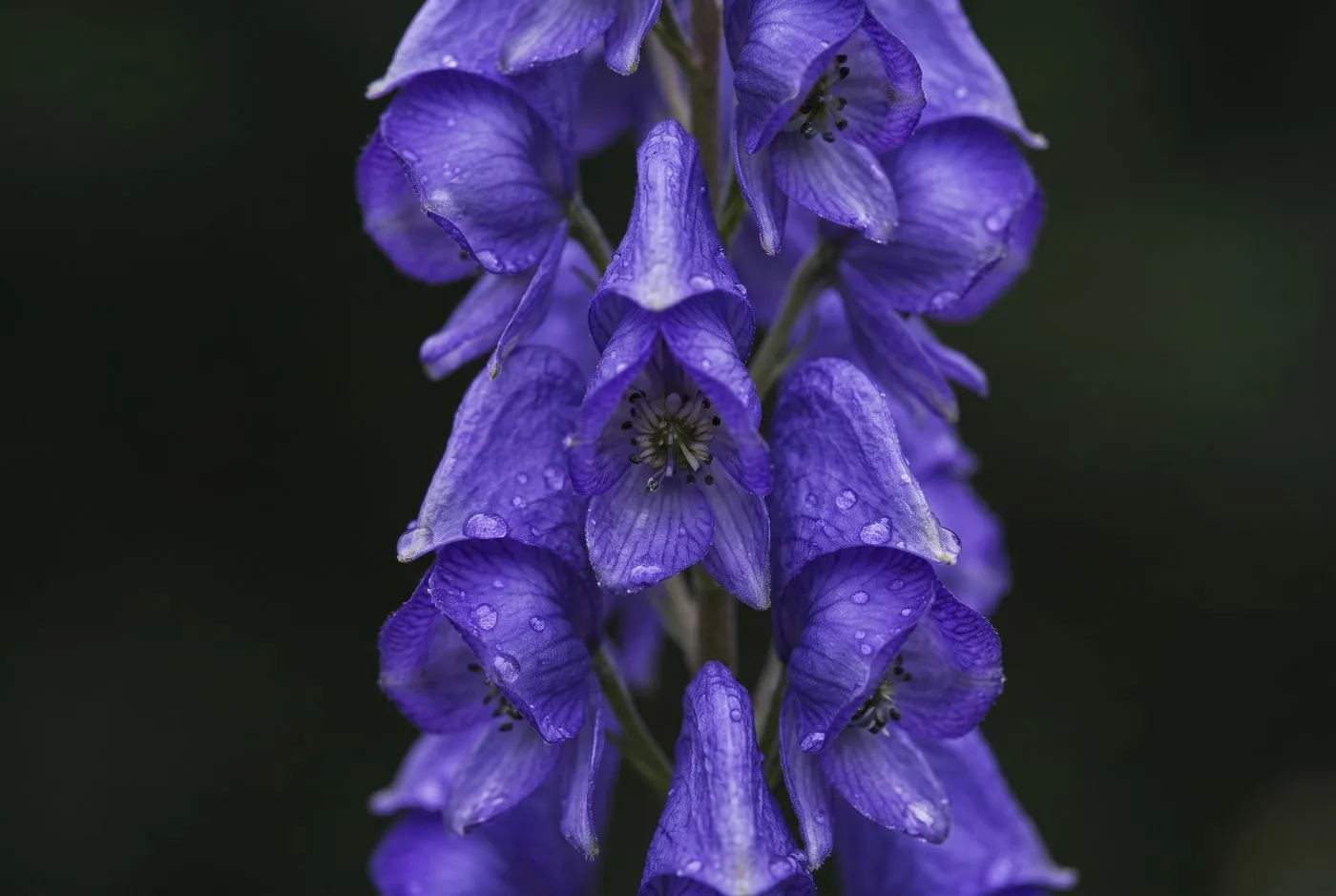
That hooded top gives monkshood its name. Long-tongued bumblebees are among the few insects that can reach inside.
How to recognise aconitum
Monkshood is easy to spot once you know the flower. The upper part of each bloom arches over into a helmet or hood. Delphiniums, which look similar from a distance, have a spur pointing backwards instead.
The leaves are dark green and deeply cut into five to seven toothed lobes, a bit like a large buttercup leaf. They appear in spring, weeks before the flower spikes. Label your plants clearly so nobody digs them up by mistake.
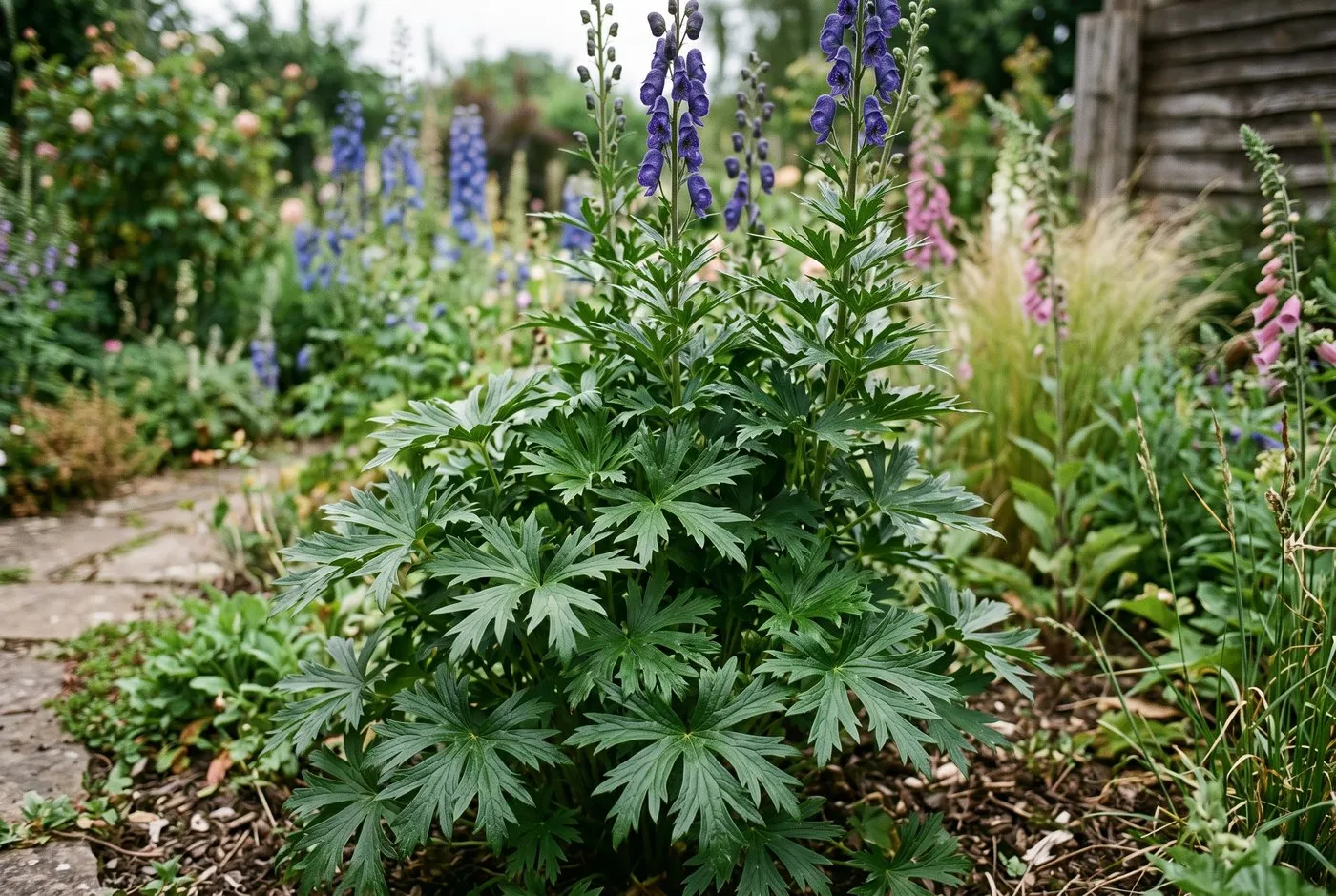
Dark green leaves cut into deep, toothed lobes are a good clue, even before the flowers open.
Where to plant monkshood
Aconitum likes what a woodland edge offers: moist, rich soil and dappled or part shade. It copes with full sun only where the ground stays damp all summer. In a hot, dry border it browns early and flowers poorly.
A north or east-facing border is ideal. Heavy clay is fine, as it holds moisture well. On light, sandy soil, dig in plenty of compost or leaf mould first.
Plant it at the back of a border, behind other plants, with no path, seat or lawn edge within easy reach. Its height helps, as the flowers sit above a small child’s eye line. Hostas and ferns in front hide its lower stems, which can look bare by late summer. See the guide to the best plants for shade for more partners.
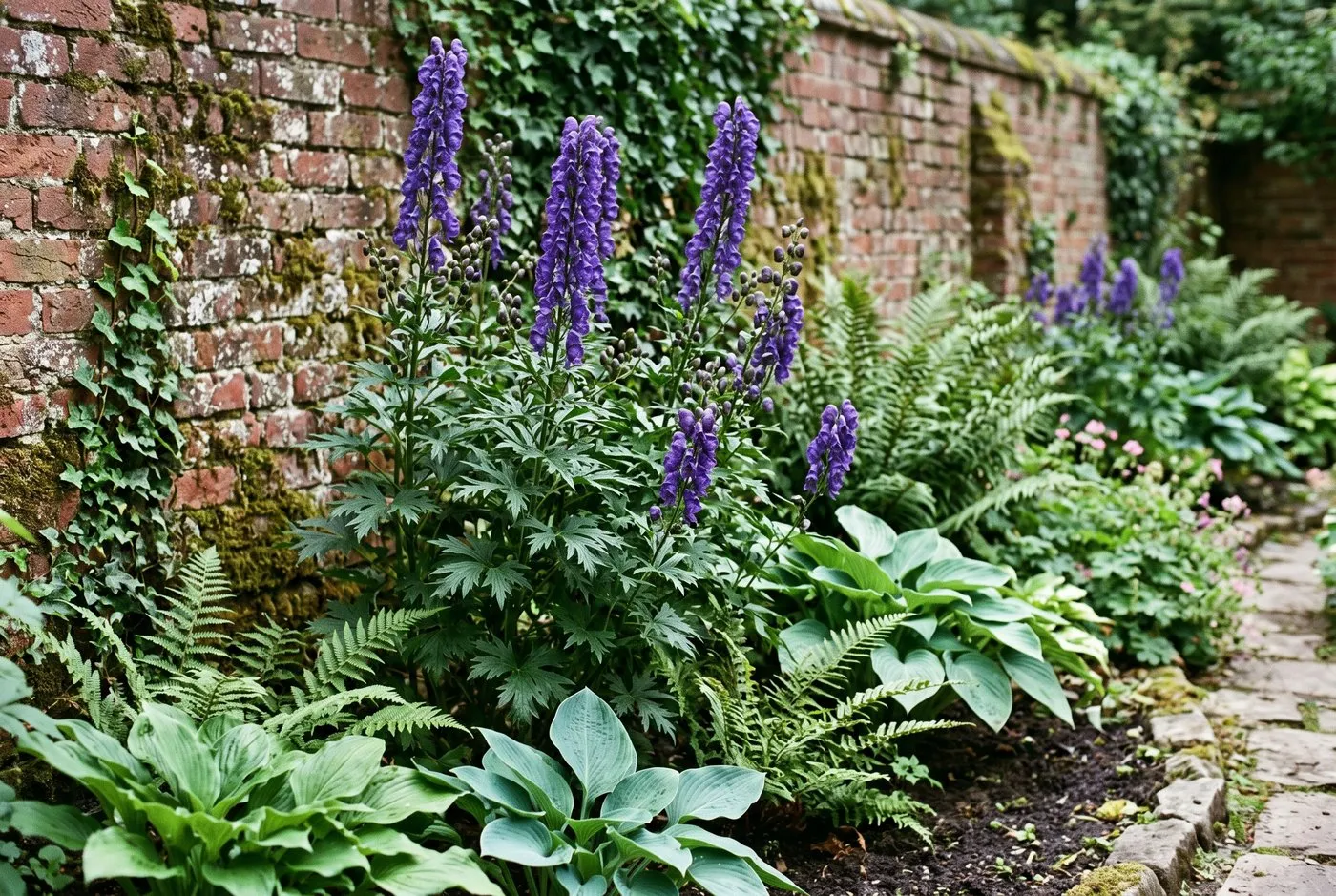
Monkshood at the back of a damp, shady border, with hostas and ferns in front and the path out of reach.
How to plant aconitum
Plant bare-root crowns or potted plants in autumn (September to October) or early spring (March to April).
- Put on waterproof gloves before you open the pot or bag.
- Dig in garden compost or leaf mould, especially on dry soil.
- Set the crown about 5cm deep.
- Space plants about 45cm apart. A group of three looks better than one.
- Water well and mulch with compost.
Water new plants in dry spells for their first couple of summers. Small plants may take a season or two to reach full height.
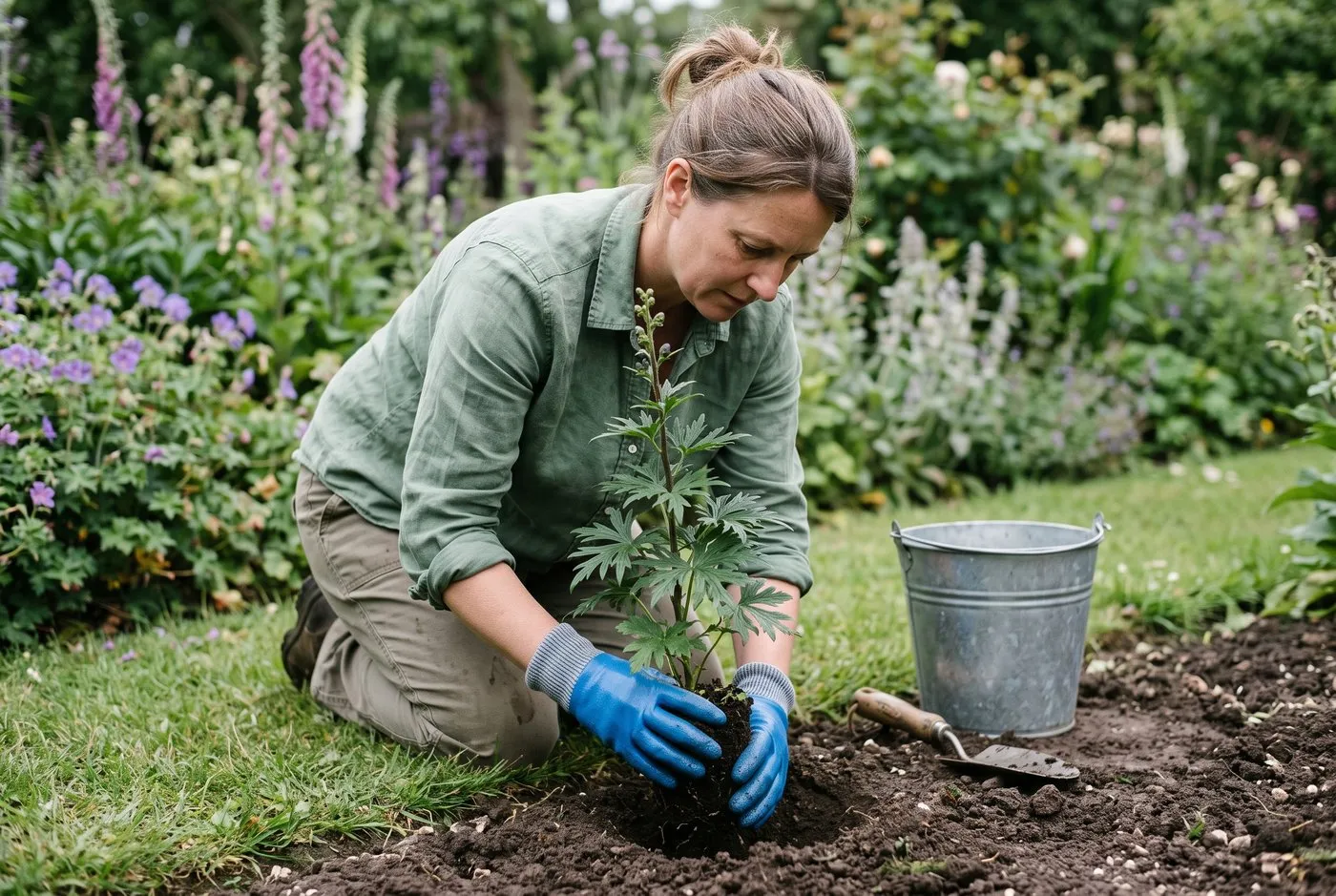
Put your gloves on before the plant leaves its pot, not after.
Handling monkshood without getting poisoned
The aim is simple: keep the sap off your skin. Fabric and leather gloves soak up sap and hold it against your hand, so they don’t protect you. Use waterproof gloves, such as disposable nitrile gloves, and change them if they split.
- Wear long sleeves when cutting back, as forearms catch splashes.
- Take gloves off inside out and bin disposable ones.
- Wash secateurs and forks in hot soapy water afterwards.
- Bag prunings for your council green waste rather than leaving them lying about.
If sap gets on your skin, wash it off at once with soap and warm water. Tingling or numbness in the fingertips is a sign of contact. Call NHS 111 for advice and say it was monkshood (aconite). Call 999 if you feel sick, dizzy or your heartbeat feels irregular.

Waterproof gloves and long sleeves make cutting back monkshood a safe, simple job.
Monkshood, children and pets
Monkshood is poisonous to dogs, cats and other animals as well as people. Siting does more to keep everyone safe than anything else.
- Keep it away from play areas, paths and lawns.
- Don’t plant it where a dog digs or in a raised bed a dog can reach.
- Keep it well away from the vegetable plot.
- Don’t let children pick it for posies.
If you think a pet has chewed it, call your vet straight away. The guide to plants toxic to dogs explains how to zone a garden so risky plants sit where nobody goes.
Which aconitum to grow
A few reliable types cover the season from midsummer to autumn. Each grows to about 1-1.5m.
| Type | Flowers | When |
|---|---|---|
| A. napellus | Deep violet-blue | Summer |
| A. ‘Bressingham Spire’ | Violet-blue, neat spires | Summer |
| A. x cammarum ‘Bicolor’ | Blue and white | Summer |
| A. carmichaelii ‘Arendsii’ | Deep blue | September to October |
| A. lycoctonum subsp. vulparia | Pale yellow | Summer |
A. carmichaelii ‘Arendsii’ is a great pick if you only grow one. It has an RHS Award of Garden Merit, sturdy stems and deep blue flowers just as the border fades. The yellow A. lycoctonum subsp. vulparia is the traditional wolfsbane. Its stems are floppy, so it likes a shrub to lean on.
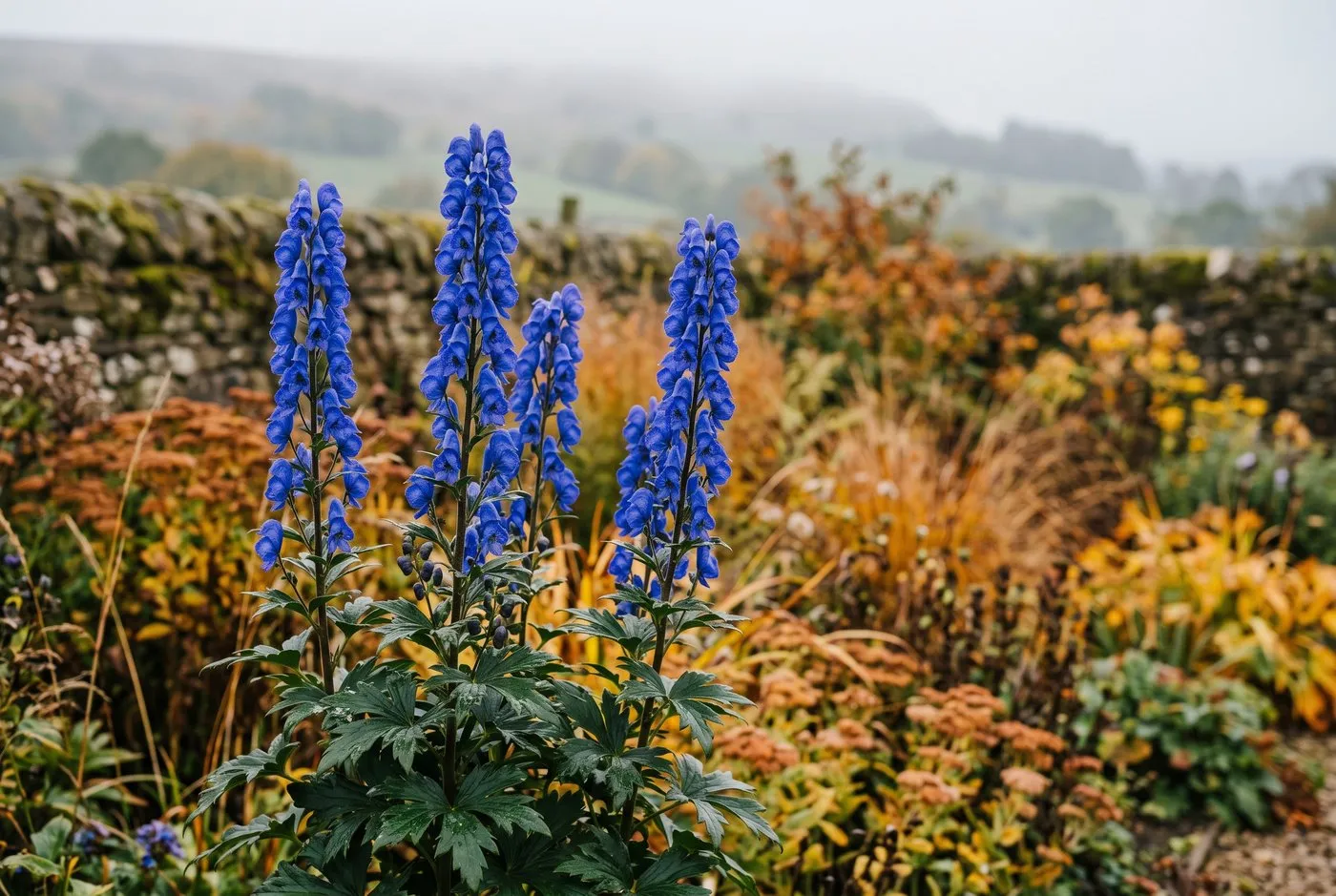
‘Arendsii’ carries strong blue into October, when most of the border has turned to seedheads.
Staking, feeding and dividing aconitum
Staking. Tall types can flop, especially in rich soil. Put in canes or a grow-through support in April, while shoots are about 20cm tall. The guide to staking tall perennials shows the options. Wear gloves when tying in stems.
Feeding. A mulch of garden compost each spring is enough. High-nitrogen feeds make soft, floppy growth.
Dividing. Lift and divide crowded clumps every few years in autumn or early spring, wearing gloves throughout. Pull the clump apart into pieces with a few buds each and replant straight away.
Problems. Powdery mildew can show on leaves in a dry summer, so keep plants watered. Vine weevil grubs sometimes eat the roots of plants in pots.
Aconitum calendar
| Month | Task |
|---|---|
| January to February | Dormant. Check plant labels are still clear |
| March | Shoots appear. Mulch with compost, keeping it off the crown. Plant new crowns |
| April | Put in supports while shoots are about 20cm tall |
| May to June | Water in dry spells. Early types start to flower |
| July to August | Summer types in flower. Deadhead spent spikes. Water in dry weather |
| September to October | Carmichaelii types flower. Plant or divide in gloves |
| November to December | Cut stems down in gloves and bag the prunings. Wash tools |
Common mistakes with monkshood
- Using fabric gloves. They soak up sap. Use waterproof gloves instead.
- Planting in a hot, dry border. It browns off and flowers poorly. Choose moist soil in part shade.
- Growing it near the veg plot. The roots can be mistaken for edible ones. Keep them far apart.
- Staking too late. Supports go in during April, not after the stems have flopped.
- Planting by a path or play area. Keep it at the back, out of easy reach.

Monkshood mixes well with other late flowers in damp, cool gardens, like this one in the hills.
For more plants to flower alongside it, see the guide to Japanese anemones, another star of the late border. You can also browse more ideas in the plants section.
Frequently asked questions
Is Aconitum poisonous to touch?
Yes, its sap can be absorbed through the skin. Handling an unbroken leaf is low risk, but cut stems, crushed leaves and roots expose the sap. Wear waterproof gloves for any cutting, dividing or weeding around it, and wash your hands afterwards.
Which part of monkshood is the most poisonous?
The roots are the most poisonous part. The seeds are also very toxic, and leaves and flowers are poisonous too. Never lift or divide a clump without gloves, and never leave lifted roots lying around.
Should I grow Aconitum if I have children or a dog?
Only if you can plant it well out of reach. Put it at the back of a border, away from paths, lawns, play areas and anywhere a dog digs. If you can’t do that, choose a safer plant such as a delphinium.
What happens if you get Aconitum sap on your skin?
Wash it off straight away with soap and warm water. Tingling or numbness in the fingers is a common sign of contact. Call NHS 111 for advice, and call 999 if you feel sick, dizzy or notice an irregular heartbeat.
When does monkshood flower in the UK?
From midsummer into autumn, depending on the type. A. napellus and its cultivars flower in summer. A. carmichaelii types flower in September and October. Growing both gives a long run of hooded spires.
Where should you plant Aconitum in a UK garden?
In moist, rich soil in dappled or part shade. It dislikes hot, dry spots. A north or east-facing border suits it well. Plant it at the back, about 45cm apart, well away from paths.
Is Aconitum the same as wolfsbane?
Yes, wolfsbane is another old name for aconitum. Monkshood is the other common name. Some people keep wolfsbane for the yellow-flowered A. lycoctonum, but both names belong to the same genus.
Our team produces practical UK gardening guidance from source research, contributor records and established horticultural practice. Editorial standards are overseen by Matt W.