Key takeaways
- Blight can wipe out outdoor tomatoes in about a week once it appears
- Greenhouse tomatoes rarely get blight because their leaves stay dry
- Resistant varieties like Crimson Crush and Mountain Magic are the best bet outdoors
- There's no cure, so get your prevention in place by late June
- Keep tomatoes well away from potatoes, which carry the same blight
- If blight strikes, pick healthy fruit, then bag and remove the plants
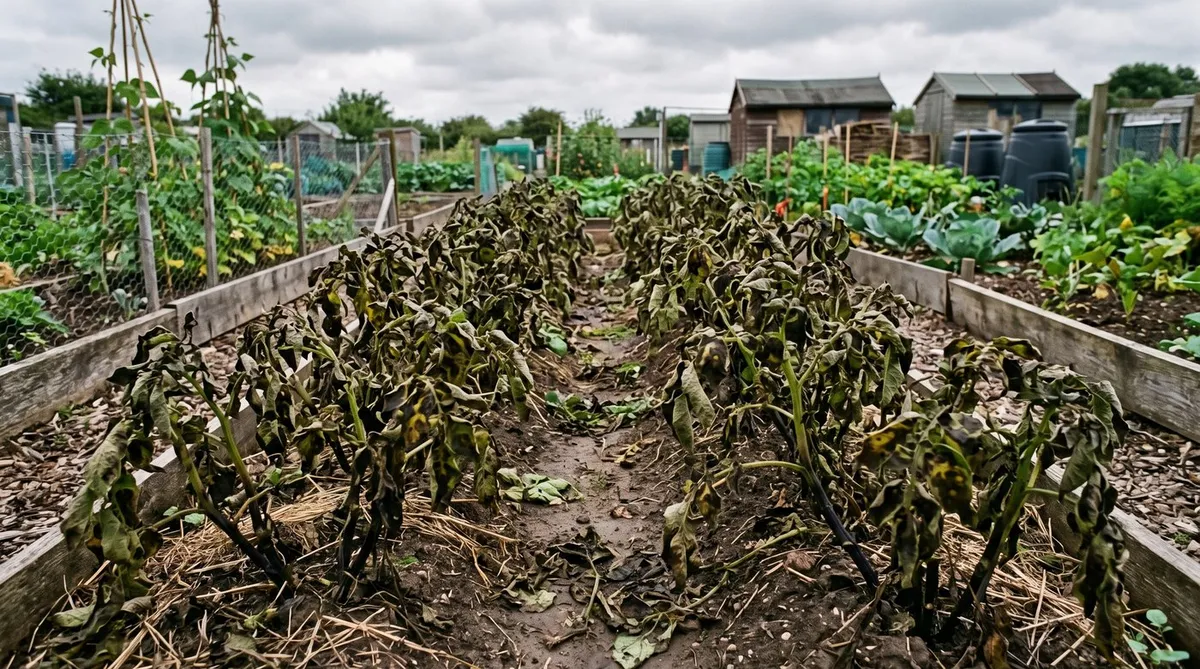
Tomato blight is the disease British tomato growers dread most. A healthy row of outdoor tomatoes can go from lush and green to brown and dead in a week or two. It’s caused by Phytophthora infestans, the same blight that attacks potatoes.
In a wet summer, blight can take a lot of outdoor tomatoes. The spores blow in on the wind, often from nearby potatoes. Once they land on wet leaves, the infection takes hold fast. There’s no cure once you see it, so prevention is the name of the game.
This guide shows you how to spot blight, which varieties resist it and why growing under cover helps so much. If you’re new to tomatoes, start with our beginner’s guide to growing tomatoes.
How to identify tomato blight
Spotting blight early gives you the best chance of saving some fruit. It also helps to tell it apart from other tomato problems.
Late blight (Phytophthora infestans)
Late blight is the serious one, and it moves fast:
- Leaves: dark brown or black patches appear at the tips and edges, often with a yellow edge. In damp weather, a fuzzy white mould forms underneath. Whole leaves collapse within days.
- Stems: dark brown or black streaks run along the stems, often near the top. They go brittle and snap.
- Fruit: firm brown patches appear, often near the stalk. They turn leathery, then rot.
Speed is the giveaway. In warm, wet weather a plant can go from first signs to collapse in about a week.
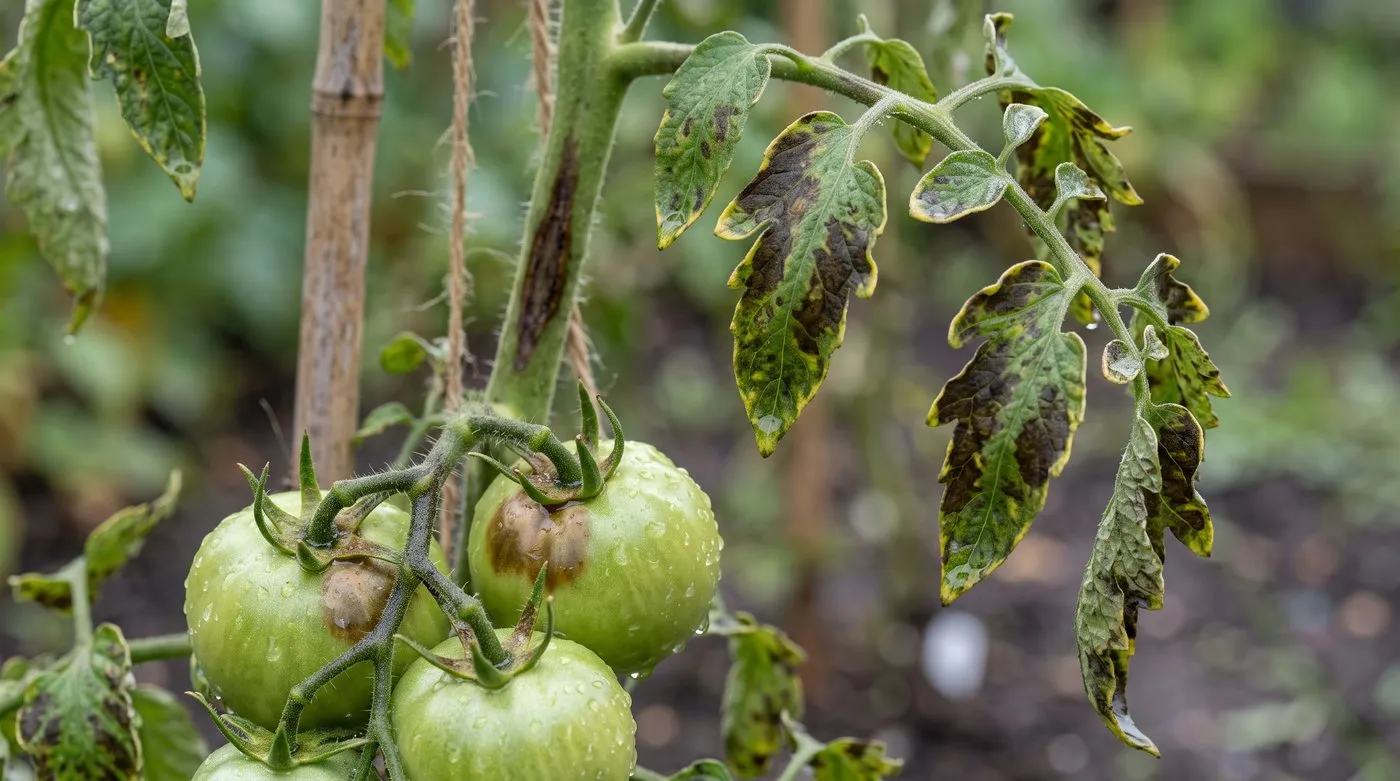
Late blight shows on leaves, stems and fruit all at once. If a plant goes downhill this fast in warm, wet weather, it’s almost always blight.
Early blight (Alternaria solani)
Early blight is a different disease, caused by a fungus. It’s slower and less serious.
| Late blight | Early blight | |
|---|---|---|
| Leaves | Large dark patches, white mould underneath | Brown spots with rings, like a target |
| Stems | Dark streaks, quick collapse | Dark spots, slower |
| Fruit | Firm brown patches, then rot | Sunken dark spots near the stalk |
| Speed | About a week | Several weeks |
| Weather | Warm and wet | Warm, with wet and dry spells |
| How bad | Severe in wet years | Moderate, rarely kills plants |
Early blight weakens plants and cuts the crop but rarely kills them. Picking off affected lower leaves often slows it down.
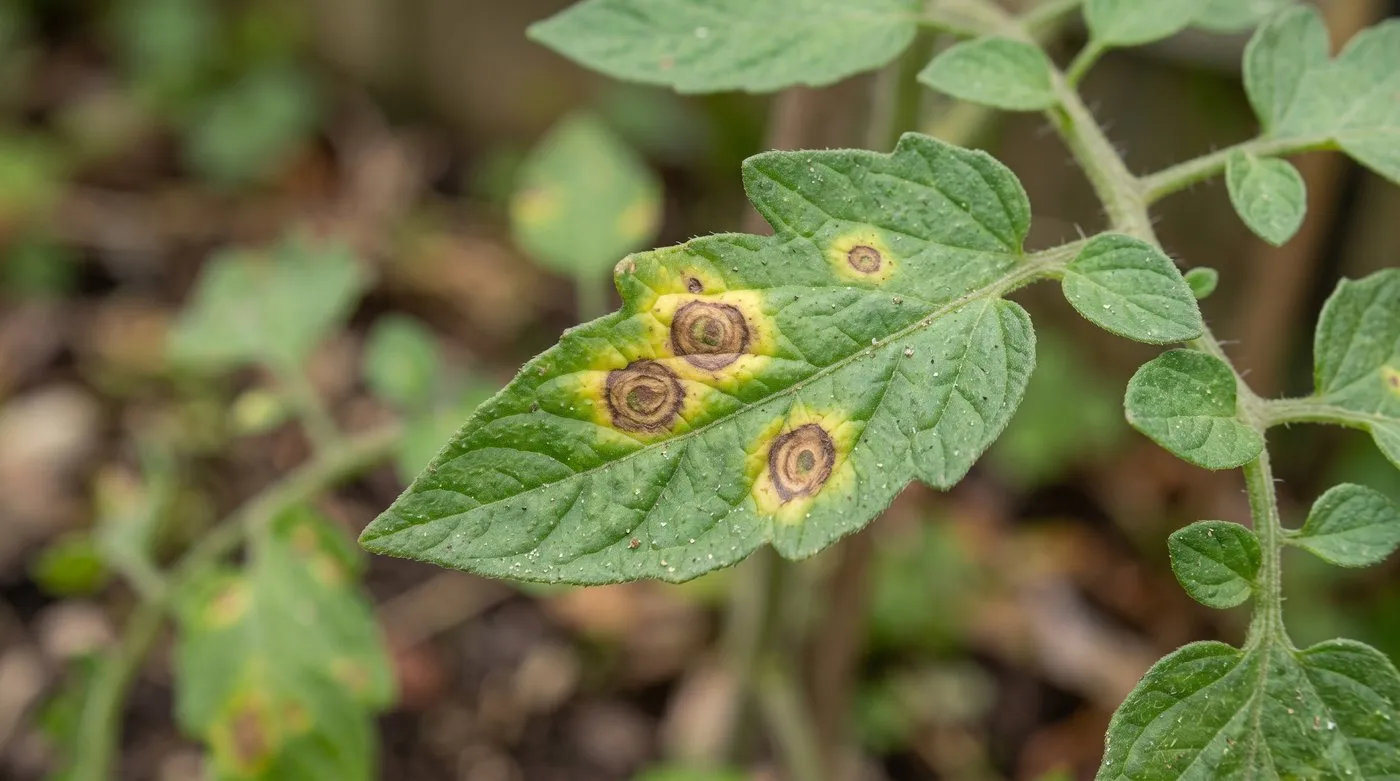
Early blight leaves ringed, target-like spots on the lower leaves. It’s slower and milder than late blight, and picking off the affected leaves often helps.
Problems that look like blight
Not every brown patch is blight. Check for these first:
- Magnesium shortage: yellowing between the veins of lower leaves. No dark patches or stem damage.
- Blossom end rot: a dark, sunken patch on the bottom of the fruit only. It comes from uneven watering. The leaves stay healthy.
- Septoria leaf spot: small round spots with grey centres on lower leaves, spreading slowly.
- Sunscald: pale patches on fruit in strong sun. No mould or rot.
What causes tomato blight in the UK
Blight is a water-loving mould that needs wet leaves to get in. Knowing when it strikes helps you be ready.
How blight spreads
- Infected leaves make spores in damp weather.
- The spores blow on the wind, sometimes a long way.
- They land on wet leaves and get inside.
- Within days the infected leaves make new spores.
- These spread to more plants, and the cycle repeats.
Blight weather: the Hutton Criteria
Experts use the Hutton Criteria to forecast blight weather. Risk is high after two days in a row where it stays at 10C or above, with very humid air for at least six hours each day. The BlightWatch service tracks these conditions and sends free alerts.
Why outdoor tomatoes are at risk
Outdoor leaves get wet from rain, dew and watering. Warm, damp British summers are just what blight loves.
Potatoes are the main source of spores. That’s why outdoor tomatoes often get blight a week or two after potato blight is reported nearby.
How to prevent tomato blight
There’s no cure, so prevention is everything. Grow under cover, choose resistant varieties and keep the leaves dry and airy.
Grow under cover
A greenhouse or polytunnel is the best protection. Blight needs wet leaves, and under cover they stay dry. Even a simple rain shelter of clear polythene over a frame helps a lot.
Tips for growing under cover:
- Water the compost, never the leaves.
- Open vents and doors on warm days to keep the air fresh. Close them in the evening.
- Space plants out so air can move around them.
- Remove lower leaves up to the first truss once the fruit starts to swell.
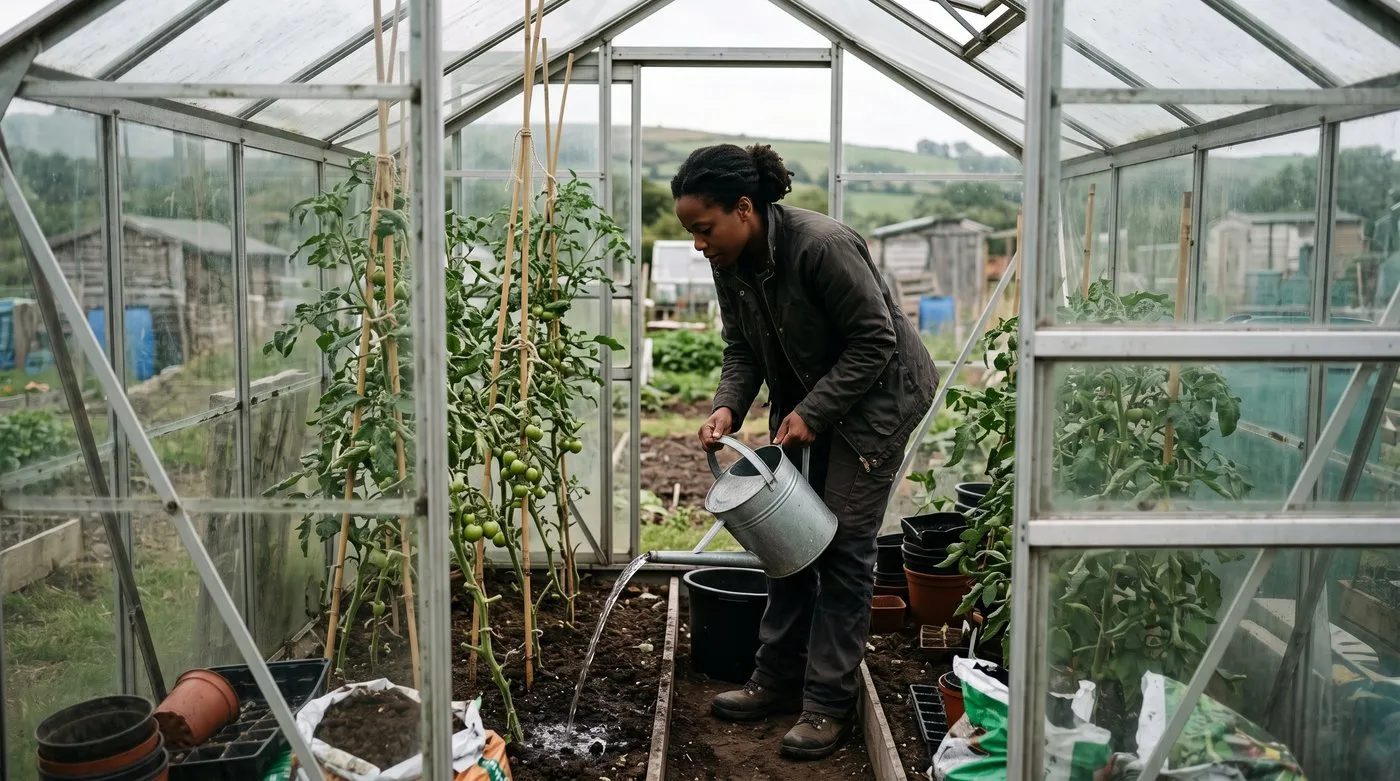
Under cover, the leaves stay dry and blight struggles to get in. Water the compost, not the plant, and open the vents on warm days.
Choose blight-resistant varieties
Some tomatoes are bred to resist blight. They’re not immune, but they hold out much better.
| Variety | Type | Resistance | Best for |
|---|---|---|---|
| Crimson Crush (F1) | Large, round | Very high | Outdoors |
| Mountain Magic (F1) | Small, cocktail | High | Outdoors or under cover |
| Losetto | Cherry, trailing | Good | Baskets and pots |
| Lizzano (F1) | Cherry, trailing | Good | Baskets and pots |
| Cocktail Crush (F1) | Cherry | High | Outdoors or under cover |
| Ferline (F1) | Medium, round | Some | Outdoor beds |
| Legend | Large, round | Some | Outdoor beds |
Crimson Crush was bred in the UK for outdoor growing. It’s the one to choose if you only have space outside.
Gardener’s tip: Grow a resistant variety outside as your safety net. Save your favourite-flavoured ones, like Sungold or Gardener’s Delight, for the greenhouse.
What about sprays?
Copper fungicides, including Bordeaux mixture, are no longer allowed for home gardeners in the UK. Older advice to spray them from late June is out of date.
For most people, prevention now comes down to resistant varieties, cover and the good habits below. If you want a spray, only use one authorised for blight on tomatoes. Apply it before symptoms appear and follow the label exactly. Home-made sprays are not allowed as pesticides in the UK.
Good habits that help
- Keep tomatoes away from potatoes. Put them as far apart as you can.
- Water the base, not the leaves. Water in the morning so any splashes dry quickly.
- Remove lower leaves. Strip the bottom leaves by mid-July to let air in and stop soil splashing up.
- Support plants well. Keep them upright and open. Sprawling, crowded plants stay damp.
- Mulch the soil. A layer of straw or bark stops soil splashing onto leaves. See our guide to using mulch.
- Move them around. Don’t grow tomatoes in the same spot every year. Our vegetable planting calendar helps with planning.
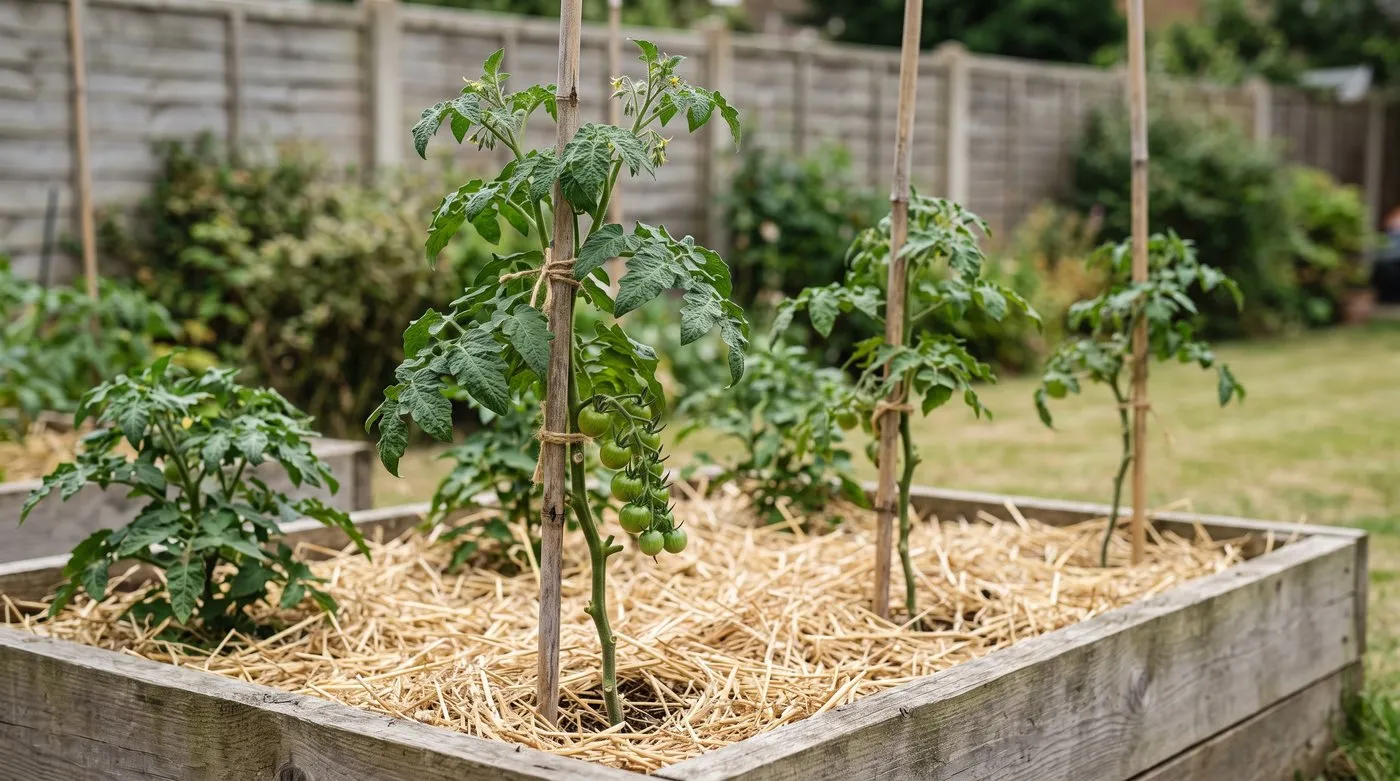
Stripping the bottom leaves and mulching with straw lets air in and stops soil splashing onto the plant. Both make life harder for blight.
Blight calendar through the year
| Month | Blight risk | What to do |
|---|---|---|
| January to March | None | Order seed of resistant varieties |
| April | None | Sow seeds indoors and plan where they’ll grow |
| May | Very low | Harden off, then plant out after the frosts |
| June | Low to medium | Sign up for blight alerts. Remove lower leaves |
| July | High | Check leaves daily. Remove any infected leaves straight away |
| August | Very high | Peak month. Keep checking and pick ripe fruit promptly |
| September | Medium to high | Pick the last fruit. Remove any blighted plants |
| October | Low | Clear all tomato debris and clean the greenhouse |
| November to December | None | Plan next year and order resistant seed |
What to do when blight strikes
Even with care, blight sometimes gets through. Act fast to limit the damage.
Straight away
- Check it’s blight. Look for dark leaf patches with white mould underneath, brown stem streaks and firm brown patches on fruit. If unsure, compare with the RHS blight guide.
- Pick all healthy fruit. Take every fruit without brown patches, green ones too.
- Remove blighted plants. Cut them at soil level and bag up the leaves, stems and bad fruit. Put them in the council green waste bin. Don’t put them on your compost heap.
- Tidy up. Clear fallen leaves and fruit from the soil.
Can you save green tomatoes from blighted plants?
Yes, as long as the fruit itself has no brown patches. Wash them and bring them indoors. Lay them in a single layer in a warm room out of direct sun. Most ripen within a week or two. Throw away any that develop brown patches.
To speed things up, put them in a paper bag with a ripe banana. Or turn them into green tomato chutney.
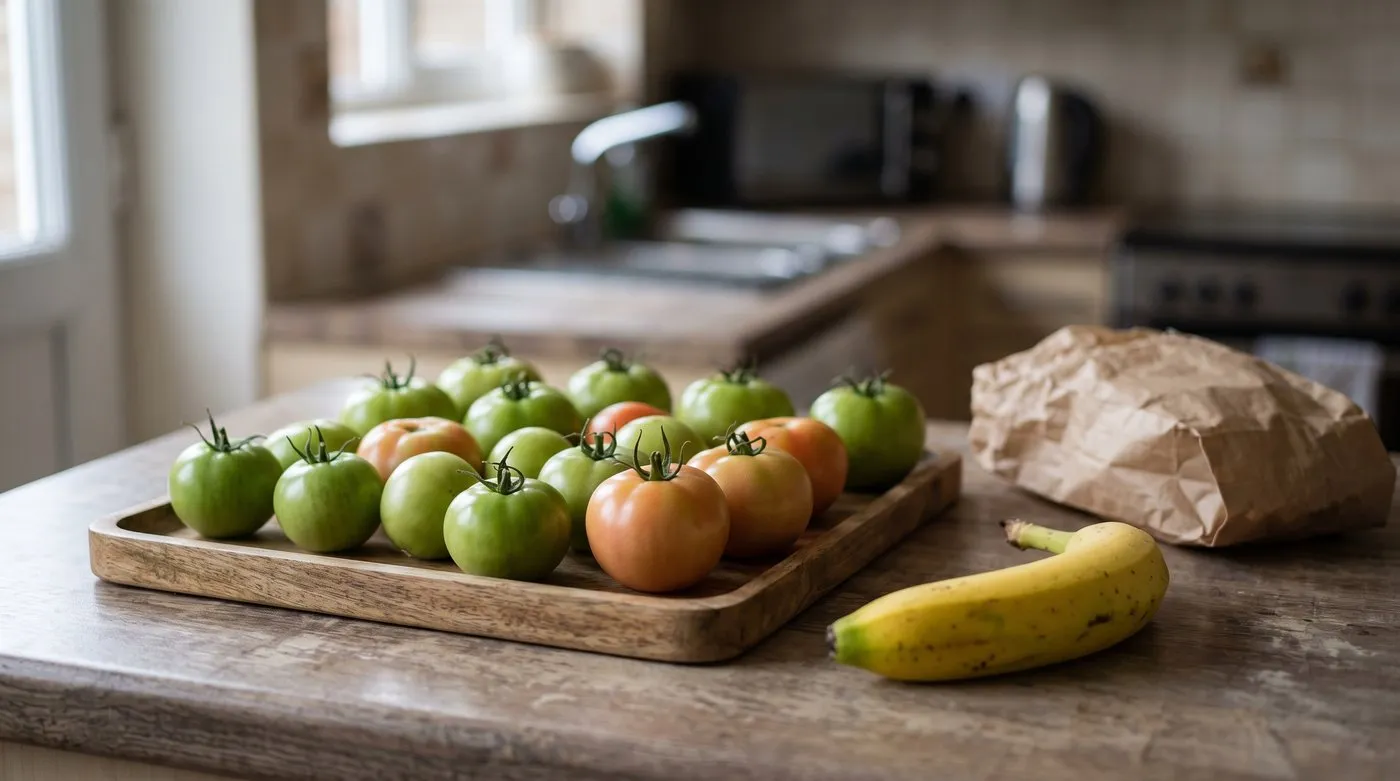
Green tomatoes with no brown patches can be ripened indoors in a week or two. A ripe banana nearby speeds things up.
Greenhouse or outdoors?
Where you grow your tomatoes matters more than anything else.
| Outdoors | Greenhouse | |
|---|---|---|
| Blight risk | High in wet years | Very low |
| Wet leaves | Often, from rain and dew | Rarely, if you water the base |
| Season | Shorter | Longer |
| Varieties | Resistant ones are best | Anything you like |
| Main defence | Resistant varieties, rain cover, good habits | Airflow, watering at the base |
If you have the space, growing under cover is well worth it.
Common mistakes with tomato blight
Waiting for symptoms
By the time you see brown patches, the infection is already days old. Have your cover, resistant varieties and good airflow sorted by late June.
Growing non-resistant varieties outside without cover
Popular varieties like Gardener’s Delight, Moneymaker and Sungold have no real blight resistance. Outside without cover, they’re a gamble in a wet summer. Grow them in the greenhouse, and grow Crimson Crush or Mountain Magic outside.
Composting blighted plants
Home compost heaps may not get hot enough to kill blight. Send blighted plants to the council green waste instead.
Watering over the leaves
Watering from above is like rain for blight. Always water the soil, not the plant. A seep hose or drip system is ideal.
Planting tomatoes next to potatoes
Both crops get the same blight, so it spreads easily from one to the other. Keep them at opposite ends of the plot with other crops in between. Dig up any stray potatoes that pop up, as they can carry blight from year to year.
More help with tomatoes
Blight isn’t the only tomato trouble. Aphids often turn up, especially under glass. Spider mites love hot, dry greenhouses. Our organic pest control guide covers pests across the veg garden.
Now your blight defences are sorted, our beginner’s guide to growing tomatoes covers feeding, watering and training for a great harvest.
Frequently asked questions
Can you eat tomatoes with blight?
Yes, if the fruit itself has no brown patches. Throw away any fruit with brown or discoloured areas. Pick all the healthy fruit as soon as you see blight on the leaves. Ripen green ones indoors or make chutney.
What does tomato blight look like?
Dark brown or black patches on the leaves, starting at the tips and edges. Stems get dark streaks and fruit gets firm brown patches that rot. In damp weather, white mould grows under the leaves. It spreads very quickly.
Is tomato blight the same as potato blight?
Yes, the same organism causes both. Spores blow from infected potatoes onto nearby tomatoes. That’s why outdoor tomatoes often get blight soon after local potatoes do. Never grow the two side by side.
Can I save a blighted tomato plant?
No, once you see blight it can’t be cured. Pick any healthy fruit, then remove the plant to protect others. Prevention is the only reliable answer.
Do greenhouse tomatoes get blight?
Very rarely. Blight needs wet leaves, and greenhouse leaves stay dry. Water at the base and keep air moving. Spores can still drift in, but they rarely cause trouble if the leaves stay dry.
When does tomato blight season start in the UK?
Usually late June or early July, depending on the weather. Blight likes warm, very humid spells lasting a couple of days. BlightWatch sends free alerts when the weather is right for it in your area.
What are the most blight-resistant tomato varieties?
Crimson Crush is the top choice for growing outdoors. Mountain Magic and Cocktail Crush also resist blight well. Losetto and Lizzano are good trailing cherry tomatoes for baskets.
Should I remove tomato plants with blight?
Yes, remove them straight away. Cut them at ground level, bag them up and put them in the council green waste. Don’t add them to your compost heap. Clear up fallen leaves and fruit too.
Our team produces practical UK gardening guidance from source research, contributor records and established horticultural practice. Editorial standards are overseen by Matt W.